



By now, you’re in all probability accustomed to the time period “quiet quitting,” the buzzword that has infiltrated enterprise information headlines and social media reels. Quiet quitting means delivering the minimal necessities of the job. A employee who’s quiet quitting doesn’t put in additional time, effort, or enthusiasm than what is critical. If employees are quiet quitting, you may wager that they’re unhappy with their jobs, burnt out, or disengaged.
We are able to attribute the rise of quiet quitting to varied components, from exterior (altering work and financial landscapes) to inner (lackluster firm tradition). However one factor that employers can management is having a stable worker engagement technique. Maintaining workers engaged can see organizations via the period of quiet quitting.
We reached out to prime CEOs and enterprise consultants to assist us study extra about quiet quitting, from what’s inflicting it to what enterprise leaders can do to deal with it.
What are the High Causes for Quiet Quitting?
Earlier than we dive into discovering the very best worker engagement practices, let’s take a second to know what we’re coping with. We have to work out what’s inflicting that feeling of quiet disengagement amongst our workforce earlier than we will begin brainstorming options to convey again their enthusiasm.
These are a number of the most typical causes employees resort to quiet quitting:
1. Lack of Belief in Management
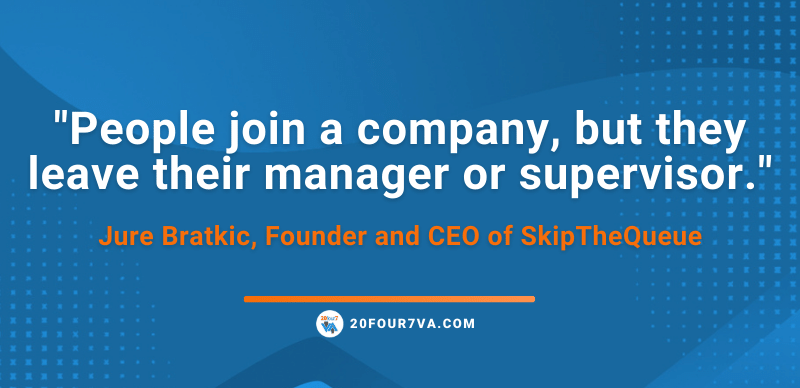
Managers play a essential function in shaping workers’ general job satisfaction and dedication to a company. Jure Bratkic of SkipTheQueue put it merely, “Folks be part of an organization, however they depart their supervisor or supervisor.”
One of many vital methods leaders lose their workers’ belief is when there’s a scarcity of transparency. Issues like unclear requirements for promotion and efficiency analysis can discourage any worker. Different components also can trigger this lack of belief, from poor communication to a perceived lack of empathy from management.
2. Disengagement and Disillusionment
Workers don’t get up sooner or later and really feel wholly disengaged and disillusioned with their jobs. Listed here are a number of the methods that may trigger disengagement and disillusionment:
-
Overpromising and Underdelivering
Unmet expectations could make workers lose belief of their supervisor and the corporate. It could possibly additionally lower motivation and productiveness as workers develop into skeptical of what management tells them. An instance is when a supervisor makes a promise they can’t fulfill, corresponding to a promotion or a increase, after which fails to observe via.
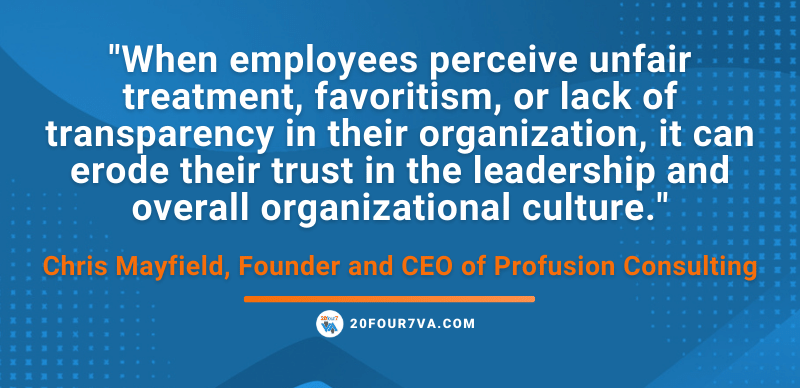
“When workers understand unfair remedy, favoritism, or lack of transparency of their group, it could erode their belief within the management and general organizational tradition,” says Chris Mayfield, Founder and CEO of Profusion Consulting. He provides, “Consequently, workers might resort to quiet quitting as a coping mechanism, selecting to disengage from their job with out formally resigning.”
It’s clear that when there’s unconscious bias within the office, it could have an effect on varied features of the group. And it begins with the recruitment course of. Unconscious bias in expertise acquisition can result in a scarcity of range and inclusivity. This creates a domino impact the place workers really feel like they don’t belong and even expertise microaggressions within the office.
-
Lack of Difficult Work and Progress Alternatives
When workers aren’t supplied with difficult work, they’ll expertise boredom and a way of stagnation. That is notably true for people who thrive on recent challenges and steady studying alternatives. Consequently, this sense of monotony can result in a state of demotivation, finally leading to worker disengagement.
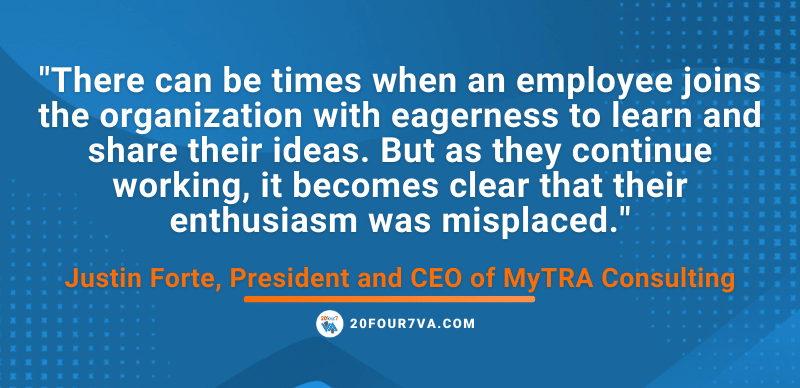
One more reason workers develop into disengaged is a scarcity of studying and development alternatives. As Justin Forte, President and CEO of MyTRA Consulting, shared, “There might be occasions when an worker joins the group with eagerness to study and share their concepts. However as they proceed working, it turns into clear that their enthusiasm was misplaced.”
This may be because of the employer needing to supply extra alternatives for skilled growth. Or, it may be only a case of the improper job match. Both manner, the worker finally ends up dropping their ardour for his or her work.
3. Financial Challenges
Monetary stress has a major affect, each consciously and subconsciously, on people. Information about wage cuts, wage freezes, and even layoffs imply job insecurity for workers. This will result in a sense of being undervalued and underappreciated for his or her efforts. Consequently, these circumstances contribute to disengagement and result in a rise within the variety of “quiet quitters.”
Moreover, uncertainty about work and the economic system locations an immense burden on employees. This example leaves them missing the motivation and incentives to go the additional mile, regardless of their monetary obligations. Consequently, a “hen and egg” state of affairs emerges the place workers acknowledge their want to go away however discover themselves unable to resign because of their monetary duties. This predicament inevitably results in quiet quitting as workers stay conscious that they want to transfer on however can not afford to jeopardize their job safety.
4. Poor Firm Tradition
When administration fails to take the time to construct an organization tradition that values workers, they’ll anticipate to have quiet quitters of their group. A poisonous work setting, lack of help, and poor management will finally trigger worker demotivation and mistrust.
Enterprise leaders should enhance the corporate tradition in the event that they need to reduce or eradicate the results of quiet quitting. It’s important to have a piece setting that rewards and acknowledges prime performers and, on the similar time, helps underperforming workers.
For extra distant expertise administration ideas, learn our article on tips on how to assist underperformers earlier than it’s too late. Or, schedule a free, no-obligation discovery name with our Progress Consultants immediately!
5. Lack of Work-Life Steadiness
When an organization tradition fails to prioritize work-life steadiness, it could have detrimental results. Viewing workers merely as cogs in a machine, devoid of their human feelings and relationships, creates a bunch of points. The absence of empathy and steering throughout the office units the stage for unrealistic work expectations, prolonged working hours, and the event of unhealthy work habits.
There’s a rising development of youthful employees now not subscribing to the notion of the “hustle tradition”—in truth, they actively reject it. For a good portion of the workforce, quiet quitting just isn’t synonymous with slacking off or underperforming; it’s an try to evade company burnout. As leaders typically lack the understanding of building wholesome work-life boundaries, quiet quitting turns into an alternate means for workers to prioritize their well-being and try for a greater work-life steadiness.
Results of Quiet Quitting
When noticed sparsely, quiet quitting shouldn’t be a trigger for concern. As a substitute, it could function a catalyst for reevaluating and shaping the specified firm tradition. Nonetheless, when confronted with a workforce characterised by demotivation, disengagement, and disillusionment, it signifies a major drawback that wants fast consideration.
The consequences of quiet quitting might be seen within the type of decrease morale and productiveness. It’s going to additionally result in a scarcity of enthusiasm and creativity amongst workers, which may trigger your productiveness to plateau and even decline. Moreover, it could weaken each inner and exterior relationships since all events can really feel the results of unmotivated workers.
1. Decreased Productiveness
As workers begin to disengage and have interaction in “quiet quitting,” productiveness tends to endure, notably when it entails top-performing people. Companies face a decline in productiveness when their precious abilities choose to do solely the naked minimal.
Worse, demotivated workers might lose curiosity in pursuing development alternatives and advancing up the company hierarchy. This locations administration in a difficult place and deprives them of the chance to nurture potential future enterprise leaders.
2. Elevated Worker Turnover
Inevitably, there’ll come some extent the place quiet quitters finally depart from the corporate, putting a further burden on the remaining workers who should shoulder the deserted workload. If this workload turns into overwhelming, it could result in burnout and additional cases of quiet quitting, perpetuating an never-ending cycle. The lack of skilled and expert workers can considerably affect the corporate’s capability to realize its enterprise aims and end in long-term decreases in productiveness.
Quiet quitting not solely impacts the person worker and their workload but in addition has a ripple impact on their colleagues. When fellow workers witness somebody turning into demotivated and disengaged, they naturally query the underlying causes. They might additionally start to harbor doubts in regards to the firm’s course and their job safety.
3. Destructive Impression on Firm Tradition
Quiet quitting can have a profound and long-lasting damaging affect on the corporate tradition. When workers silently disengage, it could create an environment of distrust, dissatisfaction, and even hostility amongst co-workers. It will result in much less collaboration, fewer artistic concepts, and a scarcity of motivation within the office. Moreover, quiet quitting fosters an setting of apathy, which might be detrimental to an organization’s progress and development.
When you’ve noticed quiet quitting in your workforce, inaction or band-aid options will solely exacerbate the state of affairs. Whereas it could be tough and time-consuming, administration should tackle the components inside their management. One efficient strategy is to concentrate on protecting workers engaged, which may profit each workers and the general enterprise.
What’s Worker Engagement?
Worker engagement is a essential think about protecting workers motivated and impressed. It’s the emotional connection and dedication that an worker has to their job, their office, and the group they work for. When workers are absolutely engaged, they’re absolutely immersed of their work, perceive its significance, and are obsessed with reaching the corporate’s targets.
Why work on worker engagement within the first place? The reply is straightforward. Workers who really feel valued and appreciated are usually extra engaged, targeted on their job, and fewer more likely to resort to quiet quitting.
Worker Engagement Methods That Really Work in a Quiet Quitting World
Enhancing worker engagement requires a devoted funding of time and persistence. Management should wholeheartedly prioritize creating an setting the place workers genuinely really feel engaged, valued, and motivated.
Listed here are some confirmed worker engagement methods really useful by enterprise consultants and CEOs that can assist you kickstart your efforts.
1. Open and Clear Communication
Chris Mayfield recommends establishing “open and clear communication channels encouraging workers to share their ideas, concepts, and considerations.” He provides, “Listening actively to workers’ suggestions and addressing their issues promptly and respectfully may help workers really feel heard and valued.”
To make sure open and efficient communication channels within the office, contemplate implementing the next practices:
- Conduct common crew conferences to foster collaboration and teamwork.
- Arrange city corridor conferences to supply basic firm updates and promote transparency.
- Schedule one-on-one classes for efficiency critiques and constructive suggestions exchanges.
- Actively search and worth worker suggestions to encourage their participation and involvement.
- Set up each synchronous and asynchronous communication platforms to accommodate totally different work types and preferences.
- Keep professionalism by being conscious of your tone and expressions in all communication interactions.
- Make the most of collaboration and challenge administration instruments to make sure alignment and readability amongst crew members, no matter their synchronous or asynchronous work preparations.
Whereas communication channels might differ throughout totally different organizations, one side stays fixed: fostering a two-way dialog the place each events are open to listening and studying. Whatever the particular platforms you make the most of, prioritizing energetic engagement and receptiveness is essential to efficient communication.
Wish to know extra in regards to the prime communication instruments for distant groups? E book a free session with our Progress Consultants immediately!
2. Have an Efficient Recognitions and Rewards System
“Workers are [a company’s] best asset,” says John G. Self, a recruitment professional and govt teaching skilled. “They need to be celebrated and compensated.”
Implementing a recognition and rewards system might be extraordinarily useful in protecting workers engaged within the period of quiet quitting. Acknowledging workers for his or her arduous work, dedication, and achievements could make them really feel valued and appreciated. This sense of belonging can result in elevated morale, larger job satisfaction, and improved worker engagement.

Financial rewards can take varied kinds, together with bonuses, present playing cards, and wage will increase, amongst others. Nonetheless, monetary rewards have to be coupled with public recognition, corresponding to certificates, plaques, or company-wide bulletins. Other than guaranteeing that top-performing workers really feel genuinely appreciated for his or her contributions to the corporate, public recognition fosters a way of belonging. It could possibly additionally function inspiration for others to try for excellence, understanding that their arduous work shall be acknowledged and rewarded, relatively than leading to an elevated workload.
3. Present Alternatives for Progress and Improvement
It’s essential to supply workers with the chance to develop and develop. This not solely helps them develop into extra competent of their respective roles but in addition retains them engaged. Workers will really feel that administration values their private growth and usually tend to be extra engaged and motivated at work.
Investing in coaching and growth also can assist organizations determine future leaders. They’ll see who responds nicely to studying alternatives and who has the potential to steer their very own crew. This fashion, workers will know that they’ve a spot within the firm’s future ought to they be prepared to use themselves.
4. Prepare Managers to be Leaders, Not Bosses
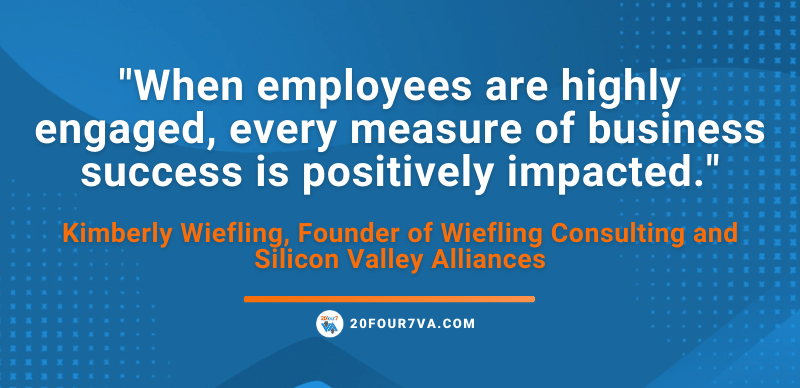
Kimberly Wiefling, the founding father of Wiefling Consulting and Silicon Valley Alliances, says management is significant in motivating workers. She notes, “When workers are extremely engaged, each measure of enterprise success is positively impacted.”
An incredible place to begin is to supply coaching to your managers, encouraging them to embrace management relatively than a boss-like mentality. Whereas each roles require particular abilities, it’s important to acknowledge the basic distinction between being a pacesetter and being a boss.
Leaders empower workers by granting them the liberty to behave and make unbiased selections, whereas bosses sometimes demand strict obedience with out room for autonomy. As a substitute of being a boss that orders the crew round, Kimberly recommends, “Managers ought to intention to be leaders that workers can admire and willingly observe.”
Efficient and empathic managers may help your organization on this period of quiet quitting. They work with workers straight, so that they’re higher positioned to determine the telltale indicators of workers who’re about to or already really feel disengaged.
5. Prioritize Worker Effectively-Being
Whereas it may be simple to get caught up in monetary experiences, backside traces, revenues, and KPIs, it’s essential to needless to say enterprise success goes past numbers. Corporations must prioritize worker well-being. When workers are wholesome and content material, they’re higher positioned to make significant contributions to the crew and general firm efficiency.
Bodily and psychological well being points contribute to lowered productiveness and lack of motivation. Organizations should put within the effort to deal with these points by creating an worker well-being program. This program ought to embody the next:
- A complete medical insurance coverage package deal
- Entry to counselors or therapists
- Common stress administration applications and actions
- Assets for psychological well being help
- Paid day off and sick days
- Versatile working preparations
- Common evaluation of enterprise and staffing necessities to keep up affordable workloads
- Group wellness applications to advertise wholesome practices and set up connections between co-workers
- Establishing a optimistic work setting ranging from management and throughout the group
Providing these advantages demonstrates your real concern in your workers’ well-being, resulting in improved morale and engagement. Moreover, it’s essential to supply managers with correct coaching to determine indicators of psychological well being points amongst crew members and equip them with the instruments to supply the mandatory help.
Within the period of quiet quitting, the place disengagement and demotivation can silently permeate the workforce, it has develop into more and more important for organizations to prioritize worker engagement.
By understanding the underlying causes and implementing efficient methods, firms can create a tradition that nurtures and helps their workers. From fostering open communication channels to recognizing and valuing their contributions, investing in worker well-being and engagement not solely boosts productiveness but in addition cultivates a optimistic work setting the place people thrive.
Embracing these practices is the important thing to retaining prime expertise, driving success, and constructing a resilient group within the face of evolving office dynamics. By taking proactive steps to maintain workers engaged, firms can pave the way in which for a brighter future the place people are motivated, fulfilled, and dedicated to reaching shared targets.
Want tips about setting workers up for achievement? Our Enterprise Progress Consultants shall be completely happy to share their prime ideas—and extra!

