
Every company wants its brand, product, or service to be the one that is top of mind in the market. When you ask founders and CEOs about their vision, they will often tell you they want to be “number one” or become the “industry leader” in whatever they do.
As marketers, we all want the brands we work on to be just that—number one. Even if “to be number one” vision statements are as cringe-worthy as a TikTok creator dancing in public, we want to be the brand that people search for on the shelf, tell their friends about, and are top of mind when someone needs to make a purchase decision.
But how do we build something big, sticky, and famous enough? Something worthy that people want, need, and crave? Something they will rally behind, brag about, and even fight over to defend?
In this article, we will explore what it means to think, strategize, and go beyond brand awareness to reach a status of brand fame. We unpack the value and impact that come with it and show you how to craft a brand strategy that will drive long-term sustained growth and customer loyalty.
What is Brand Fame?
I’m sure all of you know exactly what brand awareness is, but I am willing to bet that some of you are not completely sure what I am talking about when I speak of brand fame.
Brand fame is not some superior level of brand awareness. It’s closer to Hollywood fame, big sports fame, or political fame. Red carpet stuff, really.
Why do you adore a particular celebrity or vote for a specific political figure? Why do people part with their hard-earned cash to buy Apple or Gucci when there are perfectly fine, functional alternatives to choose from?
Brand fame is the widespread recognition and established perception of a brand among the general public or within a specific niche. It goes beyond simple brand awareness and is about a deep association with the values, emotions, and experiences a brand represents.
Achieving brand fame means that your brand’s presence becomes part of people’s everyday lives. It often becomes a household name or a coffee machine term around the office, symbolizing a specific standard of quality or a unique identity that sets it apart from competitors. “Google it,” “Get an Uber,” or “Send me a Slack” are probably some of the best examples of this.
Being famous, however, doesn’t necessarily mean world-famous.
Niche Famous is also Famous
A brand can also be famous in a niche, industry, or category. Take Boss, for example (not those models with smoldering poses you see on Instagram, but the subbrand from music equipment giant Roland). Many of you have never heard of the brand before, but anyone here who has ever picked up a guitar with serious intent likely knows that Boss makes some of the world’s best sound effect pedals and that you are unlikely to find a guitarist on a stage without one in his/her arsenal.

For small companies and startups, becoming famous might seem like a farfetched idea and a dystopian-like state they probably will never reach. The harsh reality is that this is true for the most part— and you need to accept that you won’t be rivaling Coke, Nike, or Apple anytime soon.
But being famous as a brand doesn’t mean that you have to be Taylor Swift. If there is only one guy in a small town, who plays guitar and sings at the local watering hole, everyone in that town will know him and probably come watch if they fancy some live music on the weekend.
Your objective should be to become famous within your niche and industry. You want to be top of mind or considered as an option when your target audience goes shopping for what you are selling.
How exactly is Brand Fame different from Brand Awareness?
In its simplest form, brand awareness is the knowledge of your brand’s existence. It is measured by how many people know about you, what they know about you, and how much they can recall about you. For instance, if someone sees your company’s logo, do they know who you are, what you stand for, and what you sell?
Brand fame is less about recognition and knowledge about your existence and more about mental availability. Marketing legend Byron Sharp defines mental availability as “the probability that a buyer will notice, recognize, and/or think of a brand in buying situations.”
Consumers are more likely to purchase products from famous brands than from brands they have never heard of. Obviously, there are exceptions to this—if you are starving, you will buy and eat whatever is available. Or if you are thirsty and have no other option than a no-name soda, you’ll stomach it.
But in most cases, people will opt for famous brands for reasons they themselves can’t explain without falling over their words and grasping at the programmed perception in their minds.
The Impact of Brand Fame
I’m going to get straight into the juicy stuff here so that you are enticed to read the rest of this article. Brand fame directly correlates to leads, sales, growth, customer loyalty, price elasticity, survivability, and competitive defensibility.
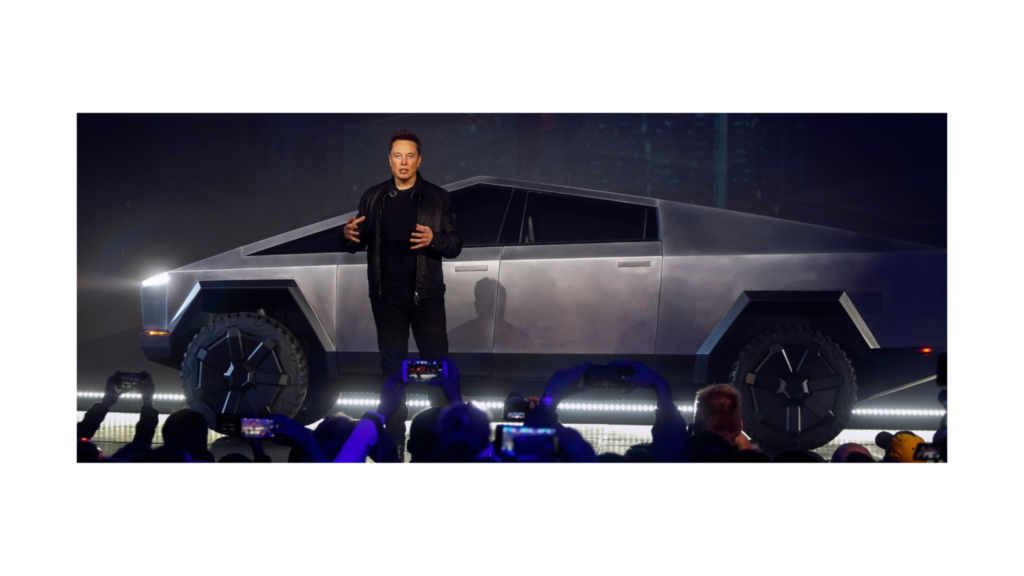
I know I just dropped a bag of terms heavy enough to leave a dent in Elon Musk’s boardroom table. But the thing is, Elon gets this and has leveraged brand fame to become one of the most successful businessmen in human history.
People buy Tesla because they trust the founder and believe in his vision. If Tesla had been founded by someone you have never heard of, it’s highly likely that the brand would have never been as famous as it is today.
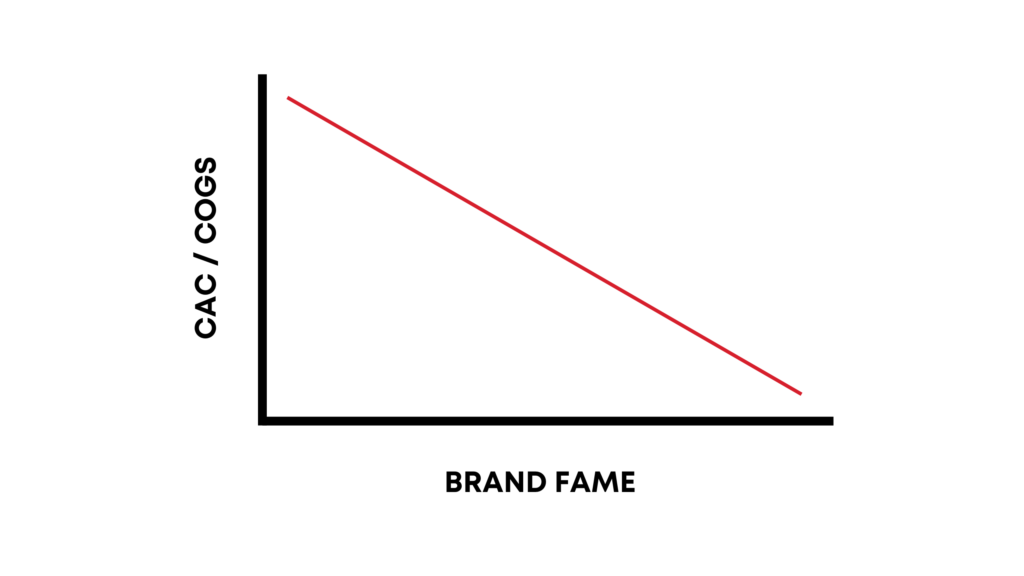
From a pure metrics standpoint, as brand fame and mental availability increase, customer acquisition cost (CAC) and cost of goods sold (COGS) decrease.
Below is a little unofficial graph I created to illustrate this. You are welcome to show it to your CEO and CFO next time they question your budget allocation to brand marketing. Stand firm and hold your ground – investing in your brand IS important. I’ll happily die on that hill with you.
Brand Fame impact
The simple reason for this is that the more famous your brand is, the less money you have to spend on making your audience aware of your existence and educating them on the benefits of your product. It takes less time, effort, and resources to try to convince your audience to choose you over your competitors.
Brand fame is like having a perfect, free, always-on campaign running. Famous brands live rent-free in consumers’ minds and memories.
The more famous a brand is, the more desired it is, and the more likely it is to be included in someone’s consideration set when shopping for just about anything in this world.
A good recent example of this is Microsoft. They have to spend extensive resources to convince the audience of its Surface product range that the new models are functionally and technically a “better” purchase than the MacBook Air. Yet, they will not be able to outsell Apple in this category, and they will sure as hell not convince die-hard Apple loyalists to switch over to Windows.
This is true for any category and industry, from enterprise software to cosmetics and fast-moving consumer goods. People default to the industry leader, the famous one. They buy the one they remember, read about, and hear about ALL THE TIME. People buy the strongest brand.
This is why Coca-Cola continues to outsell Pepsi even when Pepsi wins the blind taste test.
Brand fame defies logic in many cases – it shortcircuits the human brain and affects us in a way similar to religion. We buy things we don’t need with money we don’t have to impress people we will never meet.
Famous brands win all the time.
Growth and Sales
The more famous your brand is, the more likely someone will choose your product or at least consider it.
Everyone in the category competes with famous brands and industry leaders. Famous brands need to put in less effort to convince people to buy from them. While smaller, lesser-known brands have to spend money just to be an open Chrome tab on someone’s browser when researching a new product, service, or software.
As Prof. Mark Ritson puts it, “You’re very fucked if you are a small brand.” Small brands will always compete with the biggest fish in the pond and, more often than not, draw the short straw. Ritson explains that it’s not a David vs Goliath scenario. Brand success stories have always been about big brands getting ahead and staying ahead.
Customer Loyalty
Brand fame comes hand-in-hand with equity and loyalty among consumers. Have you ever heard someone swear by a brand or a product? I bet it’s a famous brand they are swearing by. People even swear by brands they have never even used themselves. Simply because they’ve heard it’s the best or because someone they know uses it.
Customer loyalty directly leads to positive word-of-mouth, repeat purchases, and increased customer lifetime value—or simply money in the bank.
Most people are very reluctant to leave a famous brand they are loyal to. They don’t easily switch to something else, especially not something new. Yet companies all over the world are dishing out millions of dollars to try to win consumers over and get their piece of the pie.
Competitive Defensibility
Famous brands enjoy competitive defensibility because of customer loyalty. They are immune to persuasive advertising and promotional efforts from competing brands. Just try to convince a BMW or Mercedes driver to switch to Skoda—go ahead; I’ll wait. It’s more likely that they will switch over to another famous brand like Tesla if they fancy going electric and care about the planet.
The same applies if you try convincing many marketers to switch from Mailchimp or Hubspot to some new email tool or CRM that launched earlier this year. You are fighting a losing battle, pushing up a wet, muddy hill with little reward waiting at the top.
Price Elasticity
The impact here is two-fold:
(1) Consumers are willing to pay more for famous brands, and
(2) they are less likely to be put off by price hikes.
People are willing to pay a premium for perceived quality, status, and the trust label that comes with certain brands.
No one in their right mind spends $2000 on a Gucci bag because of its functionality; it’s about the self-expressive benefits that come with it—that bag just looks better in a selfie. If the price rises to $2500, it will likely not affect the target audience’s decision to buy it. It won’t suddenly push them to go for something that doesn’t come with the same status and quality.
Dolf van den Brink, CEO of Heineken, perfectly summarized it when he recently made the powerful statement in defense of a price increase: “Brand power today is pricing power tomorrow.”
The stronger your brand is and the more mental availability it enjoys, the more people are willing to pay for it. They might complain about price hikes in the short run but will convince themselves to buy it anyway.
Famous brands enjoy more freedom in the market and are also much less likely to be affected by economic downturns and inflation’s negative impact. At the end of a rough month, they clean out what’s left in people’s wallets.
The Impact of Branding
Let’s take a small step back and zoom out just a little. To understand brand fame and how to create fame, you have to understand branding as a whole. After all, brand fame is the result of a sound and solid brand strategy. It is not something that merely happens or spawns into existence when the CEO asks the social media manager to make a post go viral.
Here are 16 statistics from a few recent consumer studies on branding to help set the mood:
Why is branding so damn important?
- 80% of people regularly buy name-brand food and grocery items.
- 81% of consumers need to trust a brand to consider buying it.
- 77% of consumers prefer shopping from brands they follow on social media.
- Consistent branding can increase a company’s revenue by up to 23%.
- Consistently presented brands are 3-4 times more likely to achieve strong brand visibility.
- On average, it takes 5-7 brand interactions for a person to recall a brand.
- 33% of buyers have already chosen a brand before they go shopping.
- 65% of consumers say that a brand’s CEO and employees influence their decision to buy.
- 68% of people like to spend time reading about the brands they find interesting.
- 62% of consumers say that their purchase decisions are heavily influenced by a brand’s values.
- 76% of Gen Z consumers state that they like buying from brands that serve a greater purpose.
- 77% of B2C consumers are likely to make a purchase based on a brand name.
- 76% of B2C consumers have purchased a product based on someone else’s recommendation.
- 94% of customers recommend brands they connect with emotionally.
- 46% of customers tend to pay more when purchasing from a trusted brand.
- 59% of consumers would wait for products to be back in stock at their favorite brands’ stores or websites rather than shop elsewhere.
(Sources: Accenture, Lucidpress, G2, Sprout Social)
I can keep this up all day, but what is essential is to understand that your brand is your most important marketing asset and justifies having a solid foundation, a well-thought-out strategy, and ongoing investment. Even if the CFO disagrees and wants quick wins, not investing in your brand will leave you in the dust as you watch your competitors get ahead of you in the long game.
Airbnb CEO and founder Brian Chesky recently said their investment in brand building has led to Airbnb becoming a “noun and a verb” and has “enabled them to maintain the same level of marketing investment year after year.” Ever heard someone say, “Book an Airbnb”? That’s brand power right there.
Big, famous brands get this and double down on it.
As a brand specialist, it pains me to see new companies focus so much on their product and just pushing sales. More often than not, brand strategy is nowhere to be found, and investments in brand development are not made until it’s too late. Building a brand should be a priority right from the get-go.
What is Brand Strategy?
I always explain that a brand is a perception held in the mind of an individual about a person, organization, or group. It is made up of a collection of physical elements, as well as emotional and psychological connections. It is what people see as much as it is what they feel and believe.
A brand strategy is a framework that determines how businesses present themselves to consumers and differentiate themselves from competitors. It is a blueprint that predetermines and curates what you want people to think, feel, and know about your brand. A brand strategy is about more than just a name, logo, fonts, and colors. It includes elements like a brand’s vision, mission, purpose, values, personality, and promises to its customers.
How to build a Brand that can achieve Fame
To build a famous brand, we need to understand the basics of building a brand, a brand identity, and a purpose-driven strategy.
I love this quote by Ren Jones: “Marketing is like asking someone out on a date; branding is the reason they say yes.” What do you wear, what do you smell like, what’s your personality like—what is there to like about you, and what makes some people fall in love with you?
To build a strong, famous brand, we need to start with the foundation—the brand’s essence. Without a brand strategy, it’s like building a house on sand. The brand essence serves as a blueprint and light in the dark, guiding business decisions and setting the course in the market. A brand’s essence also forms an important part of its differentiation strategy and is what we use to create and design a brand identity.
Let’s dive in.
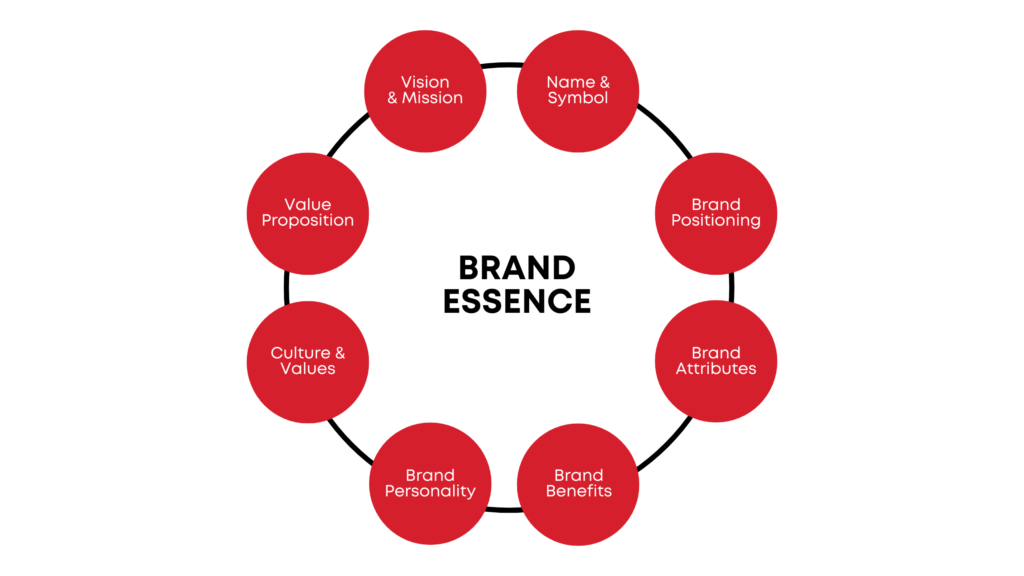
Brand Essence Wheel
Brand Essence: A Strategic Foundation for Growth
Name and Symbol
A company’s name and any visual elements like a symbol, color, or typeface serve as its primary identifier, call sign, and visual trademark.
Most companies start with someone really just sucking this out of their thumb and paying some rookie designer $25.00 to grab a free icon off the Canva library.
Some people are clever and witty about it and pick names like “Dentist near me.” Others take the deep association route that sets them up for a meaningful brand story, like the famous brand Nike, named after the Greek goddess of victory. Nike’s famous swoosh logo, which represents the goddess’s wing, was designed by Carolyn Davidson for a staggering $35.00 way back then.
Nike and its “cheap” logo went on to become the global icon we all know and love. The name and logo work because they are short, memorable, and have a story to back it up. They represent something bigger.
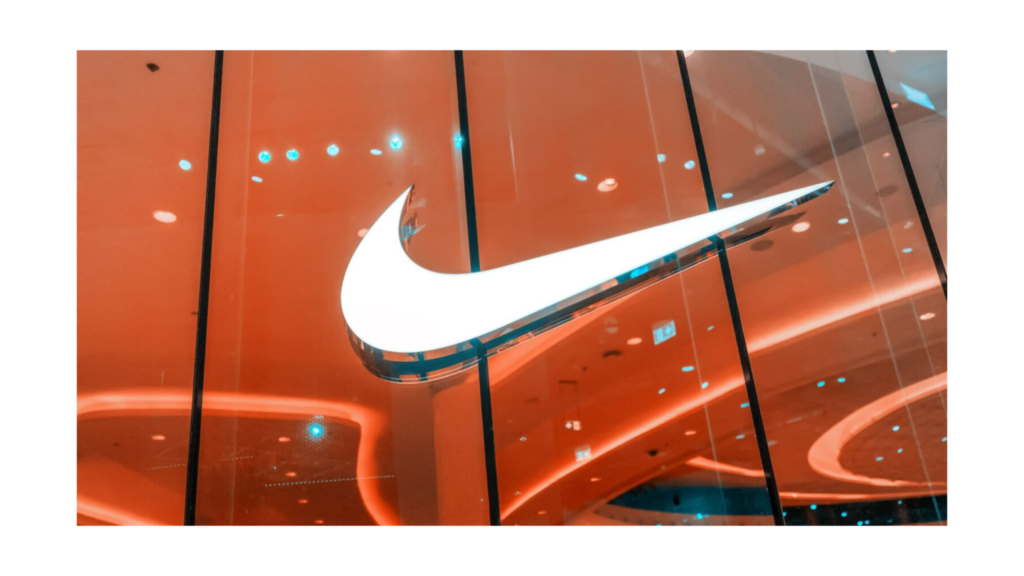
A logo doesn’t have to be expensive to be good. However, brand names and logos need to be well-thought-out and strategically planned. They play a significant role in helping build a brand and shaping perceptions in the market.
Here are 9 things to keep in mind when choosing a name and logo for your brand:
It needs to reflect your brand identity:
Ensure the name and logo accurately reflect a brand’s values, story, vision, and the products or services it offers.
It needs to be memorable:
Choose a name that is easy to remember and a logo that is recognizable at a glance. Short, one-word brand names are always a good idea.
It needs to be simple:
A simple, clean design is always more effective than a complex one, which can be difficult to make out, understand, and remember.
It needs to be unique:
A brand name and logo should stand out from competitors in the market and not be easily confused with other brands. Designers: make it pop.
It needs to be scalable:
Make sure the logo looks good in various sizes and mediums, from a tiny icon on a website to a large billboard. The world is 4-dimensional, and people are likely to see the logo in a digital setting more than in a physical one. This is why you have seen so many big brands simplify their logos over the past few years.
It needs to be “available”:
This should go without saying, but check the trademark databases and website domains to ensure the name and logo aren’t already taken. The last thing you want is a company name similar to that of a famous pop artist or to end up having to go with some shitty website domain.
It needs to be culturally okay:
Be sensitive to cultural meanings and avoid names or symbols that could be offensive or have negative connotations in other languages, regions, or religions.
It needs to appeal to your target audience:
Consider your target demographic, do your research, and pick something that appeals to them, not the founder. The name and logo should resonate with the people you want to reach and sell to.
It needs to be future-proof:
Last but not least. Think long-term.
Will the name and logo still be relevant and effective as your brand grows and evolves? If you add more product ranges and offerings, will it still fit?
Remember, a brand’s name and logo are often the first things people see, so it’s important to make a strong, positive, and memorable impression.
In most cases, you are already working with an established brand and only need to worry about the name and symbol if a rebrand or refresh is on the horizon. Or if you are working for a branding agency that regularly creates new brand identities.
Vision and Mission
It all revolves around a purpose, a vision, and a mission. What do you stand for, what are you setting out to achieve, and how will you achieve it?
Strong brands have a purpose. What they stand for is what attracts a crowd of followers and loyal customers over time. The vision guides the way and seeps through every aspect of the organization and its offerings.
The father of branding, David Aaker, emphasizes the significance of brand purpose as a pivotal element of modern brand strategy. Aaker teaches that brand purpose should go beyond functional benefits and include values, brand personality, and emotional and self-expressive benefits.
If you are interested in reading more about this, I recommend following David on Linkedin
and reading some of his books on the subject matter.
Think about some of the biggest brands in the world—you know what they stand for. Their purpose is as famous as their logos. This is not a coincidence but rather the product of a clever brand strategy.
Dove: Promotes real beauty and is dedicated to boosting self-esteem among women and girls.
Patagonia: Known for its high-quality outdoor gear, has made a significant commitment to sustainability, using eco-friendly materials and supporting environmental initiatives. Yvon Chouinard, the 83-year-old founder of the brand, recently announced that he has placed 100% of the shares of his $3 billion company in a trust, which will direct future profits to protecting the environment and combat climate change. For consumers, this means buying Patagonia helps save the planet.
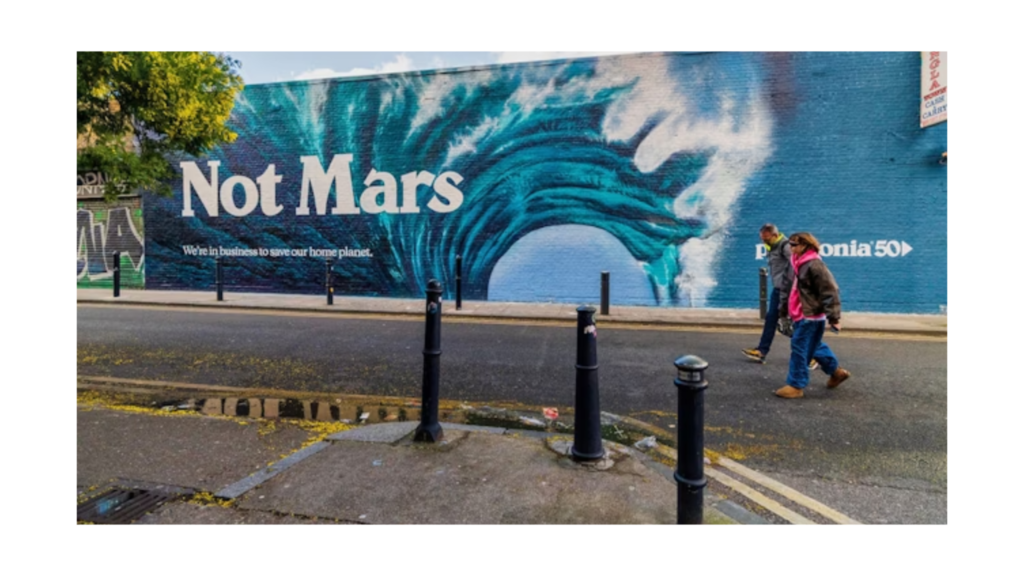
Having a purpose and standing for something more than just sales give brands substance, meaning, and cultural relevance.
“A mission statement defines the organization’s business objectives and how it will reach them. A vision statement details where the organization aspires to go. Why does a company exist? What does it hope to accomplish in the next several years?” (Atlassian)
Google’s vision statement is “to provide access to the world’s information in one click.”
Its mission: “to organize the world’s information and make it universally accessible and useful.”
A vision should be aspirational and leave room for the imagination.
In Google’s case, their vision makes sense as a guiding light when thinking about their products—translations, maps, search engines, browsers, etc. Everything they build revolves around their vision—providing access to the world’s information as easily as possible.
Toyota, a Japanese brand famous for high-quality motor vehicles, has the following vision: “Toyota will lead the future mobility society, enriching lives around the world with the safest and most responsible ways of moving people.”
Toyota’s vision often confuses people, but I bet many of you don’t know they make wheelchairs and technology to help people with movement disabilities. But now, knowing this, it suddenly makes complete sense that they are one of the biggest sponsors in the Paralympics.
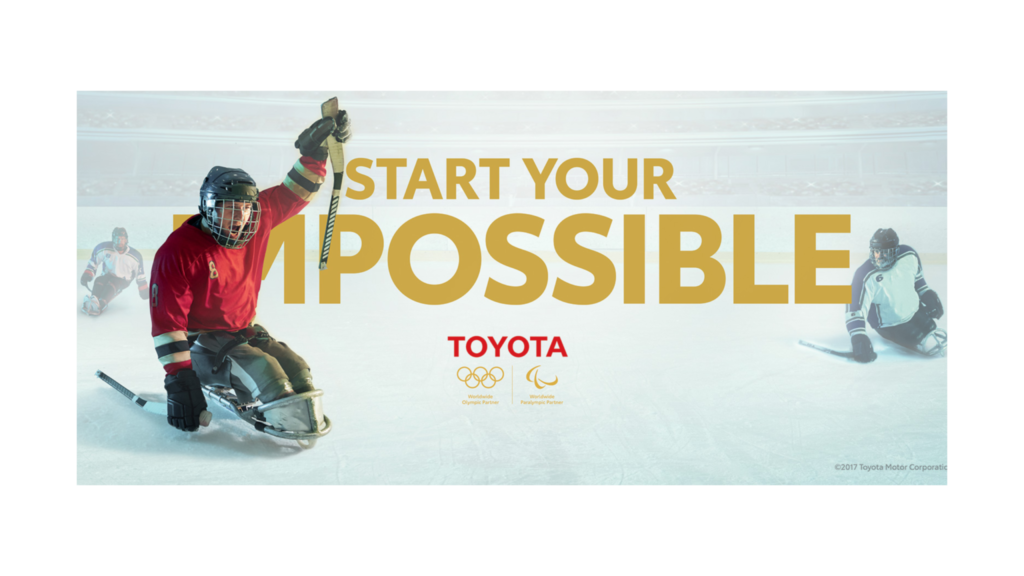
Having a strong vision and a higher purpose sets winning brands apart from mediocre ones. In the long run, this is what matters, not product benefits. As the age-old saying goes – “The wise man builds his house on a rock, not on sand.” When it comes to building a brand, your vision and purpose are the rock you build your house on. You need a strong foundation to build something lasting. This is how companies build brands that stay relevant for generations. It takes time, but it creates the foundation for becoming famous.
Values and Culture
Building on the vision and purpose, leading brands have a set of core brand values that humanize them. Values clearly state what a brand stands for, how the company operates, and guide what it puts out into the world.
Most people are familiar with these as we encounter them on job listings, career pages, and conversations with recruiters. They are often sold to you coated in more sugar than the sweetest donuts from Dunkin’. But they serve a great purpose. And no, I’m not referring to “a ping pong table in the office”; I’m referring to the likes of these:
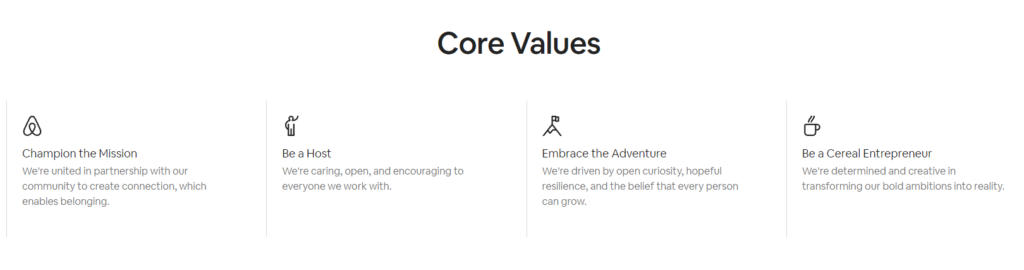
When constructed well, values guide both the internal culture and the customer experience. They dictate how employees should act at work as well as how they should treat customers. They also set the standard for the quality of their products and services.
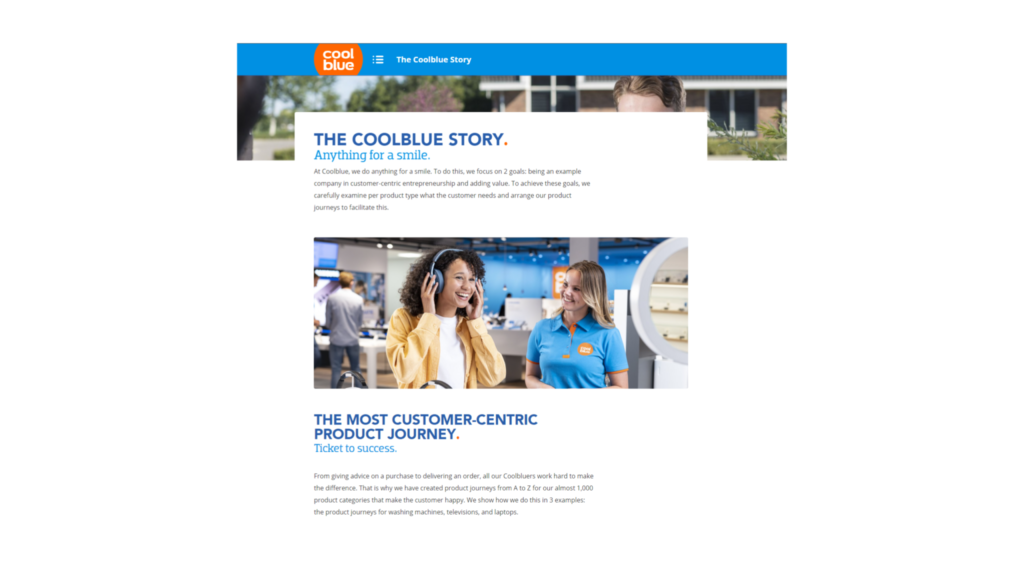
One of my favorite examples is Cool Blue, a big Dutch e-commerce brand whose culture is based on its exceptional customer experience. Their slogan, “Anything for a Smile,” is more than just some marketing dust a creative copywriter sprinkled. You can feel this in every part of the journey, every interaction, and every touchpoint—especially when something goes wrong.
The customer service is almost too good. When you want to return something or tell them something is broken, they don’t ask questions; they just sort it out and make sure you leave happy—and in actual awe.