


I’ve tried just about every major AI image generator out there: DALL E, Stable Diffusion, Midjourney, Imagen, Runway, and even the latest GPT-4o. Which ones do I keep coming back to? Midjourney and DALL E. They’ve consistently led the pack in terms of quality, style, and creativity.
Both have undergone significant transformations. Midjourney now offers the sophisticated v6.1, the recently released v7, while DALL E is powering ahead with DALL E 3, fully integrated into ChatGPT.
With all this progress, I decided it was time for a proper Midjourney vs. DALL E showdown. I wanted to see which one actually delivers better results in 2025 and which deserves the crown as the best AI image generator at the moment.
So I ran over 10 prompts, from cinematic landscapes to weird mashups of a cat riding a unicorn through a neon-lit Tokyo street, to find out which one is really the best AI image generator.
TL;DR: Midjourney delivers stunning, artistic visuals perfect for storytelling and emotional impact, while DALL E 3 is more accurate with prompts, easier to access, and better for quick, clean, and literal image generation. Use Midjourney when you want mood and creativity. Use DALL E 3 when you want speed and precision.
Let’s get into the results, prompt by prompt, image by image.
Midjourney vs. DALL E 3 at a glance
Here’s a quick feature comparison of both AI models.
|
Feature |
Midjourney |
DALL E 3 |
|
G2 rating |
4.4/5 |
3.9/5 |
|
Access |
Discord and web interface |
Available for free in ChatGPT, Bing Image Creator (bing.com/create) for free, and via OpenAI API and Perplexity Pro. |
|
Latest AI model behind the tool |
Version 6.1 (default) and version 7 (recently released) |
DALL-E 3 |
|
Output quality |
Highly detailed, artistic feel |
Clean, versatile, and prompt-accurate. |
|
Editing and control options |
Extensive editing and control options |
Limited control via the selector tool after image generation, along with a prompt |
|
File rights |
Image ownership is allowed and can be used commercially. Also, all images are published to the public by default unless you use the Pro or Mega paid plan. |
Commercial use and image ownership are allowed, but OpenAI may retain some reuse rights for training unless you opt out or use a Teams or Enterprise plan. |
|
Free plan |
Not available |
Yes |
|
Pricing |
Basic: $10/month
|
ChatGPT Plus: $20/month API pricing starts at $0.04 per image for DALL E 3. |
Note: Both OpenAI and Midjourney frequently roll out new updates to these AI models. The details below reflect the most current capabilities as of April 2025 but may change over time.
Midjourney vs. DALL E 3: What’s different and what’s not?
After spending considerable time with both Midjourney and DALL E 3, I’ve observed distinct differences in their capabilities and user experiences. Yet, they also share some notable similarities.
Midjourney and DALL E 3: The differences
While both tools are capable, using Midjourney and DALL E 3 feels like two very different creative experiences. From how you start a project to how much control you have over the results, the differences start to show quickly.
- Access and interface: DALL E 3 is baked right into ChatGPT, so I can access it easily on the web or mobile. It feels smooth and familiar if you’re already using ChatGPT. I can also access it via Bing Image Creator or Perplexity Pro. Midjourney started off Discord-only, but now it has a web interface too, which makes browsing and organizing generations way easier.
- AI models: Midjourney runs on its own proprietary model. It’s not built on GPT or any open-source base, which might explain why it has such a distinct “artistic look.” Currently, it has version 6.1 as the default model and offers access to its latest v7 model. DALL E 3, on the other hand, is developed by OpenAI and closely integrated within their ecosystem. Currently, OpenAI has GPT-4, which has better image generation capabilities.
- Prompt interpretation: Midjourney likes to get creative. It often adds its own artistic spin, even when I give it a pretty basic prompt. DALL E 3 is much more literal. It tends to follow the prompt, which can be great if you need control or specific details.
- Image style: Midjourney’s style is bold, detailed, and often dreamy or cinematic. It’s perfect when I want something visually stunning or unique. DALL E 3, on the other hand, feels cleaner and more grounded, great for visuals that need to match a certain aesthetic.
- Editing tools: I’ve found Midjourney more flexible when it comes to editing. You can zoom, pan, tweak specific regions (using Vary Region), remix images, add style or character reference, set weights, have multiple prompts, and do more. DALL E 3 does have inpainting inside ChatGPT, but it’s a little more limited and less interactive.
- Pricing and plans: Midjourney operates on a tiered subscription model, starting at $10/month with varying generation allowances. DALL E 3 is included with ChatGPT for free. It can also be accessed through Microsoft’s Bing platform and Perplexity Pro plan.
- Privacy and image visibility: Here’s a big one. Midjourney is public by default. Every image you make (even in a private message) shows up in their community gallery unless you’re on a Pro or Mega plan with Stealth Mode. DALL E 3 keeps your generations private automatically inside ChatGPT, so unless you share them yourself, no one else sees them.
- Community: Midjourney has a super active community, mostly on Discord. It’s a constant flow of prompts, tips, and image sharing. DALL E 3 doesn’t really have the same centralized vibe. It’s part of the wider ChatGPT user base, so the image-gen side of things feels less community-driven.
Midjourney and ChatGPT: The similarities
There are a few things they both do really well, and honestly, these shared strengths are what make them two of the best tools out there:
- High-quality outputs: No matter which one I use, I usually end up with impressive results. Both tools can generate stunning visuals across styles, like realistic portraits, dreamy landscapes, and surreal mashups. It all comes down to how I craft the prompt.
- Inpainting support: Both platforms let me edit specific parts of an image without starting over. Midjourney’s “Vary (Region)” and DALL E 3’s inpainting via ChatGPT work a bit differently.
- Commercial use: I can use the images commercially on both platforms. Whether I’m working on client content or experimenting, it’s nice to know I actually own the outputs. That said, while commercial use is allowed, there’s still no clear legal stance on copyright ownership of AI-generated content, so it’s something to keep in mind, especially for high-stakes projects.
- Fast generation: Speed-wise, they’re both solid. I get image results in seconds, which makes it super easy to experiment, iterate, and keep the creative momentum going.
- Prompt responsiveness: While they interpret prompts in their own way with Midjourney being more stylized, DALL E 3 being more literal. Both reward thoughtful, detailed prompting. The better I write the input, the better the output turns out on either side.
Now that you’ve seen how these two tools compare in terms of features and user experience, let’s get into how I actually tested them side by side to put them through their paces.
How I compared Midjourney and DALL E 3: My prompts and evaluation criteria
To get a fair sense of how Midjourney and DALL E 3 perform, I ran the same 10 prompts through both tools. My goal wasn’t just to see which one could create a “pretty” image, but to test their strengths across different use cases: realism, creativity, detail, branding potential, and how well they followed my instructions. I also avoided using any custom settings, style presets, or model tuning.
I used a paid Midjourney plan and Bing Image Creator powered by DALL E 3. Both tools generate four images per prompt, so I evaluated the entire batch, not just the best one, to get a true sense of consistency and output quality. Here’s what I looked at when comparing results:
- Prompt Accuracy: Did the image match what I actually asked for?
- Visual Quality: How polished, detailed, or clean did the image look?
Creativity: Did the tool add something imaginative or unexpected (in a good way)? - Realism vs. stylization: Could it be done in a more photorealistic way if needed? Could it switch to more artistic styles?
- Usefulness: Would I actually use the image in real-world content (e.g., a blog, brand visual, thumbnail, or mockup)?
To add other user perspectives, I also cross-checked my findings with G2 reviews to see how other users experience these models.
Disclaimer: AI responses may vary based on phrasing, session history, and system updates for the same prompts. These results reflect the models’ capabilities at the time of testing.
Midjourney vs. DALL E 3: How they actually performed in my tests
For each prompt, here’s how I’ll break it down:
- What stood out? Noticing the highlights, quirks, and occasional AI weirdness in the results.
- Who did it better? A winner based on accuracy, creativity, visual quality, and real-world usability.
- Final verdict: My honest call on which tool handled the task better and why.
1. Photorealism
For this test, I wanted to test how well each tool could handle detail, lighting, realism, facial generation, fine texture rendering.
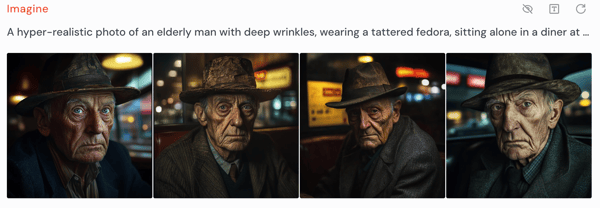
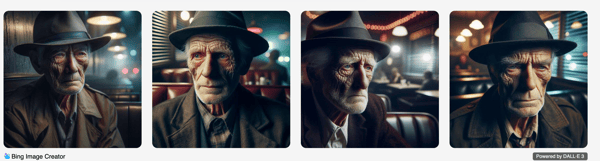
Midjourney vs DALL E in photorealistic image test
DALL-E 3 did a decent job of capturing the setting. The booths, the lighting, and the lonely diner atmosphere were all there. The overall composition looked good across all four images, and I understood the “moody” part. But the faces felt slightly off to me; some were too smooth, others slightly uncanny. It all had a subtle “AI-generated” look that pulled me out of the realism just a bit.
Midjourney absolutely nailed the vibe. The lighting felt cinematic, the shadows were rich and realistic, and the skin texture? Stunning. I could see the lines, pores, and subtle color gradients in a way that almost looked like a photograph. The eyes especially stood out—reflective, tired, but sharp. Each image had slightly different tones and focus areas, but all captured that gritty, contemplative feel I was aiming for.

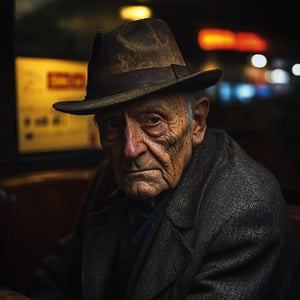
Photorealistic portrait in DALL E vs Midjourney
Between the two, Midjourney clearly came out on top for me. It was definitely photorealistic. DALL E 3 gave me decent results, but Midjourney gave me the image I was imagining.
Winner: Midjourney
2. Whimsical image
This one was pure fun — a surreal, colorful scene meant to test how well each tool handles fantasy, composition, and prompt accuracy.
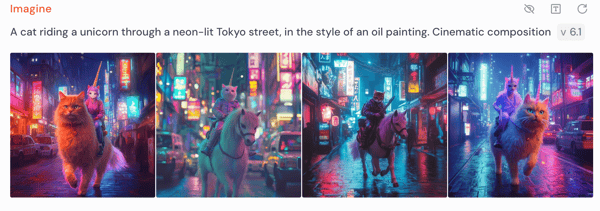
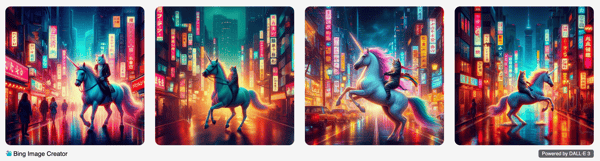
Midjourney vs DALL E pictures for the whimsical prompt for a cat riding a unicorn
DALL E 3 crushed it. All four images had exactly what I asked for: a cat riding a unicorn, in the middle of a neon-soaked Tokyo street, with glowing signage, rich reflections, and a vibrant style. The lighting was dramatic, the poses dynamic, and the balance between cute and epic was spot-on. It even added some playful motion, which made the images feel good without straying from the prompt.
Midjourney’s outputs were visually polished, with strong lighting and rich colors that gave the images a moody, cinematic feel. But when it came to prompt fidelity, it missed the mark. In two of the images, the unicorn turned into a unicorn-cat hybrid, and in the other two, the unicorn morphed into a regular horse with no horn in sight. The cat was also inconsistent, sometimes oversized or oddly blended with the rider.

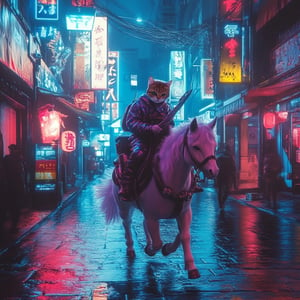
Whimsical image of a cat riding a unicorn by DALL E and Midjourney
So while the style looked impressive at first glance, it didn’t actually deliver what I asked for.
Winner: DALL E 3
3. Product mockup
This test was all about clean design, balance, and usability. It was to create a minimalist product mockup, something you might actually use in a marketing campaign or Instagram ad.
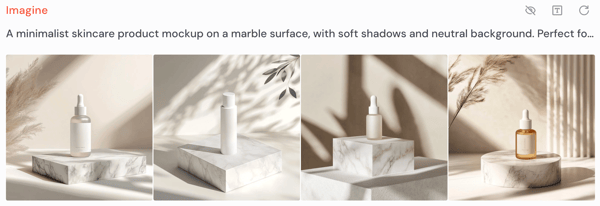
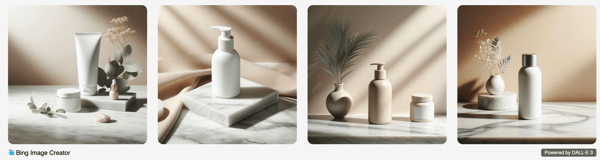 Midjourney vs DALL E pictures for the product mockup
Both DALL E 3 and Midjourney impressed me here. The compositions were clean, well-lit, and totally on-brand for the type of aesthetic skincare brands love.
DALL E 3 leaned a bit more into lifestyle. Its images included soft draping fabrics, vases, and foliage that made the whole setup feel styled, like something pulled from a brand shoot. The lighting was natural and soft, and the product forms were believable and realistic. I could easily imagine dropping a real label onto them.
Midjourney, meanwhile, delivered beautiful lighting and sharper textures. It felt a little more polished overall, like high-end product photography with editorial flair.
Some of its compositions had more dramatic shadows and tighter framing, which made them look ready to plug into a design layout or mockup. The product forms were crisp and elegant, though a couple were maybe a bit too stylized for a real-world label.

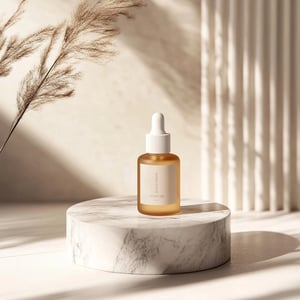
Product mockup pictures by DALL E and Midjourney
Honestly, both tools nailed this one. If I had to split hairs, I’d say DALL-E 3 offered a more realistic mockup potential, while Midjourney gave me higher-end visuals with more personality.
Winner: Split
AI avatars are reshaping digital identity and content creation. Read more about AI avatars on G2.
4. Complex image generation
This was a loaded prompt. I had five distinct elements that needed to work together in a single image: a steampunk airship, three dragons, a futuristic desert city, sunset lighting, and people watching from rooftops. I wanted to see how each model handled complex scene composition and multi-part instructions.
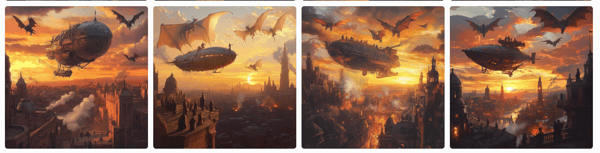
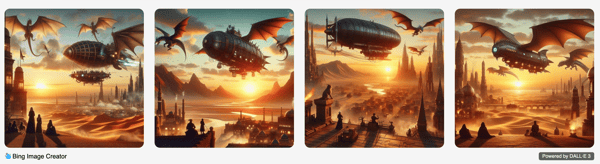 Midjourney vs DALL E pictures for a complex prompt
At first glance, DALL E 3 outputs looked like it did really well. Each image included a cityscape, dragons in the sky, and a flying airship with a sunset backdrop. But on closer inspection, I noticed something odd — some of the airships had dragon wings, which kind of blurred the lines between the dragons and the vehicle. That creative interpretation cost it a bit in terms of prompt fidelity. Still, the composition and color grading were beautiful.
Midjourney’s images, meanwhile, were cinematic and rich with detail. The lighting was dramatic, the environments felt alive, and the steampunk vibes were unmistakable. But not every image checked all the boxes. In some, I saw more than three dragons, or couldn’t clearly spot rooftop spectators.
The airships looked amazing, but the instruction-following just wasn’t as tight. It leaned heavily into visual storytelling but took a few liberties with the specifics in most of the images. But I would say Midjourney had at least one visual that adhered to the prompt.
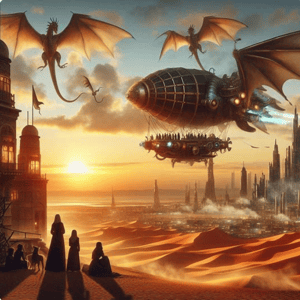
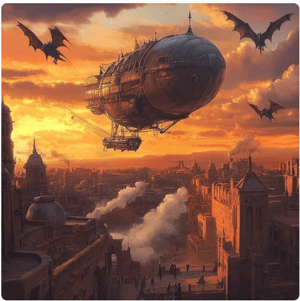
DALL E and Midjourney pictures for a complex prompt
So while neither tool consistently got everything right across all four images, if I had to choose one image that best captured the full prompt, I’d give the edge to Midjourney for that standout frame. It felt the most complete.
Winner: Midjourney
5. Abstract image
Mondrian’s work is all about geometric abstraction — think straight black lines, grids, and primary-colored rectangles on a white background. So when I asked for “an abstract painting of loneliness using cool-toned brushstrokes, in the style of Piet Mondrian,” I was expecting at least some interpretation of that structure.
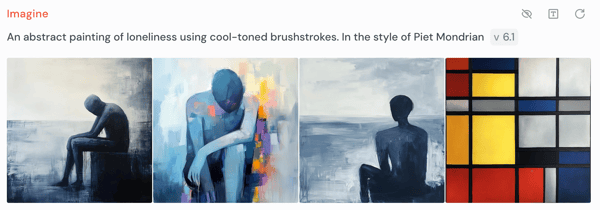
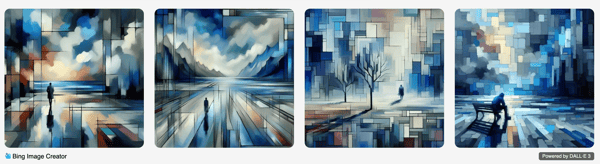
Midjourney vs DALL E pictures for abstract image prompt
Midjourney? It definitely got the emotion right. The figures felt isolated, the scenes were moody and paint