



As brands strive to build product visibility in a tough market, it’s still hard to think through their influencer marketing strategy.For someone who consistently keeps her pulse on innovative marketing trends, I see the zeal of brands that hire influencers, but with all the wrong means.
Running campaigns with influencer marketing software without guidance leads to underperforming outcomes. Marketers cannot collate data across content attribution platforms, fail to vet influencers, and tinker with obsolete campaign metrics that don’t show real-time results.
Untriggered and unsegmented influencer marketing approaches can negatively impact the brand in the market. That’s why I turned to G2 and delved into the 8 best influencer marketing platforms that segment influencers, verify authenticity, and attribute ROI in real time.
If you are planning to pitch your next influencer marketing campaign, you must measure the cost, budget, and ROI via an influencer marketing platform to ensure your campaign reaches the right audience.
That’s exactly what I’ve tried to cover in this listicle.
8 Best Influencer Marketing Software in 2025: my top picks
- Later Influence for influencer recruitment, influencer segmentation and campaign analytics. ($16.67/mo)
- Afluencer for e-commerce integration, influencer scoring and audience analysis. ($49/mo)
- Captiv8 for affiliate networks, data imports and exports, and social commerce. (Available on request)
- Meltwater for keyword targeting, custom feeds and alerts, and influencer identification. (Available on request)
- inBeat for campaign analytics, influencer whitelisting and influencer compensation. (Available on request)
- CreatorIQ for user-generated content (UGC) management, approvals, and scoring. (Available on request)
- GRIN for influencer collaboration, reporting, and dashboards, and influencer recruitment. (Available on request)
- Sprout Social Influencer Marketing for contact and campaign management, monitoring, and team collaboration. ($199/mo)
These influencer marketing software are top-rated in their category, according to G2 Grid Reports. I’ve also added their monthly pricing wherever available.
8 best influencer marketing platforms, according to me
Navigating the ups and downs of influencer strategy is crucial before investing your dollars in an influencer marketing platform. Running background authentication checks on influencers, establishing direct key performance indicators (KPIs), and ensuring you convey proper messaging are foundational in shortlisting an influencer marketing platform.
My experience as a content and prior brand marketer helped me cut through the noise of various influencer marketing platforms. My research led to shortlisting tools that targeted the right influencers, optimized campaign management, automated content approvals, and converted influencer promotions into real-time actionable metrics.
In this process, I utilized internal G2 data to segment these chosen products based on factors like ease of use, ease of admin, market relevance, customer satisfaction, and ease of implementation. I centered my research on tools that offered ROI models, advertising structures, campaign attribution, and influencer personas for brands to use ethical means to promote their products.
How did I select and shortlist the eight best influencer marketing tools in 2025?
I spent weeks evaluating and analyzing influencer marketing platforms and identified common trends observed on key features, pros, cons, and pricing. My research combines personal experience signing up for the tool and G2 analysis that segments them on a proprietary score and authenticity of real-time user reviews.
I also utilized AI in this process to identify the patterns in user sentiments, feature differentiators, and drawbacks or limitations discussed for every platform. After carefully evaluating the market acceptance and buyer behaviour for these tools, I combined this list to present a complete picture for software buyers.
In cases where I couldn’t personally test the tool due to limited access, I consulted a professional with hands-on experience and validated their insights using G2 reviews. The screenshots featured in this article may mix those captured during evaluation and those obtained from the vendor’s G2 page.
What makes an influencer marketing platform worth it: my opinion
Businesses don’t have to dive soullessly into influencer marketing. What I learnt in this process is that handling influencer contracts, contacting an authentic and verified individual, and ensuring the strategy is compliant with advertisement rules and guidelines are equally contributing to the success of the overall influencer strategy.
According to me, businesses should be wary of these factors while shortlisting an influencer marketing platform:
- Robust influencer discovery engine: I shortlisted the influencer marketing tools that help identify suitable influencers that align with your particular industry or niche. These tools have advanced filtering, browsing, and searching options to shortlist relevant influencer profiles based on the nature of content and expertise. It offers filtering options by follower count, audience demographics, engagement quality, and even brand affinity. This level of granularity is crucial to find influencers who genuinely resonate with your ideal customer.
- End-to-end campaign workflow management: These tools also provide features to track, optimize, and tweak influencer campaigns to monitor real-time return on investment. They offer a response metrics dashboard to manage digital or offline influencer advertisements. They stood out because they had seamless tools for planning, collaborating, briefing, approving content assets, and overseeing delivery and payments all in one platform. This removes dependency on scattered spreadsheets and back-and-forth emails.
- Authentic performance tracking (beyond vanity metrics): These platforms also track influencer campaigns’ success rate and reach across social media platforms. I prioritized platforms that track tangible ROI metrics like sales conversions, referral code usage, traffic sources, and attributable revenue, not just likes and comments. Marketers need real proof to impact and justify influencer budgets, and these metrics allow them to interpret the response of influencer-backed content promotions.
- Audience authenticity and fraud detection: This is a non-negotiable functionality that differentiates authentic from fake influencers. I looked for platforms that can flag fake followers, suspicious spikes in engagement, or bot activity. Tools with these features ensure that you don’t encounter any fraud or disingenuous influencer that can be disastrous for brand reputation.
- Integrated content rights management: These tools also ensure that influencer contracts or agreements protect the originality of content. Buyers sometimes overlook this, but platforms with built-in tools to secure and reuse influencer-generated content (and track usage rights by campaign) stood out to me. This is a game changer for repurposing content across paid, owned, and earned channels.
- API and CRM integration: I also evaluated the API, CRM, analytics, and e-commerce tool connectivity for smooth data transfer and format compatibility. These tools can integrate with any existing tech stack to transfer campaign metrics and take the next possible action. This ensures influencer data can plug directly into broader marketing campaigns and attribution models, which is essential for scaling.
All in all, these features can prove a boon if you want to contact the right influencer, monitor advertisements, and ensure your content follows all ethical and security guidelines so it can’t be maliciously used.
Out of the several tools I initially started with, these top 8 tools stood out in all these parameters and gave the headroom to brands to invest in the right and authentic influencers.
The list below contains genuine reviews from the influencer marketing platform category page. To be included in this list, a software must:
- Provide tools that enable users to search for social influencers within an influencer network across social networks.
- Allow users to filter through and segment influencers according to various factors.
- Offer campaign management and communication tools for users to communicate and manage influencers.
- Provide a dashboard through which users can visualize and evaluate influencer campaign performance.
- Facilitate the importing and exporting of influencer data, including contact information.
*This data was pulled from G2 in 2025. Some reviews may have been edited for clarity.
1. Later Influence
Later Influence is an inclusive platform that helps you shortlist niche influencers, optimize your campaign management workflows, and offer seamless integration with broader content attribution and social media platforms.
What pulled me in from the start was how seamless the platform feels. From finding influencers to managing campaigns, everything flows.
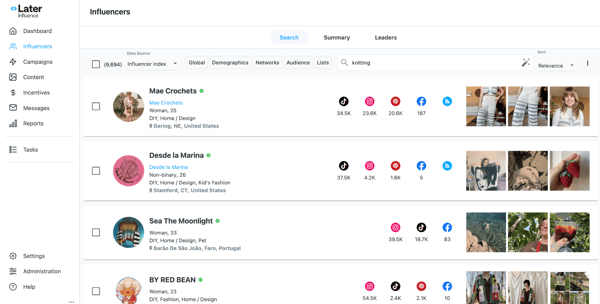
The UI is intuitive, and navigating through influencer profiles or campaign dashboards is seamless. I especially appreciate how Later Influence categorizes creators and influencers. The filtering and search capabilities make it easy to shortlist niche influencers based on engagement rates, follower count, or content types.
One of my favorite parts is the influencer discovery tool. It feels like you have access to an entire ecosystem of vetted, quality influencers, and what’s better is how Later Influence automates outreach.
It sends out personalized collaboration invitations via email, and most of the time, influencers actually respond, which says a lot about the platform’s credibility on both ends.
Another win for me is that later Influence integrates content rights and legal documentation right from the campaign workflows.
Everything from application to content approval and payments happens inside the tool, so you don’t have to manage ten different platforms.
If you are on one of their premium tiers, you get deeper insights into influencer metrics. I’m talking detailed performance data like click-through rates, conversion metrics, and social reach per post. These analytics are presented in a pretty clean dashboard, which I geek out over because I can track ROI without spreadsheets.
Higher-tier plans also offer better support access, custom onboarding, and multi-user collaboration features, which are critical for agencies and larger teams.
However, the platform has some challenges. Sometimes, it feels a bit sluggish, especially when multiple team members are logged in. While it’s mostly user-friendly, there is a noticeable learning curve at the start, especially when transitioning from manual influencer marketing or another tool.
A few users also mentioned issues getting through the initial setup without needing to reach out to support. I’ve also noticed that the influencer database, while expansive, could use more frequent updates. There were a couple of instances where influencers had outdated stats or were no longer active.
I noticed that there were some complaints regarding the login issues. Once in a while, the site takes forever to load, which can throw off your workflow if you are trying to meet a campaign deadline. But customer support is usually pretty responsive, and the product team also genuinely seems to care about rolling out updates.
All in all, Later Influence is an agile influencer marketing tool that optimizes email communication with influencers, handles content projects and workflows, and establishes proper guidelines for regulatory compliance to prevent content bottlenecks.
What I like about Later Influence:
- I love how Later Influencer organizes everything, making it easy to manage collaborations, track deadlines, and communicate with brands.
- I also appreciate their customer service team, which has been friendly and open to feedback whenever there have been issues with the platform.
What do G2 Users like about Later Influence:
“I love the whole experience from start to finish and how involved the Later team is. From start to finish, they make the process seamless and ensure the influencers get what they need, in addition to us getting what we need! Later Influencer’s platform is so helpful in tracking who we do and don’t want to work with.”
– Later Influence Review, Nicole M.
What I dislike about Later Influence:
- Although the overall experience was smooth, sometimes the interface is clunky. Working with larger companies or influencers will often cause the site to crash or not load all candidates. G2 reviews mention this as well.
- Another downside that users noticed is the dashboard, which I found very busy and confusing, with options and information that users didn’t use.
What do G2 users dislike about Later Influence:
“While Later Influence offers a vast pool of influencers, it’s important to note that there can be some low-quality options within the platform. Additionally, shipping can sometimes be complicated, especially when dealing with international influencers or products with specific shipping requirements.”
– Later Influence Review, Pieper J.
2. Afluencer
Afluencer helps organizations target influencers within their domain of expertise. It provides actionable and real-time campaign metrics, and external payment support in a consolidated platform to strike the right deals and grow your base.
What initially pulled me in was how ridiculously easy it was to get started. The UI is clean, intuitive, and you don’t need a manual to figure things out. Everything from browsing collabs to applying for them is streamlined, a lifesaver when juggling multiple platforms and partnerships.
I like that Afluencer bridges the gap between influencers and brands with a kind of matchmaking precision that doesn’t feel robotic. They’ve nailed the discovery process.
You can find influencer collabs that match your niche, follower count, and vibe. As a creator, I loved the ability to apply directly to collabs and even get invites from brands actively looking for someone like me. This proactive approach is a huge win.
One thing that stands out is how responsive and human their support is. I’ve had questions pop up mid-campaign, and I got quick, helpful answers every single time. It feels less like dealing with a software provider and more like being part of a well-run creator community.
I also noticed that Afluencer isn’t bloated with features. It’s lean but innovative. You get job listings tailored to your profile, and if you’re on a premium plan, you get access to more exclusive collabs and higher-tier brands.
Some users mentioned the lack of advanced targeting options, which I agree with. If you’re a brand trying to filter to hyper-specific audiences, the filters might feel a bit surface-level. But for creators? It gets the job done without overwhelming you.
I also love that Afluencer offers a subscription model, where premium users get more visibility and perks. That includes better job prioritization, increased profile reach, and early access to brand campaigns. The tiers aren’t overly expensive and help your brand value if you are serious about building partnerships.
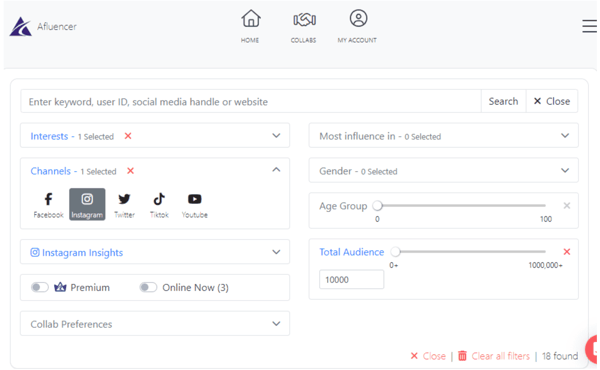
That said, there is room to grow. Sometimes, you can’t batch apply to multiple jobs, which feels unnecessarily manual. Also, there were moments when I felt like product inventory is limited, especially if you’re in a niche that is not fashion or beauty.
Not all brands are upfront and transparent about their ideal influencer specifications, which can make the application process feel like shooting in the dark.
That said, Afluencer helps you find the right authentic creator, analyzes and optimizes content creation workflows, and tracks your ROI in real time from campaigns across various attribution channels to fit into a larger marketing attribution model.
What I like about Afluencer:
- Afluencer helps you work with your favorite brands and endorse products, boosting your career as a UGI creator.
- Another thing about this platform is that you already know if you are a match, and all the information is right there.
What do G2 Users like about Afluencer:
“Afluencer has helped me discover content and products I never knew I was interested in. It opened up my options, helped me look outside the box, push myself to try different products, and discover more about myself. It has been a game changer in the biggest way; honestly, it’s changed my life. I have always had this huge passion and love for makeup and all things beauty related but i didnt know that i could make a career trying and using products that i love. This is where anyone who needs that motivation, that guidance, and the tools they need to grow in achieving their dream as an influencer.”
What I dislike about Afluencer:
- Some reviews highlighted that even though influencers can collaborate with top companies on this platform, some might find it challenging to register using a corporate email. Due to the availability of brands in tier-1 countries, partnerships will be scarce in tier-2 and tier-3 countries.
- I also noticed that Afluencer’s user interface is pretty basic; however, it may need some enhancement. As highlighted in G2 reviews, there might be some issues with collaboration filters, too.
What do G2 users dislike about Afluencer:
“I don’t like that I haven’t gotten any brand deals. I have created my profile. When I apply for a particular brand, it’s either that I don’t qualify, or I am declined, or ignored, and I do want to work with brands and showcase what I can do to them. They should change how they do things. They should accept new people to work with, and they shouldn’t choose based on their huge following but on what they can bring. Everyone is talented out there.
– Affluencer Review, Nobuhle N.
In 2025, get your guide to brand marketing and measure the impact of your organic and paid marketing campaigns effectively.
3. Captiv8
Captive8 is an AI-powered branded content platform that helps brands connect with authentic influencers with genuine follower counts, ideate and brief content proposals, and align with data governance and digital rights management.
When I first started with Captiv8, I sought a streamlined way to find influencers and manage a campaign or two. But the platform went way beyond that. The influencer discovery engine lets you drill down into the nitty-gritty, like audience engagement rates (ER), specific follower demographics, and content categories.
I’ve found everything from beauty creators in LA to fitness influencers in Mumbai, and it’s wild how precise the filtering is. You can sort by audience psychographics, brand affinity, and even fake follower detection, which is crucial today.
The best part is that it feels like a community. If you need support, you’d get it. I found actual campaign strategists and account managers who hopped on calls, offered creative input, and helped me troubleshoot in real time.
One of the users stated that they were juggling five influencer activations in different regions, and the Captiv8 team helped them track, pay, and optimize in one dashboard. They even appreciated the onboarding process, which was deep and hands-on and made the transition so easy.
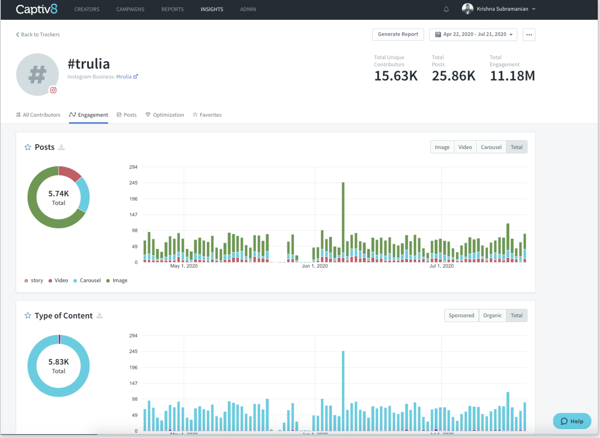
Another feature I loved was campaign reporting. Their automated reporting dashboard tracks everything from impressions and engagement to cost-per-click (CPC) and conversions.
You can slice the data by individual content pieces or compare influencers side-by-side. I loved how creators and clients could log in separately to approve content and talent lists. The platform even manages payments globally right after the campaign is wrapped. This eliminates the constant follow-ups for payments.
However, there are some drawbacks to counting. The influencer recommendation tool sometimes missed the mark as users got odd suggestions, like a Twitch gamer for a luxury fashion brand.
And while the interface is solid, it could use a bit of a facelift. Some parts felt like they were built five years ago and haven’t changed much. Also, I wish more fraud detection were built, like a red flag system that spots suspicious influencer trends or activities.
I also want to talk about the content approval process. While it’s great that it exists, it can get clunky. I’ve had bulky email chains with multiple links floating around, which slows things down when dealing with enterprise-level campaign reviews. Plus, it’d be awesome if creators didn’t have to link their socials to share insights. Sometimes they’re hesitant, and it delays everything.
I’ve used both standard and premium plans in terms of pricing and tiers. The base tier gives you access to discovery, basic campaign tools, and standard analytics. But the premium or enterprise-level unlocks way more, like affiliate marketing integration, in-depth reporting, creative support, and white-glove service.
If you wish to scale, you would need a premium upgrade. They also recently rolled out updates to support affiliate workflows and multi-campaign analytics, which is crucial for brands running seasonal campaigns or A/B tests across regions.
So, I feel Captiv8 leverages AI to build high-quality external collaborations, prevent risky or malicious influencer activity, and help with influencer campaign tracking all in one platform.
What I like about Captiv8:
- Captiv8 simplifies influencer campaign management by streamlining discovery, contracting, reporting, and payments on one platform.
- I also discovered that the platform is clean and easy to use, and it is not hard to find talented influencers on Captiv8.
What do G2 Users like about Captiv8:
“Captiv8 is great to work with because they truly understand the client’s needs. They take the time to align with goals and provide thoughtful solutions, making collaboration seamless and effective.”
– Captiv8 Review, Maddy L.
What I dislike about Captive8:
- While Captiv8 allows genuine collaborations, users would like to see more about fraud/bot data, and if that would discount an influencer from being recommended for a potential campaign.
- I also found that some information isn’t readily available for influencers, which is a downside for teams that have 24 hours to compile the list. G2 reviews also discuss this.
What do G2 users dislike about Captiv8:
“There have been a few instances where we have been caught behind the 8 with influencers that had been approved, content approved, only to find out right before launch, an exclusivity clause was missed. Additionally, we received a few vegan influencers for my fish-based CPG client. A closer attention to these minor details would be helpful, especially when onboarding clients with a new influencer process for the first time.”
– Captiv8 Review, Amy D
Contextualize your marketing funnels with real-time customer data and build practical conversion possibilities with the best brand intelligence software in 2025.
4. Meltwater
MeltWater is an all-in-one influencer, PR, and media platform that contributes to social collaborations, influencer partnerships, and outbound marketing activities to improve brand visibility. It helps you shortlist top-ranked media engagement platforms and provides real-time quantitative and qualitative metrics for campaigns.
I noticed that Meltwater’s user interface is surprisingly intuitive, especially considering how complex the backend capabilities are. You might think a tool that pulls in real-time data from social media, online news, print, broadcast, and even podcasts would be clunky, but Meltwater is just the opposite.
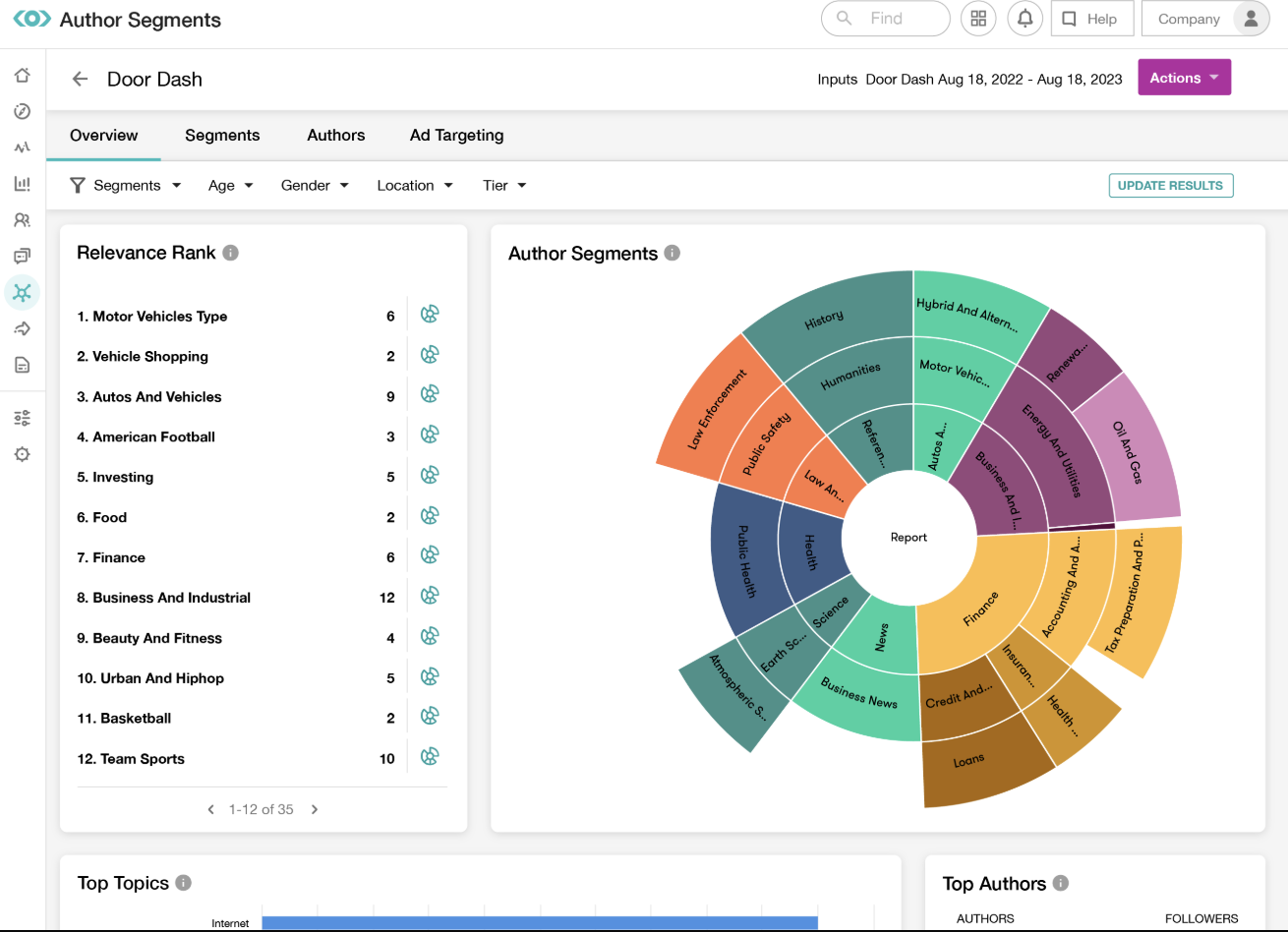
Once you get the hang of it, it offers clean dashboards and smooth navigation. I can create custom dashboards, toggle between engagement metrics and sentiment scores, and even plug in widgets that help me visualize year-over-year shifts in media tone.
The graphs and visualizations are pivotal when I need to present findings to clients or internal stakeholders. They are clean, exportable, and surprisingly flexible, making them useful in my daily workflows.
One feature I appreciated is the AI-powered sentiment analysis. It’s not perfect, but it does a decent job of flagging whether a conversation’s tone is positive, neutral, or negative. It’s beneficial when I need a quick snapshot of how a brand or campaign performs in the wild.
I also like their “Search” tool, which lets me filter down to the nitty-gritty of who’s saying what, and where. From tracking competitor mentions to scouting potential influencer collaborations, Meltwater gives me a detailed view of the media landscape.
Speaking of detailed views, their premium solutions offer them, which aren’t cheap. But they unlock some robust features. For example, you can get access to automated media briefings, API integrations, and advanced Boolean search capabilities.
You can even build newsletters from search results, which saves you a ton of time when putting together weekly updates for your team. This neat “Impact Reports” feature also evaluates media reach and ROI from your campaigns. It’s incredible, accurate, and reliable for PR analytics.
However, I did notice some potential areas for improvement. One is that while the platform boasts a ton of features, it can feel bloated at times.
It can have too many features, not all of which are easy to find or use without proper onboarding. The support team is amazing, attending to issues almost instantly, but you’ll need their help now and then to navigate updates or configure certain widgets.
One more thing that’s been a bit frustrating is the sentiment tool’s accuracy, especially when dealing with nuanced or polarizing topics like climate change. Sometimes, it pegs emotionally charged, but neutral statements as negative, which can skew the final reporting.
Also, the search results can be messy, as it can start pulling in your branded content or internal posts. You might have to spend time fine-tuning filters to keep the data relevant.
While the dashboard is great, it could use a bit more flexibility, like customizing the “previous period” settings when I’m doing comparisons. It feels like a minor thing, but it becomes noticeable when you’re knee-deep in weekly or monthly reports.
Overall, Meltwater is a great assistant for social media managers and brand managers in identifying, shortlisting, and authenticating content creators, providing them with the framework or briefing and optimizing conversion potential.
What I like about Meltwater:
- Meltwater is extremely user-friendly. It is easy to navigate and implement, depending on your personal or client’s needs.
- I also found that in addition to brand monitoring and competition options, it has tools for presenting dynamic reports, which are easy to visualize and value.
What do G2 Users like about Meltwater:
“Meltwater has helped us create daily media round-ups for our company. It’s super simple to create the searches and find daily relevant news based on keywords to keep up to date on the industry and how far our reach in media goes. We also use it to create monthly social media reports and can easily see who our audience is and what content performs best. Our representative at Meltwater is super helpful any time we have questions.”
– Meltwater Review, Kathleen M.
What I dislike about Meltwater:
- Although there aren’t too many downsides, the only thing some users wish they could improve is the API capabilities of some of the social platforms within the Explore features, such as Threads.
- I also noted some users mentioning that, compared to other platforms, Meltwater did not have the same amount of historical data available (1 year of social media data vs. 5, 10, or even 15 years).
What do G2 users dislike about Meltwater:
Unfortunately, most of Meltwater’s features go beyond what we need for our smaller organization. We do not use Meltwater for our social media listening, so those features go unused. As a smaller organization that is not consumer-facing, our media monitoring needs are a bit different, and we have found that Meltwater’s growth, while fantastic, is outpacing us.
– Meltwater Review, Ashley S.
5. inBeat
InBeat is a user-generated content tool that helps