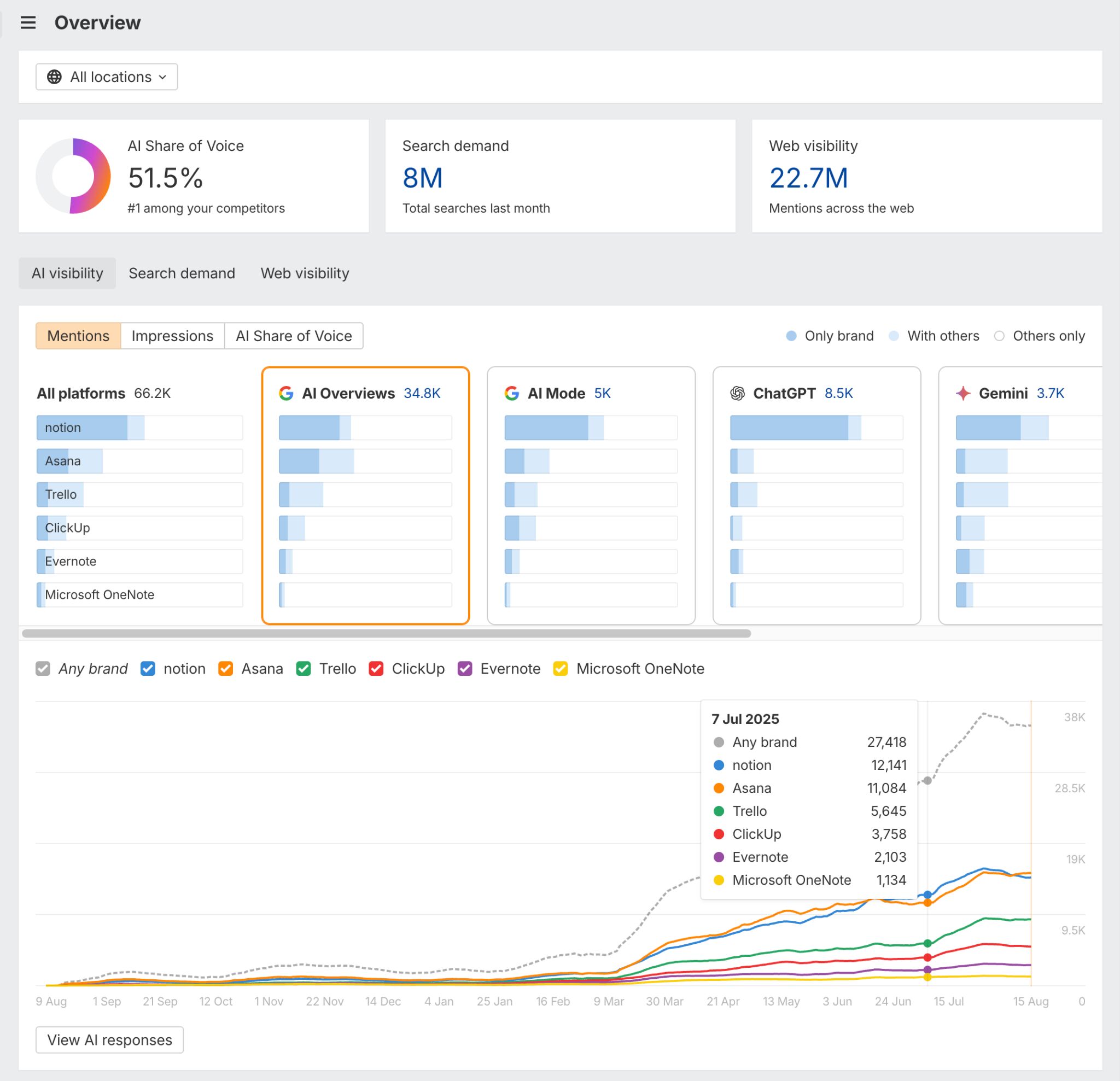

Visibility in AI search is still in its early stages, which means you’re not late to the game—you’re actually early. Most businesses haven’t even started tracking their AI mentions, let alone optimizing for them. This creates a genuine first-mover advantage for those who act now.
This guide will walk you through everything you need to know about building and improving your AI visibility.
AI visibility is how discoverable your brand is and how often your content gets referenced across AI platforms like ChatGPT, Claude, Google AI Overviews, Google AI Mode, and Perplexity.
For example, here I’m using Ahrefs’ Brand Radar to analyze Tesla’s AI visibility and benchmark it against competitors.
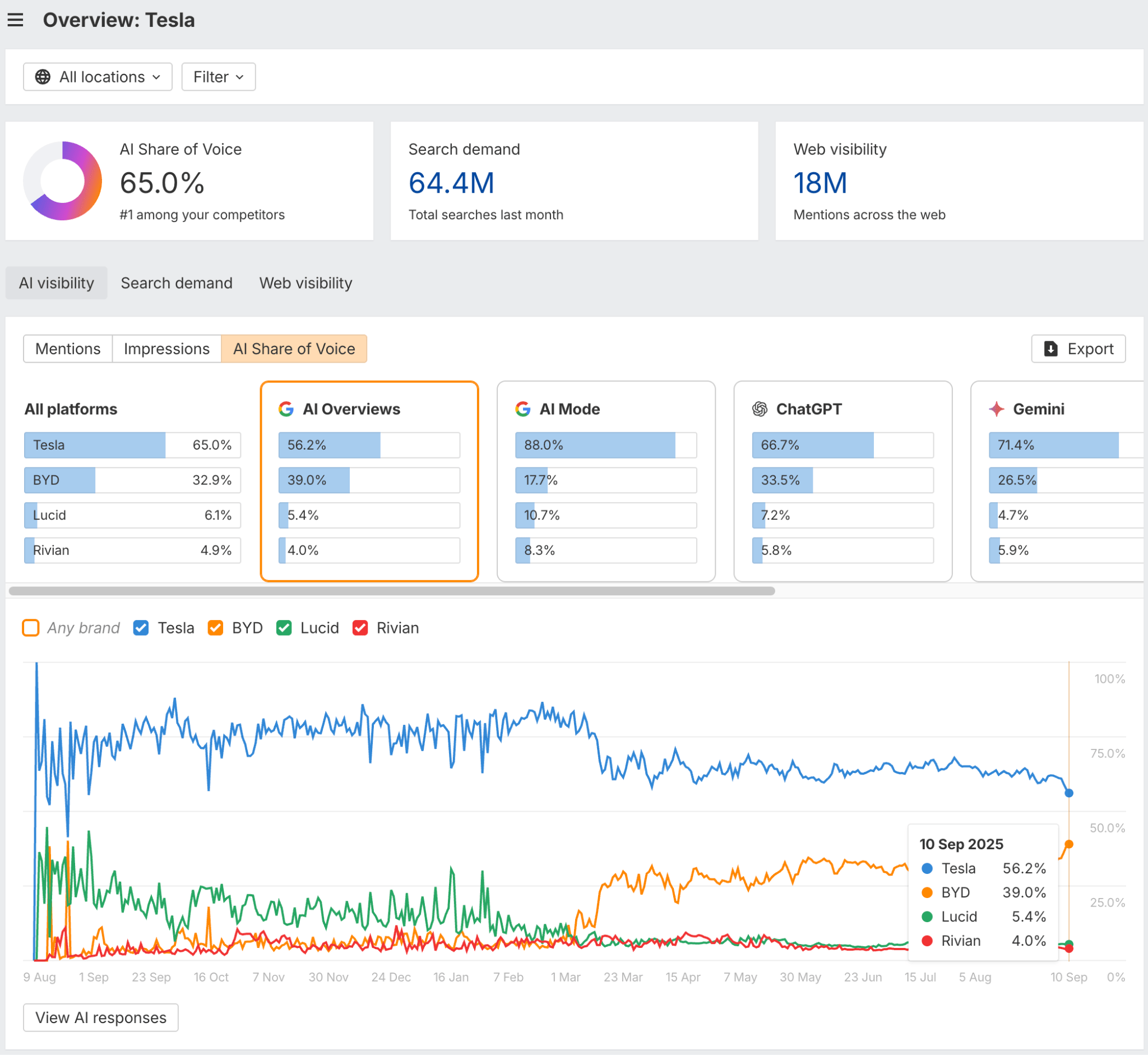
The data tells us that while Tesla has dominated the AI Share of Voice for the past year, its leadership is narrowing. The primary story is BYD’s explosive growth since March 2025, which has fundamentally shifted the competitive landscape from a single dominant brand to a two-brand race. Meanwhile, Lucid and Rivian remain marginal players with negligible AI visibility.
This rise of AI search and AI visibility is creating some important changes in marketing:
- You may get fewer visitors, but they may be more likely to buy. That’s because AI answers most basic questions directly, filtering out “tire-kickers” who were just browsing for information. So, people who actually click through to your site have moved past the research phase and are closer to making a decision.
- Attribution is getting trickier because AI often drives traffic or awareness without leaving the usual digital footprints. In many cases, people hear about your brand through AI mentions, but those interactions don’t show up in traditional web analytics.
- AI can provide personalized recommendations in a way traditional search never could. Instead of showing the same results to everyone, it can suggest solutions tailored to a person’s exact budget, industry, or use case. This opens up new opportunities for niche tools and services aimed at very specific audiences. But there’s a trade-off: unlike search results where your brand appears alongside many others, AI may only present a single recommendation—without showing all the alternatives it considered. That means less visibility for some businesses.
The rise of AI visibility has sparked conversations about Generative Engine Optimization (GEO) and even doubts about the future of traditional SEO. Instead of just trying to rank high on search engines, the goal now is to get your brand mentioned and recommended by AI assistants when people ask questions related to your business.
SEOs, this is mostly for you. The metrics you rely on—click-through rates, organic impressions, rank tracking—miss this entire discovery channel.
GEO requires new tactics: earning mentions instead of just rankings, building authority through PR and media coverage, and optimizing for being cited rather than just being found. The tactics that worked for traditional search still matter, but they’re not enough anymore.
This is also a first-mover opportunity. Companies that figure out how to show up in AI recommendations early will have a big competitive edge—long before everyone else catches on.
Brand managers, executives, and business owners should also understand this shift. While you focus on traditional channels, competitors who figure out AI visibility first could build advantages before you realize what’s happening. Again, this requires coordination across PR, content, and marketing teams.
This section covers the three fundamentals that will shape your AI visibility strategy: how people search differently now, which AI platforms actually matter for your business, and how AI platforms source their information.
How AI search changes customer behavior
Traditional search gives you a list of links to click to get answers. AI search gives you direct answers immediately.
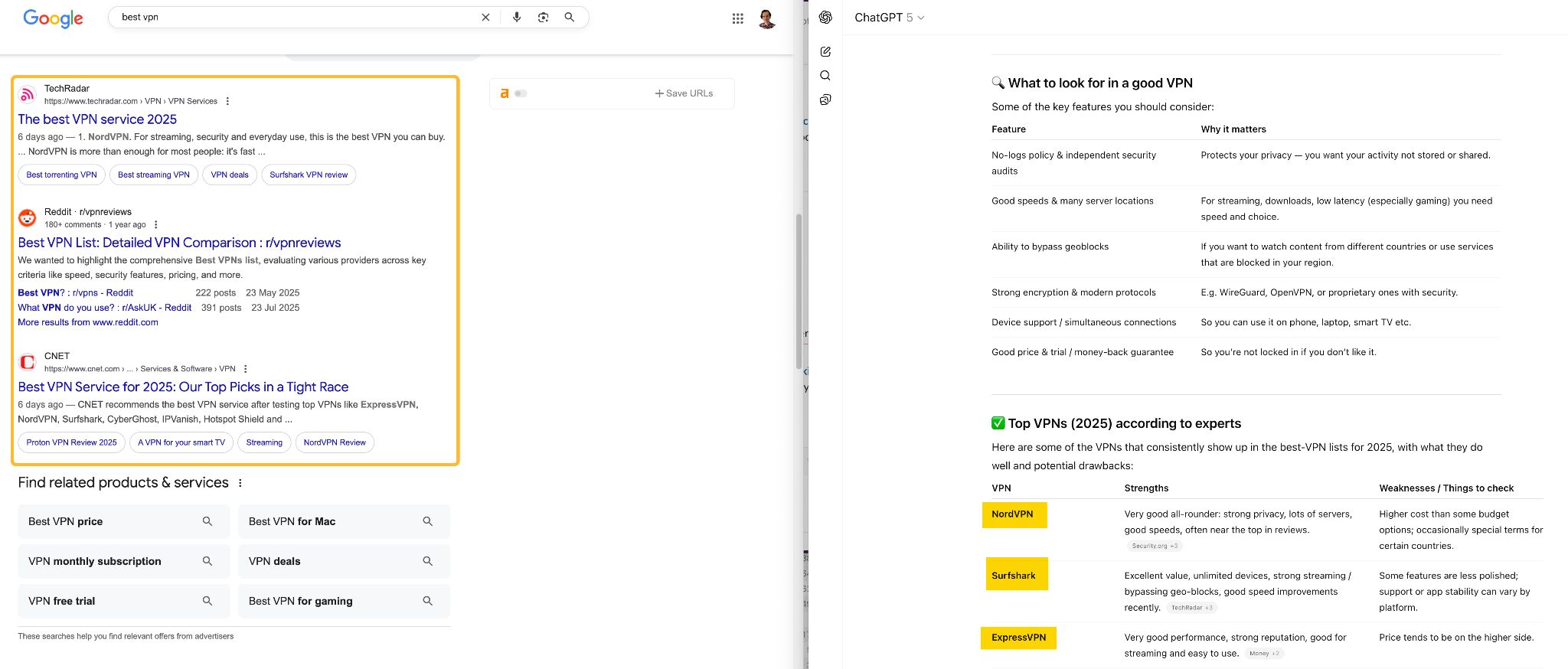
This changes user behavior. People get conversational with their queries (e.g., “I have a budget of around $200 and I’m looking for the best email tool. Can you compare some options and recommend which one gives the best value?”) and can ask follow-ups (“What about one with social media add-on?”). Most importantly, they get comprehensive answers without clicking through to websites, which means fewer visits overall but potentially higher-quality visitors who do click through.
This seems to be confirmed by the latest study from Kevin Indig. People use the new AI answers as a shortcut for simple facts, like a quick definition or a measurement conversion. It saves them a click.
But for anything important, anything involving a purchase, a big decision, or high-stakes topics like health and finance, they don’t fully trust the AI. They see the AI summary as a starting point, and then they scroll down to the traditional blue links to find a trusted brand or authoritative site to get the real story.
Major AI platforms you need to know
When it comes to sending traffic, a few AI search platforms stand out:
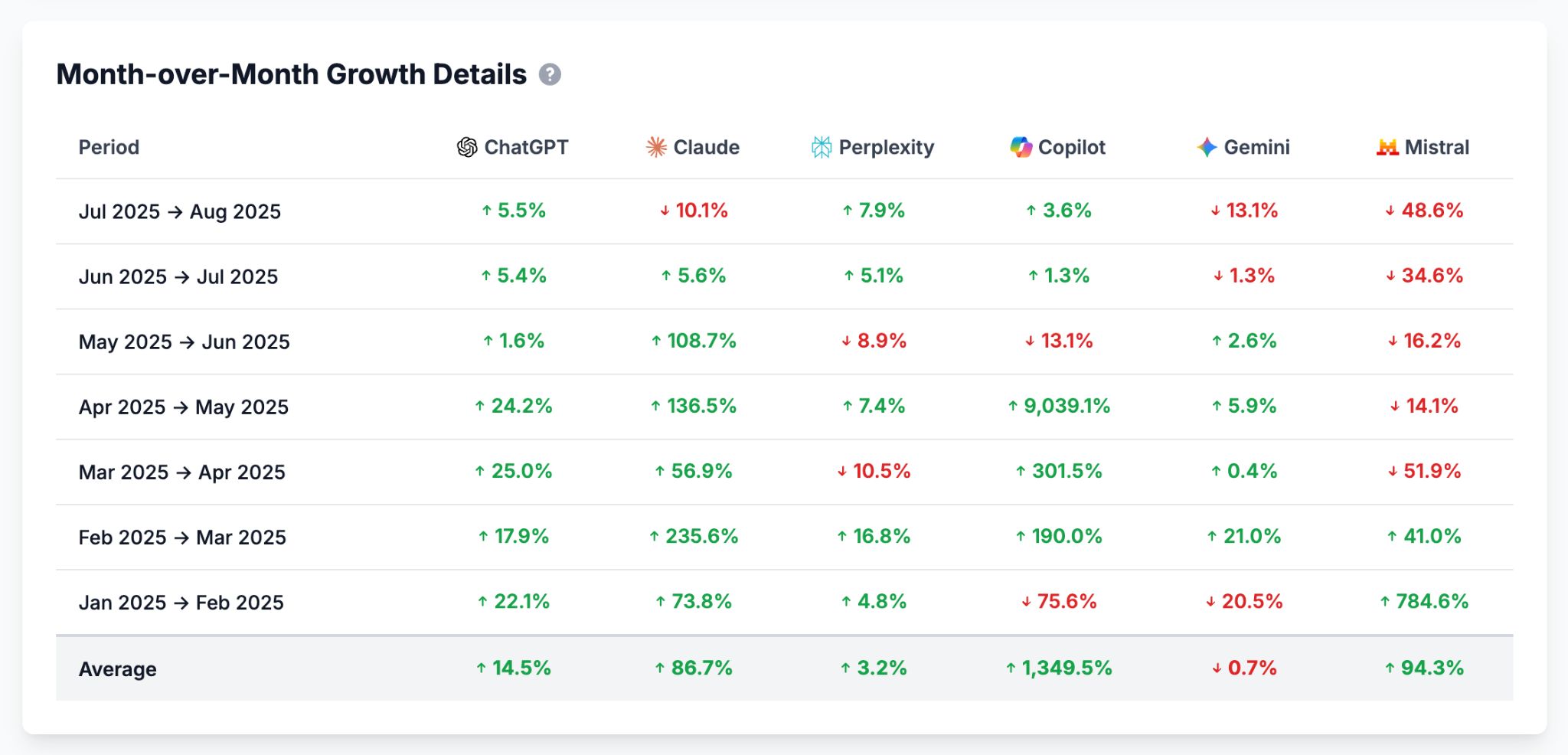
- ChatGPT. The dominant player, driving 0.21% of total website traffic.
- Perplexity. Smaller but growing fast, contributing 0.02% of traffic share.
Together, these tools account for nearly all AI-driven traffic today.
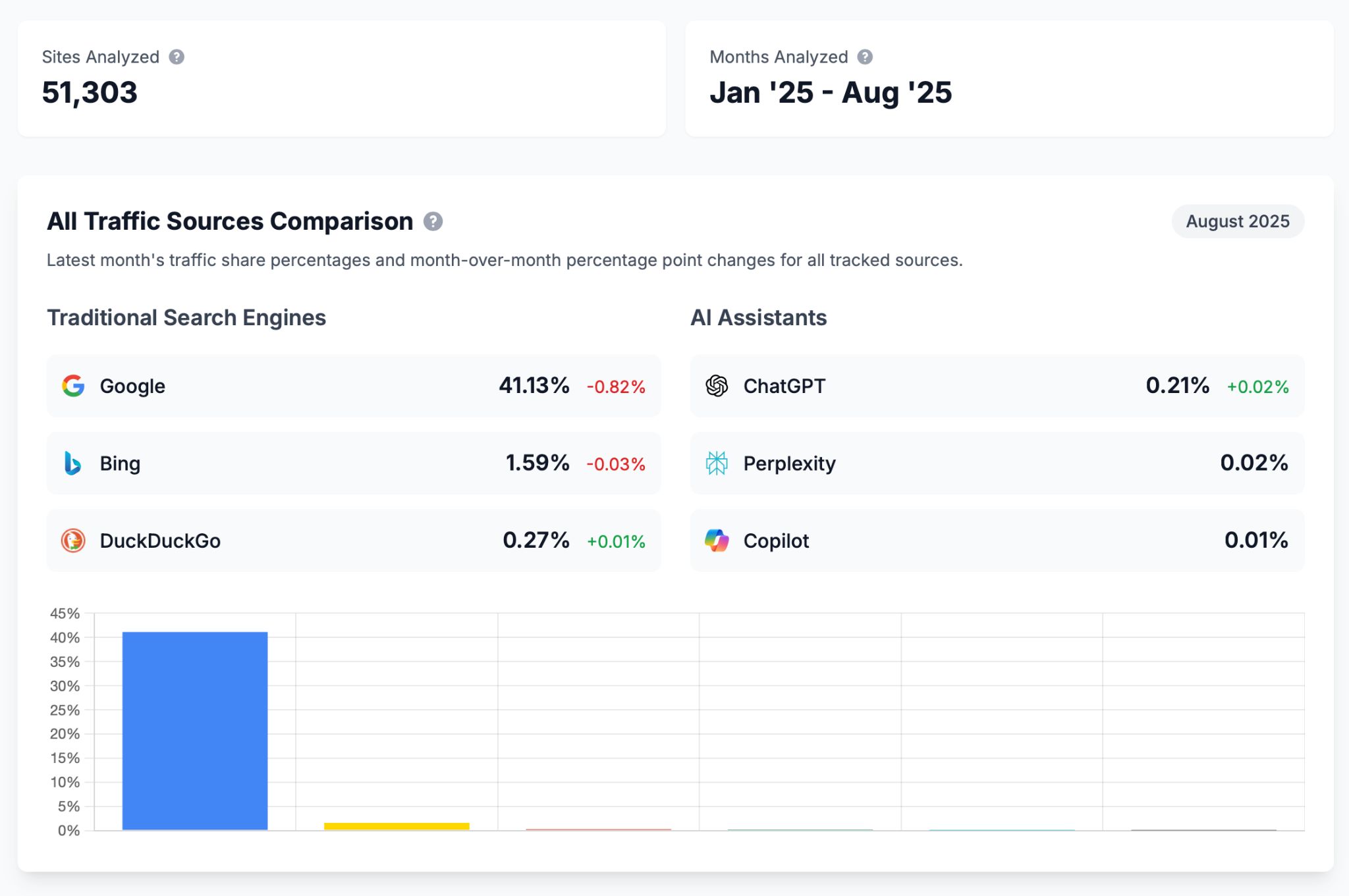
The numbers come from our AI vs. Search Traffic Analysis dashboard (based on over 50k sites), where you can explore the data yourself for free and track how the trends shift over time.
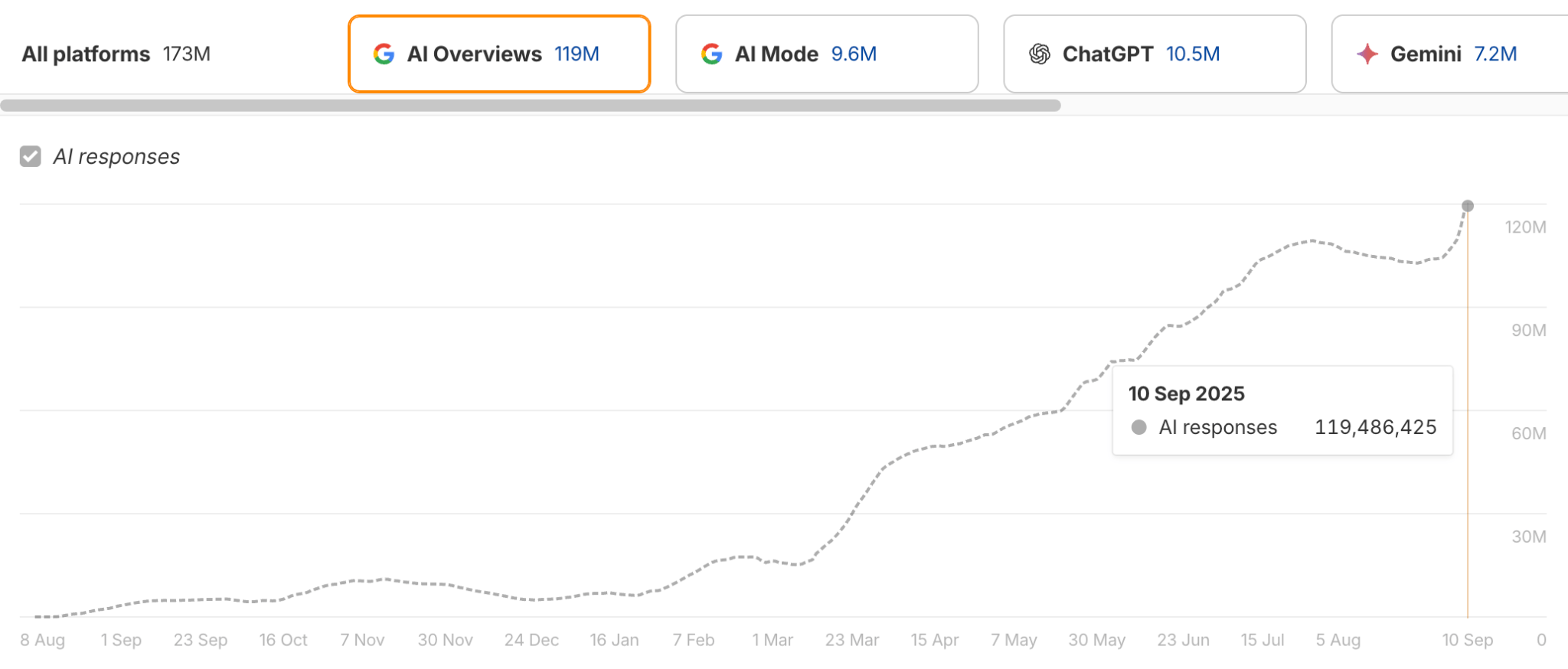
Another AI system to watch is Google’s AI Overviews (AIOs)—a new AI feature built directly into Google Search. As of May 2025, AIOs appear for 9.46% of all desktop keywords, and in the US, that number jumps to 16%.
According to Ahrefs Brand Radar, their presence is steadily increasing, showing a clear upward trend.
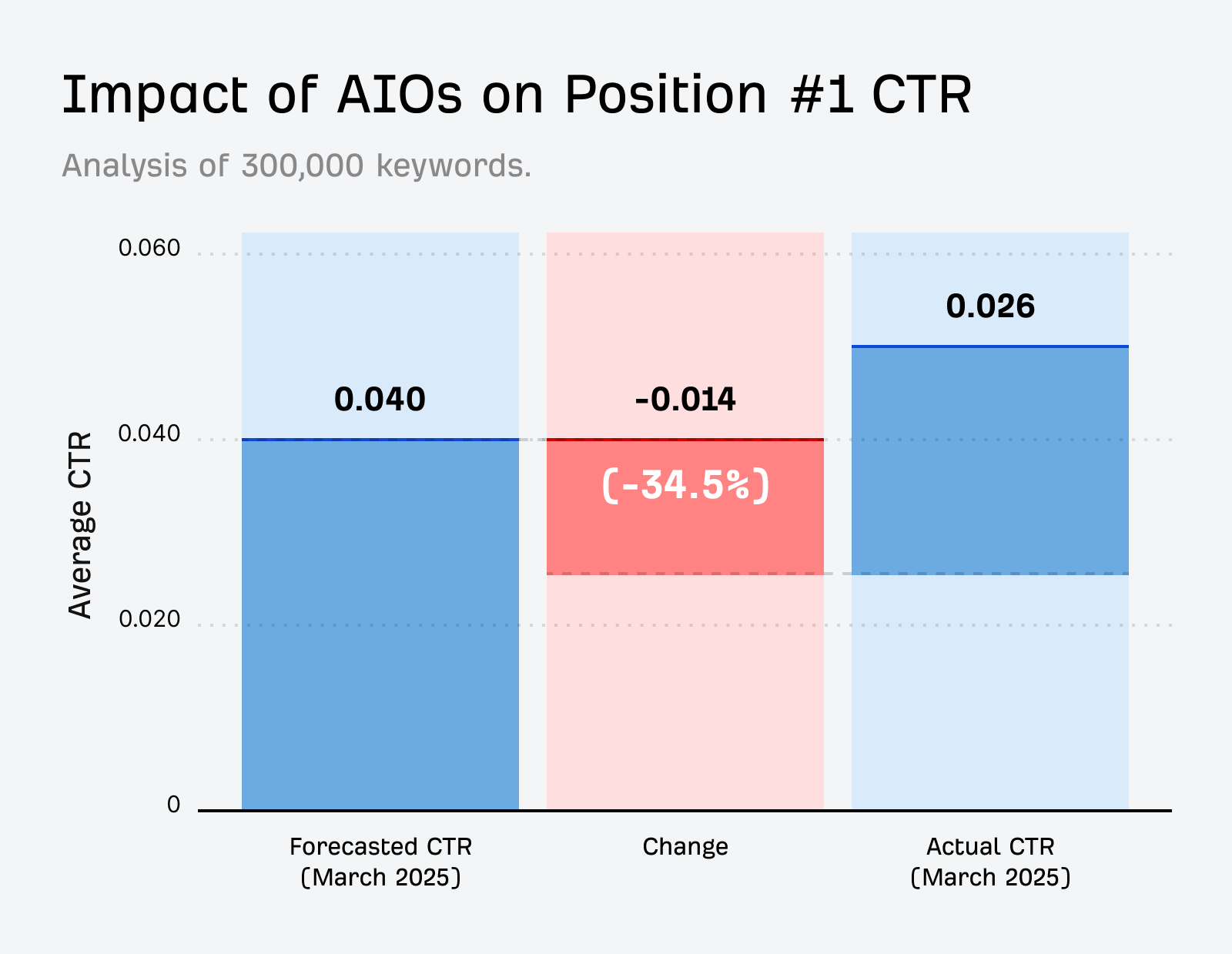
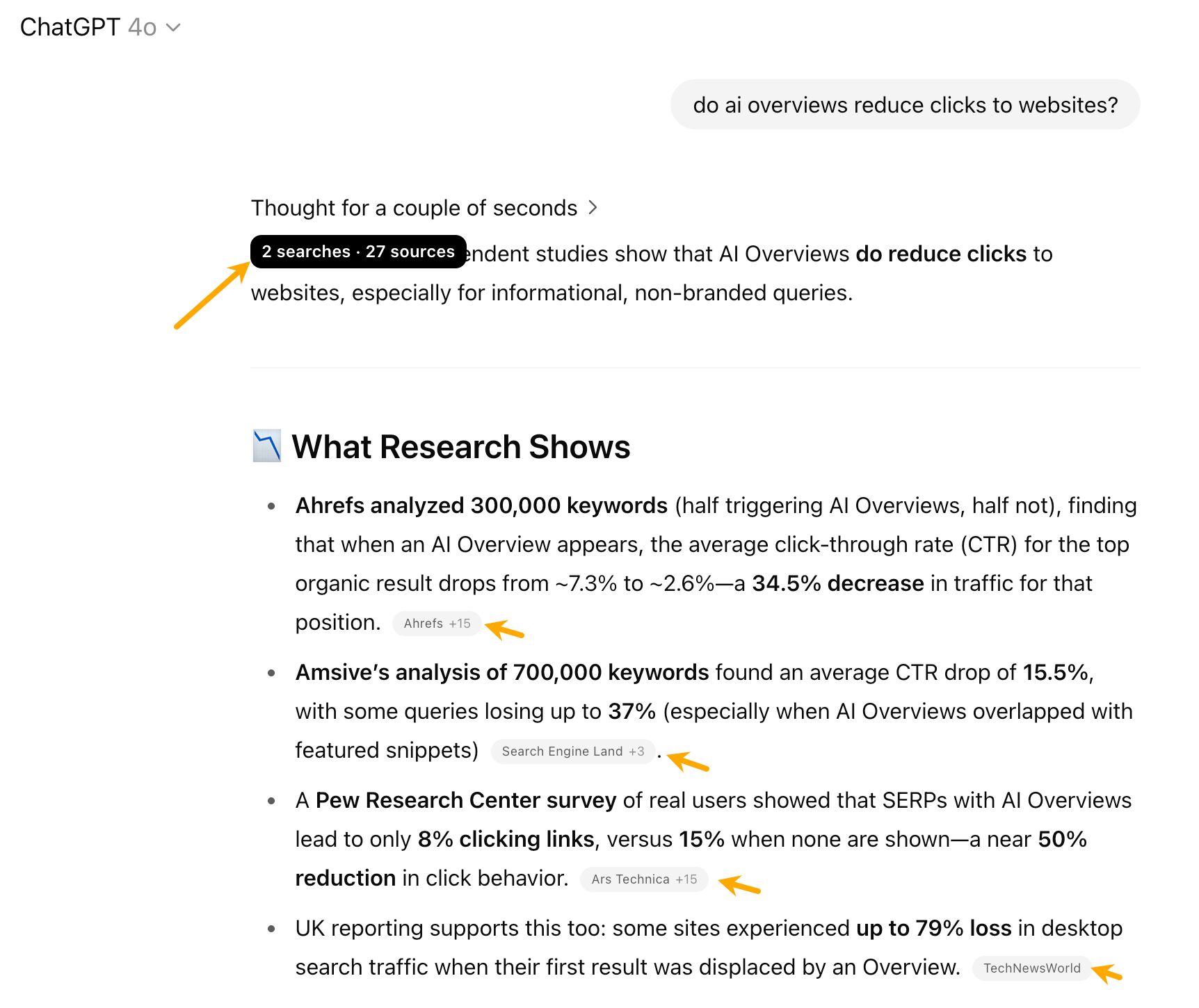
AIOs mostly show for informational queries and source 76% of citations from top-10 ranking pages. When present on a search engine result page, they reduce clicks by ~34.5%.
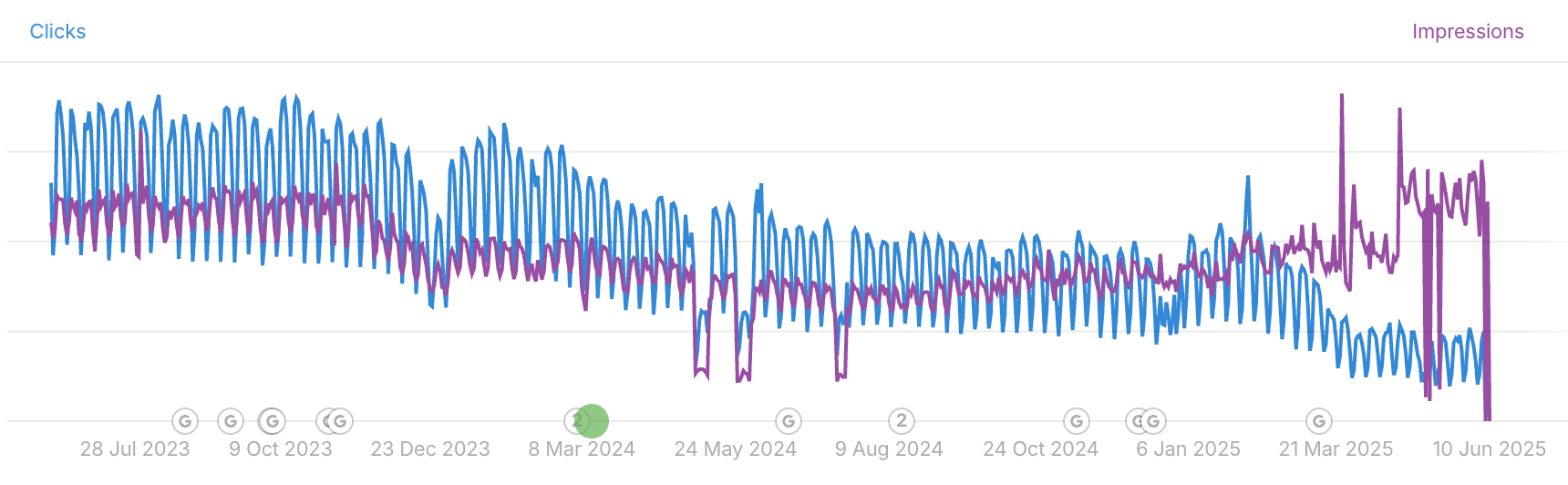
At the same time, AIOs may increase organic search impressions, creating what the industry calls the great decoupling—more visibility doesn’t mean more clicks anymore.
Training data vs. real-time search in AI search
AI platforms use two information sources, sometimes combining both:
- Training data: Foundational knowledge with cutoff dates—this is the information AI learned during its initial training, which typically includes content from across the web up to a specific point in time (often 6-12 months ago). Established brands with strong historical presence have advantages here because they were well-represented in the training data and tend to be mentioned more frequently in AI responses about established topics.
- Real-time search: Current information for recent events, products, and pricing. This levels the playing field for newer companies with effective SEO and GEO strategies.
Future models starting from GPT-5 will probably rely more heavily on real-time search, making optimization more important.
Start with simple questions your customers might ask. Try obvious ones first: “What’s the best [your type of business]?” or “How do I choose [your product category]?” Then get more specific based on what you actually do. If you sell email marketing software, try “affordable email marketing for small businesses” or “email marketing vs newsletters.”
Don’t know what to test? Here are some ideas:
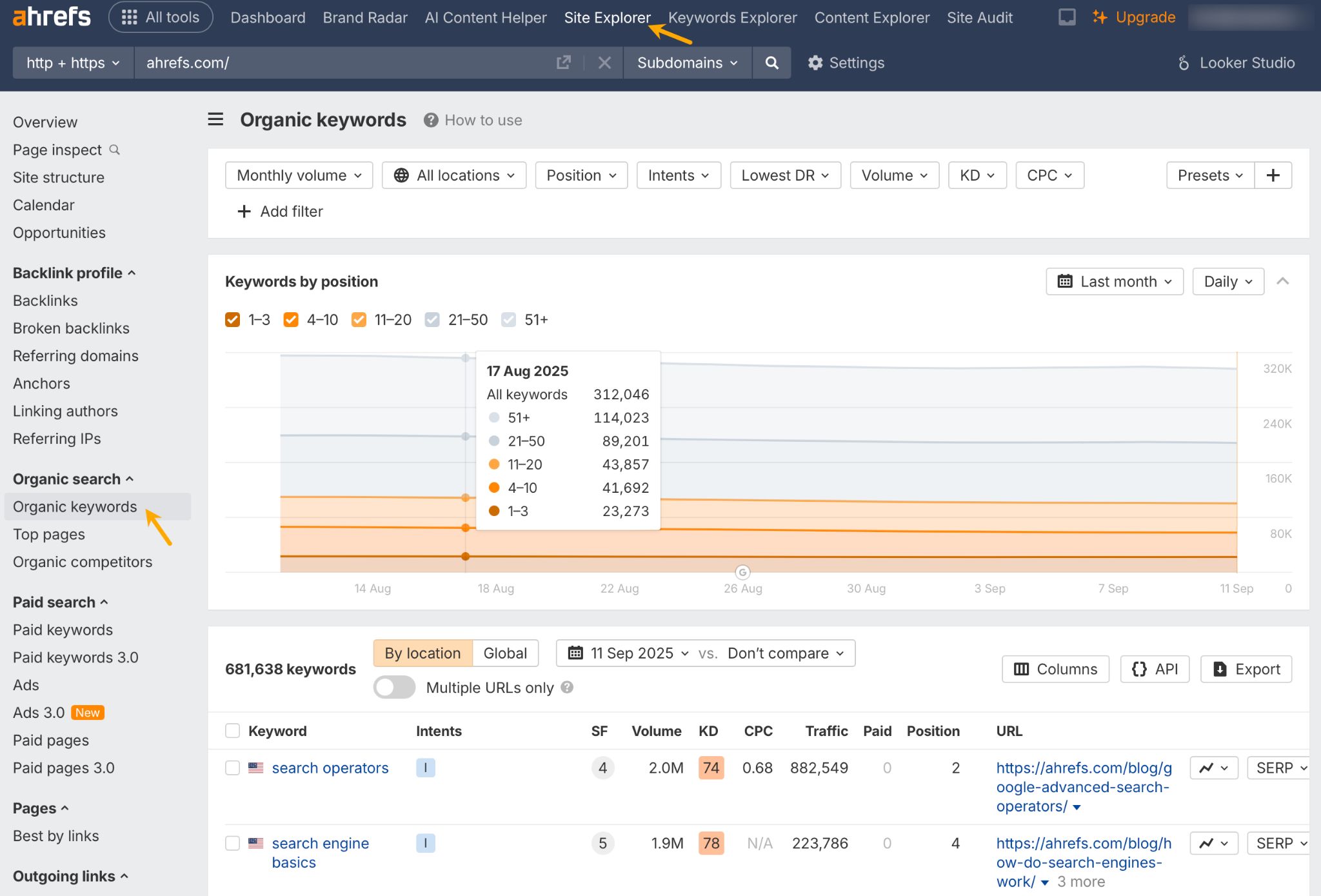
- Check the top search terms your site ranks for. You can use the free Google Search Console or AWT for that. If you use AWT, head to the Site Explorer tool and open the Organic keywords tab (screenshot below).
- Use a free keyword tool like Ahrefs’ Free Keyword Generator or AlsoAsked to see what search terms people may use to find your site.
- Think about the questions customers ask you most often.
- Check Google’s autocomplete suggestions for keywords related to your business.
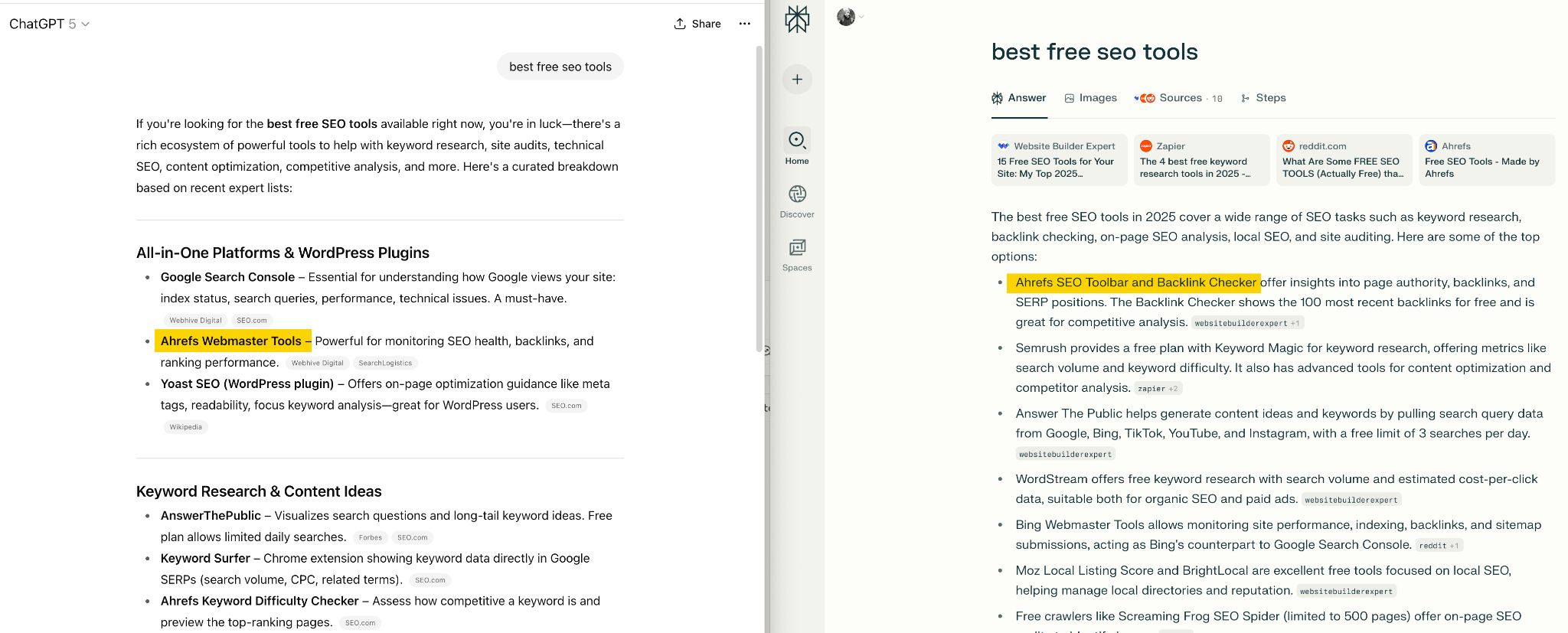
Test on different AI platforms. Create a free account on ChatGPT, Claude, and Perplexity (Google AI Overviews appear automatically in some Google searches). Ask the same question on each platform—you’ll be surprised how different the answers can be. One might mention your brand, while another completely ignores you.
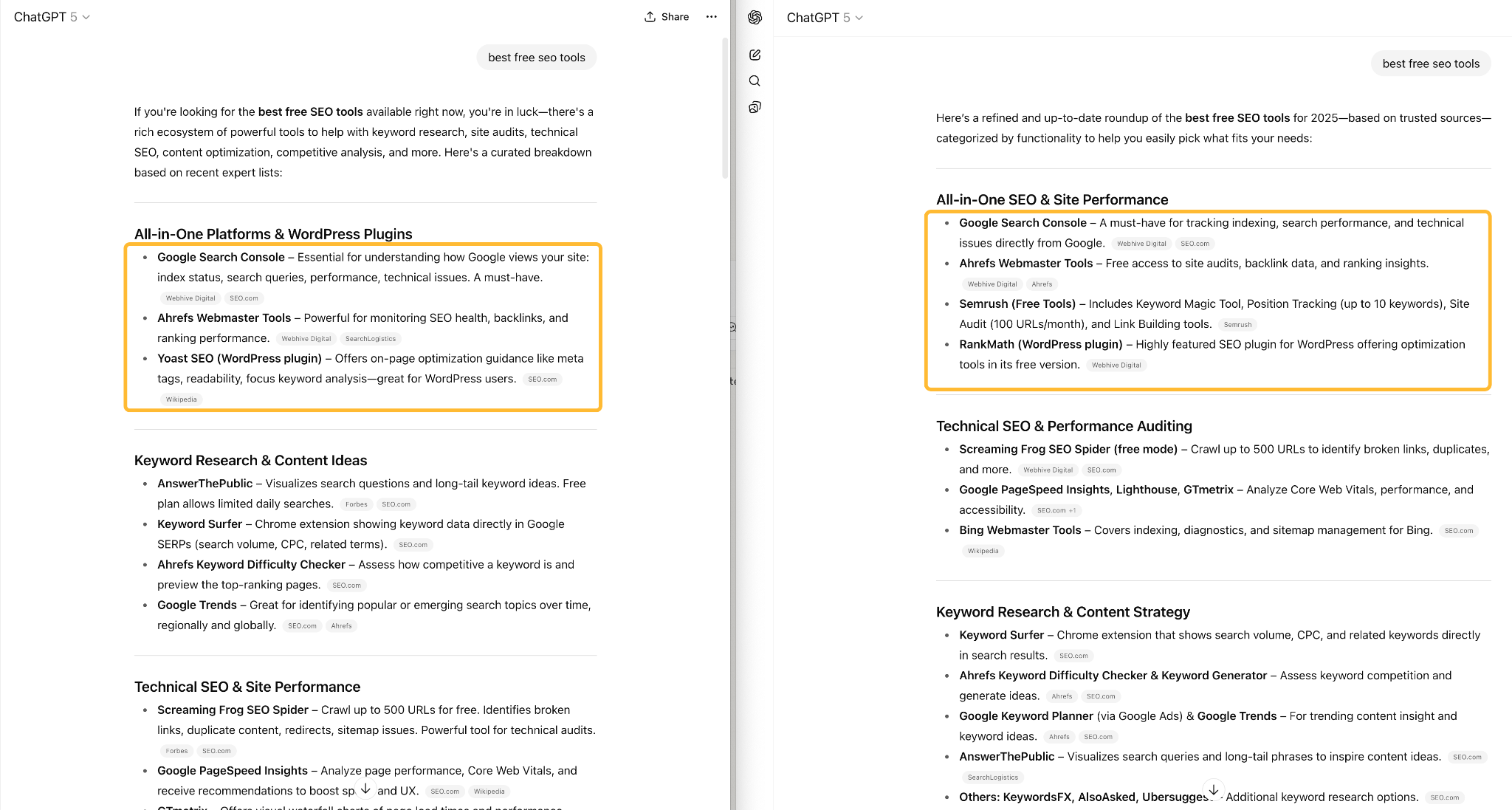
Also, AI assistants may recommend different products from your lineup for the same query, as in the example below.
Ask the same question multiple times. This sounds weird, but AI gives different answers even to identical questions. Try the same prompt 2-3 times on each platform. Yes, this means a lot of conversations, but you can spread this over a few weeks, and it gives you a realistic picture.
For example, when I ran the same prompt again in ChatGPT, it gave me a slightly different response; this time with a new way of categorizing the tools and offering different recommendations.
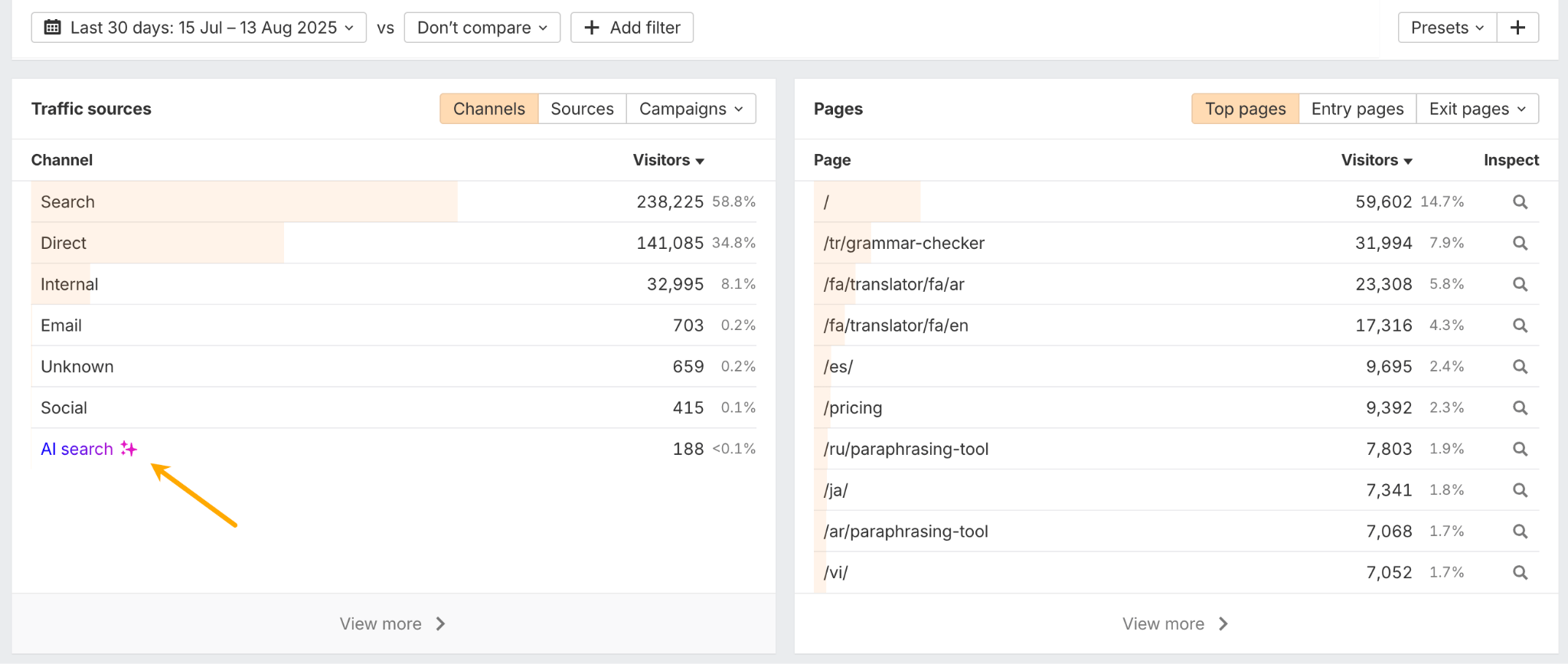
Take a close look at how visitors referred by AI behave. They may act differently from regular search traffic. In our recent study, we found that these visitors stayed longer on our site and were likely to convert—probably, they’ve usually done their research before clicking through.
Another thing you can do with Ahrefs’ free Webmaster Tools is check which types of content drive visitors to your site and how they interact with it (do they stay longer, do they click through). For context, I recently ran this check on ahrefs.com, looking at a 3-month data period:
| Content category | Total views | Engagement | Strategic insight |
|---|---|---|---|
| How-to guides | 7315 | 184 sec time on page | Bread-and-butter traffic drivers; AI assistants favor clear, actionable guides. |
| Data studies | 6134 | 207 sec time on page | High engagement; authoritative research performs well in AI results and invites further clicks. |
| Homepage | 2875 | 0.53 bounce rate (low) | Captures navigational queries; AI assistants surface brand entry points. |
| Listicles (tools) | 976 | 0.84 bounce rate (high) | Strong time on page; useful for tool discovery via AI assistants, but high bounce suggests single-visit utility. |
| Definition | 747 | 173 sec time on page | Fulfills direct informational queries; AI assistants use these for concise answers. |
| Listicles | 585 | 0.79 bounce rate (high) | Good at attracting curiosity clicks from AI summaries. |
| Product | 530 | 0.24 bounce rate (low) | Low bounce rate; AI assistants can drive qualified visitors directly to product-related pages. |
| Opinion / thought leadership | 282 | 214 sec time on page | Engaging for deeper reads; niche but valuable for brand authority in AI contexts. |
To get this data, click on AI Search in the Web Analytics tool (part of AWT). Then, you can export it and ask your favorite AI assistant to help you do the data analysis.
Manual tracking becomes unmanageable very quickly. You’re dealing with multiple platforms, hundreds of query variations, and a lot of response variability. For competitive analysis, you need consistent tracking over time, which is almost impossible to do by hand.
However, the bigger limitation is discovery versus tracking. When you manually test “best email marketing tools,” you’re only checking one specific query you already thought of. You’re tracking what you know to look for, not discovering what you don’t.
Tools like Brand Radar automate monitoring across millions of prompts and various AI platforms, which means they can uncover opportunities you never would have found manually. They reveal queries where your competitors get mentioned, but you had no idea those conversations were even happening.
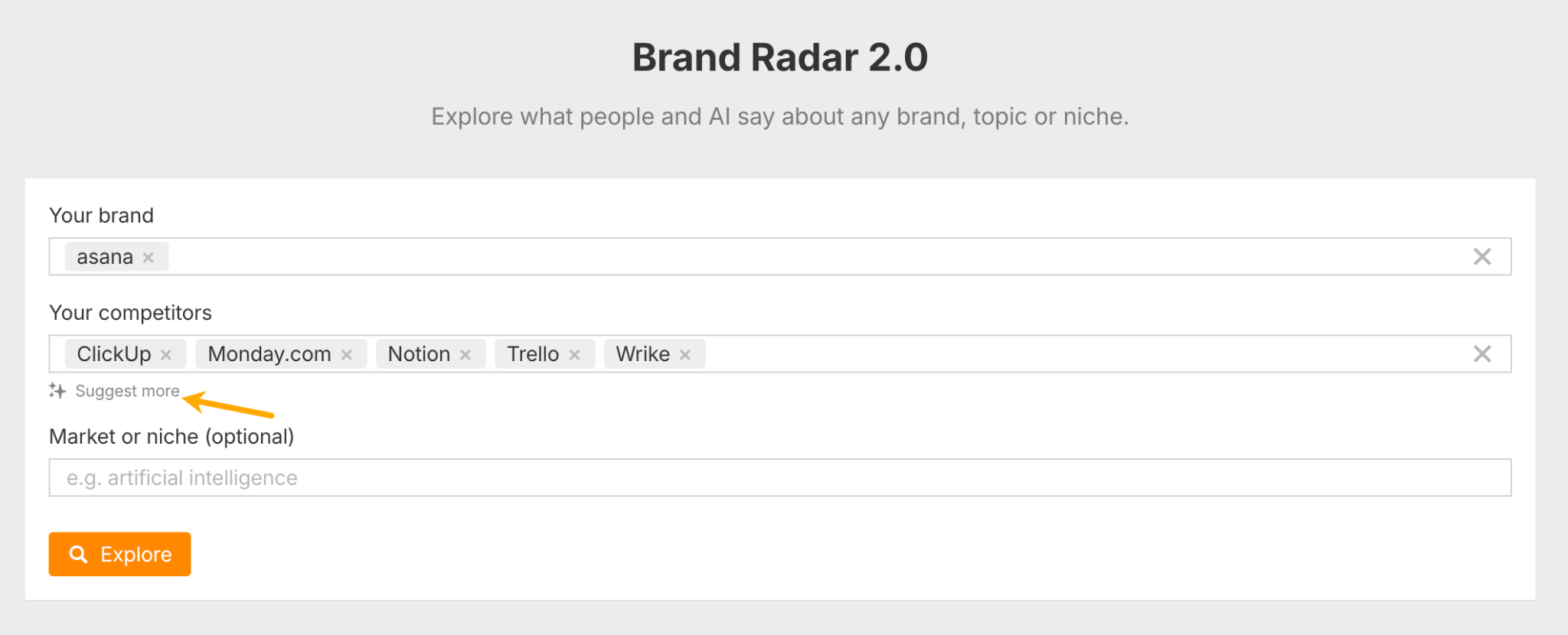
To start using Brand Radar, just enter your brand name and your competitors’ names (the tool can even use AI to suggest similar brands).
You’ll get a dashboard with data on:
- AI mentions: When your brand appears in AI responses.
- Impressions: Mentions weighted by search volume to estimate reach.
- AI share of voice: Your brand’s reach percentage versus competitors.