


Organic search still delivers some of the strongest returns in marketing, and the right content optimization tools make it easier to capture.

But in 2026, the stakes are higher than they used to be. AI search engines like Google AI Overviews, Perplexity, and ChatGPT are now a standard part of the buyer research process, and they don’t select sources the same way traditional search does. Marketing teams that optimize only for Google rankings often find themselves invisible in AI-generated answers — and being invisible in AI answers means invisible to buyers.
This guide covers the best content optimization tools available in 2026, organized by use case. Whether the goal is to build a content stack from scratch or to fill gaps in an existing content optimization workflow, this guide breaks down what each tool does and who it’s best for.
Table of Contents
Types of Content Optimization Tools
Content optimization tools improve content quality, search visibility, and conversion performance. Plenty of content and SEO analysis tools are on the market, and many of them cover a wide range of functions.
Before we get into specific recommendations for AI content optimization tools, here’s a breakdown of the major categories:
- On-page optimization and content scoring tools analyze published or draft content against top-ranking pages, flagging keyword gaps, structural issues, and readability problems.
- Research, brief creation, and content-writing accelerators help marketing teams plan and draft faster, using AI to generate outlines, briefs, and first drafts grounded in keyword and intent data.
- Internal linking and site structure tools identify opportunities to strengthen semantic relationships between pages and improve crawlability.
- Experimentation and content QA tools enable content teams to test content variations and audit existing pages for technical or structural issues before publishing or republishing.
- Performance reporting and strategy tools track how content performs across rankings, traffic, engagement, and increasingly, AI visibility — including whether a brand appears in AI-generated answers.
HubSpot pro tip: As AI visibility becomes a standard reporting requirement, tools that track it become more important. HubSpot AEO shows where a brand appears in AI-generated answers across ChatGPT, Perplexity, and Gemini — and connects that data to the same CRM where the team is already tracking leads and pipeline.
Featured Resource: 9 SEO-friendly CMS options
The Best Content Optimization Tools by Use Case
The most effective content stacks combine SEO optimization software with specialized tools for research, AI visibility, and reporting. The breakdowns below are organized by category, covering what each tool does, who it’s best for, and how it fits into a content stack.
On-Page Optimization and Content Scoring
These tools analyze and score content against top-ranking competitors, surfacing specific recommendations to close gaps. Most use NLP and semantic analysis rather than simple keyword density.
HubSpot SEO Marketing Software
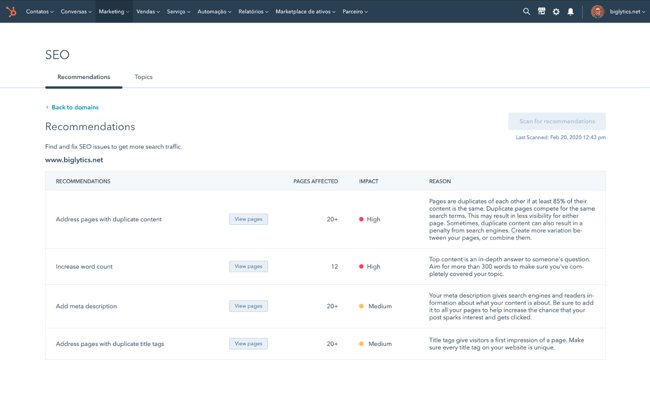
HubSpot’s SEO Marketing Software is built into Marketing Hub and provides teams with a centralized view of SEO performance, on-page recommendations, and topic cluster structure. It’s all connected to the same CRM data that powers the rest of HubSpot’s platform.
Unlike standalone SEO tools, HubSpot’s SEO recommendations are tied directly to a brand’s actual content and pages. Teams can see which pages need optimization, act on those recommendations within the same platform, and track the downstream impact on traffic and leads without switching between tools or manually stitching together data.
What I like: The biggest advantage isn’t the recommendations themselves (which are solid) — it’s that they’re connected to real pipeline data. When a content team can show that improving a cluster of pages drove a measurable increase in marketing-qualified lead (MQL) volume, securing executive buy-in for SEO investment becomes much easier.
Key Features
- On-page SEO recommendations with step-by-step guidance
- Topic cluster visualization and internal linking suggestions
- Page-level performance data connected to CRM and contact records
- SEO analysis tied to real traffic, leads, and revenue attribution
Best for: Marketing teams already on HubSpot who want integrated SEO visibility without managing a separate tool. Ideal for mid-market and enterprise teams that need to report on content ROI across the full funnel.
Pro tip: Teams on Marketing Hub Professional or Enterprise can add AEO through the HubSpot for Marketers bundle, keeping SEO and AI search visibility in one platform.
What the experts say: Rob Freedman, VP of Marketing at SureCam, said, “I use HubSpot’s content editor, SEO recommendations, and content calendar to plan, publish, and optimize website and blog content, then tie each asset directly to campaigns so I can report on pipeline and revenue impact in our CRM.”
Clearscope
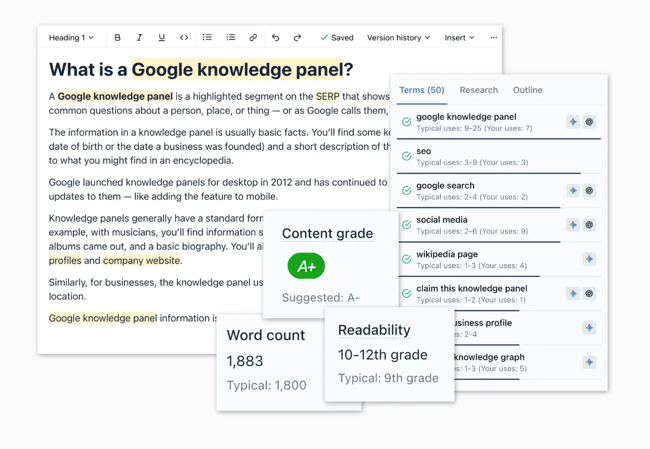
Clearscope is a content discoverability platform covering the full content workflow: topic research, AI-assisted drafting, on-page optimization, content monitoring, internal linking, and AI search visibility tracking across ChatGPT and Gemini.
Key Features
- Content grading with real-time keyword and topic coverage reports
- Prompt tracking across ChatGPT and Gemini to monitor brand mentions in AI-generated answers
- Query fan-out awareness
Pricing: Starts at $129/month.
What I like: Clearscope’s interface is clean and fast, which makes it one of the easier tools to standardize across a writing team. The query fan-out feature is useful for an AI search strategy, helping teams understand the downstream searches that AI platforms trigger to build their answers. It also gives content teams a concrete signal for where to invest.
Best for: Enterprise content teams and agency partners who want a unified platform for on-page optimization and AI search visibility, with unlimited user seats and no per-seat pricing.
What the experts say: Cassy Aite, co-founder of Postbeam.ai and Hoppier.com, said, “Clearscope has been a huge part of how I scale content with new writers. It helps both me and the writer reduce the amount of on page seo research for content, which cuts down the editing process and gives me more confidence that the content is actually optimized before it goes live.”
Surfer
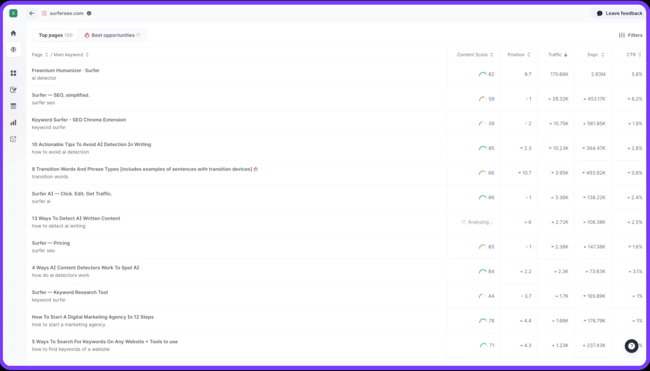
Surfer is an AI visibility platform that combines on-page content optimization with AI search tracking, topical authority planning, and competitive intelligence across Google and major AI engines, including ChatGPT, Perplexity, Gemini, and Google AI Overviews.
Key Features
- Real-time Content Score with NLP-driven keyword and structure recommendations
- Monitors brand visibility across ChatGPT, Perplexity, Gemini, Claude, Google AI Mode, and AI Overviews
- Mention Gap analysis to identify where competitors appear in AI answers, and the brand doesn’t
- Brand Sentiment analysis to surface how AI models frame the brand in responses
Pricing: Starts at $119/month billed monthly, or $99/month billed annually.
What I like: The Mention Gap feature is a useful addition for teams building an AI search strategy. Knowing specifically which AI engines are citing competitors for a given topic gives teams a concrete starting point for closing visibility gaps rather than optimizing unquestioningly.
Best for: Content teams and SEO specialists who want a unified platform for on-page optimization and AI visibility tracking, with strong support for high-volume publishing and multi-brand management.
What the experts say: Chris Coussons, founder at Visionary Marketing, tests tools out before fully committing to adding them to the martech stack. This is what he said about Surfer SEO:
“We did a test of Surfer SEO at the end of last year, and optimised 50% of a client’s aged blogs with their content optimization, and left the other 50% as they were, and measured the impact. The uplift on the optimized blogs was higher than I think everyone expected, with an average increase of 4 places (zero for the control) and 43% clicks in the 3 months that followed. We’ve used it ever since on all of our clients’ blogs.”
Research, Briefs, and Content Writing Accelerators
Optimization starts before writing begins. This category covers tools that help teams plan more strategically, produce better briefs, and accelerate first-draft creation, while keeping content grounded in real keyword and intent data.
HubSpot Content Hub
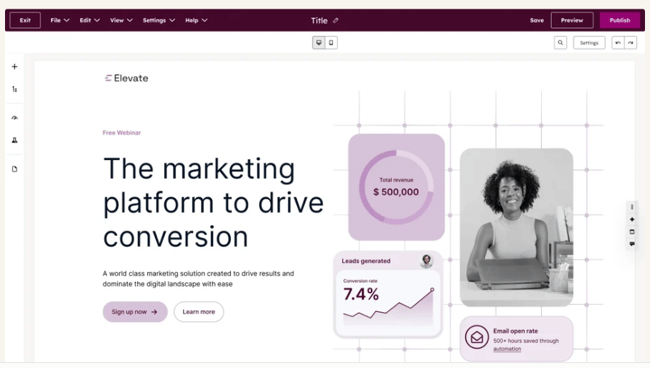
HubSpot’s CMS platform with built-in AI content creation, drag-and-drop editing, and content optimization features designed for teams that want to build, publish, and optimize content in a single environment.
Content Hub helps content teams publish faster, but its bigger advantage is structural: the AI content writer produces clear, extractable content that both human readers and AI search engines can parse and cite. That structure aligns with how generative engines evaluate and pull from sources.
For teams trying to optimize for Answer Engine Optimization (AEO), this integration between the CMS and the AI writing layer is a meaningful structural advantage. Teams aren’t retrofitting AI optimization onto a legacy CMS; the capability is already built into the content creation workflow.
Key Features
- AI content writer for drafting and repurposing
- Smart content and personalization for different audience segments
- Built-in SEO recommendations connected to Marketing Hub
- Content performance analytics
Best for: Teams that want a unified platform for building, publishing, optimizing, and measuring content without stitching together separate CMS, SEO, and AI tools.
HubSpot pro tip: Content Hub and Marketing Hub are separate products, but they’re designed to work together. Teams that want both traditional SEO and AEO in one platform can access them through the HubSpot for Marketers bundle, which combines both hubs and includes AEO — all connected to the same CRM data.
What the experts say: Kshitij Chaudhary, founder of Dintellects, relies heavily on HubSpot’s content tools. He said, “I love using the HubSpot Content Tools. It helps me to organize how I work with content and see how my blog posts are doing. I can see how they are helping me generate leads and improve my search rankings. The tool is extremely helpful because it keeps all my content and marketing work in one place.”
Frase
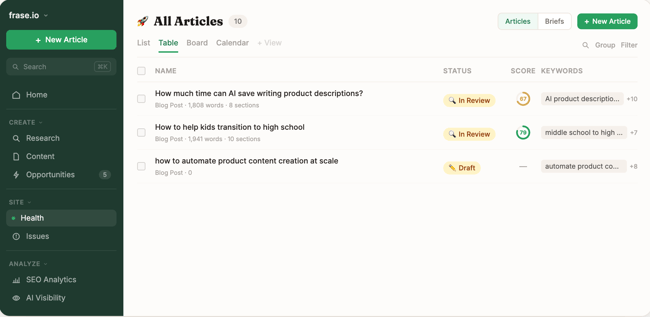
Frase is an agentic SEO and GEO platform that consolidates research, writing, optimization, AI-driven visibility tracking, and content maintenance into a single platform. Frase covers the full content strategy, from SERP research and brief creation through AI-powered drafting, combined SEO + GEO scoring, and automated content decay detection.
Key Features
- AI Agent with 80+ specialized skills for research, optimization, and content creation via natural language
- Combined SEO + GEO optimization score
- Closed-loop content maintenance that monitors articles, diagnoses ranking and citation decay, and auto-republishes fixes
- Content atomization for repurposing to LinkedIn, email, social, and other formats
Pricing: Starts at $49/month billed monthly, or $39/month billed annually.
What I like: Instead of optimizing for Google in one tool and then checking AI visibility separately, Frase gives marketers a single score that accounts for both. This is helpful for teams that have been asking, “Are we optimizing for the right things now that AI search matters?”
Best for: Content teams that want to consolidate a fragmented tool stack into one platform covering research, writing, SEO, GEO, and AI visibility tracking.
What the experts say: Chaudhary is also a Frase user. He said, “I use this tool for quick content research. It helps me to create outlines for my articles and to discover what people are looking for online. I can see what questions people have and what they want to know about something. It helps me write my articles.”
MarketMuse
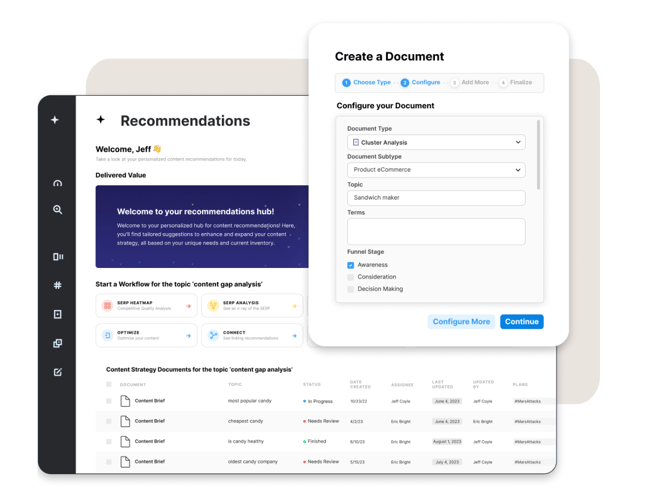
MarketMuse is a content intelligence platform that uses AI to identify content gaps, prioritize topics, and score content quality across an entire website.
Key Features
- Site-level content inventory and gap analysis
- Topic modeling and competitive benchmarking
- Content briefs with personalized difficulty scores
- Nine content brief types, including comparison, FAQ, how-to, and product review formats
Pricing: Free plan available; paid plans are quote-based.
What I like: MarketMuse helps marketers quickly create an entire content library covering target topics and highest-priority gaps. For content teams, this tool can help prevent duplication and focus effort where it will have the most strategic impact.
Best for: Enterprise and mid-market teams managing content libraries of 100+ pages who need a strategic, site-wide view of their content gaps.
Internal Linking and Site Structure Support
Strong internal linking helps search engines understand topical authority, improves crawlability, and passes equity between related pages, all of which compound over time. Here are some tools that can help marketers optimize site structure.
HubSpot SEO Topic Clusters (via Marketing Hub)
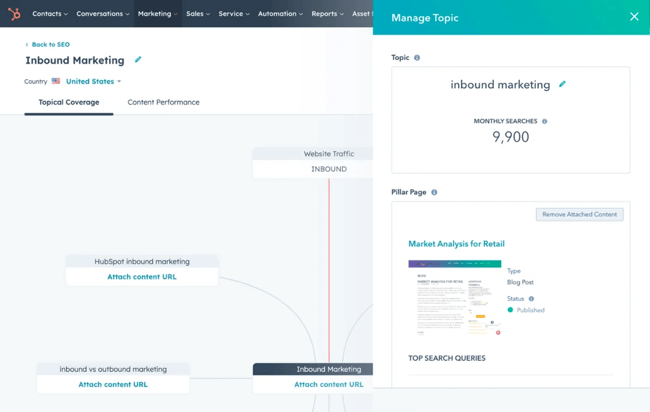
HubSpot’s topic cluster tool visualizes how pillar pages and cluster content connect across a site. It flags missing links, identifies orphaned content, and makes it straightforward to build the kind of semantic architecture that search engines — and AI engines — reward.
Unlike standalone site auditing tools, the topic cluster map is built directly into Marketing Hub, so the recommendations connect to the same pages, contacts, and pipeline data that the rest of the team is already working from. When a cluster improves, the impact shows up in the same dashboard where leads and revenue are tracked. Topic clusters are available across Marketing Hub Starter, Pro, and Enterprise.
What I like: The visual map makes it easy to present site structure to stakeholders who aren’t deep in SEO. Being able to show the connection between strategic topics and actual content in a single view tends to accelerate alignment on content priorities — and makes it much easier to argue for investing in gap content.
Key Features
- Visual topic cluster map showing pillar and cluster page relationships across the site
- Topic suggestions based on relevance, competition, and popularity
- Orphaned-content detection for pages not yet connected to a cluster
- Performance data connected to CRM and contact records via Marketing Hub
Best for: Marketing teams already on HubSpot who want a strategic view of their content architecture without managing a separate site auditing tool. Particularly useful for teams building or expanding topic clusters as part of an AI search visibility strategy.