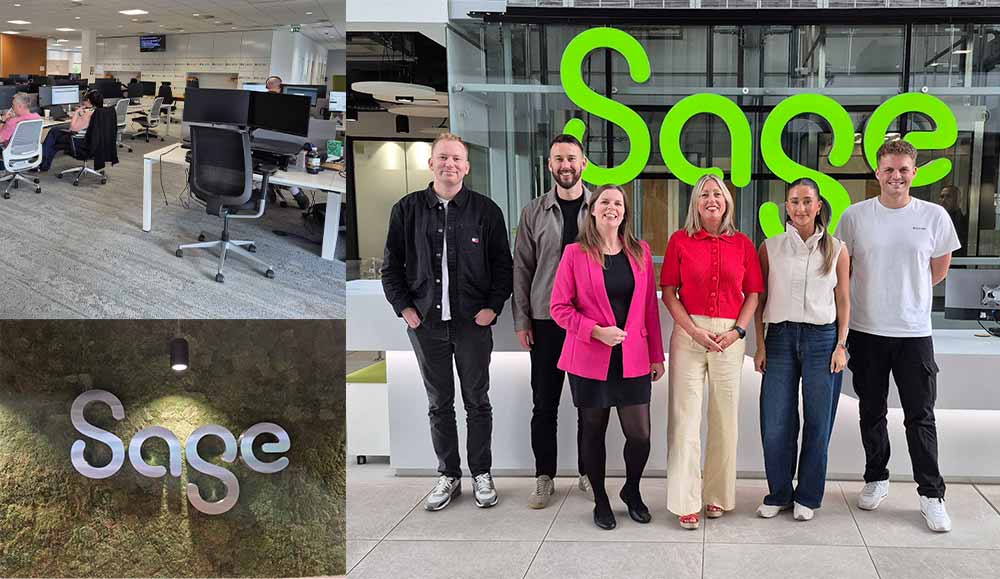
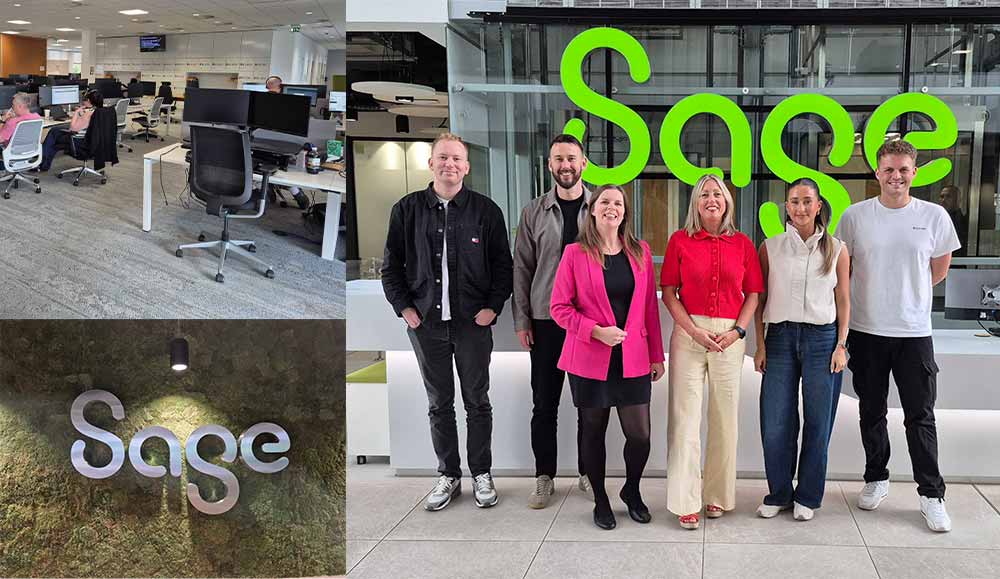
We recently visited Sage’s Operational HQ in the North East of England to find out what it takes to be a truly award-winning operation – including taking home the 2025 NECCA for ‘Contact Centre of the Year Over 250 seats’.
From making daily huddles count and deep diving on what’s really driving up AHT, to using AI to give agents better customer insights, here are 10 great ideas we heard from Sharon Oley and the team.
1. Hold Everyone Accountable to Effective Daily Huddles
Are your daily huddles tick-box exercises or productive conversations? At Sage, the team have taken steps to make sure that every huddle is about identifying problems, prioritizing actions, and removing barriers to great customer service.
How? The team starts by reading out the company’s mission statement, reinforcing their purpose. The subsequent agenda then explores everything from which issues are call drivers, whether problems stem from people or processes, and how issues stemming from one team might be creating problems for other teams as well as customers.
Not only this, but they hold themselves accountable to a great huddle with a checklist at the end of each session – talking about how the session could have been better and keeping every conversation on track.
Quite simply, it’s about using huddles to identify problems, agree actions, and celebrate success – not simply to share updates and go through the motions. As Customer Services Director Sharon Oley explained, “If you’re not getting anything out of the huddle, you’re not putting enough into it.”
2. Understand What’s Driving Up AHT – Before Adjusting Targets
Don’t immediately adjust your targets when you see upward trends in Average Handling Time (AHT). Instead, do a thorough investigation to see what’s really happening under the bonnet.
For example, the team at Sage analysed 24 months of data to better understand what was happening to their AHT levels. This in-depth analysis resulted in several key findings – including the impact of chatbots, the introduction of additional steps in their security processes, as well as internal attrition and recruitment drives.
This exercise really helped to unpick where the AHT gains were coming from and created strong evidence for conversations with other teams on where issues needed fixing, as well as where raising the target was justified.

“It was really important we analysed trends over a longer timeframe, as there are lots of things you wouldn’t necessarily be able to see in the moment, but reviewing higher-level data helped us to spot these things and the impact they were having.” – David Delaney, Operations Manager – L2 and Continuous Improvement
3. Gradually Reduce Agent:Coach Ratios as New Starters Develop Their Confidence
Sage make sure their new starters move through agent:coaching ratios of 1:1, 2:1, 3:1, 4:1, 5:1 and 6:1 over a 6-month period to gradually wean them off their “new starter” coaching support as their confidence grows. After all, coaching shouldn’t be a sudden “all or nothing” in any agent’s journey.
4. Close the Loop With NPS Detractors Within 24 Hours
Don’t let customer feedback stop at a score.
Follow up promptly, investigate the root cause, and make sure the learning reaches the people who can act on it.
The team at Sage live and breathe this – as customers who give a low NPS score receive a callback within 24 hours.
The aim is to understand what went wrong, gather more detail, and identify opportunities to improve. And most importantly of all, refer the issue into the right department to fix.
| Sage Fact File | |
|---|---|
| Call Volumes | |
| Annual Inbound Calls | 700,000 |
| Annual Outbound Calls | 46,000 |
| Chat | 77,000 |
| Contact Centre Size | |
| Number of Seats | 400 |
| Number of Full-Time Agents | 85% full time 275 L1 colleagues 22 L2 colleagues 30 coaches 12 trainers Some small specialist teams |
| Office / Remote / Hybrid? | Hybrid 3 dates mandatory in office Removed all remote workers |
| Technology | |
| ACD | Genesys |
| CRM | Salesforce |
| Headsets | Jabra noise cancelling / roaming headsets |
| WFM | Verint |
| Call Recording | Genesys |
| Intranet | Sage Intranet |
| Any other tech | Right Answers Knowledge Base, Speech and Text |
5. Bake Continuous Improvement Into the Operational Routine
Continuous improvement should mean exactly that!
This isn’t about one-off exercises, but rather baking activities into the operational routine so they become business as usual; for example to:
- Share daily customer pain points – Two AI-generated emails provide snapshots of current problems and help the team focus on fixing issues.
- Give agents ownership – Frontline colleagues can tag items on the continuous improvement board and assign owners to address them.
- Build relationships across the business – Sharing data alongside a clear explanation of the customer impact helps the team secure buy-in from product teams and key stakeholders.
- Create opportunities to speak openly – Weekly breakfast meetings rotate between team managers, team leaders, and frontline colleagues, to offer each group a safe space to share ideas with their peers.
6. Share In-House AI Projects to Avoid Duplicating Effort
As we’re sure you are probably aware, ‘shadow AI’ is a very real issue across many organizations, whereby colleagues use AI tools in secret to help boost their own productivity.
However, Sage has taken a more open approach to bringing this technology into their daily operational rhythm. Not only do all employees have Copilot licences but around 100 people are also undertaking AI apprenticeships and bringing their learning back to their teams.
But it doesn’t stop there! They actively encourage experimentation and for people to take the initiative to build internal tools others can use – with just 2 caveats:
- Customer data isn’t involved
- Employees share their AI projects (and therefore avoid duplication of effort across the operation)
7. Give Agents Tailored Insights During Calls to Boost Customer Conversations and Commercial Opportunities
Another use of AI in action is the use of SwitchScout, an AI-powered tool designed to surface more helpful insights about customers during a call – so agents can better understand their business, previous interactions, and key areas of interest.
This means that – rather than searching through multiple systems or putting customers on hold – agents can use these insights in the moment to have more relevant conversations.

“The commercial opportunity is amazing, as it really boosts confidence across the frontline and gives them the extra support they didn’t have before.
It’s put the focus on what actually matters – not scrolling through information and putting customers on hold – and is the best use of AI I’ve seen this year at Sage!” – Carey Walsh, Team Manager
8. Take a More Structured Approach to Change Management
Sage also has a dedicated team of change managers – headed up by David Griffiths, Senior Manager of Insight, Change, and Readiness – whose prime focus is to ensure agents and customers are prepared for key changes across the operation – such as software releases and Making Tax Digital (MTD).
The team brings stakeholders together, develops support resources, and coordinates activities before changes go live.
They also run weekly working-group meetings to track progress and hold people accountable. All to get ahead of any knock-on effects – including increased contact volumes and unanswered customer questions.
9. Remember That “Behind Every Great Bot Is a Great Human Being”
It’s easy to forget that AI still needs strong human ownership – but Sage is out in front in getting this right! So much so that their Digital Support Team has won several awards in recent years – including Greatest Impact of a Single AI Solution (Silver) at the 2025 European Contact Centre & Customer Service Awards (ECCCSAs).
So, what does this all mean in practice? Firstly, they have a global bot team and conversational designers in place working on content and AI prompting – making sure each product has at least one person responsible for its bot.
As Digital Operations Manager Richie emphasized, “Behind every great bot is a great human being!” Bot performance is also actively managed too, as conversations are reviewed daily to identify where prompts need improvement and fine-tuning.
10. Monitor Schedule Adherence in Real Time to Keep Service Levels on Track
Schedule adherence is most useful as a metric when teams can act on the information and protect coverage throughout the day.
For example, with Verint’s customizable adherence screen, the planning team at Sage can see scheduled and actual activity in real time – helping intraday managers identify agents who are out of adherence, so they can contact their managers to explore what’s happening.
“It’s really useful as it helps intraday managers identify where and when extra support may be needed, so they can work with managers to understand what’s happening and respond accordingly.” – Louise Arnott, Senior WFM Manager
With huge thanks to Sharon Oley and the team at Sage for making us feel so welcome on our visit and sharing so many fantastic ideas.
For more best practices and fun tips from other contact centres, read these articles next:
Reviewed by: Jo Robinson