

If there’s one thing I’ve learned from working with product, engineering, and QA teams, it’s that no two teams experience bugs the same way, but everyone feels the pain when things slip. Some teams get overwhelmed by UI defects that keep bouncing between QA and dev. Others struggle with root-cause debugging that eats up entire sprints. And for security-mature teams, a single missed vulnerability can trigger a completely different level of urgency.
That’s why choosing the right bug tracking software isn’t just about logging issues. It’s about finding a system that actually matches how your team builds software.
I’ve spent a lot of time evaluating tools across different workflows, and what stands out isn’t how shiny the dashboards are: it’s how consistently a platform helps a team stay ahead of the chaos.
Some teams need the rigor of a full Agile setup. Others want fast visual debugging to understand what actually broke. Plenty prefer an all-in-one workspace that adapts to their workflow, while developer-heavy teams gravitate toward tools that sit naturally inside their version control. And then there are security-focused teams that treat bug tracking as part of a broader vulnerability and disclosure process.
But here’s what I’ve seen firsthand: when a team picks a tool that fits their real workflow, everything downstream gets clearer — prioritization, communication, even release confidence.
In this guide, I’ve broken down the tools that actually help teams solve different kinds of “bug problems.” Whether you’re tightening Agile delivery with Jira, hunting down elusive visual issues in LogRocket, managing cross-team workflows in ClickUp, or formalizing security programs with HackerOne or Bugcrowd, you’ll find an option here built for your specific reality.
By the end, you’ll know exactly which platform aligns with how your team works today, and what will help you ship cleaner releases, faster, and with far fewer surprises.
10 best bug tracking software for 2026: My top picks
- Jira: Best for Agile workflows and deep customization
Powerful hierarchy, dashboards, and integrations that scale from teams to enterprise. (Free for up to 10 users; paid plans start at ~$7.91/user/month) - LogRocket: Best for visual debugging and user behavior insights
Session replay with embedded network logs to fix issues faster and improve UX. (Starts at ~$99/month; higher tiers require custom pricing) - ClickUp: Best for all-in-one work management with customization
Tasks, docs, goals, and automations in one platform for cross-functional alignment. (Starts at ~$7/user/month) - GitHub: Best for version control and developer collaboration
Pull requests, Actions CI/CD, and open-source ecosystem support structured workflows. (Free tier available; paid tiers vary: pricing depends on plan and features) - Backlog: Best for simple, beginner-friendly bug tracking
Clean UI, fast setup, and helpful AI suggestions for smaller QA-driven teams. (Pricing not publicly standardized; varies by region and plan) - monday dev: Best for flexible, visual development workflows
Easy onboarding, multiple work views, and automations for coordinated delivery. (Starts at ~$9/user/month) - HackerOne Platform: Best for crowdsourced security testing
Strong triage support and a global talent network for continuous vulnerability discovery. (Pricing not publicly available: custom quotes only) - Bugcrowd: Best for structured security testing at scale
Clear scopes, predictable workflows, and mediation support for enterprise teams. (Pricing not publicly available: custom quotes only) - Kualitee: Best for managing fast, iterative QA workflows
Version traceability and centralized test management built for rapid releases. (Starts at ~$15/user/month for cloud; enterprise/on-prem requires custom pricing) - GitLab: Best for unified DevOps and CI/CD workflows
Repos, issues, pipelines, and security scans unified for streamlined DevOps. (Free tier available; paid plans vary by tier and features)
*These bug tracking and security testing tools are top-rated in their category based on G2’s Fall 2025 Grid Report. I’ve included their strengths and pricing details to help you choose the right platform for your team’s development and QA workflows.
10 best bug tracking software I recommend
At its core, bug tracking software helps one turn scattered reports, user feedback, and unpredictable defects into a clear, organized workflow that the whole team can act on. The right tool doesn’t just record issues; it helps one understand their impact, trace their root cause, and keep development moving without the usual chaos.
What I’ve found is that the best bug tracking platforms go beyond simple ticketing. They show me why a bug happened, who it affects, how severe it is, and what needs to happen next. Whether it’s surfacing patterns in recurring defects, connecting issues to specific releases, or using automation to clean up triage, great tools give me clarity instead of noise.
And it’s not only large engineering orgs that benefit. G2 Data shows that adoption is pretty evenly spread: small teams, mid-market companies, and enterprises all rely on these tools to keep their products stable and their customers happy. Most teams can get up and running quickly, which means fewer fire drills and faster impact.
Ultimately, good bug tracking software gives me what every product or engineering workflow needs: visibility into what’s breaking, predictability in how we fix it, and the confidence that nothing critical is slipping through the cracks.
How did I find and evaluate the best bug tracking software?
I used G2’s Grid Reports to shortlist the top bug tracking and security testing tools based on real user satisfaction scores and market presence across small, mid-market, and enterprise teams.
I then used AI to analyze hundreds of verified G2 reviews and extracted recurring feedback patterns around what matters most in real-world engineering workflows, like sprint visibility, UI learning curve, automation depth, issue traceability, integrations with code repositories, and the quality of collaboration between QA, dev, and security teams. This helped me identify which platforms actually improve delivery speed and which become bottlenecks at scale.
Since I haven’t personally used all of these platforms, I cross-checked my findings with insights from software engineering, QA, and product teams who actively use them. The visuals and product references included in this article are sourced from G2 vendor listings and publicly available product documentation.
What makes the best bug tracking tools worth it: My criteria
After reviewing thousands of G2 user reviews, studying engineering team workflows, and speaking with developers, QA leads, and engineering managers, the same themes showed up repeatedly. Here’s what I prioritized when evaluating the best bug tracking tools:
- Clear, structured issue capture with zero friction: The best bug trackers make it effortless for developers, QA teams, and even non-technical stakeholders to report issues. This means fast logging, rich text fields, screenshot/video capture, automatic environment tagging, and templates that enforce good reproduction steps. A tool that lowers friction at this step consistently leads to higher-quality bug reports and faster resolutions.
- Robust triage, prioritization, and workflow automation: Not all bugs are equal. I looked for platforms that simplify triage through severity scoring, auto-assignment rules, duplicate detection, and customizable workflows that match how engineering teams actually work. Tools that support SLAs, priority queues, backlog grooming, and automated tagging stood out because they help teams spend less time sorting issues and more time fixing them.
- Deep integration with the engineering ecosystem: Great bug trackers don’t operate in isolation. They plug seamlessly into version control (GitHub, GitLab, Bitbucket), CI/CD pipelines, test automation frameworks, monitoring tools, and communication platforms like Slack or Teams. The best tools can automatically sync commits, pull request links, stack traces, test failures, and deployment metadata so developers never need to context-switch during debugging.
- Smart insights, analytics, and trend detection: Beyond listing issues, the strongest platforms surface patterns: recurring crashes, regressions after specific releases, modules with rising defect rates, and aging bugs that pose delivery risk. I rated tools higher when they offered dashboards that highlighted hotspots, owner accountability, cycle times, and historical comparisons, turning bug data into actionable engineering intelligence.
- Scalable project organization with flexible customization: Bug tracking needs vary widely across teams. I prioritized tools that allow custom fields, labels, workflows, permissions, and project structures without becoming overly complex. The best systems scale from small teams to enterprise-grade organizations without forcing a rigid process or requiring extensive admin overhead.
- Collaboration features that reduce back-and-forth: Bugs often require conversations: clarifying steps to reproduce, attaching logs, tagging teammates, or linking related issues. Leading tools support threaded discussions, real-time updates, inline comments, checklists, and cross-team visibility. The goal is to reduce friction and keep context in one place so engineering, product, and QA teams stay aligned.
- Reliability, governance, and enterprise readiness: Security and uptime matter deeply, especially when dealing with proprietary codebases and sensitive logs. I looked for bug trackers that offer role-based access control (RBAC), audit logs, IP restrictions, SOC2 compliance, and high SLA guarantees. Enterprise teams also value data residency, SSO, and at-scale performance across large projects with thousands of active issues.
Based on these criteria, I filtered down the tools that consistently deliver on developer experience, visibility, and long-term scalability. Not every platform excels at every feature, so choose based on your team’s workflow whether you need simplicity, automation, deep integrations, or enterprise-grade controls.
Below, you’ll find authentic user reviews from the Bug Tracking Tools category. To appear in this category, a tool must:
- Capture, categorize, and track software defects across the development lifecycle
- Support assignment, prioritization, and status tracking
- Integrate with development, QA, and project management workflows
- Provide reporting and analytics on bug trends, severity, and resolution metrics
This data was pulled from G2 in 2025. Some reviews may have been edited for clarity.
1. Jira: Best for end-to-end Agile execution and deep workflow customization
I’ve seen Jira show up in almost every engineering, product, and IT setup I’ve worked with. When I dug into its G2 profile, the numbers made it obvious why. With extremely high category scores (99 for Market Presence, Satisfaction, and Overall Score) and a 4.3/5 rating on G2, Jira isn’t just widely adopted; it’s a tool teams rely on at every scale. The user breakdown is 23% small business, 43% mid-market, and 34% enterprise which really reflects how flexible the platform is once you configure it correctly.
When I looked at what Jira scores highest for, it wasn’t surprising: Bug History (91%), Team Reports & Comments (90%), and user feedback workflows. These are the foundations of strong project tracking, and Jira gets them right. It lags slightly in adaptive learning, proactive assistance, and natural language interaction — areas where AI-native tools have an edge, but after going through dozens of reviews, it’s clear most users still prioritize Jira’s structure, depth, and reliability over its AI layer.
What stood out most to me is how consistently G2 users praise Jira’s Agile support. Scrum and Kanban boards feel native, not bolted on. Reviewers repeatedly mention clearer sprint visibility, cleaner backlog management, and smoother iterative delivery. Jira’s flexible issue hierarchy, Epics, Stories, Tasks, Sub-tasks, custom fields, and custom workflows, also come up often. Teams get granularity without being forced into a rigid model.
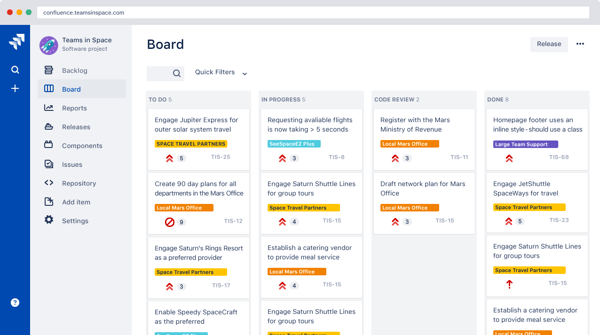
The integration ecosystem is another major strength. I’ve personally seen how powerful Jira becomes when connected with GitHub, Bitbucket, Confluence, or Azure DevOps. Reviewers say the same: commits linking to tickets automatically, docs syncing across teams, and automation rules removing tons of manual work. Several long-time admins point out that once you invest in setup and use Atlassian University and the broader community, the tool becomes dramatically smoother.
Jira’s flexibility can introduce complexity, especially in teams without clear ownership or governance. Environments with heavily customized workflows may feel slower or harder to navigate, which makes Jira a stronger fit for teams that value structure and process discipline over plug-and-play simplicity.
Most reviewers offer similar advice: use the desktop version for stability, appoint “super users,” keep workflows lean, pair it with Confluence, and provide basic training so teams don’t get lost. Internal documentation and clear project ownership go a long way toward keeping Jira manageable.
Where Jira truly proves itself is in business outcomes. I came across multiple reviews describing the same shift: scattered tasks becoming a single source of truth, predictable sprint cycles replacing guesswork, better bug tracking, full traceability from requirement to commit, and stakeholders finally getting real-time dashboards instead of chasing updates. For many teams, Jira becomes the operating system for work.
Overall, I’d recommend Jira to teams that want structure, scalability, and transparency, not just a place to store tasks. It’s especially strong for mid-market and enterprise setups running complex, multi-team initiatives, though smaller teams can thrive with the right setup. Jira remains the most complete solution for teams that want to run Agile with discipline, clarity, and long-term scalability.
What I like about Jira:
- Users consistently praise Jira’s depth in Agile execution. Scrum boards, Kanban workflows, sprint planning, and backlog grooming feel cohesive rather than bolted on, making iterative delivery and cross-team visibility feel natural.
- Jira’s issue hierarchy is highly flexible. Epics, stories, tasks, sub-tasks, and custom fields let teams add the right level of structure, turning Jira into a reliable single source of truth for everything from bugs to large initiatives.
What G2 users like about Jira:
“I love Jira’s impressive UI. It feels so modern and minimal. It has been more than two years using Jira, but it still feels like a fresh design. It allows us to break down massive, complex ETL/ELT projects into manageable, trackable nuts. We can create custom issue types and custom workflows, and ticketing is crucial for managing dependencies. It gives my manager and me instant, clear visibility. The integration with GitHub is best, as I commit changes, the commits are automatically visible in the Jira ticket. We use this process daily on Jira.”
– Jira review, Sahil M.
What I dislike about Jira:
- Some reviewers highlight that Jira’s flexibility is most effective when workflows are intentionally structured from the start. In the absence of clear conventions, extensive fields, statuses, and automation rules can introduce more process overhead than some teams need.
- Reviewers note that Jira can take time to learn, especially in heavily customized environments. The interface surfaces a lot of information, and larger projects may feel slower to navigate early on. Teams that value depth and control tend to benefit most, while those seeking a lighter setup may prefer simpler tools.
What G2 users dislike about Jira:
“Overall, the biggest challenge with Jira is managing the tool’s inherent complexity and ensuring that workflows stay practical rather than bloated. Without dedicated admins to keep things streamlined, Jira can become a source of frustration rather than a productivity enhancement. Despite this, it remains widely used because of its powerful capabilities and integrations, but those downsides do impact the day-to-day user experience.”
– Jira review, Mrudul P.
2. LogRocket: Best for fast, visual debugging and understanding real user behavior
When I first looked into LogRocket, what stood out to me right away was how widely it’s adopted by smaller teams. Around 63% of its users come from small businesses, which aligns with how the product feels in practice. It delivers deep visibility into real user behavior without the operational overhead you’d typically expect from tools in this category. While its overall G2 Score sits at 85 and Market Presence at 71, the 100% Satisfaction score suggests that teams who adopt LogRocket tend to find clear, ongoing value in it.
What really resonated with me is how visual the entire debugging experience feels. LogRocket doesn’t treat user behavior as abstract data points, it lets you see it unfold. Session replay is the core of that experience, and it fundamentally changes how issues are understood.
Instead of interpreting logs or trying to recreate a bug from memory, you’re watching exactly what the user saw and did. Multiple reviewers echoed this, noting how it removes the need for repeated follow-ups like screenshots or screen recordings, because the full context is already there.
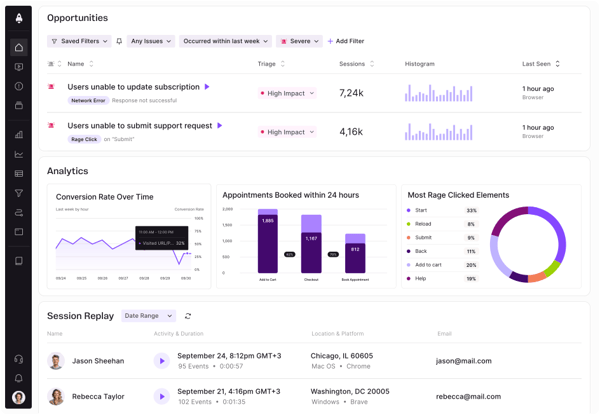
From a developer perspective, the technical depth embedded into those sessions is especially compelling. HTTP requests, responses, console logs, and errors appear directly within playback, making it easy to connect a UI action to the underlying system behavior. It feels similar to having DevTools layered over real customer journeys. Features like Bug History (87%) and Analytics (86%) support this workflow by helping teams understand how often issues occur and whether they’re isolated or systemic.
I also noticed consistent praise for LogRocket’s automated issue detection and AI-based classification. These capabilities help surface recurring problems and patterns across sessions, which is useful when you’re dealing with more than just one-off bugs. Combined with its User Feedback capabilities (83%), the platform makes it easier to link what users report with what actually happens in the product, reducing guesswork when prioritizing fixes or UX improvements.
Usability is another area where LogRocket earns strong feedback. Many users describe the interface as clean and approachable, which matters when you’re reviewing multiple sessions in a short period of time. Integrations with tools like Slack and Jira also come up frequently, largely because they allow teams to share sessions with full context attached, rather than summarizing issues manually. That shared visibility seems to support smoother collaboration across engineering, product, and support teams.
The interface exposes a wide range of controls and options, which can take some time to get familiar with early on. To ensure security, session access is time-bound, meaning older recordings aren’t always available for long-term reference.
Even with those points in mind, the overall sentiment remains strongly positive. Reviewers consistently talk about faster bug resolution, clearer insight into user behavior, and better alignment across teams. Many describe LogRocket as a key part of how they identify friction points, validate UX decisions, and resolve issues that would otherwise be difficult to reproduce.
For teams building web applications, LogRocket offers a clear, practical way to understand how users experience the product and why things break when they do. I see it as particularly well-suited for small and mid-sized teams that need to move quickly, collaborate effectively, and make product decisions grounded in real user behavior. Its ability to turn complex problems into visible, shareable context is what makes it a tool I continue to value.
What I like about LogRocket:
- LogRocket makes debugging visual and intuitive. Session replays show every click, scroll, error, and network call, giving teams real context and reducing back-and-forth during issue resolution.
- Actionable data is embedded directly in each session. Developers can inspect HTTP requests, console logs, and performance events without switching tools, helping teams resolve hard-to-reproduce bugs much faster.
What G2 users like about LogRocket:
“I use LogRocket to see what the customer actually experienced when they encounter errors, which used to feel almost impossible when just looking at raw logs. As a product-oriented engineer at a company in a complex domain, I also enjoy watching the customer experience and using the places where they encounter errors to drive product decisions. We can make updates to error patterns and really back the decisions we ultimately make with customer data. We’re able to easily jump from error logs into the user’s session. My favorite feature is being able to toggle the timestamp display, no matter what other log source is driving me to LogRocket, I can match up the logs to the user experience exactly.”
– LogRocket review, Shannon B.
What I dislike about LogRocket:
- Some reviewers note that the interface surfaces a lot of controls and data at once, which can feel dense for new users. This design tends to work best for teams that want immediate visibility and hands-on control, while teams looking for a more minimal or guided experience may find the interface heavier than expected at first.
- A few reviewers point out that session data retention is limited to 30 days. This aligns well with teams focused on short-term debugging and active release cycles, but teams running longer release timelines or conducting extended historical analysis may find the retention window more restrictive.
What G2 users dislike about LogRocket:
“I think the layout and UX could be improved a bit. It takes a while for a new user to get accustomed to the lay of the land, with too many controls visible at all times. There should be a way to hide some controls that I don’t use/need and save that setting for my login.
Also, I absolutely don’t like the fact that we can’t extend our session retention without upgrading our plan to a much higher level. That has been a huge pain point for us, because often, from when an issue occurs to when a developer gets to work on that, it has been >30 days, and the session is lost. This gets us back to the Stone Age way of trying to replicate the issue by calling the customer or keep trying ourselves.”
– LogRocket review, Abhinav B.
3. ClickUp: Best for teams that want an all-in-one workspace with deep customization
When I first explored ClickUp, what stood out immediately was how well it aligns with the way small and mid-sized teams actually operate. According to G2, 77% of its users come from small businesses and another 19% from mid-market companies, which tracks with ClickUp’s core promise: replacing a patchwork of disconnected tools with a single, flexible workspace for tasks, docs, goals, reporting, and collaboration.
What I appreciate most is how ClickUp supports different workstyles without imposing a rigid operating model. Teams aren’t forced into a predefined structure. Instead, collaboration features, reporting, automations, and AI-powered tools give each function room to shape workflows around how they already work. That flexibility is reflected in its G2 performance as well, with a 91 Satisfaction score and an overall G2 Score of 84, signaling broad approval across varied use cases.
Using ClickUp firsthand, the value of centralization shows up clearly in how bugs move from discovery to resolution. Bug reports, reproduction steps, screenshots, comments, and status updates live in one place instead of being split across chat threads, docs, and task tools. Automations help route issues through triage by updating statuses, assigning owners, or notifying the right stakeholders when a bug changes state, which reduces manual coordination and keeps fixes from stalling during handoffs.
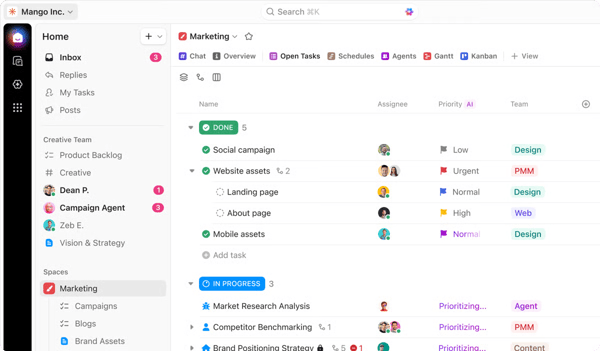
ClickUp also supports different bug-tracking workflows without forcing a single methodology. Teams can log bugs as tasks, group them by severity or component, and visualize progress through Kanban boards, lists, or dashboards. AI features like Brain AI and the AI Notetaker extend into this flow by turning QA reviews, standups, or incident discussions into structured bug items with clear next steps, which helps reduce the gap between identification and action.
That flexibility comes with some considerations. Because ClickUp exposes many configuration options early, bug-tracking setups can feel busy until fields, views, and statuses reflect how a team prefers to triage issues. This reflects how adaptable the system is rather than any inherent complexity. Teams familiar with purpose-built tools like Jira may notice that issue-type hierarchies are less opinionated by default.
Even with those considerations, the core value for bug tracking remains compelling. Housing defects, related documentation, sprint work, and release notes in one workspace creates a shared source of truth for engineering, QA, and product. Cross-functional teams benefit from having visibility into bug status without switching tools or relying on status updates passed through meetings.
Many describe ClickUp as the system that connects bug tracking to the broader delivery workflow, rather than isolating defects in a separate tool.
Overall, ClickUp works best for teams that want bug tracking tightly integrated with planning, documentation, and execution. While it doesn’t impose a rigid issue model, that flexibility makes it especially relevant for teams that manage bugs alongside broader product and operational work.
What I like about ClickUp:
- ClickUp consolidates bug tracking into a single workspace. Bug reports, reproduction steps, comments, and status updates live together, reducing context switching during triage and follow-ups.
- Its customization supports different team workflows. Engineering, QA, and leadership can each track bugs their way, while dashboards, automations, and AI Notetaker help turn reviews and incidents into structured updates.
What G2 users like about ClickUp:
“ClickUp’s ability to simplify complex, cross-functional project management into easily digestible views is truly transformative. I rely on it daily, and the brain AI feature allows me to add numerous tasks effortlessly when used correctly. The platform enables me to develop repeatable project templates and a structured implementation methodology, which greatly improves consistency and efficiency across our diverse teams. Its robust customization options also support detailed workload forecasting and capacity tracking, both essential for managing my team’s limited resources in the face of operational challenges.”
– ClickUp review, Nicole Nina N.
What I dislike about ClickUp:
- ClickUp’s breadth means most bug-tracking features are visible early on. That level of exposure reflects how configurable the platform is, though the interface can feel visually dense until issue views, fields, and statuses are aligned with the team’s triage process.
- As bug volumes grow or workflows become more layered, some users note longer load times in high-usage environments. While ClickUp supports flexible issue tracking, teams accustomed to highly specialized bug-tracking tools may find ticket-type controls less granular by default.
What G2 users dislike about ClickUp:
“It’s still pretty noisy. Too many apps, too many places, too many features, so it’s now Slack, Docs, Jira, Trello, Monday, etc, and it feels too much, when we just want to handle some simple projects, it feels like we are going in a labyrinth of buttons and clicks. Honestly, I think I would switch to 4 instead of 6, but what I decided to go up is because in the enterprise grade, this could be a more complete tool and don’t have to jump between multiple apps. (it could be “multiple apps” inside the same one, and not literally different UIs/pages, so that would make it easier, like for example what Atlassian is doing, that Jira, Confluence, Goals and others are different apps but inside the same place with almost the same UI, so it feels better that way).”
– ClickUp review, Cesar Daniel Z.
4. GitHub: Best for reliable version control and collaborative software development
When I think about platforms that have shaped how modern software teams work, GitHub is always near the top of the list. Its combination of version control, collaboration, and workflow automation has turned it into a central hub for development across company sizes.
The adoption data reflects that breadth well: usage is spread across small businesses (49%), mid-market teams (29%), and enterprises (22%). Its G2 metrics, including Satisfaction at 72, Market Presence at 82, and an overall score of 77, say that the platform is deeply embedded in day-to-day development work rather than optimized for any single segment.
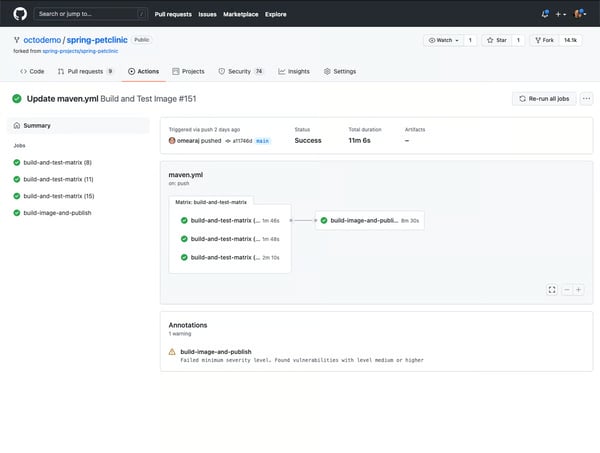
What stands out most to me is how naturally GitHub supports structured collaboration. Core workflows like commits, branches, pull requests, and reviews create a shared language that teams rely on as projects grow. Highly rated capabilities such as Data Retention (91%), Team Reports & Comments (91%), and User Feedback (90%) reinforce that sense of transparency. Whether you’re reviewing a small change or coordinating across a large codebase, the platform makes it easy to understand what changed, why it changed, and who was involved.
GitHub’s ecosystem plays a big role in that experience. GitHub Actions brings automation directly into the repository, allowing teams to connect testing, deployment, and other workflows to the code itself. Issues and pull request discussions keep technical conversations close to the work, while Projects adds a lightweight layer of planning without pulling teams into a separate system. Combined with the scale of the open-source community where patterns, libraries and templates are widely shared, GitHub often becomes the place where entire development workflows live, not just the code.
That depth does mean there’s a lot happening under the surface. Teams working with advanced Git patterns, complex permission structures, or large repositories may find that some aspects of setup and management require familiarity with Git’s underlying concepts. For many teams, though, this reflects the platform’s breadth.
Across reviews, the business impact comes through clearly. Teams describe clearer version history, fewer ambiguities around changes, and stronger code quality driven by consistent review practices. Built-in tools like Dependabot, vulnerability alerts, and automated checks help maintain stability and security as teams scale, particularly for distributed or asynchronous environments where visibility matters.
Overall, GitHub feels like a foundational platform rather than a point solution. I’d recommend it to any development organization that values transparency, reliable version control, and workflows that can grow alongside the product. From solo developers to global engineering teams, it adapts well to different scales while remaining a dependable source of truth for code, documentation, and delivery processes.
What I like about GitHub:
- GitHub makes version control feel structured and dependable. Being able to branch freely, review collaboratively, and roll back changes with confidence removes so much stress from development. It’s exactly why teams rely on it as their single source of truth.
- Actions for automation, Issues for tracking, Wikis for documentation, and a massive open-source community to learn from and build with, the ecosystem is comprehensive. It’s not just a place to store code; it’s where the entire engineering workflow can run end-to-end.
What G2 users like about GitHub:
“GitHub delivers a user-friendly experience with an intuitive interface that makes version control and collaboration straightforward, even for newcomers. Its comprehensive feature set covers everything from pull requests and code reviews to CI/CD integrations and project boards, meeting nearly all the needs a developer could have. Setting up GitHub is simple, and it integrates seamlessly with tools like VS Code, Jira, and Slack. Thanks to these smooth integrations, I find myself relying on GitHub regularly in my daily development work.”
– GitHub review, Gaurang A.
What I dislike about GitHub:
- GitHub’s breadth introduces a level of complexity, particularly around branching strategies, merge conflict resolution, and advanced workflow automation. For teams managing multiple repositories, or for developers who are still building familiarity with Git-based workflows, it can take some time before everything feels intuitive and consistent.
- Some of GitHub’s more advanced capabilities are tied to higher-tier plans. Features related to enterprise-grade security, governance, and administrative controls aren’t always available at entry-level tiers, which becomes more relevant as teams grow and operational requirements increase.
What G2 users dislike about GitHub:
“There are a couple of useful features I’m missing, but they aren’t necessarily present elsewhere. Tracking the actual time taken to do a task according to the assignee would help it bridge the gap towards a full timing solution. I’ve also noticed the odd data sync issue, with text or assignees, and lastly, sometimes if you make a task, it’ll vanish because your board is filtering it out, it’d be nice if this stuck around until you can fill in more fields.”
– Github review, John M.
5. Backlog: Best for simple, beginner-friendly bug tracking and task visibility
I’d come across Backlog mostly in smaller engineering and QA-heavy teams, and the feedback was always consistent: it’s simple, reliable, and more capable than it looks. It’s not trying to be an all-in-one enterprise platform, and that focus shows in how quickly teams can get value from it. The user base leans heavily toward small and mid-market companies, which aligns well with how the product is designed.
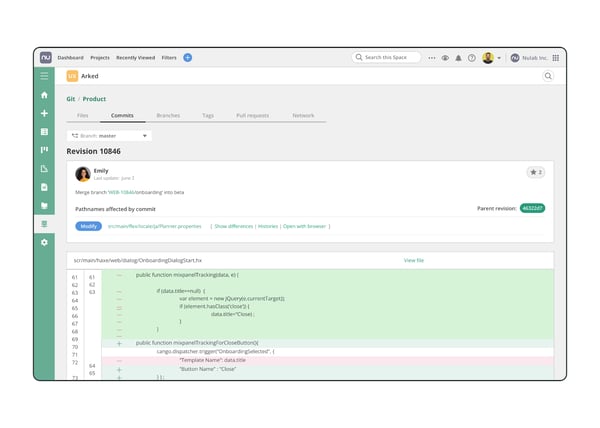
What stood out to me early on was how much attention Backlog puts into keeping everyday workflows clean. Creating bugs or tasks is fast, attachments feel natural, and prioritization stays straightforward. QA teams value having issues, comments, and history centralized, while features like issue templates add structure without turning day-to-day work into a process-heavy exercise.
Backlog’s Git integration is another strong point, especially for smaller development teams. Commits, pull requests, and issues stay connected, which reduces the need to jump between systems. For teams without dedicated DevOps support, that simplicity translates into fewer handoffs and clearer accountability during bug fixes and releases.

Backlog performs particularly well in AI-related areas. Its G2 Data shows proactive assistance, natural language interaction, and adaptive learning scoring well above category averages. For a lightweight tool, that’s notable. Reviews suggest the AI features feel supportive rather than intrusive, helping surface tasks and actions without forcing teams into unfamiliar workflows.
From a metrics standpoint, its G2 profile reflects that — 4.6/5 rating with strong Satisfa