In this guide, we’re diving into twelve content marketing tactics we’ve tested and continue to use with some decent results. We know they work, and we’re excited to show you the proof.
Generally speaking, low-competition keywords are search terms where you likely don’t need many backlinks to rank on the first page of Google (backlinks are one of the most important ranking factors).
By focusing on these less competitive terms, you can achieve higher search engine rankings faster and with less effort; and the higher the rankings, generally the more traffic lands on your site. This makes low-competition keywords a perfect SEO tactic for new sites and sites without a strong backlink profile.
To illustrate our results, here’s a heatmap showing the relationship between keyword difficulty and Google rankings for nearly 200 pages from our SEO glossary content project.
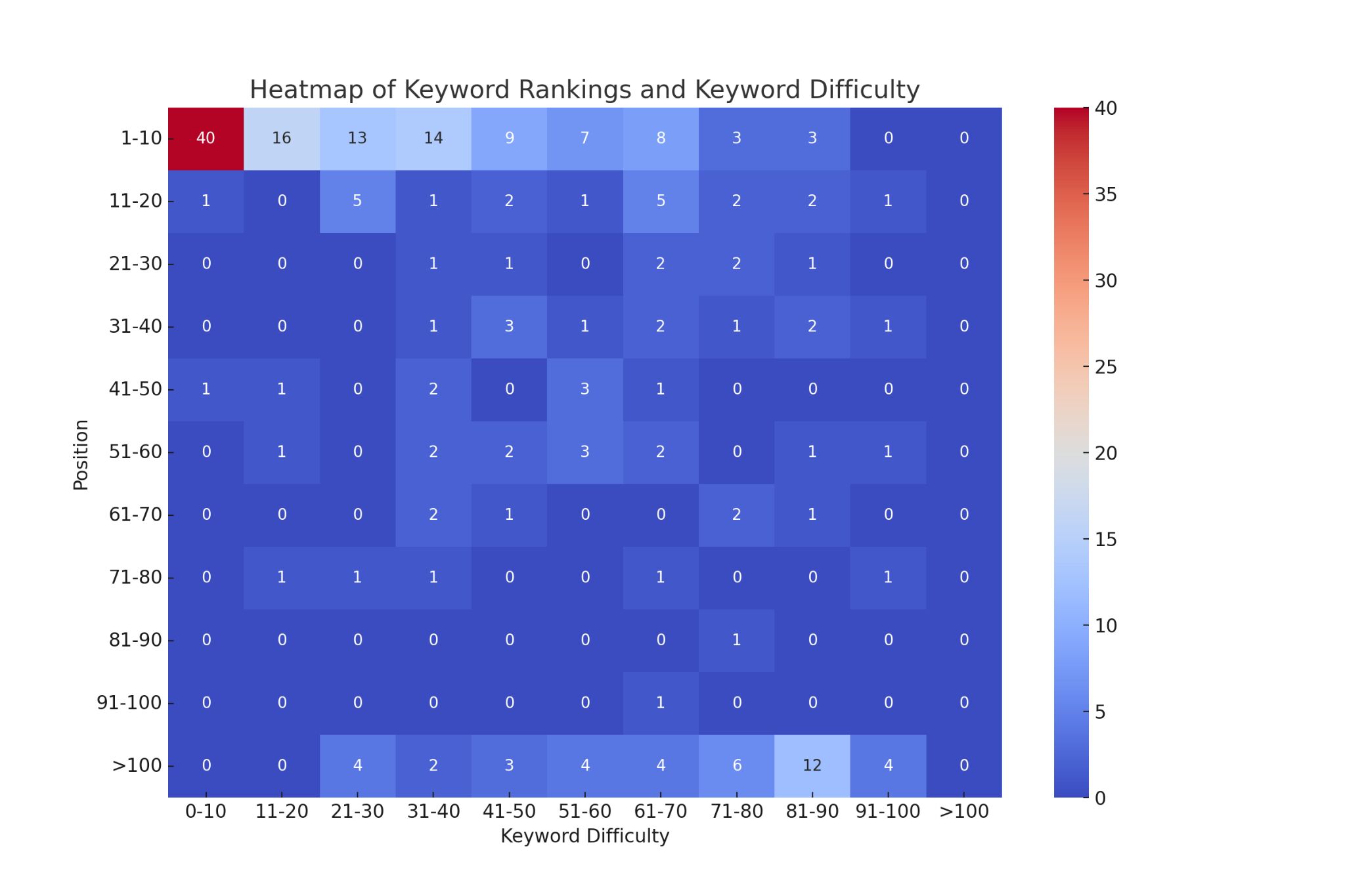
We were able to rank in the top ten with few links and a templated content approach. But that wasn’t enough for mid to high KD keywords; these would require more comprehensive content and additional backlinks.
How to get started
Use a tool like Ahrefs’ Keywords Explorer to quickly find keywords that need fewer backlinks to rank.
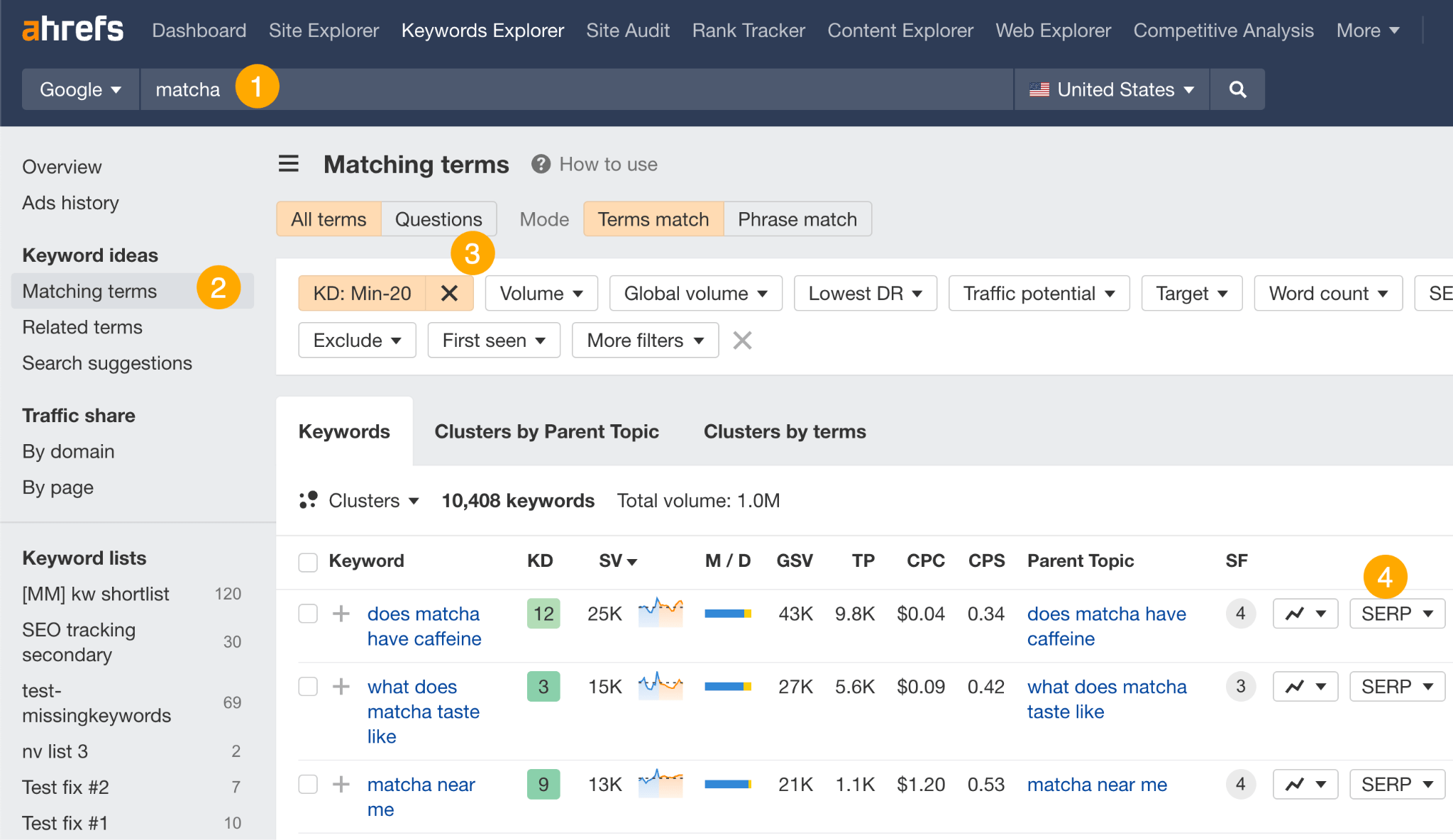
- Enter a seed keyword (or multiple seed keywords).
- Go to the Matching terms report.
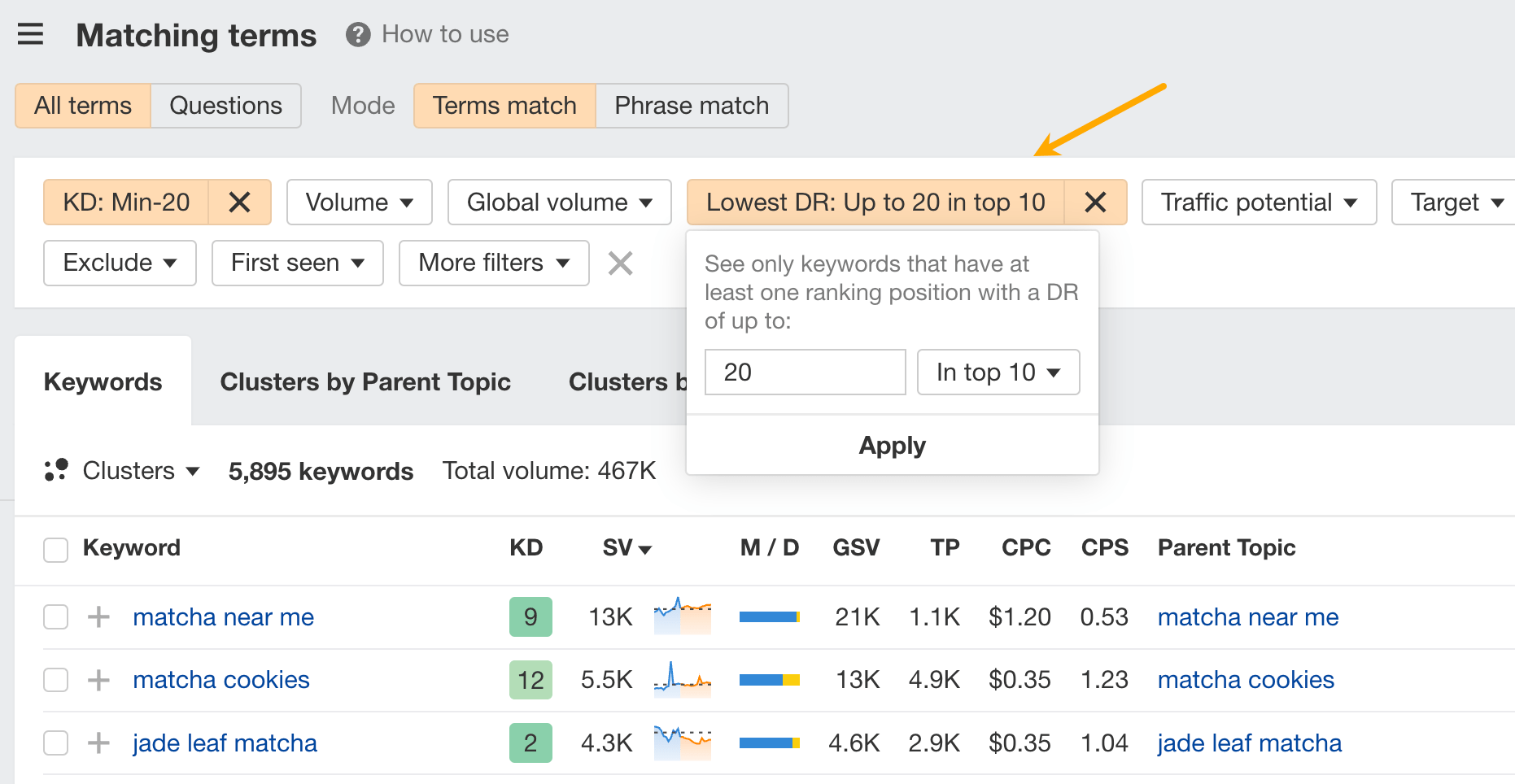
- Use the KD (Keyword Difficulty) metric to show keywords with up to 20 KD. This will show you easy keywords based on the backlink profile.
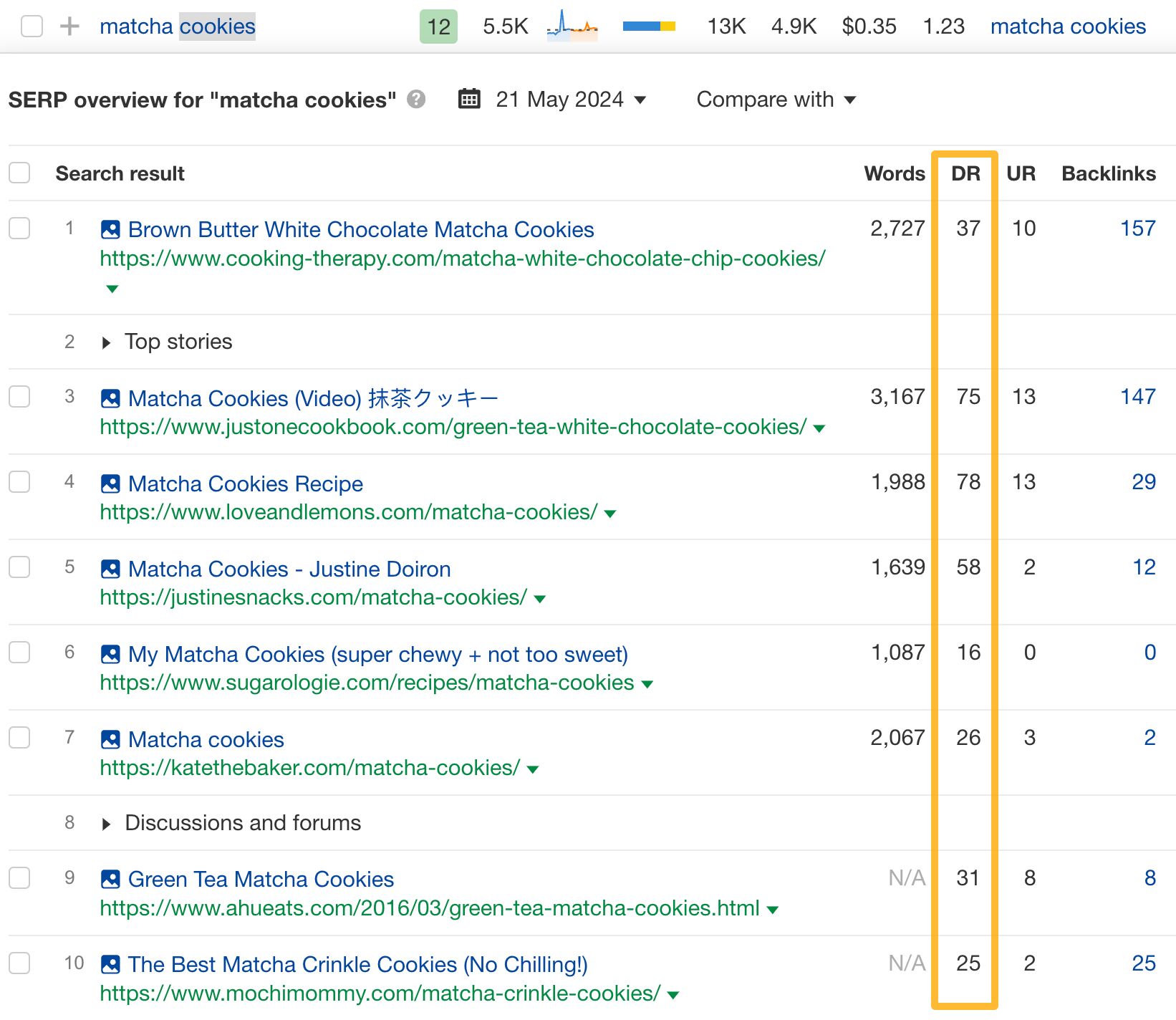
- Pick a relevant keyword and open the SERP panel to see what kinds of pages rank. If you see popular brands dominating, those keywords may be hard to rank despite the low KD (here’s why). SERPs without brands like that should be easier to target.
- Repeat step #3 for every relevant keyword on the list.
And here’s an example of a keyword with low KD and just a few strong sites (based on the Domain Rating metric).
Tip
Building a network involves creating and nurturing relationships that can amplify your message and expand your reach. These connections can be made through social media, online communities, forums, meetups, and conferences.
When other people share and engage with your content, you’ve got a higher chance of cutting through the noise of today’s information-saturated world making your content noticed and valued.
Here’s a small sample. At Ahrefs, we often seek expert commentary to enhance our content. I reached out to Ashley Faus with one simple question about her article and she was kind enough to share my article with her audience of 13K people (I didn’t even ask for it).
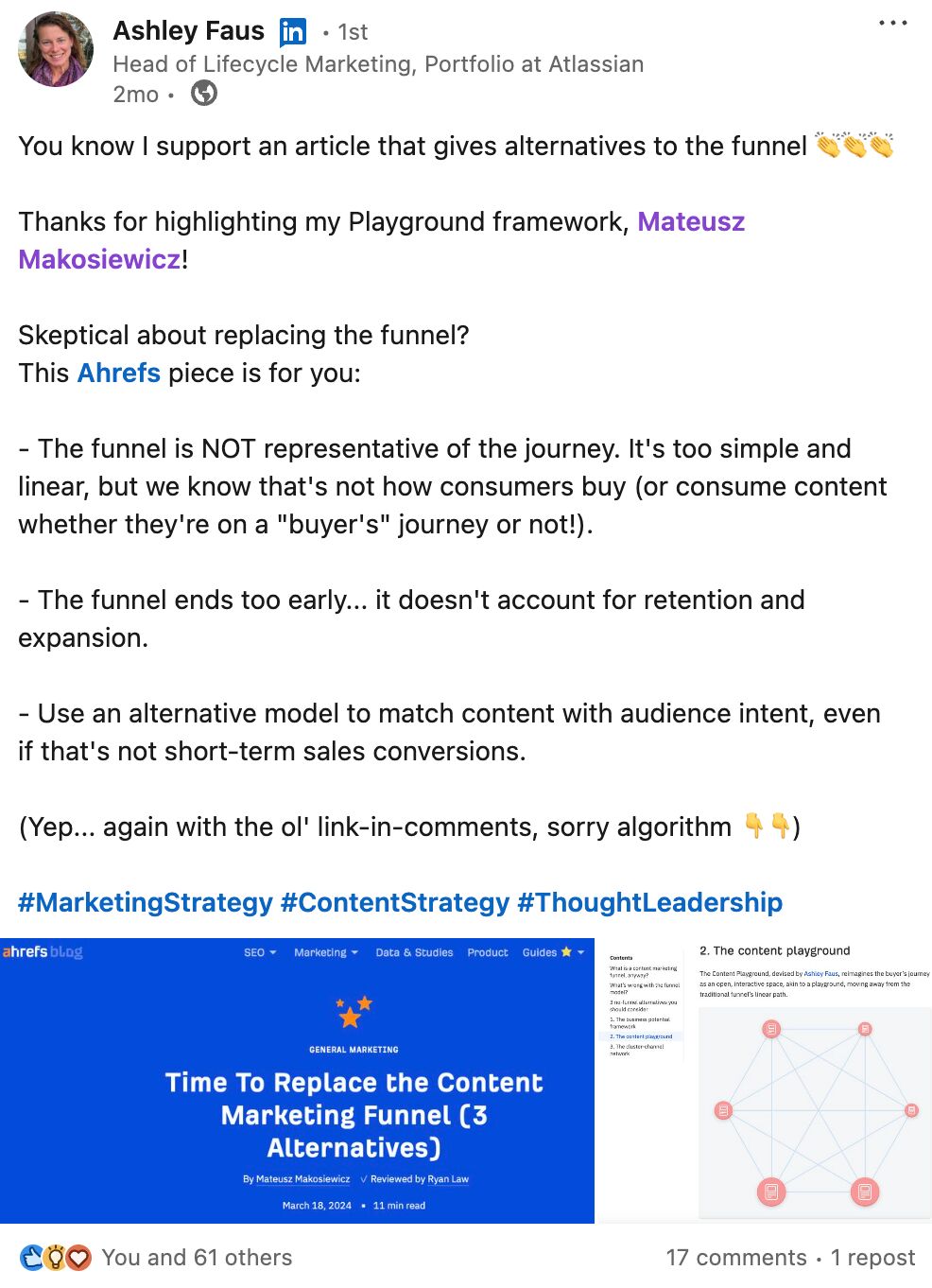
Not everyone will be as generous as Ashley, but you have to assume they will.
How to get started
There are two approaches to this: broad and targeted.
In the first one, you leverage things that typically engage people on social media and weave them into your content. Rand Fishkin, in his article on content amplification, calls these share-inducing emotions, for example:
- Novelty: An article about “A cat learned to use sign language” will attract more attention than “Cats can meow.”
- Belief reinforcement: A report linking organic food to better health will be shared by those who already support organic farming.
- Fear: A headline like “New disease spreading rapidly” will get more shares than “Health improvements in 2024.”
- Controversy: Debates over “Climate change policies” attract more engagement than consensus articles.
There’s also the targeted approach, and it’s a whole different beast — it needs customization, good research, and etiquette. You need to get that person’s attention with something they will likely care about (such as their work), but you can’t ask for anything in return.
And that is exactly what happened in the example I shared above. No strings attached, just a simple request from one professional to another.
Publishing original research is a proven method to boost your SEO through backlinks (links from other sites) and becoming a thought leader in your niche through references to your work.
When you create original studies, like data analyses, case studies, or industry surveys, other authors will often use them as sources, which means more backlinks for you. These backlinks increase your site’s website’s authority, which can help other important pages on your site rank better too.
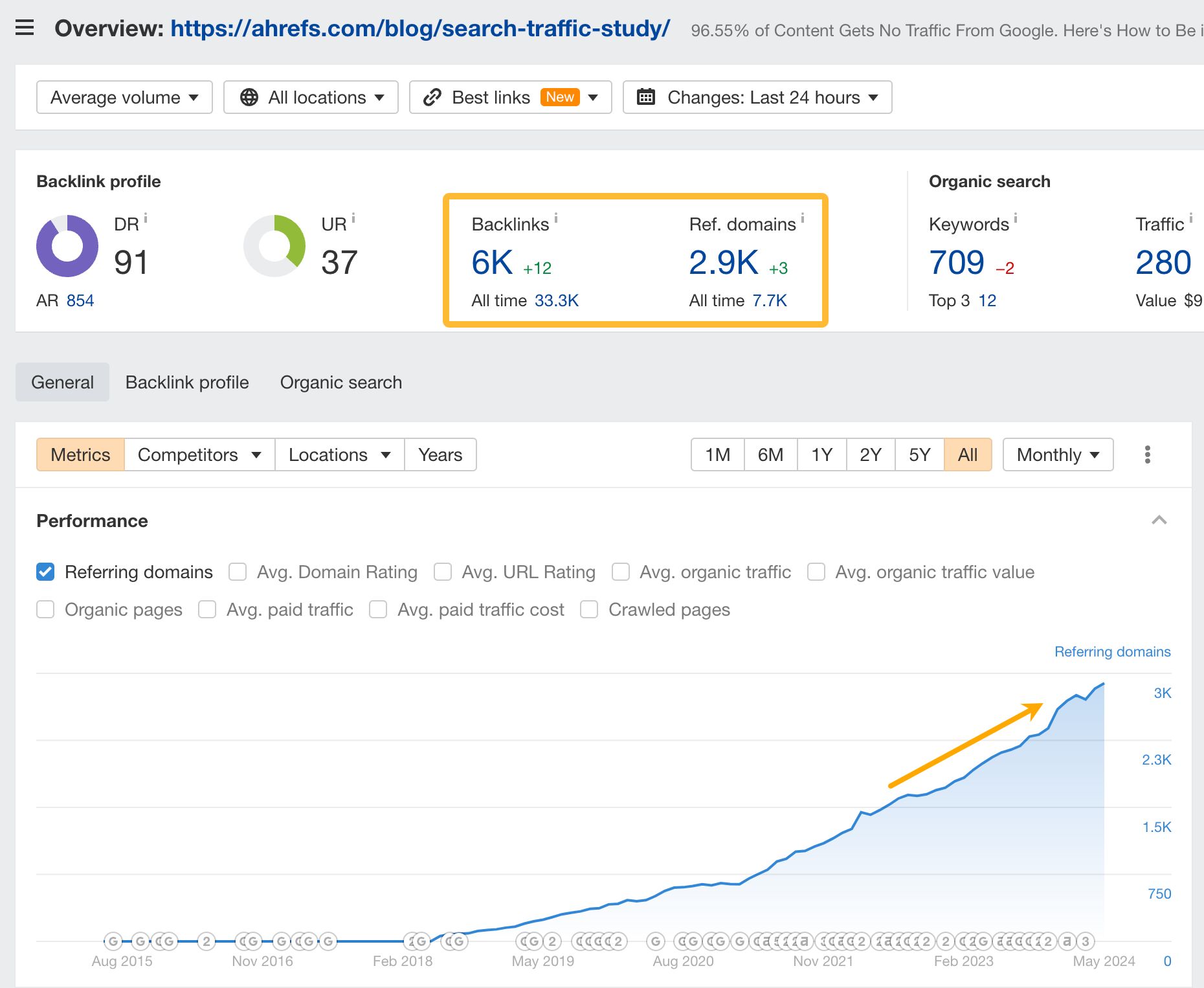
For example, we did a study on why most web content doesn’t get organic traffic and got 6K backlinks from 2.9K different sites, and those numbers keep growing without us lifting a finger.
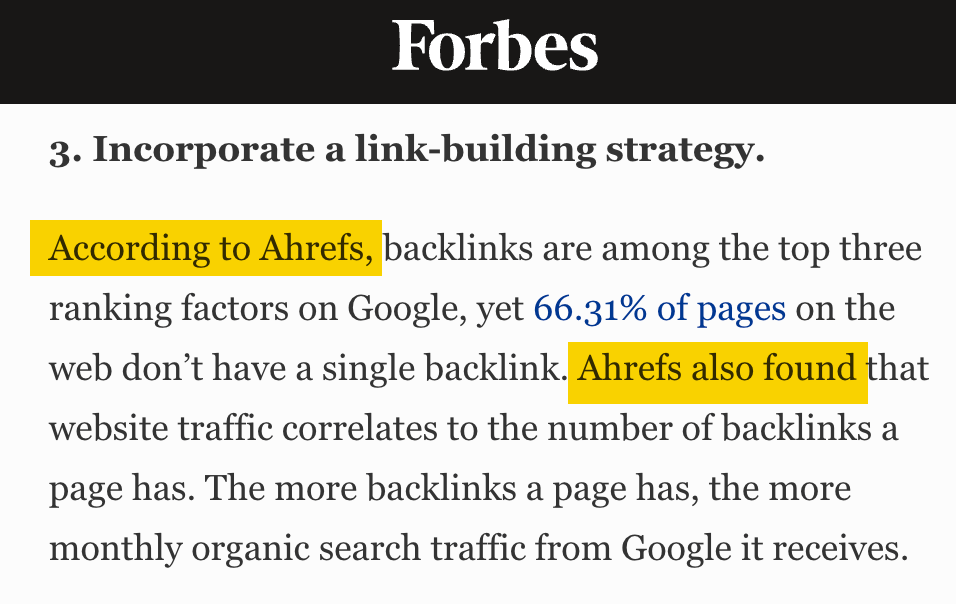
Besides improving your SEO, original research makes you a thought leader in your field. When other sites mention your research, it boosts your reputation, making you a trusted and respected brand.
How to get started
Coming up with research ideas doesn’t have to be hard.
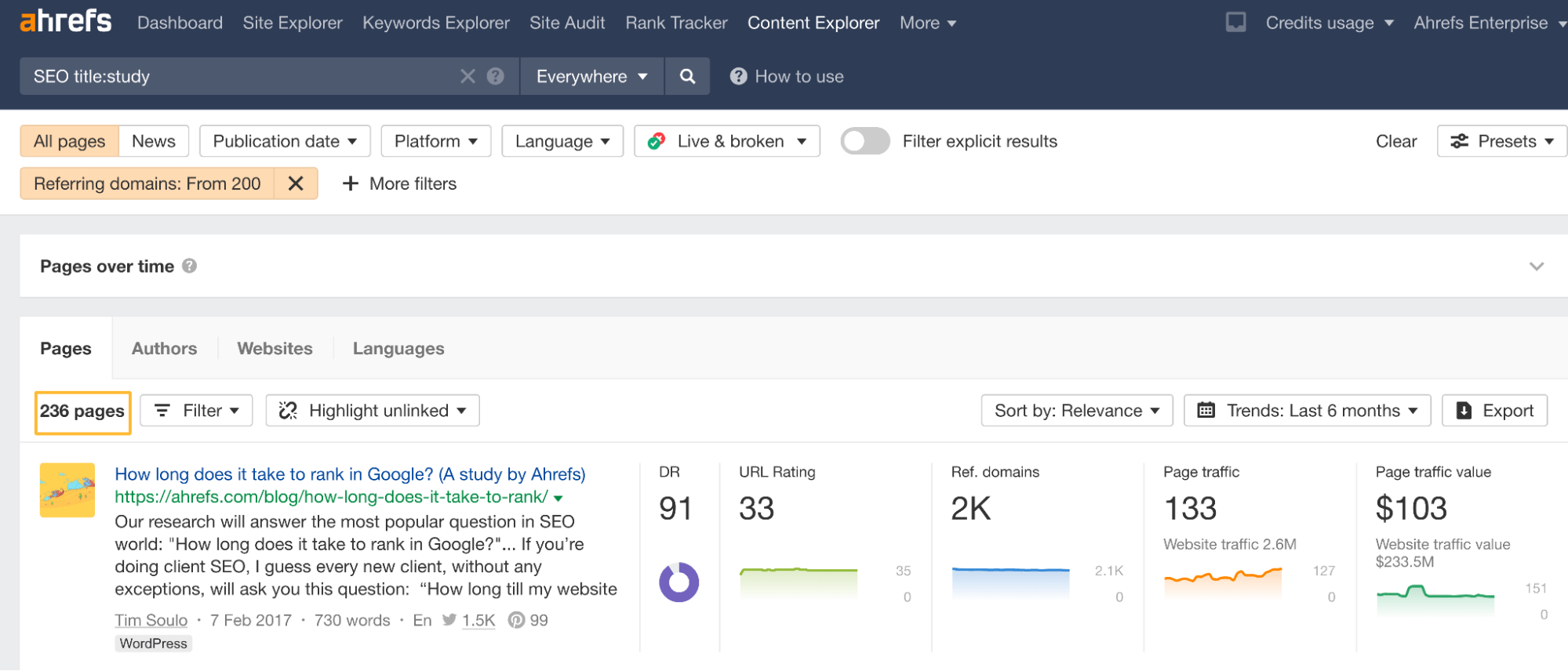
For example, to find relevant research about SEO, we use Ahrefs’ Content Explorer to look for content that has “study” in the title and at least 200 referring domains (to weed out some less popular ones).
Partnering with influencers involves paid collaboration with content creators who have a significant following (e.g., on social media or through an email list) in your target market.
Influencer partnerships are effective because they leverage the trust and loyalty that influencers have built with their audience. This authentic endorsement can introduce your brand to niche markets, sometimes more effectively than traditional advertising.
And last but not least, as a sponsor you get to feature your brand in some really unique, quality content.
We’ve been using this tactic on a constant basis for three years, now. Here are just a few examples of the amazing content from our partners.
The first is an hour-long workshop on competitive analysis for a content marketing and SEO community. This video promotes both free and our core toolset, generating 1.8k views.
And here’s a sponsored video by one of the top influencers in the SEO industry. This video promotes our free academy and our free SEO tool, generating 50k views.
And here’s a contextual ad on a channel with over 500K subscribers. This promotes our core toolset, generating 19K views.
As you can see, we’ve chosen to work with both small and big influencers, and what we promote depends on the audience and the topic. But in any case, it pays to have some kind of free offering to hook the viewers on the value you provide as a business with minimum friction.
How to get started
To find the right influencer, there are a few steps you need to take.
- Define your goals. Clearly outline what you aim to achieve with influencer marketing, such as increasing brand awareness, driving engagement, or boosting sign-ups.
- Figure out your budget. You can use average influencer earnings data like this one to estimate the budget.
- Identify potential influencers. Here are a few ideas:
- Start by considering your own employees and customers who might already be fans of your brand and have a following .
- Use social media platforms and specialized tools like Ahrefs’ Content Explorer, Sparktoro, Social Blade, and Followerwonk to find relevant influencers based on your niche and keywords.
- Seek recommendations from your audience.
- Evaluate influencers. Ensure that the influencers align with your brand values and have genuine engagement. Look beyond follower counts to assess their influence and audience interaction.
- Monitor and measure. Ask the creator to share reports with you (including content output and engagement metrics).
Find out more about finding influencers to partner with in our guide, Find Influencers: 6 Easy Steps to Choose the Right Ones.
Using content templates and programmatic SEO is about producing more content in less time, with the latter allowing you to actually automate content production.
With templates, you can set up a standard format and just fill in the details. It’s great for things like product pages, definition glossaries or local listings where you need similar content for many items.
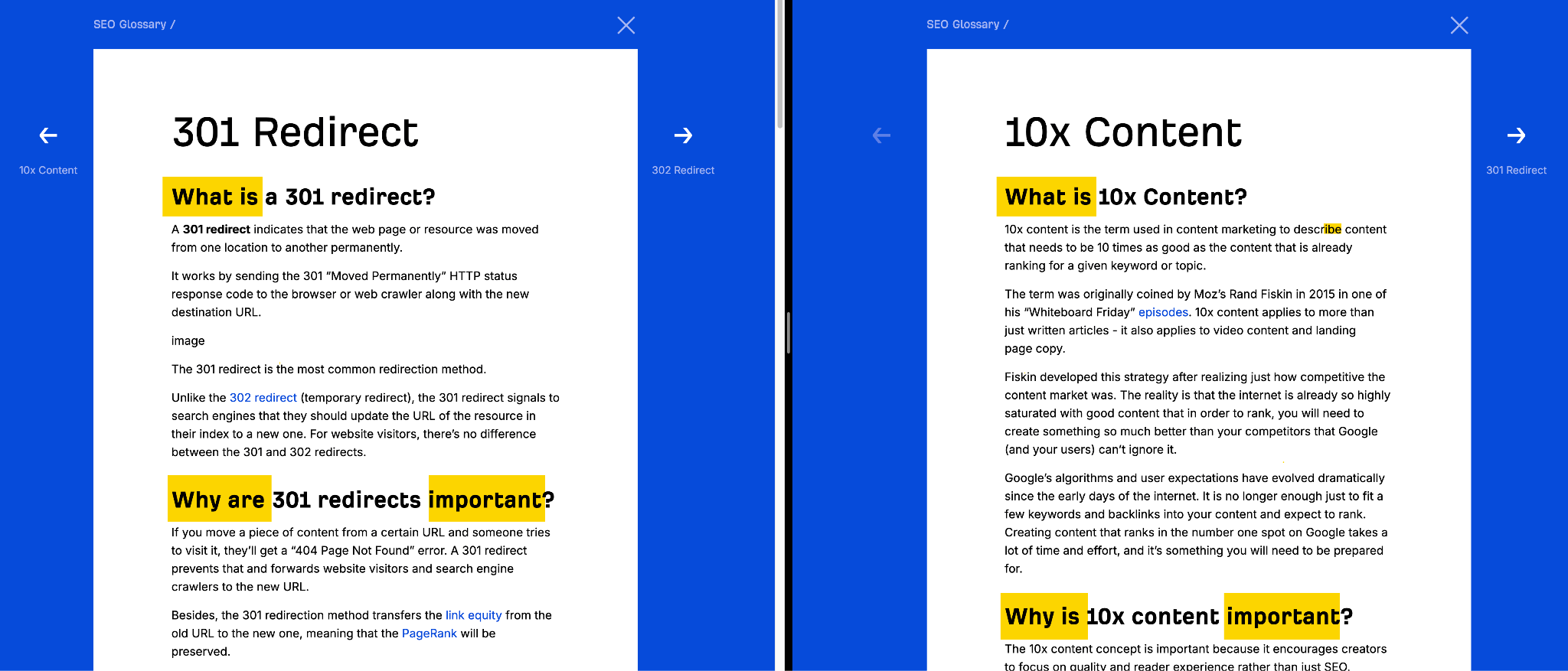
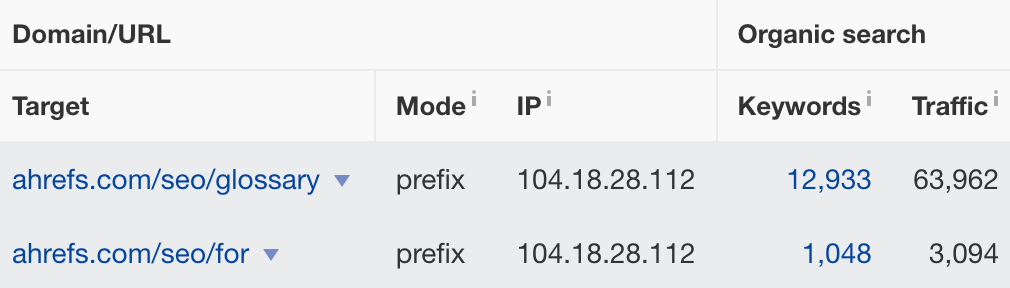
We used templates to create an SEO glossary and a directory of beginner-focused SEO guides for different professions. As of today, they’re bringing in a total of 67k visits each month.
Programmatic SEO is basically content templates on steroids. Programmatic pages are usually created automatically directly from data, like product prices, weather, or location information. This lets you cover many keywords and topics without writing everything by hand.
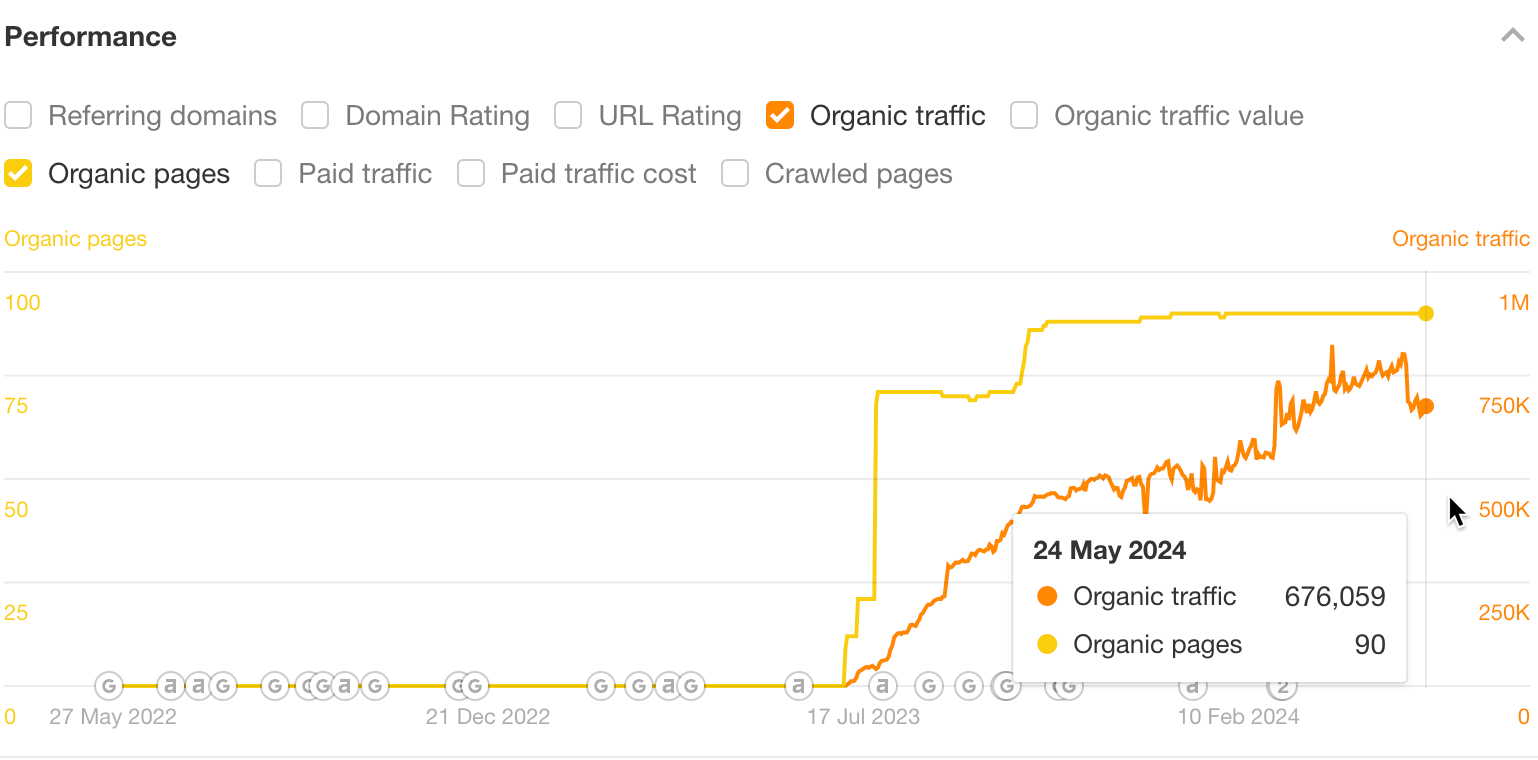
We used programmatic SEO to take advantage of huge search demand for free AI writing tools. We drive over 600K monthly search visits this way, and you can see on the graph below how this approach allowed us to publish dozens of pages in a day (sharp spikes on the yellow line).
How to get started
First, you need a set of keywords that could be targeted with similar types of content. One of the best ways to do this is to use a keyword research tool to categorize your keywords by terms. Terms like “definition”, “what is”, or “cost of living” indicate that people want the same kind of content for different topics.
- Open Ahrefs’ Keywords Explorer and enter a broad seed keyword, for instance “marketing”.
- Go to the Matching terms report.
- Open the Terms tab and browse through keyword categories.
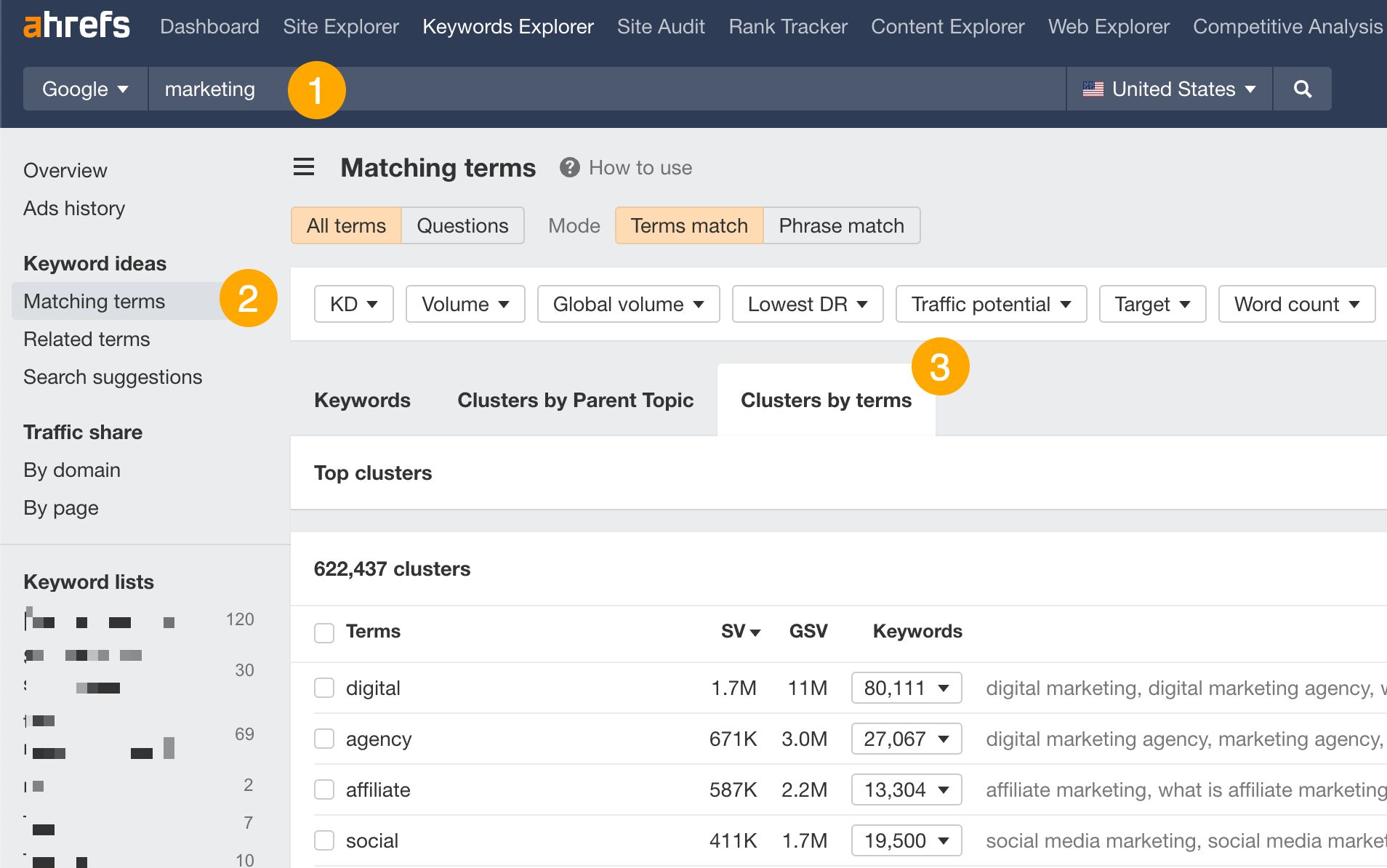
Here’s an example – over 4.6K search keywords requiring definitions which could be targeted with the same page template.
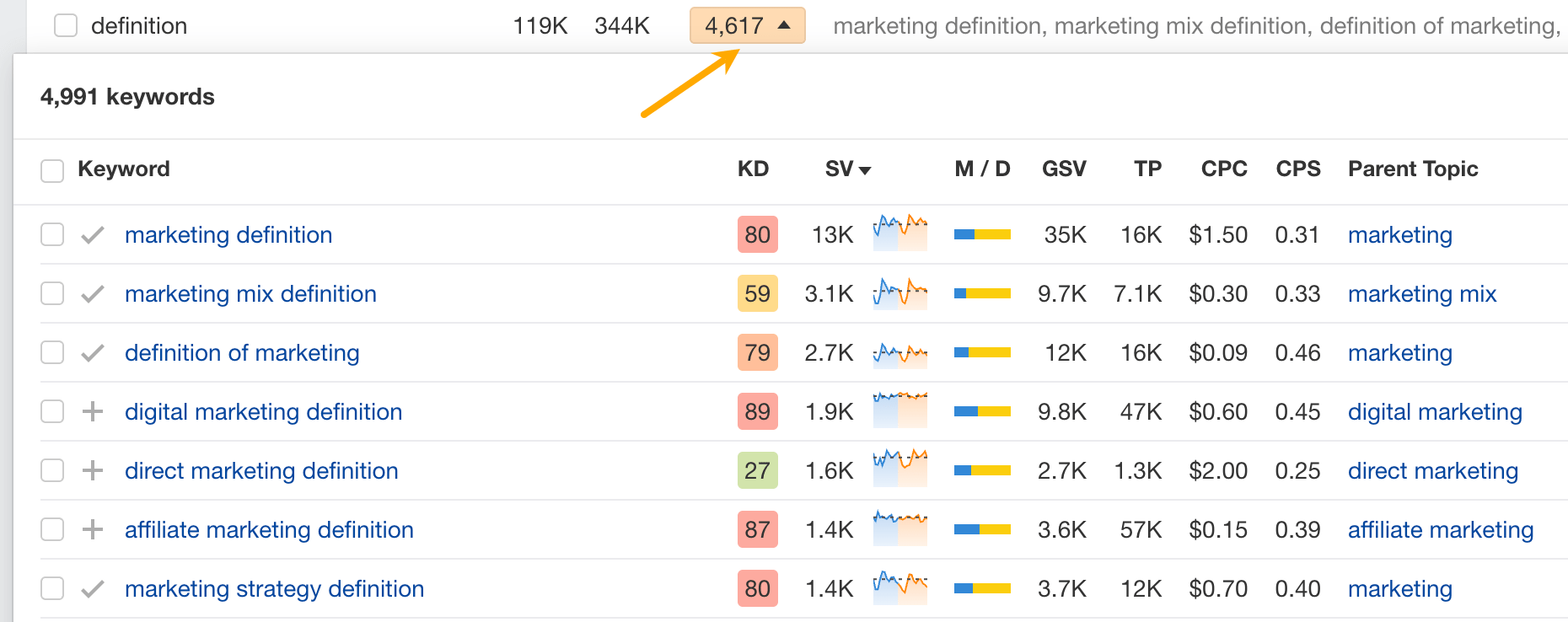
Our old newsletter was basically a handful of links to our latest blog posts, but then we made some changes:
- We started sharing useful stuff from other brands and creators.
- We stopped sharing “every” blog post; only the ones with a true FOMO value.
- We group news by topic and write a quick blurb for each to save people time.
- We made it fun. Every Ahrefs’ Digest kicks off with a meme:

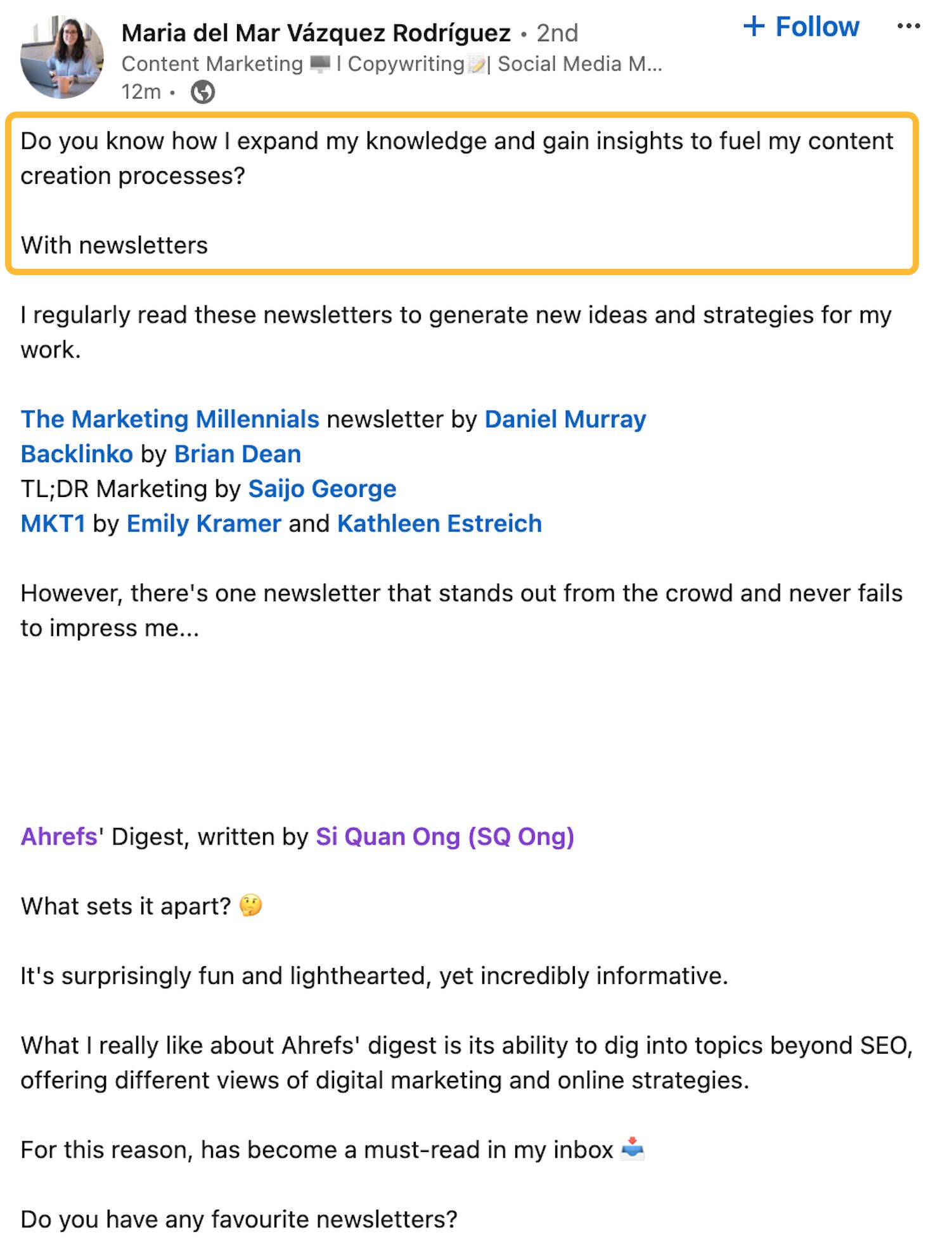
And it worked. People really seemed to appreciate the changes:
Some people will never bother to read a newsletter. But there are people who turn to newsletters because they save them time searching for valuable information — that’s where you come in.
How to get started
Technically, starting a newsletter is straightforward — sign up for a tool like Mailchimp and get all the tools you need to start collecting emails and sending newsletters.
But what matters the most and is not that easy when you’re starting out is the content and consistency. Here are some key factors to consider:
- Provide valuable, relevant, and unique content that addresses your audience’s needs and interests. It doesn’t have to be 100% your original content. Curating all the stuff that gets published online every week is a value on its own. If you’re not sure where to start with this, simply make this newsletter something you’d like to see in your inbox every week.
- Include things that people wouldn’t want to miss out on.
- Offer original insights, perspectives, or data that can’t be found elsewhere.
- Seek feedback and refine.
- Stick to a consistent publishing schedule, whether it’s weekly, bi-weekly, or monthly.
This tactic involves giving away free tools, services, or content to attract potential customers.
Offering free stuff may be counterintuitive, but it works. It provides immediate value to users, helps to build trust, and demonstrates your expertise. Once users see the benefits of your free offerings, they are more likely to invest in your paid products or services.
We’ve developed free tools mostly by carving out small parts of our product and offering them on landing pages without any email walls to serve the intent of the searchers. So, in a sense, this way, the product promotes itself.
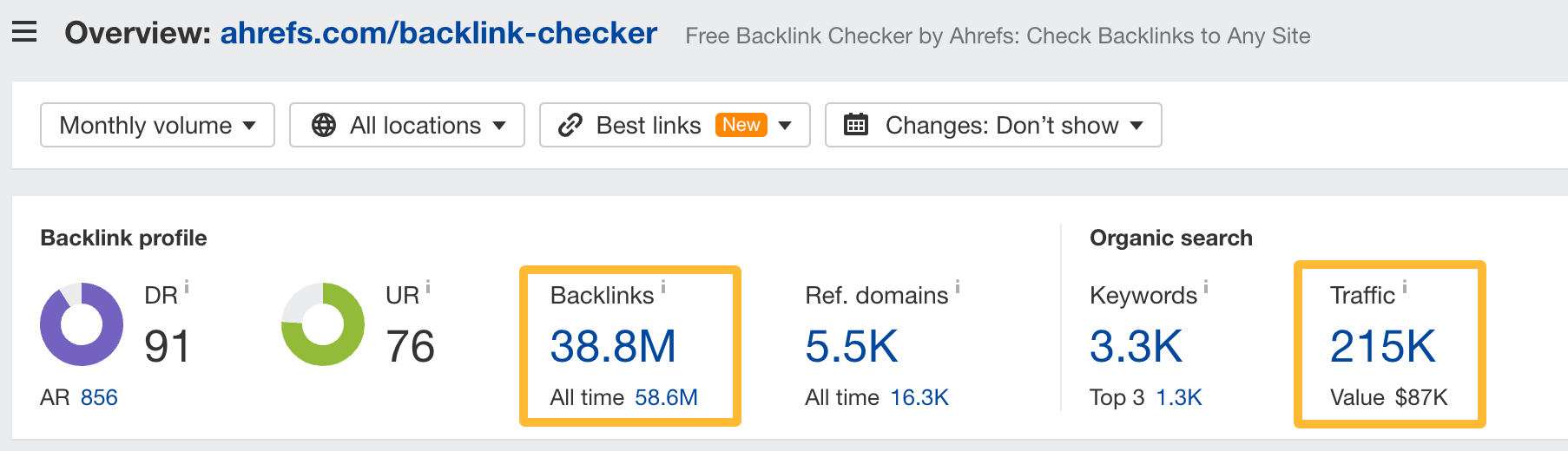
Results? Combined, our fourteen tools drive over 1.5M monthly organic traffic from people looking for these tools and 38.7M backlinks.
How to get started
When looking for ideas for free products that will generate traffic, try a keyword research tool like Ahrefs’ Keywords Explorer.
- Enter broad terms describing the functionality of your product (e.g., keywords, backlinks, traffic).
- Go to the Matching terms report.
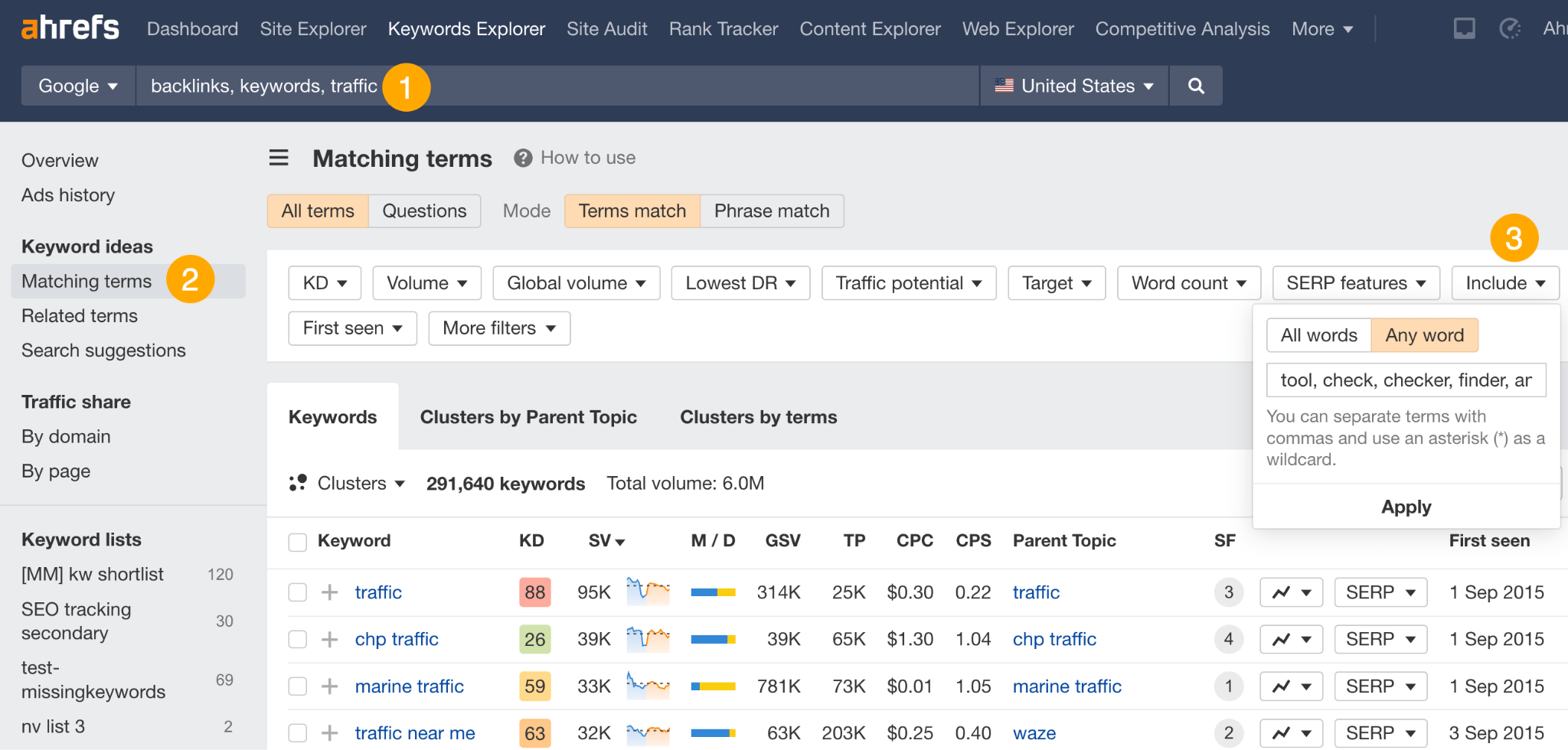
- Use the Include filter with keyword modifiers pointing to tools, for example: “tool, check, checker, finder, analyzer, builder, free.” Set to “Any word.”