


AI assistants like ChatGPT, Gemini, and Perplexity have become the new places people turn to for answers—handling millions of prompts every day. Even Google now uses AI to generate summaries right at the top of search results.
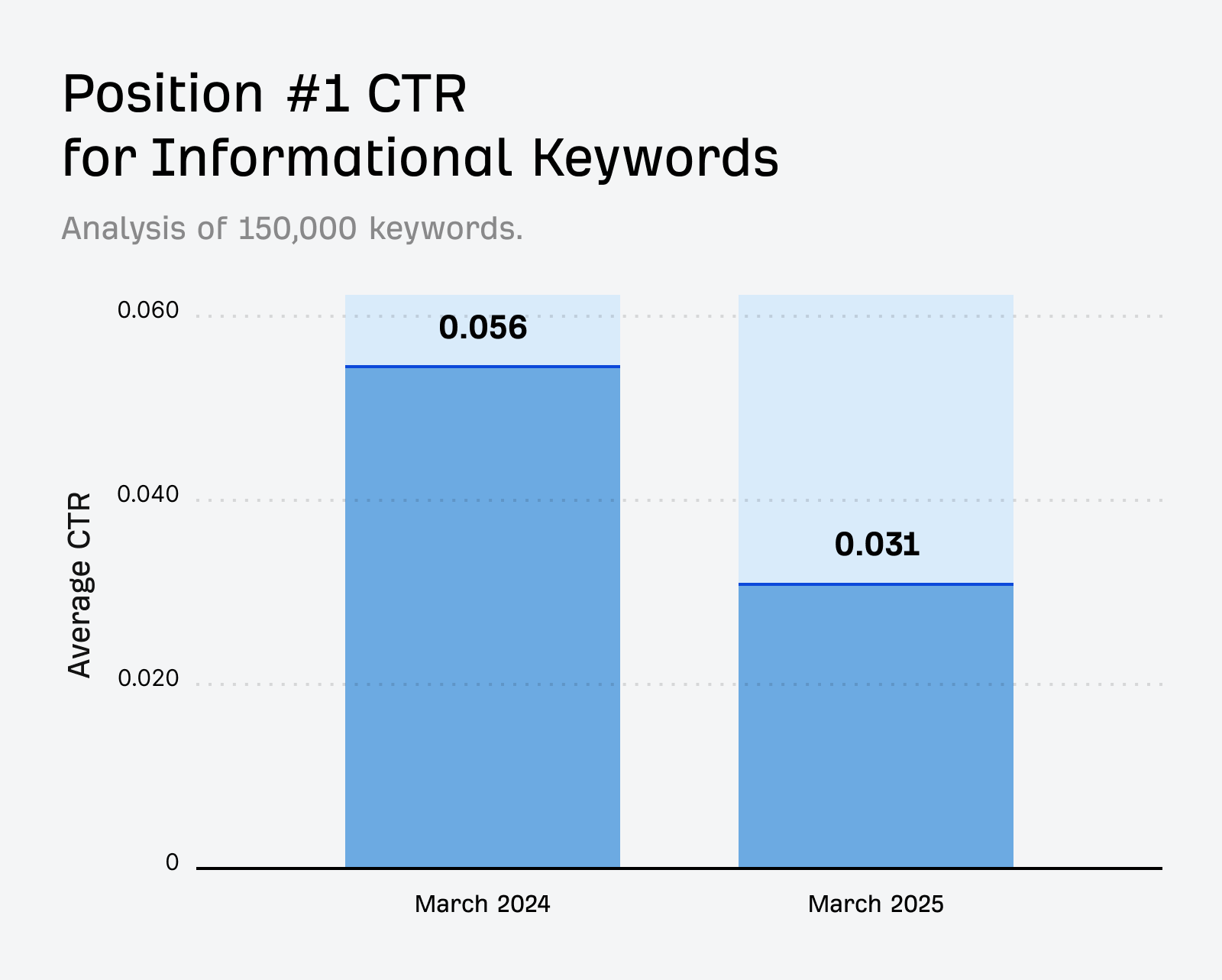
This shift happened fast. In 2024, AI Overviews rolled out to millions of searches, ChatGPT climbed into the top ranks of global websites, and the once-reliable #1 Google spot began losing a third of its clicks. Suddenly, SEO wasn’t just about rankings anymore.
Some marketers panicked, others brushed it off. But AI has changed how people discover brands and where visibility happens.
This isn’t the end of SEO, it’s the next chapter. The fundamentals still matter, but the strategy needs to evolve.
So, here’s what’s changed, what hasn’t, and how to stay visible in the age of AI search.
For years, Google has been moving away from simple keyword matching. But the inclusion of their Gemini large language model (LLM) took this to another level.
Pre-LLM systems could recognize that “Apple” the company was different from “apple” the fruit. They could connect related concepts. But they couldn’t truly comprehend nuance, handle complex multi-step reasoning, or synthesize information across dozens of sources the way a human would.
LLMs changed that. Search engines with an LLM layer understand context at a depth that lets them interpret ambiguous queries, infer unstated intent, and connect disparate pieces of information in ways previous systems couldn’t.
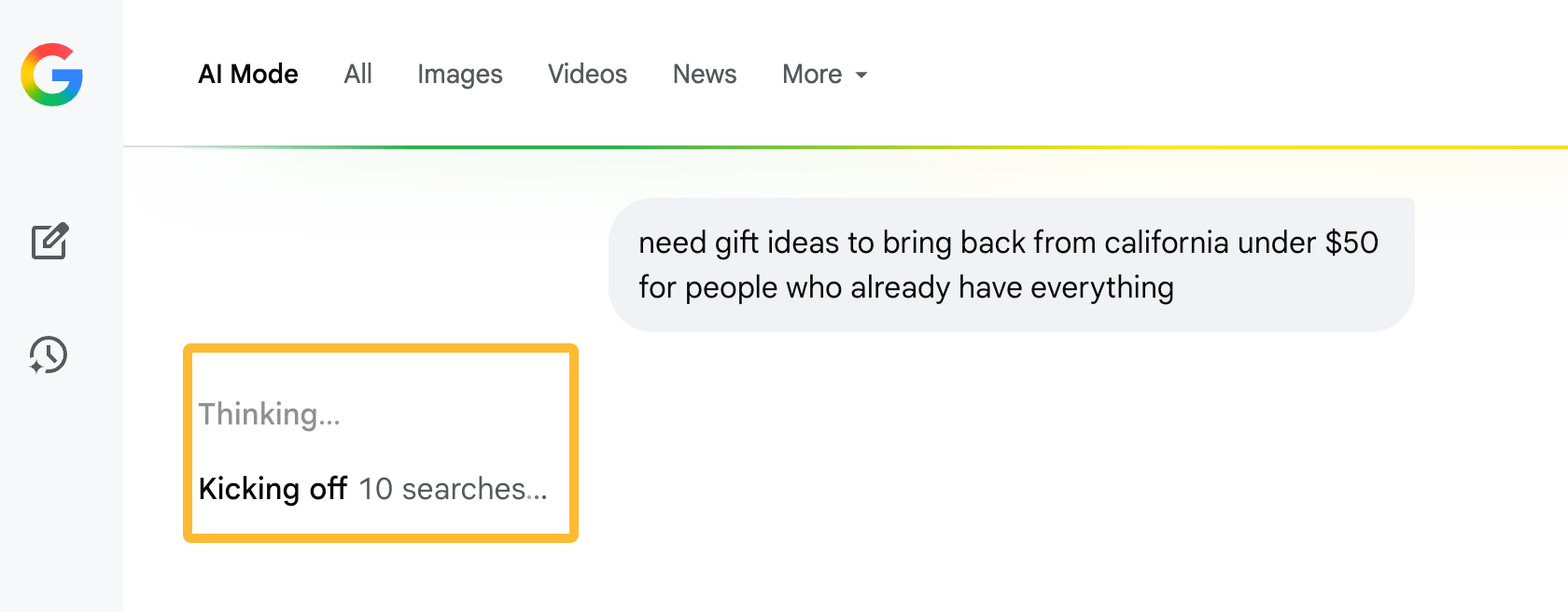
So, when you search something complex like “gift ideas from California under $50 for people who already have everything,” Google’s AI Mode (based on the Gemini large language model) doesn’t just look for pages with those exact words. Instead, it uses what’s called “fan-out queries”, breaking out your question into multiple related searches behind the scenes (in this case, 10 different searches).
Those fan-out queries might look like:
- “California artisan gifts under $50”
- “California food products budget-friendly”
- “Experience gifts California affordable”
- “Hard to shop for people gift ideas”
- “California-made practical items”
- “Gifts for people who don’t want more stuff”
- “California specialty products budget”
Or, when someone searches “best laptop for video editing under $1000 that’s not too heavy”, modern AI doesn’t just look for keyword matches. It genuinely understands the trade-offs between processing power, portability, and budget constraints.
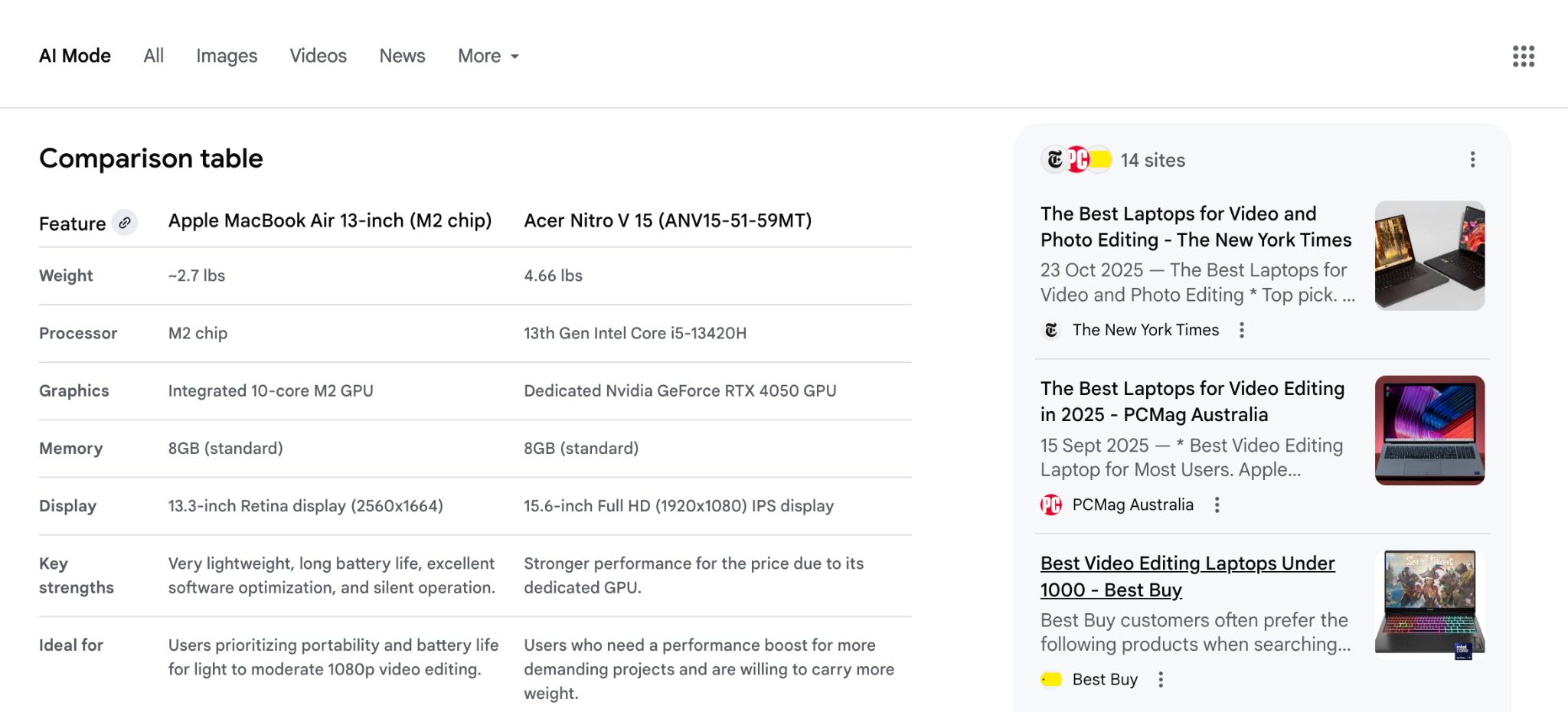
Google now understands the nuance of prompts and does the research legwork for users, rather than just handing you a list of links to click through.
Google’s AI Overviews now sit at the very top of search results, pulling insights from multiple sources to deliver instant, comprehensive answers. They occupy the most valuable real estate on the page—above every traditional result—and often satisfy the user’s query without a single click.
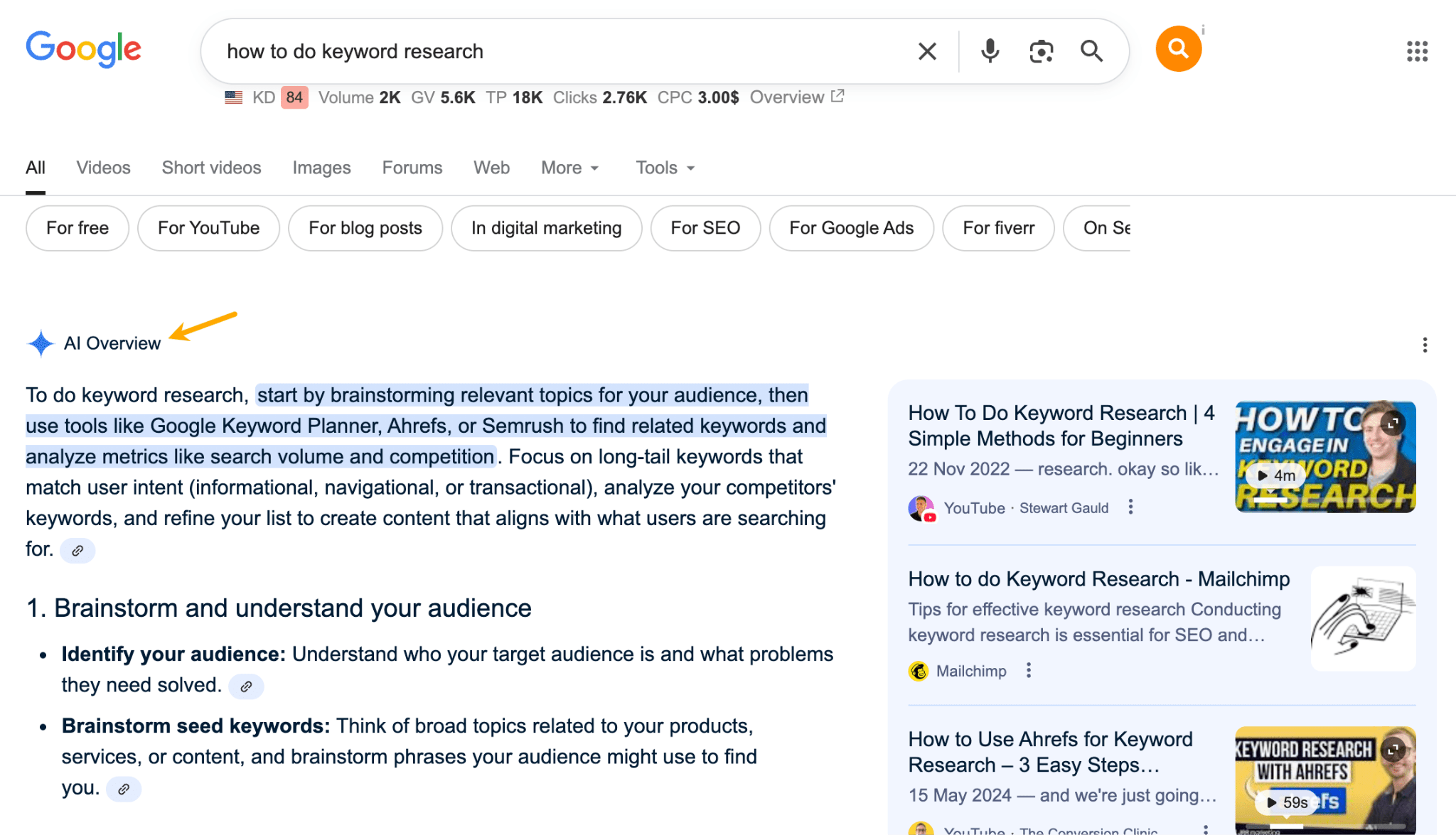
Because of that, even the #1 organic result has lost around 34% of its clicks when an AI Overview appears.
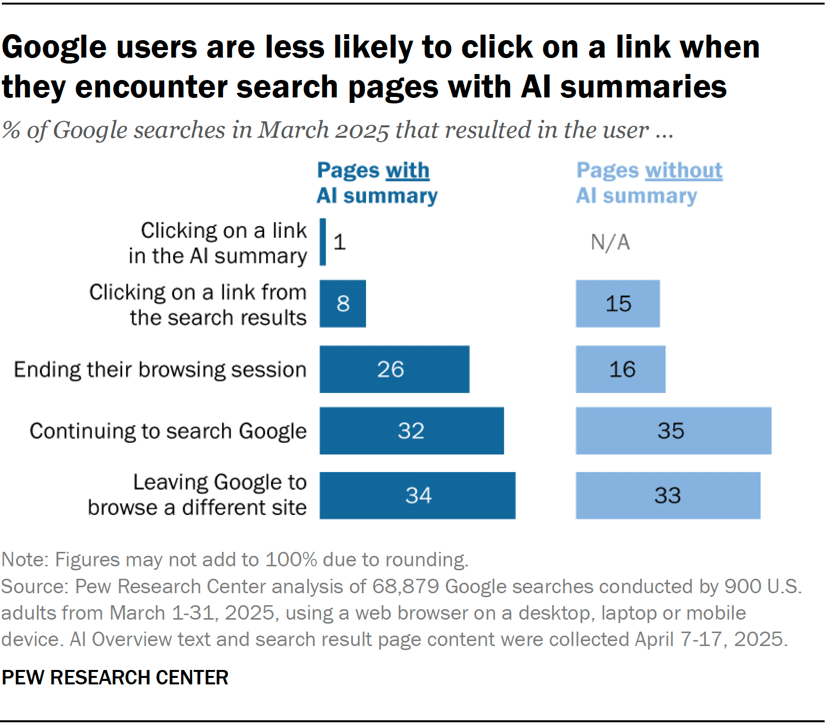
At first glance, being cited within an AI Overview might seem like a win, but the data tells a different story. A Pew Research Center study found that 99% of users who see an AI Overview don’t click any of the cited sources, and 26% close their browser entirely after reading the summary.
In contrast, about 8% of users click results in the traditional organic listings directly below the overview, meaning you may actually drive more traffic from those standard rankings than from being featured in the AI box itself.
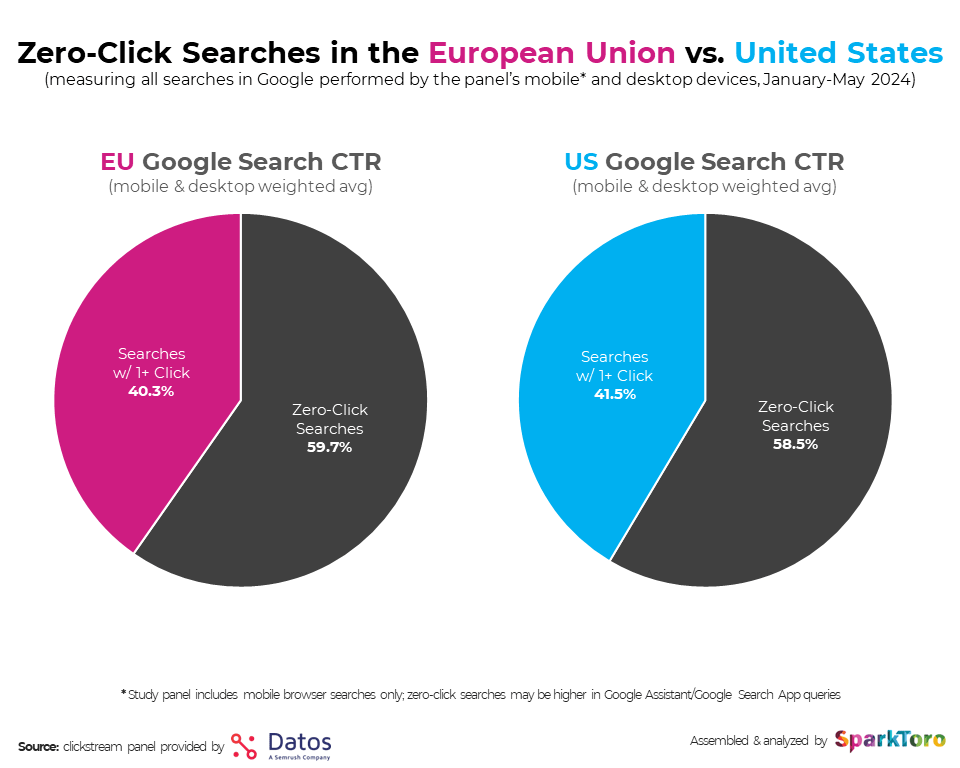
All of this compounds the growing zero-click search trend. Over half of all Google searches already ended without a single site visit in 2024, and AI Overviews are only accelerating that shift. Users who do click through tend to be more motivated, but overall discovery is increasingly happening on the results page itself—not on websites.
Since 98% of AI Overviews are informational, content focused on “how-to” or educational topics has been hit hardest.
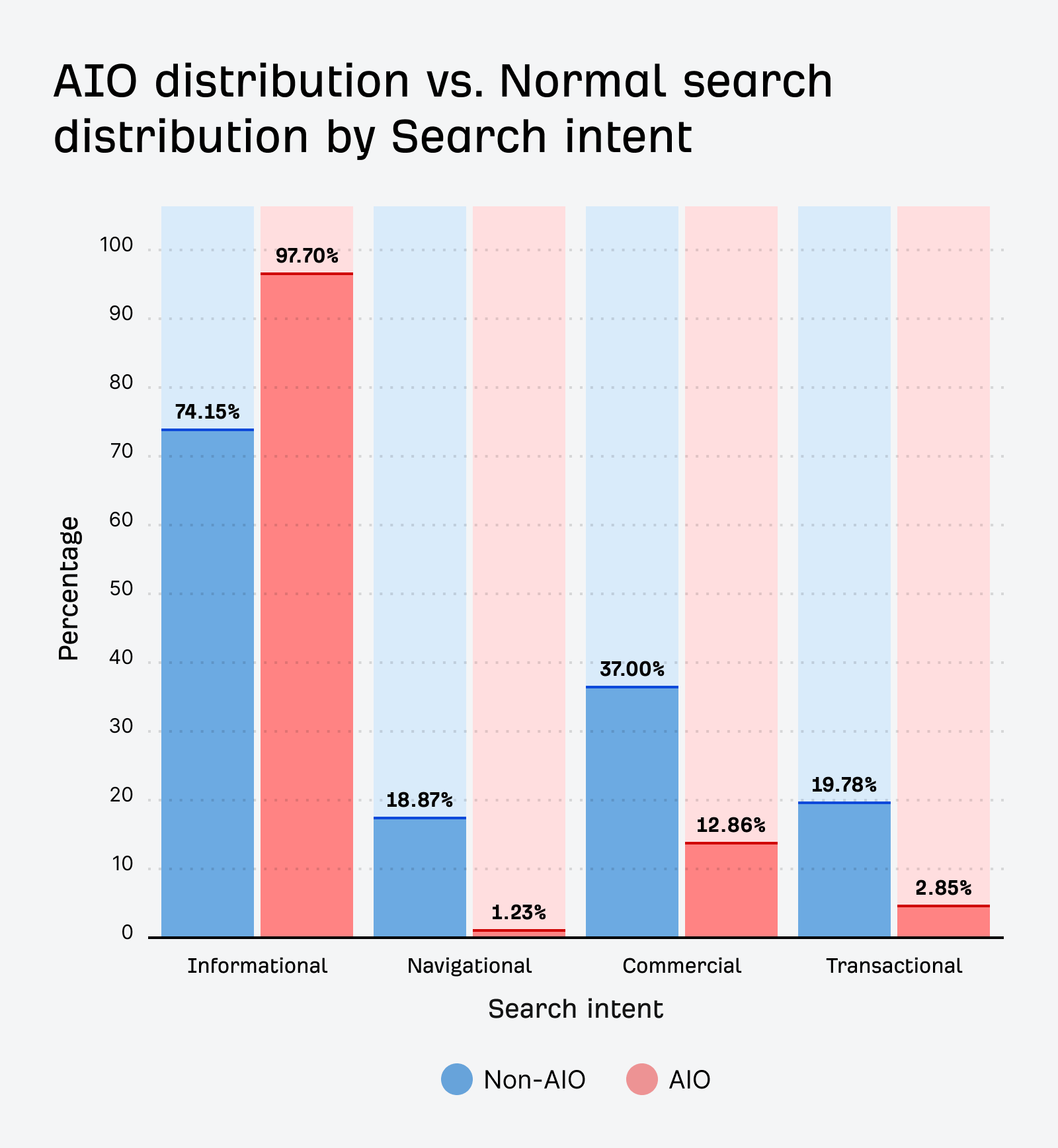
Searches that show clear buying intent or mention specific brands are less influenced by AI. Whether in Google’s AI Overviews, AI Mode, or within large language models (LLMs), when users already know what they want to buy or which brand they prefer, AI tools usually display traditional search results instead of summarizing or replacing them.
A recent study by Kevin Indig, which analyzed 250 search tasks, found that Google’s AI Mode has an almost 100% zero-click rate. Users are now discovering products, comparing options, and forming opinions entirely within the AI interface—only clicking through when they’re ready to make a purchase.
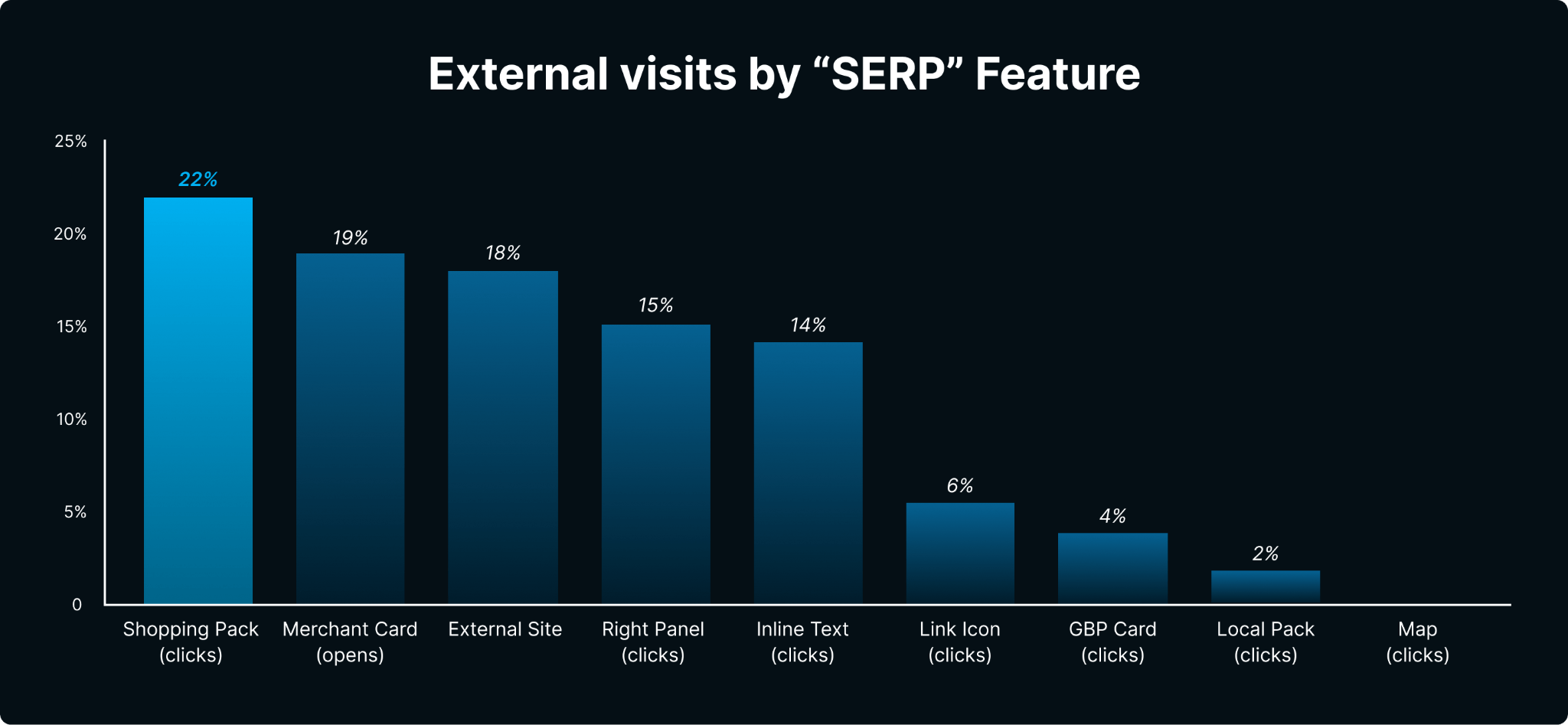
In other words, AI Mode consumes all top-of-funnel and middle-of-funnel activity, reserving clicks exclusively for transactions.
Here’s the silver lining: the users who actually click through from AI summaries are likely to be more valuable than before.
If someone sees an AI answer but still chooses to visit your site, they likely want something more—deeper information, a different perspective, or they’re closer to taking action.
In some cases, these clicks convert better than the old high-volume, low-intent traffic.
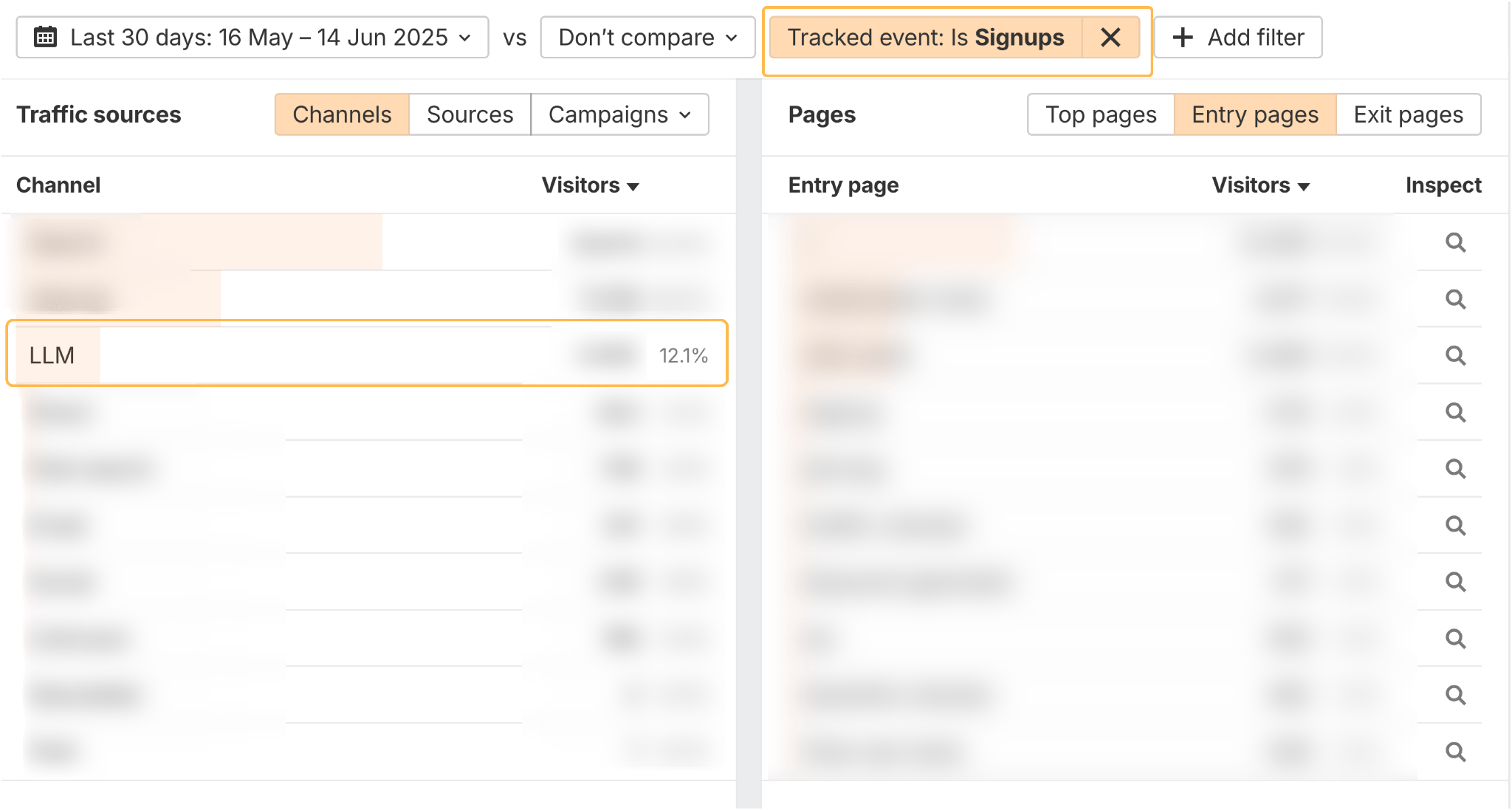
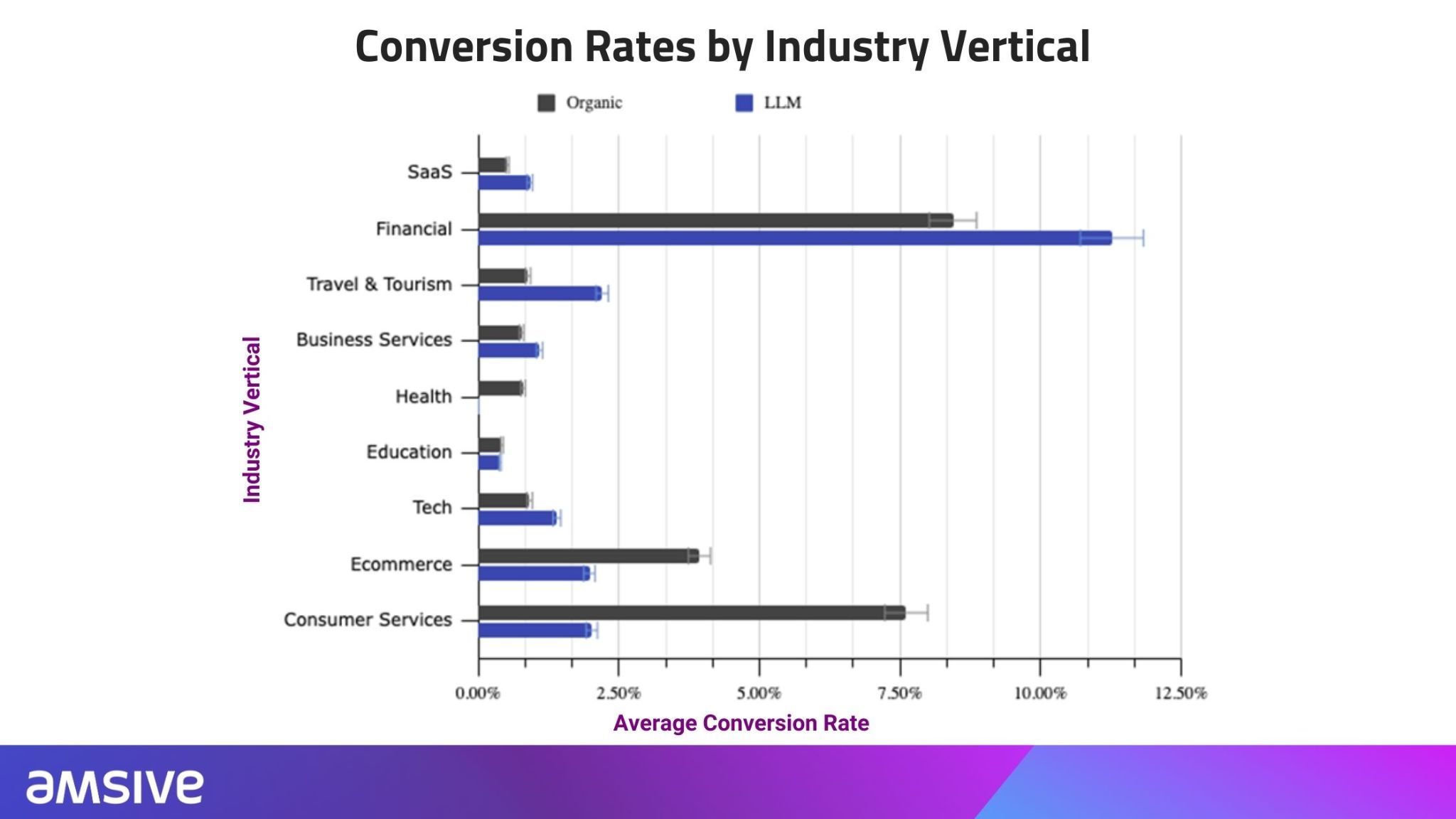
The keyword is “sometimes.” It depends on your specific situation. To illustrate, our analysis found that traffic from LLMs was responsible for 12% of signups, while accounting for only 0.5% of total clicks.
But another analysis by Amsive found that this can’t be extrapolated to all industry verticals.
GEO, or Generative Engine Optimization, is the next stage in SEO’s evolution, driven by the rise of AI. It takes traditional SEO further by introducing a new channel, a new type of user experience, and an entirely new way to measure success.
While related terms like AEO (Answer Engine Optimization) or LLMO (Large Language Model Optimization) are sometimes used, the idea is the same: ensuring your brand is visible, cited, and accurately represented within AI-generated answers.
For marketers, this represents a new “battleground” for visibility—one where AI assistants, not just search engines, influence consumer decisions. Some brands are surfaced and recommended as trusted authorities, while others are simply left out of the conversation.
That doesn’t mean GEO replaces SEO. In fact, it builds on the same foundation. The difference lies in where and how visibility happens. Search and AI results draw from similar content pools, but how they surface and summarize that content can vary dramatically.
To earn mentions and citations in AI-generated answers, marketers will need to adapt familiar tactics—not invent entirely new ones. Strategies like influencer marketing, reputation management, and structured, semantically clear content are seeing a resurgence.
[note]
A citation is when an AI attributes information to your content and includes a link to your site—usually for data, stats, or how-to content.
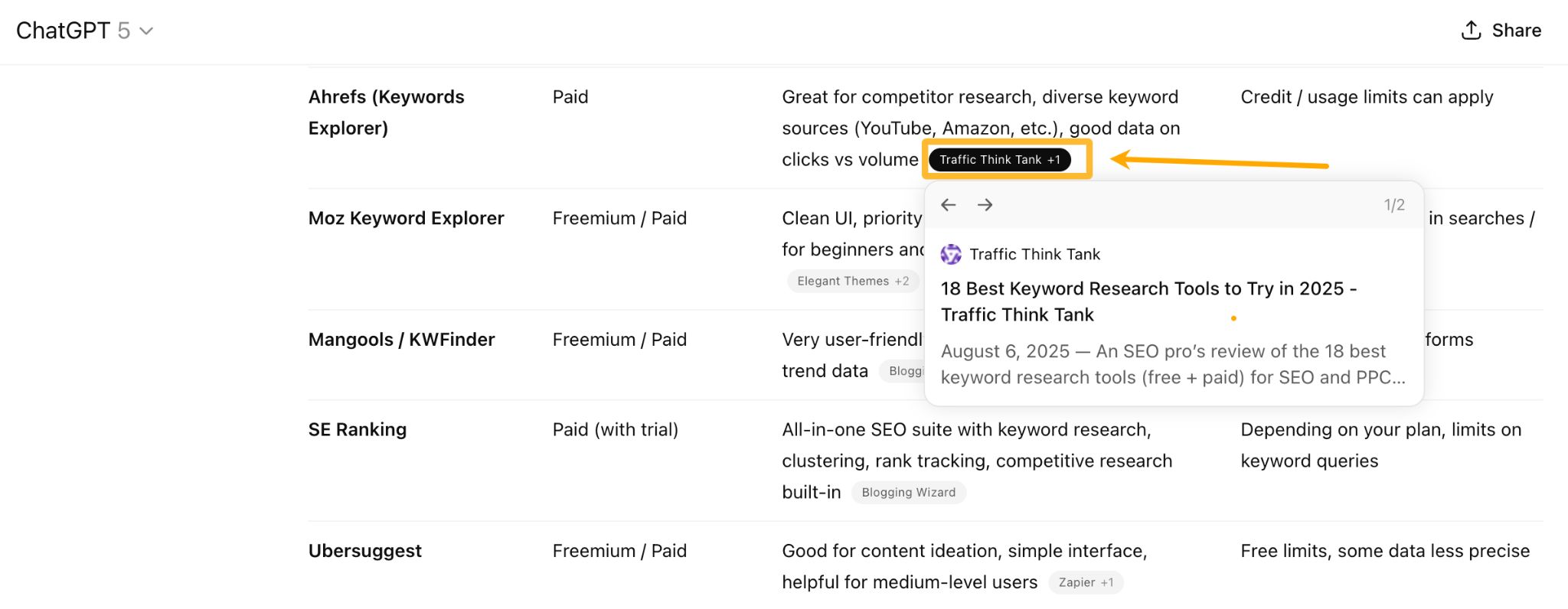
A mention is when your brand or product name appears in an AI-generated answer without a link, often in product recommendations.
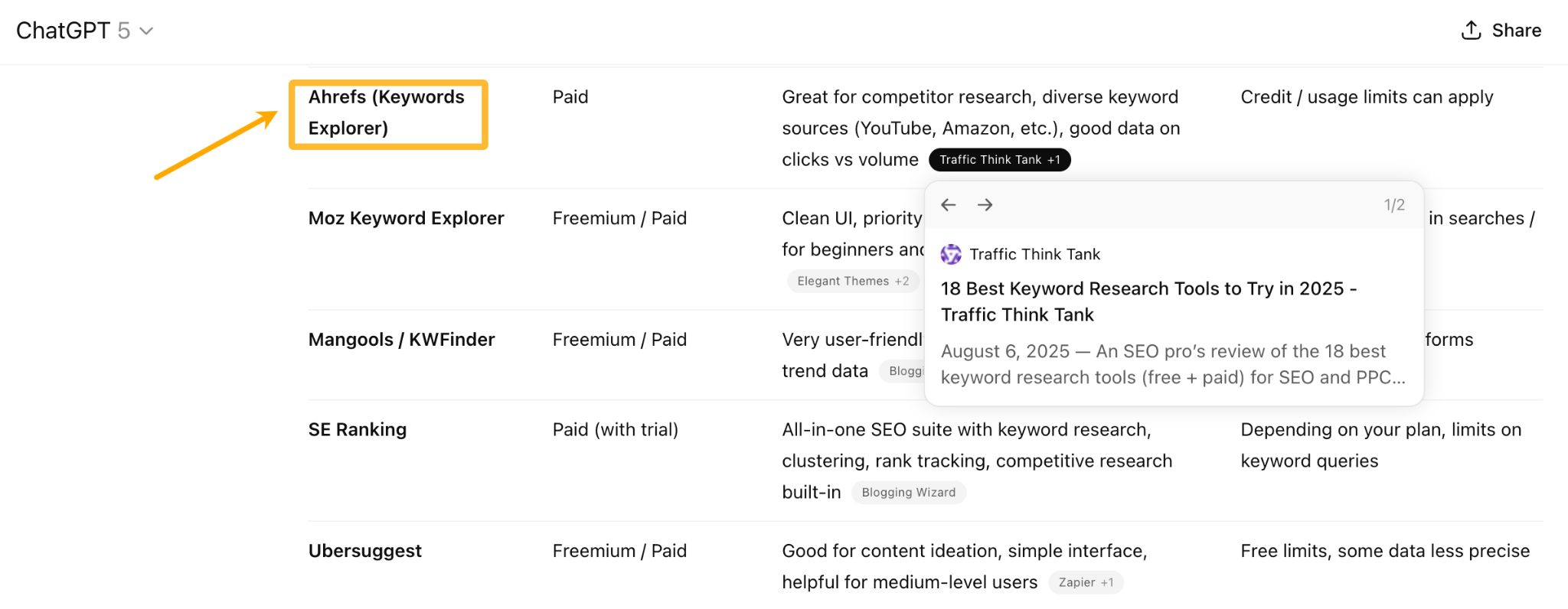
Every industry—and every brand—experiences AI visibility differently. But what AI understands about your brand likely comes from the same place it learns about ours: other people’s websites.
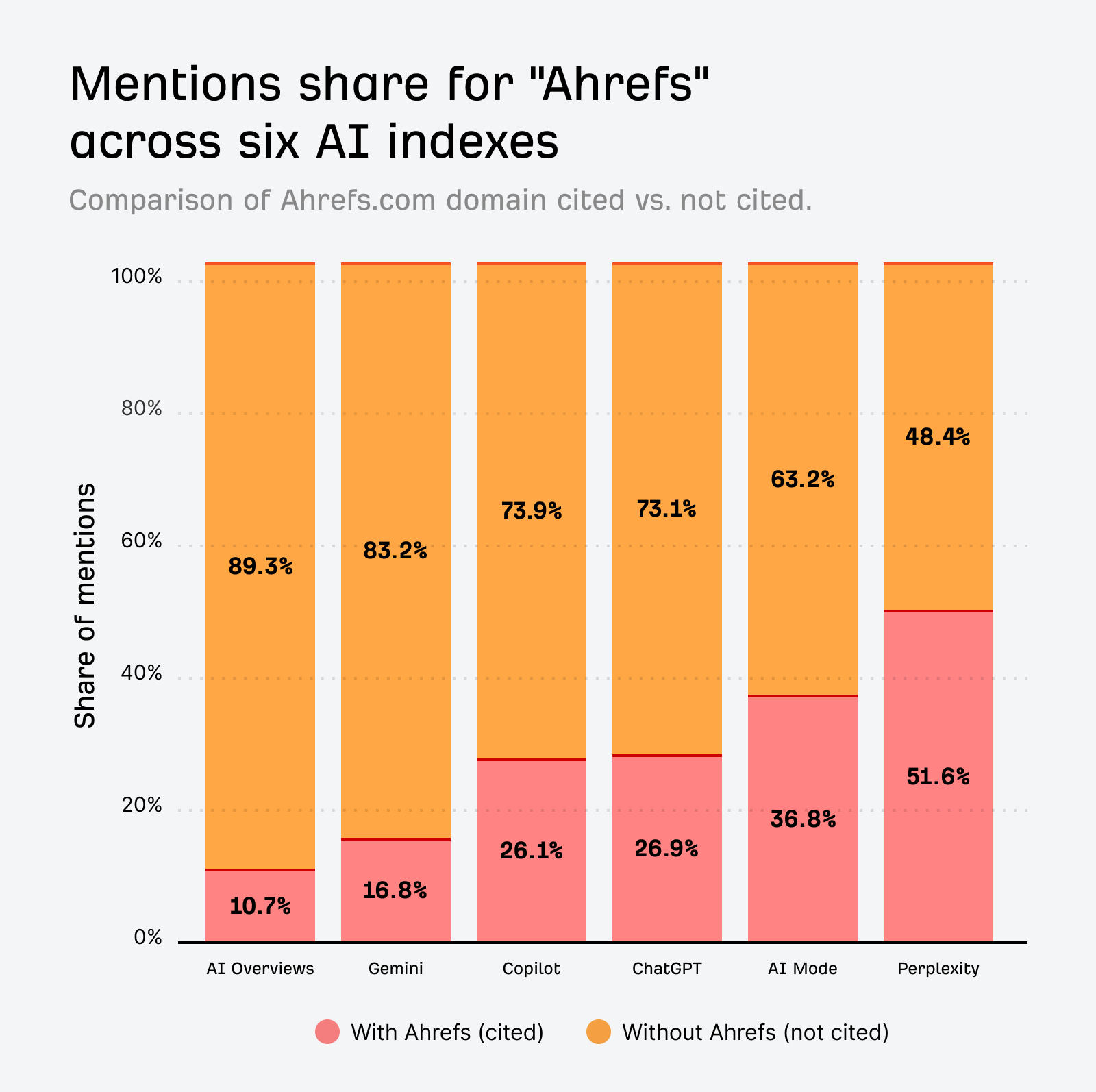
At Ahrefs, most AI-generated answers reference us without citing our site directly. Instead, they draw from reviews, news articles, forums, some social media, and blogs, combining that with the AI’s built-in knowledge to form their understanding.
Interestingly, when we analyze potential reach across our Brand Radar indexes (reach = mentions x volume of keywords), the answers where Ahrefs is directly mentioned or cited perform significantly better in three of the six tracked AIs—specifically AI Mode, Gemini, and Perplexity.
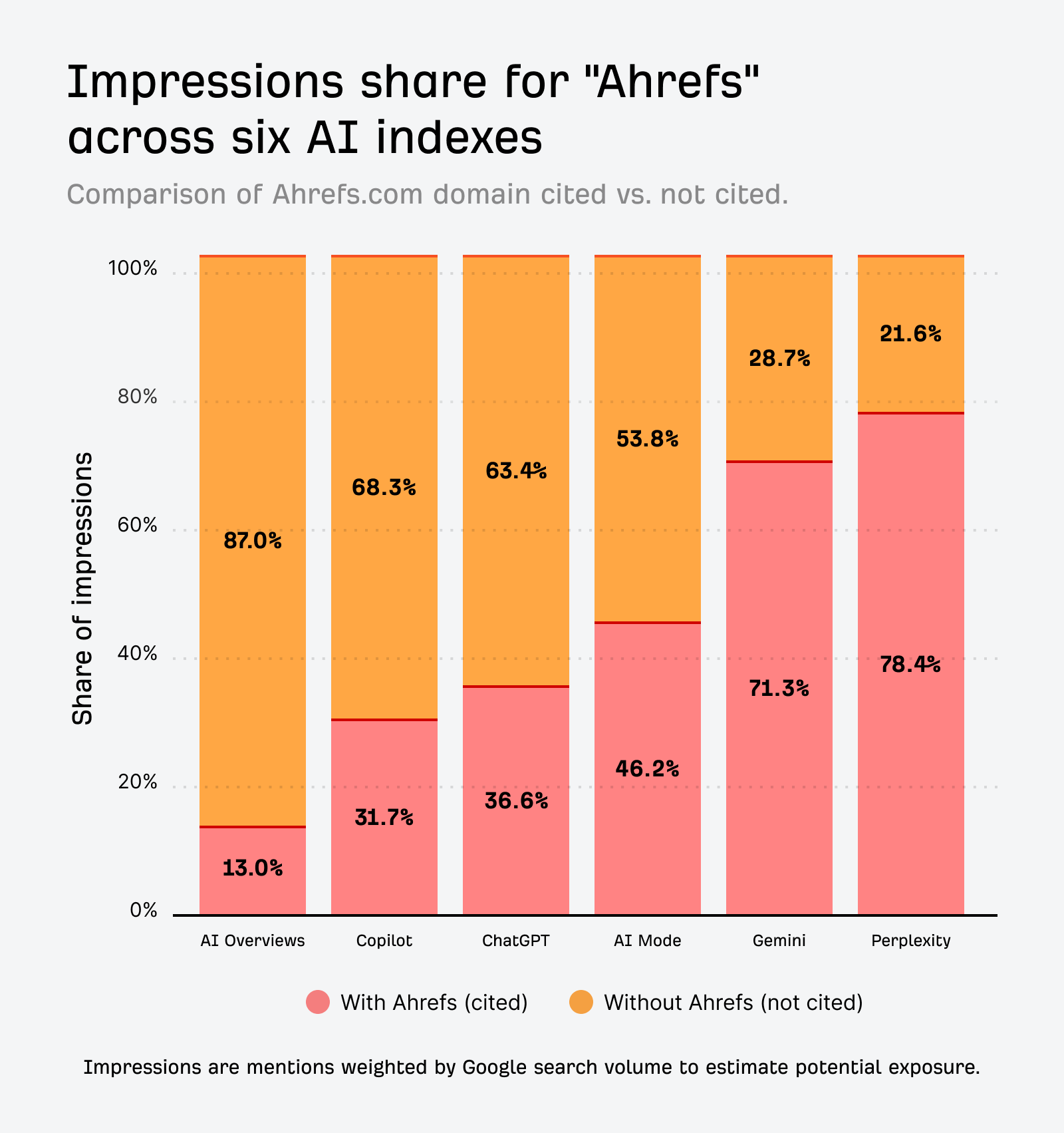 The takeaway here is that your broader online presence—and what others say about you—matters more than ever for how AI perceives and represents your brand.
Traditional SEO tools show you rankings and clicks, but they don’t tell you how often AI mentions and cites your brand or how you compare to competitors in AI answers.
New AI visibility tools are emerging to fill this gap.
For example, Ahrefs’ Brand Radar can monitor your AI visibility across various major AI indexes.
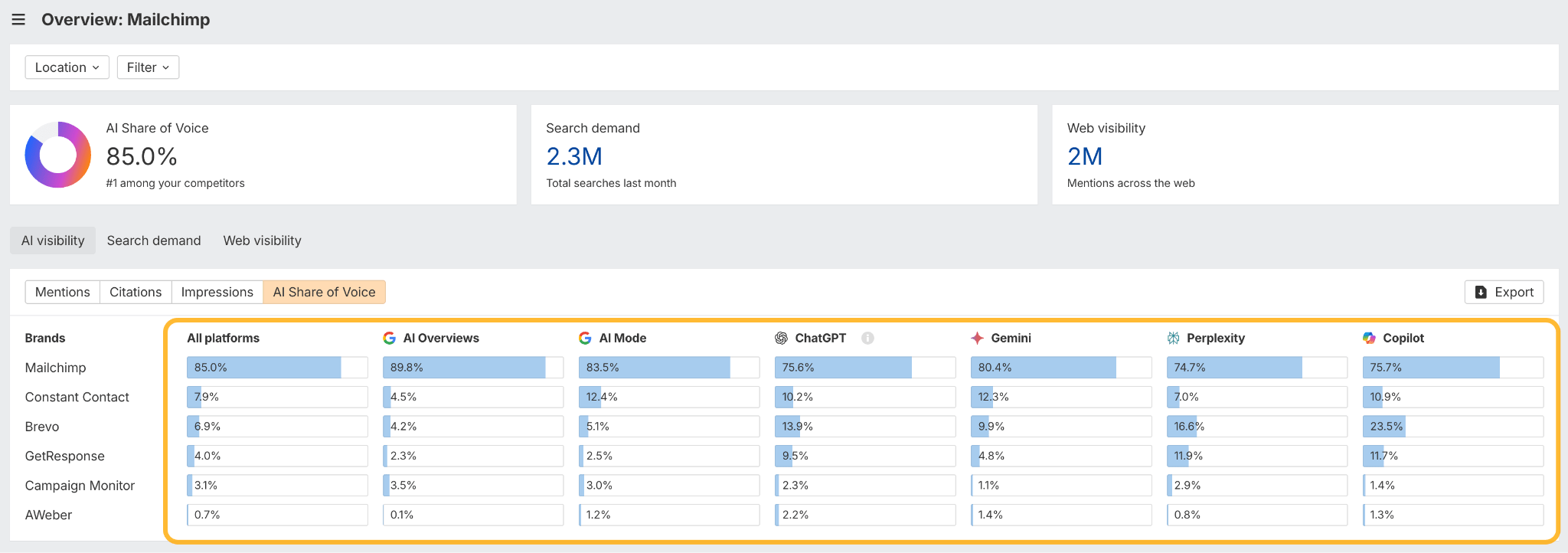
And show the topics you miss out on so you can create new content for them and/or contact cited sites to feature you, so you can boost your AI visibility.
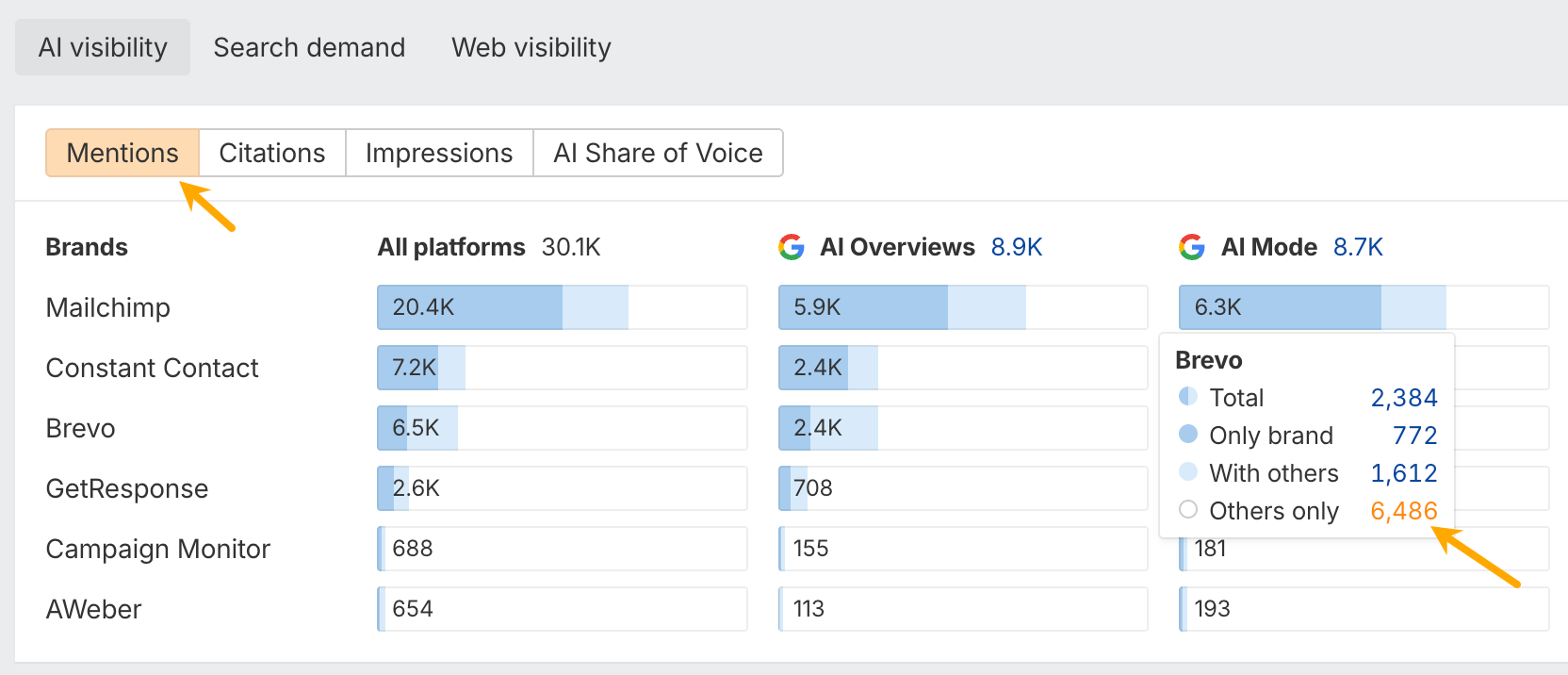
Most brands already have some AI visibility simply inherited from their existing organic presence in Google and the broader web. We do too—nearly 8,000 citations across Google’s AI experiences and LLMs—all achieved with zero AI-specific optimization, purely from traditional SEO.
But I suspect most brands haven’t started optimizing intentionally for AI visibility yet. It’s still early days. Those who begin now will have a real advantage—time to test, learn, and build authority before everyone else catches on.
The window won’t stay open forever. Once AI visibility becomes a mainstream priority, standing out will get much harder.
As mentioned earlier, optimizing for AI doesn’t really mean adopting brand-new tactics (assuming there even are any GEO-specific ones yet). It’s more about applying existing SEO practices with AI search in mind and tracking a different set of metrics. Here’s a quick video to help you get up to speed on optimizing for AI-driven search.