


There are over 2 billion active monthly Instagram users, and 70% of consumers turn to their Instagram feed when considering their next purchase.
Amassing a large following on Instagram can help you at every stage of the marketing funnel—from bolstering brand awareness to driving conversions.
In this post, we’ll walk you through how to use Instagram to reach more people and encourage them to become engaged followers.
13 principles to effectively grow your Instagram following
The principles you are relying on to get more traffic, conversions, and sales on your website are the same ones you should use for your Instagram accounts.
This article assumes you:
- Already deeply know your audience and have conducted research to understand what types of posts will resonate with them;
- Have a solid brand messaging strategy in play so you can emulate relevant, customer-centric content on social;
- Have clearly defined goals tied to measurable metrics (e.g., how many follows you want to gain in a month or quarter);
- Post consistently (or have curated a plan to) with a detailed content calendar.
We also do not recommend buying followers (if you do, reconsider). This tactic is a surefire way to sabotage your Instagram growth in the long term. Spending $10-$25 to acquire 1,000 followers sounds good, but the benefits stop at perceived value. Here’s why:
- Your Instagram account could get banned: Instagram looks down on fake accounts, bots, and any account that relies on them. At the minimum, you can expect that Instagram will suspend all of your bot and fake followers over time. If the percentage of real to fake followers is too skewed, they’ll likely penalize or ban your account as well.
- Your Instagram performance metrics will suffer: Fake followers and bots don’t like, comment, or view your posts after your initial purchase. This means that your post and story engagement ratios will decrease dramatically. When your engagement drops, you’ll lose organic reach on all of your posts.
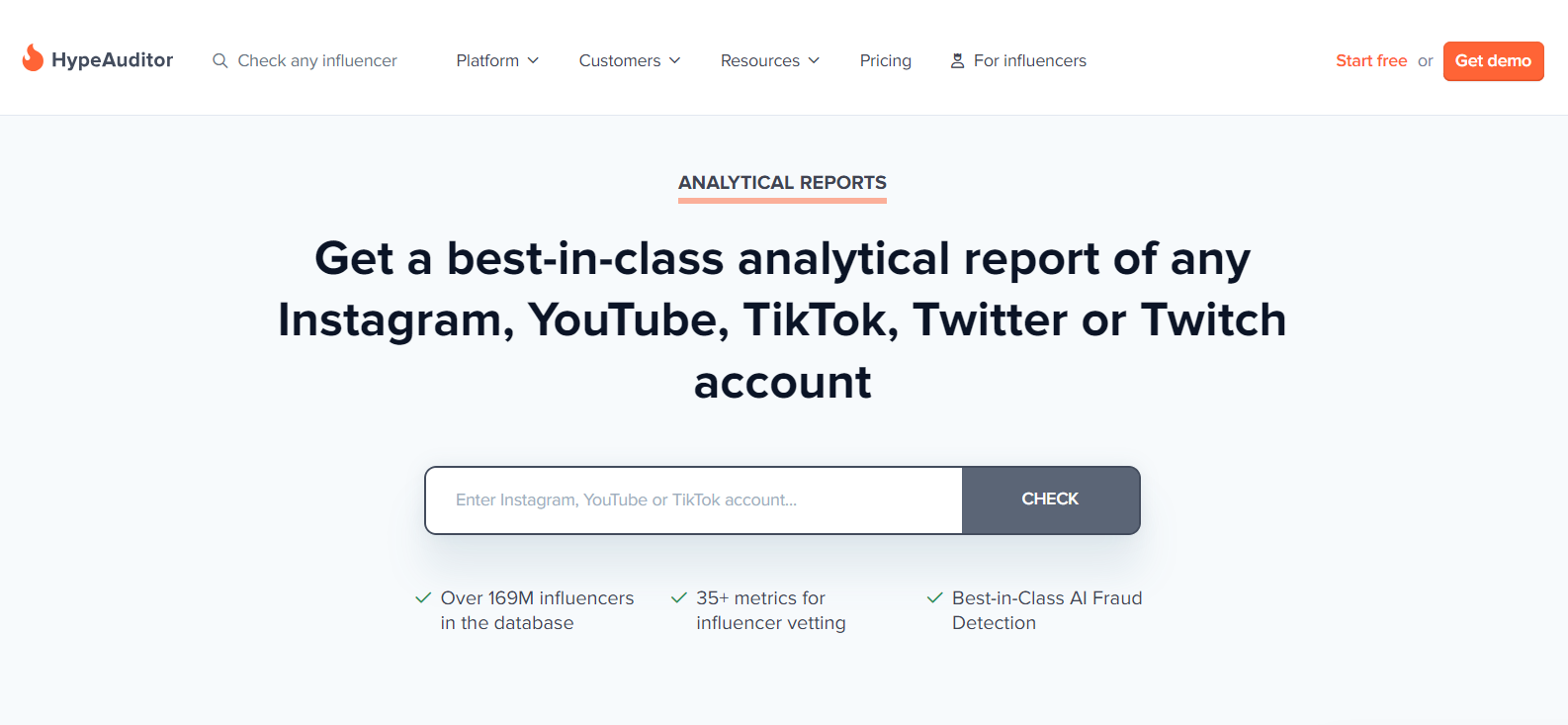
- You’ll lose credibility: It is easy to tell if an account is buying followers. A tool like HypeAuditor lets you see the percentage of real to fake followers. You could also figure it out for yourself by looking for telltale signs, like low engagement rates on posts for the account size or segmenting followers with incomplete profiles or who only engage on posts in short bursts.
- You could be a victim of identity theft: Most of the businesses that sell Instagram followers or engagement are fly-by-night operations. They set up shop, make a lot of money, and then shut down before they get caught. These businesses will have access to your Instagram account and credit card details. Best case scenario, you buy your followers, and nothing happens. Worst case scenario, they steal your identity.
1. Humanize your brand
It is tempting to hide behind your logo and share overly-polished corporate highlights. The brands that have the most success do the opposite. They find ways to build authenticity and cultivate connection by sharing their brand’s story consistently.
Take U.K. fintech brand Tide. They consistently post stories that take you behind the scenes at their London HQ:

Each story gives you a sneak peek at their fun-loving, all-inclusive culture:

These stories show Tide’s employees engaging in commonplace, relatable activities—feeding treats to dogs and dressing up for Halloween. They also take a stance on important societal issues, such as mental health awareness:

These pictures speak a thousand words. The culture they foster is entrepreneurial and community-driven—traits reflected in their startup and small business target audience.
They also prioritize the “work hard, play hard” mantra, a mindset shared by many entrepreneurs hustling to bring a new idea to market and scale. But they also recognize the need to prioritize mental health in order to avoid burnout, among other side effects, which 52% of employees report experiencing.
You don’t have to scroll far to note that their overall messaging is skewed toward side hustles and small business owners:

By showcasing their employees engaged in non-work activities, they open the door to building deeper connections with their target audience and demographic. We’re intrinsically wired to connect with one another, and understanding the importance of these social bonds is an excellent way to drive engagement and loyalty.
Here are a few takeaways that you can learn from successful Instagram accounts like Tide:
- Remember to be “social”: Respond to comments and direct messages from followers in a timely manner. You’ll build relationships faster and gain a better understanding of what posts resonate.
- Share behind-the-scenes takes: As noted with Tide, showing the human side of your team makes your brand more relatable, which is a key part of captivating your audience while also sharing what makes you unique and different.
- Share your story across different mediums: Leverage all of Instagram’s post formats to share your story (Instagram photos, Stories, Instagram Reels, Live Video, and IGTV). When it makes sense, adopt new features early on as the Instagram algorithm has been known to prioritize that content in people’s feeds.
2. Use your Instagram bio as a landing page
First impressions last, and on Instagram, your bio is usually the first point of reference for potential followers. To turn your bio into an effective landing page, it requires four characteristics. It needs to be:
- Concise: Make sure that your description is short and to the point, describing what you do and/or sell;
- Compelling: A strong call-to-action (CTA) helps capture IG users’ attention and convert them into loyal followers or at least make them curious about your content;
- Searchable: Use keywords that your ideal followers or customers search for. You could even amplify this by including a keyword in your handle or username, but be sure to keep this consistent across other social platforms;
- Recognizable: Use a clear profile pic, icon, or logo. (It’s a visual app after all, so make sure your followers can recognize your brand at a glance.)
Remember, you’re limited to 150 characters, so make sure you make the most of this prime real estate.
Use line breaks to create a list format, separating various services or products you offer from your company tagline or branded hashtags. An easy way to do this is to edit your profile on your desktop.
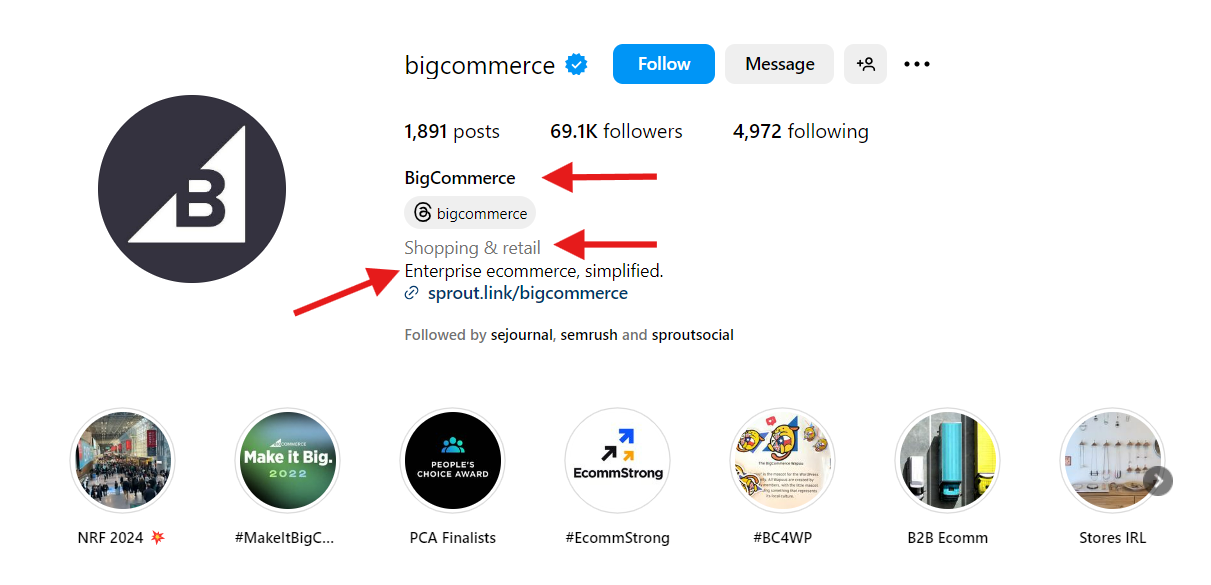
BigCommerce showcases an exemplary bio landing page format. It uses keywords like “commerce,” “enterprise ecommerce,” and “shopping and retail” in its bio. It also uses the list format and its tagline “Enterprise ecommerce, simplified” tells you exactly what services it provides in just 3 words.
The logo and branding remain consistent across platforms like X and Facebook, making them easily recognizable.


When it comes to links, Instagram allows users to add up to five URLs. So, whether you want to link to your website, eCommerce store, podcast, latest articles, or other social platforms, you can do this in three easy steps:
- Step 1: Choose “Edit profile”;
- Step 2: Select “Add link”;
- Step 3: Click “Add external link.”
Although you can add multiple links in your bio, make sure that your first link is your primary CTA as it will likely get the most traffic. In other words, if you want to direct the most traffic to your website, make that your first link.
In BigCommerce’s case, they’ve opted for Sproutsocial’s link-in-bio tool (Sproutlink)to highlight their latest articles with a CTA linking to their website.
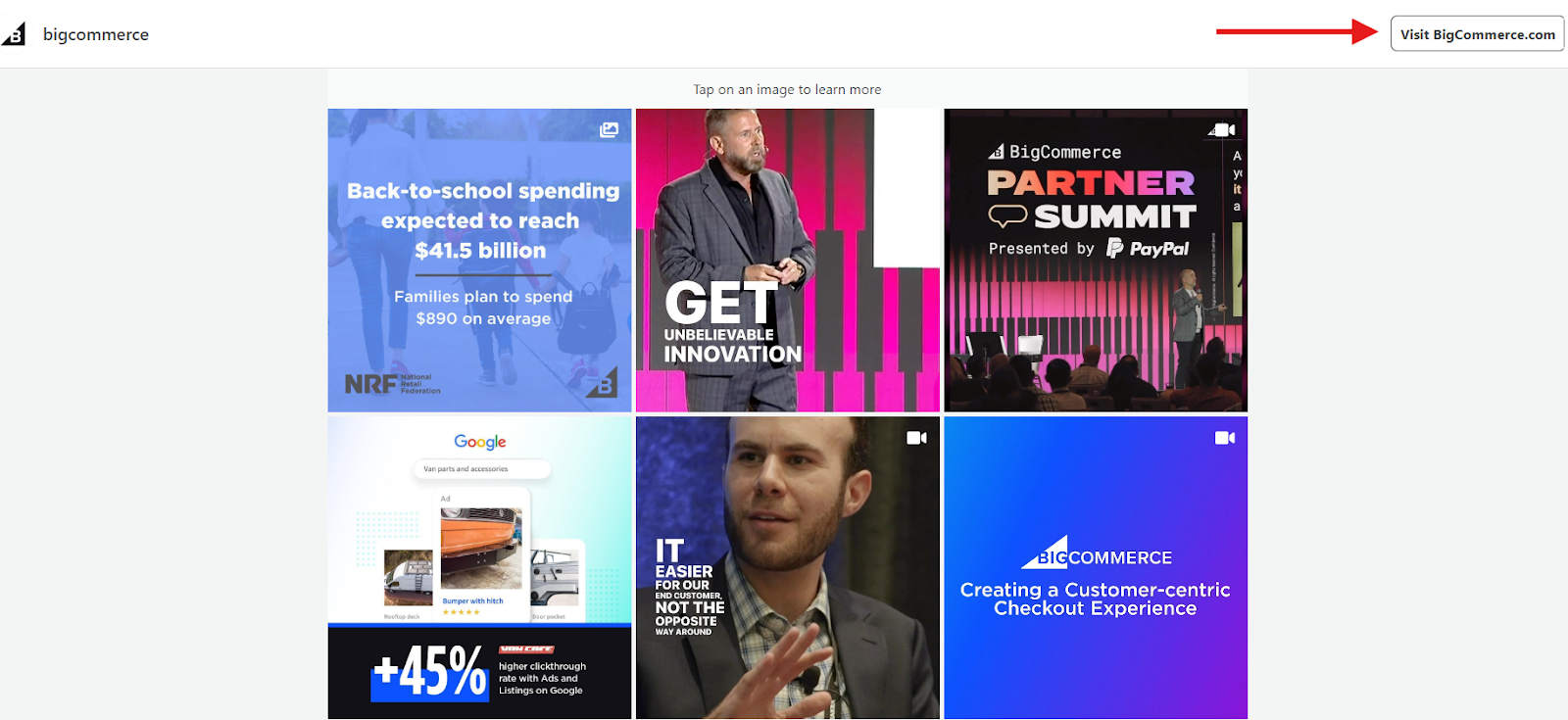
If you need to add more than five links, use a link-in-bio tool like Buffer’s Start Page. This allows you to maximize your reach by linking to an external multi-URL landing page, essentially combining multiple links in one.

3. Create a narrative (not just a Story)
It’s no secret that our attention spans are dwindling. Consumers are looking for bite-sized chunks of content they can easily digest, making short-form videos, like IG Stories or Reels, the most palatable format for most viewers. According to Socialinsider, Reels has the highest overall performance rate, including the highest impression rate of any other post format on the platform. Meanwhile, Stories has a monthly completion rate of 87% (Flick).

This makes short-form content the ideal way to reach and engage with a larger audience and grow your following.
Creating visually appealing short-form content is great but to really connect with your audience and make an impact, you have to understand what type of content they’re looking for. People want to feel heard and understood. To achieve this, you need to appeal to their emotions and give them a narrative.
Whether you aim to inspire or entertain, your content should trigger an emotive response.
Here are some useful tips:
- Vertical video format is a must;
- A strong hook two seconds in helps prevent skips, which hurts your ranking;
- Closed captions are gold, as a lot of people watch without sound;
- Be original—generic simply won’t cut if you want to move the needle.
IG also provides useful insights on Reels and Stories, which you can use to analyze what works and what doesn’t.
4. Keep your brand messaging consistent
No matter what you post, or when, it needs to be easily recognizable and consistent. Whatever makes your brand stand out and differentiate, use that on Instagram, too.
A consistent brand messaging strategy:
- Focuses on what sets you apart;
- Does not try to appeal to everybody;
- Speaks directly to your audience (in their voice and to their intent).
The more consistent you are with your messaging and brand, the more it will resonate with your followers (and attract new ones). Consistency also promotes habit-building. Partial habits take 25 days to build, and full habits take 50-60 days:

For example, if you post about a similar theme (like mental health awareness) at the same time on the same day each week, your audience will come to expect that. Building habitual anticipation is a great way to boost awareness and engagement, as it’s easy for followers to develop a habit of checking in, especially if it’s on a topic they care about.
SaaS company BigCommerce does this well. Before every holiday, they highlight unique brands on their platform selling gift ideas:

Here are their posts for Father’s Day and Mother’s Day, respectively:

This consistency makes it easy for their audience to anticipate and appreciate gift idea posts.
And in turn, engage with their platform on highly competitive ecommerce shopping days.
5. Curate content for each stage of the marketing funnel
Besides consistent, high-quality brand messaging, you need a wide array of Instagram content to speak to every customer touchpoint. Use your customer journey map to inform your strategy.
One B2B brand that does this well is social media scheduling platform Later. In this meme, they share educational content that helps social media managers do their job better:

It’s relatable, prescriptive, and not overly salesy. Because it’s general in nature, it appeals to existing customers looking to improve their content creation strategy, as well as top-of-funnel prospects curious about how Later can help them improve.
In another example, they highlight a platform-specific feature that appeals to bottom-of-funnel consideration prospects, as well as existing customers looking to level up their game:

By releasing product updates on Instagram, you expand your cross-selling and up-selling opportunities to potential customers on the edge of making a purchase as well as existing customers eager to take advantage of your latest offerings.
6. Repost/refresh high-performing content (the right way)
Once you’ve put out content and determined which posts have been successful you can not only use this to determine a winning formula but you can actually repost content as is. This not only saves you time and effort in creating new content but Instagram’s algorithm will actually prioritize it because it’s evident there’s already an audience for it. There are some hacks to implementing this technique effectively, though:
- Refresh existing content by changing the hook of your post i.e., change the first three seconds;
- It’s recommended to wait at least a week before reposting;
- It’s important to change the hashtags and description to avoid it being flagged as spam;
- Encourage users to comment on a post using a hashtag. This helps people find your post and drives engagement. It’s a win-win!
Top Tip: People want to feel heard and appreciated so it’s not enough to post and push engagement and not respond. Manychat is a useful automation tool that streamlines responding to posts, Stories, Reels, and DMs. This helps to create a targeted contact list and, ultimately, drives lead generation and increases sales by up to 60%.

7. Encourage shares rather than likes
Instagram loves engagement; in fact, it’s an important ranking factor. But meaningful engagement goes beyond simply clicking on a heart.To effectively engage users, focus on encouraging comments, follows, and shares, particularly DM shares, rather than saves and likes. Why? Well, let’s hear what Instagram CEO, Adam Mosseri, had to say in an interview with Buffer on June 10, 2024. (Skip to 9:50 for the good stuff, “How posts gain more reach”)
According to Mosseri, people seldom like and share content-they either do one or the other. When sharing content directly with friends or family, it’s more targeted as people know what resonates with them. So, it’s more likely that they will either explore more content on your feed or reshare the content with others, expanding your reach.
Mosseri recommends looking at “sends per reach” and the percentage of reach that is “connected and unconnected” when determining what content works for your brand. In other words, what percentage comes from your followers versus what IG suggested to users?
When it comes to maximizing shares, short-form content is better than longer video formats for two reasons. One, expecting friends or family to watch a 15-minute video can be a big ask, especially in our busy lives. And, two, viewers can consume a lot more content if you share 15-second videos than 15-minute videos. This means that short-form content is not only more likely to be shared but there’s a better chance that they will be consumed from start to finish.
When it comes to your feed, Mosseri said Instagram gives preference to content from accounts users follow and content your friends and family like. So, shares may not necessarily have weight there.
8. Leverage influencers to expand reach
The influencer marketing industry is estimated to be worth more than 24 billion dollars by the end of 2024. Partnering with the right influencers can help boost awareness and lead to more sales.
One DTC brand that does influencer marketing well is meng’s grooming company Beardbrand. At any given time, they partner with several micro-influencers in the men’s beauty and fashion niche:

In the Reel above, they partnered with a men’s fashion blogger who shares how he recreates a specific beard style. This partnership makes sense since it is aligned with Beardbrand’s products, and helps Beardbrand tap into a like-minded audience that was previously beyond their reach.
To run successful influencer marketing campaigns on Instagram:
- Don’t obsess over follower counts: Unless you have a nearly unlimited marketing budget, it pays to focus on niche micro-influencers (i.e. influencers that have anywhere from a few thousand to a million Instagram followers). It is tempting to work with an influencer with 25 million followers, but it will cost a lot more, and often the influencer has lost direct touch and access with their fans.
- Find influencers that resonate with your audience and align with your brand’s values: Before you reach out, do your homework. Look at their post history, follower list, engagement ratio, and any other brands they’ve highlighted on their account. For example, if your brand is big on sustainability, you don’t want to partner with an influencer who is promoting muscle cars and pick-up trucks.
- Be aware of influencer fraud: This is a growing problem. Some influencers will inflate their stats by buying followers or creating fake brand deals on their accounts.
- Start small: When working with a new influencer, start with a small project and measure their results. Then, keep testing results over time to maximize reach and conversions.
We take a deep dive into these best practices and more in CXL’s influencer marketing course.
9. Lean into whitelist advertising
Gaining traction, especially as a newer brand on IG can be challenging. Organic growth takes time and IG users often scroll past paid advertising. A newer technique that’s proven effective in gaining followers is whitelist advertising or influencer whitelisting. This technique involves advertising through influencers’ social media accounts or handles.
Seeing as people are more likely to trust people than brands, this is an excellent way to target a warm audience. Whitelist advertising automatically gives you access to an audience that has already built a level of trust with the influencer. So, rather than having to try to win over or convert a new or “cold” audience, influencer ads come across as more authentic and yield better results than traditional ads.
According to entrepreneur Gretta van Riel, you could see “an uplift of around 1 ROAS” using this method. Here are some of van Riel’s tips for using this method effectively:
- Choosing the right influencer: look at the 3 R’s -: reach, relevancy, and relationship;
- Different content styles that convert.
10. Embrace social proof
Social proof is invaluable. It boosts authenticity, builds trust, helps prove your value, and drives decision-making.
Here are some ways to use social proof to your advantage on Instagram:
User-generated content
UGC works well because it shows real customers using your product or service. This helps potential customers see if a product is for them.
This can range from product reviews and photos or videos of a customer using your product to more elaborate displays.
House of Wise, a luxury CBD brand, does this well through its Instagram Stories. To ensure these reviews are easy to find, they’ve added them to their Instagram Highlights:


By amplifying customer content, House of Wise not only encourages reviewers to keep sharing feedback but also increases the reach for both accounts (a win-win).
Importantly, the customer is advocating on their behalf without an incentive, which adds authenticity to the review: