

We’ve shared, discussed, tested out, and invested in a whole tech stack’s worth of different AI marketing tools lately.
Below, you’ll find some we love and use every day, and others we’re keeping a keen eye on in 2025.
Marketers use AI for search engine optimization, brainstorming content ideas, and automating repetitive processes like ad targeting, according to research from SurveyMonkey.
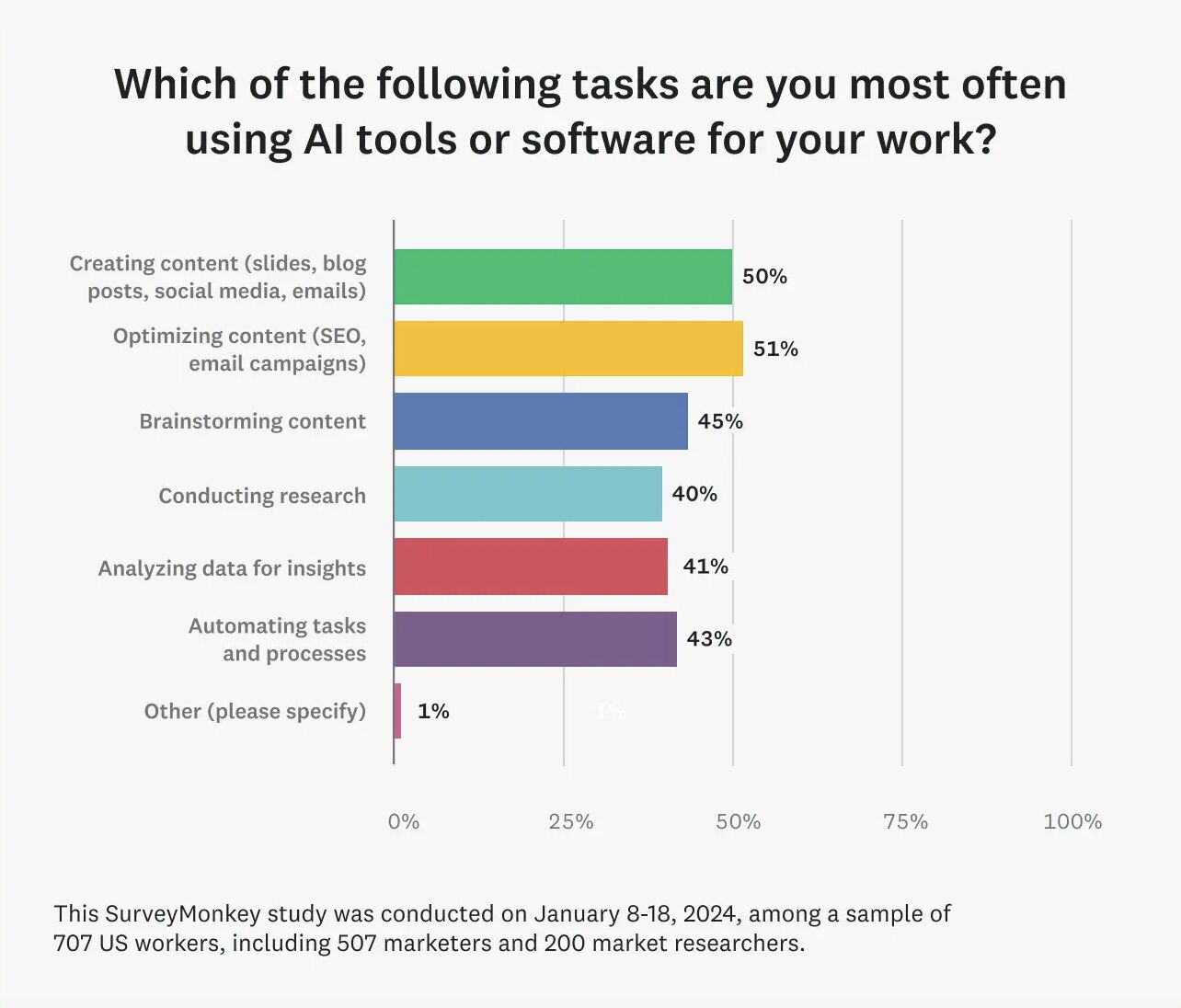
The best AI marketing tools help users save time and scale, but there are tons of nuanced use cases popping up and making work easier everyday.
We have ChatGPT to thank for that. Since its launch back in November, 2022, the AI tech market has exploded—especially in the last year.
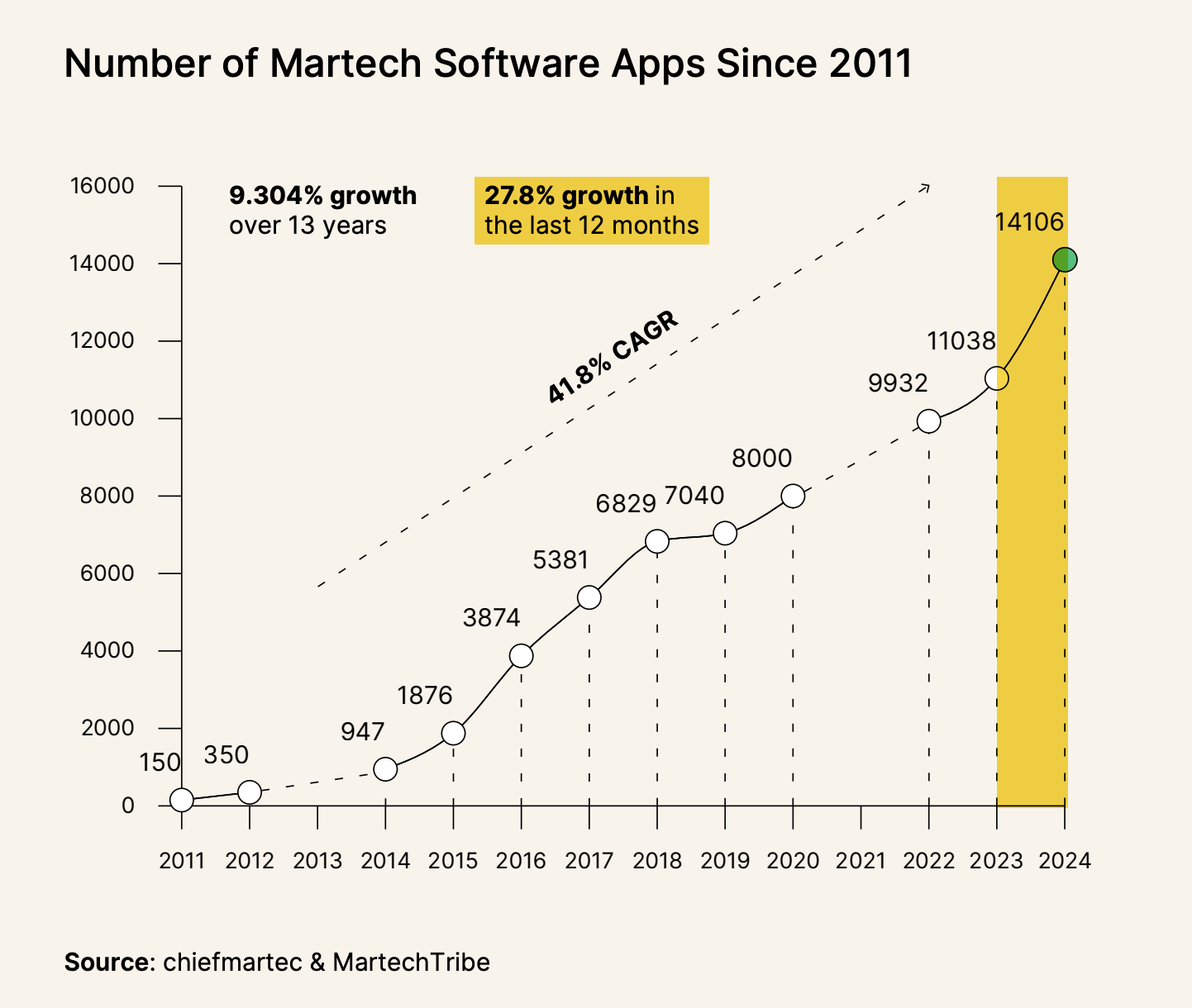
AI is infused throughout martech at this point. Nearly every major martech vendor has added generative AI features into their products. And hundreds of new martech startups (or seedlings of startups) have been born natively on the back of LLMs. It’s ballooned the martech landscape to more than 14,000 products. 14,106 to be exact. And that’s not including 3,135 marketing-specific GPTs from OpenAI’s GPT Store.

Now, you can use AI marketing tools for anything from cleaning your CRM data¹ and assessing your brand’s social media sentiment², to creating localized, auto-updating transit billboards³

And, just this month, AI agents have been unleashed.
They take the wheel, automating a bunch of time-intensive marketing tasks on your behalf—think broken link fixes, content audits, keyword research—heck, they can even order your groceries.
Recently a customer found us through the AI agent, ChatGPT Operator, which recommended Ahrefs as the top SEO solution.
The operator used the Ahrefs platform on the customer’s behalf, fixing backlinks and optimizing content, based on just simple commands.
In other words, it made autonomous, real-time improvements, without requiring any additional technical expertise. The user described the experience as “like having a tech guy in my computer”.
Agents aren’t the only new development in AI.
Now that chatbot usage is firmly on the up, we’re all desperate to know our AI brand visibility, which has given way to a whole new wave of AI analytics tools.
With all of that in mind, we’ve hand-picked the AI marketing tools we think you should have eyes on in 2025.
1. ChatGPT (for coding and automation)
Everyone knows ChatGPT by now—typical marketing use cases include brainstorming ideas and outlining content.
But there’s a new use case that I’ve seen a lot of marketers picking up lately: “vibe coding”
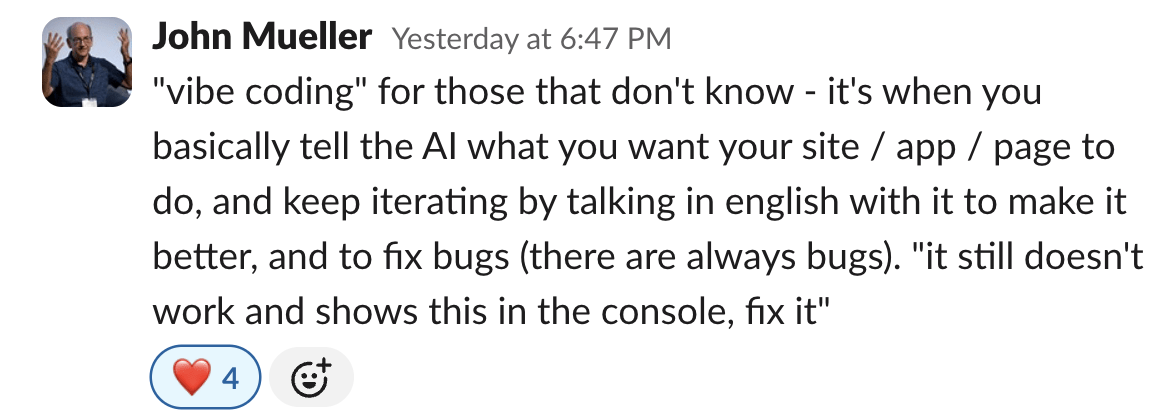
Quite a few of us in the Ahrefs marketing team have started using ChatGPT to “vibe code”.
Using a combination of ChatGPT and Google Colab, we’ve learned how to pull data autonomously from Ahrefs API just by chatting with ChatGPT.
We feed it Ahrefs API documentation, tell it which endpoints we want to grab data from, then ChatGPT generates the code and gives us step-by-step instructions on how to use Google Colab to retrieve the data.
It’s why we’re able to create leaderboard blog posts like The Top 50 Ecommerce Startups by Search Growth, Top 50 Trending SaaS Startups, and other large-scale analysis.
The one use case that has markedly changed my life and my abilities as a marketer is: coding. ChatGPT helped me work through a coding course and coached me through my mistakes. I know just enough now to ask it to build useful things, and have a better sense of what is possible. I can do stuff like:
- Automate big chunks of blog reporting (generating reports and graphs from GSC exports)
- Build and deploy simple tools to the web (like calculators, a sentence capitalizer, a growth rate calculator, interactive maps, etc)
- Call APIs to get whatever data I need, scrape webpages, run an LLM locally to make “free” content, etc.
I definitely think it has made me a better marketer in that sense.

2. Ahrefs Brand Radar (for AI share of voice analysis)
Ever since buyers started using AI to find brands and products, there’s been a race to understand and track AI brand visibility.
Our newest AI marketing tool supports this exact use case, and is fast-becoming my favorite part of the Ahrefs platform.
Ahrefs Brand Radar helps you track your brand mentions and entity ownership in AI Overviews.
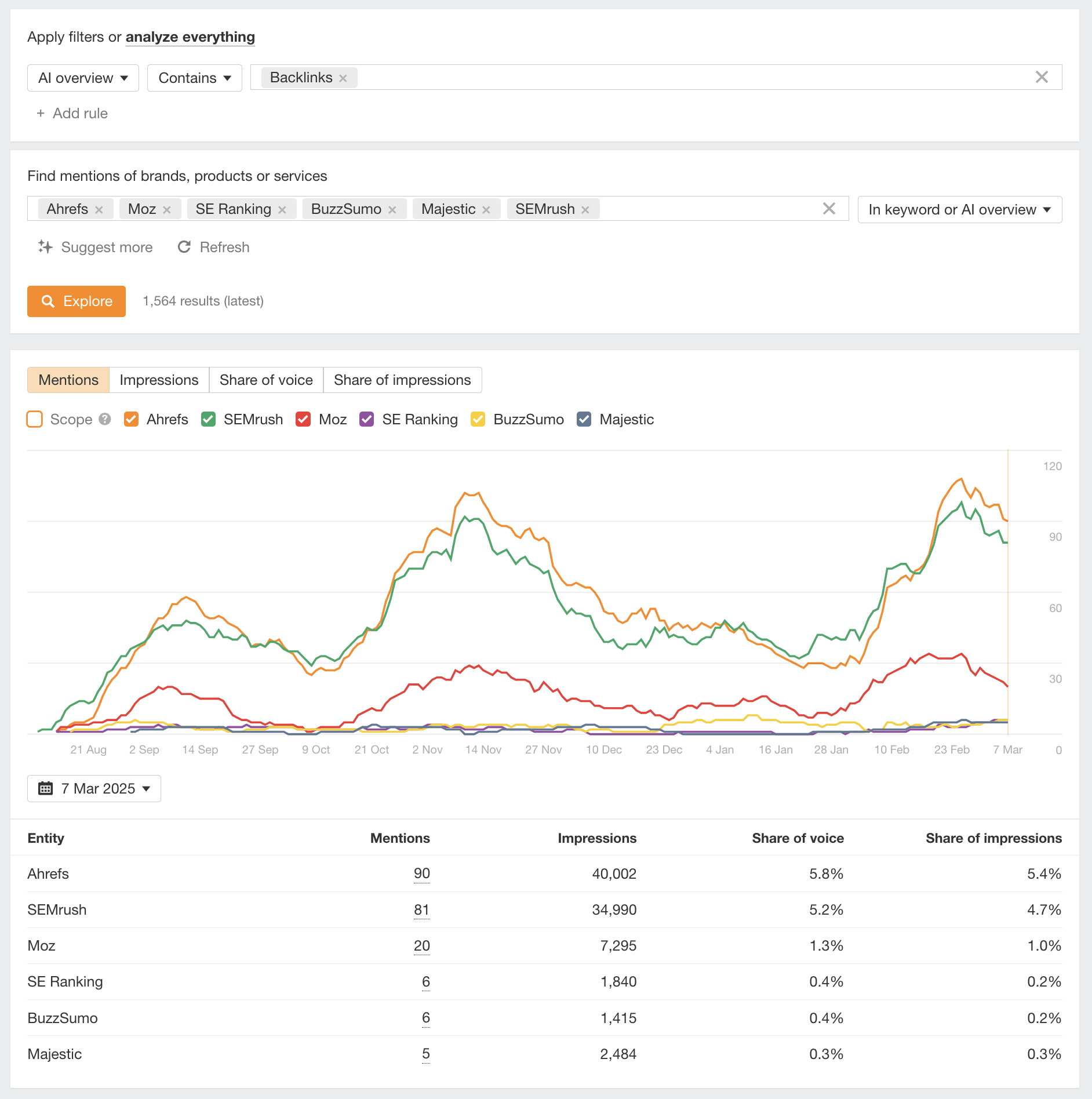
Just enter your brand name to see your total AI Overview ownership, or filter by specific keywords in search queries and/or AI Overview answers, to understand your presence across certain topics.
Then scroll down to further to view mentions in-situ, and see which domains are commonly cited in AI search answers.
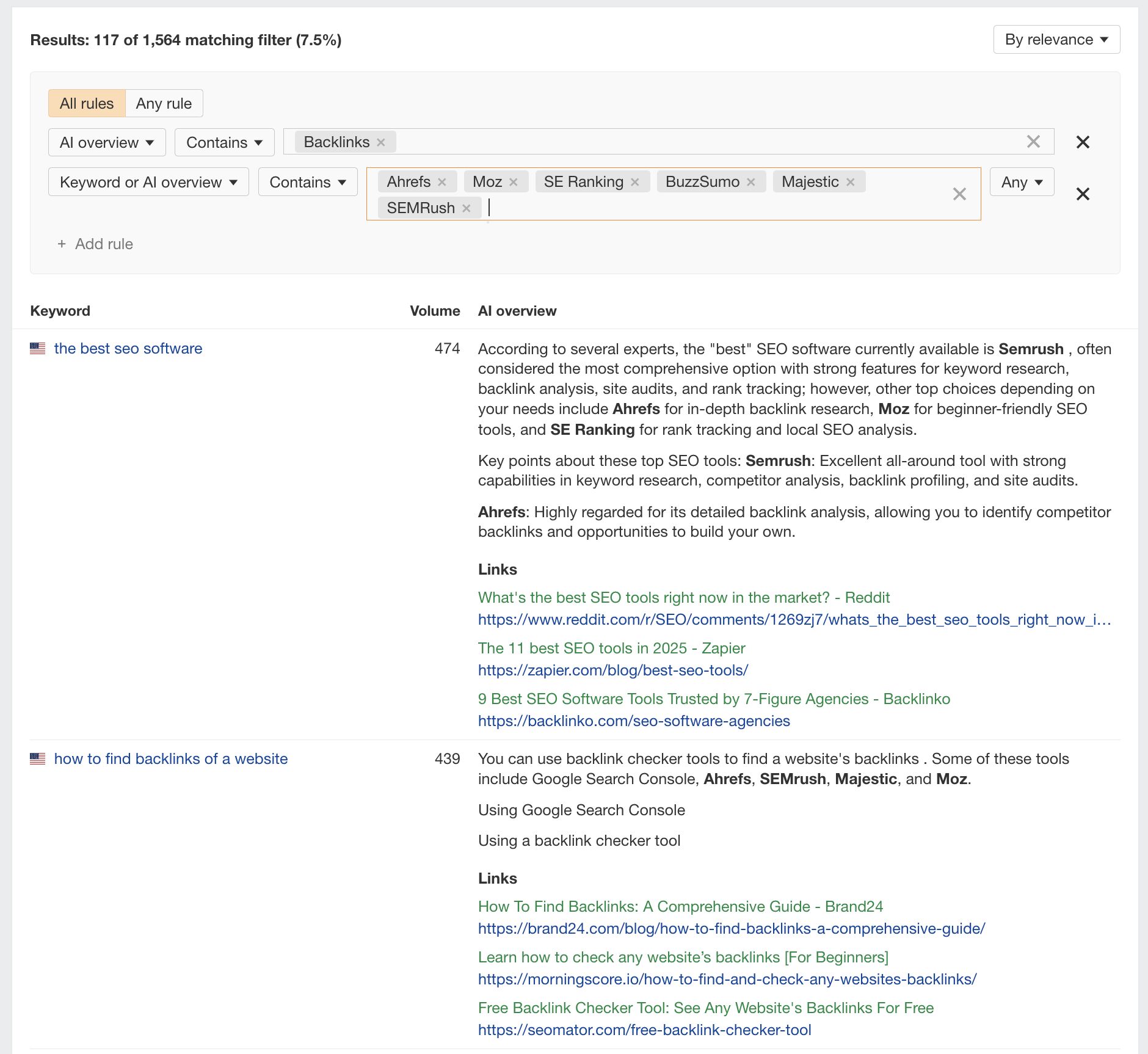
AI answers are changeable and “non-deterministic”, but with Ahrefs Brand Radar, marketers can get past the volatility of daily AI visibility, and measure their brand across 100s or 1000s of queries, to see more definitive trends and actual AI share of voice.
Marketing teams can use Brand Radar for brand share of voice analysis, competitive intelligence and benchmarking—even forecasting AI traffic.
3. NapkinAI (for generating presentation assets)
NapkinAI is a visual AI that creates flowcharts, icons, and venn-diagrams from your prompts.
Think of it as a more advanced version of Google Slides’ preset diagram templates.
This tool is great for visualizing scrappy, back-of-the-napkin ideas and handing them over to design, or generating one-click diagrams so you can get a deck together in record-time.
Here’s an example flowchart I made in under a minute, based on the 7-step web crawling process taken from my article: Crawl Me Maybe? How Website Crawlers Work
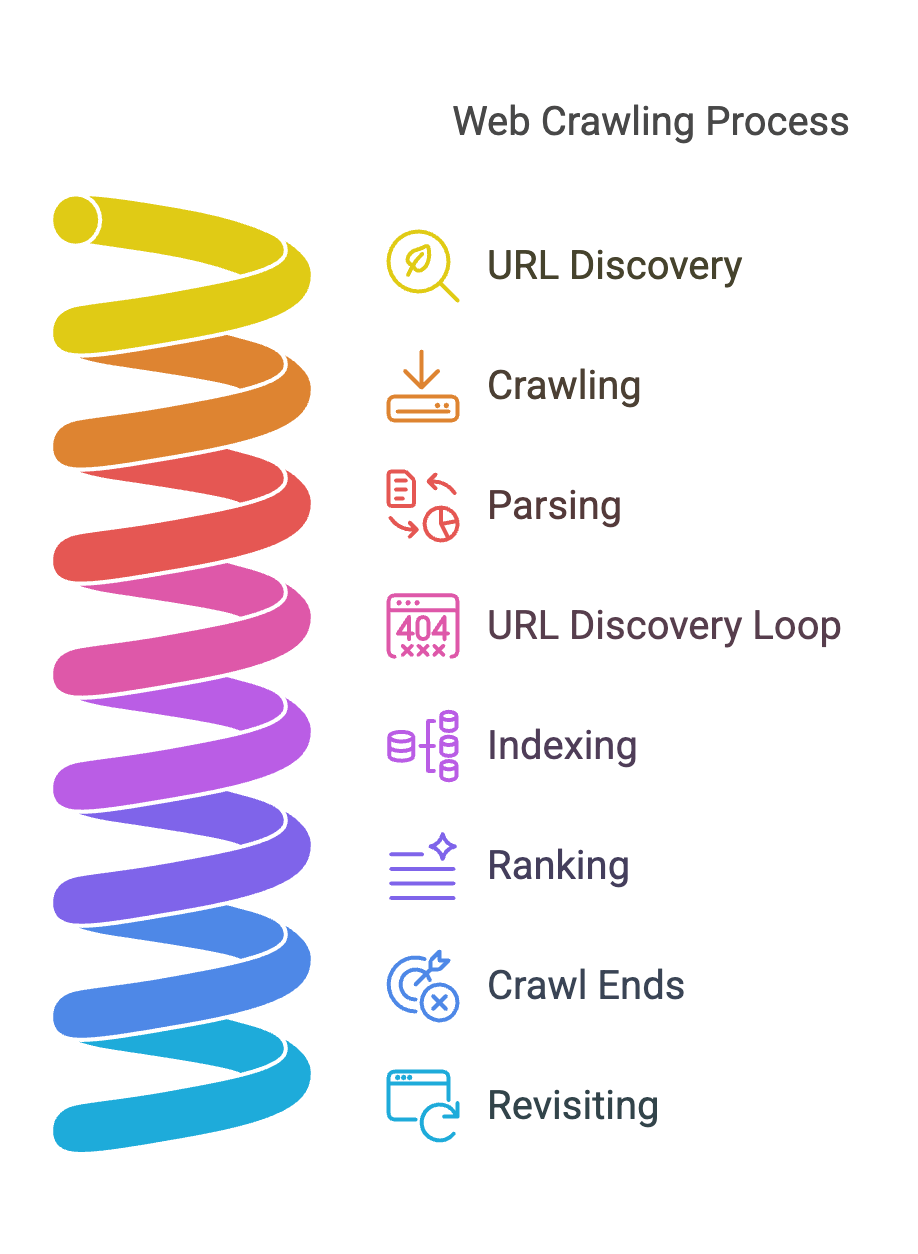
I use NapkinAI to create quick visualizations/mockups that send them over to get designed.

4. Ahrefs AI Content Helper (for optimizing content)
Ahrefs AI Content Helper is a powerful AI tool for marketers looking to enrich topics and entities in their content.
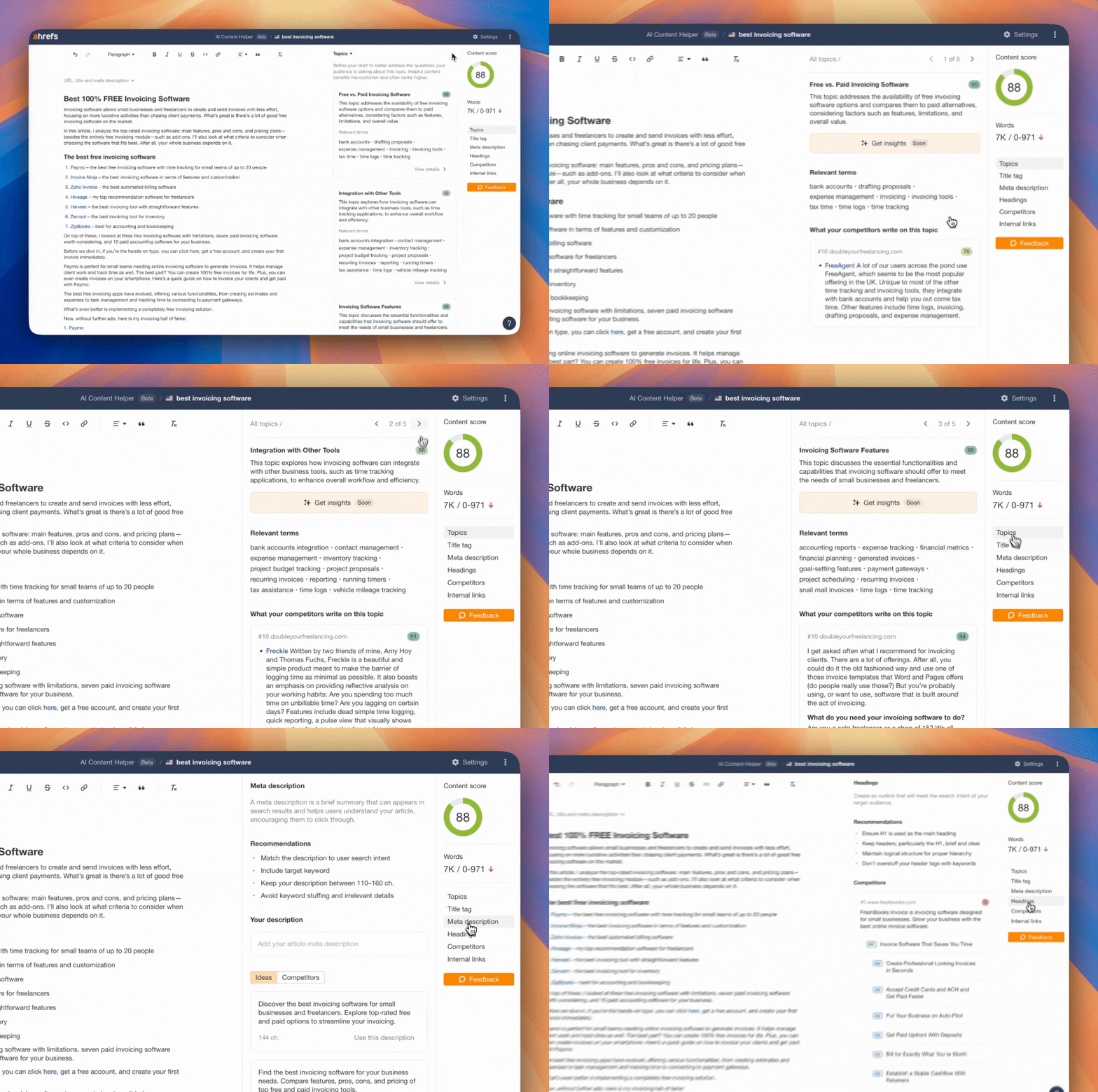
The AI analyzes the top 10 SERP results, giving you a breakdown of topic coverage, and scoring your content out of 100 based on the extent to which it satisfies search intent.
Crucially, AI Content Helper points out the key topic gaps that need filling, with coverage scores that update as you write.
It then helps you meet those goals with right-click AI rephrasing, an AI chatbot to talk through your edits, and detailed recommendations for optimizing your topics, titles, meta descriptions, and headings.
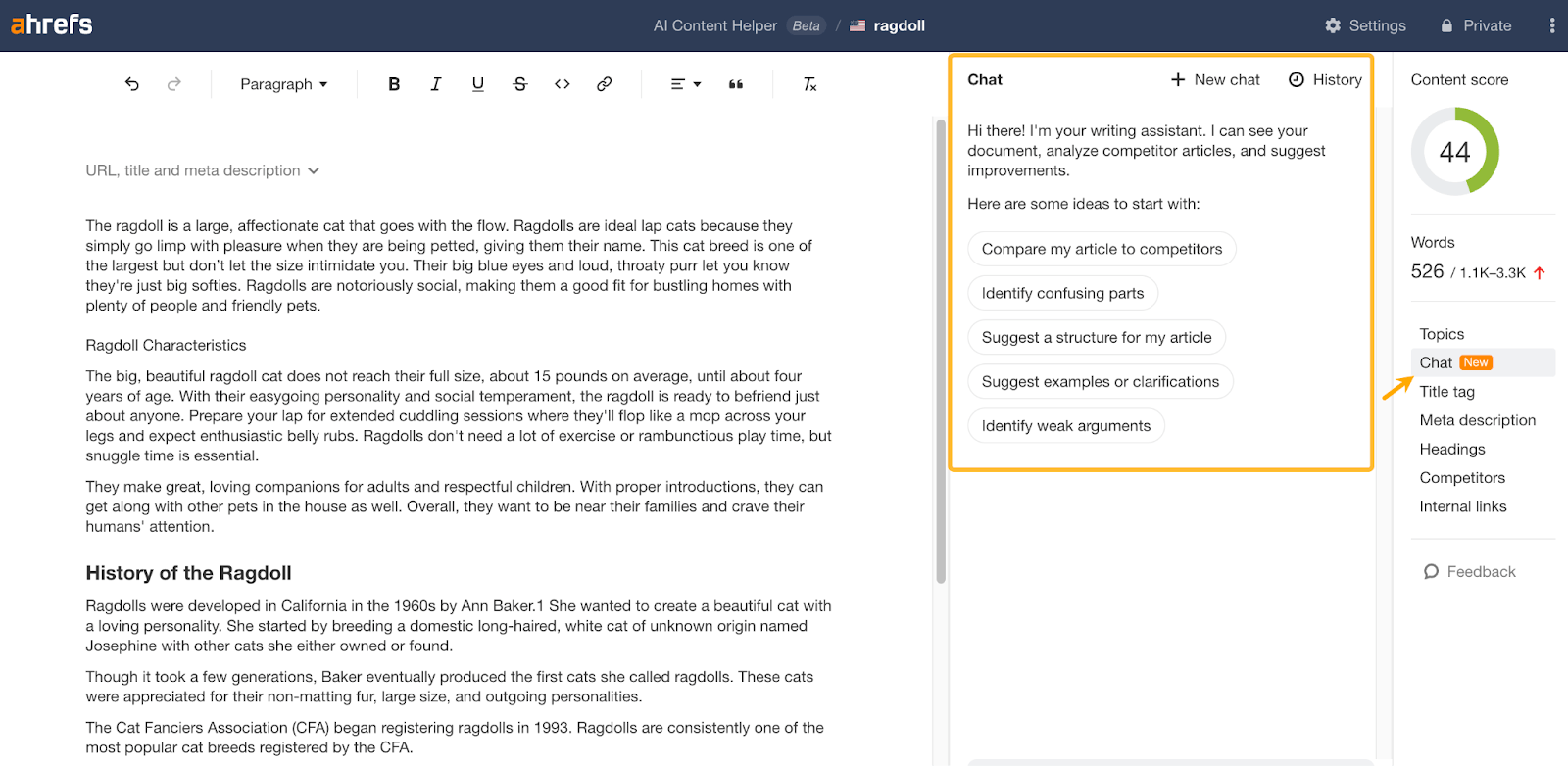
Ultimately, it takes the guesswork out of SEO, giving you strategic direction when you don’t know where to begin with outlines or updates.
For that reason, it’s one of my favorite tools in Ahrefs—I love it so much that I’ve written a whole blog post about it, including the content wins I’ve seen since using it.
You can read that here: How I Boosted Traffic by 72% With Ahrefs’ AI Content Helper
If you’re in the market for an AI content optimization tool, you should also have a read of Ryan Law’s article: The Best AI Content Optimization Tools for 2025.
Ryan’s gone straight to the source, collecting product and feature information from the founders of each tool on the list, and giving you the fairest comparison of what’s out there right now.
5. Ahrefs Batch AI (for batch creating meta content)
Batch AI in Site Audit is an AI tool for marketers that need to minimize SEO busywork, helping to batch-correct content like meta descriptions and page titles, in a single click.
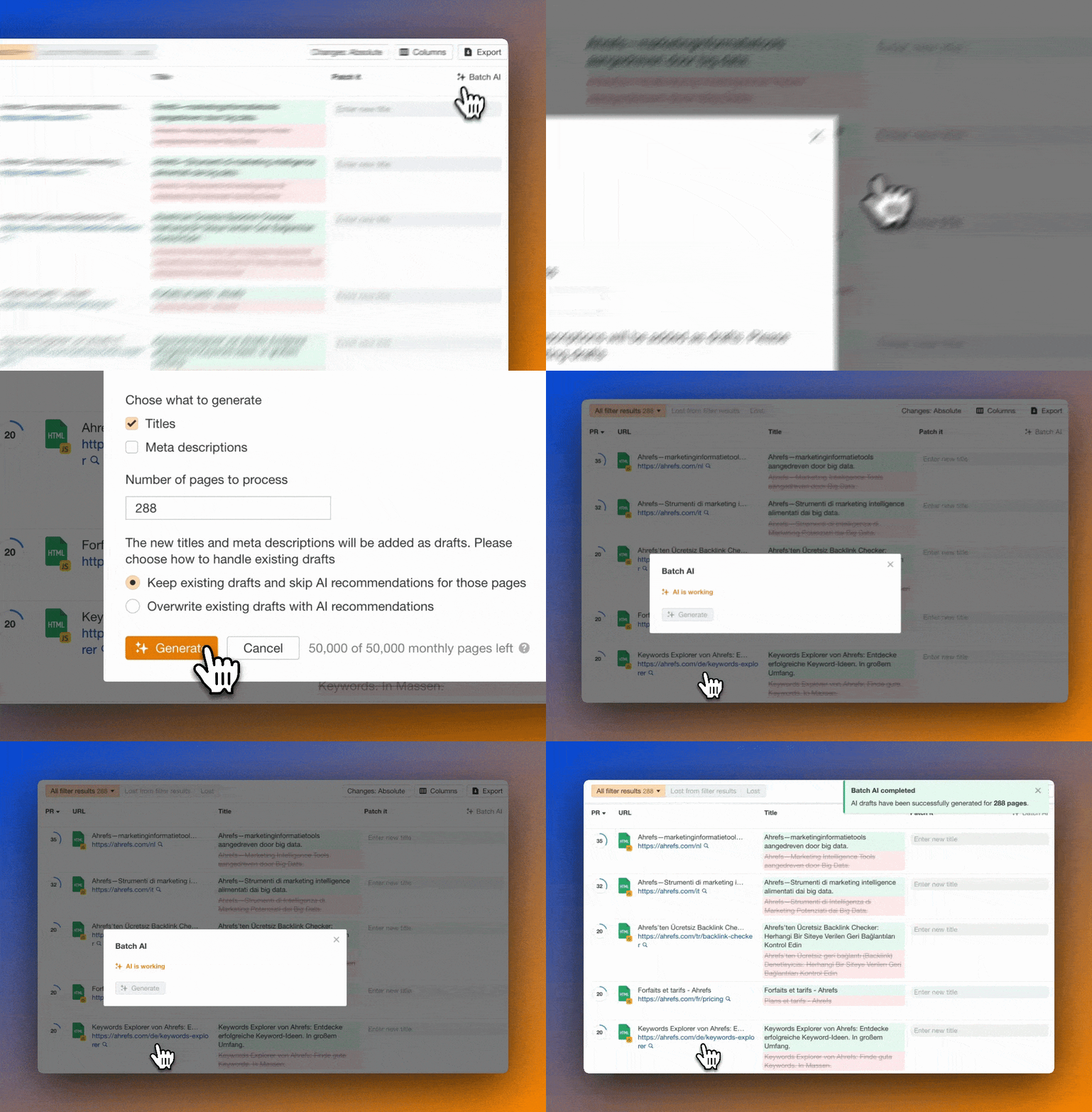
Batch AI works best in combination with Ahrefs Patches—another tool that lets code-shy marketers push instant technical SEO fixes and updates.
With Ahrefs Patches and Batch AI, you can push hundreds of meta data updates without having to ever involve the dev team.
We use Ahrefs Batch AI to support our own marketing. In fact, we’re currently working on an A/B test to assess the impact of widescale title tag updates on our rankings.
There’s a lot of conjecture as to whether writing titles manually is worth the effort—since Google rewrites them 61% of the time—and whether adhering to the best practice title tag length is strictly necessary, so we’re putting that to the test!
6. Grammarly (for quick copy edits)
Marketers create a ton of written content every day; emails, social media posts, blogs, proposals, presentations.
All that context-switching and tone-shifting can take its toll on output.
Personalized AI writing tools like Grammarly can lighten the load, supporting with features like one-click tone adjustment, content summaries, writing assistance, and article outlines.
Just this morning I used Grammarly’s AI to write an email, asking marketing influencers for quote contributions to my next article.
To keep it relevant I dropped in my article thesis, hit a button to make it more “friendly”, then hit another to shorten it.
Obviously, I’d still need to give it a quick edit (I don’t tend to bandy the term “fellow marketers” around often, for example), but the output wasn’t too shabby for a ~1 minute job.
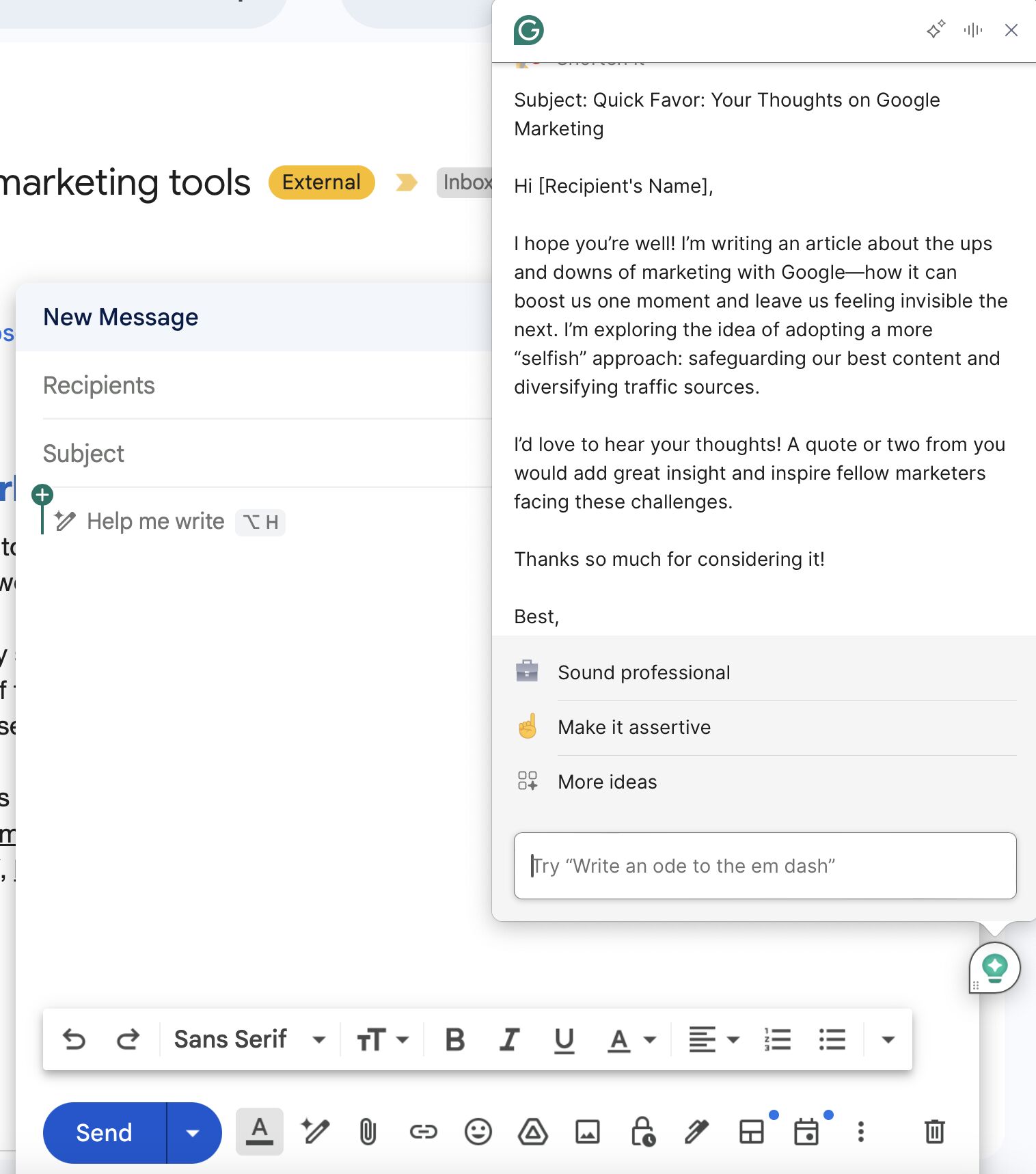
Grammarly’s AI features are embedded in the tools marketers use every day.
In onboarding, you get to choose your top use cases and apps, to determine where Grammarly pops up and the kinds of recommendations it makes.
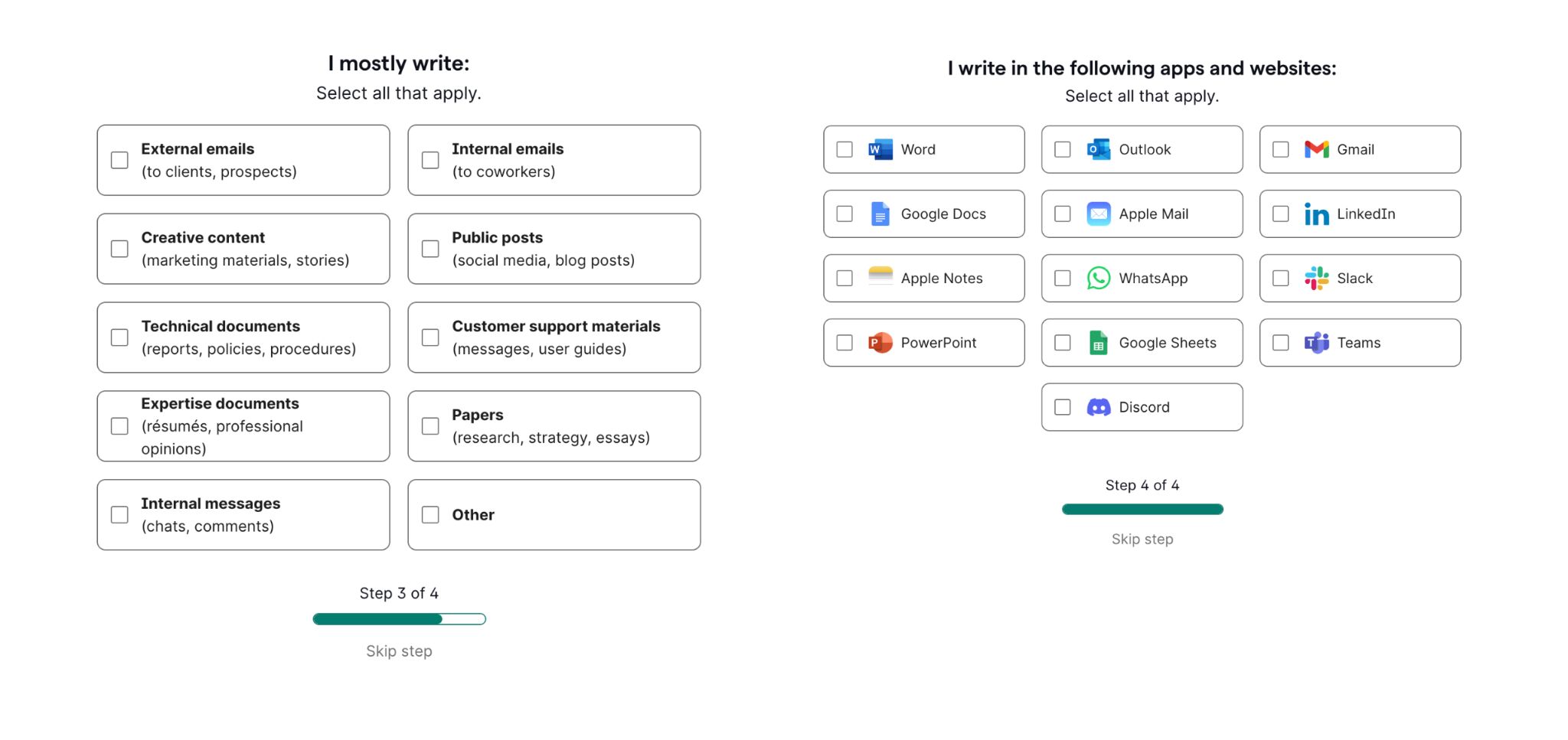
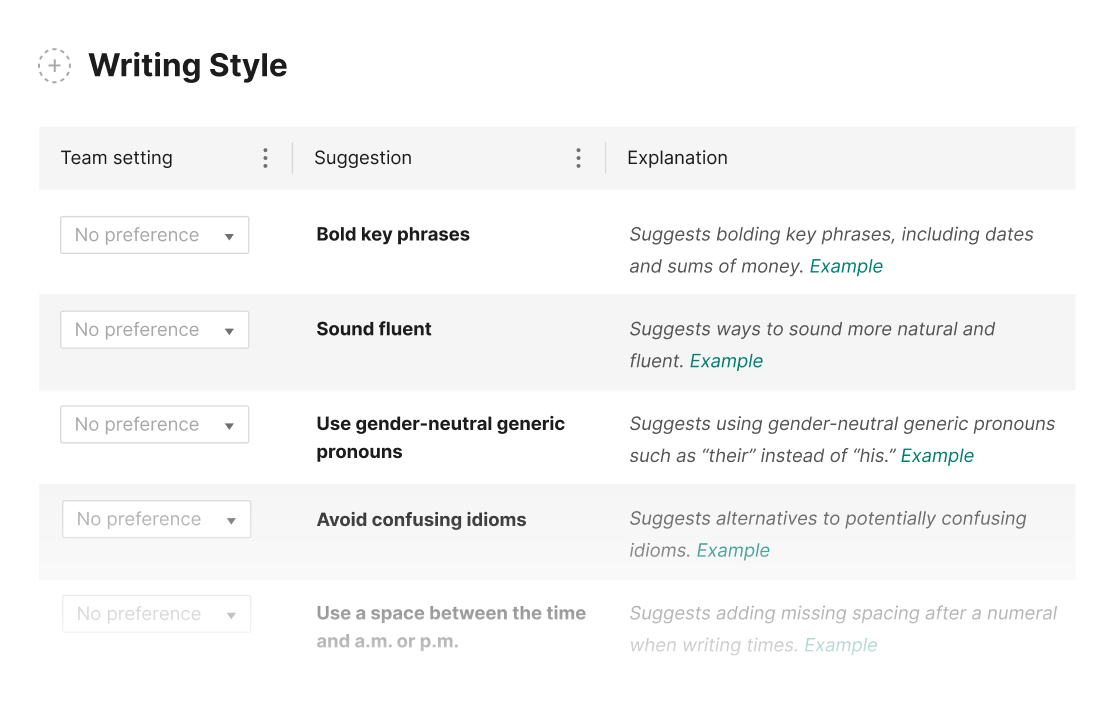
Grammarly’s Business AI offers another level of support—pointing out missing information, encouraging the use of specific CTAs, and guiding marketers towards language that’s in-keeping with their business’ tone and style guidelines
7. Ahrefs Web Analytics (for AI traffic analysis)
There’s a new type of AI marketing tool in town right now: AI Analytics.
AI Analytics tools show you the traffic your brand picks up from AI, and can help you work out what to do to get more of it.
This data helps you create more AI-driven content, and grease the wheel for conversion by optimizing typical AI journeys.
Ahrefs Web Analytics lets you analyze your traffic from different LLM sources including ChatGPT, Gemini, and Perplexity.
Just select the “LLM” channel, hit “sources”, and analyze the pages on your site attracting users from AI Chatbots.
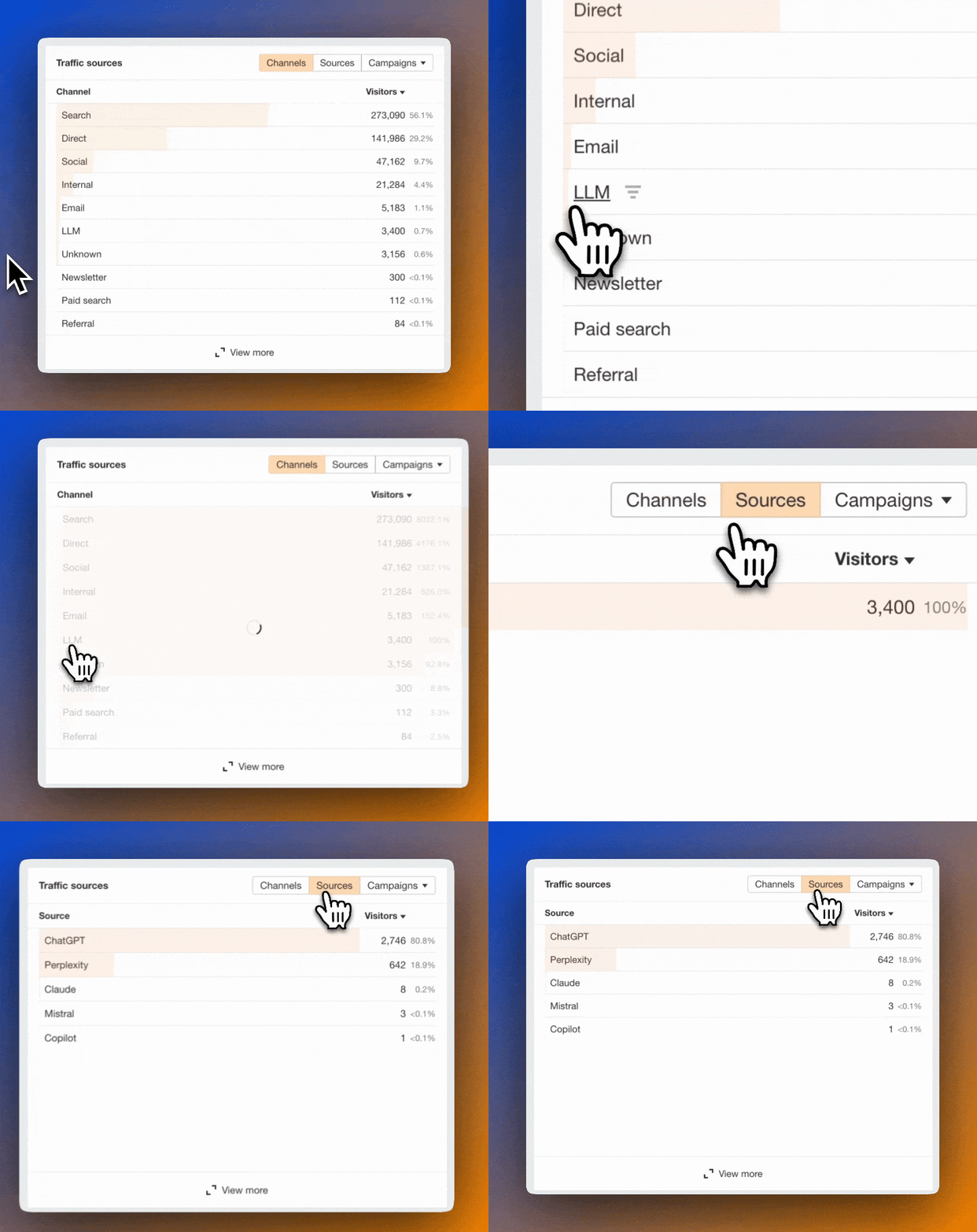
See which AIs drive clicks, page views, and long, engaged sessions—then feed that back into your marketing strategy.
Here I am using this tool when it was first released—before we’d even added a filter for LLM traffic.
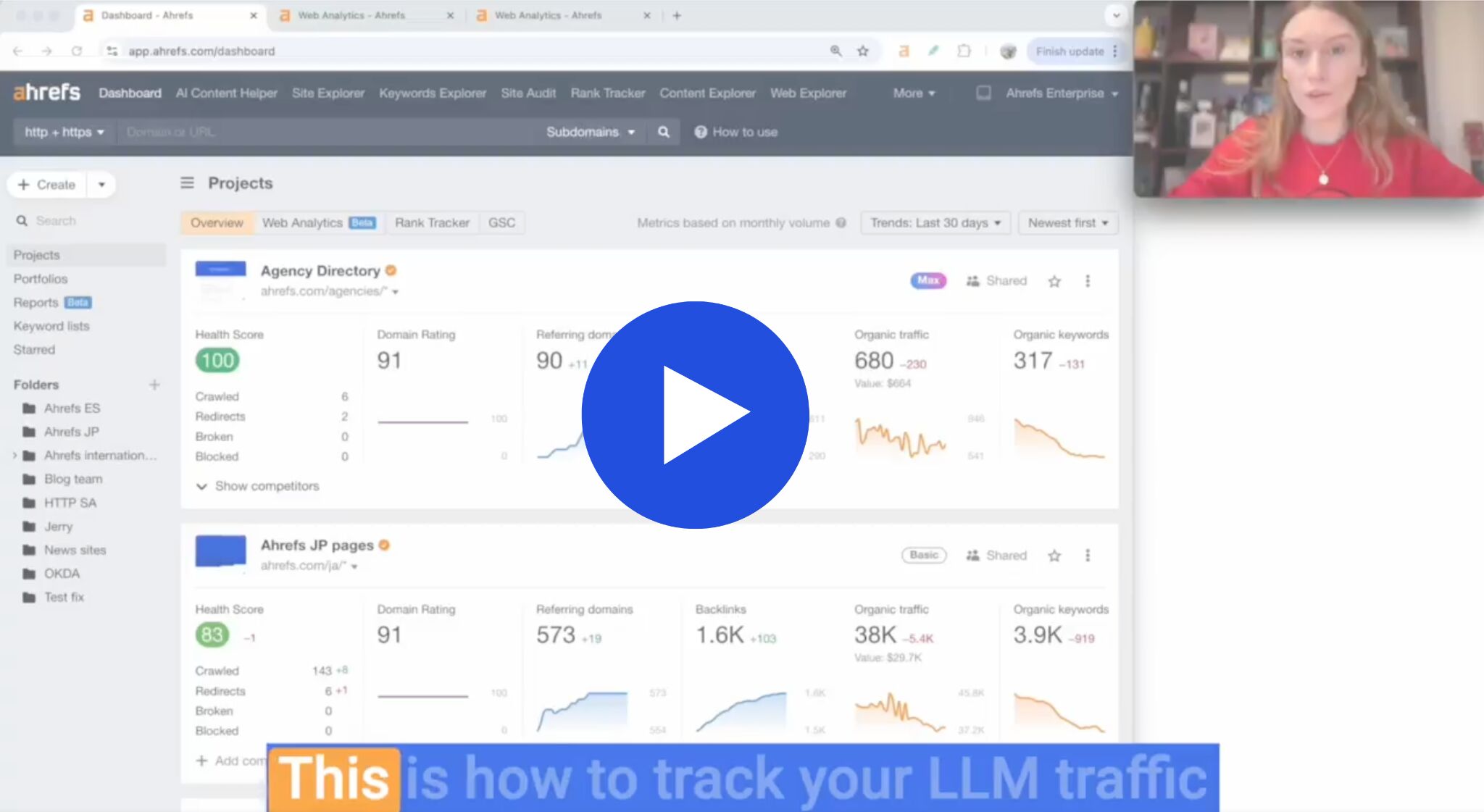

Even then, I was able to see that our bottom-of-the-funnel pricing pages were being cited routinely by ChatGPT, along with statistics-based blog content.
8. Browse AI (for no-code AI scraping)
Used by the likes of Zapier, Hubspot, and Salesforce, Browse AI is a multifunctional, no-code AI scraper that lets you crawl and extract data from websites.
The point-and-click UX makes it accessible even for non-technical marketers, opening it up to tons of marketing use cases.
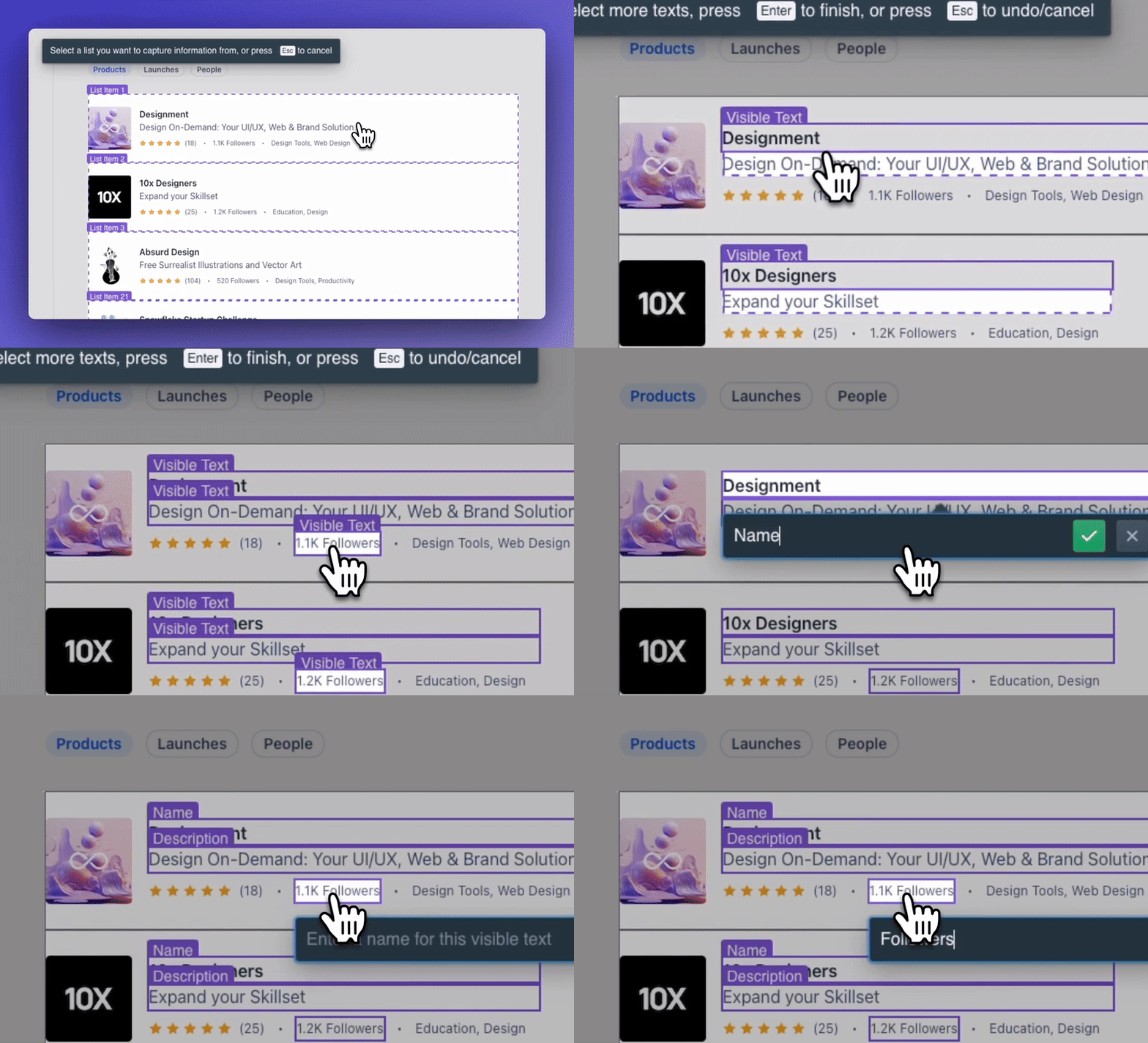
For social media monitoring, you can use it to scrape comments to find brand mentions, and analyze customer sentiment.
For editorial exclusives, you can scrape popular sites (e.g. Apple), set up alerts for page updates to report on new developments, and be the first to break news in your industry.
Browse AI is also a ridiculously powerful tool for competitive analysis. You can train its bots to scrape competitor product data to inform your pricing strategy or analyze negative reviews, to take advantage of competitor flaws in your marketing.
I’m looking into Browse AI to create more detailed B2B research and PR data stories—either using one of its 200+ prebuilt robots, or by building a custom robot from its thousands of integrations (e.g. Google, Google Trends, LinkedIn, Reddit, Zapier IMDB, ProductHunt etc.).
9. Jasper (for replicating brand/author tone-of-voice)
As a self-described “LLM-agnostic vendor”, Jasper is an AI content marketing tool powered by no fewer than 39 LLMs—including OpenAI, Google, Anthropic, and Cohere.
Does this LLM mash-up move the needle? With the added context of brand style guidelines, I think so.
Having had two Jasper trials, and used it for various content tasks, I can say I am a fan—I mean there’s a reason I came back for trial #2!
Jasper is the best AI marketing tool I’ve used for replicating tone of voice.
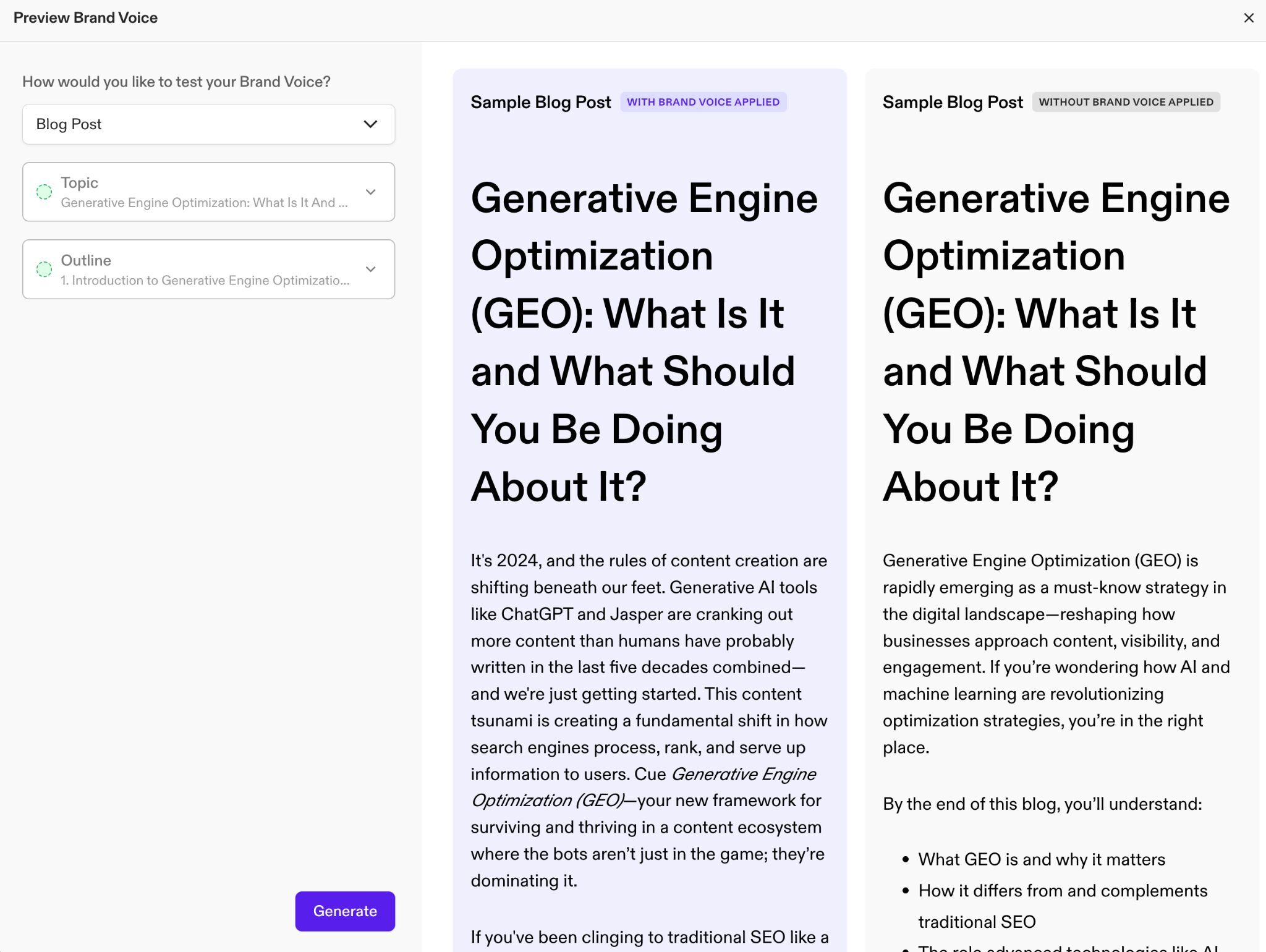
I have tried training ChatGPT and Claude with few-shot-learning prompts, but they don’t quite capture my writing style.
Knowing what you want to say and knowing how to say it are two very different things.
Jasper is great for the latter—it convincingly mimics your tone and helps you move past edit paralysis, so you can focus on shaping your argument and getting more of those mic-drop moments into your marketing.
Some other cool features: Jasper helps marketers repurpose their content into different written and visual formats for campaigns, with access to a library of 90+ templates and apps.
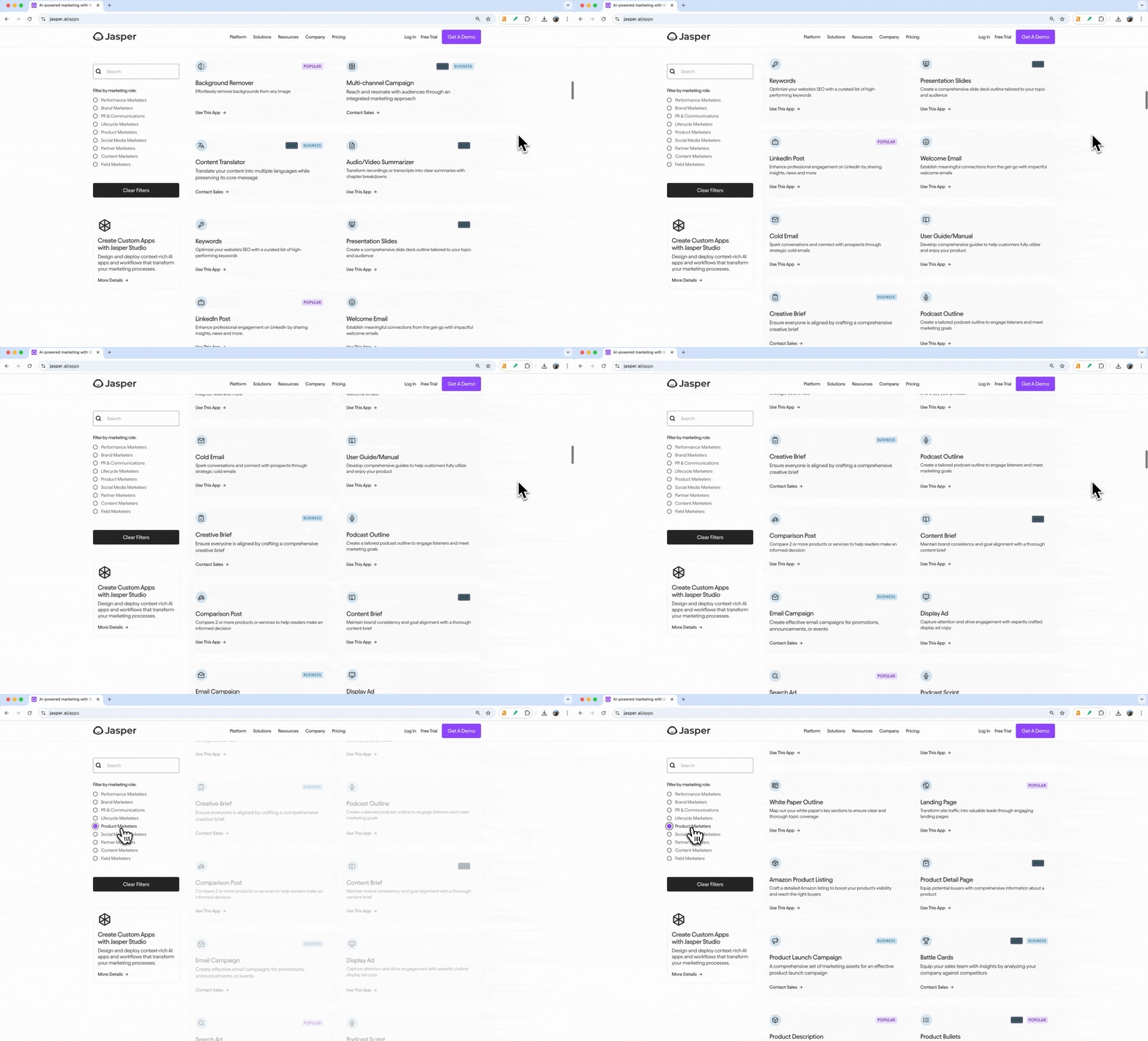
Its AI also supports content translations in 30+ languages and uses RAG-based functionality to surface the latest news and information.

10. NotebookLM (for grounding and strategic feedback)
NotebookLM is a Google-owned AI “research companion”, that allows users to query all different forms of information, including Google Docs, YouTube URLs, websites, and their internal documentation.
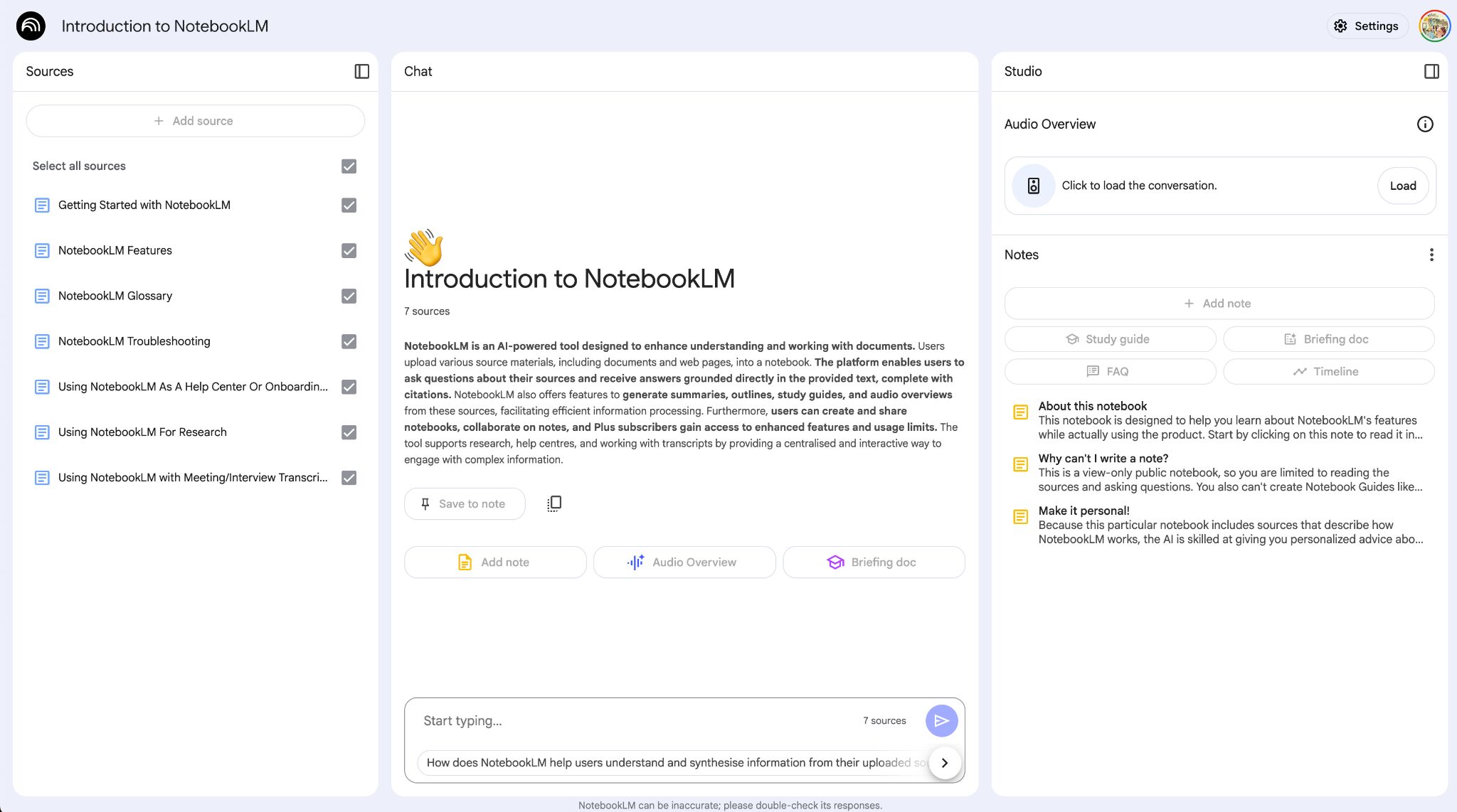
One of the standout features is its ability to spin up outputs into scarily convincing podcast chatshows. Google recently reported that users have already generated more than 350 years worth of Audio Overviews with NotebookLM.
NotebookLM was one of the first AI Marketing Tools built solely to assist with what is known as “grounding” tasks. In layman’s terms, that’s when you feed a file to an AI to contextualize your query, improve response accuracy, and avoid hallucinations. Google describes it as “the ability to connect model output to verifiable sources of information.”
I have been using NotebookLM for grounding. Giving it sources and asking questions about those sources, aggregating data.
Marketers use NotebookLM for everything from content research to strategic consultan