

AI search is the most consequential thing to happen to our industry in a decade… and the most over-narrated.
Every week brings a new acronym, a new era, a new thing you are supposedly already too late for.
Some of it changes how we work, but a lot of it is—let’s be honest—noise.
Well, fear not.
I’ve curated some genuine AI search trends that have been building throughout the year, backing up my observations with cold, hard search volume and social media discussion—with a little help from Keywords Explorer and Letaido.
Ever since ChatGPT launched in 2022, marketers have wanted to know whether their brand gets recommended in AI answers.
Demand for AI visibility tools has exploded over the last year more than any other, with searches like “ai search tracking” up 184%, and “ai rank tracking” up 175%.
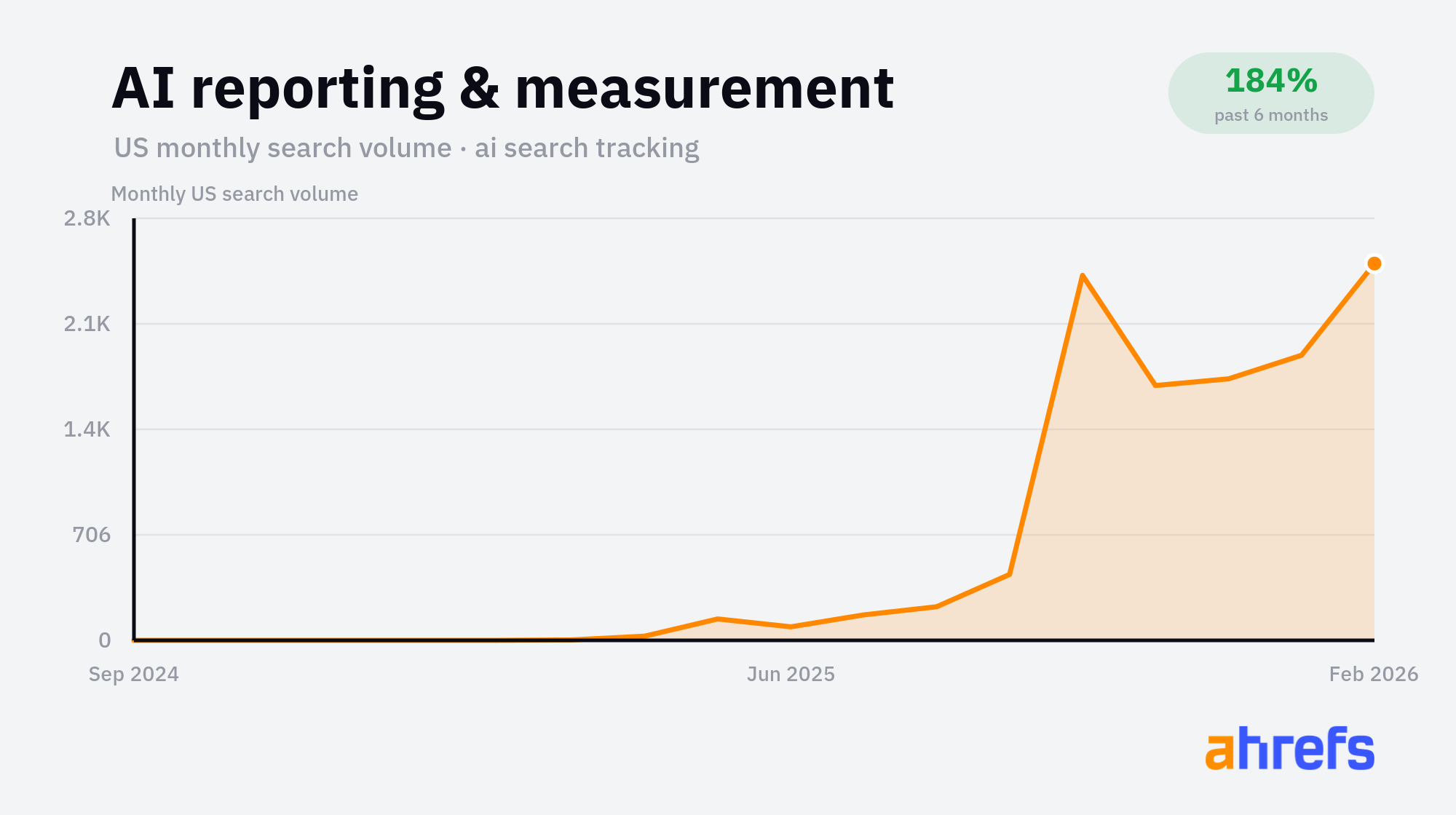
“AI search tracking” US monthly search volume. Source: Ahrefs Keywords Explorer.
Recently, Google rolled out an AI performance report in Search Console, breaking out visibility inside AI Overviews and AI Mode.
Brodie Clark called it “the most requested report in Google Search Console ever”—the appetite for any visibility data is that strong.
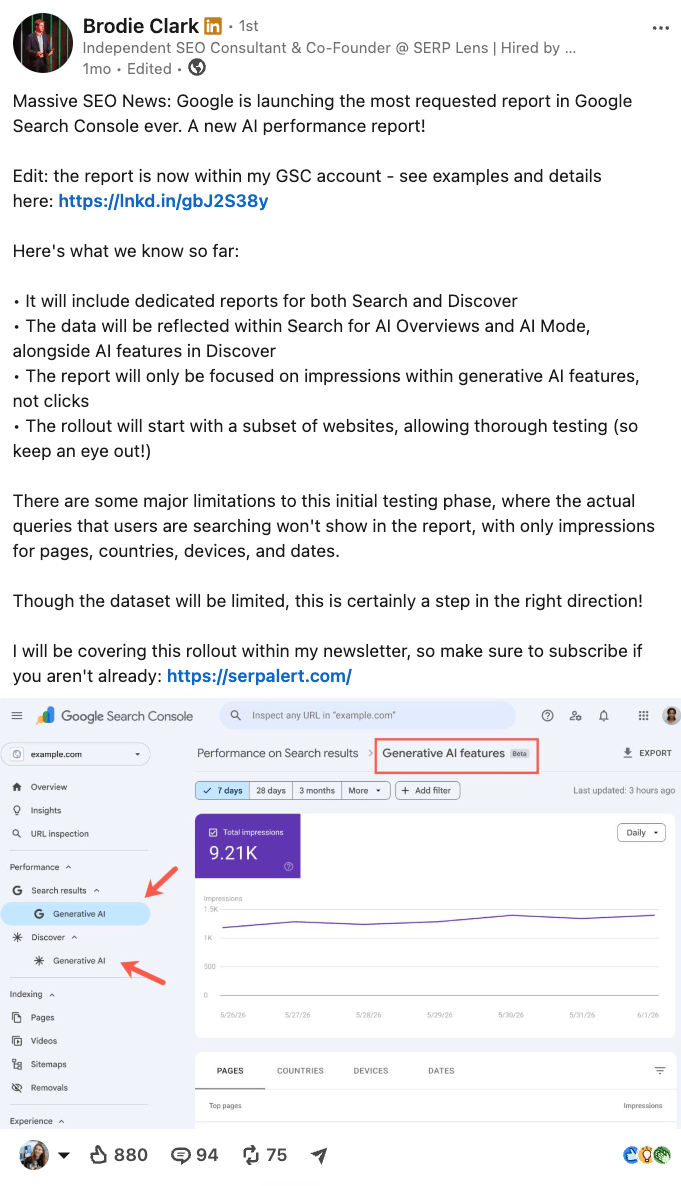
The launch drew a packed r/SEO thread within hours, but most of it centered around the report’s limitations.
The main one being that clicks and queries aren’t shown—only impression data.
Under Google’s official announcement, TUI’s Technical SEO Manager Simone De Palma asked why marketers should be satisfied with a sub-menu that aggregates AI Overview and AI Mode impressions together with no referral distinction, when Bing at least surfaces the RAG queries behind its answers.
The industry is mostly in agreement that earning a citation is the fast, controllable way to show up in an AI answer—far quicker than the slow, opaque hope of getting baked into a model’s training data.
But they also agree that surface-level citation data is not enough.
The harder question we’re all beginning to ask is: what is an AI citation actually worth?
Does it actually send someone to our site and do they convert, or is it just a vanity reference sitting in an answer nobody acts on?
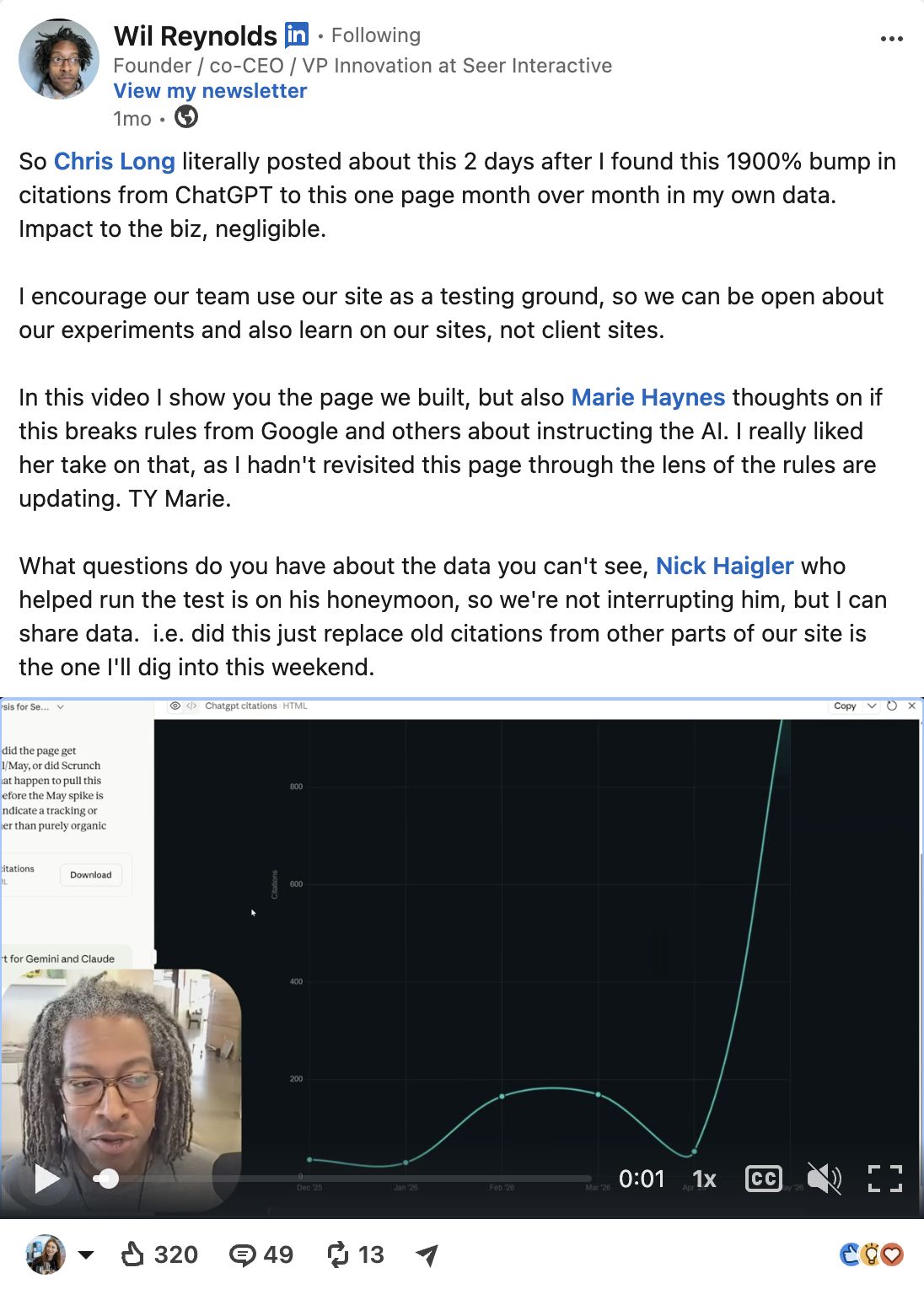
Wil Reynolds got SEOs and marketers debating the topic of AI ROI on LinkedIn when he shared the results of an experiment he ran on his personal site.
He noticed a 1,900% month-over-month jump in ChatGPT citations to a single page, then quickly realized it made little-to-no business impact.
The shift from counting mentions to interrogating their value is a genuine, developing trend in AI search over the last twelve months—spawning an entire measurement vocabulary.
Every trending keyword in the table below reflects this.
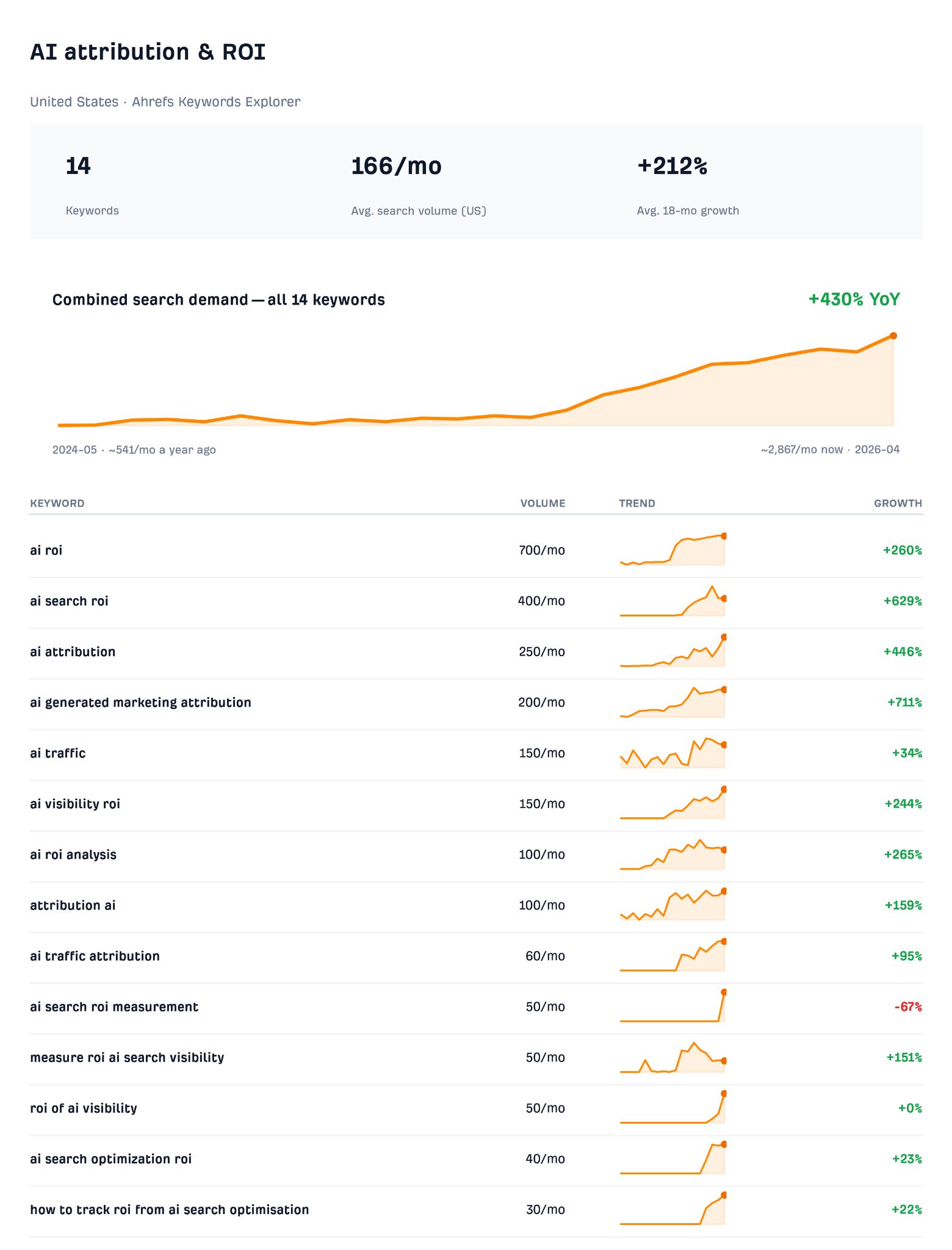
This table shows just a small sample of keywords—some with pretty modest volumes—but having scanned Matching Terms, Related Terms, and Search Suggestions reports in Ahrefs Keywords Explorer, I can confidently reassure you that there are tons of these synonymous searches.
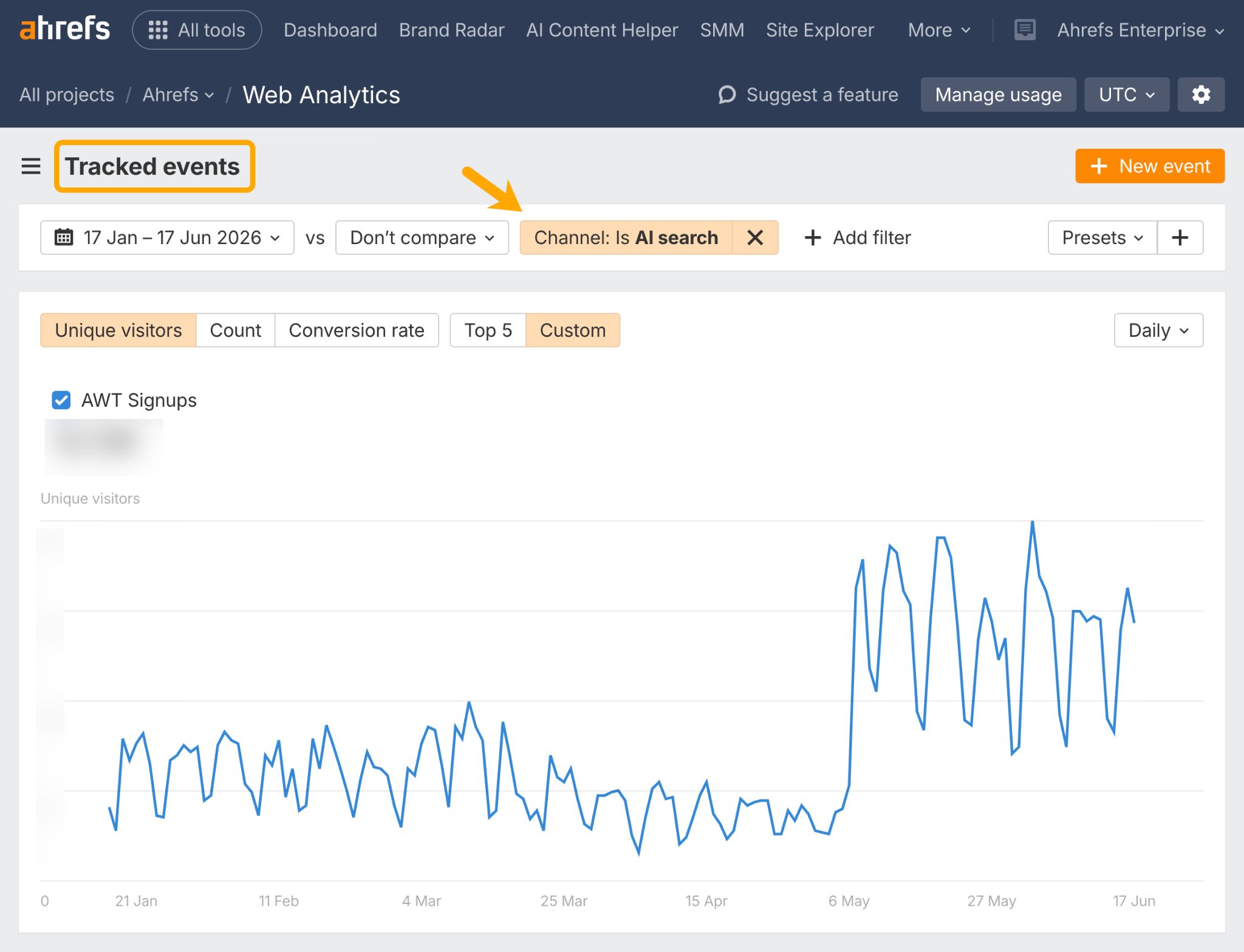
Marketers have realized that some citations are only worth chasing when they send people to your site, and when those people act.
This is the kind of data you can see in Ahrefs Brand Radar. It shows you which of your cited pages are actually picking up real AI traffic.
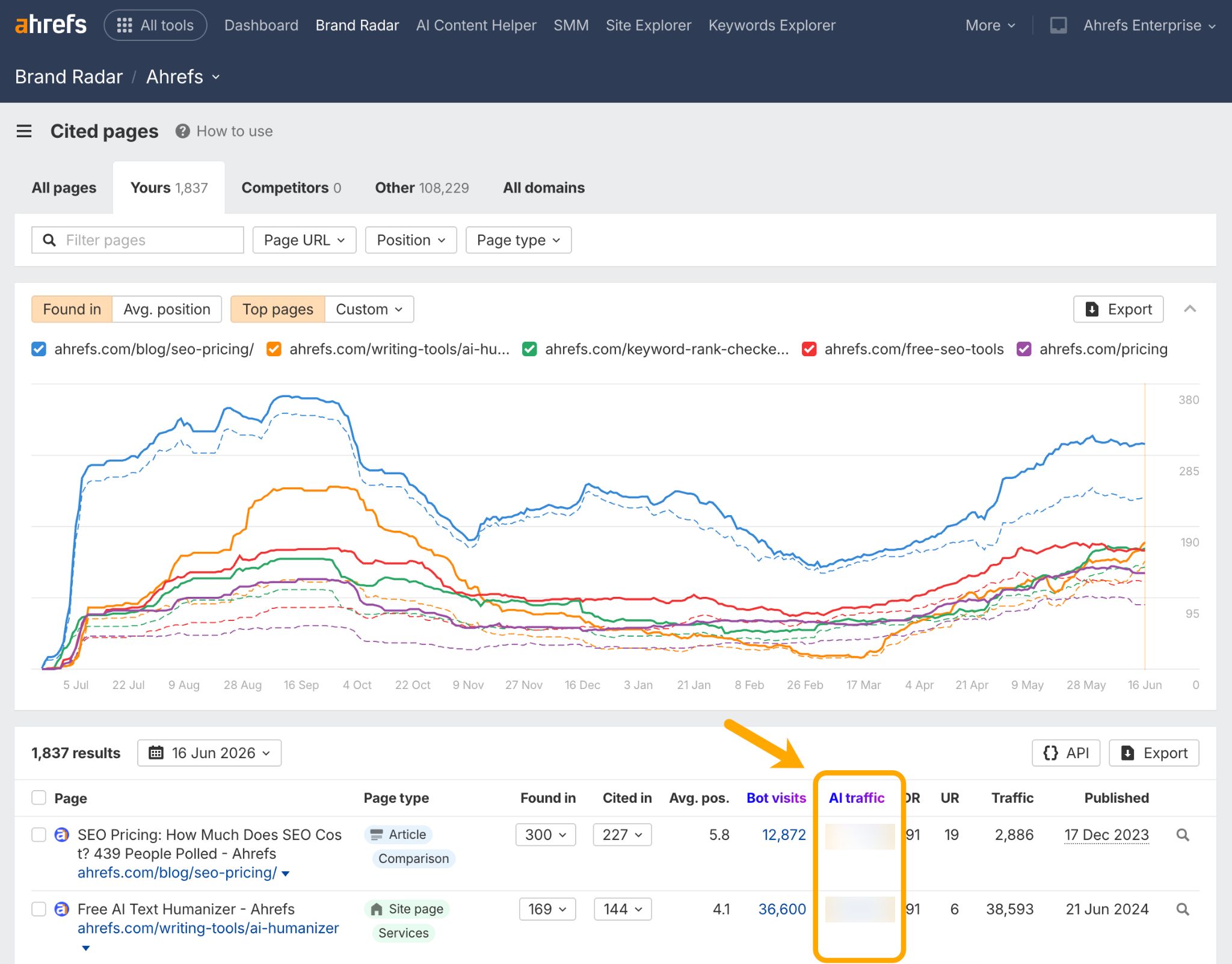
From there you can check Web Analytics, to trace real events and conversions back to their AI source.
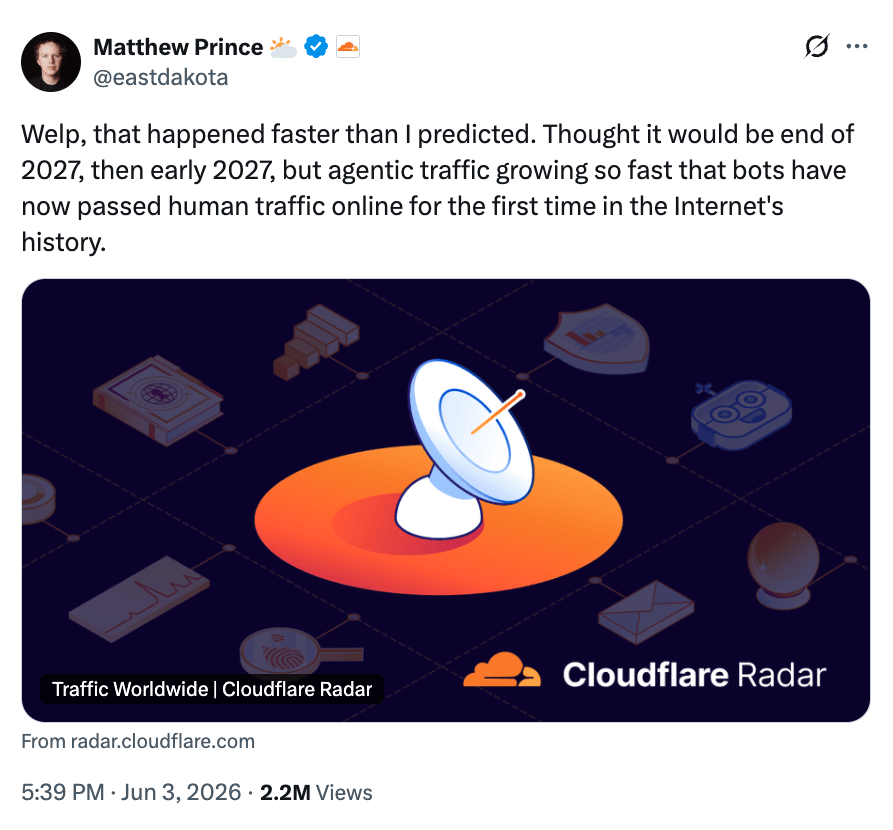
A growing number of the “readers” you’re attempting to influence are actually AI agents browsing and buying on your audience’s behalf.
In fact in June 2026, Cloudflare CEO, Matthew Prince, revealed that agentic (bot/crawler/agent) traffic had surpassed the 50% mark for the first time in the history of the internet.¹ ²
Over the past two years agentic AI has grown into mainstream demand in its own right, and trailing it, a small but unmistakably new set of searches has appeared for optimizing pages so an agent can read and act on them.
Think: “llms.txt” and “agentic seo”.
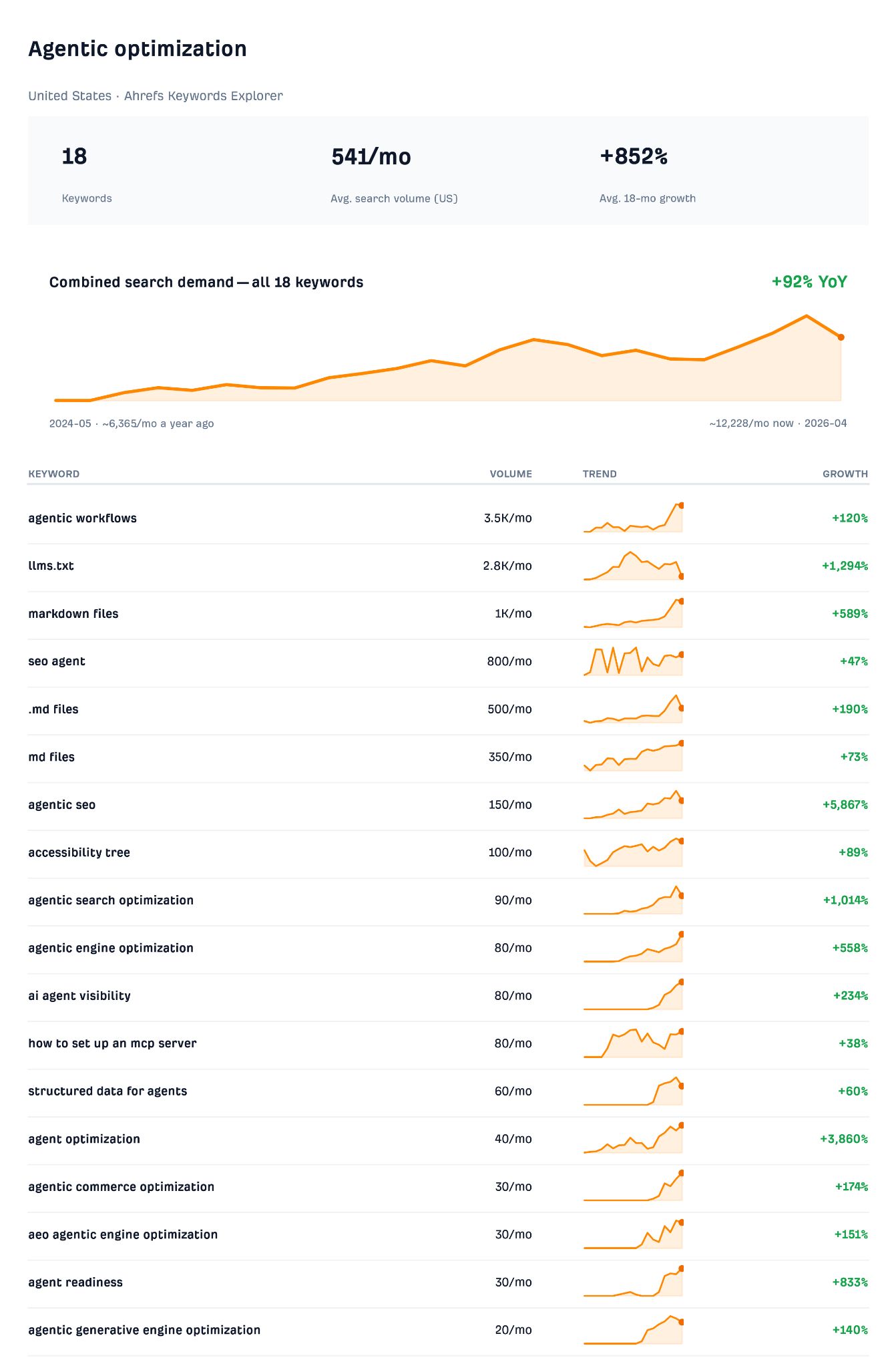
These kinds of agentic optimization topics are trending in the industry right now for multiple reasons.
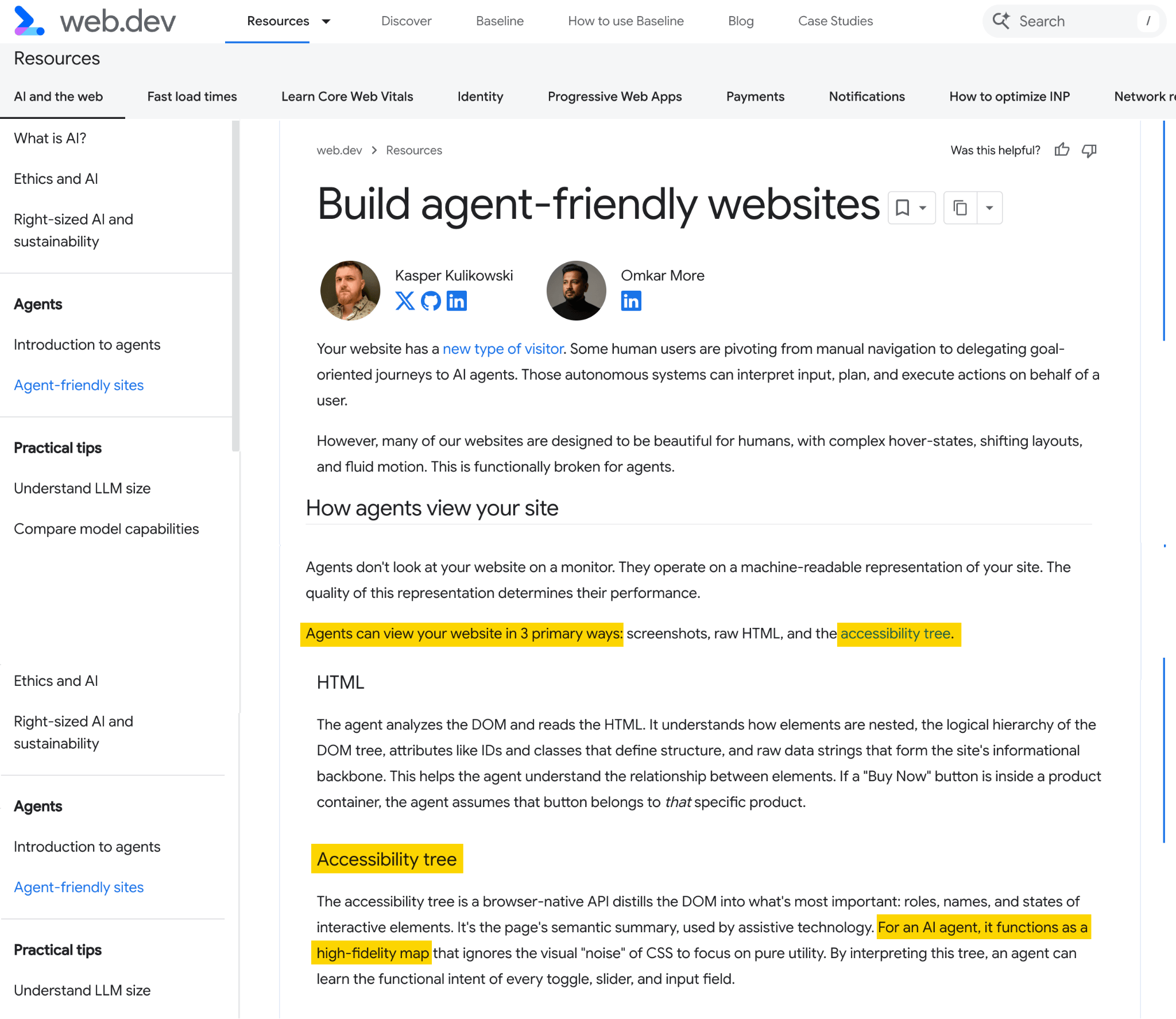
Llms.txt, markdown files, and the accessibility tree are all ways of telling an agent what a page contains, since agents parse structured text far more reliably than they render JavaScript or infer meaning from a layout.
Llms.txt has garnered attention over the last year following constant industry debates over whether it actually improves AI visibility (hence our own study: We Analyzed 137K Sites: 97% of llms.txt Files Never Get Read).
Markdown files also gained traction when sites like Cloudflare began popularizing serving plain-text versions of pages so agents can skip the rendering step entirely.
And the term “accessibility tree” (a feature built for screen-readers to help blind or visually impaired users navigate webpages) spiked when Google began suggesting developers optimize for accessibility tree structure in its web.dev guide.
Adding to this, the Chrome team recently announced an experimental “Agentic Browsing” category at Google I/O, featuring agent readiness checks in Chrome Lighthouse and PageSpeed Insights.
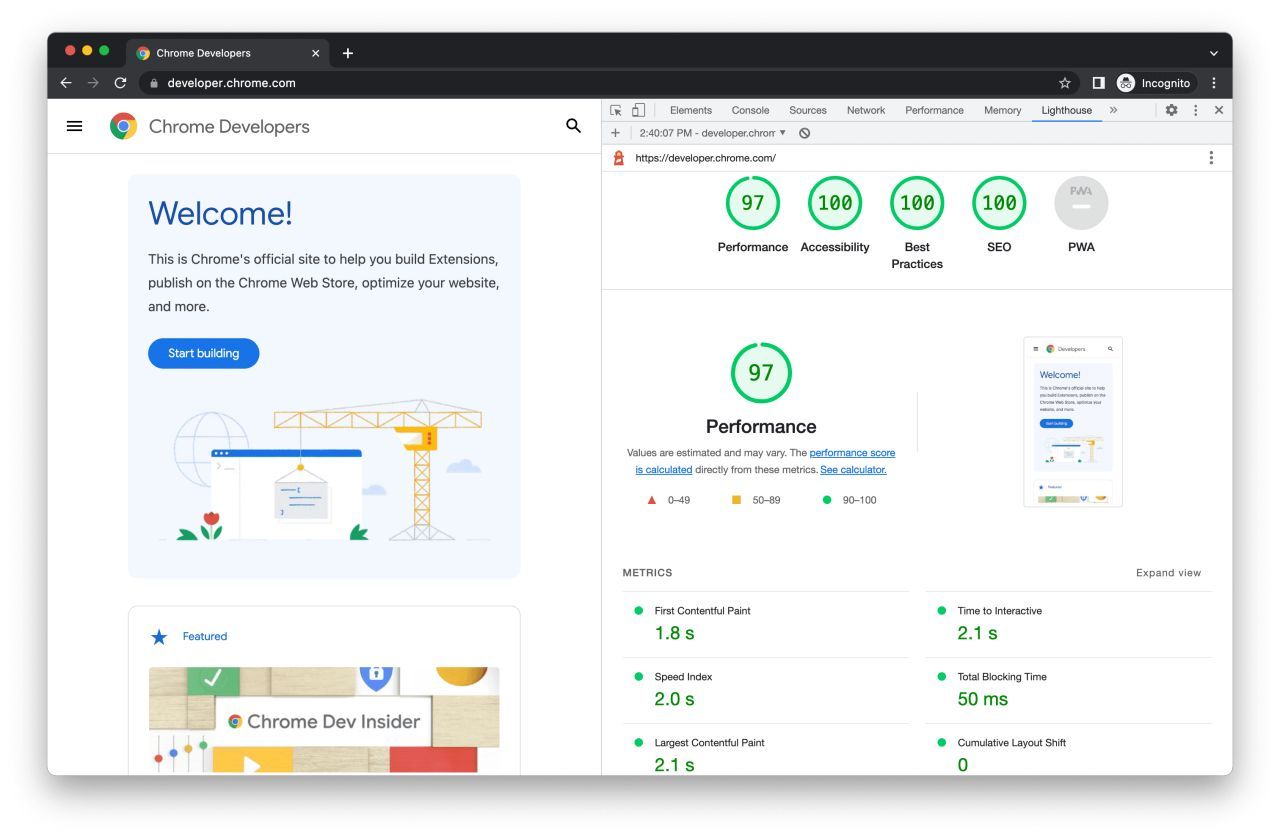
It’s the same audit panel SEOs already open for performance, except this one scores how well an AI agent, rather than a person, can read and act on a page.
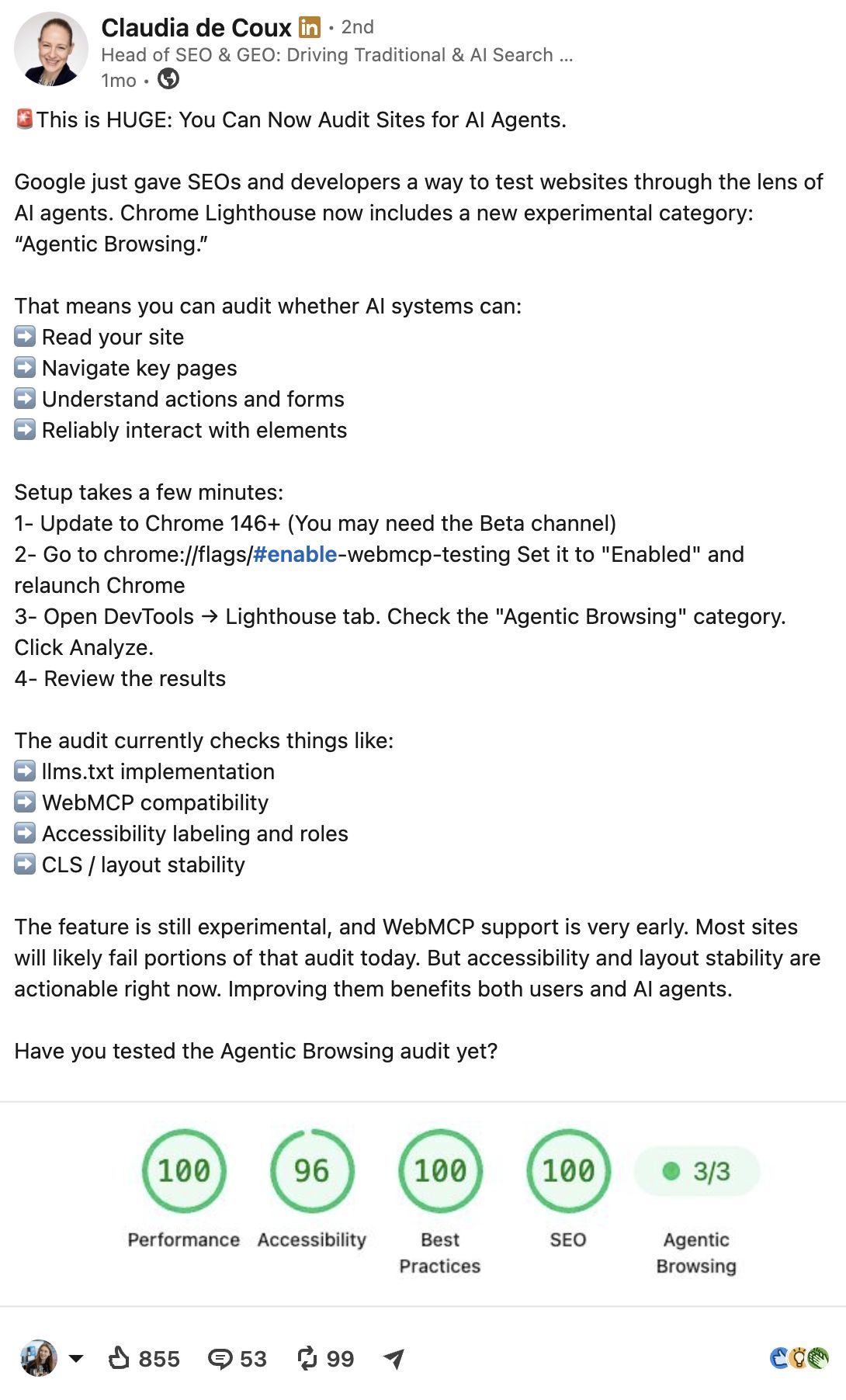
This became a big talking point on LinkedIn, and posts sharing the news—like this one from Claudia de Coux—picked up hundreds of likes.
Marketers keep circling back to whether agentic optimization will affect rankings.
Elena Kostova asked directly in the replies under Chrome’s own post: will agentic readiness follow the same path Core Web Vitals did, starting as a Lighthouse audit and ending up a ranking factor?
Nobody knows yet, and that’s exactly why I predict that search volume, forum threads, and social media discussion surrounding agentic optimization will just keep growing.
What you can know today is whether any of this applies to your site.
Ahrefs Bot Analytics shows you which AI agents and crawlers are already hitting your pages, and how often.
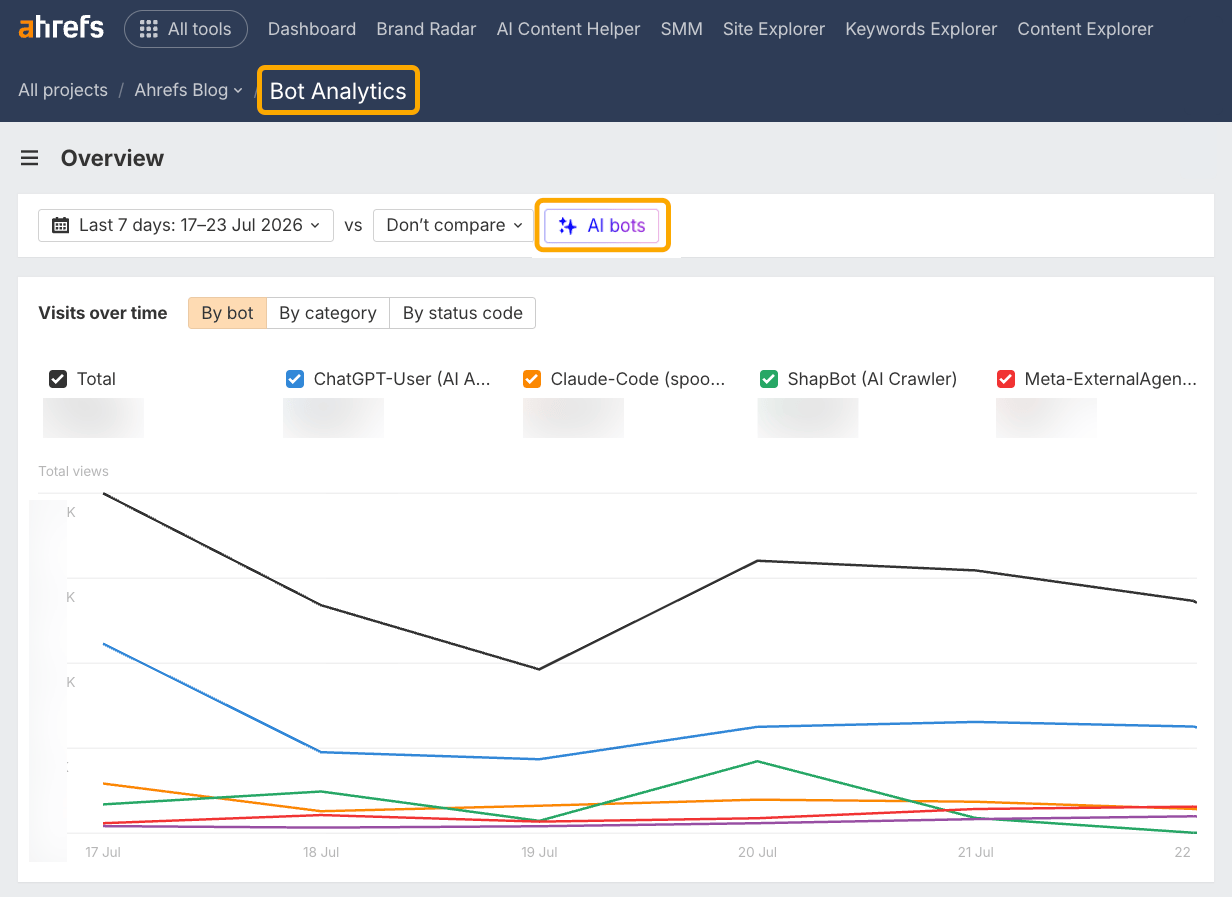
This is a great starting point for optimizing your AI visibility, and a quick way of testing whether Cloudflare’s 50% figure holds true for your own traffic.
As AI search answers more queries on the results page, the clicks that used to reach websites are disappearing.
Over the past year marketers have moved from worrying about it to diagnosing and actively doing something about it.
Searches for “zero-click search strategy,” traffic-loss audits, and a run of “why is my website traffic dropping” queries are all climbing as we all look for a plan.
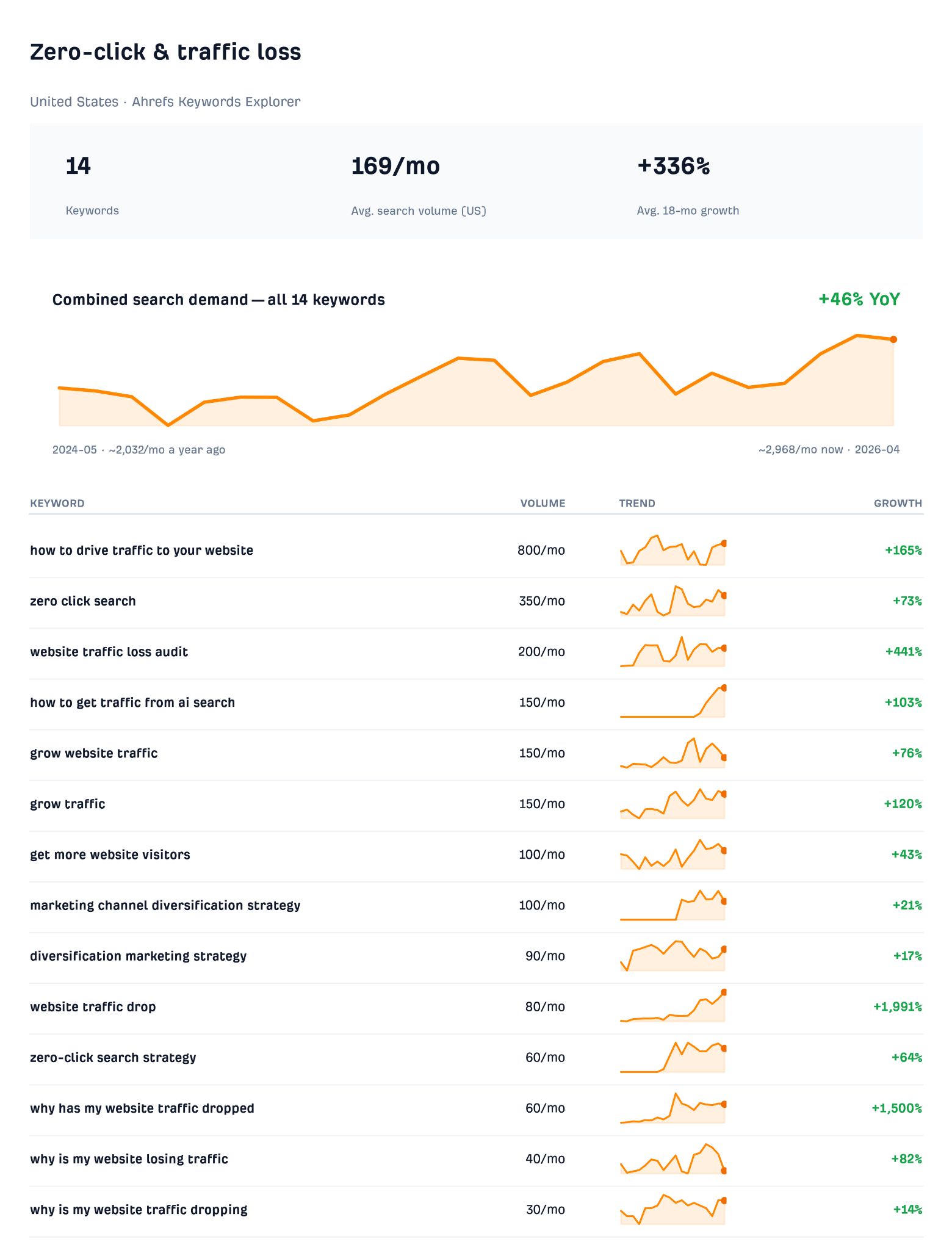
“Zero-click search strategy” US monthly search volume. Source: Ahrefs Keywords Explorer.
The one-way deal where Google takes your content for AI answers and returns less traffic is now being contested in regulators and courts.
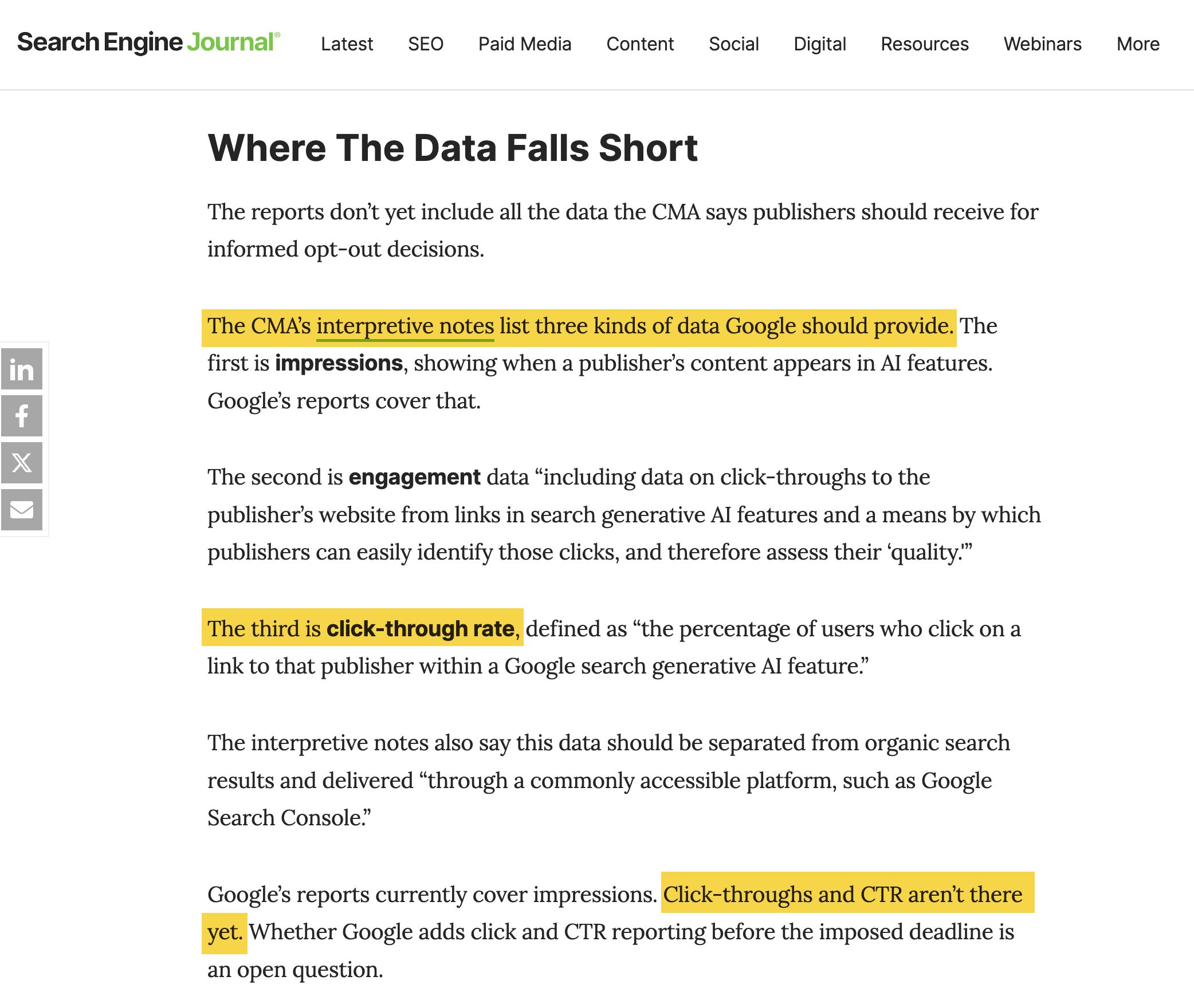
Strategy SEO Lead, Chloe Smith, noticed that Google’s new Generative AI report in Search Console landed the same morning the UK’s Competition and Markets Authority outlined plans to challenge Google’s market status, including a requirement that Google give site owners a way to opt out of AI Overviews and AI Mode.
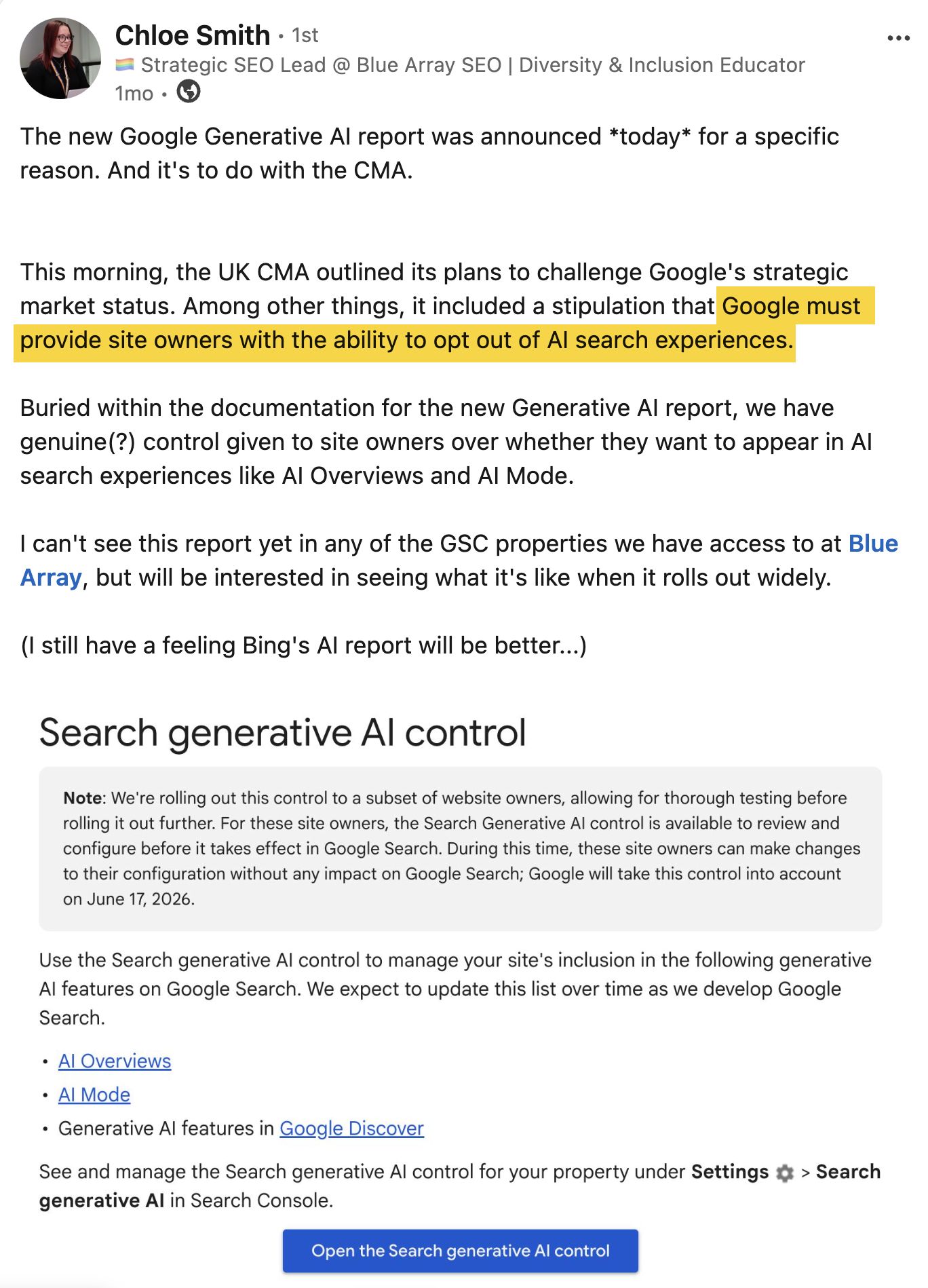
Google responded by developing a toggle option within Search Console, allowing users to dip out of AI search features.
But many are reading this as a response to regulatory pressure rather than a gift.
And we all have the same problem: opting out of AI search means opting out of potential traffic—though no one knows how much traffic, since Google still withholds that data.
According to our own estimates AI Overviews result in a click loss of ~58%.
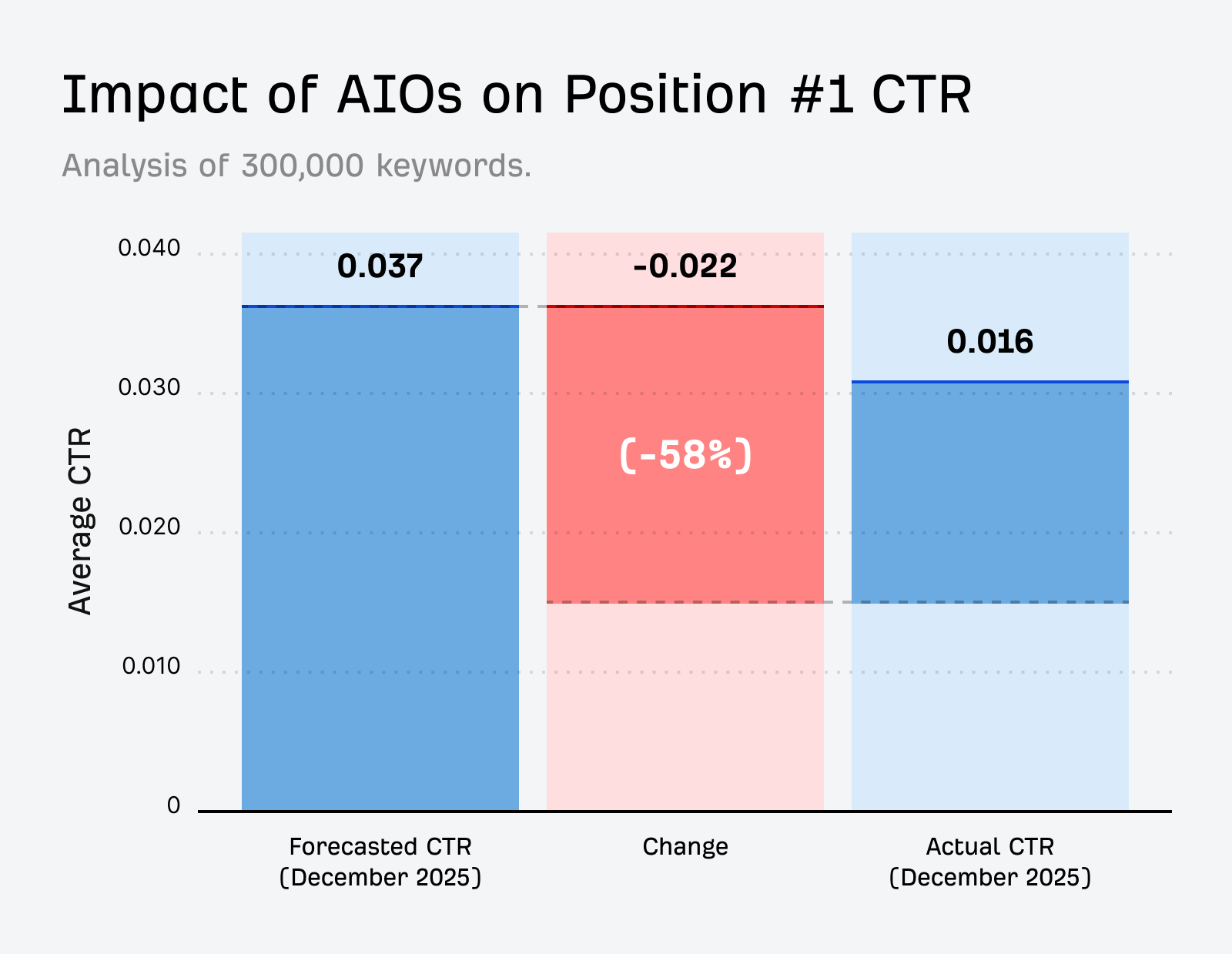
Most sites don’t see opting out as a real choice until CTR data—something which the CMA insists Google must provide—is incorporated.

While all of this was happening, another ruling was taking place—one which Insites CEO, Andrew Waite, argued deserved far more attention.
A Munich court ruled that AI Overviews are Google’s own words, not neutral search results, and now holds the company liable when one is wrong.
As Waite framed it, if Google wants to be the answer rather than the index that points to it, it has to own the answer—even when it is false.
Under his post Group Digital Marketing Manager at Belron, Chris Ellis, joked that the cookie banner may soon have a companion: an AI disclaimer users have to accept before reading a generated answer.
All of this news paints a slightly more positive picture for our organic traffic.
Google is getting duly taken to task on its use of AI to intercept our website clicks.
But while all of this plays out, we are still working out what to do about that dwindling traffic; from diagnosing how much we’ve lost, to seeking out strategies—like “marketing channel diversification”—to recover our losses.
To size up your own losses, Site Explorer’s traffic history, or Search Console data within Ahrefs, shows which of your pages have shed the most organic traffic.
The pattern to look for is the “crocodile mouth”: pages whose rankings/impressions held steady while clicks fell away.
That’s the signature of an AI Overview absorbing your clicks rather than a ranking problem.
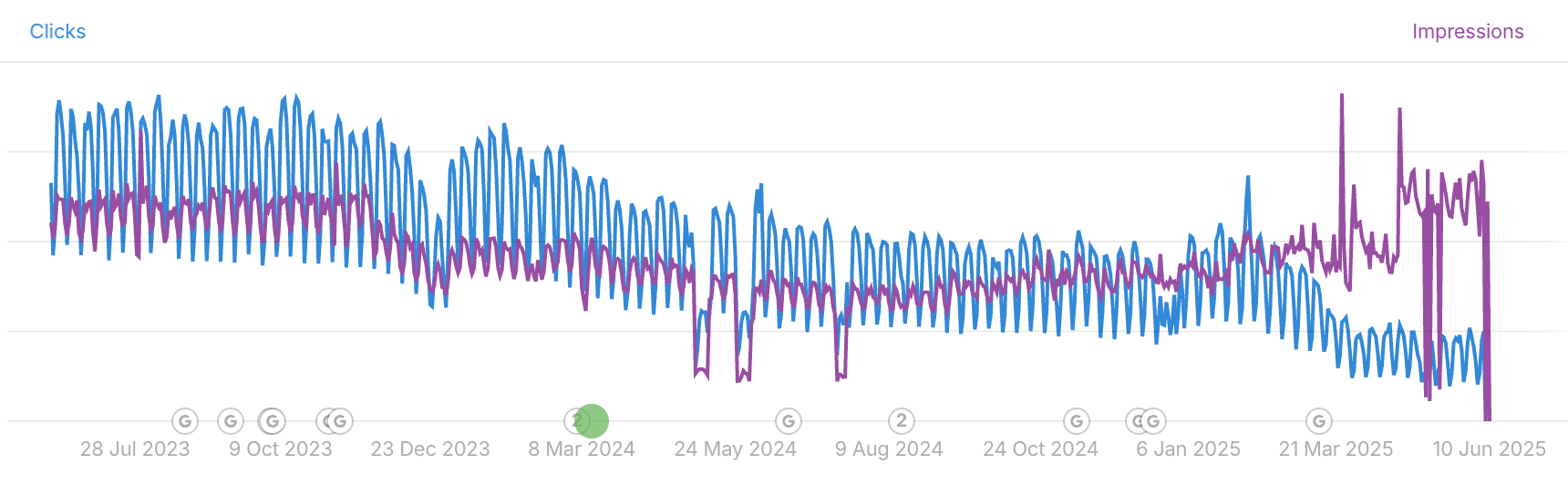
Those pages are your starting point for recovery, whether that’s updating them, rebuilding them around queries AI can’t fully answer, or repurposing them for other channels.
Thought you’d heard the end of the GEO vs SEO debate? Think again.
Marketers still can’t agree on what to call the work of getting found in AI, or how to define it, and over the past year the vocabulary has splintered further.
For instance, Director at Google Cloud AI, Addy Osmani, has given AEO a second meaning, shifting it from “Answer Engine Optimization” to “Agentic Engine Optimization”.
That phrase is now a breakout keyword at 80 monthly searches.
Whatever you call it