


Search everywhere optimization (some call it SEvO) means making sure people can find you no matter where they’re looking online.
And here’s the thing: they’re not just looking on Google anymore.
People are turning to TikTok for product suggestions, digging through Reddit for brutally honest reviews, and asking ChatGPT for personalized shopping lists and recommendations—often in the middle of conversations about their personal or professional challenges.
They’re searching where they already spend their time, hunting for the kind of authentic, unfiltered content that traditional search results sometimes miss or asking AI for help with choosing from too many options in a field they don’t know much about.
So, while traditional SEO asks, “How do we rank higher on Google?” Search Everywhere Optimization asks, “Where is our audience actually looking, and how do we show up there?”
Let’s explore the five platforms where your audience is actually searching, and how to show up authentically on each one.
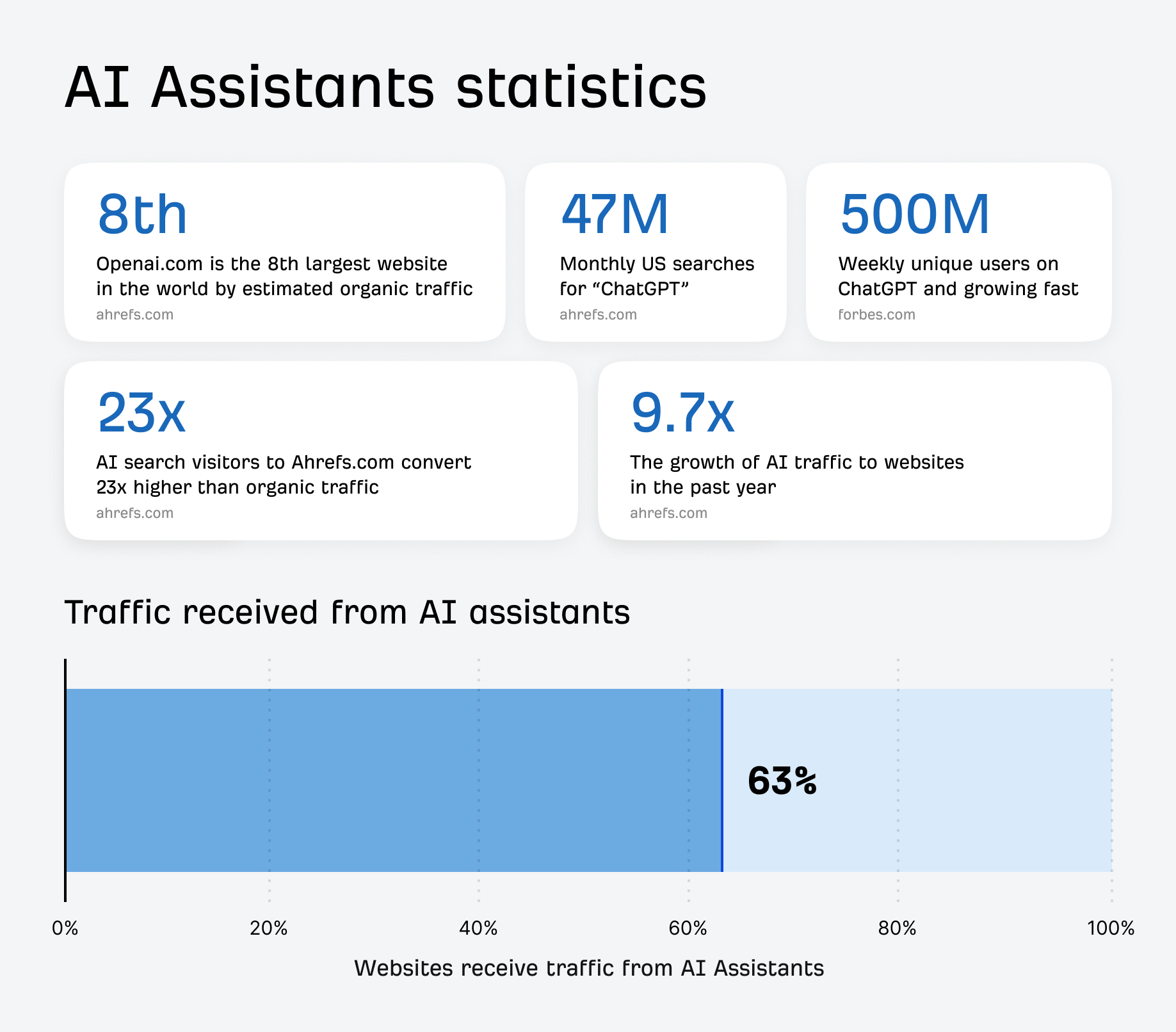
AI traffic to websites has grown 9.7x in the past year, with 63% of websites now receiving AI-driven traffic that can convert even 23x higher than traditional organic search traffic. ChatGPT alone had 500 million weekly users in April 2025 and growing fast.
When people need to solve complex problems, compare detailed specifications, or learn something new, they’re increasingly turning to AI assistants like ChatGPT, Gemini, and Claude.
Unlike traditional search, AI can synthesize information from multiple sources, create personalized recommendations, and provide step-by-step guidance tailored to specific needs.
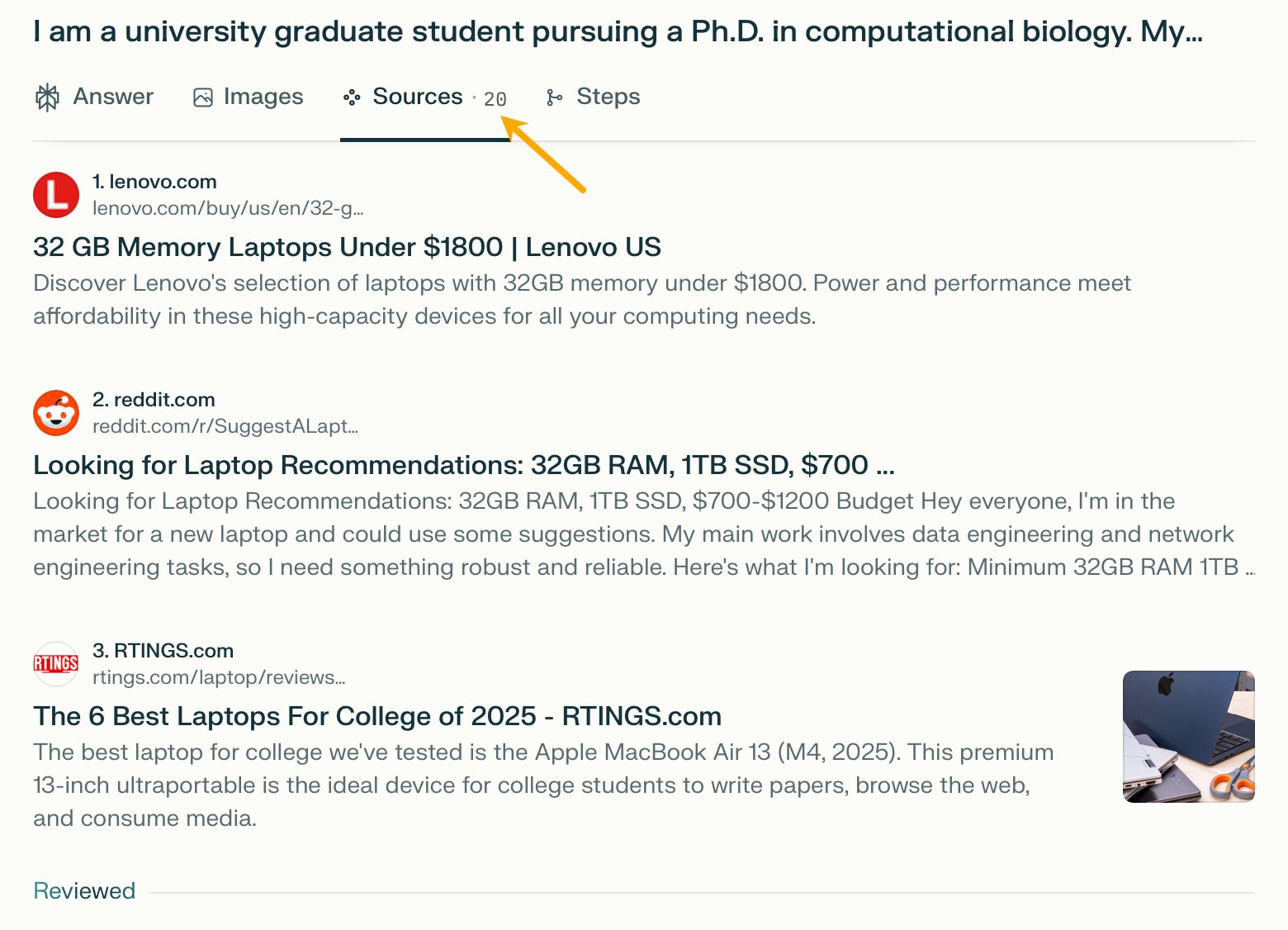
For example, when I asked for the best laptop for a Ph.D. student in computational biology—complete with a list of specific personal needs—Perplexity reviewed 20 different sources to come up with a recommendation. Honestly, going through that many sources on my own would be exhausting. That kind of research is exactly the kind of task I’d gladly hand over to AI every time, instead of Googling.
Core optimization principles
As of now, there’s still an ongoing—and likely long-running—debate in the industry about whether optimizing for generative AI search engines is truly different from traditional SEO, with its own unique set of rules.
The web feels like it’s in a bit of a panic. AI Overviews and assistants are starting to pull traffic away from websites, and some are declaring that “SEO is dead.” The new buzzword is Generative Engine Optimization (GEO), and some people are saying you need to drop everything and start learning this brand-new playbook.
But here’s the thing: every time I try to break down the discussion and look for clear, confirmed facts, I end up with a list of strategies that look a lot like what SEOs—ourselves included—have been recommending for years. At the end of the day, it all comes down to:
- Develop brand authority signals across the web. AI models recognize and weight authoritative sources more heavily. Build mentions, citations, and references across reputable sites to establish your expertise in AI training data and come up more often when AI assistant use search to refine their answers(yes, ChatGPT actually Googles things).
- Build comprehensive, authoritative resources. AI assistants favor detailed, well-researched content that covers topics thoroughly. Instead of thin content, create definitive guides that AI models will want to reference and cite, aka deep content.
- Create content that is easy to digest. Structure your content with clear headings, bullet points, and factual statements that AI models can extract and reference.
If you want to learn more about the intersections between Search Engine Optimization and Generative Engine Optimization, dig into our two articles:
Note
That said, the AI era is definitely bringing some shifts to how we approach marketing. In a recent webinar, our very own Patrick Stox highlighted two key points about SEO for AI assistants:
- SEO itself hasn’t drastically changed, but getting good results may now require closer collaboration with other teams like PR and partnerships.
- And a word of caution: don’t try to game AI systems. With major updates happening every few months, the safest bet is to focus on delivering real value. With major updates rolling out every few months, you never know when a shortcut could come back to haunt you. Focus on real value—it’s the safest long-term strategy.
The full webinar might be the most insightful thing you’ve seen so far on the topic:
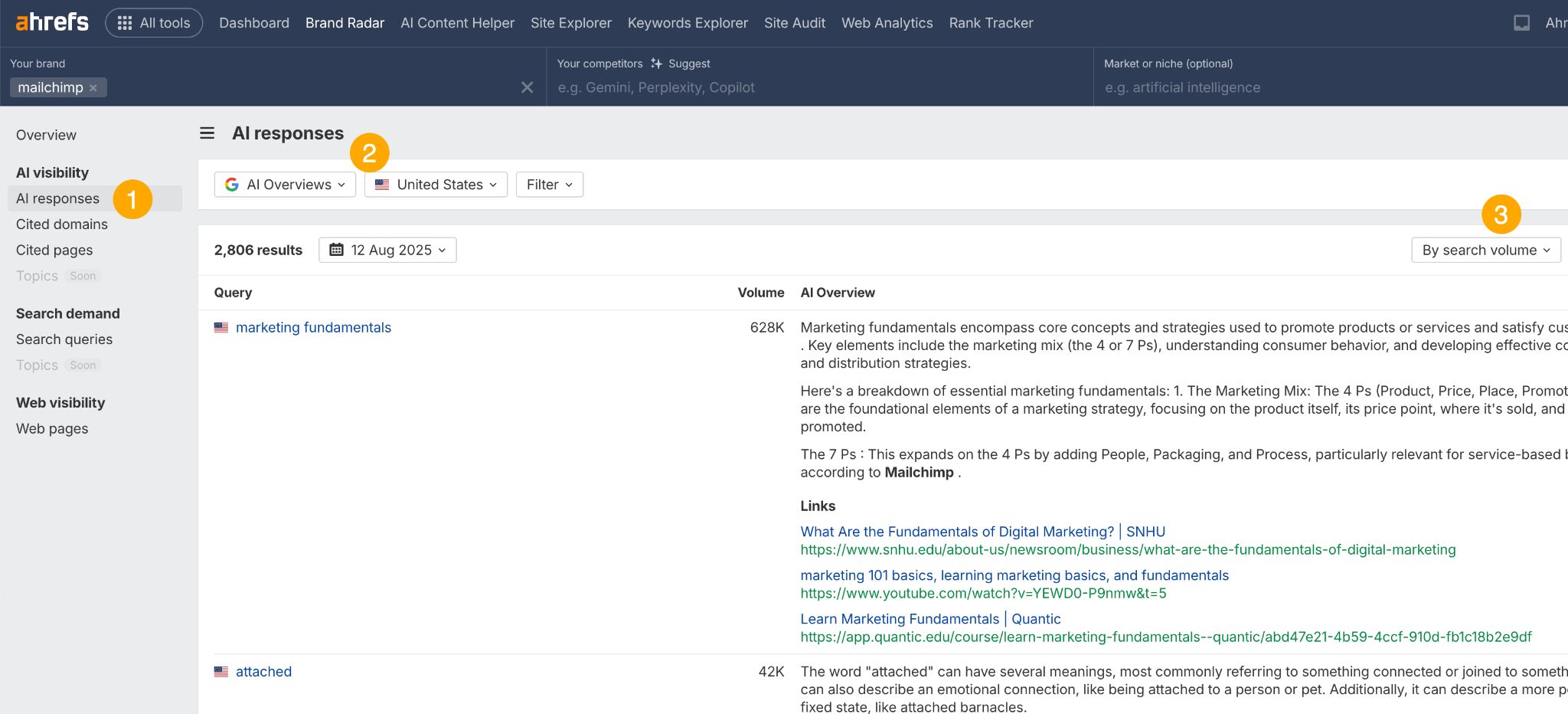
How can you tell when or how AI is mentioning your brand? AI assistants themselves don’t provide such data, so you will need an AI monitoring tool like Brand Radar. Here are a few ideas.
First, you can monitor where your brand is mentioned online and contact sites to correct or update any outdated information.
Once you enter your brand in Brand Radar, click on AI responses, set the AI type, preferred location, and sort by search volume (for AI responses with the biggest reach).
Next, you can dive into competitive analysis.
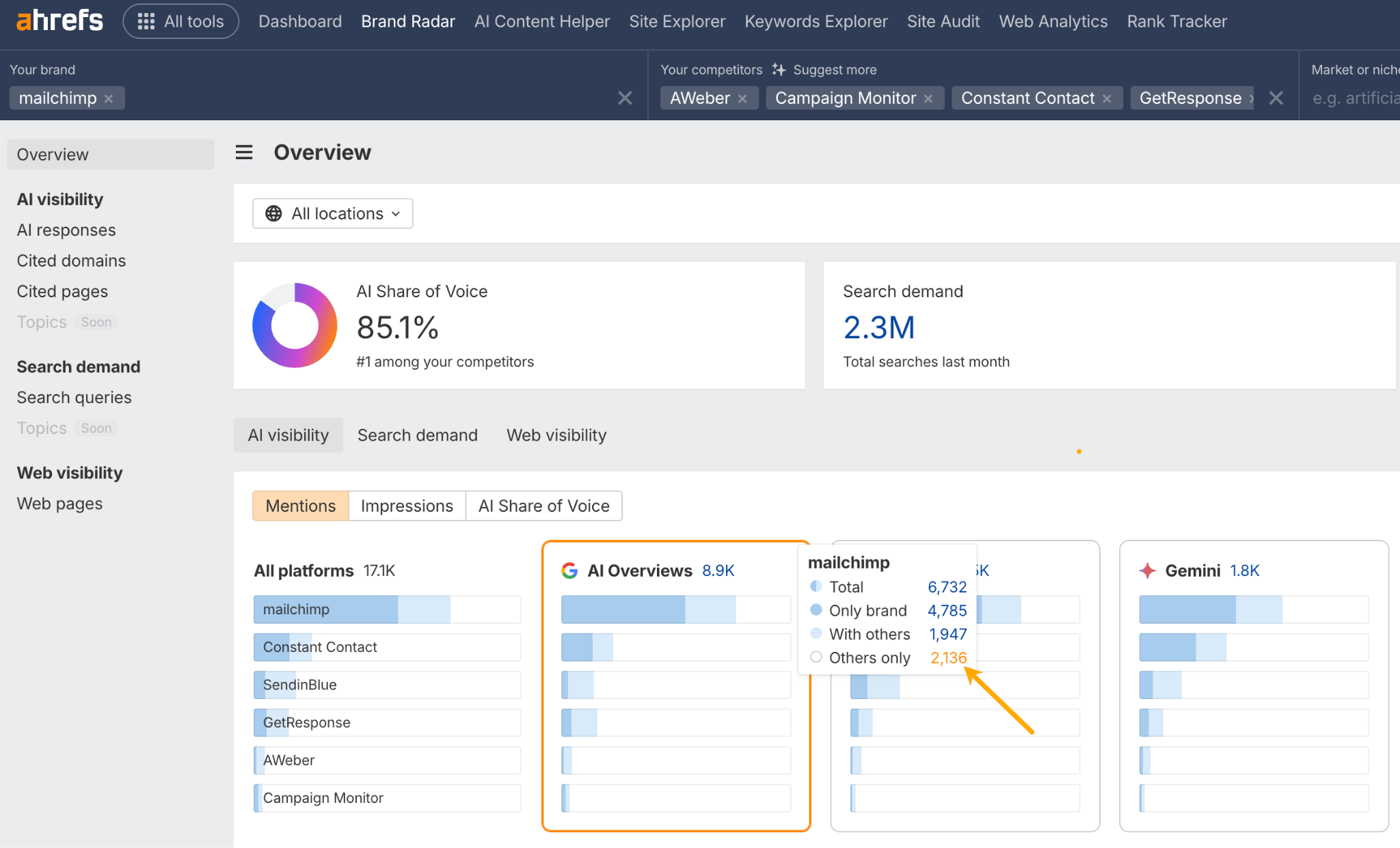
To find pages that mention your competitors but not you (your AI mention gap), add your competitors to Brand Radar, hover on any AI chart, and click on “Others only”.
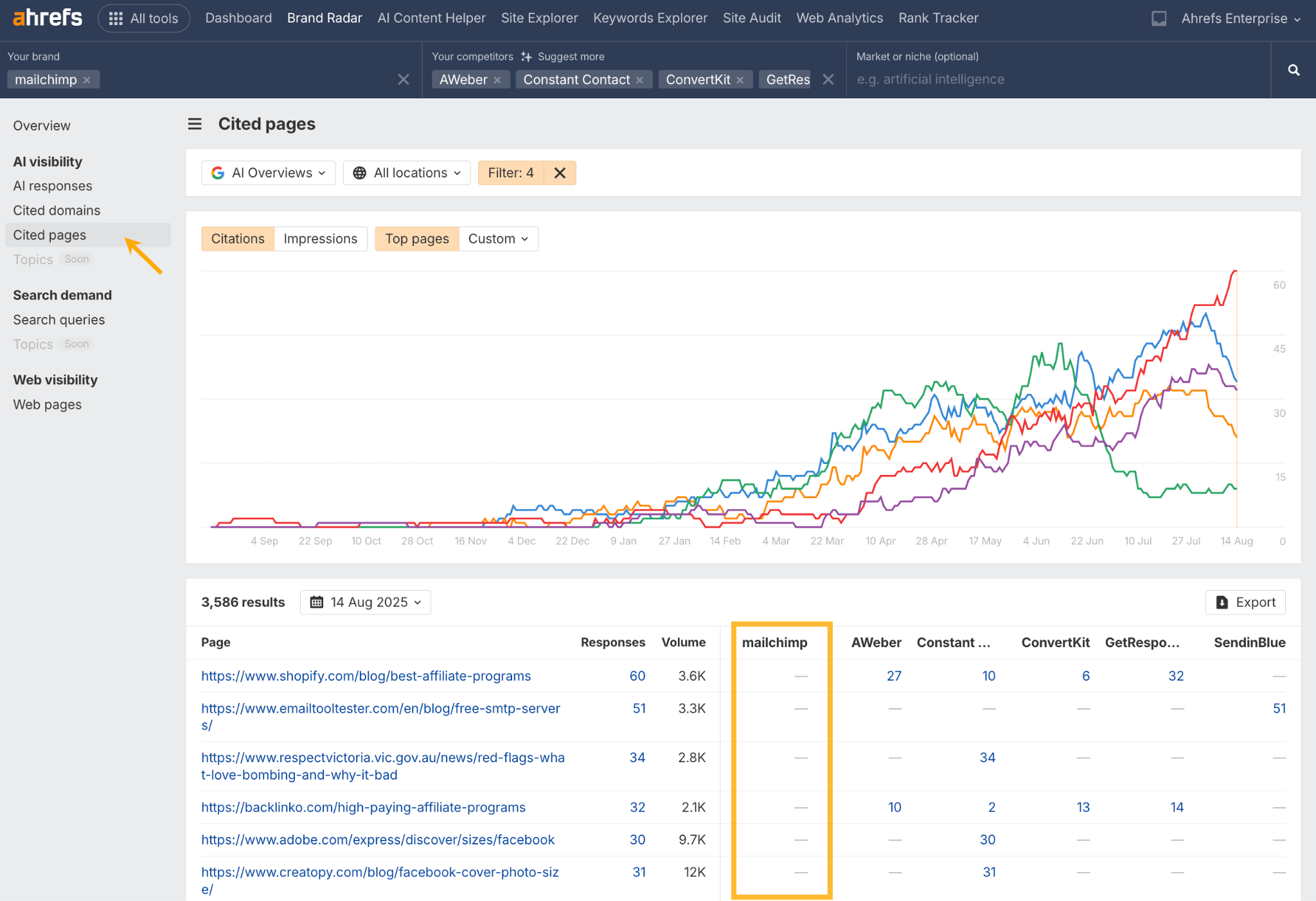
Next, click on the Cited pages report to see websites you could reach out to to close your AI mention gap.
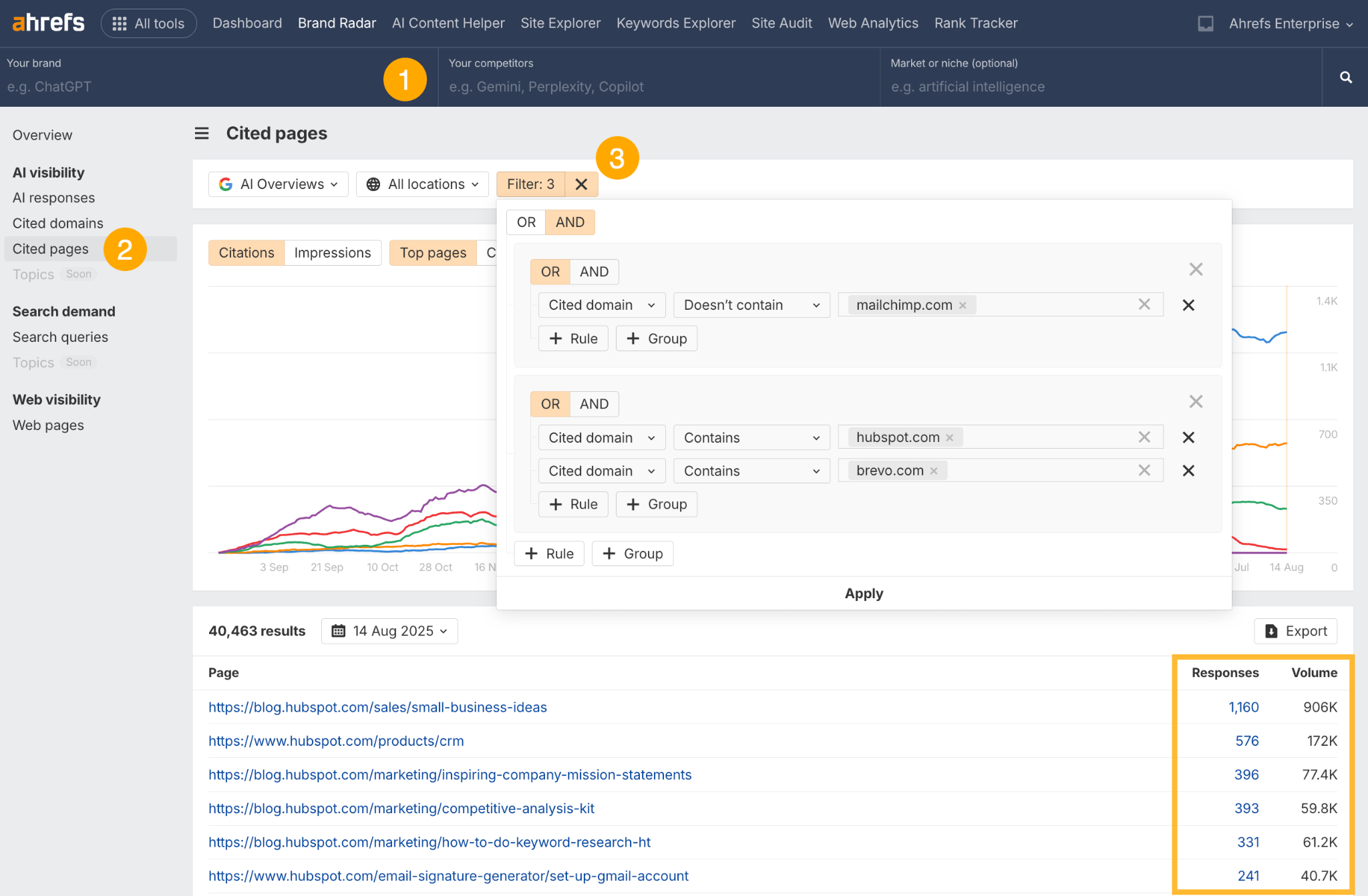
To fix your AI citation gap (when your competitors are cited in AI answers but you’re not), start by clearing all the top-level filters. Then, go to the Cited pages report and apply the lower filter shown in the screenshot below. This will give you a list of pages, showing how many AI responses they were mentioned in and the total search volume of those queries.
Next tip. According to our data, Reddit pages have been cited over 12 million times in AI Overviews and AI Assistants.
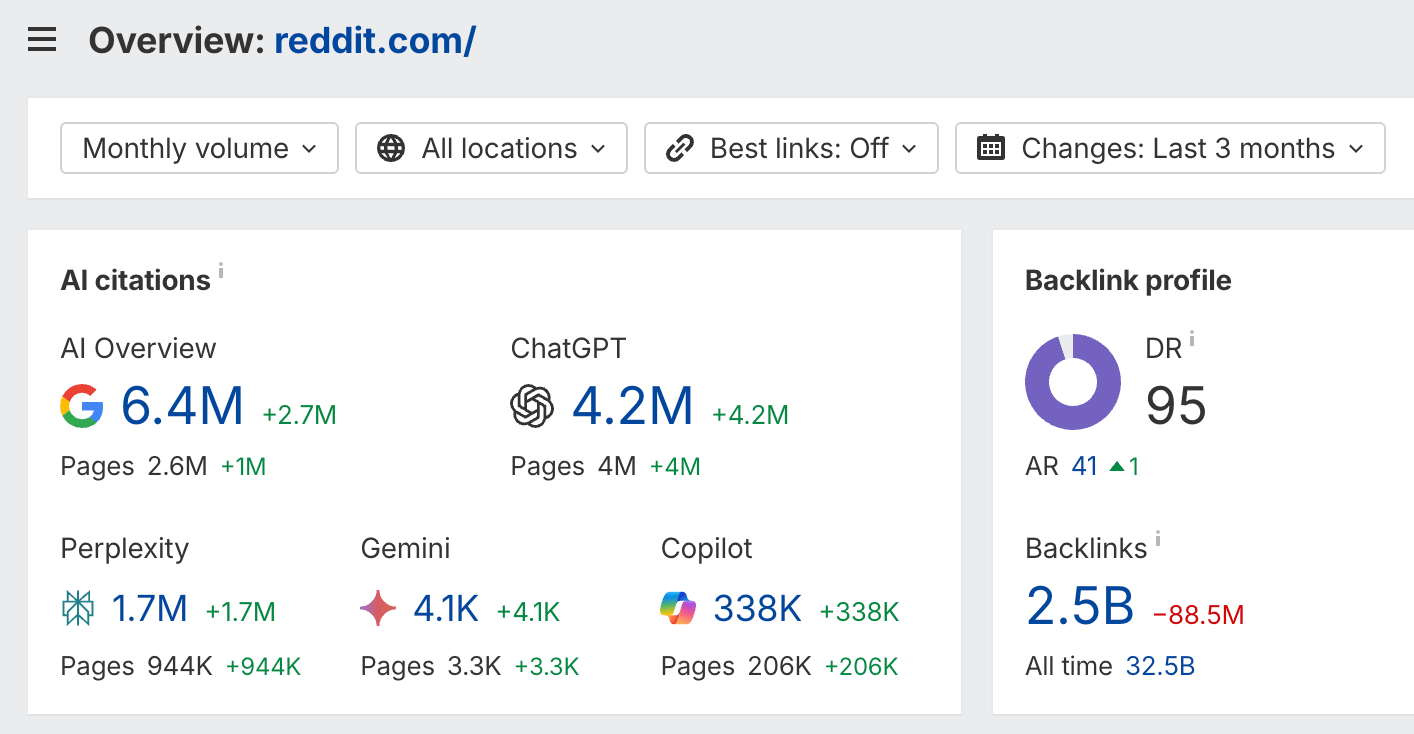
You can use Brand Radar to spot which Reddit threads are being featured in AI Overviews and assistant answers. From there, jump into the conversation or share useful posts to shape the sources AI relies on.
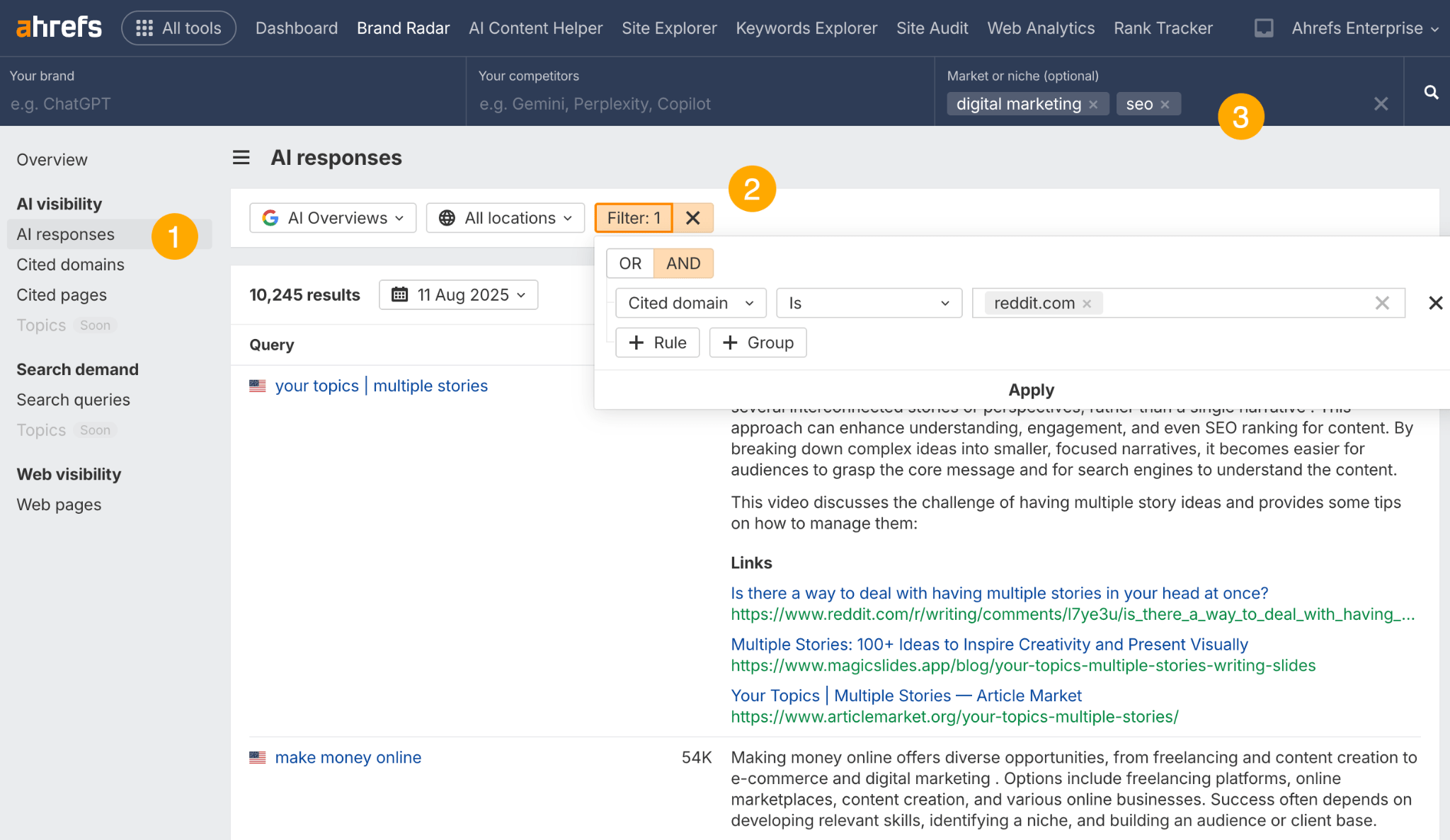
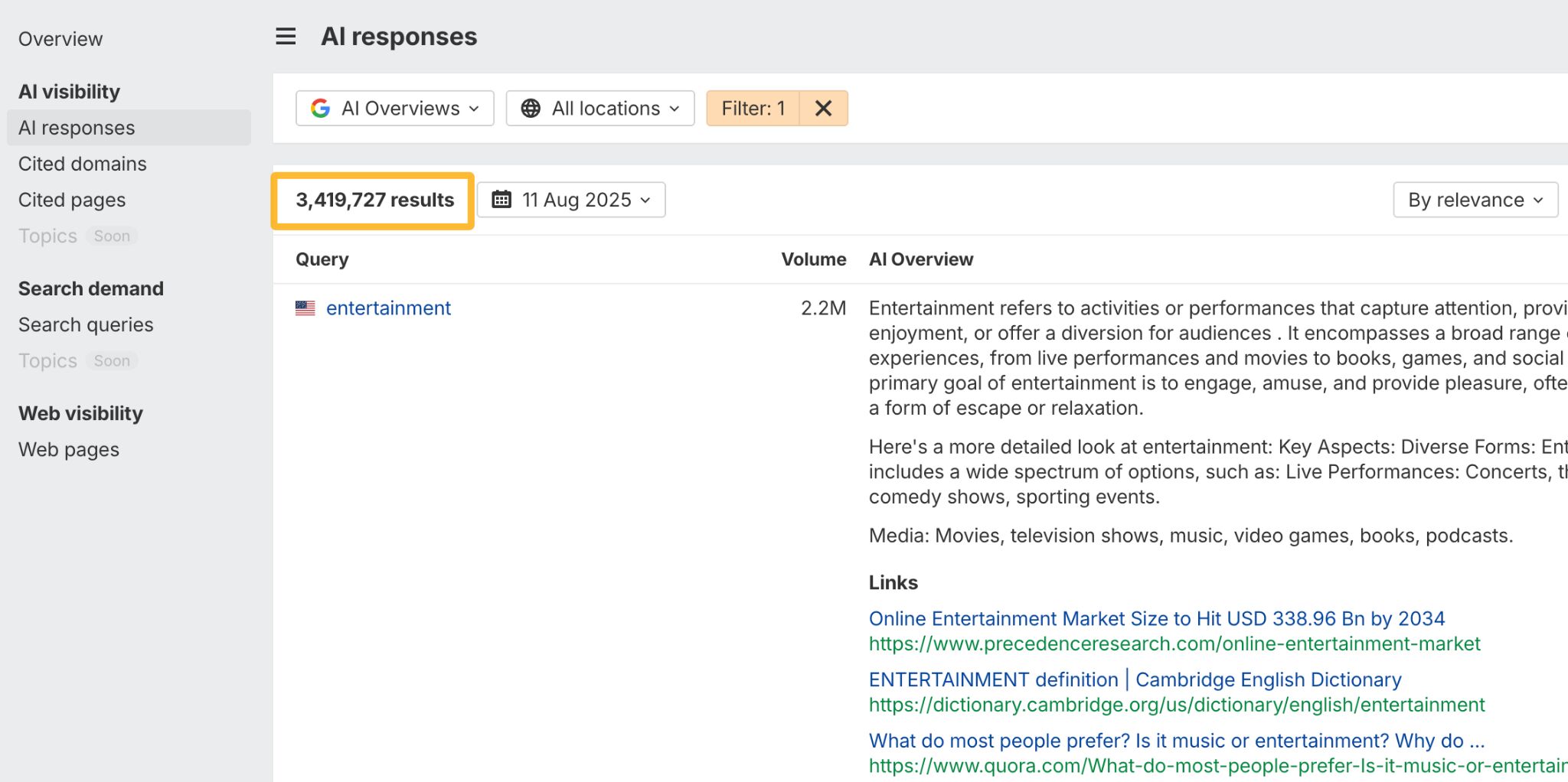
This approach also works for Quora, which shows up in around 3.4 million AI Overviews, giving you plenty of opportunities to influence what AI surfaces.
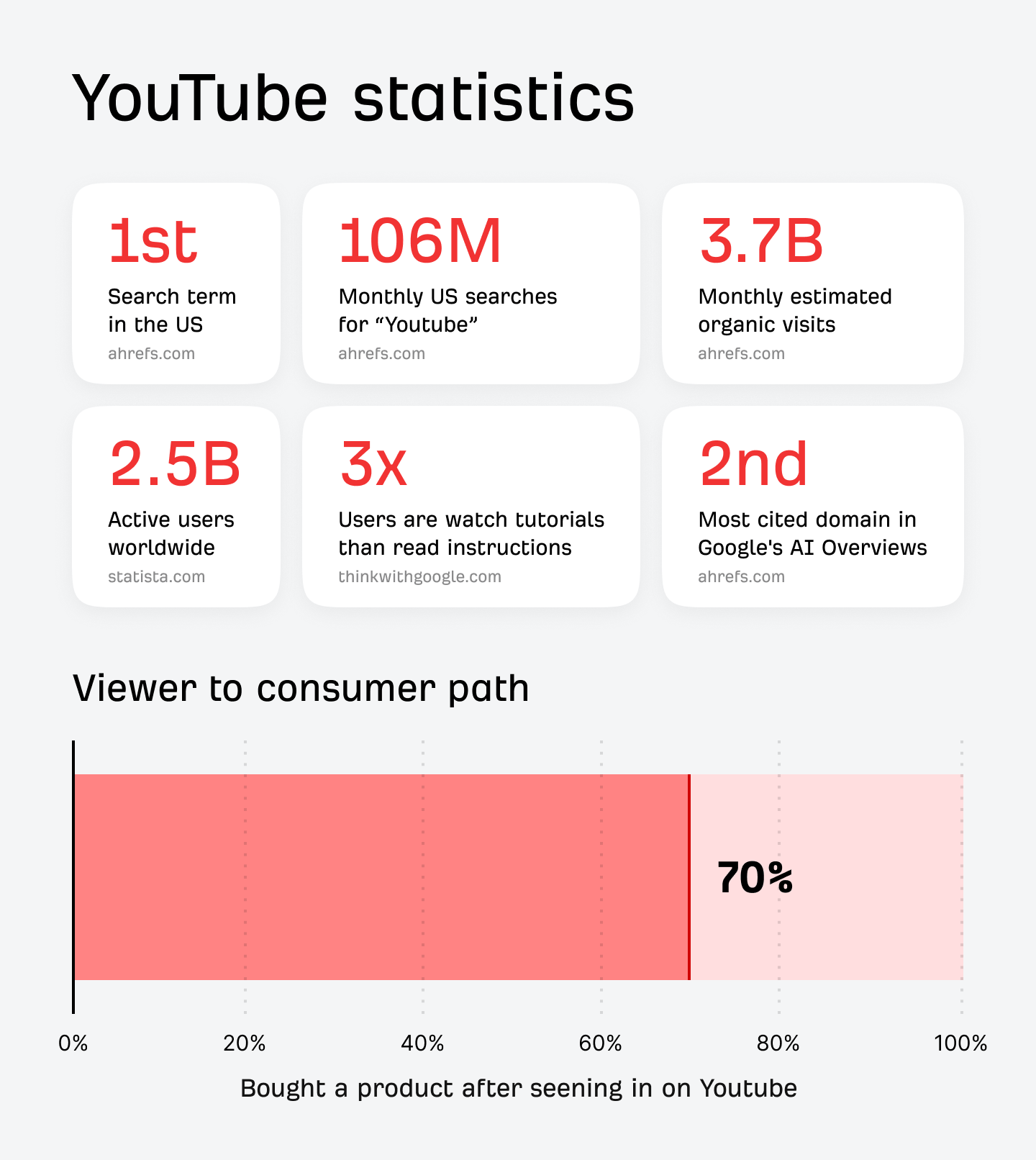
YouTube reaches 2.5 billion monthly active users with 3.7 billion monthly organic visits, where users are 3x more likely to watch tutorials than read instructions, and the majority of viewers have purchased products after discovering them on the platform.
Google might tell you the steps for a recipe, but YouTube shows you what the batter should actually look like, how the sauce should bubble, and what “golden brown” really means. You see the mistakes, the corrections, and the final result.
Plus, in many cases, visual learning simply trumps text. A 10-minute YouTube video about investing feels more digestible than a 2,000-word article, even if it contains the same information.
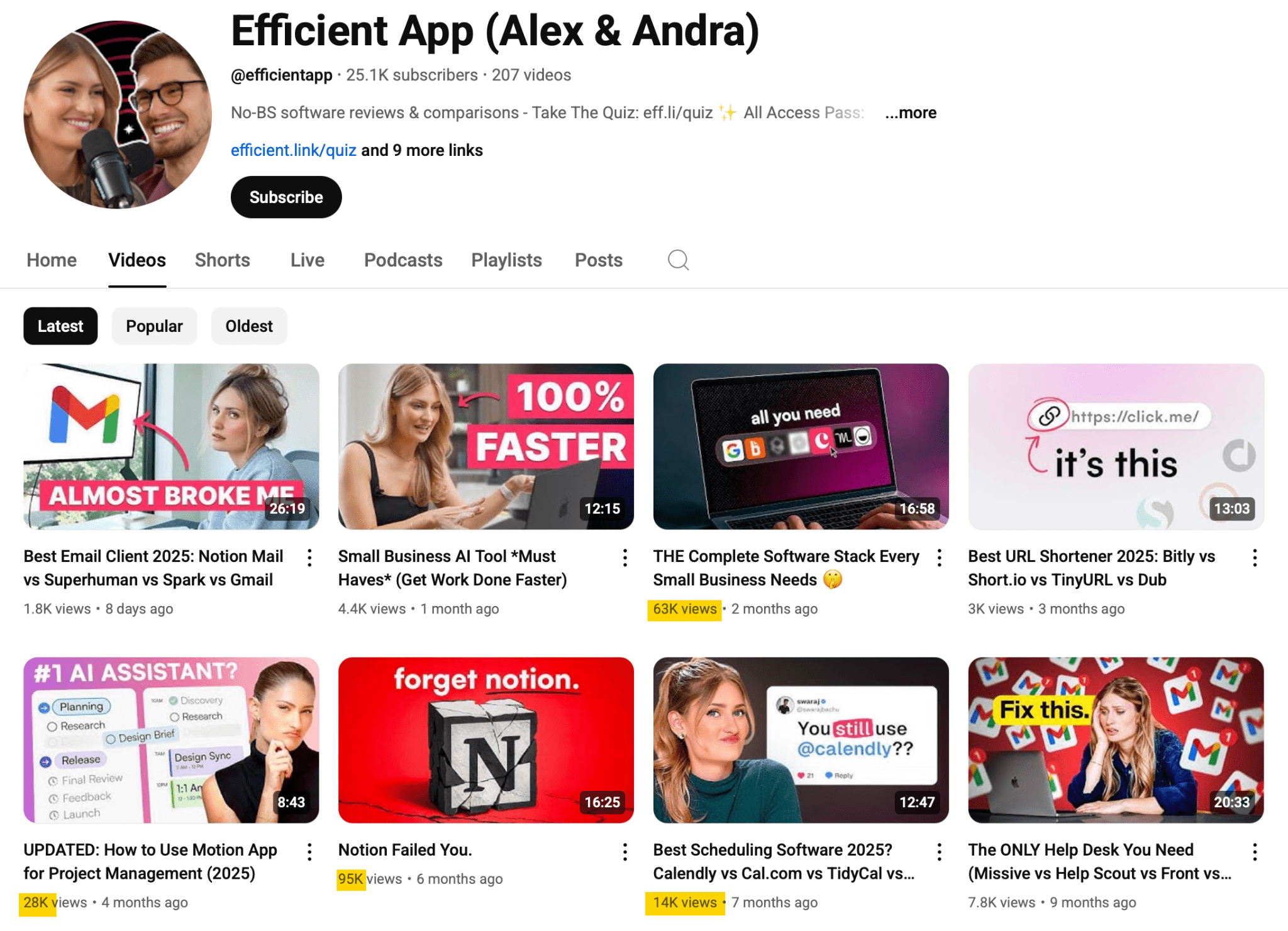
YouTube always surprises me with what kind of content takes off. I used to think tool reviews were more of a written thing, but there is this couple who run a YouTube channel doing just that, and they’re actually doing really well with it. It’s their full-time job!
Core optimization principles
While features like Suggested and Browse usually work better once you’ve built an audience, YouTube SEO is key for getting those first views. Search traffic is super reliable, often brings in steady subscribers, and tends to have higher average watch times.
We’ve put together a complete guide that walks you through our video SEO strategy—the same one that helped us earn over 5.7 million organic views and 642,000 watch hours in 2024 alone.
- Mastering YouTube keyword research using Ahrefs, YouTube autosuggest, Google Trends, TubeBuddy, and vidIQ (plus why search volume estimations can be misleading).
- Strategic topic selection by analyzing top-performing video formats and competitor channel authority to find realistic ranking opportunities.
- Creating high-retention content with proper scripting, natural keyword integration, and engagement hooks that keep viewers watching.
- Complete optimization checklist covering video file names, titles, strategic tags, descriptions that capture “key moments,” compelling thumbnails, closed captions, and strategic cards/end screens.
- Promotion strategies for driving initial views, from Reddit and Quora sharing to cost-effective YouTube search ads.
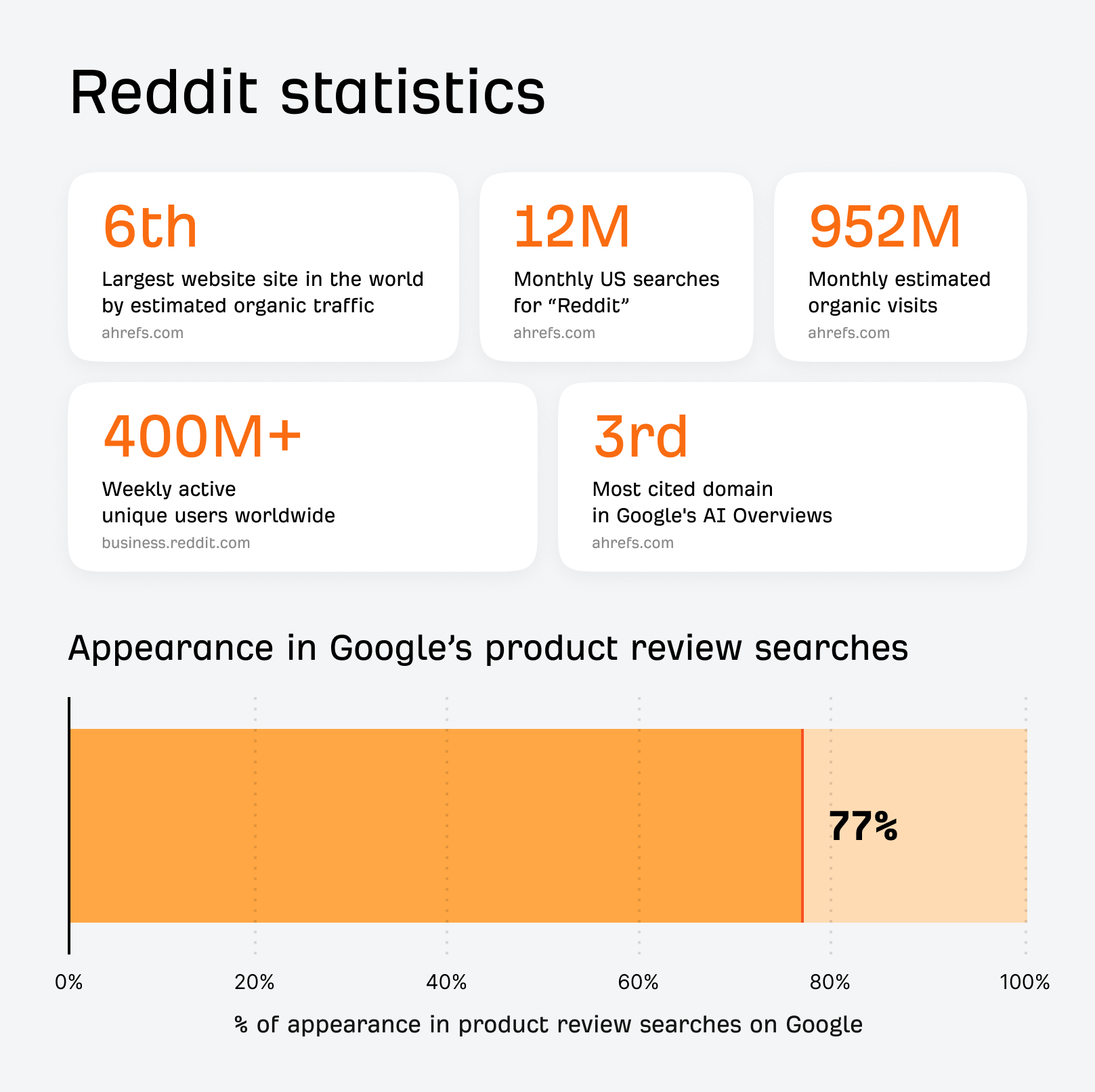
With over 400 million weekly active users generating 952 million monthly organic visits, Reddit dominates product review discussions, appearing in 77% of product review searches on Google.
When people want the real story—not the marketing version—they head to Reddit. It’s where you’ll find brutally honest product reviews, unfiltered advice, and communities discussing everything from skincare routines to enterprise software decisions.
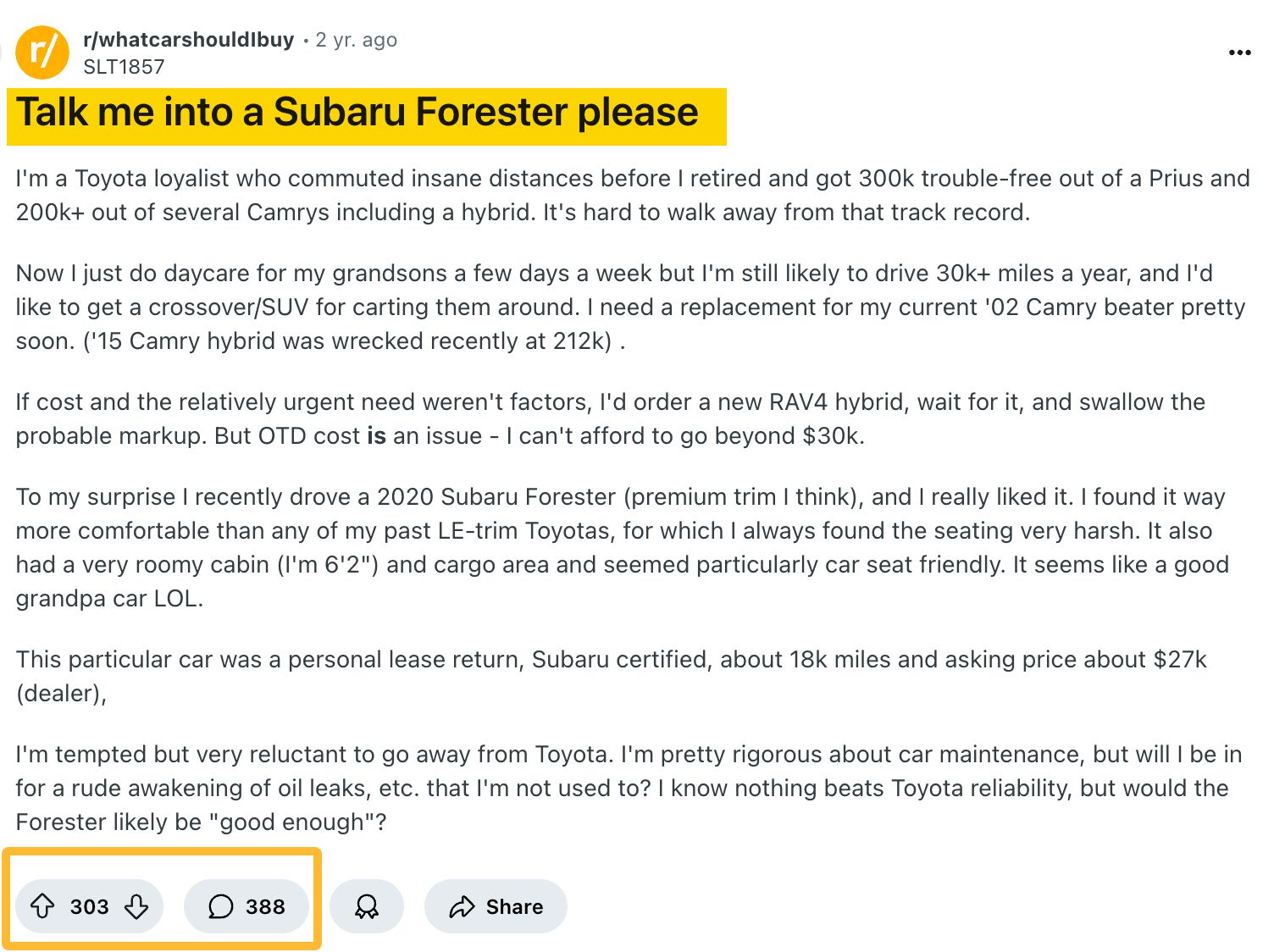
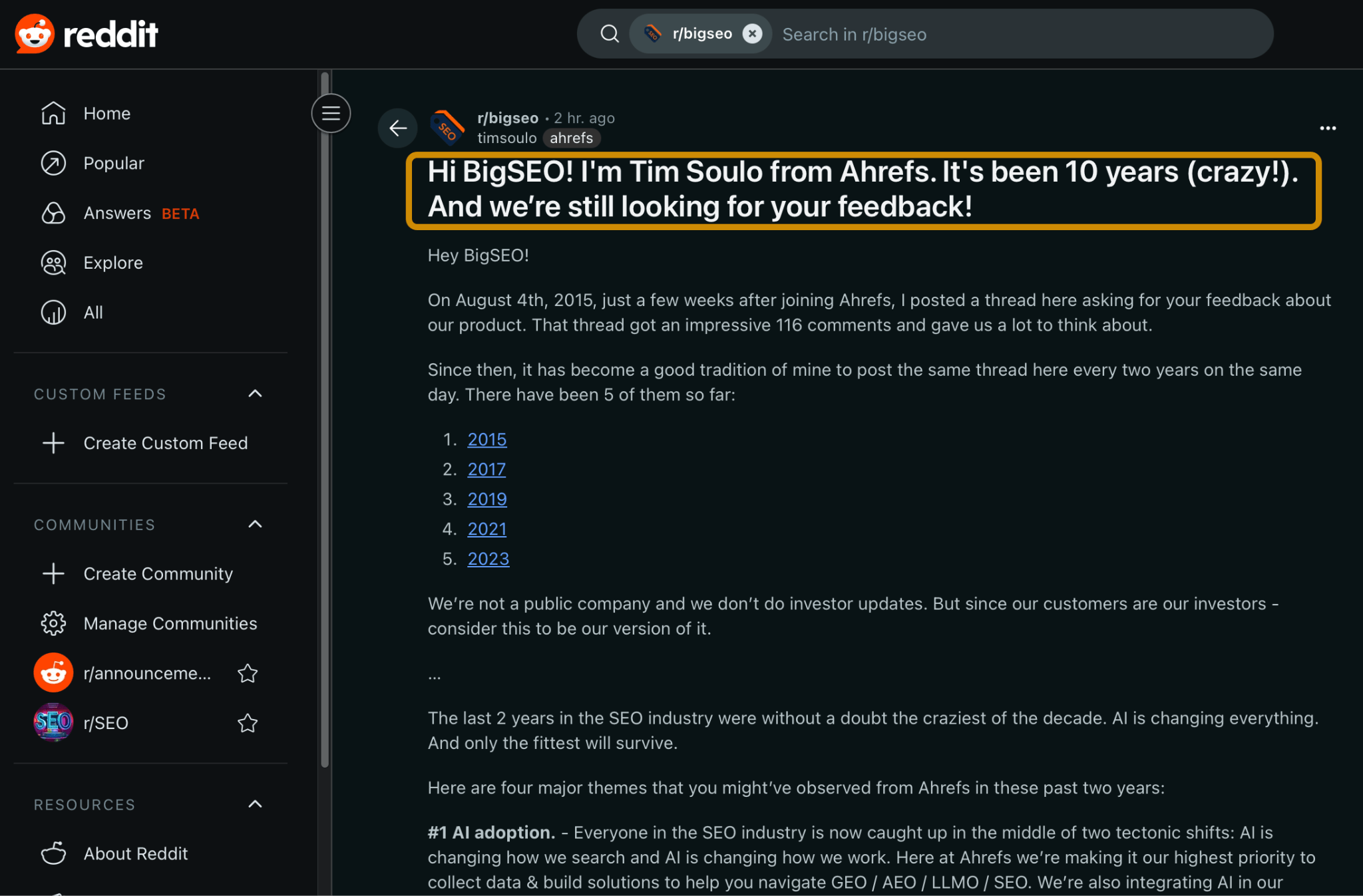
By the way, that’s where we’ve been going for the past 10 years for product feedback.
What’s more, bad advice gets downvoted. Good advice rises to the top. It’s social proof built into the search experience, something Google’s algorithm can’t replicate.
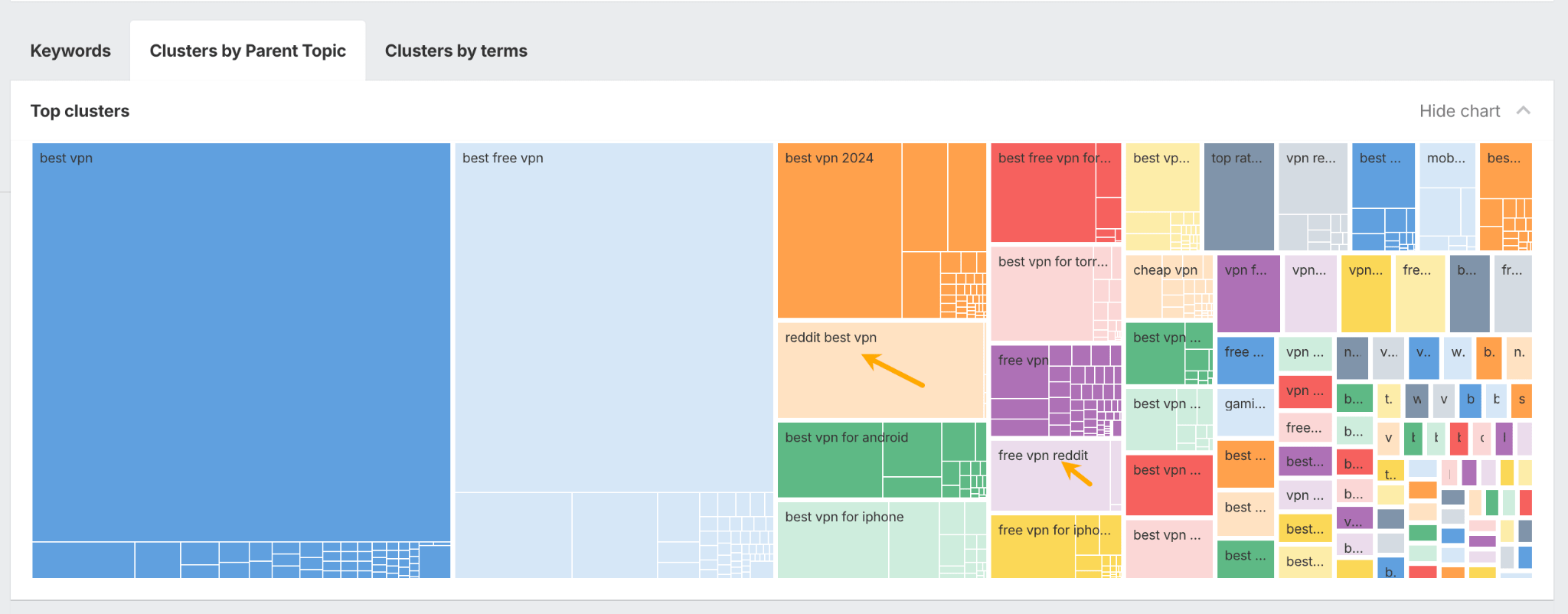
Reddit’s unique experience has created the “Reddit modifier” phenomenon—perhaps the clearest symbol of Reddit’s power as a search engine. It means that people type “reddit” right before the thing they are interested in.
To illustrate, this tree chart from Ahrefs’ Keywords Explorer shows the most popular way to ask for vpn recommendations. The ones that include the Reddit modifier appear twice in the top 15.
Core optimization principles
Learn the culture before you post anything. Each subreddit has its own rules, tone, and expectations. Spend time reading, understanding what gets upvoted, and how community members interact before you ever consider posting.
Build genuine relationships, not promotional campaigns. Reddit users have finely tuned promotional radar. Instead of pushing your product, become a helpful community member. Answer questions, share insights, and provide value without expecting anything in return.
Participate consistently in relevant subreddits. Find 3-5 subreddits where your ideal customers hang out. Become a regular contributor by sharing useful content, asking thoughtful questions, and engaging in discussions that matter to that community.
Create content worth discussing. The best Reddit content sparks conversation. Share case studies, ask for feedback on real problems, or present interesting industry data that gets people talking.
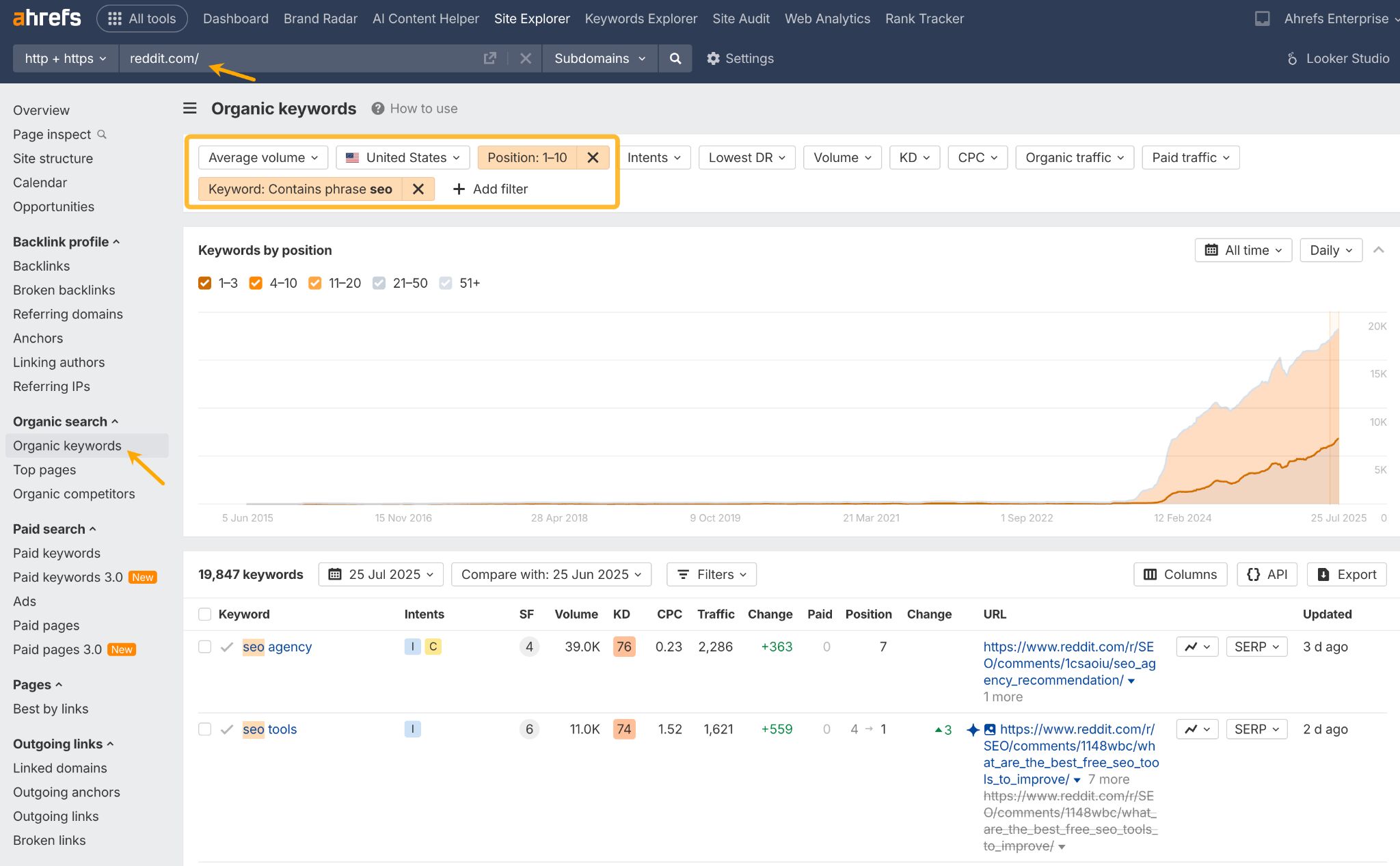
Here’s a quick tactic you can use for Reddit: focus on threads that already have visibility in Google Search.
- Go to Ahrefs’ Site Explorer, enter “reddit.com”, and open the Organic keywords report.
- Use filters: positions 1-10, keyword includes (enter phrases related to your site). You can select a preferred location, too.
- Look for relevant keywords with a lot of traffic.
- Add thoughtful, useful answers to these high-traffic threads.
TikTok is the 10th largest website by search trafifc in the world (470M visits). Among Gen Z—especially the younger segment—TikTok is increasingly preferred over Google for search, with 62% using it to search for product reviews and recommendations.