


I don’t judge free influencer marketing tools by how many creators they claim to have. I judge them by whether a small brand can do the risky part for free: find a relevant creator, check if their audience looks real, send a first offer, and see what comes back before they spend a real budget.
After testing, I found Afluencer, SocialBook, HypeAuditor, Influencity, Shopify Collabs, Sprout Social Influencer Marketing, and Tracknow to be the best free influencer marketing platforms for small businesses in 2026. And each one has a different sweet spot.
That difference is the whole point when your team is small, and the campaign is still half experiment, half hope. The best free plan isn’t always the most generous one; it’s the one that fits where you are, whether you’re hunting for your first creator or trying to prove the last one paid off.
For this guide, I worked through the top products on G2’s free influencer marketing platforms page and evaluated the free plan or trial of every platform, paying attention to what you really get for free, how it holds up when you’re a small team running a live campaign, and the moment each one starts nudging you toward an upgrade. Here’s what I found about the best free influencer marketing platforms for small businesses in 2026.
What are the best free influencer marketing platforms for small businesses in 2026?
-
Afluencer: Best for first-time influencer campaigns
Post a “collab,” let creators apply, and run a first campaign with no existing creator list. (Free forever plan; paid plan starts at $49/month)
-
Dovetale (Shopify Collabs): Best for Shopify creator-affiliate programs
Run a creator-affiliate program inside Shopify, with referral links, sales tracking, and automatic payouts. (Free forever plan; commission-based pay on sales )
-
HypeAuditor: Best for influencer vetting and fake-follower checks
Run fake-follower and audience-authenticity checks, plus 40+ free tools without creating an account. (Free trial; paid plans start at $299/month)
-
Influencity: Best for data-driven influencer discovery and campaign planning
Search creators across networks with deep audience analytics for a bigger, more serious campaign. (Free trial; paid plans start at $318/month)
-
SocialBook: Best for free inbound creator campaigns
Post free campaigns, collect creator applications and vet stats via a free Chrome extension. (Free forever plan; paid plans start at $99/month)
-
Sprout Social Influencer Marketing: Best for social-first teams moving to one workflow
Discovery, vetting, management, and reporting in one platform for a growing social team. (Demo available on request; paid plans start at $79/user/month)
-
Tracknow: Best for proving influencer ROI and performance payouts
Tie influencer-driven sales to real-time data and pay creators automatically based on results. (Free trial; paid plans start at $116/month)
*Tools are listed alphabetically. These tools offer free trials, free forever options, or freemium models.
Comparison of the best free influencer marketing platforms for small businesses
Here’s a side-by-side look at free plan limits and pricing before diving into the full reviews.
| Tool | G2 rating | What the free plan covers | Paid starts at |
| Afluencer | 4.6/5 |
|
$49/month (for brands); $29/month (for influencers) |
| Dovetale (Shopify Collabs) | 4.6/5 |
|
Needs Shopify (from $39/month) |
| HypeAuditor | 4.6/5 |
|
$299/month |
| Influencity | 4.5 / 5 |
|
$318/month |
| SocialBook | 4.7 / 5 |
|
$99/month |
| Sprout Social Influencer Marketing | 4.3/5 |
|
$79/user/month |
| Tracknow | 5.0/5 |
|
$116/month |
*All pricing details are based on publicly available data at the time of publication and are subject to change.
Influencer marketing has become one of the most direct ways for a small business to put its product in front of the right people. And it’s still gaining ground. A 2026 industry benchmark report found 87% of brands expect to increase their influencer budgets this year, and they’re expanding their use of nano- (1k-10k followers) and micro-influencers (10k-50k followers) faster than any other tier: the most affordable and accessible creators to work with.
When the creators you want are within your budget, it’s hard to justify buying software before you’ve identified a few that fit your needs. A free plan or trial lets a small business find and vet creators first, and spend later.
How did I find and evaluate these free influencer marketing platforms?
I started with G2’s free influencer marketing platforms category page, which lists tools that offer free plans, free trials, or freemium models. From there, I took the top products as they appear on the page and tested the free plan or trial for each one.
I looked at how well each tool held up for small business use, starting with how easy it was to find relevant creators and what the signup experience felt like. I also checked which outreach and campaign features worked without paying, including support for gifting, affiliate links, discount codes, vetting, reporting, or payouts. Another key consideration was identifying the point at which free-plan limitations began to impact usability.
To complement the hands-on evaluation, I cross-referenced verified G2 user reviews for each tool to understand real-world patterns beyond my own testing. This helped highlight what small businesses consistently praise, what frustrates them over time, and how the free plan holds up in practice.
The screenshots featured in this article may be a mix of those taken from the vendor’s G2 page or from publicly available materials.
What I look for in free influencer marketing platforms for small businesses
Because “free” looks very different across influencer marketing platforms, I judged each tool by how much real campaign work a small business could do before paying. Here’s what I paid attention to:
- Usability of free access: A free plan or trial should let a small business do something meaningful, not just view a locked dashboard. I looked at how many real searches, campaigns, or reports you can work with before the limits stop you.
- Quality of creator discovery: I looked at whether the tool helps find relevant creators by category, platform, audience, location, or other niches, especially nano or micro-influencers and creators a small business could realistically work with.
- Outreach and campaign setup: I paid attention to whether brands can invite creators, receive applications, organize campaigns, manage replies, or move beyond manual DMs and spreadsheets.
- Influencer vetting before spending money: On a small budget, paying a creator with fake followers stings. I noted if the tool helps check engagement, audience quality, fake followers, brand fit, or creator credibility before committing.
- Tracking, links, codes, and payouts: I checked whether influencer marketing connects back to results. That meant looking for a tool that supports affiliate links, discount codes, sales tracking, campaign reporting, commissions, or creator payments.
- The specific upgrade trigger: Every free plan has a wall. I looked at where that wall appears in terms of creator invites, search limits, and campaign volume. Knowing this upfront turns a forced, last-minute decision into a planned one.
With this list, I narrowed it down to the seven best free influencer marketing platforms. Not all of them tick every box on my criteria list, but each stands out in ways that make it worth considering, depending on your specific needs.
To be included on this list, a tool must:
- Provide tools that enable users to search for social influencers within an influencer network or across social networks
- Allow users to filter through and segment influencers according to a series of factors
- Offer campaign management and communication tools with which users can communicate and manage influencers
- Provide a dashboard through which users can visualize and evaluate influencer campaign performance
- Facilitate importing and exporting of influencer data, including contact information
*This data was pulled from G2 in 2026. Some reviews may have been edited for clarity.
1. Afluencer: Best for first-time influencer campaigns
Afluencer felt like the easiest starting point for a small business that knows it wants to try influencer marketing but doesn’t have a creator list yet. It pushes the work into a simple marketplace-style flow: create a collab, describe what you’re offering, and let interested creators come to you.
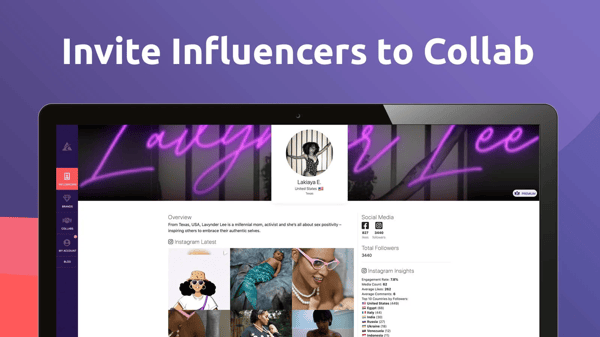
Plus, it was easy to sign up as a brand (you can also join as an influencer). Creator search is more capable than I expected on a free account. You can filter by interest, audience size, minimum followers, country, and pay model. That ease also shows up in G2 Grid data: Afluencer scores 94% for ease of use, which matches the simple collab-posting flow I saw.
Creating a Collab is where it clicked for me. What stood out most was that I could set the criteria that creators must meet to apply. So, instead of fielding a flood of mismatched applications, only relevant creators came through in testing. Sending an invite draws from your one daily credit, which requires you to keep your outreach deliberate rather than scattershot.
What does Afluencer’s free plan include?
- Free forever plan for both brand and creators
- Covers one brand profile
- Post one Collab a day
- One influencer invite per day
- Unlimited creator applicants to your collab
- Direct messaging with creators
- No credit card required for the free plan
When should you upgrade your Afluencer’s free plan?
Upgrade from Afluencer’s free plan when the one-invite-per-day limit begins restricting your influencer outreach, you need premium influencer filters, or you want to manage multiple brands. The free plan is best for testing one brand or campaign and identifying which creators are most responsive. Afluencer’s VIP plan starts at $49 per month and includes 60 invitation credits per month, premium influencer search filters, live support, and a 30-minute influencer strategy call.
Where Afluencer genuinely stands out:
- Support and engagement punch above the price. Across its 700+ G2 reviews, support comes up repeatedly as a standout, and reviewers specifically noted higher creator engagement than they’d seen elsewhere. So, posted collabs actually get applications rather than sitting idle.
- The Collab-first setup is helpful for beginners because you can publish one clear opportunity and review interested creators instead of building your entire outreach list manually.
What G2 users like about Afluencer:
“From signup to collaboration, everything on Afluencer feels professional and well-organized. The dashboard is clean, and the support team is responsive. It’s a reliable place to build long-term influencer partnerships.”
– Afluencer review, Joyce Ann D.
Is Afluencer right for your small business?
Best for: Small brands and founders running their first influencer collabs who want creators to come to them and send a limited number of invites without paying upfront.
Not ideal for: Multi-brand operators or teams that need high-volume creator outreach from day one, who will hit the free caps quickly.
What I dislike about Afluencer:
- The free plan keeps outreach intentionally narrow: one Collab and one invite per day, with stronger filters reserved for the paid tier. That can feel limiting once you’re ready for higher-volume outreach. For a first campaign, though, it keeps the process focused: post one clear offer, review inbound applicants, and learn which creators respond before scaling.
- The platform is easy to navigate, but some reviewers say the interface looks dated and filters can be less smooth when several parameters are stacked. Most also note that these issues don’t get in the way of regular use, so I’d treat it more as a polish tradeoff than a blocker for running simple collabs.
What G2 users dislike about Afluencer:
“At times, there are limited active collaborations, which can make it harder to find the right match quickly. Improving filters and search options would help creators discover more relevant campaigns faster. A more advanced notification system for new opportunities would also enhance the experience.
These are minor improvements, as the platform overall works well and does a great job connecting creators with brands.”
– Afluencer review, Afshan F.
New to planning creator campaigns? G2’s influencer marketing strategy guide helps you start with goals and KPIs before creator outreach, a step small businesses should define before posting their first Collab.
2. Dovetale (Shopify Collabs): Best for Shopify creator-affiliate programs
Dovetale was acquired by Shopify and now lives as Shopify Collabs, a creator-marketing app that is free to install for Shopify merchants. If you already sell on Shopify, Collabs lets you run an affiliate program right inside the store you already use, with nothing extra to wire up for tracking sales or paying creators.
That Shopify-native simplicity is also reflected in the G2 Data: Dovetale scores 93% for ease of setup and 95% for ease of doing business, which fits a workflow built around in-store recruitment, tracking, and payouts.
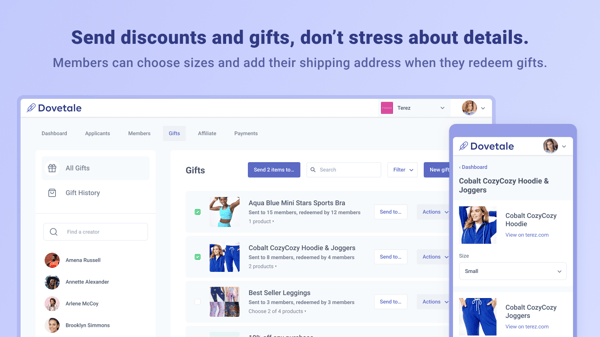
What stood out to me in testing is that you’re not locked into one path; you can run inbound and outbound at the same time. You tell Collabs your category, your primary audience, and your region. From there you get three ways to bring creators in: invite affiliates directly, put a recruitment page for creators on your store, or let creators find you through the Collabs network. Once you land on a creator, the profile gives you enough to judge fit fast: their audience, social account, and a preview of their content, so you’re not going in blind before you reach out.
The part that genuinely impressed me is the payouts: commissions are tracked and paid out automatically on your regular Shopify bill. For a small eCommerce owner, it removes the two things that make affiliate marketing painful: knowing who drove which sale, and paying everyone correctly.
What does Dovetale (Shopify Collabs) free plan include?
- Free to install on any Shopify store
- Create custom affiliate application pages with commission rates
- Up to 100 creator invites in any 7-day period
- Send personalized referral links and discount codes for approved creators
- Send gifts and samples through Shopify
- Automatic commission payouts via your Shopify bill
- 2.9% commission processing fee applies to automatic payouts
- Works with Instagram, YouTube, Klaviyo, Yotpo, and Shopify Subscriptions
When should you upgrade your Dovetale (Shopify Collabs) free plan?
There’s no paid tier for the app itself. Your only direct cost is the 2.9% fee on automatic commission payouts. The real spend is your underlying Shopify subscription, which starts at $39/month (or $29/month billed yearly) on Basic. The practical upgrade trigger is when you need more than Shopify’s built-in collab system: deeper influencer vetting, richer creator discovery, bulk outreach, advanced reporting, or support for stores outside Shopify. At that point, I’d compare dedicated influencer or affiliate platforms, while keeping Collabs as the simplest free option for Shopify-native tracking.
Where Dovetale (Shopify Collabs) genuinely stands out:
- Merchants consistently call auto-payment the most convenient part. Since affiliate links and discount codes are connected to your sales on the Shopify store, commissions are tracked and paid automatically. For small merchants, that means less manual reconciliation between creator activity and actual sales.
- It makes influencer marketing feel more like an eCommerce operation than a separate marketing project. You can collect creator applications from your store, invite them directly, send gifts, and reward sales without building the whole process from scratch.
What G2 users like about Dovetale (Shopify Collabs):
“Simple, easy-to-use interface, good influencer discovery, analytics, and filtering/sorting features. The platform also has features that help process the inbound collaborations, product gifting, and affiliate commission.”
– Dovetale (Shopify Collabs) review, Justina V.
Is Dovetale (Shopify Collabs) right for your small business?
Best for: Shopify merchants who want a free way to recruit creators, issue affiliate links or codes, and track creator-driven sales inside Shopify.
Not ideal for: Brands not on Shopify, or teams that need advanced influencer discovery, deep audience vetting, or agency-style campaign management.
What I dislike about Dovetale (Shopify Collabs):
- It’s lighter on advanced creator vetting, including micro-niche targeting and deeper audience-quality data. But for a first affiliate program, that tradeoff is usually manageable as you’re mostly approving applicants, inviting creators you already like, and using Shopify’s built-in tracking to see which partnerships actually drive sales.
- Shopify Collabs only works for eligible Shopify merchants, so it’s not an option if your store runs on WooCommerce, Amazon, Etsy, or another non-Shopify platform. But if Shopify is already your home base, that single-platform focus is typically what makes Collabs useful for users.
What G2 users dislike about Dovetale (Shopify Collabs):
“It would be nice if the discovery tools were a bit more comprehensive and allowed you to target creators based on micro niches.”
– Dovetale (Shopify Collabs) review, Calev B.
Running Shopify Collabs as an affiliate program? G2’s guide to affiliate marketing for merchants is a useful next read for thinking through commission rates, referral links, and how creator-driven sales should be tracked.
3. HypeAuditor: Best for influencer vetting and fake-follower checks
HypeAuditor built its name on audience analytics and fake-follower detection, and a lot of that capability is reachable without even creating an account. It gives access to its 40+ tools for free, which you can use straight from their site. I ran a few creator handles through the fake-followers check and the engagement-rate checker, and within seconds, got a read on audience authenticity, real vs. suspicious followers, and whether engagement looks earned or inflated. That alone can save a small budget from a bad partnership.
On G2, it scores 90% for both audience analysis and influencer scoring. That matches how I’d use it for a small business: to pressure-test whether a creator’s audience is real and relevant before paying.
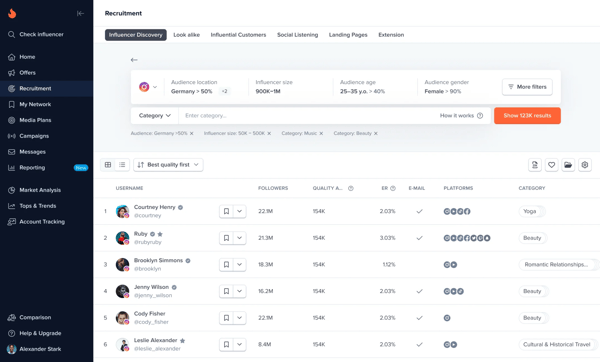
In the trial I accessed, HypeAuditor showed a 14-day trial window, but the trial is limited and primarily built for finding and vetting creators. Influencer discovery shows three results per search, and you can preview up to ten full influencer reports. That’s enough to pressure-test a handful of creators you’re weighing.
What stood out immediately is how limited the outreach is. The portal sends you to a creator’s social account to DM them directly. Most of the deeper features, like Influencer Outreach, Campaign Management, Creator Payments, Gifting, and Competitor Intelligence, sit behind a lock on the dashboard.
One thing to know upfront: there’s no self-serve upgrade. When I went to unlock more, it routed me to contact sales.
What does HypeAuditor’s free access include?
- 14-day free trial
- Influencer Discovery showing the first 3 results per search
- Full preview of up to 10 influencers (audience quality, demographics, engagement, and authenticity)
- Influencer discovery by platform (Instagram, YouTube, TikTok, Twitch, and X)
- 40+ always-free standalone tools, like fake-follower check, engagement-rate checker, account auditor (no account needed)
When should you upgrade your HypeAuditor’s free plan?
Upgrade once you move from checking a few creators in different niches to building a serious shortlist in selected niches. The first 3 search results and 10 report previews are enough to understand the value of the data, but not enough to run a full creator search and campaign. The upgrade trigger needs more search depth, full influencer reports, outreach, campaign tracking, gifting, payments, or competitor intelligence. HypeAuditor’s published pricing guidance says the Basic plan starts at $299/month when billed annually, with core modules like Influencer Discovery, Account Analytics, CRM, and Campaign Management included at different usage limits.
Where HypeAuditor genuinely stands out:
- Influencer reports are intuitive in a way even a non-expert can judge whether a creator fits. Small-business reviewers say the same. Across HypeAuditor’s 4.6/5 rating from 200+ reviews on G2, reviewers single out granular, readable reports, useful for narrowing a shortlist from large creator pools before outreach.
- The best part of testing HypeAuditor was how quickly it shifted the question from “How many followers does this creator have?” to “Is this creator actually a good fit?” Its standalone tools let anyone quickly test the creator’s authenticity at no cost or effort. For a small brand, that matters because one bad paid post or wasted shipment can eat up a meaningful part of the campaign budget and time.
What G2 users like about HypeAuditor:
“HypeAuditor is easy to use and very intuitive. In addition, they offer excellent customer support, which makes the overall experience even better.”
– HypeAuditor review, Pawan S.
Is HypeAuditor right for your small business?
Best for: Small businesses and agencies that need to vet influencer audiences and screen for fraud before paying for full discovery.
Not ideal for: Teams that need unlimited creator search, influencer outreach, or an end-to-end campaign workflow without talking to sales.
What I dislike about HypeAuditor:
- For mainstream Instagram creators, the data runs deep. But reviewers note coverage can thin out for smaller, newer, or more niche creators, and some non-Instagram data may be less consistent. Treat it as a strong first vetting pass and pair it with a quick manual check for profiles outside its core strengths.
- The trial ceiling shows up quickly. Seeing only the first 3 Discovery results and previewing up to 10 influencer reports is enough for testing the data quality, but not enough to build a complete creator list or a campaign. Reviewers also note some KPIs and email lookups sit behind credits. It works well if your goal is to vet a few creators before deciding whether the paid platform is worth it.
What G2 users dislike about HypeAuditor:
“Sometimes it’s difficult to search for very specific types of profiles, and it can take extra effort at times.”
– HypeAuditor review, Sarah G.
Before paying a creator, get the partnership basics in writing. G2’s influencer contract guide is a useful next read to lay out creator expectations.
4. Influencity: Best for data-driven influencer discovery and campaign planning
Influencity felt like the most structured discovery-and-planning workspace I tested. While it has no forever-free plan, its 7-day free trial is enough to evaluate the core workflow. For a small agency or in-house marketer who wants the whole pipeline in one place, that breadth is the draw.
In G2 Grid Data, Influencity’s scores 93% for ease of admin, and marketing and advertising is its largest represented industry in the report. That lines up with how the trial felt in testing: less like a quick creator checker and more like a workspace for organizing searches, analyses, campaigns, and reports before presenting a shortlist.
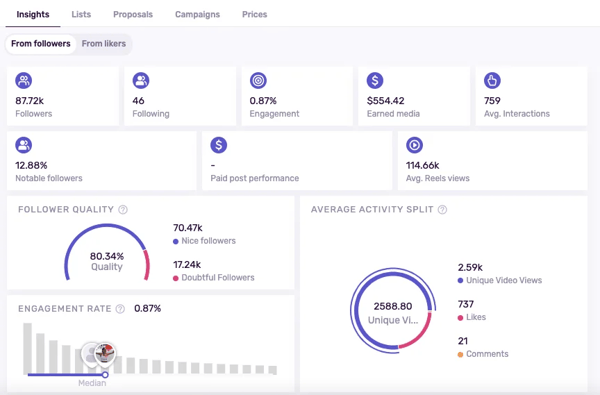
It took me all of a few clicks to see its huge creator database and genuinely deep filters, but each search shows only the top three results, and you get 30 results total for the entire trial. One sample search turned up over 35,000 matches and surfaced only three of them. The influencer relationship management (IRM) tool runs on a credit system called “analyses”, you get three, spent whenever you add a creator’s profile.
On the campaign side, the trial lets you build one campaign and one report (covering up to three posts), enough to see the workflow and performance dashboards. Two things stood out to me: you can add up to four team members even on the trial, and everything you save carries over if you upgrade.
What does Influencity’s free plan include?
- 7-day free trial across four products (Discover, IRM, Campaigns, and Reports)
- Up to 30 searches in the trial
- Unlimited search filters
- Top 3 visible results per search
- 1 campaign plus 1 influencer program
- 1 report with up to 3 post “analyses” (the trial currency used when you add creator profile or run a follower-overlap check)
- Add up to 4 team members
- All saved data carries over if you upgrade
When should you upgrade your Influencity’s free plan?
You’ll outgrow the trial once you need to build a real creator shortlist rather than sample the workflow. The trial is enough to test the filters, profile analysis, campaign setup, and reporting flow, but the 3-result search view and analysis limit are too tight for ongoing discovery. You get a 7-day free trial, and the paid plan starts with Professional at $318/month, with annual billing, which includes 10,000 monthly results, 150 profile analyses, and more features required to run end-to-end influencer campaigns.
Where Influencity genuinely stands out:
- The campaign and reporting layer makes it useful for marketers who need to explain their creator choices to a client or founder. That matches what small-business G2 reviewers pointed out: users like being able to package audience and engagement data into reports they can hand to clients.
- The search experience feels built for planning, not just browsing. Influencity pulls all of a creator’s social accounts together from a single handle, so you’re not hunting down each platform by hand. Reviewers call out how much this speeds up multi-platform scouting.
What G2 users like about Influencity:
“It’s very practical, easy to use, and it helps the needs of the agency. I like being able to group the influencers by brand, and the most important part is that it helps me find influencers across the country.”
– Influencity review, Jaime R.
Is Influencity right for your small business?
Best for: Small agencies and in-house marketers who want to test deep, multi-network discovery, campaign workflow, and reporting before committing to a paid plan.
Not ideal for: Teams that need a forever-free tier, high search volume right away, or creators applying directly to their first campaign.
What I dislike about Influencity:
- Limited credit and results are among the most common things reviewers raise. With three visible results per search, 30 total results, and three analyses, it works best as a test drive for the filters, profile data, and campaign workflow to decide whether to upgrade.
- Audience data is detailed enough to shortlist creators with real confidence. Though some reviewers note the estimated figures (audience size, earned media) aren’t always exact, and that filters can be less precise for certain regions or niches, which is a reasonable limit for any third-party estimate. Use it as a directional signal and confirm with the creator before you finalize.
What G2 users dislike about Influencity:
“Sometimes the data and metrics are not entirely correct.”
– Influencity review, Carla S.
5. SocialBook: Best for free inbound creator campaigns
SocialBook has a strong rating of 4.7/5 on G2, and it made the most sense to me once I stopped treating it as another influencer search database. Its strongest small-business use case is inbound: post a campaign for Instagram, YouTube, and TikTok, let creators apply, and use the search and AI tools to fill the gaps when you want to invite people directly.
On G2, SocialBook scores 96% for both ease of use and ease of setup, which matches its strength as a quick way to post campaigns and review applicants.
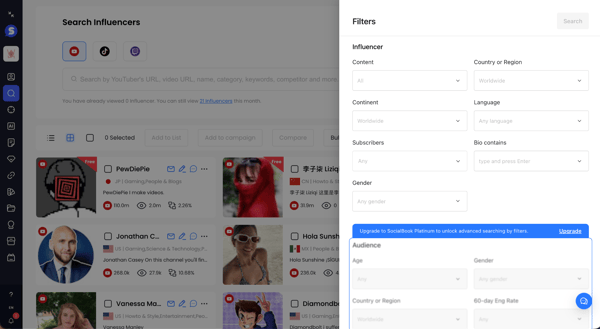
The first thing I noticed is that SocialBook is really two products. The Marketplace (or Product Launcher) side is built around campaign activities, like posting an offer and working with creators who respond; while the Growth Platform (or SaaS side) is for deeper creator search and analysis. The Growth Platform is paid for deeper creator search, a large database of influencers, an influencer CRM with ROI tracking, and competitor monitoring.
The free “Basic” plan is the Marketplace side. In the free plan I tested, I could post campaigns, and connect with creators, but search felt more like a preview than a full discovery workflow. My dashboard showed a small (up to 21) monthly profile-view allowance, so I’d treat the free plan as a way to test inbound interest, not as a way to build a full creator database.
The piece I’d actually keep using is the free “SocialBook Checker” Chrome extension, which surfaces a creator’s core stats right on their YouTube or social page, so you can sanity-check someone the moment you find them, no dashboard needed.