

SEO is critical in the travel industry. While most travelers might gain inspiration on TikTok, YouTube, or Instagram, they will still search on Google before purchasing.
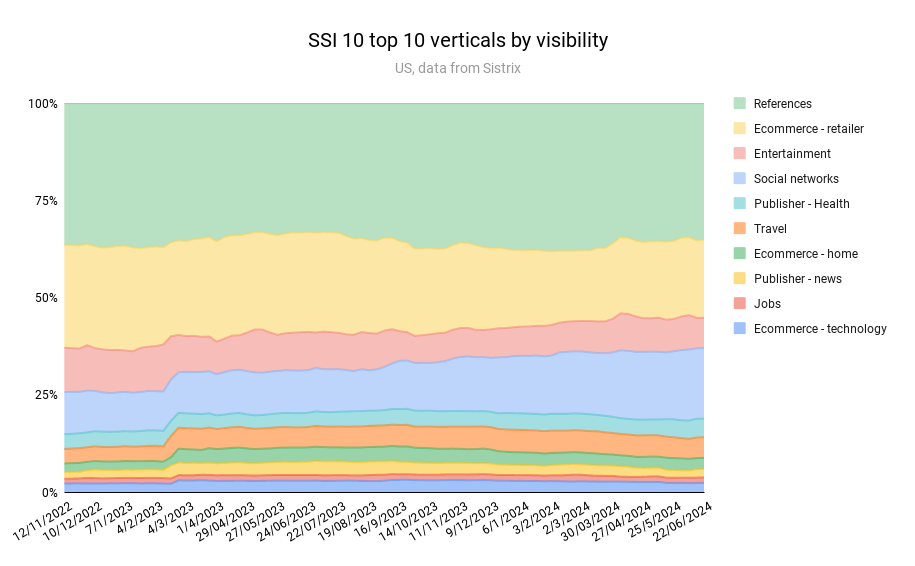
In fact, according to Kevin Indig, travel was the fifth largest industry on the web by organic visibility in June 2024.
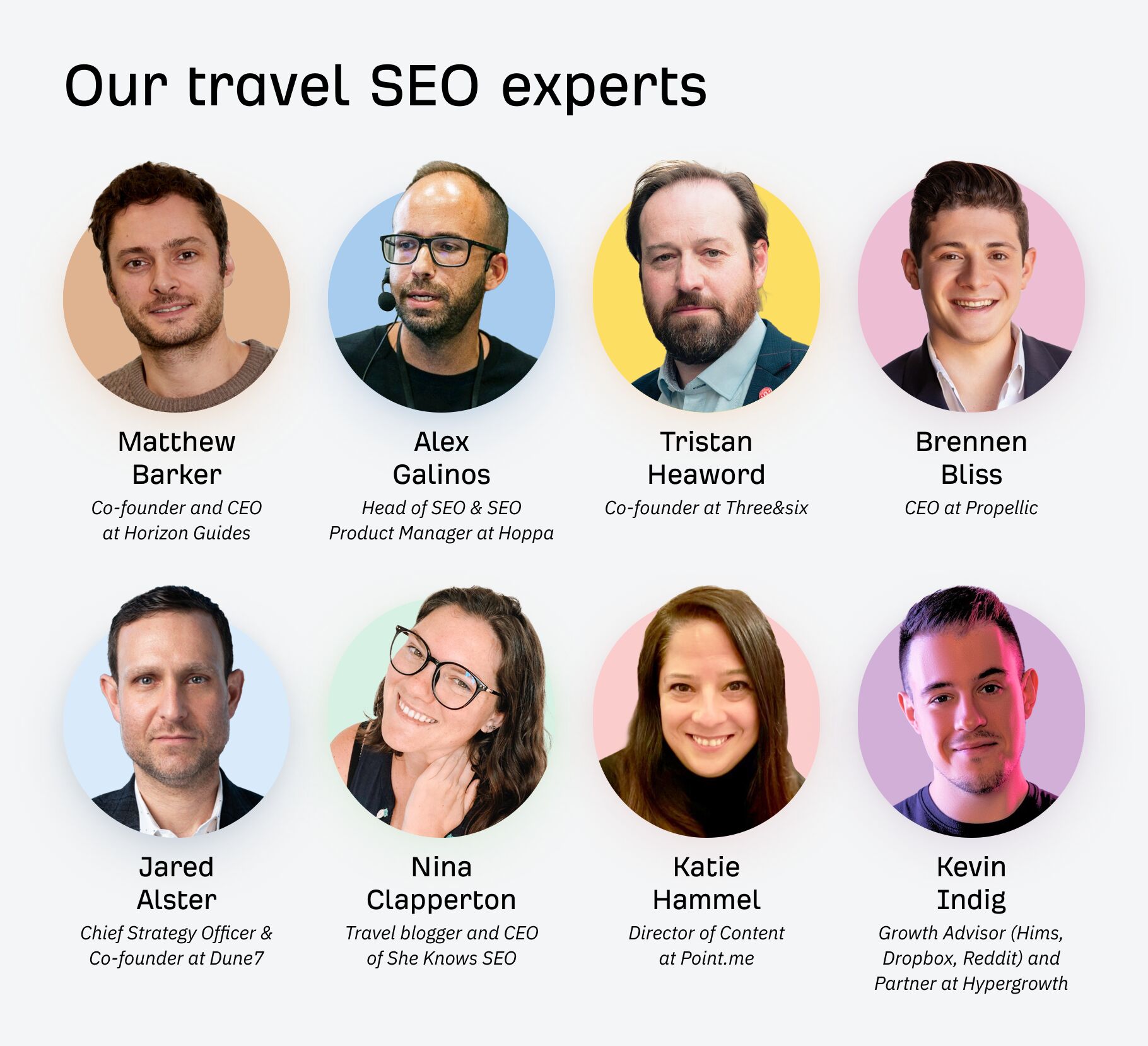
If you want to generate more bookings or get more customers, you will need to do SEO. To write this guide on travel SEO, I interviewed seven experienced travel SEOs:
Kevin Indig also very kindly shared his paid publication on travel SEO with me.
The basics of SEO are the same for every industry. You need to create high-quality content, earn backlinks, and make sure your site is free of technical issues.
But travel SEO has some unique challenges:
- Travel isn’t just one industry but is made up of many different industries and players—there are online travel agencies, comparison sites, hotels, airlines, cruise operators, tour operators, car rental companies, travel technology companies, travel bloggers, and even travel insurance.
- You’re competing with Google itself. Google has its own travel product, which it’s happy to insert into the SERPs. Google also dominates the SERPs by showing many different SERP features for travel-related keywords, which usually answer the query (e.g., things to do in Barcelona).
- Popular keywords are also dominated by huge international brands like TripAdvisor and Booking.com.
- Many travel companies, such as tour operators, only serve a particular local area.
- Many travelers don’t visit or book trips via a business’s website. This is especially true for airlines and hotels. Instead, travelers might search via Skyscanner or Booking.com.
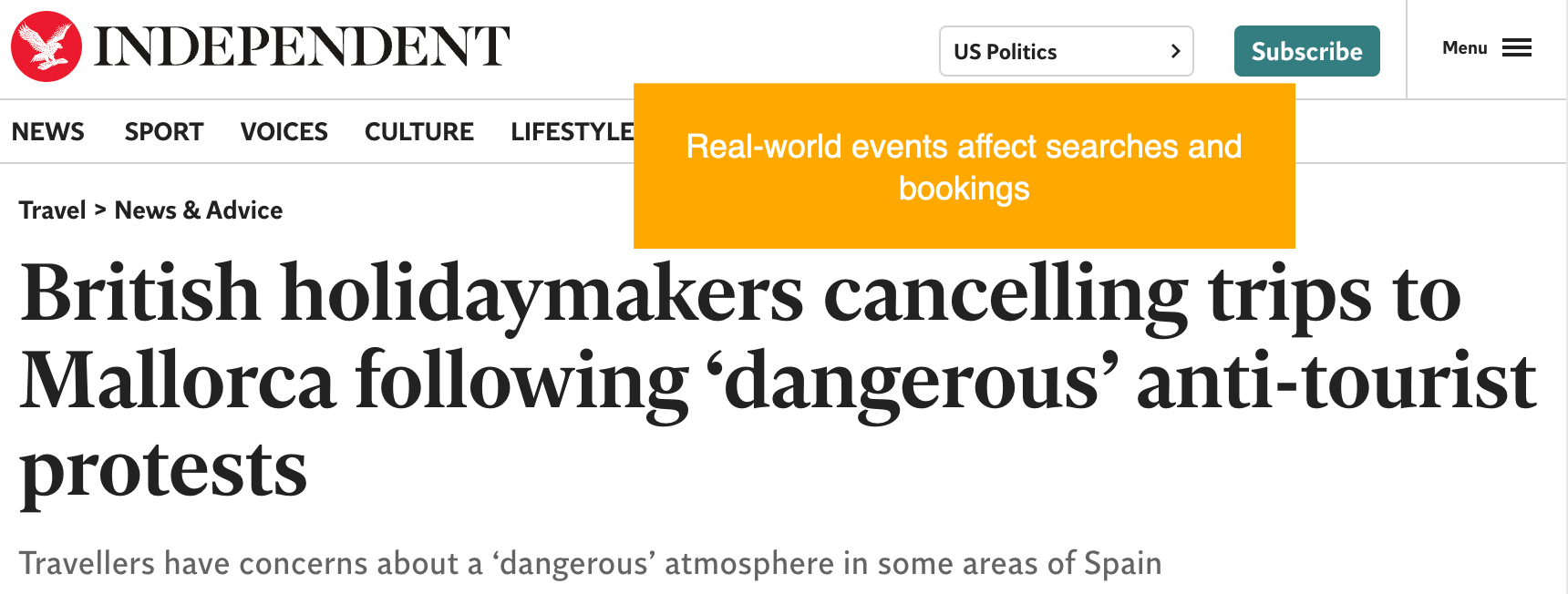
- Seasonality and real-world events (e.g., terrorism, pandemics, natural disasters) can impact your search visibility.
In this article, we’ll show you how to solve these problems.
The most popular travel-related keywords are dominated by Google, SERP features, and big sites.
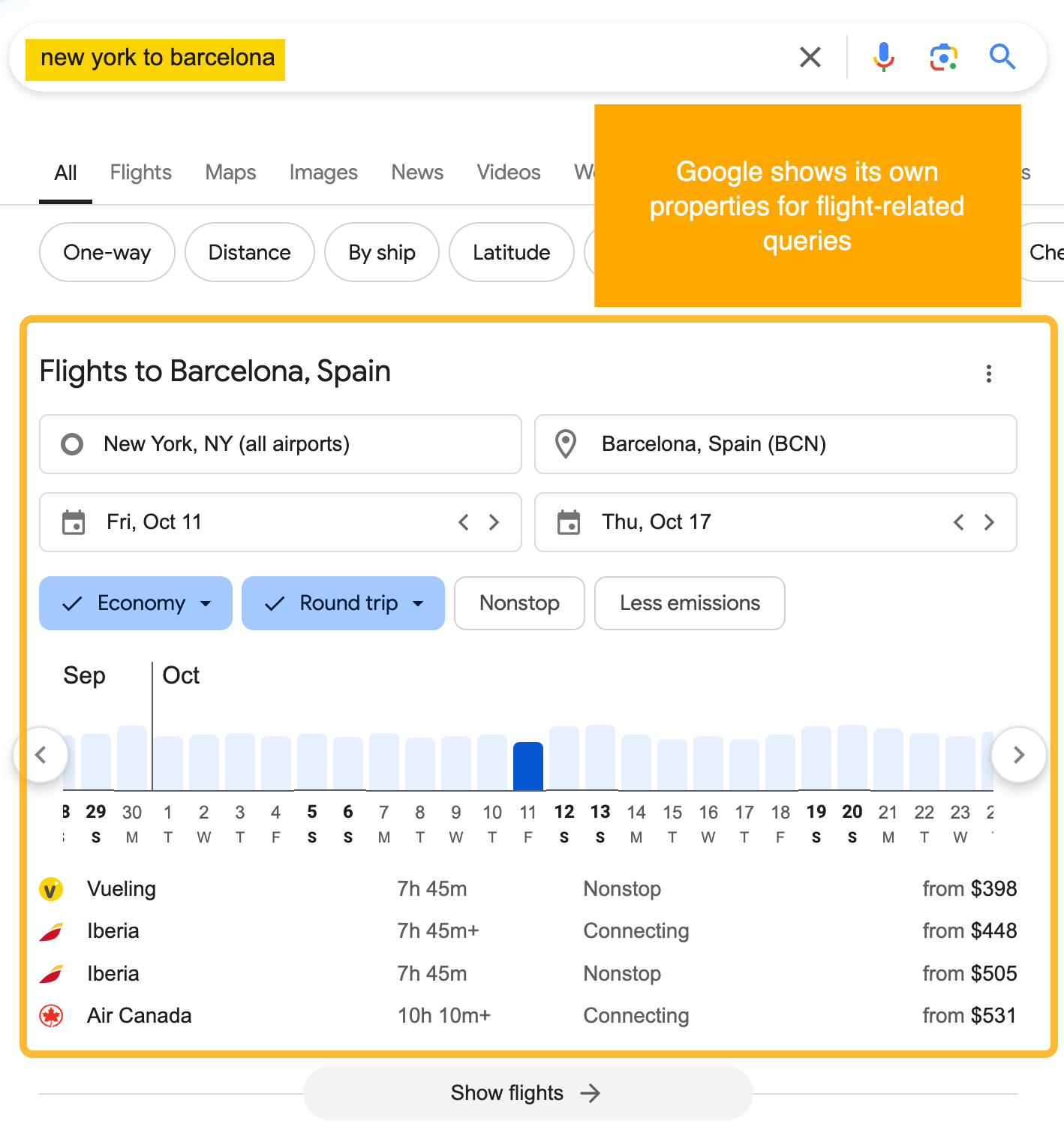
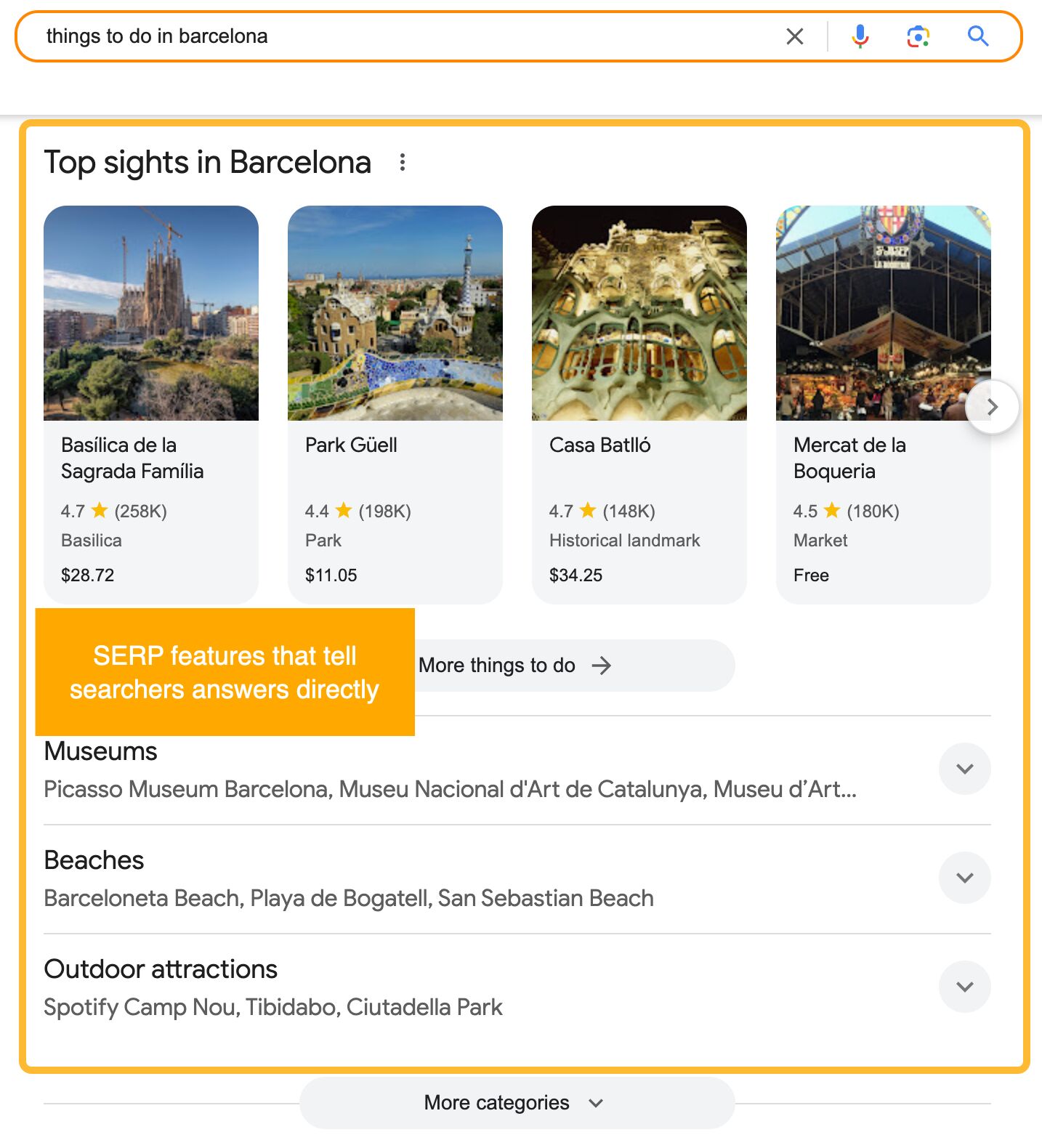
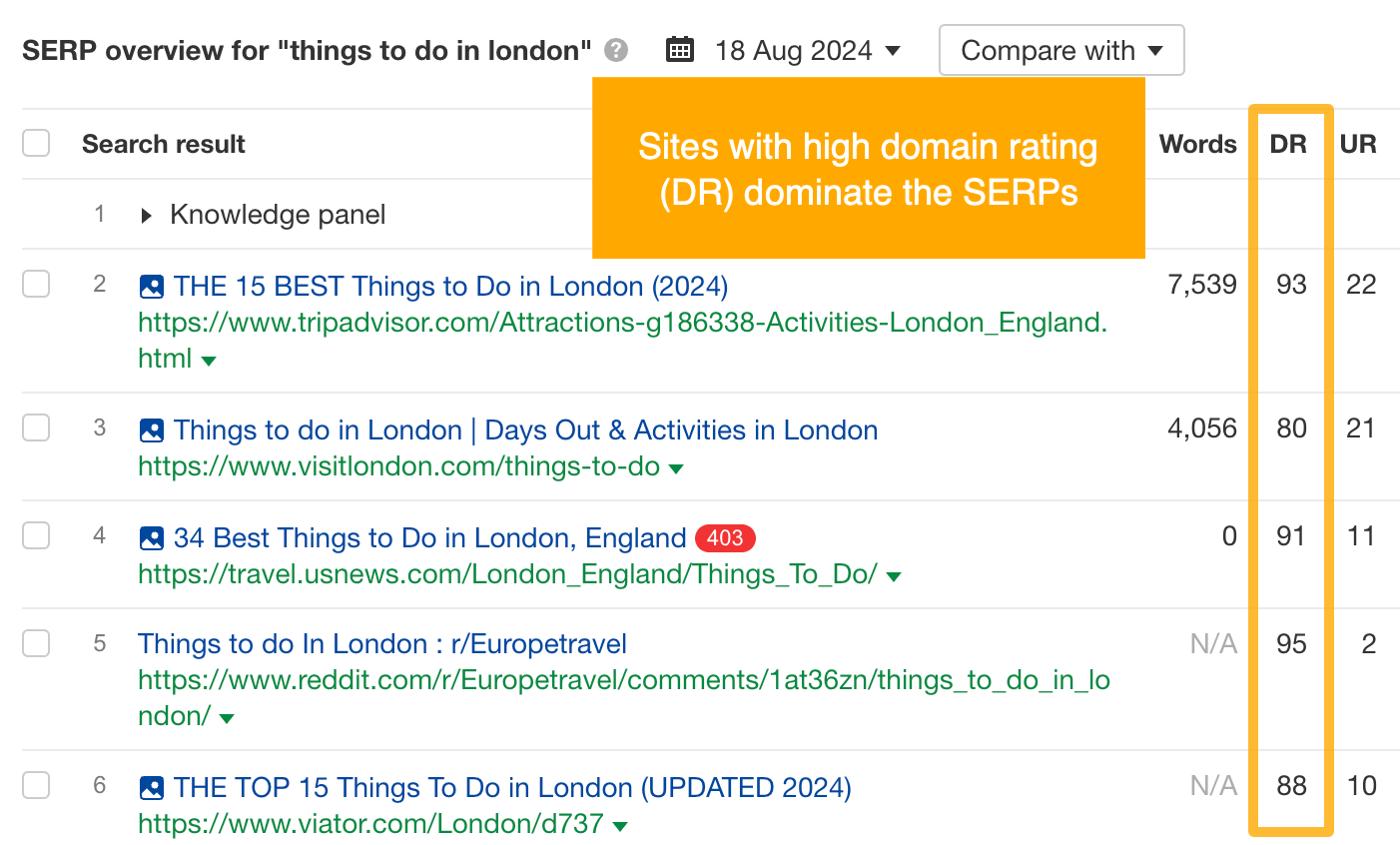
Coupled with Google’s insistence on rolling out AI Overviews (now in six more countries, besides the U.S.), many terms are out of reach for most travel websites.
This is why most of the experts I spoke to are now focusing on keywords that actually drive business. Typically, these are middle- to bottom-of-the-funnel topics.
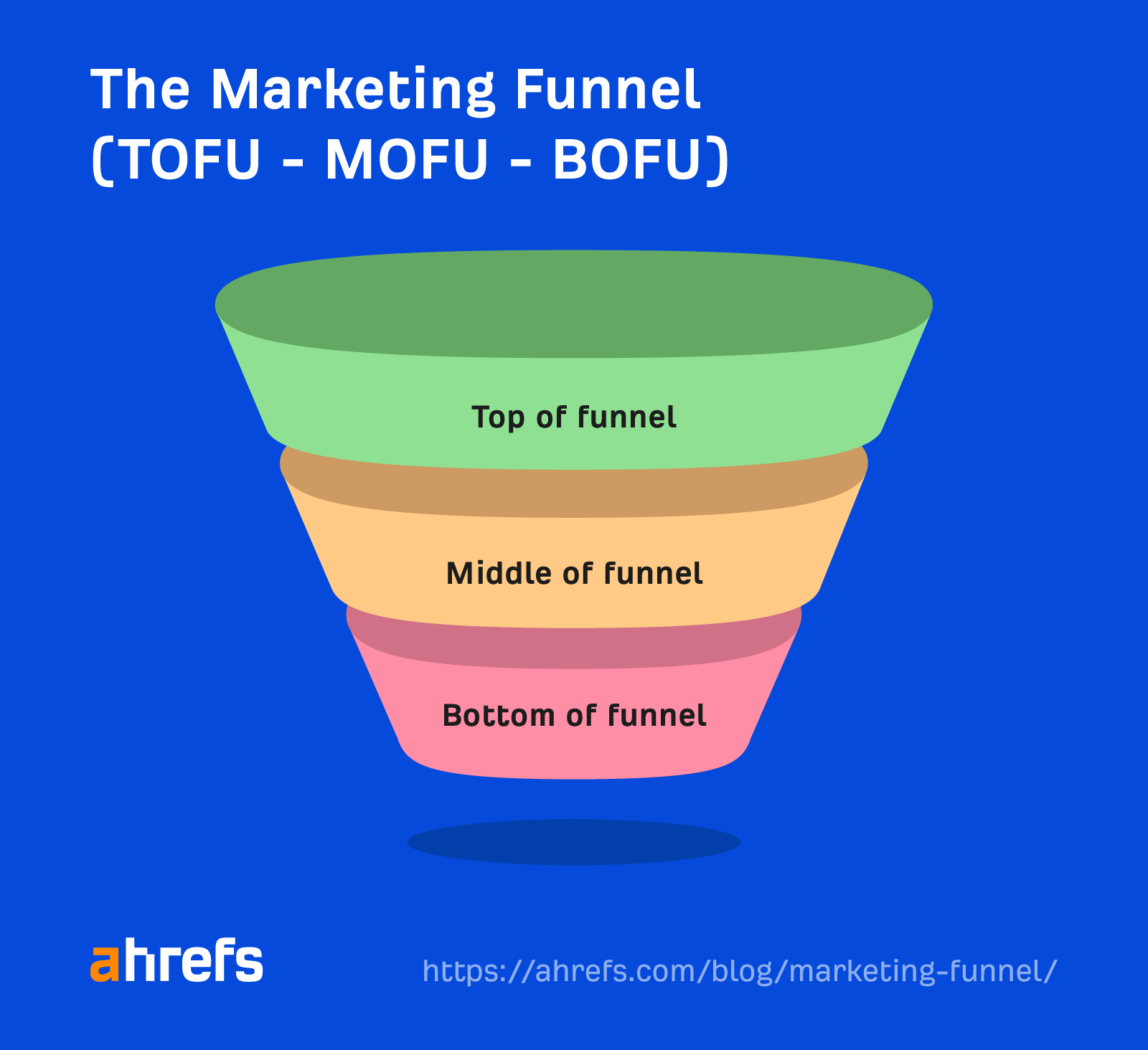
For example, instead of targeting top-of-the-funnel (TOFU) terms like “london tour” or “things to do in London”, a London-based tour operator could target keywords like “harry potter walking tour for muggles in london” or “world war 2 walking tour london” (provided they offer those tours.)
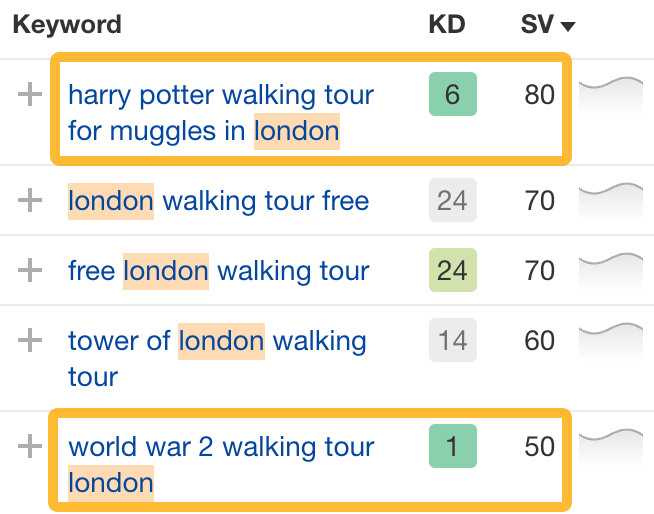
While search volume may not be high, these keywords demonstrate intent. Someone searching for “harry potter walking tour for muggles in london” is close to the purchase decision—they’ve already decided to visit London or are perhaps already in London. They’re likely to convert.
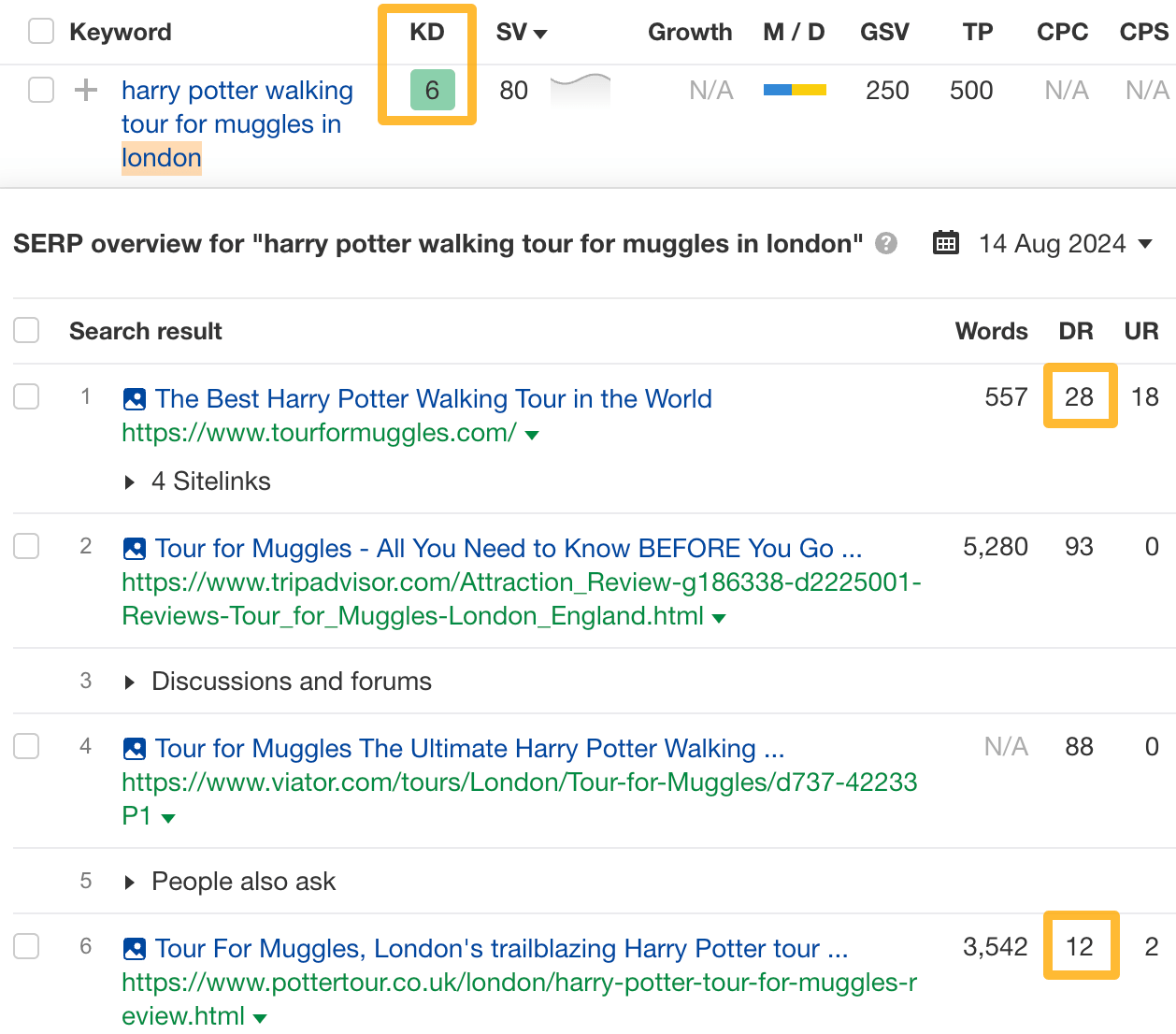
This keyword is also easier to compete for: Keyword Difficulty (KD) is only 6 and there are sites ranking in the top 10 with low Domain Ratings:
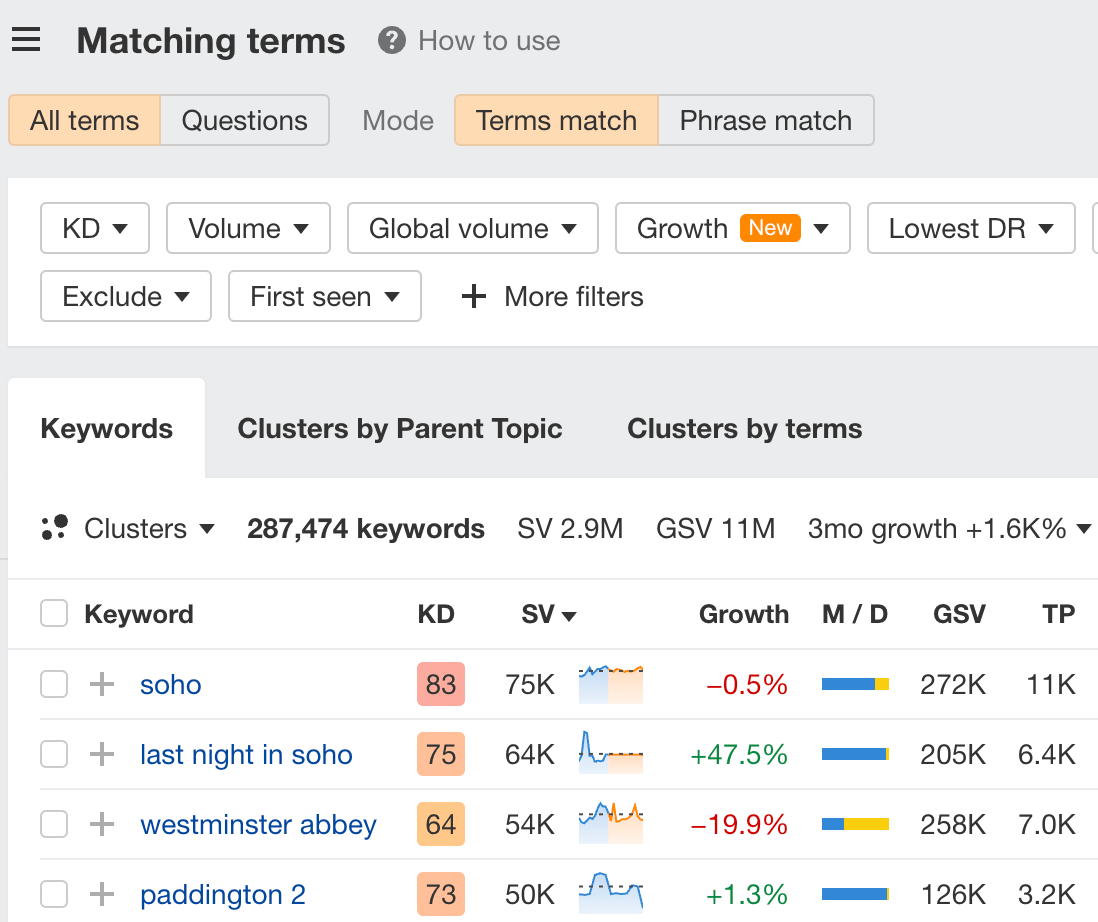
To find these keywords with business potential, enter a few seed keywords into Ahrefs’ Keywords Explorer and go to the Matching terms report. For example, as a London-based tour company, I might enter the locations I cover (e.g., Westminster, Kensington, Paddington, Soho).
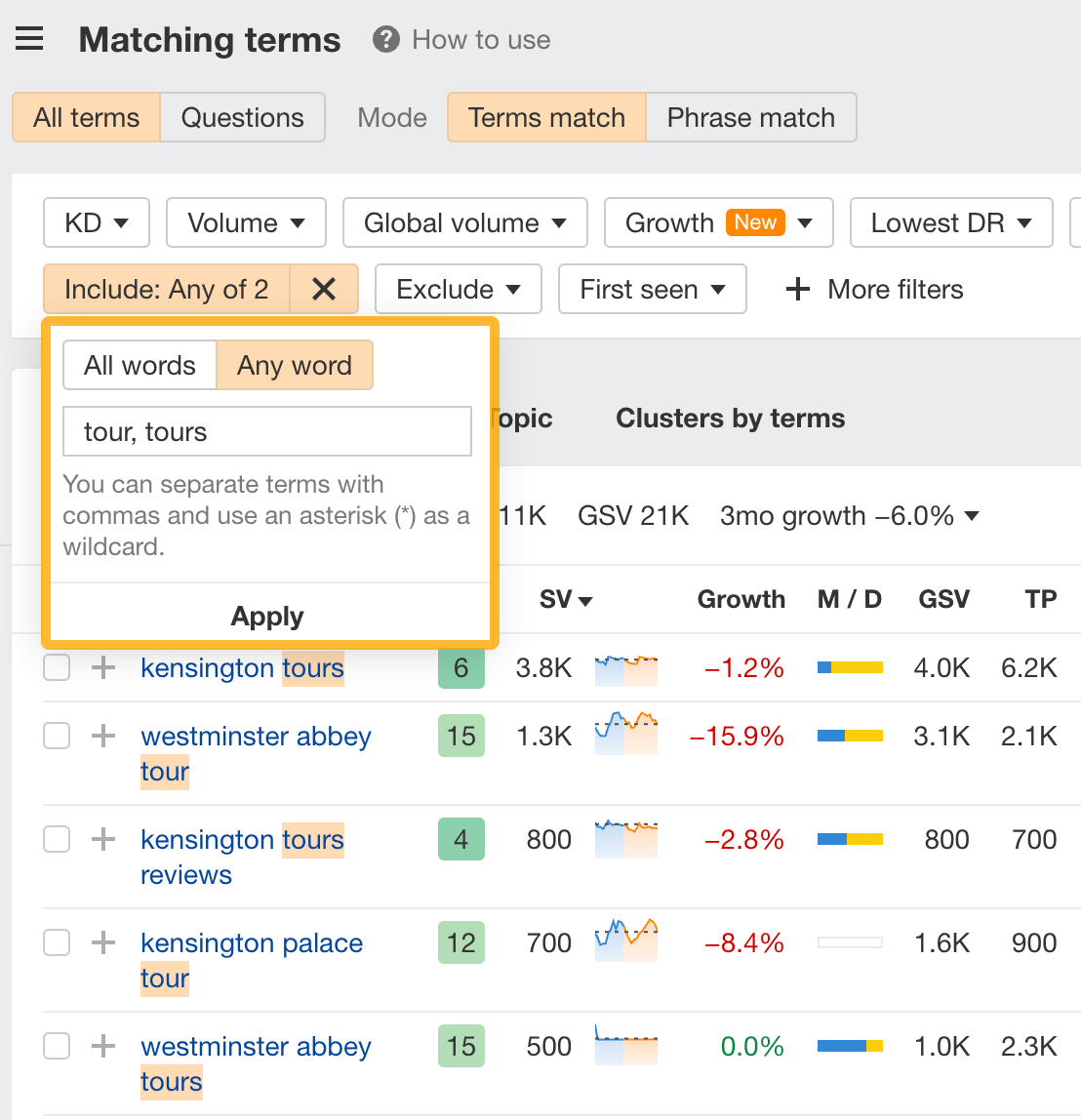
I’ll go through the report and pick out the keywords that are relevant to my site. I could even narrow down the report by specifically looking for keywords with the words “tour” or “tours”:
Once you have your list of keywords, you’d want to score them on their ‘business potential’, or how commercially relevant they are to your website. The simplest way is to ask whether your product or service fits in the topic. This is how we do it at Ahrefs too:
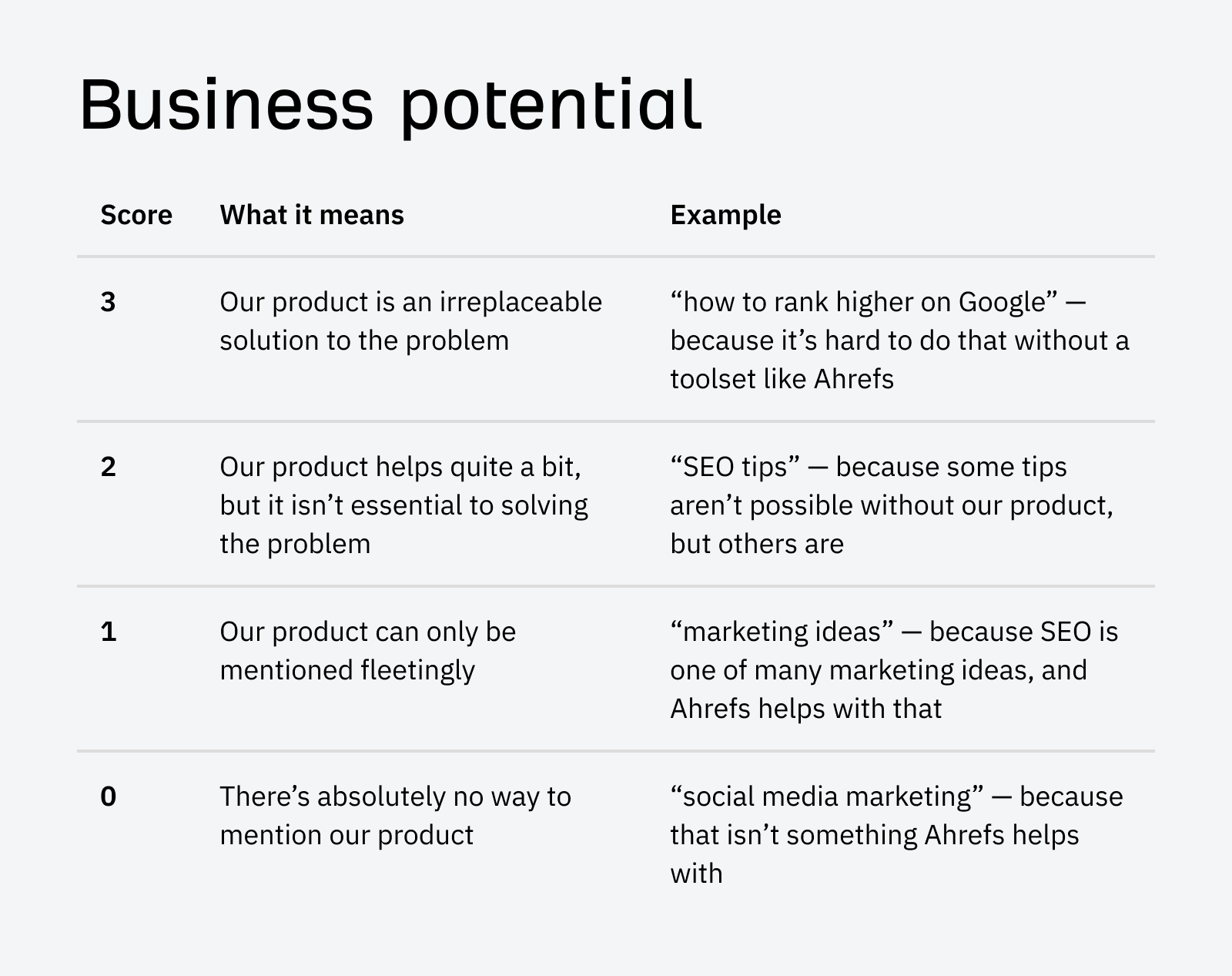
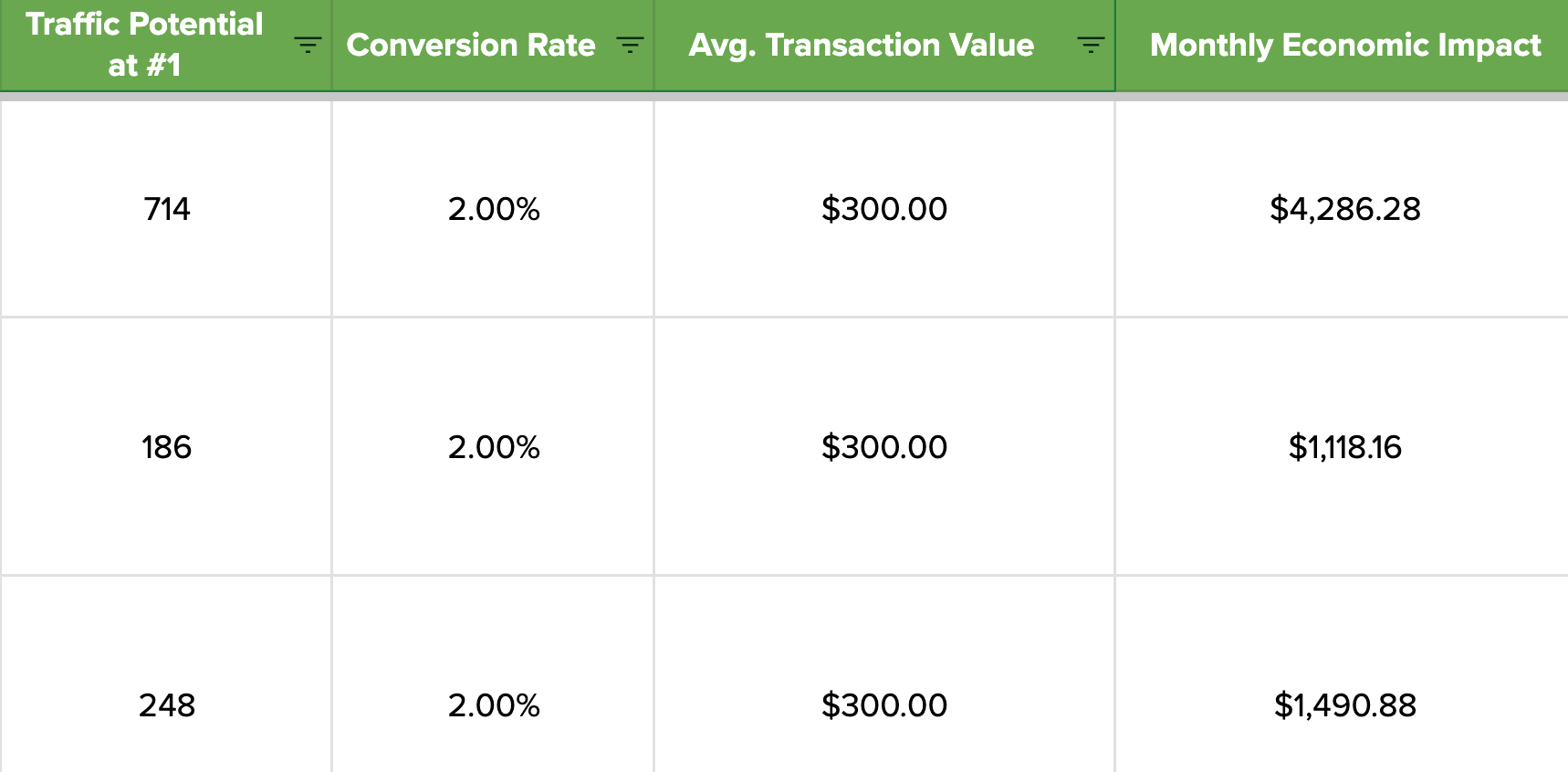
Alternatively, you can go in deeper with numbers and use this formula, as suggested by Brennen:
(Monthly Search Volume) x (Keyword Click-through Rate) x (Website Conversion Rate) x (Avg. Gross Margin or Revenue per Transaction)
Through this formula, you can see that even if traffic potential is low, as long as it’s commercially relevant, it can still be impactful to your company’s bottom line:
To get around competing with big sites in the SERPs, a common SEO strategy is to start with low-competition keywords. In the travel space, as Alex shared, this can manifest as targeting keywords for less popular destinations.
For example, look at the difference in search volume and keyword difficulty between these two keywords:
- Things to do in London
- Things to do in Southampton
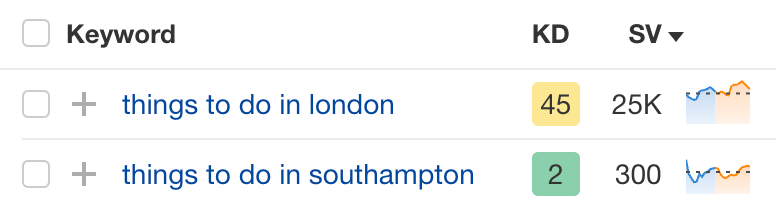
It would be easier to target the keyword “things to do in Southampton”.
This would work even if you’re a London-based tour operator. You could easily create an article about the things to do in Southampton—and include a day trip to London as one of the items. (And pitch your tour, of course!)
To find keywords about these less popular destinations, Google for a list of cities or towns in your target country. For example, a search for “cities in England” brings up a list of cities from GOV.UK:
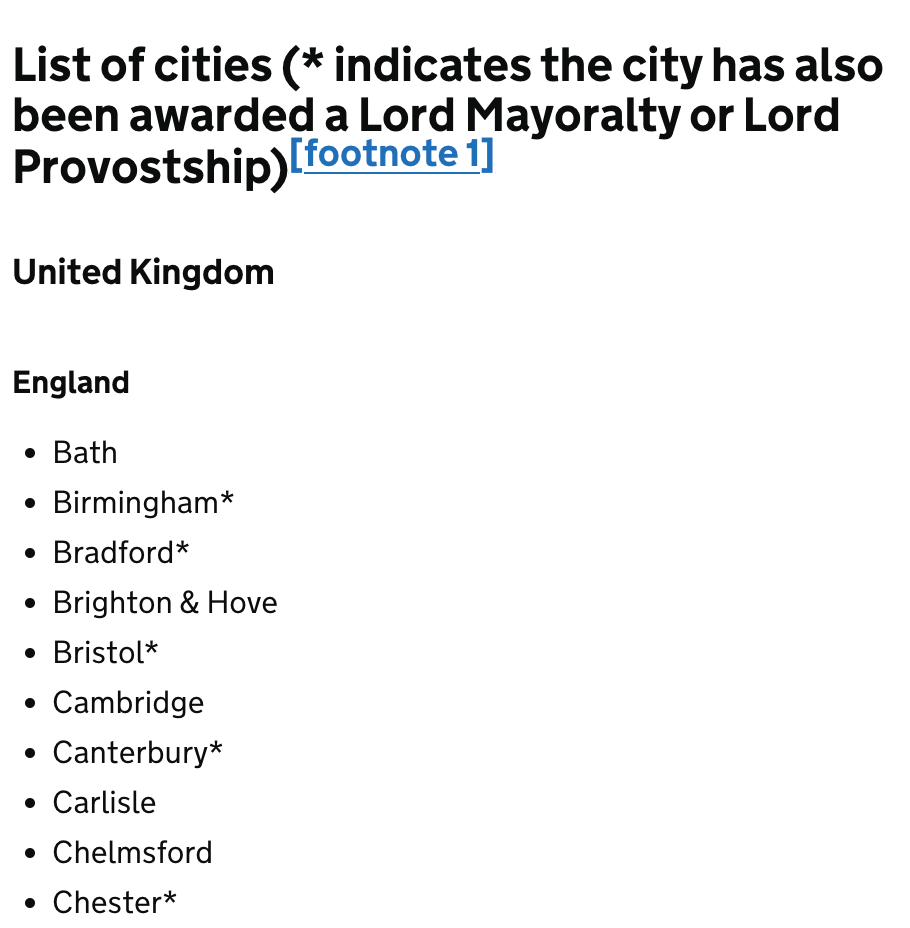
Copy and paste the cities into Keywords Explorer. Then, go to the Matching terms report, click Clusters by Parent Topic, select the Include filter, and add a few common modifiers, like “things to do”, “where to eat”, and “where to stay”. (James Brockbank has a list of common travel modifiers here.)
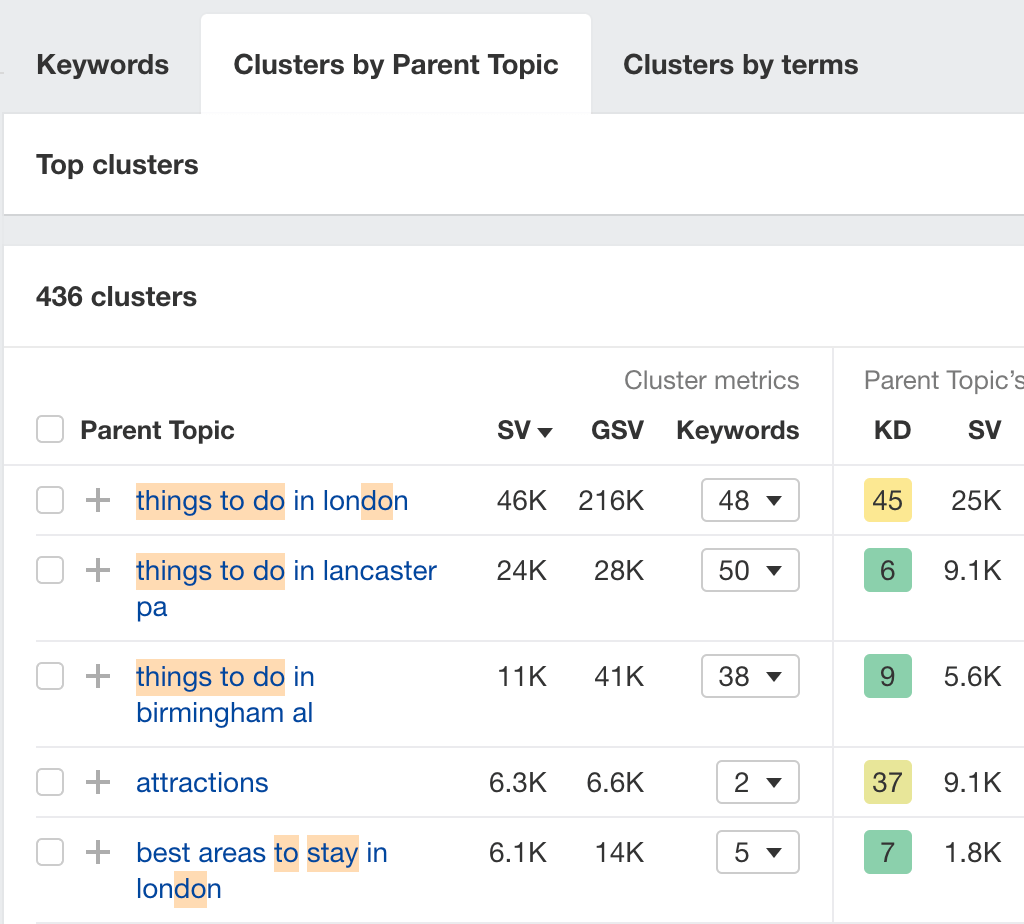
Going through the report will surface keywords for less popular destinations that we can target.
“Taylor Swift”.
If there was something surprising I heard from many of my interviews, it was the global superstar. The reason: She’s currently holding her Eras Tour all around the world. And search volume for her tour locations is spiking:
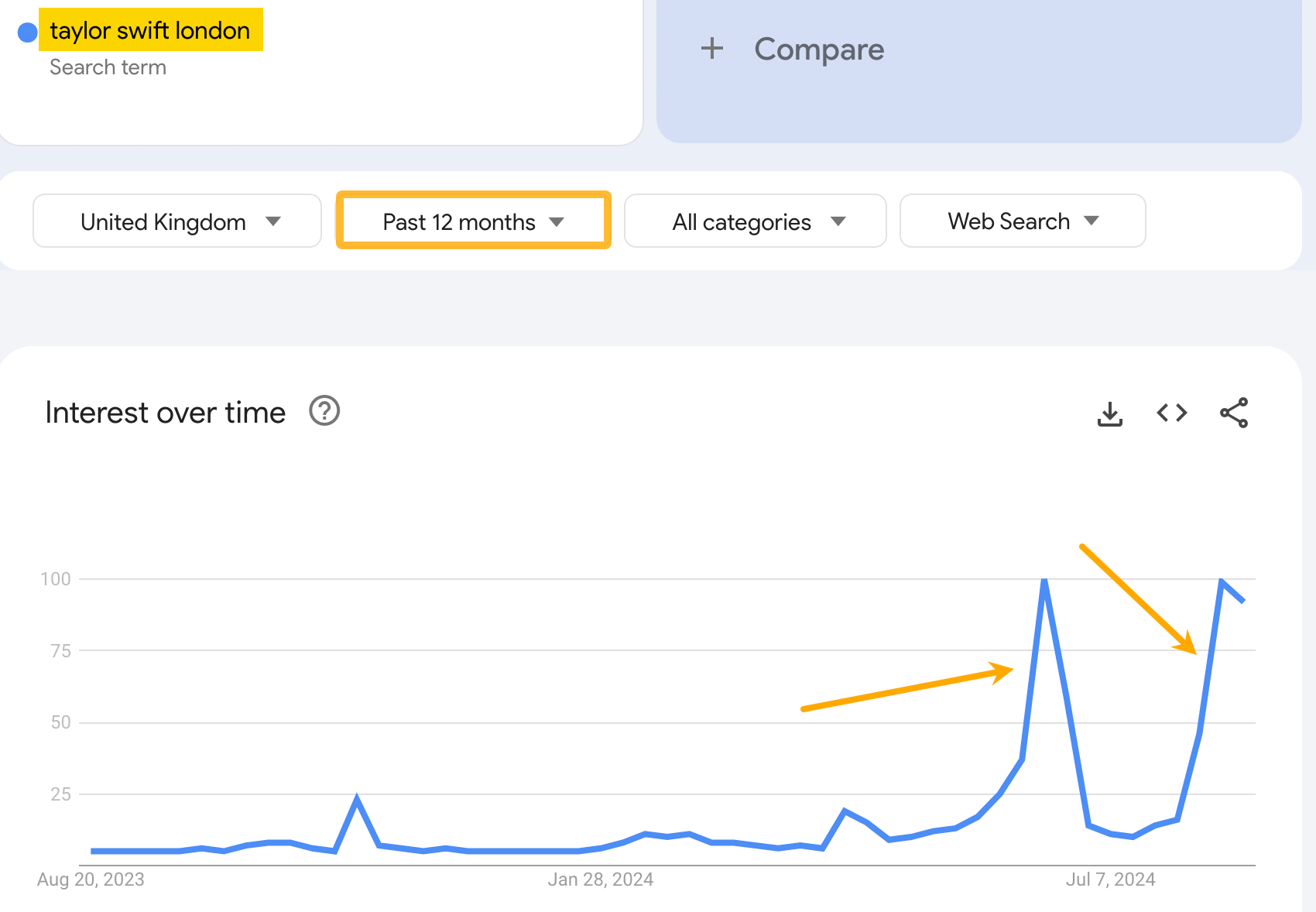
Which means: An opportunity for travel companies to take advantage of Swiftonomics.

It’s not just Taylor Swift. The Olympics, Tomorrowland, and even the Asian food festival in your local area could be topics you create content about. These trending events or topics may have low search volume but they could be the main reason why someone is traveling. It’s important to capture these opportunities.
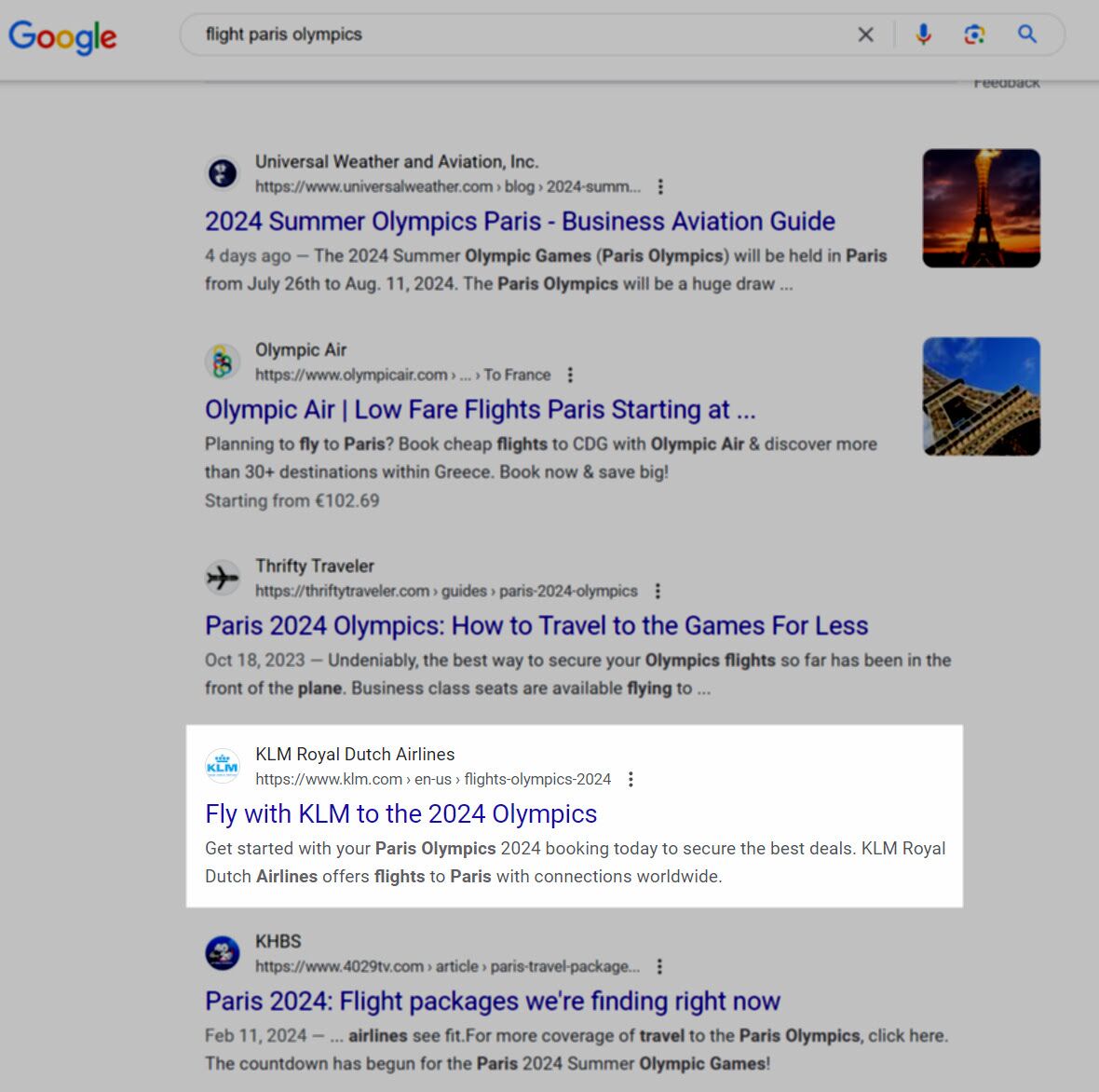
As Kevin pointed out in his newsletter, only KLM bothered to seize the moment to rank for “flight paris Olympics”:
The easiest way to find trending topics or events is yourself. If you’re based in the area, you should be aware of most of the events that are happening. Alternatively, you can use Google Trends or enter your location (e.g., “London”) into Keywords Explorer. Then, click on the Growth column to sort by the most growth in search volume.
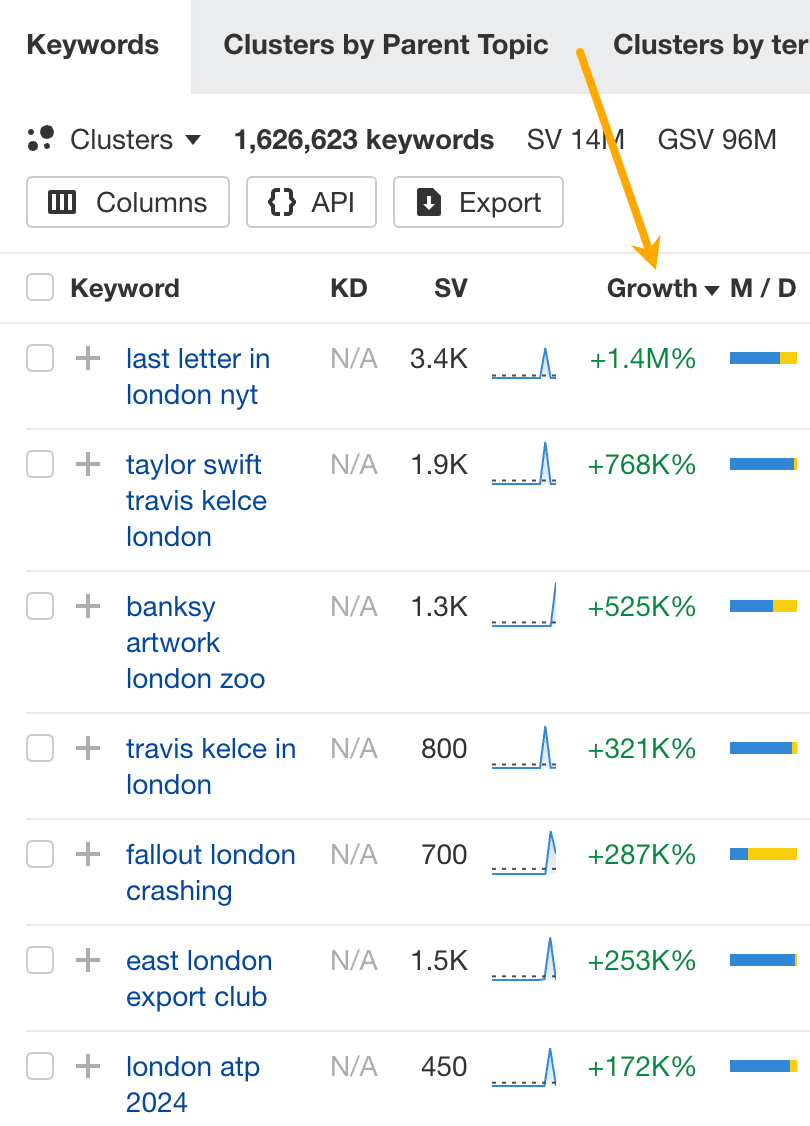
You can see why so many travel websites are targeting Taylor Swift (and don’t forget her boyfriend, Travis Kelce too!). There’s also interest in flying to Austin, Texas from London:

Topic clusters, or content hubs, are interlinked collections of content about a similar topic.

For example, our beginner’s guide to SEO is a content hub that links to the major aspects of SEO.
In the travel industry, you can make content hubs based on a potential traveler’s journey. Nina explains:
Start from “what would my audience need to know to plan a trip to this specific location based on their specific travel style?” Map out at least 10 posts in a topic cluster that helps someone go from “hmmm where should I go this summer?” to “I’ve got a fully booked trip and a great tour I can’t wait to go on!


Then rinse and repeat with different clusters, so that the blog becomes a one-stop shop for a person’s trip planning.”
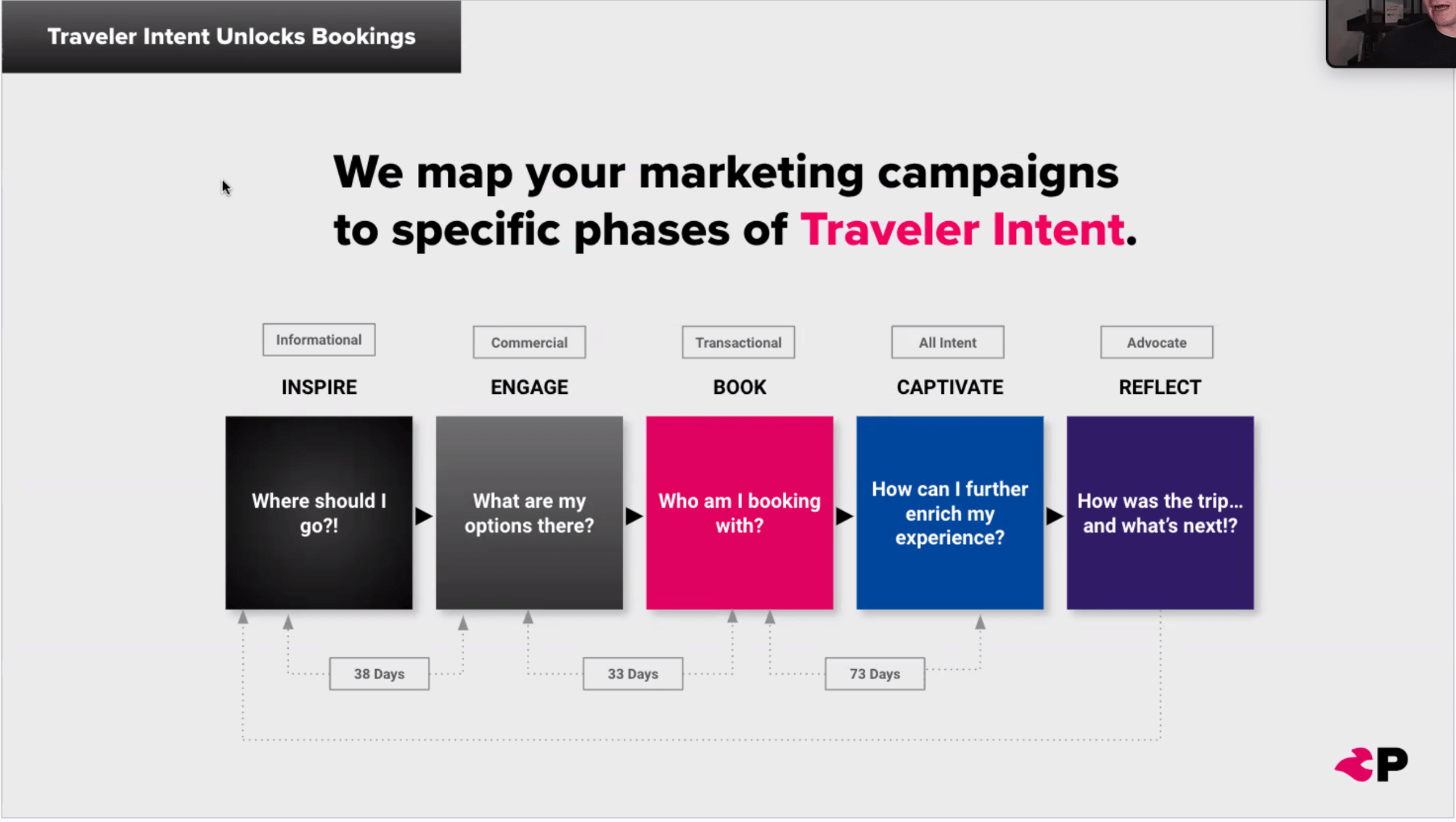
What does a typical traveler’s journey look like? Here’s a diagram from Brennen that showcases the five stages of traveler intent:
For example, for an adventurous traveler, you could recommend a destination like Uzbekistan. A content hub for Uzbekistan may look like this:
- Why you should visit Uzbekistan
- When is the best time to visit Uzbekistan
- Things to do in Uzbekistan
- Best cities to visit in Uzbekistan
- The best Uzbek dishes you should try
- Where to stay in Uzbekistan
- Best restaurants in Tashkent
- Best restaurants in Samarkand
- Silk Roads tour Uzbekistan
- Uzbekistan Kygyrszs