


A therapist spending two hours on notes after a full clinical day isn’t a productivity problem. It’s a software problem.
Finding the best mental health software gets harder as the category grows. Documentation gaps, unstable billing, and fragmented intake workflows are the most common pain points teams report when the wrong platform is in place.
Research shows mental health professionals spend an average of 20.3% of their total working hours on administrative tasks — the highest of any healthcare profession studied. The platforms built for this work exist specifically to change that ratio. In this guide, I focus on the distinct problems teams are actually trying to solve.
I built this list using G2’s Winter 2026 Grid® Report, AI-assisted G2 review pattern analysis, and cross-checking with clinicians and practice administrators who work with these systems daily. Visuals and product references are sourced from G2 vendor listings and publicly available product documentation.
This guide gives you clear direction on which platform fits which operational reality.
9 best mental health software for 2026: My top picks
- EHR Your Way: Best for customizable behavioral health EHR workflows
A flexible EHR built for behavioral health clinics needing configurable documentation, billing, and compliance workflows. (Pricing available on request) - TheraNest by Ensora Health: Best for multi-therapist practice management
A centralized platform for group therapy practices managing scheduling, billing, and intake across multiple clinicians. (Free trial available; Paid plans start at $29/month) - TherapyNotes: Best for streamlined clinical documentation and billing
A clinical management system for therapy practices seeking reliable progress notes, treatment plans, and insurance billing in one workflow. (Free trial available; Paid plans start at $69/month) - Oliva Health: Best for employer-sponsored mental health care programs
A workplace mental health platform combining therapy access, coaching, and wellbeing insights for HR-driven employee benefit programs. (Pricing available on request) - Therap Services: Best for large behavioral and developmental care providers
A compliance-focused platform for organizations supporting individuals with developmental disabilities or long-term behavioral care needs. (Pricing available on request) - SimplePractice: Best for independent therapists and solo practice management
An all-in-one practice management tool for solo and small-group therapists managing scheduling, notes, billing, and telehealth in one place. (Free trial available; Paid plans start at $49/month - Eleos Health: Best for AI-powered session insights and clinical supervision
An AI-assisted documentation platform that captures clinical conversations and generates structured notes to reduce clinician administrative load. (Pricing available on request) - Personify Health: Best for corporate wellness and population health engagement
A digital health platform helping employers manage wellness programs, health incentives, and population-level engagement across their workforce. (Pricing available on request) - Greenspace Health: Best for measurement-based care and outcomes tracking
A clinical outcomes platform helping providers collect patient assessments, track treatment progress, and integrate measurement-based care into therapy workflows. (Pricing available on request)
*These mental health software platforms are top-rated in their category based on G2’s Winter 2026 Grid® Report.
9 best mental health software I recommend
Mental health software helps providers turn scattered clinical notes, intake forms, and patient interactions into a structured care workflow that the entire care team can manage. The right platform does more than store records. It helps clinicians track patient progress, coordinate care, manage documentation, and keep treatment plans moving without administrative friction.
What separates strong platforms from weak ones is rarely a feature count. The systems that hold up in practice surface patient outcomes clearly, keep clinical documentation from becoming a bottleneck, and support therapist workflows without requiring workarounds.
G2 data shows adoption across solo therapists, growing group practices, and large behavioral health networks. Many teams implement these systems specifically to reduce administrative overhead without sacrificing compliance or care visibility.
How did I find and evaluate the best mental health software?
I used G2’s Winter 2026 Grid® Report to shortlist the top mental health software based on real user satisfaction scores and market presence across solo practices, growing behavioral health clinics, and large healthcare organizations.
I then used AI to analyze hundreds of verified G2 reviews and extracted recurring feedback patterns around what matters most in real-world care workflows. This included clinical documentation quality, ease of scheduling and intake management, billing reliability, outcomes tracking, telehealth capabilities, and how well platforms support therapist and administrative collaboration. This helped identify which tools genuinely streamline care delivery and which introduce operational friction as organizations scale.
I validated my findings against insights from clinicians, practice managers, and behavioral health administrators who actively work with these systems. The visuals and product references included in this article are sourced from G2 vendor listings and publicly available product documentation.
What makes the best mental health software worth it: My criteria
Digging into G2 feedback, reviewing behavioral health workflow discussions, and gathering insights from clinicians, practice administrators, and digital care teams managing therapy operations at scale, clear patterns began to emerge. These signals shaped the criteria I used to evaluate the best mental health software, focusing on how effectively platforms support clinical care delivery, reduce administrative burden, and provide visibility into patient outcomes rather than on surface-level features.
- Clinical documentation that aligns with therapy workflows: Mental health care relies heavily on structured documentation such as progress notes, treatment plans, and assessments. Strong platforms support how therapists actually document sessions rather than forcing rigid templates.
- Efficient scheduling and practice management. Behavioral health practices depend on smooth coordination between therapists, administrators, and patients. Feedback from users frequently emphasizes the importance of tools that centralize scheduling, intake forms, appointment reminders, and client management.
- Reliable billing and reimbursement workflows: Billing is one of the most operationally sensitive parts of behavioral health services. G2 reviews often highlight the need for software that connects clinical documentation with billing systems and insurance claims processing.
- Measurement-based care and outcomes tracking: User feedback consistently points to the value of platforms that allow providers to collect, track, and analyze patient outcome data across sessions. Without these capabilities, clinicians struggle to measure treatment effectiveness and adjust care plans proactively.
- Data visibility and reporting for clinical oversight: Behavioral health organizations increasingly require insight into both clinical outcomes and operational performance. Reviews frequently mention the need for reporting tools that track patient progress, clinician workloads, appointment patterns, and financial metrics. Without reliable reporting, organizations struggle to make informed operational or clinical decisions.
- Security and compliance for sensitive health data: Mental health records contain highly sensitive patient information, making strong data protection essential. User feedback consistently highlights the need for platforms that support secure data storage and compliance with healthcare privacy standards. Weak security frameworks introduce significant risk for both providers and patients.
Applying these criteria surfaced platforms that consistently support clinical documentation, streamline practice management, and improve visibility into patient outcomes across behavioral health workflows. No single platform excels across every dimension.
The most effective choice aligns with how your organization actually delivers care rather than simply the number of features offered. Below, you’ll find authentic user feedback from the mental health software category. To appear in this category, a tool must:
- Support structured clinical documentation such as therapy notes, treatment plans, and assessments.
- Provide scheduling, intake management, and patient coordination tools for behavioral health workflows.
- Enable tracking of patient outcomes or treatment progress across sessions.
- Securely store and manage sensitive behavioral health records while supporting compliant care delivery.
This data was pulled from G2 in 2026. Some reviews may have been edited for clarity.
1. EHR Your Way: Best for customizable behavioral health EHR workflows
EHR Your Way is an electronic health record platform designed specifically for behavioral health organizations. It focuses on giving clinics the ability to tailor documentation, scheduling, and reporting workflows to match real-world care delivery.
G2 review data frequently highlights its flexibility, structured documentation tools, and dependable support model. Based on analysis of user feedback on G2, the platform is commonly adopted by practices that want configurable systems. According to G2 Data, the market distribution signals also buyer confidence among outpatient practices that need operational flexibility.
Treatment plans, progress notes, and chart entries are organized in a structured way that helps clinicians document care efficiently without disrupting their workflow. Patient records are arranged so key information can be located and updated quickly, which supports smoother chart reviews before sessions. Compliance ratings sit at 97%, reflecting consistent trust in how the platform handles documentation standards and regulatory requirements.
Patient records, billing information, and sensitive documentation are managed within a secure system designed to support regulatory requirements. HIPAA compliance holds a 98% positive rating, indicating strong confidence in how the platform protects clinical and administrative data. Practices commonly centralize charts, insurance details, and compliance-related documentation within the system, allowing teams to maintain organized and secure patient records in one environment.
G2 user feedback frequently emphasizes the system’s ability to adapt to unique practice structures. Clinics can configure forms, reporting templates, and documentation structures to reflect their internal processes rather than adopting a standardized workflow imposed by the software. What I found consistently across the EHR Your Way reviews is that this configurability is what keeps behavioral health clinics on the platform long term. Teams rarely outgrow a system they were able to shape around their own workflows from the start.
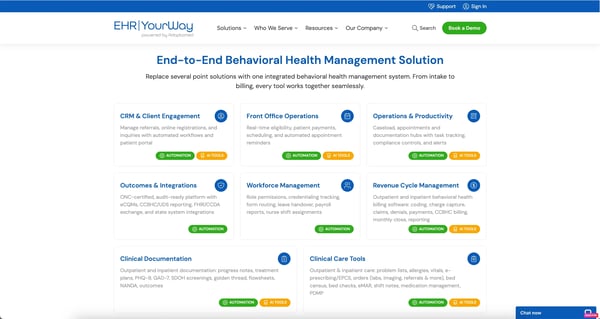
Operational tools are integrated into the platform, helping teams coordinate scheduling, billing, and client communication from a central interface. Practices commonly use the system to manage appointments, track payments, and send automated reminders to clients. These capabilities help reduce administrative coordination and keep clinicians informed about upcoming sessions and documentation requirements.
G2 review feedback describes the interface as straightforward once familiar, with tabs and record structures designed for quick access to charts, forms, and session documentation. This is reflected in 97% satisfaction ratings for documentation and compliance features.
Reporting tools help organizations track clinician activity, billing data, and documentation compliance. For group practices expanding their teams, this visibility supports operational planning without requiring separate reporting systems.
According to G2 reviewers, the platform does not currently support the ability to hide or collapse features that fall outside a clinic’s core workflows. For practices that rely on the platform’s full configuration depth, however, the breadth of available features supports more complex documentation and billing structures without requiring workarounds.
Client-facing communication through the portal has some rough edges. G2 reviewers mention that portal emails occasionally land in spam and that clients sometimes struggle with the login process, placing extra follow-up work on administrative staff. Teams that keep most communication internal find the core scheduling and documentation tools well-structured and easy to manage day to day.
EHR Your Way stands out as a flexible behavioral health EHR built for practices that want greater control over documentation and operational workflows. Its strong focus on customization and structured clinical records makes it particularly well-suited for mental health organizations managing complex care processes.
What I like about EHR Your Way:
- It allows practices to customize workflows, forms, and documentation structures so the system aligns with how behavioral health teams actually operate.
- It keeps scheduling, charting, billing, and client records organized in one place, making it easier for clinicians to access patient information quickly and manage day-to-day operations efficiently.
What G2 users like about EHR Your Way:
“I appreciate how easy EHR was to learn and to use. I do all my patient scheduling, and EHR makes it easy and simple to book appointments and modify them if needed.”
– EHR Your Way review, Carly D.
What I dislike about EHR Your Way:
- Unused features can’t be hidden, which makes the interface feel busier than it needs to be for clinicians focused on a narrow set of daily tasks, though the feature depth pays off for practices running complex workflows.
- Portal emails sometimes miss clients’ inboxes entirely, creating extra follow-up work for admin teams. The core scheduling and notes side of the platform stays clean and dependable regardless.
What G2 users dislike about EHR Your Way:
“As with all EHRs, there are limitations – though I will say that the team is always seeking opportunities to further develop and improve systems and functions – and they also solicit feedback from users to better understand customer needs, etc. Clients have reported varied feedback about the client portal, but it is difficult to determine if that is user error, access issues (such as inconsistent internet access), or truly feedback that belongs with the EHR itself.”
– EHR Your Way review, Kate T.
2. TheraNest by Ensora Health: Best for multi-therapist practice management
TheraNest by Ensora Health serves as a centralized management platform for behavioral health practices, helping therapists and clinics organize day-to-day operations. G2 review analysis indicates the platform is widely adopted by smaller counseling clinics and private practices, highlighting its strong traction among independent and multi-therapist setups.
Mental health platforms often require strict safeguards for sensitive patient information, and TheraNest addresses this requirement effectively. G2 review data highlights strong confidence in the platform’s HIPAA compliance capabilities, rated at 92% on G2. This framework enables practices to maintain secure electronic records while meeting regulatory standards. For therapy clinics managing confidential client histories, compliance support becomes a foundational operational requirement.
Maintaining organized client records is central to mental health care, and the platform’s record-keeping tools are frequently highlighted in reviews. Patient records received a 91% rating, with users consistently mentioning the ease of storing treatment plans, session histories, and client information in one centralized system. This helps support continuity of care, reduces the need to manage information across multiple tools, and makes collaboration and case management easier for multi-clinician practices.
What I found across TheraNest reviews is that the visual layout is what helps multi-user practices adopt the platform quickly. Reviewers consistently describe being able to find what they need without training, which matters when multiple clinicians are using the same system daily.
G2 reviews frequently mention customizable note templates, treatment planning tools, and structured clinical documentation features as standout capabilities. These help standardize case notes while keeping the documentation process efficient for clinicians, with documentation rated at 90% on G2. In mental health practices where documentation compliance is essential, structured workflows can significantly reduce administrative friction.
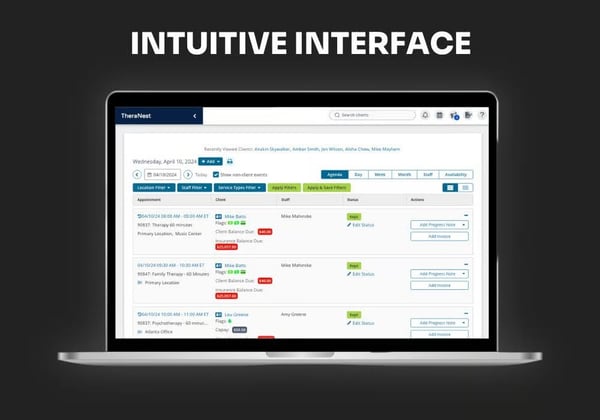
Appointment calendars, intake forms, and session reminders sit in a single workflow. G2 reviews consistently describe this as reducing the need for separate tools, with centralized scheduling improving visibility across clinician calendars in multi-therapist practices.
The client portal lets clients complete intake forms, view appointments, and make payments directly, reducing back-and-forth with administrative staff and keeping therapist-client interactions within a secure environment.
The platform also includes integrated telehealth functionality, enabling clinicians to conduct secure video sessions directly within the system. This supports both in-person and virtual care models while helping therapists maintain continuity of care for remote clients. For practices offering hybrid or online therapy services, having telehealth built into the platform can simplify session delivery and overall workflow management.
Some G2 users note that documentation workflows sometimes require manual confirmation when saving notes or treatment plans. Practices managing long or high-volume session notes may notice the extra step during documentation. However, the confirmation process adds reassurance that information is securely saved, supporting accuracy and record integrity.
The platform does not offer deep interoperability with external systems or advanced insurance management beyond core internal workflows, as G2 reviewers point out. Larger organizations running integrations across multiple external platforms or managing complex payer relationships may notice this gap more than others. Private practices handling billing and operations internally tend to find the feature set reliable and well-matched to their day-to-day needs.
TheraNest by Ensora Health offers a centralized platform tailored to the needs of behavioral health practices. With strengths in HIPAA compliance and structured clinical documentation, it aligns well with multi-therapist clinics seeking organized and secure practice management within the mental health software space.
What I like about TheraNest by Ensora Health:
- It brings core practice operations, client records, notes, and administrative tasks into one centralized system, helping therapy practices manage clinical and operational workflows without relying on multiple tools.
- The platform emphasizes structured documentation and secure record management, making it easier for behavioral health providers to maintain organized clinical notes while meeting compliance expectations.
What G2 users like about TheraNest by Ensora Health:
“I find Ensora Mental Health (formerly TheraNest) exceptionally valuable for writing my case management notes due to its high level of professionalism in design and functionality. The software is easy to navigate, making the completion of tasks more straightforward and efficient. I appreciate the intuitive nature of the system, which is very understandable and simplifies my workflow. The initial setup was very easy and simplified, which further enhanced my positive experience. Furthermore, I highly recommend this software; in my opinion, it stands out as the best, and I would suggest it to anyone without hesitation. The thoughtful design ensures that everything functions harmoniously, reflecting a well-built and professionally done product.”
– TheraNest by Ensora Health review, Clarence S.
What I dislike about TheraNest by Ensora Health:
- Some users note that documentation sometimes requires manual confirmation to ensure notes are fully saved; while this adds an extra step, it can suit practices that prefer more deliberate control when finalizing clinical records.
- External integrations and insurance management don’t extend beyond the platform’s internal workflows, which limits support for complex payer connections. Straightforward private practices find the built-in billing tools more than sufficient for daily operations.
What G2 users dislike about TheraNest by Ensora Health:
“It won’t let you delete some previous versions of the intake paperwork if it’s been sent to someone. Which can lead to us sometimes sending the old intake paperwork since it will not let us delete it from the platform.”
– TheraNest by Ensora Health review, Emily H.
3. TherapyNotes: Best for streamlined clinical documentation and billing
TherapyNotes brings scheduling, documentation, billing, and client management into one system. It is commonly used by independent therapists and group practices that want clinical and administrative workflows in a single environment, with a design that prioritizes clarity over complexity.
TherapyNotes is straightforward to learn and easy to navigate. Clinicians transitioning from paper records or other systems are able to adopt the platform without extensive training. Core actions such as scheduling appointments, entering notes, and accessing client information follow a logical structure that aligns with how therapy sessions are typically managed, with documentation sitting at 95% on G2. What I noticed across TherapyNotes reviews is that two things come up together almost every time: how easy the system is to navigate and how responsive the support team is. The combination is what makes the platform feel dependable rather than just functional.
Support representatives are described as knowledgeable and responsive, often providing detailed explanations and follow-up guidance after resolving issues. Support is available through multiple channels, including phone and email, which helps clinicians troubleshoot operational questions quickly. Patient records hold at 96% on G2, reflecting how consistently the platform keeps clinical information organized and accessible across care teams.
TherapyNotes keeps patient information organized in a single system, with 89% patient portal ratings. Client records, clinical notes, forms, and scheduling data are connected in one place, making it easier for clinicians and administrative staff to locate relevant information quickly. This centralized structure can support collaborative environments where multiple clinicians or care coordinators need access to patient history.
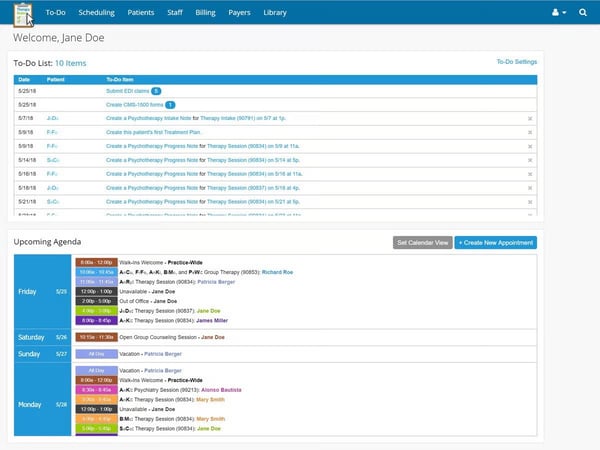
TherapyNotes includes reporting capabilities that allow practices to review operational data across providers, payers, and financial activity. G2 reviewers highlight the ability to generate reports that support revenue tracking, billing oversight, and administrative decision-making. These insights help practice owners better understand performance trends and operational efficiency. While the reporting tools focus on practical operational metrics, they provide useful visibility into the business side of a therapy practice.
Many reviewers describe TherapyNotes as a platform that supports nearly every aspect of running a therapy practice. Scheduling, documentation, forms, telehealth, and financial workflows are accessible within the same environment. This consolidation helps reduce the need for multiple tools while allowing clinicians to manage both patient care and administrative tasks from a single dashboard. For practices balancing clinical work with operational responsibilities, this breadth of functionality can simplify daily practice management.
Regular updates based on clinician feedback, supported by tutorials and release notes, signal a product that continues to evolve alongside how therapy practices actually operate.
The platform generates structured reports but does not support deep in-platform data manipulation or advanced analytics, a gap that surfaces in feedback from G2 users who need more than export-ready summaries. Teams focused on straightforward billing oversight and revenue tracking find the built-in reporting practical and easy to incorporate into day-to-day operations.
The platform does not offer a rollback option or a freeze period when new feature releases alter existing workflow steps, which users on G2 have flagged when familiar processes shift between updates. The steady release cadence does signal active product development, which practices that want a platform evolving alongside their needs tend to view as a net positive.
TherapyNotes remains a strong fit for independent therapists and small behavioral health practices that want to simplify documentation and billing workflows. Its structured approach to patient records and operational management aligns well with the day-to-day needs of therapy providers. The platform reinforces its position as a dependable system for clinicians seeking streamlined, secure practice management.
What I like about TherapyNotes:
- It keeps scheduling, clinical notes, billing, and client records organized in one place, making it easier for clinicians to manage both care delivery and administrative tasks without switching between multiple tools.
- Customer support stands out as highly responsive and knowledgeable, with many users highlighting helpful walkthroughs and follow-up guidance that make day-to-day use smoother.
What G2 users like about TherapyNotes:
“ I really find TherapyNotes valuable because of its record-keeping capability and simple case notes feature. Additionally, its connection to claims processing is critical for our clinic’s workflow, particularly for our 30 therapists and 7 staff. I also appreciated that the initial setup was easy.”
– TherapyNotes review, Phil S.
What I dislike about TherapyNotes:
- Reporting may require exporting data for deeper analysis, which can feel limiting for teams wanting advanced in-platform analytics, though it works well for smaller therapy practices reviewing reports externally.
- Regular feature updates can require small workflow adjustments, but many users view this as a sign of active development that benefits practices seeking continuous improvements.
What G2 users dislike about TherapyNotes:
“My only complaints are: need for secondary billing to save time, need for ROI integrated in the system to save time, option for admins to add and remove clients for providers, and option for admins to be able to download and send records as needed! All of this would save me (as the owner) so much time!”
– TherapyNotes review, Melissa P.
4. Oliva Health: Best for employer-sponsored mental health care programs
Oliva Health is a more workplace-focused platform for employer-sponsored therapy, coaching, and wellbeing programs. G2 reviews highlight easy scheduling, guided therapist matching, and secure care provider interactions as its defining strengths for organizations integrating mental health into employee benefits.
G2 review data consistently highlights how easy it is for users to schedule, adjust, or manage sessions. The appointment scheduler, rated 96%, supports quick booking and smooth calendar coordination, helping users align therapy sessions with busy work schedules. This streamlined workflow lowers one of the most common barriers to mental health support: finding time for care. As a result, scheduling becomes a routine step rather than an obstacle.
The platform’s patient portal, rated 94%, provides a centralized space for managing therapy sessions, surveys, and progress tracking. G2 reviews frequently describe the interface as intuitive and structured in a way that makes mental health support easier to navigate. Periodic questionnaires and check-ins help users reflect on well-being trends over time. This design encourages consistent engagement. What I noticed across Oliva Health reviews is that the matching process is the feature users mention first, not just the scheduling tools or the interface. Reviewers describe being connected with someone who felt right for their specific situation, which is a different outcome from browsing a directory and hoping for the best.
Oliva Health emphasizes structured therapist and coach matching during onboarding. Based on user inputs about goals and challenges, the platform connects individuals with professionals aligned to their needs. G2 reviews often indicate that this approach helps shorten the time required to establish a productive therapeutic relationship. By guiding the selection process, the platform removes the uncertainty that can come with browsing large provider directories.
Mental health platforms rely heavily on confidentiality, especially when delivered through employer benefits. Oliva Health’s security and authorization capabilities, rated 94%, highlight the platform’s emphasis on protecting sensitive conversations. G2 review feedback suggests users value having a dedicated and secure space to discuss personal or professional concerns. Strong privacy practices help build trust in workplace-sponsored wellbeing services.
Oliva Health extends beyond therapy sessions by offering coaching and self-guided resources alongside one-on-one support. This layered model helps individuals address a broader range of needs and keeps engagement active between scheduled sessions.
Because Oliva Health is commonly delivered as a workplace benefit, it introduces mental health support to employees who may not otherwise pursue therapy. The availability of sessions through work reduces financial and logistical barriers. Employees can access professional guidance for both personal well-being and work-related challenges. This positioning helps normalize mental health support within organizational wellbeing strategies.
Oliva Health does not offer unlimited therapy sessions; the number of sessions available is capped by the terms of the employer-sponsored plan, something employees seeking long-term or open-ended support have flagged in G2 reviews. The structure does allow organizations to extend mental health access to a broader workforce without the cost unpredictability of open-ended plans.
The platform does not provide a browsable provider directory, matching users to therapists based on onboarding inputs instead, which some users have noted on G2 when they wanted more control over their selection. The guided matching process does, however, reduce the time and friction involved in getting started with a relevant professional.
Oliva Health presents a focused approach to employer-sponsored mental health support, combining guided therapist matching with accessible session management. The platform aligns well with organizations looking to integrate structured wellbeing programs into their employee benefits. Its emphasis on usability and streamlined access helps make mental health support more approachable within modern workplace environments.
What I like about Oliva Health:
- It makes it easy to book and manage therapy or coaching sessions, with scheduling that fits around work hours and allows users to quickly arrange, reschedule, or track appointments.
- It connects users with therapists and coaches based on their needs, helping create more relevant and supportive sessions without requiring them to search through large provider directories.
What G2 users like about Oliva Health:
“It was easy to get matched and set up an appointment. The forms and surveys were very detailed, which helped make the process feel thorough.”
– Oliva Health review, Ihsan T.
What I dislike about Oliva Health:
- Session count is capped by the employer plan, which employees seeking ongoing or long-term therapy tend to hit quickly, though the structure keeps mental health access available to a wider workforce without open-ended cost.
- No browsable therapist directory means users can’t self-select their provider, which feels restrictive for those who prefer doing their own research; the guided matching does get most people to a relevant professional faster than browsing would.
What G2 users dislike about Oliva Health:
“The video chat page isn’t customizable, and the chat screen takes up too much space. (Not a big issue in general.)
– Oliva Health review, Ihsan T.
5. Therap Services: Best for large behavioral and developmental care providers
Therap Services is used widely in IDD and residential care settings for service operations, staff coordination, and regulatory reporting. Its modular structure supports organizations managing complex programs across multiple teams and locations.
The platform’s Schedule EVV functionality helps organizations track staff activity, clock-ins, and service delivery. Providers can monitor when services are delivered and ensure staff documentation aligns with scheduled care activities. For organizations managing multiple care staff across locations, this visibility helps maintain operational accountability and accurate service tracking, with insurance management sitting at 84% on G2.
Therap Services aligns closely with state and federal reporting requirements that govern behavioral and developmental care providers. Modules and reporting capabilities are updated as regulations evolve, helping organizations maintain compliance with oversight expectations. HIPAA compliance holds at 95% on G2, reflecting strong confidence in how the platform handles sensitive data across regulated care environments.
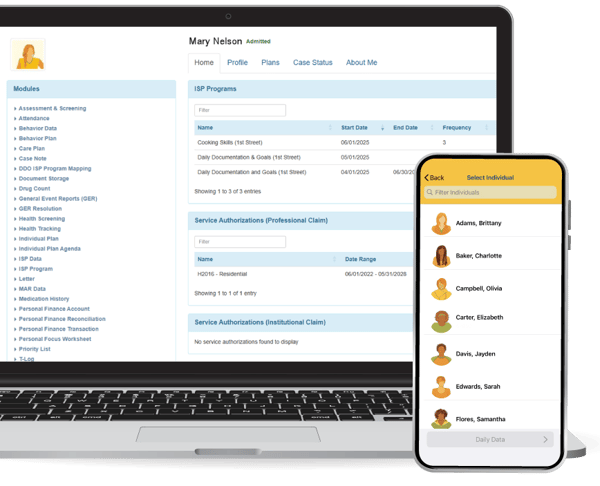
Several G2 reviews highlight the system’s ability to collect service data and monitor participant progress in real time. Staff teams can track daily activities, behavioral observations, and progress toward care goals through structured data fields. This capability supports organizations that rely on measurable outcomes when evaluating participant development or program effectiveness. As a result, care teams can reference consistent data points when reviewing service plans and making program adjustments. I saw that accessibility is the word that comes up most in the reviews. Staff describe being able to get to client information from wherever they are, which, for IDD and residential care environments where work happens across locations,s is not a minor convenience.ce
Mobile capabilities allow staff to document services and access care records while working outside traditional office environments. The usefulness of mobile documentation during community outings or home-based services comes up repeatedly across feedback. Electronic MARs and mobile documentation tools allow staff to record care activities in real time, with patient records holding at 94% on G2, above the 91% category average.
It offers extensive learning resources to support onboarding and continued platform use. Training materials include webinars, tutorials, user guides, and educational sessions that help staff understand the system’s modules and documentation workflows. Organizations onboarding large staff groups may benefit from this structured training environment. These resources also help teams remain informed as the platform evolves and additional modules become available.
G2 review feedback also points to the platform’s ability to support internal communication and coordination among staff teams. Features such as daily logs and shared documentation help teams exchange updates about individuals receiving services. In multi-staff care environments, this shared communication layer helps ensure that information about participant needs, activities, and progress remains visible across the organization.
The platform does not allow users to selectively navigate individual modules without first working through its broader structural setup, something staff new to the system have raised across G2 feedback. The depth of functionality across modules does align well with the level of documentation and oversight these environments demand.
Creating new client or provider records involves a structured, multi-step data entry process that does not support quick or minimal input, as flagged by users in G2 reviews. Teams focused on fast record creation during busy intake periods tend to notice the additional steps most. The structure does ensure documentation remains thorough and organized, which benefits providers where regulatory reporting depends on complete and consistent records.
Therap Services is well-suited for organizations delivering behavioral and developmental care at scale. Review insights highlight its ability to support operational oversight, regulatory reporting, and coordination across large service teams.
What I like about Therap Services:
- It centralizes participant records, daily progress notes, billing data, and service information, making it easier for care teams to access important details and manage services from one system.
- It supports real-time data collection and progress tracking, helping providers monitor participant outcomes and make informed decisions about care plans.
What G2 users like about Therap Services:
“ I like that Therap Services is user-friendly and everything is straigh