
SEO and the stock market — two completely different worlds. Yet when you run a correlation analysis between organic traffic and stock price on, say, Nasdaq, you suddenly get a strong positive correlation.
Here’s why that happens and what it means.
- The combined stock prices typically rose along with the total organic traffic they received. Our research showed a strong positive relationship between the market cap weighted standardized price and the total traffic of all Nasdaq stocks used in the study.
- 32% of Nasdaq companies with at least 100k annual traffic have a moderate or strong positive correlation between organic traffic and stock price.
- SEO may directly increase the stock value of companies that invest in it. Positive effects may be more likely in industries that already show a stronger SEO-stock link such as consumer products, healthcare, finance, and real estate.
- SEO is a great way to take advantage of the “entity” edge and any public relations efforts.
- Publicly traded companies don’t necessarily need specialized strategies to attract organic traffic. After analyzing about 200 of the highest-traffic sites, most were simply applying typical SEO best practices.
- Researchers say that investors can profit from the organic traffic and stock market correlation. They can also avoid losses this way.
Please note: correlation does not imply causation and past performance is not indicative of future results. This article is for informational purposes only and does not constitute investment advice.
I used Ahrefs API and Polygon’s APIs to get the stock monthly closing price, monthly market cap, and monthly traffic for each month from 2021-11-01 to 2024-10-01.
Based on monthly close price and organic traffic I calculated the Spearman correlation for each ticker listed on Nasdaq.
To calculate the percentage of positively correlated tickers and market cap weighted data, we used one ticker per company and only the tickers with 36 rows of data (full 3 years). Hence, the difference between the number of tickers on Nasdaq and the number of tickers used for research. Big thanks to our data scientist Xibeijia Guan for the idea and running the analysis!
To find out how positively correlated companies get traffic and links, I selected about 200 sites that have at least one million estimated visits per year.
The analysis revealed a strong correlation between the total traffic and the value of the Nasdaq. This was supported by both the Spearman correlation of 0.680 and the Pearson correlation of 0.727, which are both typically considered strong correlations. The correlation was also visually apparent as you can see below.

To clarify the chart, here’s a breakdown of the methodology. Weighted standardized price is calculated in three steps:
- Standardization: each ticker’s stock price is standardized on a scale of 0 to 1 to remove price scale variations between tickers, ensuring a fair comparison regardless of their original price levels.
- Weighting: the standardized prices are then weighted by their respective monthly market cap.
- Summation: the weighted standardized prices are summed to produce the final value.
However, this doesn’t imply that all Nasdaq listed companies have a positive correlation. The overall positive correlation of the stock market is influenced by the impact of websites with higher traffic. When examined more closely, the ratio of negative to positive correlations is almost equal — see the chart below.

Because publicly listed companies have access to many channels besides organic traffic, I expected to see many negative correlations. So, to me, the most interesting finding was that 32% of companies showed a moderate to strong correlation, which is a substantial correlation easily seen in examples like Makemytrip.
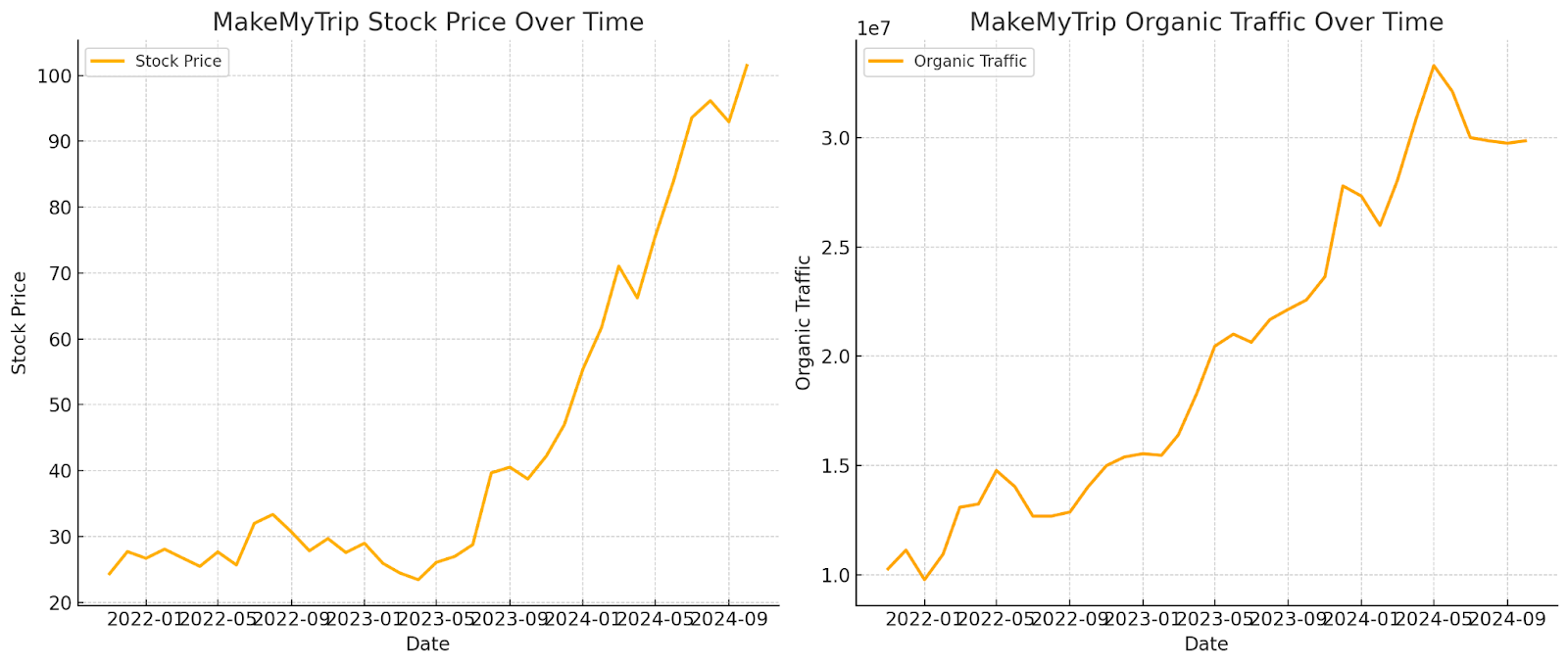
It’s not solely their SEO strategies at work here. Many companies benefit from existing demand that originates elsewhere: PR, offline advertising or word, mouth, etc.
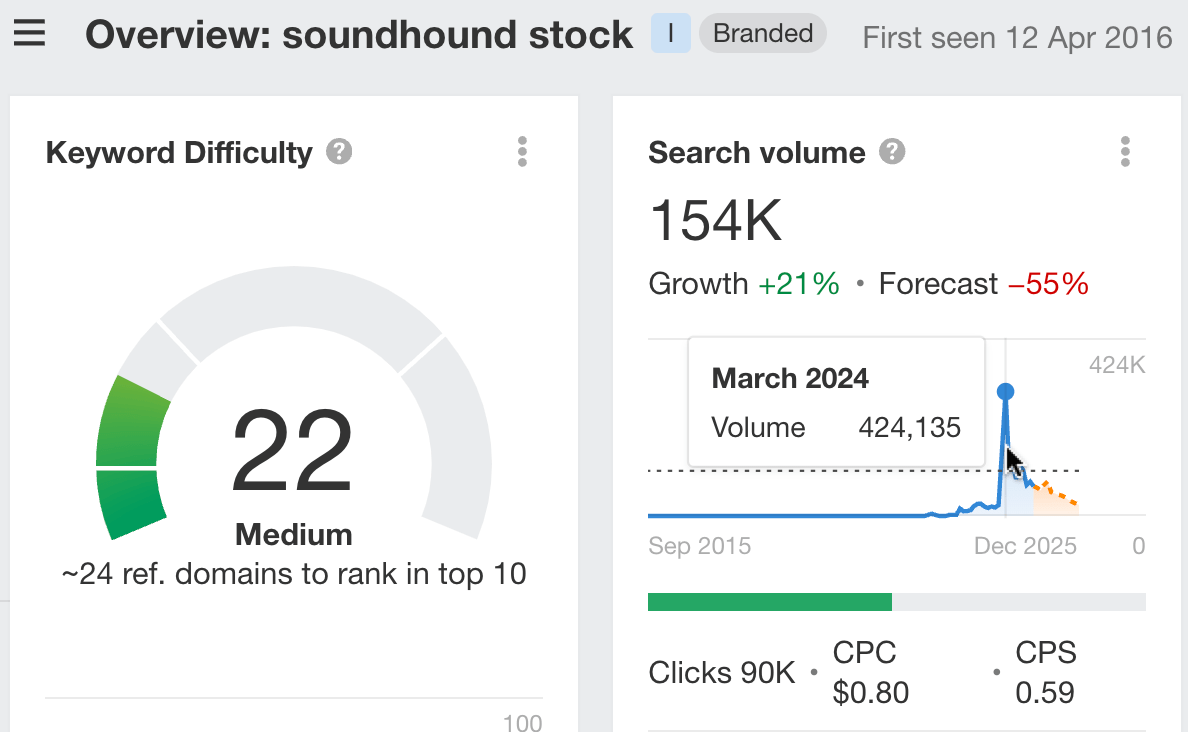
To illustrate, here’s how interest in Soundhound’s stock (likely caused by Nvidia’s investment and partnership) impacted search volumes and organic traffic to their site simultaneously — there is likely no SEO magic there.
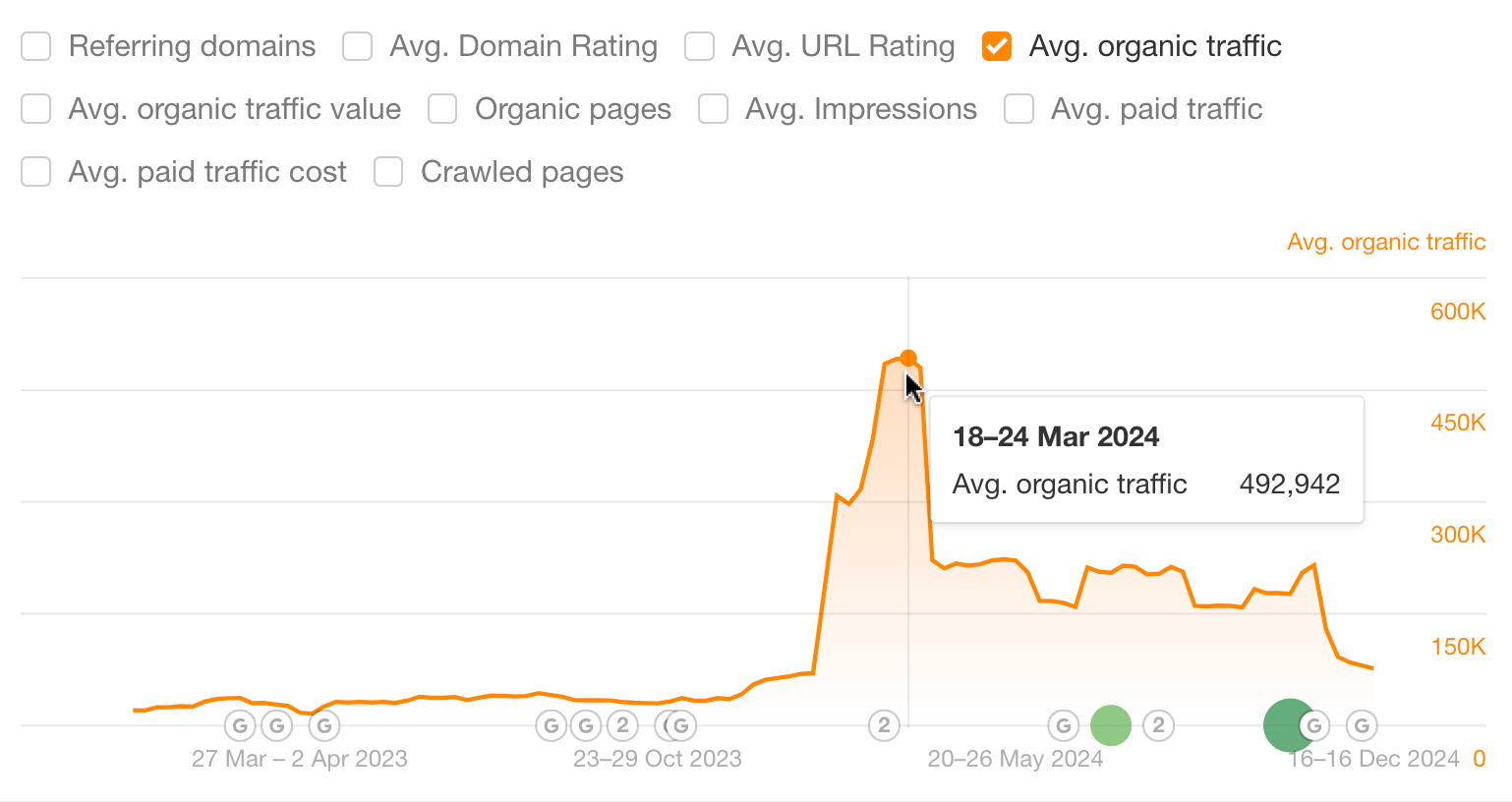
However, for high-traffic sites that consistently invest in SEO (e.g. Makemytrip, Airbnb, Wix) the connection between organic traffic and stock value becomes stronger. Companies like that typically have a higher non-branded-to-branded traffic ratio, just like the one below.
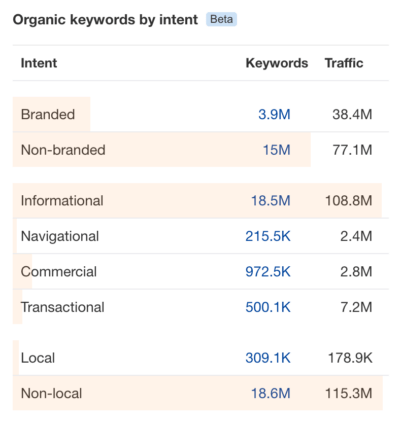
In these cases, SEO can have both a direct and indirect impact on stock value. The direct impact comes from attracting customers and increasing revenue, while the indirect impact is from increased brand awareness. Over time, this heightened brand awareness results in more branded search queries and improved search result rankings.
Market sectors from positively correlated companies may show a greater propensity to boost market valuation through SEO. Here are the sectors of the companies with the highest traffic with their percentage distribution in the dataset.
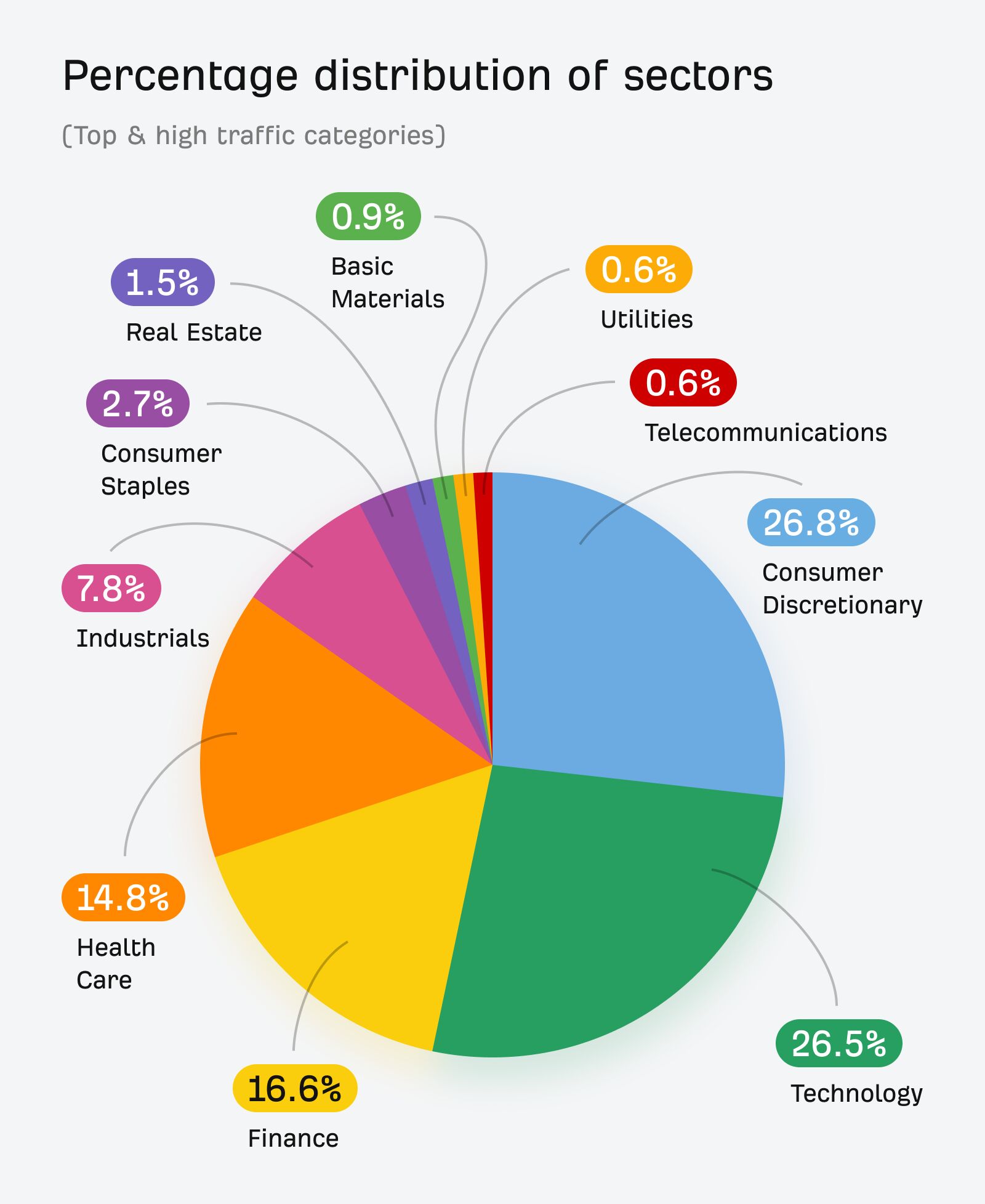
If you’ve been around the SEO block a few times, this list probably doesn’t shock you.
Many of these sectors share a common thread: customers frequently begin their purchase or research journey through Google. Whether it’s finding a mortgage lender, shopping for consumer products, or searching for medical information, high-intent searches can directly impact revenue.
That said, not all industries will see a significant SEO-stock price connection.
For businesses in deeply B2B niches or highly regulated sectors — where contracts are negotiated offline or through long lead cycles — organic traffic may be less predictive of market movements. The same goes for companies where everyone already knows their brand or they’ve got strong offline connections (like those making super specialized stuff).
Many public companies seem to enjoy what I call the entity SEO edge. My theory is that publicly traded companies often have a natural head start in Google’s search results, thanks to the extensive online footprint that accompanies their “entity” status — mentions in financial news, investor portals, press releases, and other authoritative sources.
This visibility amplifies their overall domain authority, causing Google to more easily associate them with certain topics or services. That’s what gives them an edge over less-established brands when it comes to SEO.
For instance, Kelly ranks for “temp services near me” without ever using that exact phrase, and Robinhood ranks for “buy stocks” even though that phrase isn’t anywhere on the homepage.
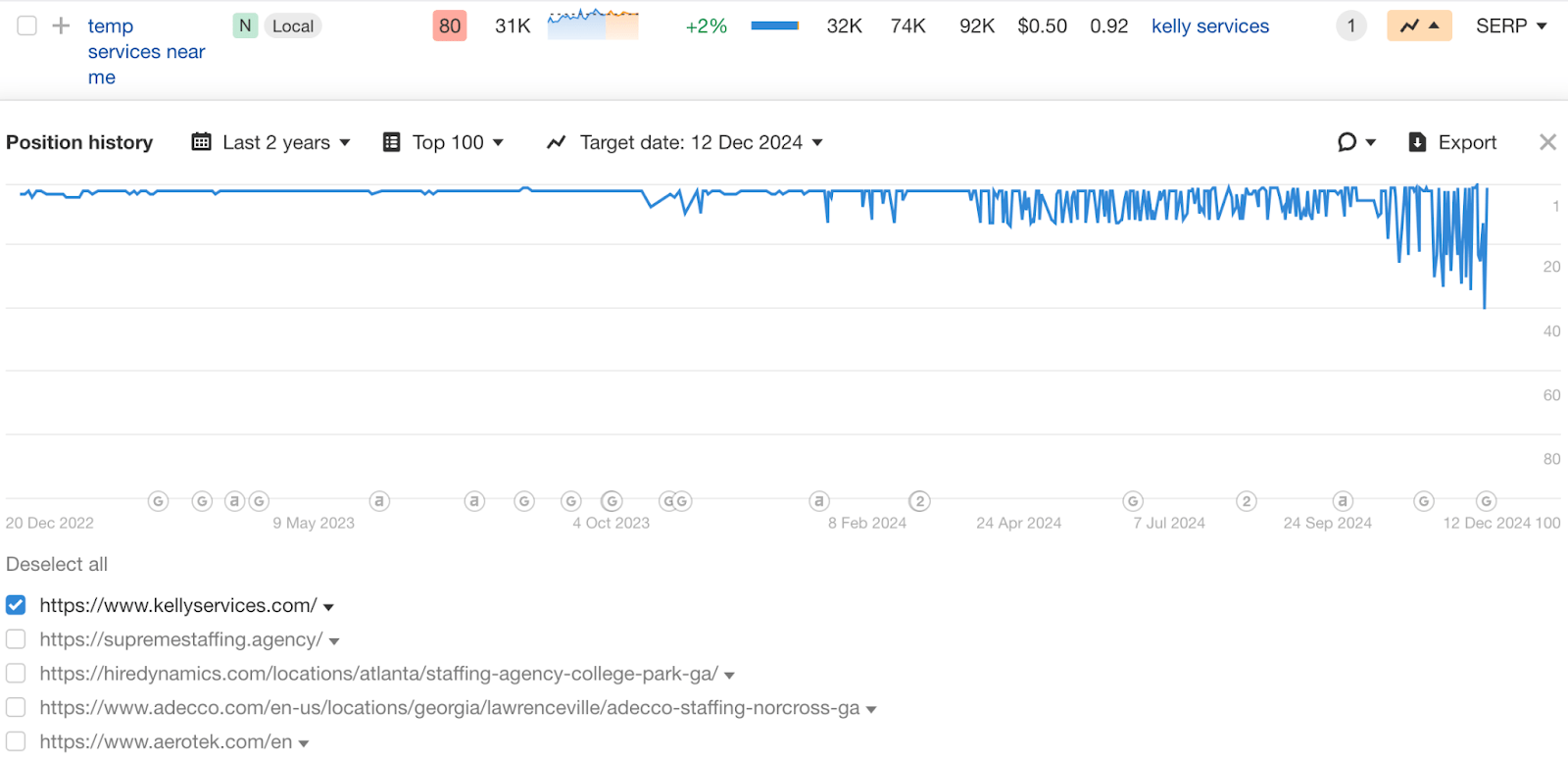
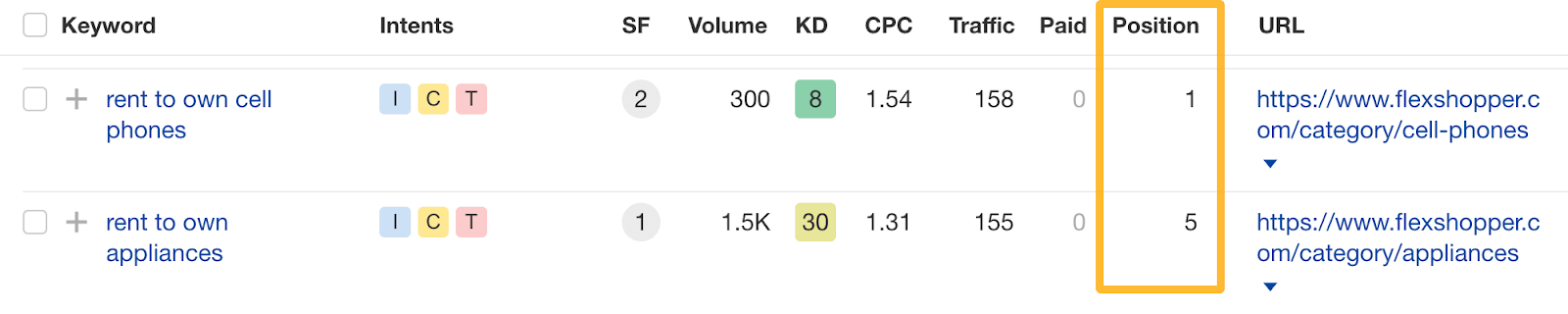
Flexshopper has the same advantage. They rank for “rent to own,” even though those exact words don’t appear on their landing pages.
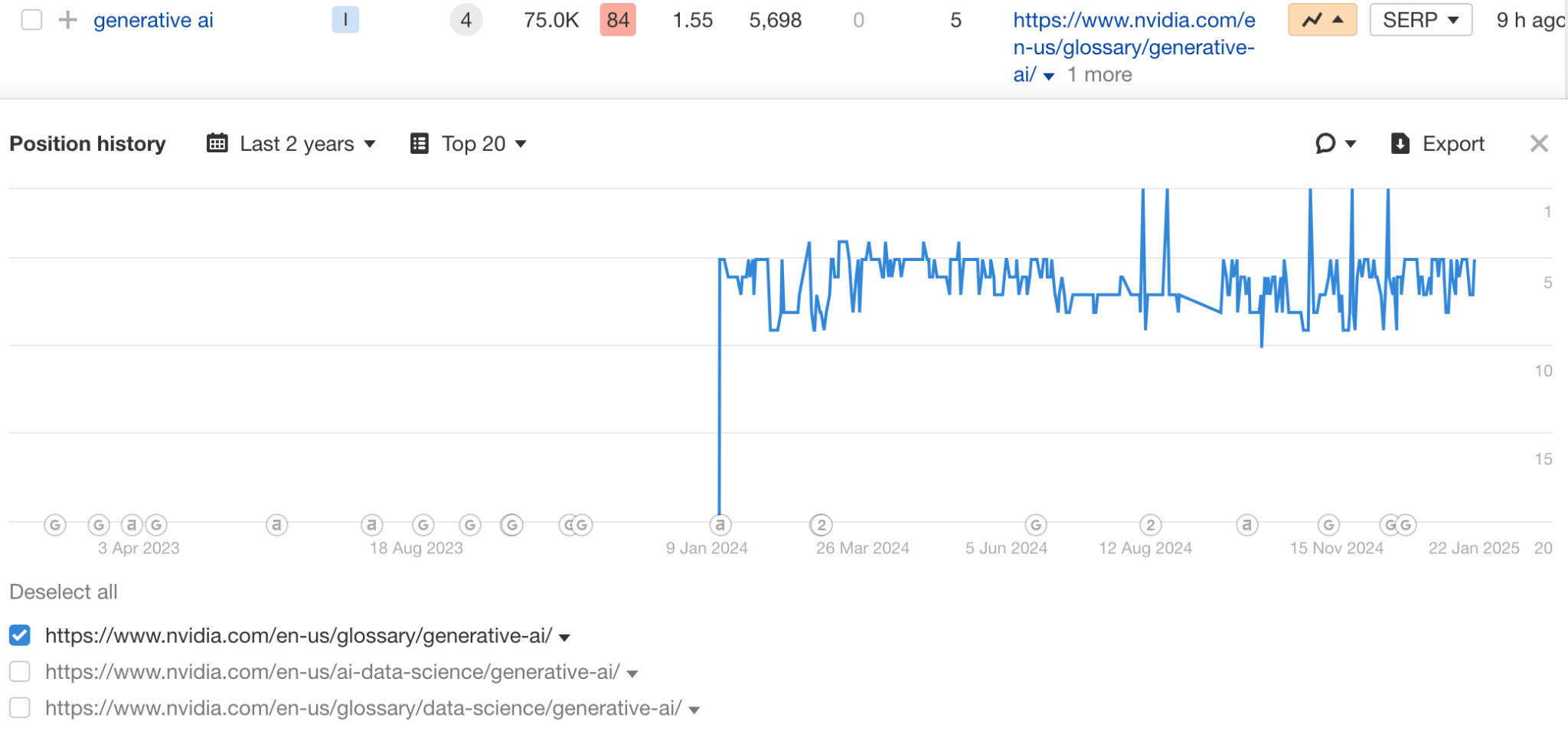
Nvidia ranks immediately and has no problems staying in the top 10 with a glossary page on generative AI.
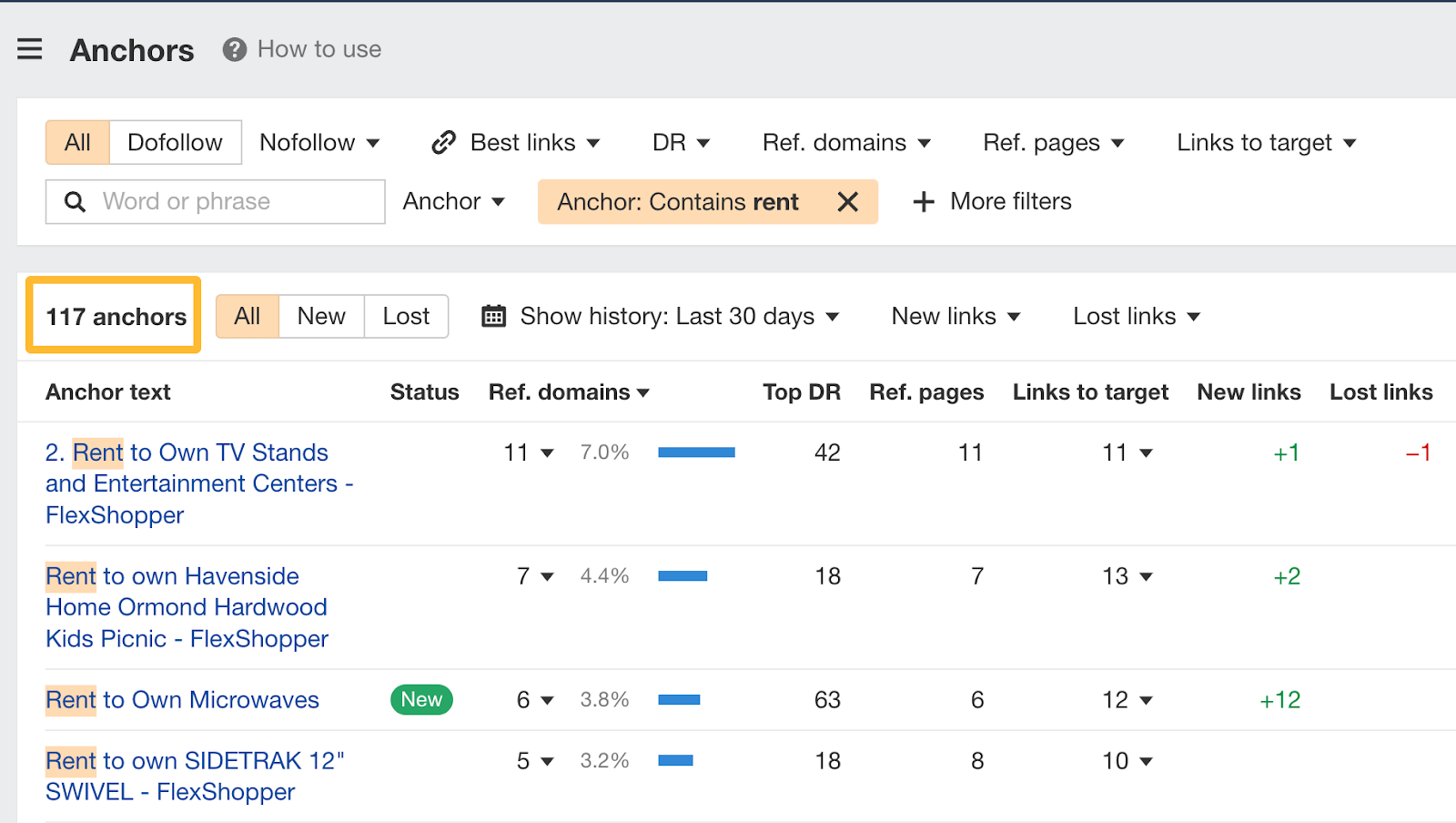
It appears that Google’s understanding of entities goes beyond keyword matching; it may look at site context, user behavior, and external references. For instance, Google may get some of its authority signals from anchor texts in the links.
This brings us to the next point.
Not using link equity generated by PR is a missed opportunity to generate more online visibility through SEO and possibly increase brand value.
It’s like being a celebrity and not endorsing any brands. Or starting your own brand.
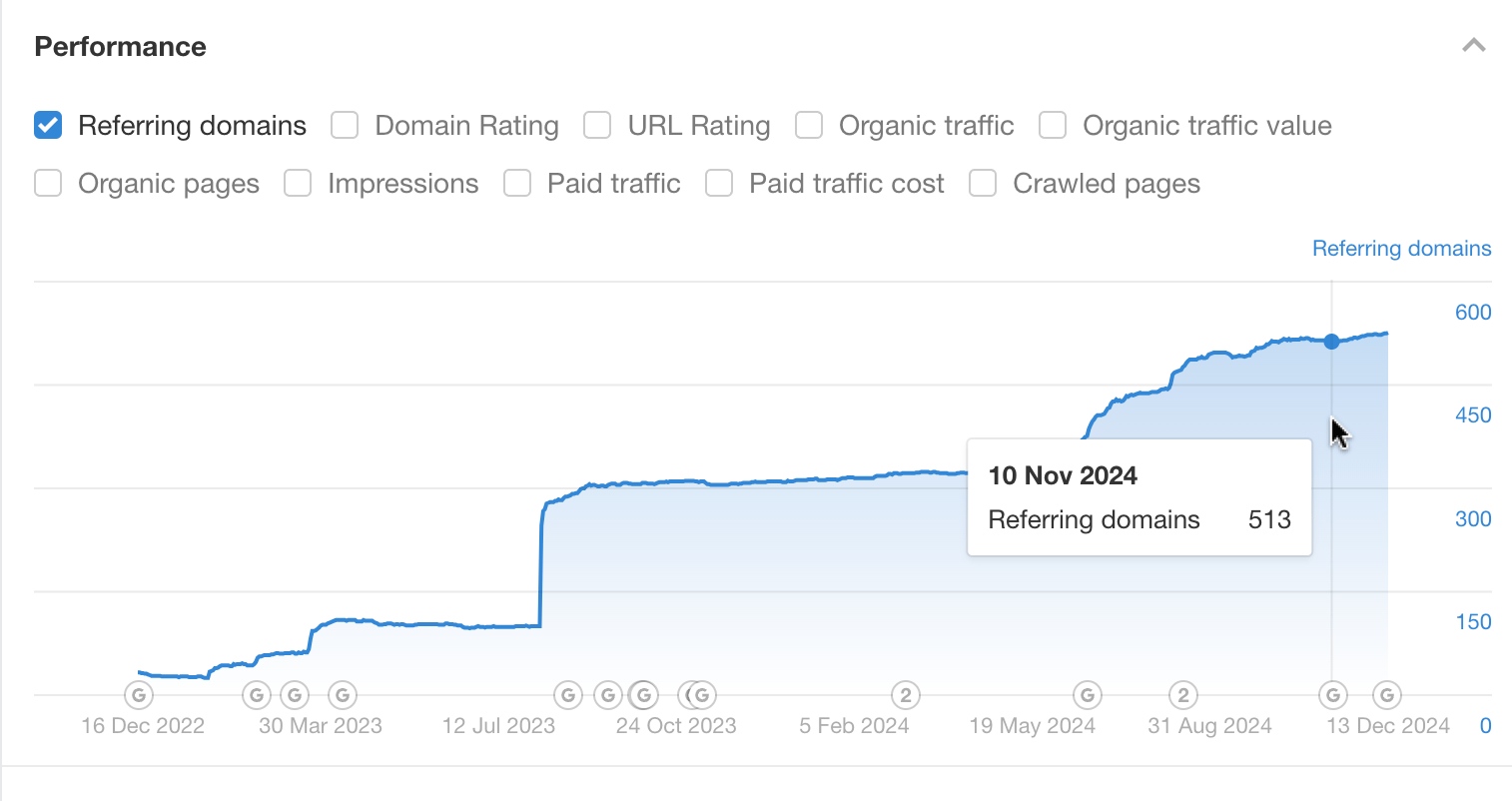
Media coverage, press releases, awards, and relationships with journalists often lead to backlinks from trusted websites. Just look at Soundhound’s newsroom referring domain growth. “Regular people” usually don’t wander there but journalists do.
Backlinks from “regular” PR can help improve search rankings and bring more visitors to the company’s site because, as we know, search engines see them as a sign of credibility.
For instance, quite a few Nasdaq companies are on the Forbes 500 list, each with a link back to the homepage.
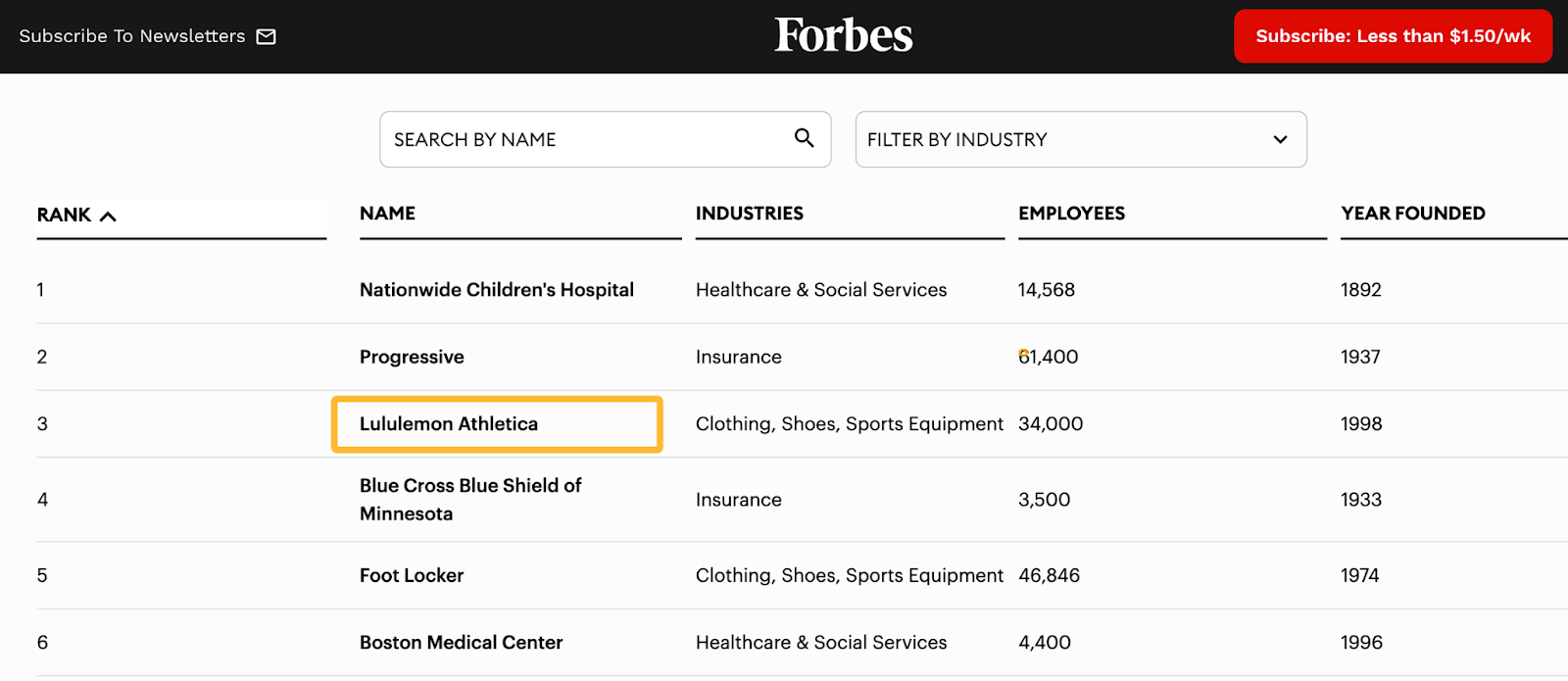
The fact alone that you’ve been included in the ranking is an opportunity to grab some more links.
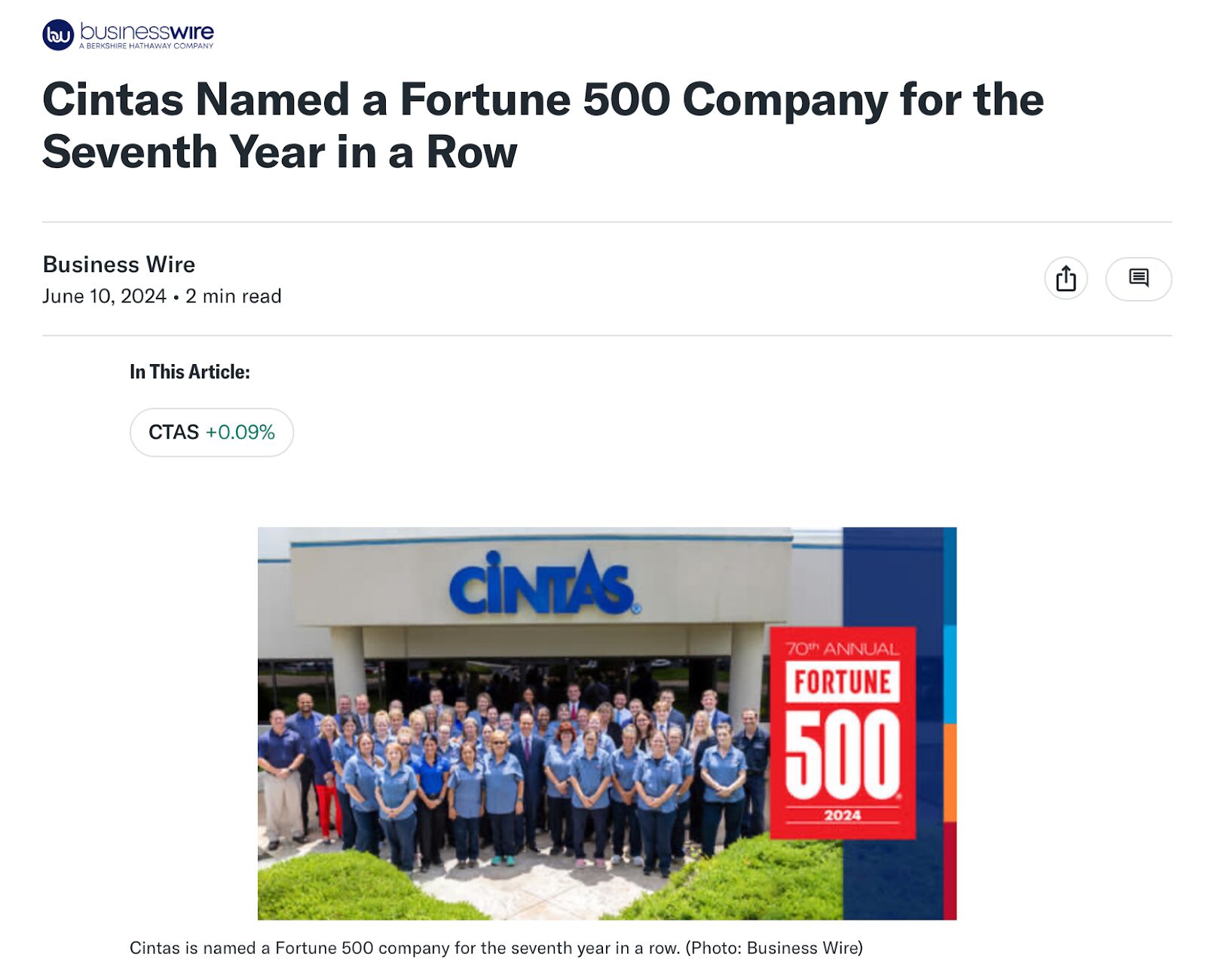
Offering quotes for journalists is a known link building tactic and it’s even more effective when you represent a well-known brand. Your established reputation increases the likelihood that journalists will choose your information over the countless other sources they consider.

In other words, SEO is a way to make online visibility work even harder.
I checked out more than 200 Nasdaq sites with at least around 1M yearly organic visits, and it turns out publicly traded companies don’t need a totally different SEO playbook.
Lots of the same tactics that smaller businesses use to drive major traffic still get the job done. Let me show you some examples.
Blogs still drive serious traffic
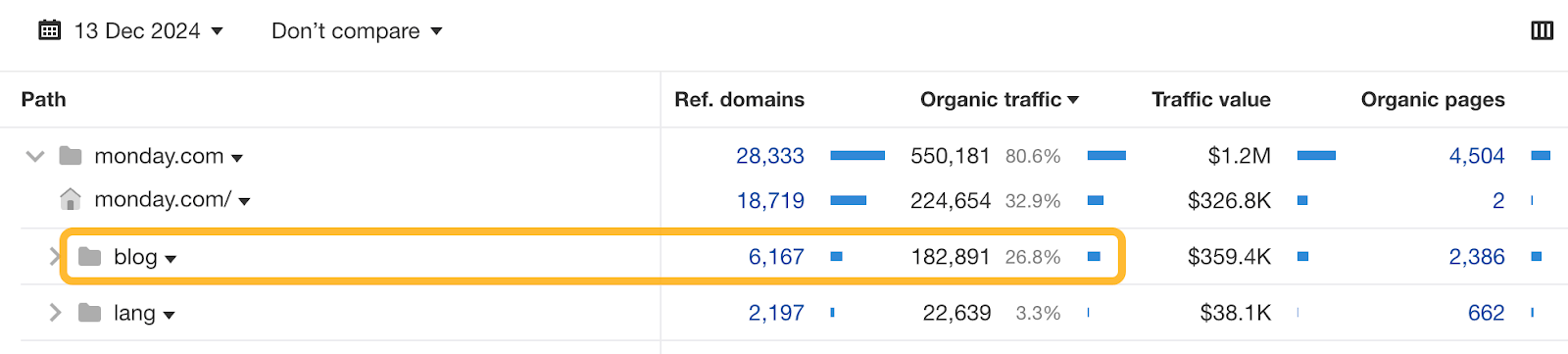
For example, Monday.com.com’s blog brings over a quarter of the entire traffic.
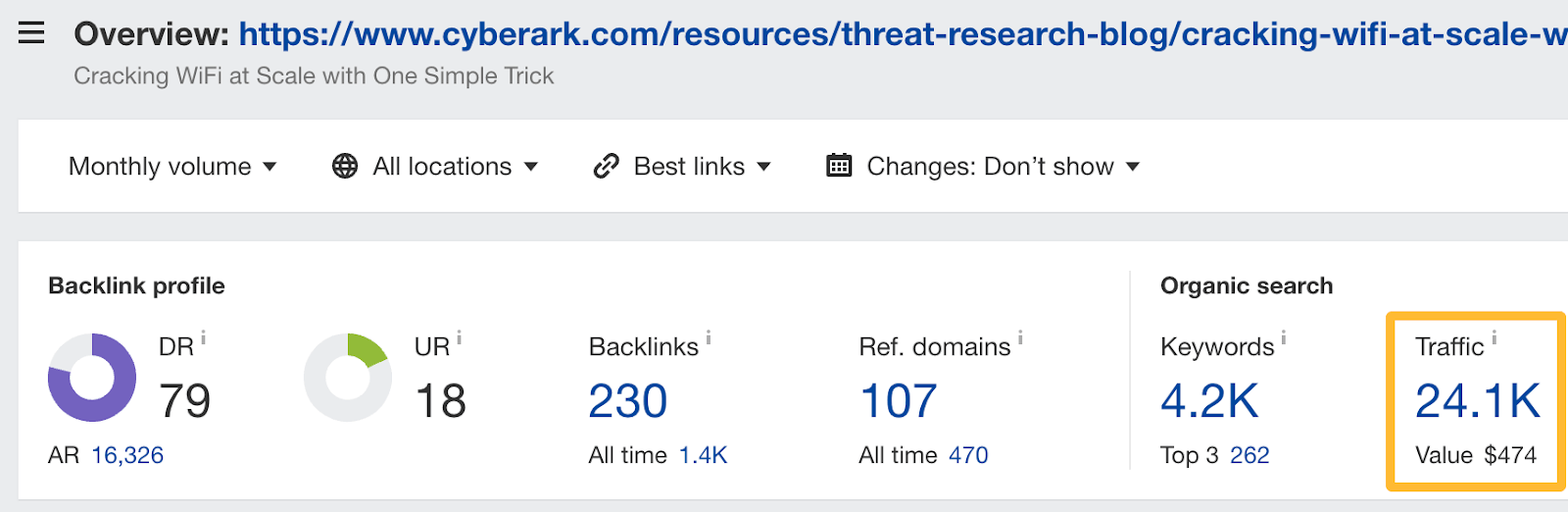
And here’s Cyberark with 24k monthly visits from a single blog post.
In general, Nasdaq companies stick to topics directly related to their core offerings, using their domain authority to outrank smaller competitors easily.
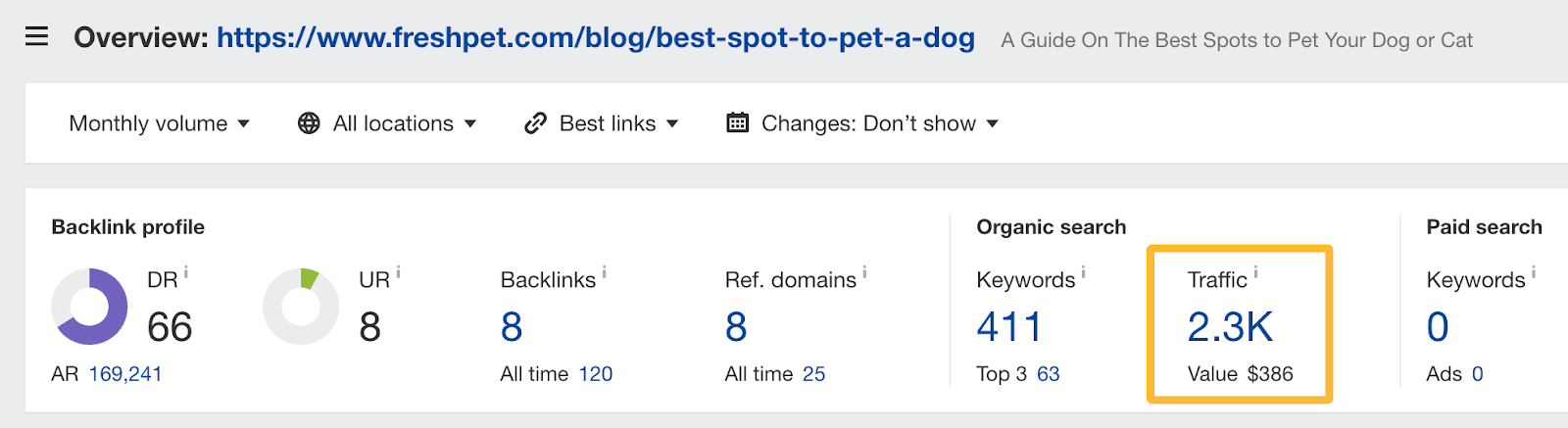
And so, Freshpet blogs about how the best spots to pet a dog or cat; 2.3K estimated monthly visits.
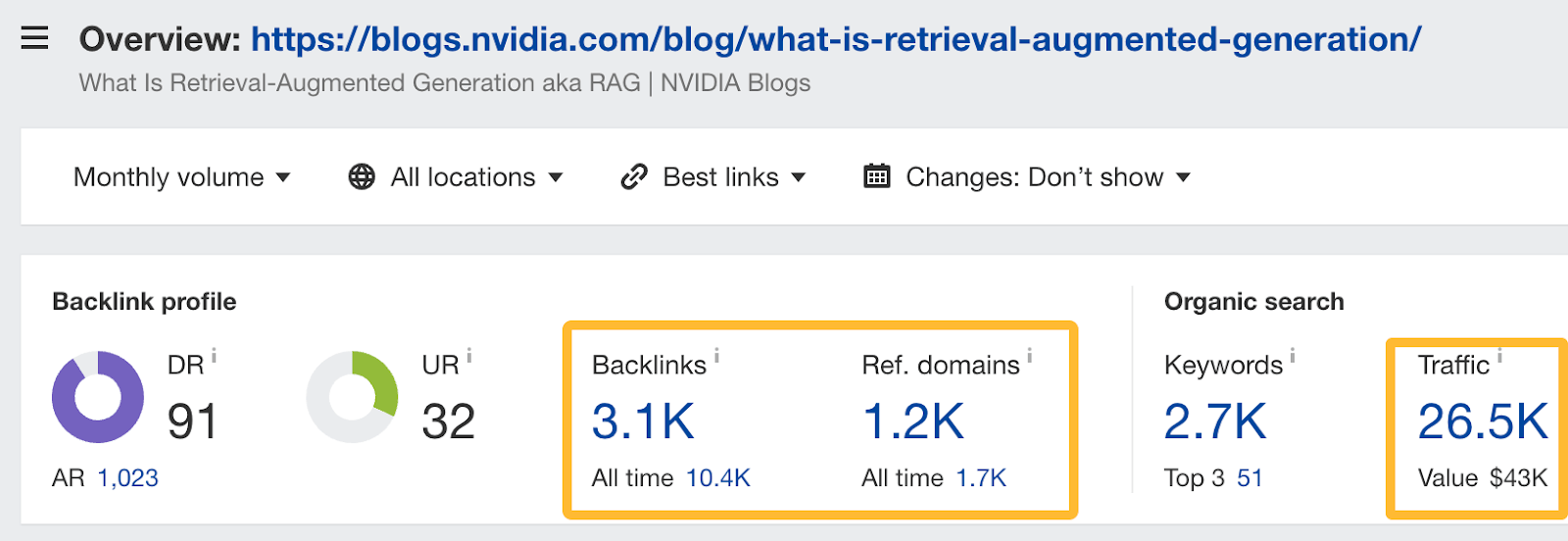
Nvidia blogs about new tech, recently mostly AI. Here’s a nice example of a high-traffic, high-backlink blog post.
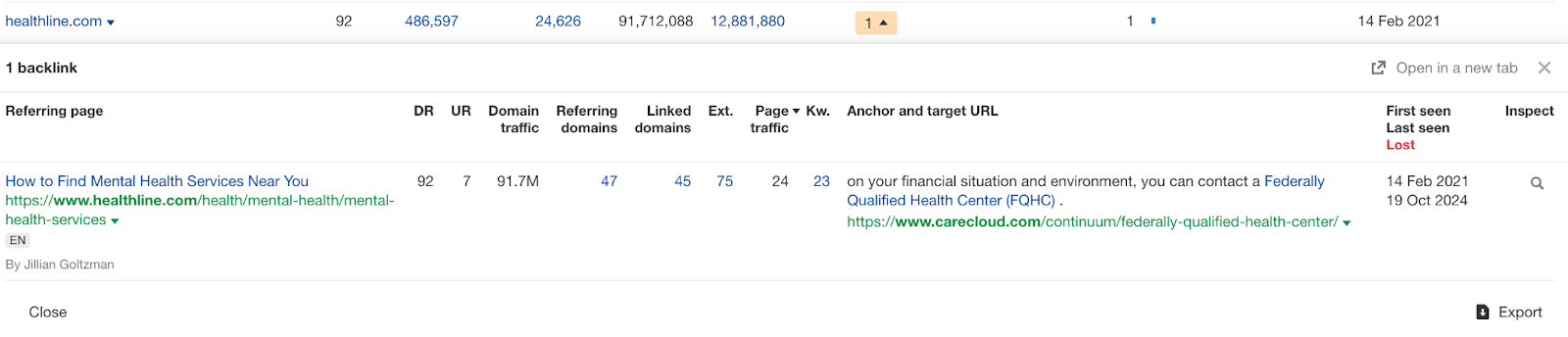
Blogging also proves to be a great way to earn authoritative backlinks. For example, Carecloud’s blog is reputable enough that Healthline cites it as a source.
Landing pages capture big (and small) demand
From deep product pages to sophisticated topic clusters, public companies craft landing pages for every type of search.
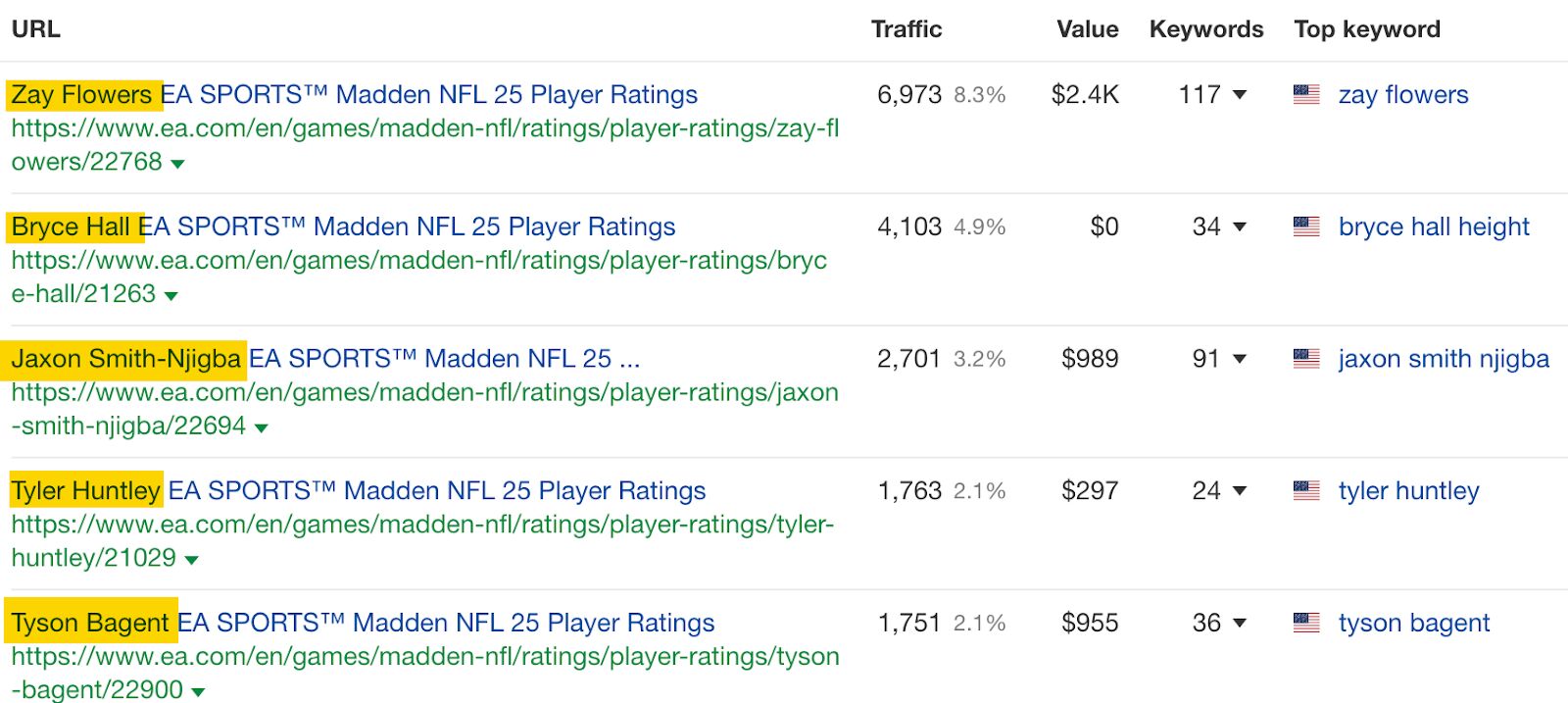
One of the best examples I’ve seen comes from Electronic Arts: they share real NFL player stats to help promote Madden NFL 25. It’s a clever twist on content marketing, blending authentic sports data with game promotion.