



If you’re evaluating the best ad network software, this isn’t a category you’re exploring; it’s one you already depend on. The question isn’t whether you need it, but which platform can actually support your revenue and campaign performance without adding friction.
For growth, monetization, and media teams, the pressure points are familiar. Revenue leakage, limited visibility into performance, and unreliable integrations show up quickly when the system doesn’t fit. When this layer underperforms, it slows optimization cycles, impacts payouts, and creates operational drag across teams.
To help you make that decision, I analyzed patterns across verified G2 reviews and real-world usage from teams running these platforms at scale. Instead of focusing on feature lists, this guide looks at how tools perform in practice, where they drive results, where they fall short, and which use cases they’re best suited for.
Different tools stand out for different needs. Some are built for mobile app monetization at scale, others for ad serving and measurement across complex campaigns, and some for yield optimization or niche traffic acquisition. This breakdown is designed to help you choose the right fit based on how your team actually operates.
8 best ad networks software for 2026: My top picks
- Innovid: Best for enterprise-grade ad measurement and cross-channel campaign insights
Advanced analytics, CTV measurement, and media optimization for large advertisers. (Paid plans available on request) - Google AdMob: Best for mobile app monetization with global advertiser demand
In-app ads, mediation, and access to Google’s advertiser ecosystem for scalable revenue. (Paid plan pricing available on request) - beehiiv: Best for creators and publishers monetizing newsletters through ads
Built-in ad network, growth tools, and audience monetization in one platform. (Paid plans start at $49/month) - AdMaven: Best for publishers seeking high-performing ad formats and global reach
Pop, push, native, and display ads optimized for traffic monetization. (Paid plan pricing available on request) - Perform[cb]: Best for performance-driven affiliate and CPA campaigns
Strong advertiser–publisher matching with optimization focused on conversions. (Paid plan pricing available on request) - Attekmi: Best for streamlined affiliate campaign management and tracking
Simplified workflows, tracking, and reporting for performance marketers. (Paid plan pricing available on request) - MonetizeMore: Best for publishers optimizing ad revenue with managed services
Google-certified solutions for yield optimization, compliance, and revenue growth. (Paid plan pricing available on request) - AdPushup: Best for A/B testing and maximizing ad revenue across formats
Layout testing, header bidding, and analytics for publisher monetization. (Paid plan pricing available on request)
*These tools are top-rated in their category based on G2’s Winter 2026 Grid Report. I’ve included their strengths and pricing details to help you choose the right platform based on your requirements.
8 best ad network software I recommend
Most ad network platforms promise the same thing: better monetization and more efficient ad delivery. What separates them is how much visibility they provide into yield, demand quality, and revenue performance once traffic starts flowing. The right platform turns that noise into a coordinated monetization workflow.
Beyond ad delivery, you need visibility into how impressions translate into revenue, where yield is leaking, which demand partners are actually driving value, and what optimization decisions move the needle next. Whether that is balancing multiple demand sources, improving fill rates, enforcing quality controls, or automating traffic routing, the best tools replace guesswork with structured insight.
G2 category data shows adoption spread across small publishers, mid-market media businesses, and large platforms managing complex ad ecosystems. Teams adopt these tools to reduce manual intervention, stabilize revenue streams, and gain clearer control over how ads are served and monetized. Most platforms are built to integrate into existing stacks without forcing you to rebuild workflows from scratch.
How did I find and evaluate the best ad network software?
My shortlist started with G2’s Winter 2026 Grid Reports, filtering by real user satisfaction scores and market presence across small, mid-market, and enterprise teams in digital advertising and monetization environments.
From there, I used AI to analyze hundreds of verified G2 reviews, pulling out recurring patterns around what actually matters in live ad operations: yield optimization, fill rates, reporting transparency, demand partner quality, traffic controls, payout reliability, fraud prevention, and stack integration. That analysis is what separates tools that hold up as scale increases from those that quietly introduce friction over time.
Because I have not personally deployed every platform covered here, I validated these findings against feedback from growth, monetization, media, and ad operations teams using these tools in production. All visuals and product references are drawn directly from G2 vendor listings and publicly available product documentation.
What makes the ad networks software worth it: My criteria
From what I’ve seen across G2 reviews and real-world usage, the strongest platforms provide clear visibility, reliable controls, and consistent performance as volume scales. They fit naturally into daily operations and help teams make faster, more informed decisions.
This is the criteria I focused on while evaluating G2 reviews for the best ad networks software:
- Revenue control, not just ad serving: The best ad networks software gives teams control over how revenue is generated across every stage of the ad delivery process. G2 review patterns consistently show that platforms succeed when users can see how impressions translate into earnings and where value is lost. Tools built around ad delivery alone, with limited revenue visibility, often create blind spots that slow optimization.
- Transparency in reporting and attribution: Strong platforms surface reporting that teams actually trust. This means clear attribution, consistent metrics, and minimal reconciliation work between systems. Poor reporting clarity is a frustration because it forces teams to second-guess performance. Transparency reduces debate and accelerates decisions.
- Scalability without operational complexity: Ad network software often looks capable at low volume. The real test is whether it holds up as traffic, partners, and formats expand. When platforms require constant intervention to maintain performance, operational cost rises faster than revenue.
- Demand quality and traffic controls: High-performing platforms give teams confidence in the quality of demand they are routing. This includes controls that help prevent low-quality traffic, policy violations, or partner misalignment. G2 review patterns suggest that weak controls lead to downstream issues, including advertiser dissatisfaction and compliance risks. Strong tools reduce exposure before problems escalate.
- Workflow fit for monetization and growth teams: Ad networks software is rarely owned by a single role. Monetization, growth, analytics, and sometimes finance all touch it. The best platforms support shared workflows without forcing everyone to use the same level of interface complexity. When tools fail here, teams drift into siloed decision-making and slower feedback loops.
- Automation that removes toil, not visibility: Automation is valuable only when it reduces repetitive work while keeping important signals visible. G2 review feedback consistently favors platforms that automate optimization while keeping decision logic visible. Tools that over-abstract performance may save time initially, but create risk when teams need to diagnose issues quickly.
Some platforms prioritize control, while others focus on simplicity. Some emphasize reach, while others offer more granular controls. What matters is matching the tool to your revenue model, traffic profile, and how much operational complexity your team can manage.
From what I’ve seen, teams that focus on how the tool fits into their workflow tend to move faster and spend less time correcting mistakes.
To be included in the Ad Network Software category, platforms must meet the following baseline criteria:
- Support ad distribution or monetization workflows as a primary use case
- Be actively reviewed by users across multiple company sizes on G2
- Provide reporting and controls beyond basic ad serving
- Be positioned as a standalone platform
This data was pulled from G2 in 2026. Some reviews may have been edited for clarity.
1. Innovid: Best for enterprise-grade ad measurement and cross-channel campaign insights
Innovid sits in a different category for teams dealing with real operational complexity. It handles the gap between agency-side and client-side metrics across linear TV and CTV, which is genuinely hard to solve. If your team is reconciling multi-market campaign data under tight reporting windows, I’ve seen that this is the platform that G2 review data keeps pointing back to.
Based on my evaluation of G2 reviews, teams often describe the interface as easy to navigate, even during high-pressure reporting cycles. Once you’re onboarded, campaign setup, tracking, and adjustments follow a clear, predictable flow, which makes it easier to move quickly when timelines are tight. What stands out is how the platform balances speed with visibility. You can manage multiple campaigns in parallel without feeling like you’re losing control or context. Overall, the usability supports execution and keeps daily workflows moving efficiently.
Innovid gives teams a lot of flexibility in how they slice and present data. What stood out to me is how often reviewers connect these reporting capabilities to faster stakeholder communication and decision-making. Breaking down performance by vendor, format, or delivery environment is straightforward, and comparisons like CTV vs. linear or budget allocation are easy to surface without exporting anything. Because reporting can be configured to match how each team consumes data, internal alignment tends to follow more naturally.
I’d point to integration as one of the quieter strengths here. Teams connect Innovid to existing tools without major disruption, and platform updates roll out in ways that preserve workflow familiarity. The quality of support score sits at 92%, and that tracks with what reviewers describe: responsive, effective interactions that keep campaigns moving.
What stood out to me across reviews is that scale is where Innovid makes its strongest case.. Reporting and delivery stay stable across long-running and multi-market initiatives without the kind of noise that distorts performance signals. Teams operating at volume get to spend more time on decisions and less time on interventions. When you’re accountable to clients on top of all that, that steadiness in day-to-day operations carries real weight.
If you’re managing high volumes of creative versions across display and video, the DCO and cross-channel trafficking capabilities are worth close attention. G2 reviews describe decision tree functionality that routes personalized creative to specific audiences without rebuilding logic for each placement. Manual versioning work drops significantly, and campaign delivery stays aligned across placements as creative sets grow.
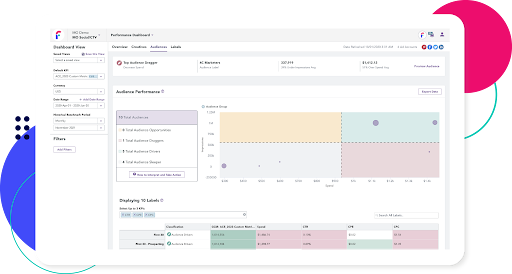
As I worked through G2 reviews, one theme surfaced repeatedly: teams describe Innovid as a platform that delivers on what it promises. That aligns with its 91% meets requirements score on G2. Teams can access detailed performance analysis without being locked into a rigid reporting flow, and that flexibility helps both post-campaign review and future planning. Post-campaign evaluation and forward planning work better when reporting fits how your organization already thinks about TV and video measurement, and that’s what you get here.
G2 reviewers note that certain configuration changes, particularly around custom views and reporting dimensions, require submitting a support request. This is more noticeable for teams working to tight reporting deadlines where turnaround speed matters, while organizations prioritizing reporting accuracy and consistency align well with the platform’s approach. Working through support ensures changes are implemented accurately and consistently across the platform, which keeps reporting outputs reliable once adjustments are live.
Onboarding new users or transitioning account ownership can take additional time before teams reach full efficiency. G2 reviews describe the platform as one that rewards familiarity, meaning handoffs may involve a short re-ramp period before workflows feel natural again. That investment in building familiarity pays forward; teams that know the platform will move faster and extract more from its reporting and campaign management depth over time.
Honestly, Innovid is a strong call for enterprise media teams where measurement accuracy and creative management at scale are non-negotiable. For organizations running complex TV and video operations with real accountability attached, this one holds up.
What I like about Innovid:
- Innovid brings clarity to complex TV and video measurement by aligning agency and client metrics in one system, reducing reconciliation work across linear and CTV campaigns.
- The intuitive interface and reliable performance support frequent, high-volume campaign tracking without disrupting daily workflows.
What G2 users like about Innovid:
“What I like best about Innovid is that it makes managing ad campaigns easy and organized. I use Innovid all the time for all my video ads in one place. It is integrated well with different platforms, so I don’t have to switch between tools. Because of good integration options, One Innovid tag simplifies implementations processes for our publishers. The reports are detailed and help me see how each ad is performing. Also, their support team is quick to help whenever I have questions.”
– Innovid review, Gandharva P.
What I dislike about Innovid:
- Some advanced configuration changes rely on guided support rather than fully self-service controls. This is most noticeable for teams expecting complete administrative autonomy, while organizations with structured governance workflows align well with the platform’s support model.
- G2 reviews suggest Innovid’s feature depth is more noticeable for new or infrequent users. Teams managing campaigns regularly align well with the platform’s flexible workflow and reporting capabilities.
What G2 users dislike about Innovid:
“The support process. Having to submit a request through a portal feels ancient, and my requests aren’t dealt with until almost a full week later. When I have an urgent request on a Tuesday for a report and meeting due Thursday, its extremely frustrating that I can’t get help until the next week, and I then have to tell the client we can’t deliver on time because of Innovid.
The inability to adjust date ranges yourself. I understand we have to go through support now to get portals set up. but those portals aren’t adjustable by me – I have to have Innovid do it. With all my other measurement platforms, I can easily adjust the date however I like to see data from that time range. Its extremely irritating that I can’t do this.”
– Innovid review, Chiara B.
2. Google AdMob: Best for mobile app monetization with global advertiser demand
If you’re a mobile-first team looking to activate app monetization fast and at scale, Google AdMob is pretty much built for that. It plugs straight into Google’s advertising ecosystem, which makes it an easy entry point for developers who want revenue generation without the overhead of building out complex infrastructure.
The platform emphasizes accessibility, standardized workflows, and broad advertiser demand. What stood out to me across the review data is how often teams describe it as a stable monetization layer that simply does its job without demanding constant attention. It is built for foundational, reliable monetization, and developers who want revenue generation running quietly in the background while they focus on product development are likely to find that approach aligns well with how they work.
As I worked through G2 reviews, I noticed that teams prioritizing predictable performance tend to value the platform for exactly that reason. It appears most often in apps where monetization needs to remain stable as usage grows, which is a very specific requirement. If reliability matters more than constant optimization, the platform’s orientation fits that mindset well.
If you’ve ever dreaded SDK integrations, AdMob will pleasantly surprise you. The ease of setup score hits 91%, and from what I saw in G2 reviews, that number reflects reality. Documentation is clear, onboarding steps are well defined, and getting ads live across different app states requires minimal configuration. Multiple ad unit types let teams test formats without writing custom logic, which is a genuine time-saver during early growth stages.
Teams rely on it to deliver volume consistently. From what the review data shows, it is less often used as a control-heavy ad operations hub. That distinction matters when evaluating long-term needs.
I’ll put it plainly: the reporting here does its job without making teams fight for the information. Ad management connects smoothly with adjacent tools, manual data stitching drops out of the picture, and the ease of use score of 94% tracks with what reviewers keep saying about day-to-day usability. Real-time visibility into format and placement performance means adjustments happen incrementally, without pulling developers into deep ad operations work.
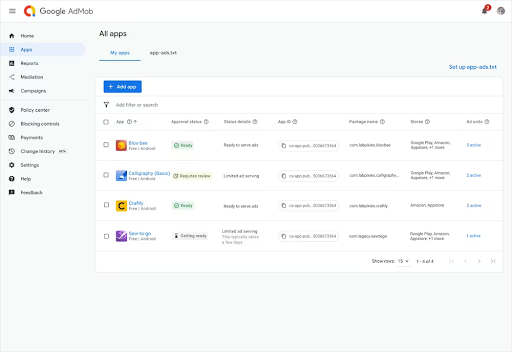
Fill rates are one area where the platform genuinely stands out. Near-complete fill across Tier-1 and Tier-2 markets takes the complexity out of monetizing international traffic, since teams are not juggling separate regional network relationships to make it work. Something I noticed in G2 reviews is that global coverage is one of the main reasons teams build their monetization setup around AdMob. For apps with a geographically spread user base, that consistency compounds into noticeably more stable revenue over time.
One thing I observed that keeps surfacing in G2 feedback is how well the mediation layer works in practice. Competing ad networks run through a single integration, competitive pressure lifts overall yield, and AdMob sits at the top of the waterfall, improving connected partner performance alongside it. Expanding the demand stack happens without rebuilding the monetization setup from scratch, which is exactly the kind of low-drama scaling developers appreciate.
If I had to summarize the revenue performance story in a few words, it would be strong eCPM and CPC performance. G2 reviewers consistently put AdMob at the top of their monetization waterfalls, and CPC payouts tend to outrun impression-based networks wherever click-driven formats are a viable option. The demand quality advantage that comes from sitting inside Google’s advertiser ecosystem is something independent networks struggle to replicate at anywhere near this scale and reach.
I’ve seen a lot of monetization tools that demand constant attention to stay healthy. AdMob runs reliably in the background with minimal intervention. The demand pool is deep enough that developers stay focused on product improvements instead of chasing advertiser relationships. Reporting surfaces enough signals to guide placement decisions without becoming a second job. For lean teams where monetization is one priority among many, that steadiness is worth a lot.
G2 reviews note that smaller publishers typically interact with a more self-serve support experience, which reflects how the platform is designed to operate at volume. Teams needing immediate, highly personalized assistance may experience longer resolution timelines than those comfortable working within structured support channels. Once publishers build familiarity with available documentation and self-serve resources, they tend to resolve issues faster and maintain more consistent monetization performance as their apps scale.
A few recurring themes in G2 reviews suggest that algorithmically imposed ad limits can affect revenue without clear explanation or advance notice. Publishers operating near policy thresholds or scaling traffic quickly are more likely to encounter this than established apps with stable traffic patterns. Teams running high-growth apps benefit from monitoring limit signals early, as proactive compliance tracking keeps monetization stable through periods of rapid traffic growth.
If you’re building a mobile app and want monetization that runs well without becoming its own operational project, AdMob is the obvious starting point. The global reach, mediation capability, and fill rate performance are plus points.
What I like about Google AdMob:
- AdMob makes mobile app monetization easy to activate, with clear documentation, a wide range of ad units, and tight integration with Google’s broader advertising ecosystem.
- The scale and reach allow developers to access high-quality demand and stabilize revenue without complex ad operations.
What G2 users like about Google AdMob:
“What I like best about Google AdMob is how easy it is to integrate ads into mobile apps and start monetizing quickly. It also has strong fill rates and access to a large advertiser network, which can help maximize revenue. The dashboard gives useful insights to track performance and optimize earnings.”
– Google AdMob review, Johan L.
What I dislike about Google AdMob:
- G2 reviews note that algorithmically imposed ad limits can affect revenue without clear explanation or advance notice. This is most noticeable for publishers scaling traffic quickly or operating near policy thresholds, while established monetization workflows align well with the platform’s policy-driven model.
- The platform follows a self-service support model, which is most noticeable for teams expecting personalized assistance. Publishers comfortable with documentation and structured support resources align well with the platform’s operating model.
What G2 users dislike about Google AdMob:
“Many time eCPM goes donw automatically, and we can’t get support if any issue.”
– Google AdMob review, Hiren R.
If your growth strategy centers on in-app engagement and retention alongside monetization, the best mobile marketing software covers the tools built around reaching users where they spend time most.
3. beehiiv: Best for creators and publishers monetizing newsletters through ads
Beehiiv is built for creators and small teams who treat newsletters as a core growth and revenue channel. What stood out to me is how naturally publishing, audience development, and advertising fit together inside the same workflow. Instead of forcing teams to stitch together separate tools, the platform keeps those functions connected in a way that supports speed, visibility, and day-to-day execution.
The platform keeps complexity low and execution fast, so creators stay focused on output. Its structure reflects how independent publishers actually operate. Monetization is layered in without reshaping the workflow.
The 96% ease-of-use score tells part of the story before you even get into the reviews. G2 users consistently describe an editor that moves from draft to delivery without unnecessary steps, and that same simplicity carries through landing pages, onboarding, and basic automations. What stood out to me is how often reviewers connect that ease of use to faster adoption and less time spent figuring out the platform. In a category where plenty of tools promise frictionless setup, beehiiv is one of the few that reviewers consistently describe as delivering on it.
If you’re growing a newsletter and need data that actually tells you something, the analytics here deliver. Subscriber growth, engagement signals, and subject-line test results surface without cluttered dashboards getting in the way. Segmentation becomes available as your audience matures, so the structure you need shows up when you need it.
What stood out to me across G2 reviews is how often creators connect monetization to the broader publishing workflow. Instead of relying on external ad tech, beehiiv brings advertising directly into the platform. Reviewer feedback suggests this works especially well for newsletters with an established audience, where monetization can be layered into existing publishing operations without disrupting them. Ads feel like an extension of the platform rather than a separate system to manage, which makes experimentation easier as newsletters grow.
The 97% ease-of-admin score reflects something I think is worth paying attention to. What I kept seeing in reviewer feedback is that teams can keep workflows lightweight early on and gradually adopt more advanced capabilities as their newsletters scale. Publishing, growth, and monetization remain connected throughout that process, reducing the risk of outgrowing the platform and needing to migrate later.
I’d highlight the product update cadence as something that quietly matters a lot over time. RSS integration, automation improvements, and monetization tools arrive incrementally without disrupting existing workflows. G2 reviews specifically describe updates that expand capability without forcing them to relearn the platform. For newsletters in active growth phases, that consistency removes the nagging pressure to go looking for something better.
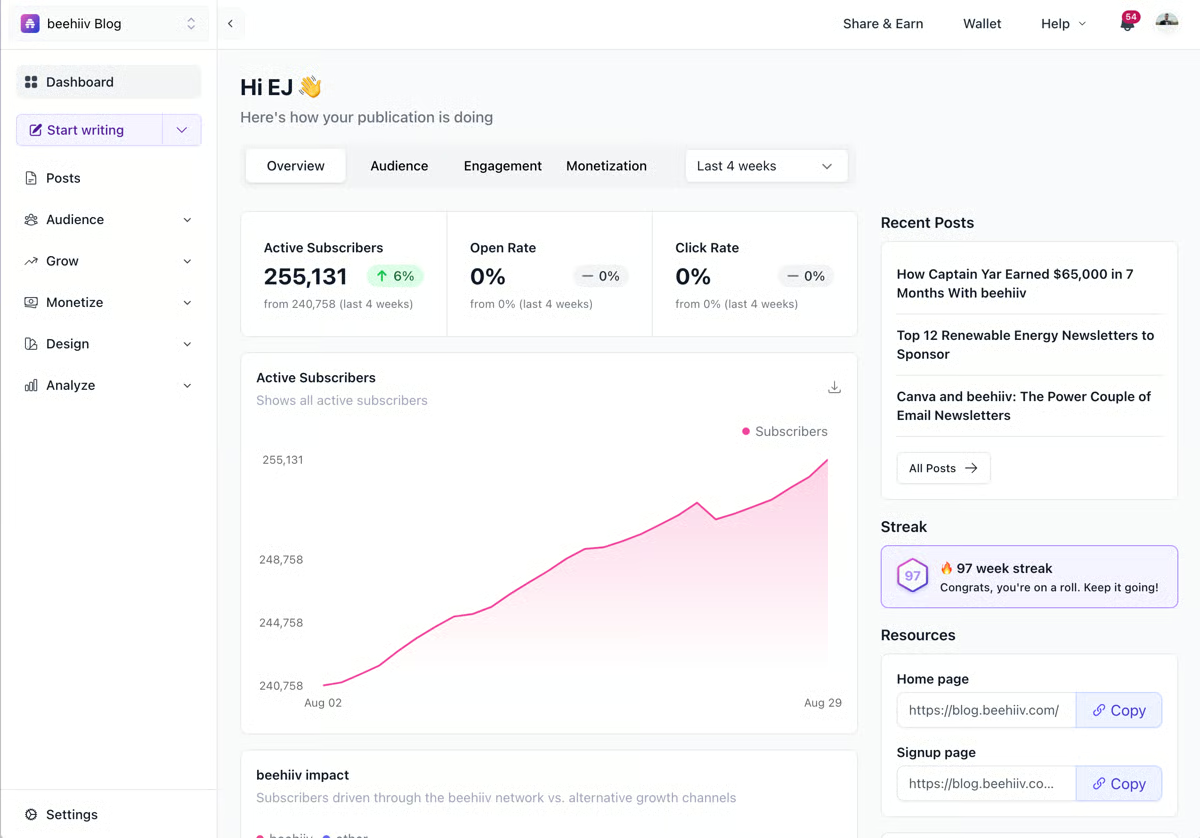
I see support responsiveness is a recurring strength in G2 reviews, with creators describing fast resolution of issues, backed by a quality of support score of 92%, and a team that engages substantively. This matters most during early setup and when time-sensitive sends are at risk. Reliable support reduces the operational risk of running a newsletter on a platform where delivery timing directly affects audience trust.
During my evaluation, I found that G2 users highlight that customization options within the editor and templates have boundaries that become more noticeable as publishing needs grow. Creators with specific design requirements or complex layout preferences encounter these boundaries sooner than those focused on clean, content-first formats. The platform’s structured design approach keeps production fast and consistent, sustaining publishing output without requiring design expertise on the team.
Across G2 reviews, pricing commitment surfaces as a consideration for creators in the early stages of experimentation. This is more noticeable for teams testing multiple newsletter concepts simultaneously, while publishers focused on growing a single, established publication align well with the platform’s model. As audience size and monetization activity increase, reviewers consistently describe the platform’s value becoming easier to justify.
I’d recommend Beehiiv without hesitation to creators and small publishing teams who want writing, growth, and monetization to live in the same place. The review data, the scores, and the feature set all point in the same direction: this platform is built for people who are serious about newsletters and want the tooling to reflect that.
What I like about beehiiv:
- beehiiv combines writing, audience growth, and newsletter monetization into a clean, focused workflow that keeps creators out of complex marketing tooling.
- It is easy to scale from early experimentation to more advanced features like segmentation, testing, and ads without switching platforms.
What G2 users like about beehiiv:
“Beehiiv turns my half-baked drafts into slick newsletters with zero SaaS headache. Clean editor, smart growth tools, and analytics that actually matter—no bloated menus, no hidden fees. If you want to focus on writing instead of wrestling a platform, Beehiiv’s the one.”
– beehiiv review, Chaitanya H.
What I dislike about beehiiv:
- Pricing is more noticeable for creators in the early stages of experimentation or testing multiple newsletter concepts. Publishers focused on a single, established publication align well with the platform’s monetization model.
- Customization options become more structured as publishing needs grow. Creators with highly specific design requirements will notice this most, while content-first newsletters align well with the platform’s streamlined editing experience.
What G2 users dislike about beehiiv:
“It’s difficult to import emails into certain segments. We had issues where all of the emails were getting rejected, and were advised to create a tag, add emails to that tag, then create a segment condition based on that tag. We couldn’t move our Flodesk templates in, so I had to recreate them. Uploading the segments was difficult. Some of the UI isn’t intuitive; the names and icons aren’t what you expect the feature to be.”
– beehiiv review, Jessica L.
4. AdMaven: Best for publishers seeking high-performing ad formats and global reach
AdMaven is a platform that steps in where conventional display networks tap out. It is built for publishers monetizing global traffic through performance-oriented ad formats, particularly in international or mixed-quality environments where stricter networks consistently fall short.
The G2 review data paints a clear picture: reach, format flexibility, and payout consistency are what this platform is built around, and it delivers on all three.
If you’re running traffic across multiple geographies and need format flexibility to match, AdMaven covers it well. Push notifications, pop-unders, and other high-impact placements run in parallel, with an ease of use score of 92% reflecting how smoothly that happens in practice. Formats can be layered by traffic source, device type, or region, which keeps revenue diversified and reduces the volatility that comes with depending on a single demand stream.
Publishers frequently call out consistent CPM performance and reliable payouts in G2 reviews, and what stood out to me is how often those two themes appear together. For global traffic that’s harder to monetize through stricter networks, predictable earnings remove a lot of the guesswork. Teams are not constantly going back in to manually adjust monetization settings, which leaves more time for traffic growth or content expansion. When payouts stay reliable, they stop being variable teams have to plan around and start becoming a predictable part of operations.
I’ll be direct: the 91% ease-of-setup score feels justified based on what I saw in review feedback. The platform is straightforward to operate even without a dedicated ad operations specialist, support response times are consistently described as practical and timely, and fast activation helps publishers get to revenue without a drawn-out setup process. What I kept seeing across reviews is that operational simplicity isn’t just part of the positioning; it’s one of the reasons teams continue using the platform over time.

With most users coming from small businesses and limited enterprise presence, the platform is clearly oriented toward publisher-led environments. What stood out to me in the user mix is how closely it aligns with the use cases reviewers describe most often. It is most at home with teams optimizing monetization efficiency across broad traffic profiles, and that profile matches the platform’s emphasis on performance and scale.
If your traffic includes international or mixed-quality sources that mainstream networks tend to deprioritize, AdMaven is worth a close look. What stood out to me while reading through G2 reviews is how consistently publishers describe it as effective for websites that conventional ad networks underserve.
You get a reliable revenue stream across geographies without having to set up separate regional arrangements, and from what I saw in review feedback, that reach is one of the platform’s most practical advantages. It makes AdMaven a compelling primary or supplemental monetization layer for publishers managing global or non-standard traffic profiles.
What you get here on integration and payments is refreshingly low drama. Onboarding is smooth, technical setup moves without unexpected friction, and multiple payment methods function reliably according to G2 reviewers. For smaller teams without dedicated finance operations, that payment predictability removes a recurring administrative concern and keeps the financial side of monetization running cleanly in the background.
I’ve seen plenty of ad networks that lag behind on format innovation and force publishers to layer on additional partners just to access current placement types. AdMaven handles this differently. G2 reviewers note active introduction of new ad formats that keep pace with emerging standards, which means the network adapts as the format landscape shifts without requiring publishers to go looking elsewhere.
Some G2 reviews note that performance-oriented formats such as pop-unders require more deliberate use. This is more noticeable for publishers prioritizing long-term audience experience and editorial standards, while teams focused primarily on maximizing monetization volume align well with the platform’s format mix. With thoughtful format selection, publishers can balance revenue performance and audience retention effectively over time.
I saw that G2 reviews also point to reporting that focuses on core performance signals rather than deep analytical customization. This is more noticeable for publishers running advanced attribution models or multi-source data analysis, while teams managing monetization and traffic at an operational level align well with the platform’s reporting approach. The streamlined reporting experience helps keep daily optimization decisions fast and focused.
For publishers monetizing global or mixed-quality traffic where mainstream networks fall short, I’d reach for AdMaven without much deliberation. The format flexibility, payout reliability, and global reach make it a practical and dependable choice.
What I like about AdMaven:
- AdMaven offers a wide mix of monetization formats, including push notifications and pop-unders, which helps publishers diversify revenue across different traffic types and geographies.
- Reliable payouts and consistent CPM performance make it easier for teams to plan monetization without constant manual tuning.
What G2 users like about AdMaven:
“What I like most about The Ad Maven is its wide variety of monetization options and consistent revenue performance. One of the best features is that the platform is user-friendly, the support staff is friendly and responsive, and the payments are reliable.It works particularly well for push notification and pop-under advertisements, which have produced good traffic results for me.”
– AdMaven review, Verified User in Computer Software.
What I dislike about AdMaven:
- Performance-oriented formats such as pop-unders are more noticeable for publishers prioritizing long-term audience experience, while revenue-focused monetization strategies align well with the platform’s ad format mix.
- Reporting focuses on core performance metrics rather than advanced analytical customization. Publishers running complex attribution models will notice this most, while operational revenue and traffic monitoring align well with the platform’s streamlined reporting approach.
What G2 users dislike about AdMaven:
“AdMaven has really suited my needs pretty well, but I think some expanded details or more customizable reporting capabilities would improve the experience and give more insight into audience reception and the overall results of the campaign.”
– AdMaven review, Derrek S.
5. Perform[cb]: Best for performance-driven affiliate and CPA campaigns
Perform[cb] operates as a performance-driven ad network software platform built around affiliate and CPA-based campaigns. The tool is built for environments where outcomes are tightly measured, and spending is directly tied to conversions.
What strikes me most about the G2 review data here is how consistent it is: teams that care about traffic quality, partner accountability, and return efficiency keep coming back to this platform. Its entire operating model is oriented around results, and that focus shows up in every layer of how the platform works.
The 90% meets requirements score lines up with what the review data showed me at every turn. Visibility into campaign economics, including ACV, conversion rates, and cost-to-revenue alignment, is strong across the board. For regulated and margin-sensitive campaigns, that transparency is particularly valuable because guesswork during scaling is expensive. Perform[cb] keeps performance signals front and center in daily workflows, and to me, that’s what separates a platform you can scale on from one you’re constantly second-guessing.
Scaling affiliate campaigns without losing grip on conversion quality is harder than it sounds, and this is where I think Perform[cb] earns its reputation. Access to a broad, dependable affiliate base keeps earnings consistent and traffic quality high. In margin-sensitive environments, dependability removes one of the most persistent sources of performance variance, making long-term campaign planning significantly more grounded.
G2 reviews made it clear to me that this isn’t a set-it-and-forget-it support model. Proactive communication and active campaign involvement are built into how the platform operates, backed by a quality of support score of 92%. What I kept seeing in reviewer feedback is that the team adapts campaign structure and bidding strategies as performance data shifts, so advertisers are not left handling recalibration on their own. For teams looking for strategic input alongside execution support, that level of involvement stands out as a meaningful differentiator.
Sourcing and vetting quality publisher partners independently is one of the most time-consuming parts of running performance campaigns at scale. From what I’ve seen in G2 reviews, Perform[cb]’s publisher network handles this consistently, with strong connections to quality traffic sources that let advertisers focus on campaign performance. Volume and conversion quality coexist here in a way that takes most teams a long time to engineer on their own.