


The workplace is changing faster than ever, and employee benefits are evolving right along with it. In 2025, perks are no longer just “extras” – they’ve become a critical factor in whether employees stay with a company or leave for better opportunities. From flexible schedules to wellness programs and advanced digital tools, organizations must rethink how they support their people. Companies that adapt will gain a competitive edge in attracting top talent, improving satisfaction, and boosting retention.
What Are Employee Benefits?
Employee benefits are non-wage perks or advantages provided in addition to a salary. They are designed to support employees’ personal and professional well-being while enhancing job satisfaction. In today’s workplace, benefits go beyond traditional offerings like health insurance and retirement plans.
Examples include:
-
Health & Wellness Support: medical coverage, therapy, fitness memberships
-
Work-Life Balance Benefits: flexible hours, hybrid work, 4-day work week
-
Career Development Perks: training programs, mentorship, tuition assistance
-
Lifestyle & Personal Perks: childcare, transportation allowances, or lifestyle stipends
-
Technology Tools & Support: software, remote work tools, AI assistance
In short, employee benefits are no longer “optional extras.” They’re part of a company’s core strategy to show employees they are valued and supported.
Types of Employee Benefits
Employee benefits can be grouped into two main categories: mandatory benefits and voluntary benefits. Both play an important role in shaping the overall employee experience.

1. Mandatory Employee Benefits
Mandatory benefits are those required by law, which companies must provide to their workforce. These vary depending on the country, but the purpose remains the same: to protect employees’ rights, safety, and financial stability.
Common Mandatory Benefits Include:
-
Social Security Contributions: Payments to government programs that provide retirement, disability, or survivor benefits.
-
Health Insurance (where required): In some regions, employers are obligated to provide medical coverage or contribute to a national health system.
-
Workers’ Compensation: Insurance that covers medical bills and wage replacement if an employee is injured at work.
-
Unemployment Insurance: Financial support for employees who lose their jobs due to reasons beyond their control.
-
Paid Leave (minimum requirements): Such as public holidays, sick leave, or maternity/paternity leave.
2. Voluntary Employee Benefits
Voluntary benefits are not legally required, but employers provide them to attract and retain talent, improve satisfaction, and build a strong workplace culture. These are often what set one company apart from another in a competitive job market.
Popular Voluntary Benefits Include:
-
Health & Wellness Perks: Gym memberships, mental health therapy, wellness stipends, or mindfulness programs.
-
Flexible Work Arrangements: Remote work options, hybrid schedules, or a 4-day work week.
-
Retirement & Financial Benefits: Pension top-ups, profit-sharing, student loan assistance, or financial planning workshops.
-
Career Development Opportunities: Tuition reimbursement, mentorship programs, and certifications.
-
Lifestyle & Family Perks: Childcare assistance, paid volunteer days, pet-friendly policies, or lifestyle stipends.
-
Technology Support: Subsidies for laptops, coworking space memberships, or tools like DeskFlex for hybrid scheduling.
Why Employee Benefits Are More Important Than Ever
Before, team member benefits were “nice-to-haves” beyond the basic salary. However, COVID-19 sparked a post-pandemic shift toward flexibility and wellness. Workforce expectations and talent competition have also been constantly increasing.
Today, strategic benefits have become a necessity. Not only does it improve the employer brand, but it also boosts job satisfaction, work-life balance, and overall organizational performance. It’s a win for both sides.
Team member benefits are key to standing out in the competitive job market to attract, engage, and retain employees.
Enhance Employee Benefits with Smart Workplace Tools
Support your workforce with flexible scheduling, better resource management, and a balanced hybrid work environment powered by DeskFlex.
Top Employee Benefits Trends for 2025
There are plenty of great benefits that your employees will surely love. However, a select few come out on top. To simplify things, we’ve compiled only the best global team benefits to adopt in 2025.
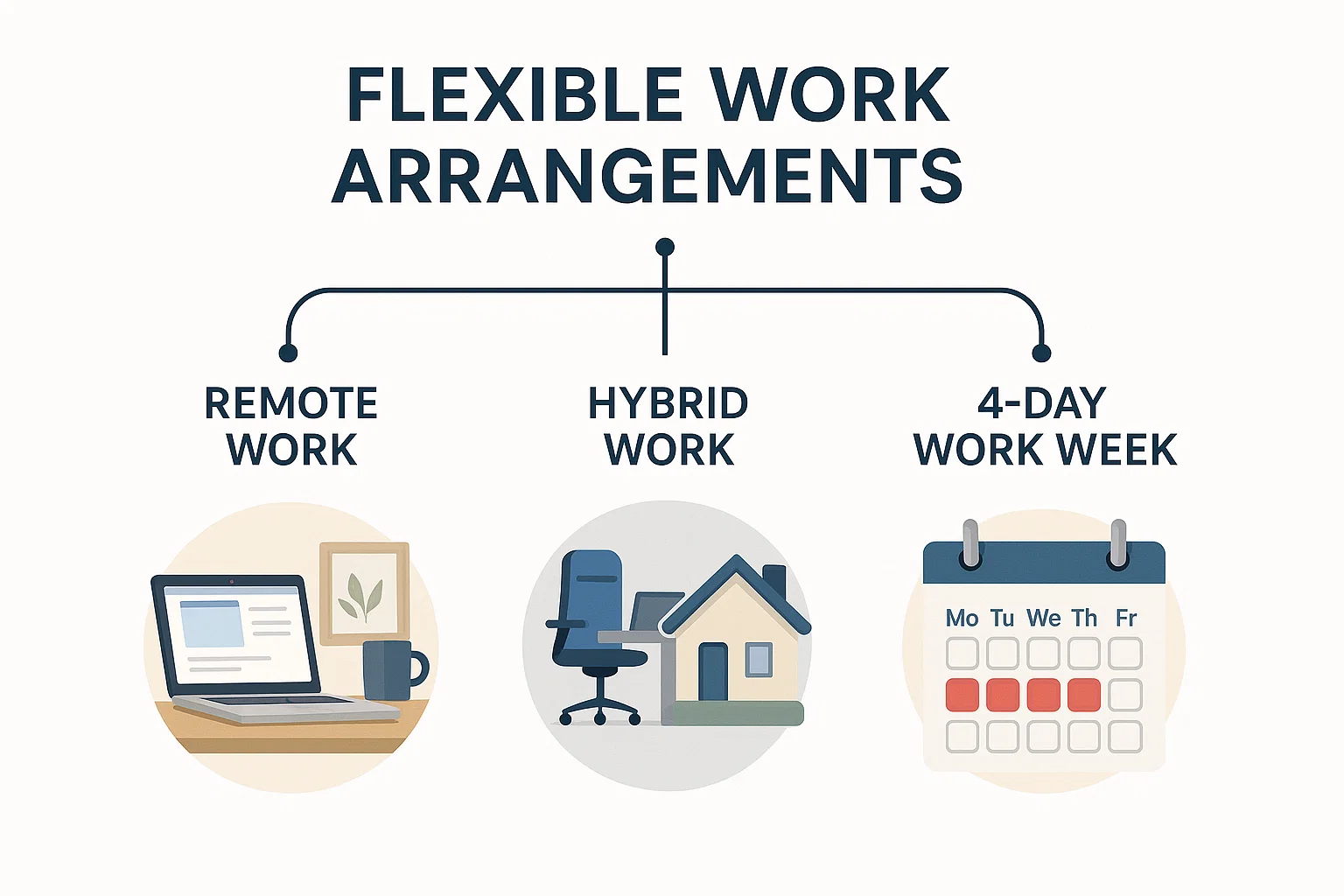
Flexible Work Arrangements
Employees love this setting; it promotes a healthier work-life balance by giving them more independence and freedom. Here are some examples of flexible work arrangements.
- Remote Work: Employees get to work entirely in the comfort of their own home without the need to come to the office.
- Hybrid Work: This type of flexible work arrangement combines remote work and office work to enjoy the perks of both worlds.
- 4-day Work Week: As the name suggests, this setup only requires employees to work 4 days a week. It extends their time to unwind and do what they want.
In the future, flexible work arrangements are expected to increase in popularity. What was once a special arrangement is now becoming the new normal.
Mental Health and Wellness Programs
Mental health and wellness are getting more attention and have become an imperative as a team benefit.
In 2025, companies with therapy support and mindfulness initiatives receive the most medals. Combined with physical wellness programs, this team member well-being approach reduces stress and improves the overall work environment.
As a result of investing in holistic wellness, organizations see a boost in team member productivity, satisfaction, retention, and efficiency.
Career Growth and Upskilling
Progressive scaling is one of the most important goals of a company. But it’s not just you who wants to develop. Your employees also want to see their own careers grow, too.
Because of this, skill development and career advancement opportunities became a sought-after benefit. They make allocating learning budgets for training, seminars, and mentorships a necessity.
Cultivating employee skills and capabilities pushes them to improve and drives your company to success.
Technology as a Benefit
New innovative technologies are continually developing and are essential to every company’s operations. You can take advantage of this and include technological support and subsidies as one of your team member benefits.
The right technology revolutionizes your entire workflow at a cost-effective price. Digital workplace tools, for example, like DeskFlex, simplify hybrid and remote work through workspace bookings, reporting and analytics, and corporate office management.
Technology and AI support shouldn’t be a threat to employees and companies. Instead, it’s a practical business strategy that allows better communication and collaboration, streamlined work management, and enhanced flexible work arrangements.
Personalized Employee Benefits
With the difference in generations, lifestyles, expectations, and priorities of each individual in your workplace, standardized benefits are insufficient.
Leading companies are adopting customized packages and lifestyle perks that let employees pick what matters to them. Provide a benefits portal to ensure all your employees, regardless of background, receive benefits that align with their life goals.
Doing so maximizes your investment in team member benefits and lessens unused spending on perks. It also improves team member satisfaction and loyalty, attracting and retaining talent in your company.
How Technology Supports Employee Benefits in 2025
Technology makes jobs easier and enables flexible work arrangements, improving team member experience. As such, forward-thinking companies lean towards using advanced technology as a benefit to attract, engage, and retain employees.
These features make DeskFlex a helpful investment as a flexible perk in your organization. As an employee management software, this solution streamlines hybrid work schedules and office reservations, reducing stress and workload for your employees.
DeskFlex also allows workplace analytics to provide actionable insights for better space utilization. You can also easily view status boards and track room occupancies on your mobile device.
So, if you need to boost team member efficiency, productivity, and flexibility in your company’s remote and hybrid work setup, DeskFlex is your technological solution.
Why These Trends Matter for HR and Leadership
Employees are what keep companies moving, which is why staying updated with modern workplace benefits is essential. It serves several purposes for HR and leadership.
- Boost retention: Competitive and evolving benefits make employees feel valued and cared for, earning their loyalty to the company. Consequently, turnover rates are minimized, which prevents disruption to established workflows.
- Improve workplace culture: Strategic benefits that provide holistic and personalized support develop job satisfaction and a healthy, productive work environment.
- Attract top talent: A high salary is good but it’s no longer enough. But when you pair it with awesome benefits, you’ll definitely bring attention to your company even in this competitive job market.
Outstanding talent and workplace culture mean excellent outcomes, resulting in growth and success for the company.

Preparing for the Future of Work
Work arrangements will evolve as worker expectations, talent, and job opportunities continuously shift. Here’s what you need to do to stay ahead.
- Emphasize employee-first culture: Put your employees on your priorities list to ensure they stay with you through the years. After all, the importance of talent will remain the same despite the many changes that will happen in the future.
- Encourage leaders to adopt flexible benefit strategies: Everyone has different goals and preferences, which outdated standardized and rigid benefits. Instead, you should implement flexible benefits strategies tailored to all your employees, no matter their status in life.
Preparing your employees for the future gives them important skills and knowledge that will help them deal with challenges in the future. For your business, proper planning leads to growth, stability, and the ability to adapt in order to stay competitive in your field.
FAQs: Employee Benefits Trends 2025
1: What are the most common team member benefits trends in 2025?
In 2025, employees prefer flexible work schedules, mental health and wellness programs, career growth, and upskilling opportunities. Many also love technological support to simplify work and personalized team member benefits that make them feel valued.
2: Why are team member benefits evolving in 2025?
Team member benefits are evolving to attract and retain workers as the job market becomes more competitive, team expectations grow, and top talents develop.
3: How do flexible work arrangements count as team member benefits?
Flexible work arrangements enable a better work-life balance, reduced work stress, lessened commuting costs, and a more personalized work environment.
4: What wellness benefits are most important to employees in 2025?
Mental health and wellness are the top team member benefits in 2025. It fosters team member wellness, creates a supportive workplace culture, and enhances morale and retention.
5: How can technology improve team member benefits in 2025?
Technology improves efficiency, productivity, and flexibility while decreasing manual workloads and stress. DeskFlex enables this through its office reservation and management solutions.
6: Which team member benefits improve retention the most in 2025?
Many love the flexible work arrangement and for good reason. It encourages a healthy work-life balance and more freedom to do what they want, so they don’t burn out from work.
7: How do hybrid workplaces impact team member benefits?
Hybrid workplaces enrich team member benefits by promoting flexibility, which leads to a better work-life balance. It also lessens stress by giving you an ideal work environment and saves time and money by reducing the need to commute.
8: What are personalized team member benefits packages?
Personalized team member benefits deliver a customizable benefit plan instead of the one-size-fits-all approach. These benefits include traditional perks and cater to employees’ unique goals and preferences.
9: What is the future of team member benefits beyond 2025?
Team member benefits will change in the coming years to give way to more employee-centric perks. These benefits include flexibility, holistic well-being, career growth, and technology.
10: How are companies changing team member benefits in 2025?
Many companies focus more on their employees to improve job satisfaction and retention, as well as attract talent. They’re implementing flexible work arrangements, mental well-being programs, upskilling opportunities, technology support, and personalized team member benefits.

