

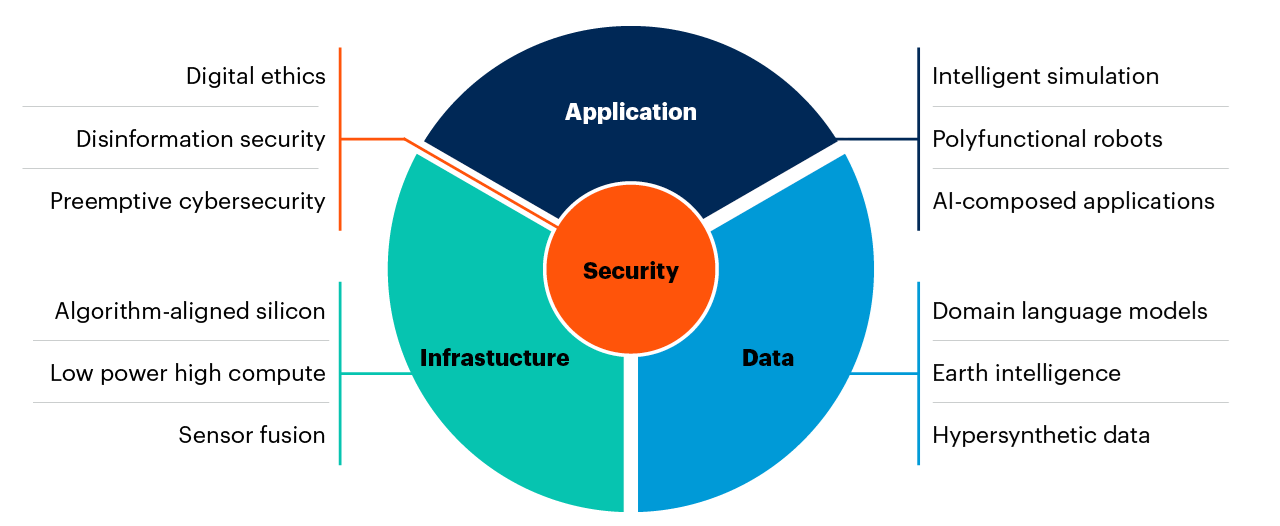
In a new report by Gartner, the research firm spotlighted 12 early-stage innovations that will redefine industries and create new market frontiers. The list includes disinformation security, algorithm-aligned silicon, and hyper-synthetic data — each signaling seismic shifts in how intelligence is computed, secured, and simulated. Polyfunctional robots, domain-specific AI, and digital ethics frameworks are also poised to shake up the tech landscape.
Gartner issued a call to action for tech leaders, saying they must act now to gain a competitive advantage.
Gartner’s playbook for emerging tech: What to prioritize and why it matters
Although all 12 disruptive technologies are considered important, Bill Ray, a distinguished VP analyst at Gartner, told TechRepublic that prioritization will ultimately depend on each organization’s goals and industry context.
Preemptive cybersecurity: A universal priority
Cybersecurity remains critical to all industries. Given the dangers of inaction, Ray called preemptive cybersecurity a high priority “across the board.” As threats become more sophisticated and proactive defense becomes essential, preemptive cybersecurity is no longer optional — it’s foundational.
Domain-specific language models: The future of GenAI
Domain-specific language models (DSLMs) — AI models trained on datasets tailored to a particular industry — will also significantly impact various sectors, Ray explained. Gartner projected that 90% of GenAI-enabled systems will use DSLMs by 2030.
Ray stressed the importance of competitiveness, warning DSLMs “will be adopted by your competitors, so the cost of ignoring them is high.”
Earth intelligence: Environmental insight at scale
Another top area of focus is the use of satellite-based remote sensing and AI to track and respond to environmental changes — or earth intelligence. Gartner forecasted that, by 2028, 80% of major earth surface assets will be monitored from space. While the defense sector pioneered its adoption, other industries are quickly catching up due to data collection and advances in analysis.
Industry-specific disruptors: Robots and silicon
Some technologies will have a more targeted impact.
- Polyfunctional robots, capable of performing multiple tasks via intelligent software and modular hardware, are expected to disrupt physical industries like manufacturing, logistics, and supply chain operations. Other sectors may have a lower urgency.
- Algorithm-aligned silicon, which uses algorithmic design to optimize silicon components for AI, will significantly affect those building AI infrastructure but may represent only incremental change for downstream users.
Ray rounded out his list of priorities with digital ethics, power shortages, and GenAI-enabled code production, saying they “will be wide ranging, but the celerity of impact will vary quite widely between industries.”
Disinformation security is an emerging discipline
Disinformation security, which focuses on threats from outside the corporate network, is another emerging discipline organizations should pay attention to, Gartner advised.
The firm predicted that at least half of enterprises will have adopted products or services to address disinformation security by 2030, up from less than 5% in 2024.
“Disinformation attacks use external infrastructure like social media and originate from areas with limited legal oversight,” explained Alfredo Ramirez IV, senior director analyst at Gartner, in a statement. “Tech leaders must add ‘disinformation-proofing’ to products by using AI/machine learning for content verification and data provenance tracking to help users discern the truth.”

