


This guide is designed to help financial institutions of all sizes navigate the unique challenges of increasing visibility in Google Search — from local credit unions and solo advisors to national investment firms and fintech platforms. We’ll walk through practical strategies to help you earn trust, demonstrate expertise, attract qualified leads, and stay compliant.
The tactics are broadly applicable, but how you apply them will depend on your business model. A local firm might focus on community-driven content and local SEO, while a digital-first platform might lean into educational resources and national visibility.
To write this guide, I interviewed eleven experienced finance SEOs:
- Elie Berreby, Senior SEO strategist, Semking.com
- Rob May, Director & Freelance SEO Consultant, Rob May SEO
- Ryan Chilton, Senior SEO & Digital Marketing Specialist, Digital Surfer
- Garit Boothe, FinTech SEO Consultant, Garit Boothe SEO Consulting
- Michael Sandford, Account Director, The SEO Works
- Molly Flynn, SEO Pod Leader, The SEO Works
- Ashley Jay Seager, Digital Marketing Manager, Moneyfactscompare.co.uk
- Alex Whyles, Freelance SEO consultant with over 16 years in SEO
- Victor André Enselmann, Founder, Modeva.dk
- Despina Gavoyannis, Senior SEO, Ahrefs
- Josh Spies, Chief Dragon, Dice Dragons (previously Moneybarn.com)

Financial SEO isn’t simply applying standard SEO practices to a financial website. It presents a unique set of challenges:
- Google classifies financial topics under the “Your Money or Your Life” (YMYL) category, which triggers much stricter content quality standards. Inaccurate or misleading financial information can lead to real-world consequences, like poor investment decisions or financial loss. Because of that, Google’s algorithms are particularly sensitive to the accuracy, trustworthiness, and authority of any content in this space.
- The financial industry is one of the most competitive spaces in search. You’re up against national banks, major insurance companies, and fintech giants — all of whom have deep pockets, strong brand recognition, and entire teams focused on SEO.
- High-value financial keywords are some of the most competitive in both organic and paid search. In paid channels, the cost-per-click can easily range from $30 to $150 making it a serious investment just to get visibility.
- Financial institutions operate under stringent regulations from bodies like the SEC, FINRA, and CFPB in the US (and similar organizations internationally). These regulations govern marketing practices, and content must be meticulously reviewed for compliance to avoid substantial penalties and lasting reputational damage.
Now, let’s see how the experts advise us to overcome these obstacles.
In financial SEO, who’s creating the content matters just as much as what the content says. If your content touches on people’s money, it needs to come from someone who clearly knows what they’re talking about.
To demonstrate real expertise, go beyond simply listing an author’s name. Create detailed author profiles that showcase specific financial credentials, such as CFA, CFP, or CPA designations, along with years of experience in relevant areas like banking, investment management, or insurance.
It’s also important to match the right expert to the right topic because that can help build credibility and show that you truly understand the topic. If you’re covering complex investment strategies, have a CFA write it or at least review it. If the topic is retirement planning, tap an experienced retirement advisor.
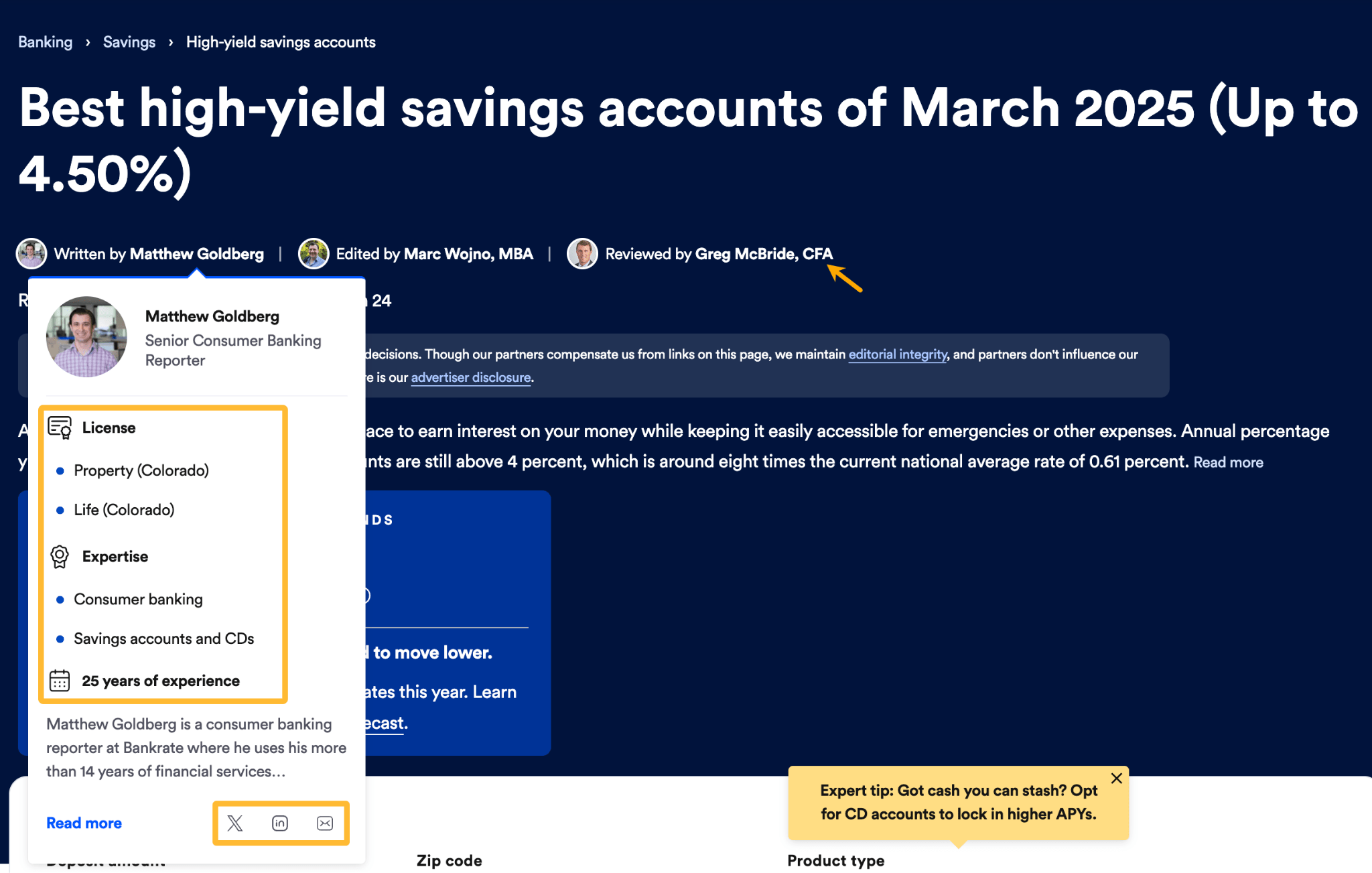
You should also use schema markup to clearly signal your authors’ credentials to search engines — this extra layer of detail helps Google better understand the credibility behind your content and can give you a visibility boost in the SERPs.
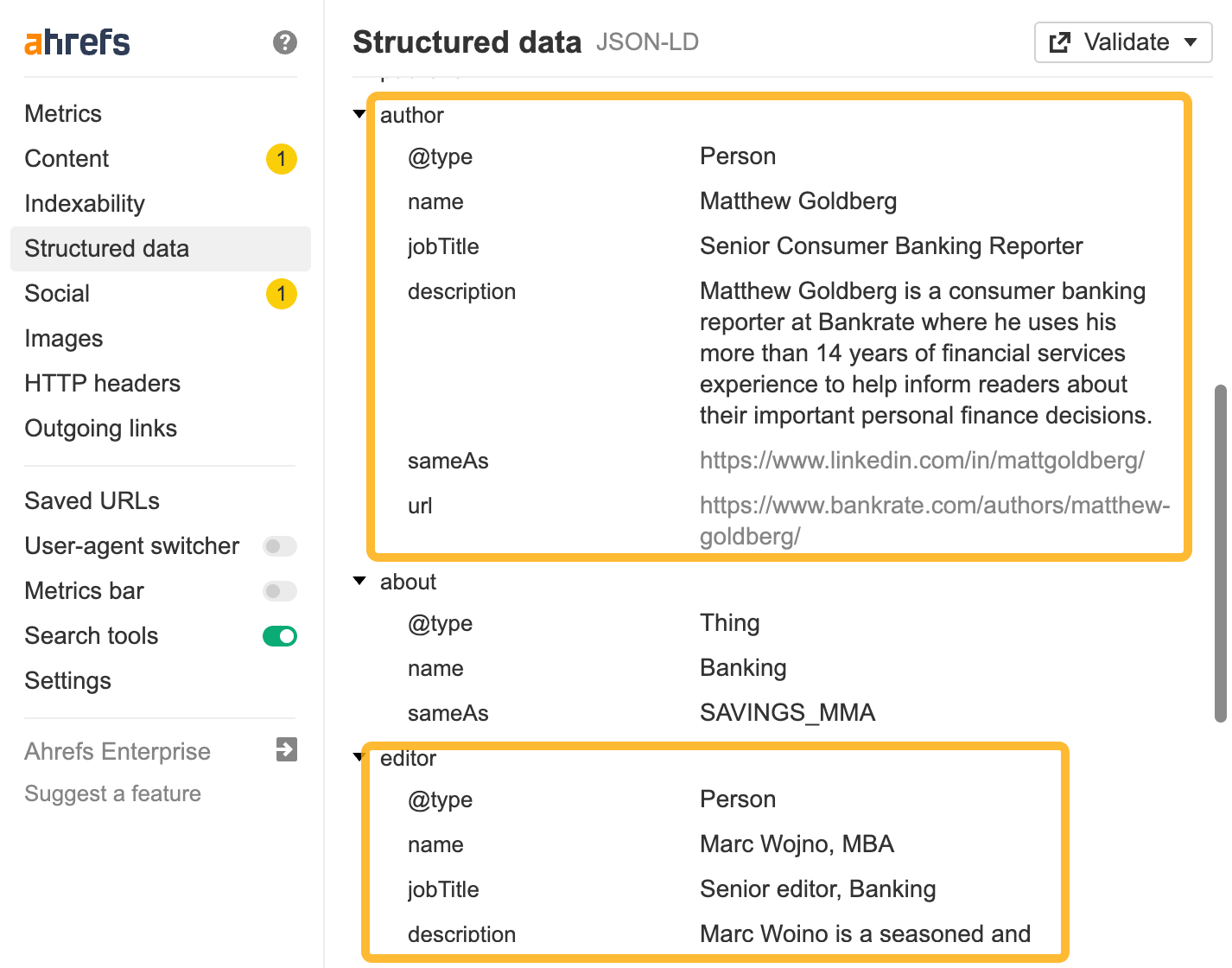
Tag authors and editors with structured data like author, jobTitle, alumniOf, and knowsAbout to showcase their qualifications, education, and areas of expertise. To generate the code, you can use free tools like Merkle’s Schema Markup Generator or any ChatGPT-like AI.
Author credentials are just one piece of the trust puzzle. To really build credibility, your entire website should reflect it. Start by showcasing ratings and reviews from trusted third-party platforms like Clutch, Expertise.com, and the Better Business Bureau.

Be upfront about your regulatory status, too. Prominently display statements like “Authorized and regulated by the FCA” or “Member FDIC” in your footer and on relevant product pages.

You can also take it a step further by dedicating space on your About page (or a separate compliance page) to explain your credentials, licenses, and code of ethics. This About page from a tax advisor firm in Chicago is a good example.

And don’t forget the basics — things like HTTPS and visible security badges signal that you take privacy and security seriously, which is critical when you’re dealing with sensitive financial information.
In financial SEO, compliance with industry regulations is mission-critical. One mistake can lead to steep fines and serious damage to your brand’s reputation. That’s why you need a rock-solid content workflow built with compliance at its core.
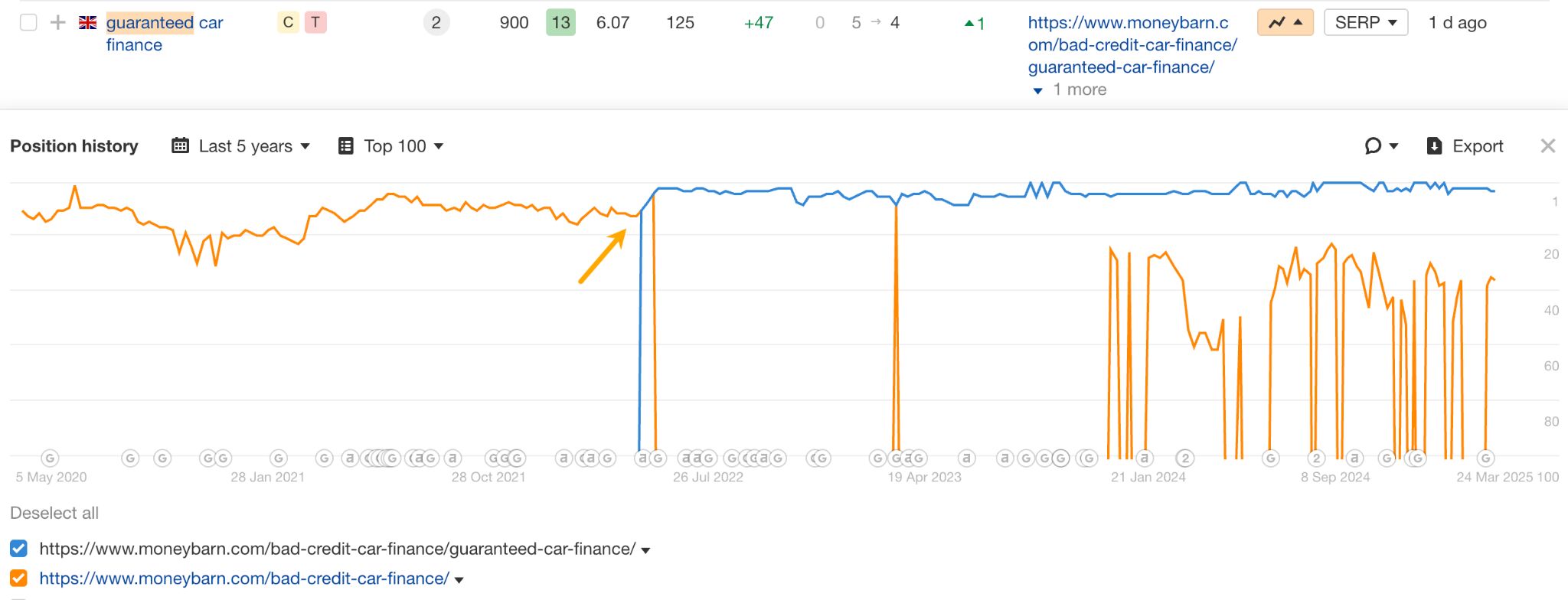
Take it from Josh Spies, who shared a real-world example from his time at a UK challenger bank. His team worked closely with the compliance team to rewrite a vague, unoptimized “guaranteed car finance” page. Instead of avoiding the topic, they tackled it head-on, clearly explaining that “guaranteed” finance doesn’t exist, citing FCA regulations, and tailoring the message to users who were often dealing with poor credit.
The result? The updated page not only ranked well, but it also set a new standard. Competitors started mimicking the transparent, user-first approach. It’s a perfect example of how collaboration with the compliance team can improve both trust and SEO performance.
Based on insights from my experts, here’s how to build a content workflow that keeps compliance front and center without slowing everything down:
- Define clear handoffs: Map out every step from content creation to approval, with clearly assigned roles — SEO specialists, writers, compliance officers, and legal (if needed).
- Centralize everything: Use project management tools to keep track of content progress, deadlines, and approvals.
- Pre-approved disclaimers: Build a repository of standardized disclaimers for different product types — investments, loans, insurance, etc. This helps ensure consistency and minimizes errors.
- Templates with built-in compliance: Develop content templates for key formats like product pages, comparison guides, and blog posts. Include placeholders for disclosures and regulatory language so nothing gets missed.
- Stay aligned: Set up monthly or quarterly meetings between your content and compliance teams to flag upcoming topics, stay ahead of regulatory changes, and resolve potential issues early.
- Automate time-sensitive updates: Check daily for updates to interest rates, stock data, or regulatory deadlines — especially for pages tied to financial markets.
- Set up regulation alerts: Subscribe to industry newsletters or set up Google Alerts to catch regulatory shifts that may impact your content.
- Run regular content audits: Review your site quarterly or bi-annually to catch outdated content, broken links to sources, and compliance gaps.
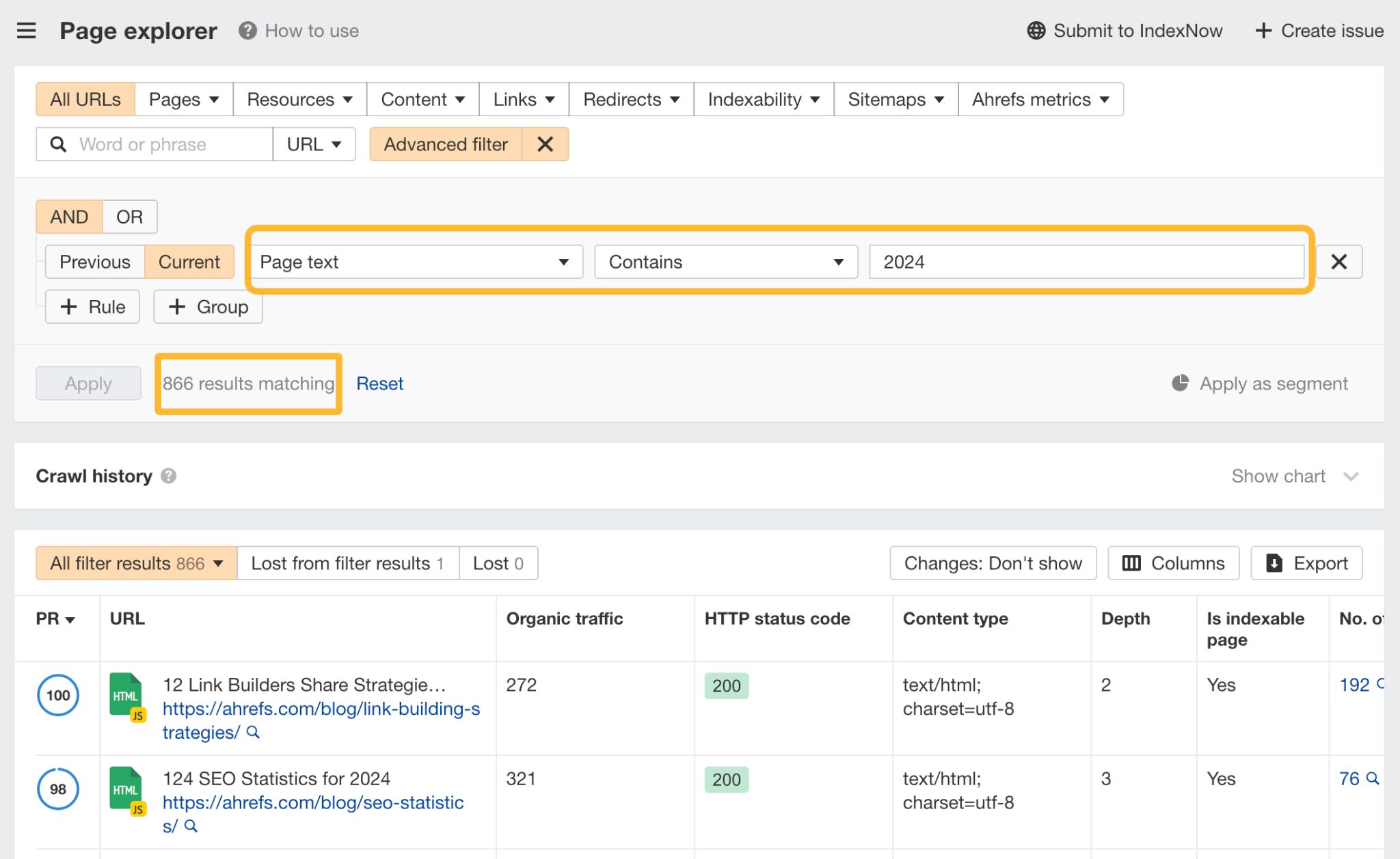
A good idea would be to keep a tool like Ahrefs’ Site Audit part of your workflow for technical SEO. It automatically monitors broken links, and you can set up custom issues to track specific phrases or dates(perfect for spotting outdated content).
Using AI in financial content creation is a grey area — and for good reason. While AI can speed things up and help scale production, the risks in a highly regulated industry like finance are too big to ignore (from losing reputation to being fined and even sued).
Some take a cautious, hybrid approach. They use AI to handle early-stage tasks like generating content variations for long-tail keywords, summarizing complex documents, researching topics, or tailoring messaging to different audiences. But every piece still goes through thorough human review.
For instance, Rob May shared that he’s “used it successfully to summarise content in an article by adding a ‘key takeaways’ section.” According to him, this can help secure featured snippets and boost clarity for readers (and I agree). That said, he also stresses the importance of “rigorous content sign-off processes with compliance teams” to ensure that even AI-assisted content is safe, accurate, and brand-aligned.
Others avoid AI entirely when it comes to financial content. Their concern? Accuracy, compliance, and trust. AI can make confident-sounding errors, struggle with regulatory nuance, and ultimately put your reputation and legal standing at risk if the content misleads users.
For example, Elie Berreby warned: “AI-generated content is one of the fastest ways to drive a financial brand off a cliff.” He points to the high likelihood of “errors, inaccuracies, and hallucinations at scale,” especially in the context of YMYL topics where factual integrity is non-negotiable.
In my opinion, the bottom line is that human oversight is absolutely essential if AI is used at all. You can use this three-layer approach:
- AI generation: Start with a detailed prompt that includes clear guidance, compliance rules, and any relevant regulatory constraints. The more specific the input, the safer and more accurate the output.
- Expert editorial review: Have a qualified financial professional — someone with credentials like CFA or CFP — review and refine the content. They’re responsible for fact-checking, adding nuance, and ensuring the final piece meets a high standard of accuracy and clarity.
- Final compliance check: Before anything goes live, a compliance officer should review the content to make sure it aligns with all relevant regulations and legal requirements.
In financial SEO, some content formats just work. They attract traffic, build trust, and move people closer to a decision. Think:
- Comparison pages that help users choose between products or services (e.g., “Traditional IRA vs Roth IRA”)
- Curated tool roundups: Create lists like “Best Retirement Planning Tools for Self-Employed Professionals” that highlight useful resources based on specific needs.
- Industry-specific financial guides: Go deep on niche audiences with content like “Best Accounting Software for Small E-commerce Businesses.”
- Step-by-step guides that simplify complex financial decisions (e.g., “How to refinance a mortgage without hurting your credit”)
- Interactive tools like calculators, checklists, and filters that help people take action (e.g., “Loan repayment calculator” or “Best credit cards for travel — customized by spending habits”)
This is where keyword research comes in. It does more than just identify topics with traffic potential; it can also guide your content format strategy based on your business’s current stage.
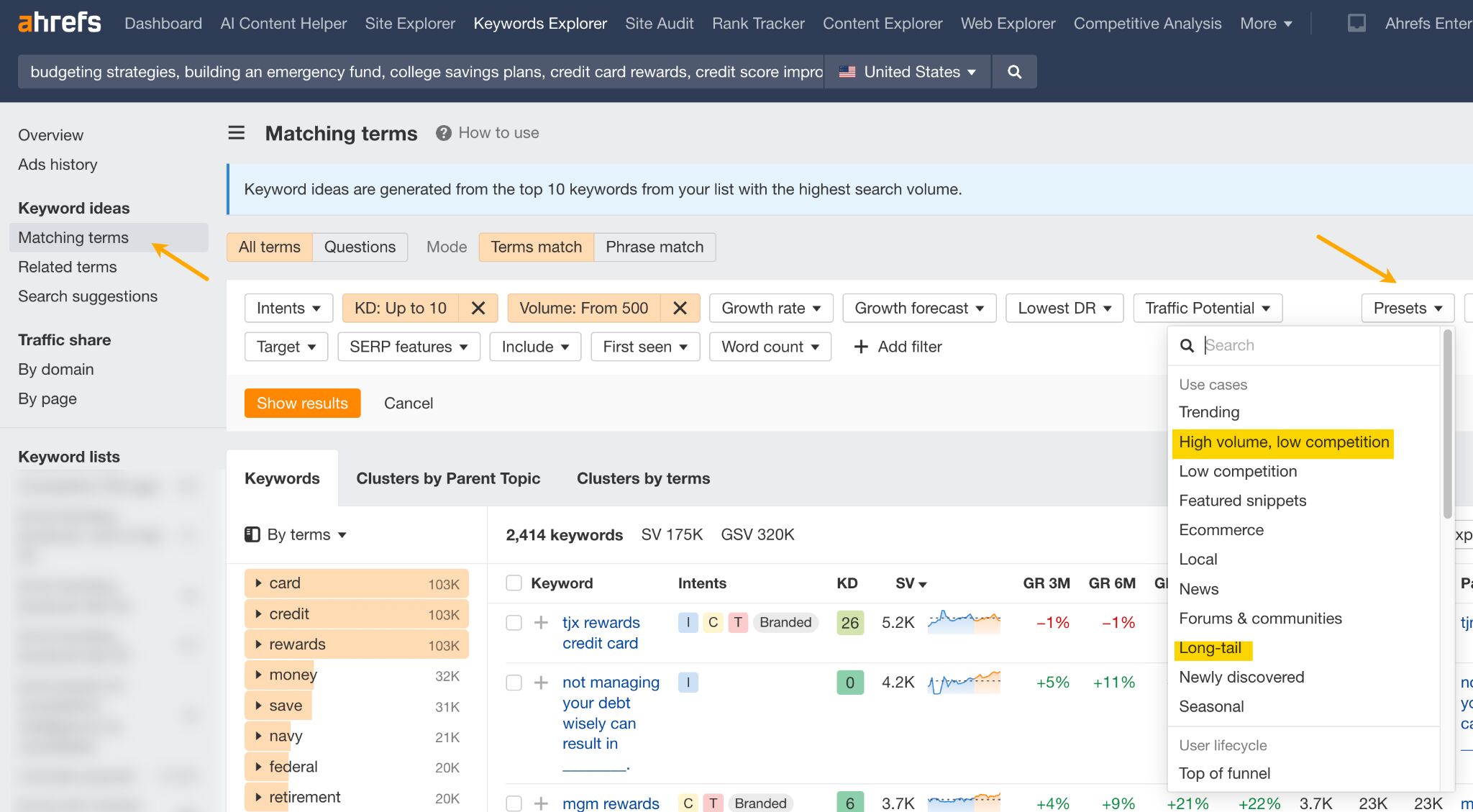
- Newer brands should focus on long-tail, low-competition keywords that match question-based searches or specific comparisons. These are perfect for how-to guides and lightweight tools. You’ll win faster and start building topical authority.
- Growing brands can step up to broader commercial keywords, especially those tied to product categories or high-intent queries. This is the time to publish deeper guides, advanced calculators, and comparison tables that align with core offerings.
- Established brands should target competitive head terms and focus on maximizing SERP visibility — through schema, featured snippets, AI Overviews, and multimedia formats. At this level, content needs to be comprehensive, authoritative, and constantly optimized.
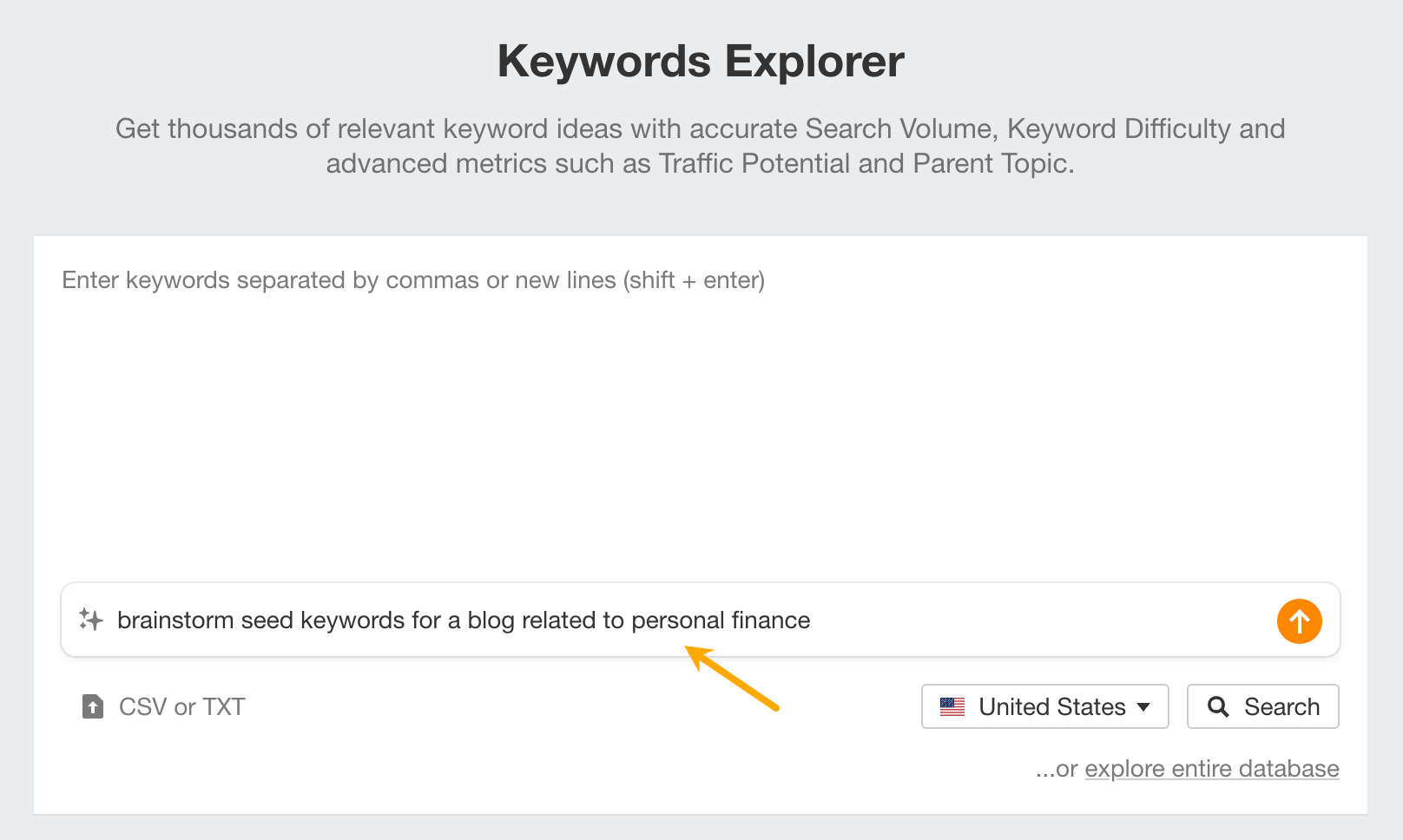
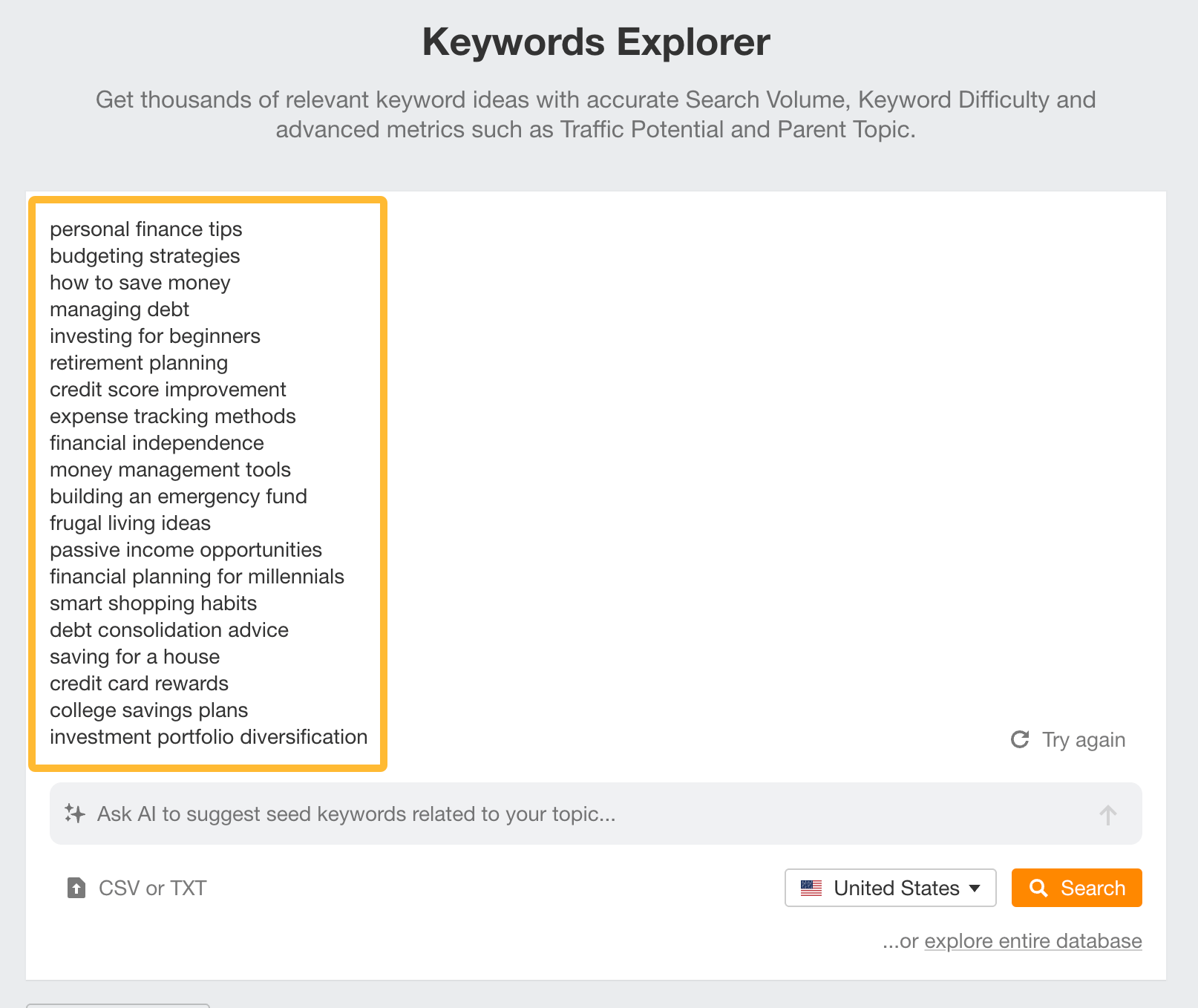
Start by identifying keywords directly related to your products or services. Use AI tools like ChatGPT to generate a list of relevant seed keywords. If you’re using Ahrefs, try the built-in AI features in Ahrefs’ Keywords Explorer to brainstorm seed keywords and expand from there.
Next, go to the terms match and use the predefined filters to quickly uncover different types of keywords we discussed above, including long tail, low competition, local (if you own physical locations), questions, and comparisons.
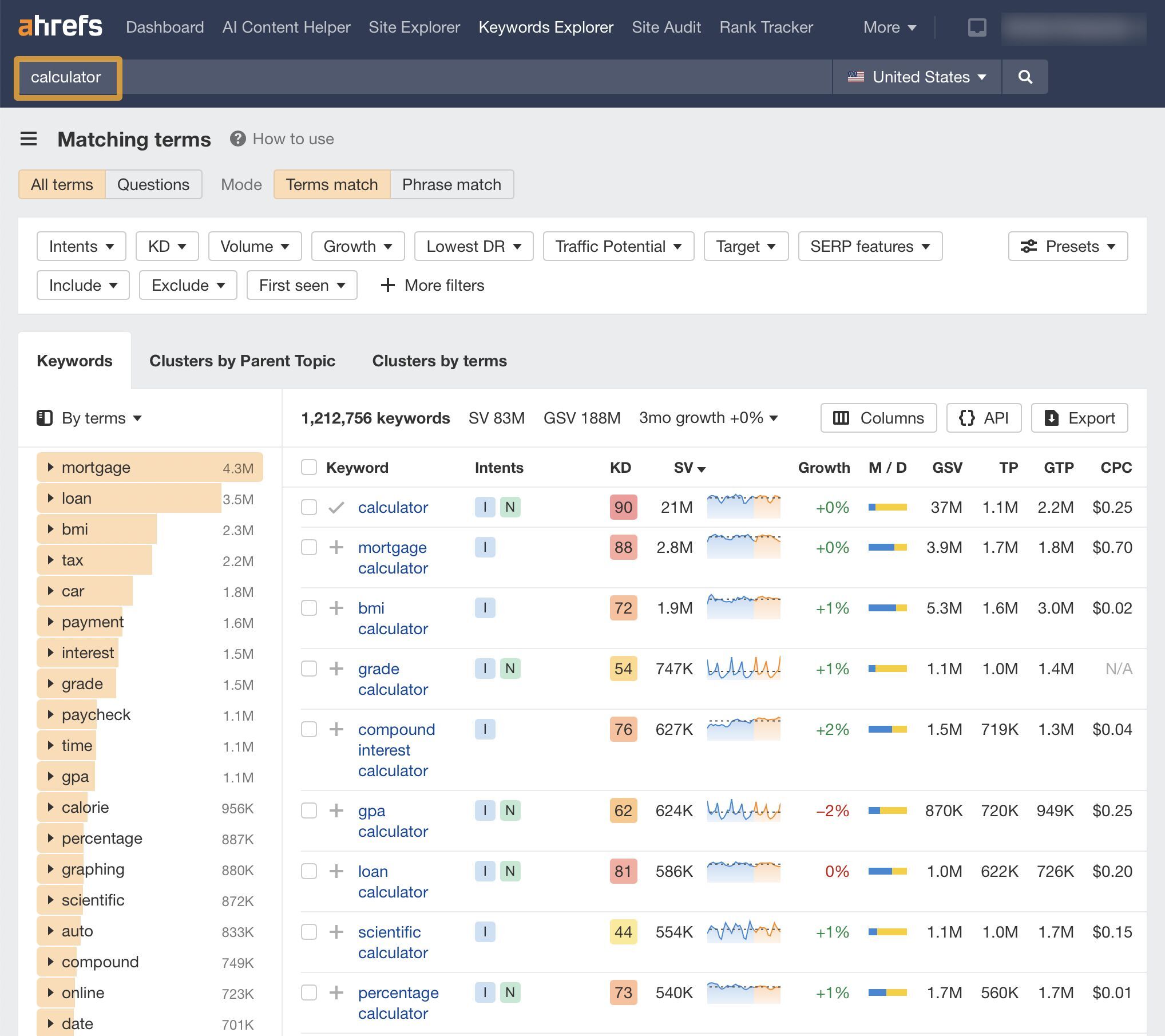
And here’s how to find keywords related to online calculators in a few seconds: enter “calculator” into the search bar of Keywords Explorer and click on the Matching terms report.
Technical SEO might not be as complex or time-consuming for financial sites as it is for giant e-commerce platforms, but that doesn’t mean you can afford to ignore it. These few foundational elements go a long way:
- Make sure your site is fully responsive. A big chunk of your audience is browsing on mobile, and any friction there can cost you lost leads.
- Slow-loading pages frustrate users and can hurt rankings.
- If your site isn’t encrypted, you risk SEO penalties and signal to visitors that their data might not be safe.
- Your navigation should make sense to both users and search engines. Clear page hierarchy, intuitive menus, and a solid internal linking strategy all help.
- As mentioned earlier, structured data helps search engines understand your content, your authors, and your services, boosting visibility in search features.
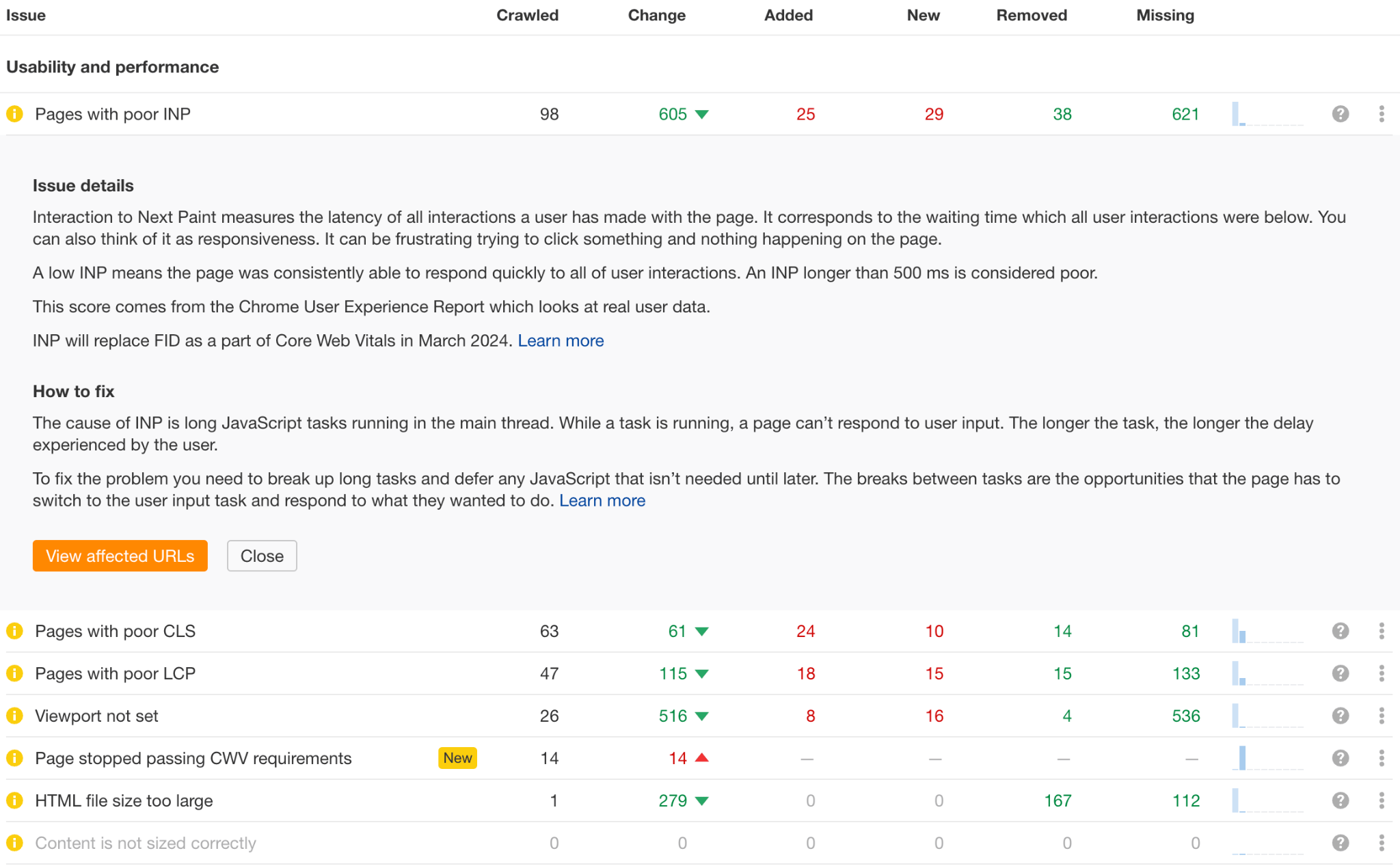
The simplest solution to keep your site in good shape is to use a tool like Ahrefs’ Site Audit, which monitors your site for over 170 issues, shows where they occur, and how to fix them.
Backlinks are still one of the strongest signals in Google’s ranking algorithm, but quality matters far more than volume. A handful of links from trusted, authoritative sources can carry more weight than dozens of low-quality ones.
Here’s how to earn backlinks that move the needle:
- Publish original research: Use proprietary data like loan applications, investment trends, or customer insights to create reports that others will want to cite. When your content becomes a go-to reference, backlinks follow naturally.
- Create comprehensive, expert-level guides: Cover complex financial topics in depth, offering clarity where others don’t. These types of resources often become link magnets within the industry.
- Build link-worthy tools: Interactive calculators, comparison tools, or financial planning resources that solve real problems are more likely to get shared and linked to.
- Optimize your business profiles: Claim and enhance your listings on trusted platforms like G2, Crunchbase, Capterra, and LinkedIn. Not only do these send trust signals to users, but they also give you high-authority backlinks that help boost your domain strength.
A real-world example of this is from Bankly, a Danish fintech startup. As Victor Enselmann shared, Bankly was up against established competitors with stronger backlink profiles. Here’s what his team did to close the gap:
- Bankly conducted a unique “debt analysis,” using nationwide data to identify Danish municipalities and regions with the highest and lowest debt per capita.
- To add credibility and depth, they secured quotes from well-known economists from high-level banks.
- The data story, enriched with expert commentary, was pitched to both local and national journalists.
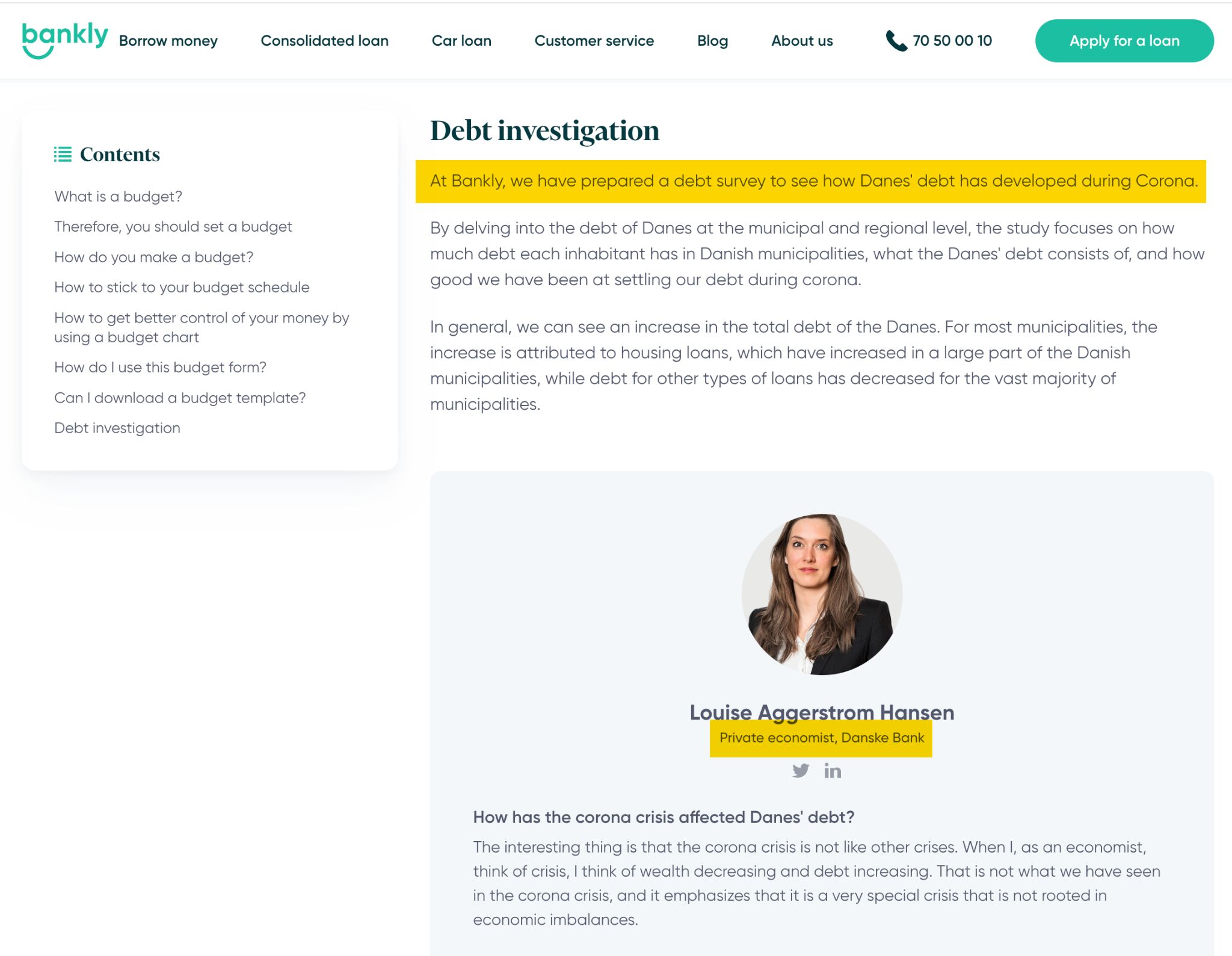
This single Digital PR campaign resulted in over 20 links from high-authority media outlets — not an easy number to get in the Danish market, as Victor later explained to me. The high-quality backlinks earned through this targeted Digital PR effort were a major factor in Bankly achieving #1 rankings for highly competitive personal loan keywords (like lån penge, which translates to “borrow money,” or samlelån, Danish for “debt consolidation loan”) and driving significant visitor growth within roughly 1.5 years.