


Ask ChatGPT, “How much does SEO cost?” and you’ll likely see Ahrefs cited as a source. Ask Claude about email marketing benchmarks, and Mailchimp’s data appears. Search Perplexity for project management tips, and Asana’s guides get referenced.
At first glance, it looks like only big brands get cited in AI answers. In the top 10 cited domains across all major LLMs, you’ll find sites like Wikipedia, Reddit, Mayoclinic, Quora, Healthline, and Amazon.
But these brands aren’t cited just because they’re famous. They’re cited because their content hits specific marks, which I’ll explain in this article.
The real question isn’t whether you can outdo Wikipedia on broad topics. It’s whether you can become the trusted expert in your specific niche—the source that language models rely on when people ask about your field.
LLM stands for “Large Language Model”—that’s the technology behind AI chatbots like ChatGPT, Claude, Gemini, and Perplexity. When we talk about “LLM citations,” we mean when these AI tools reference your website as a source in their answers.
But not all references are created equal. There are two main ways your brand can appear in AI answers.
Citations
A citation is when the AI attributes information to your content, including a link to your site.
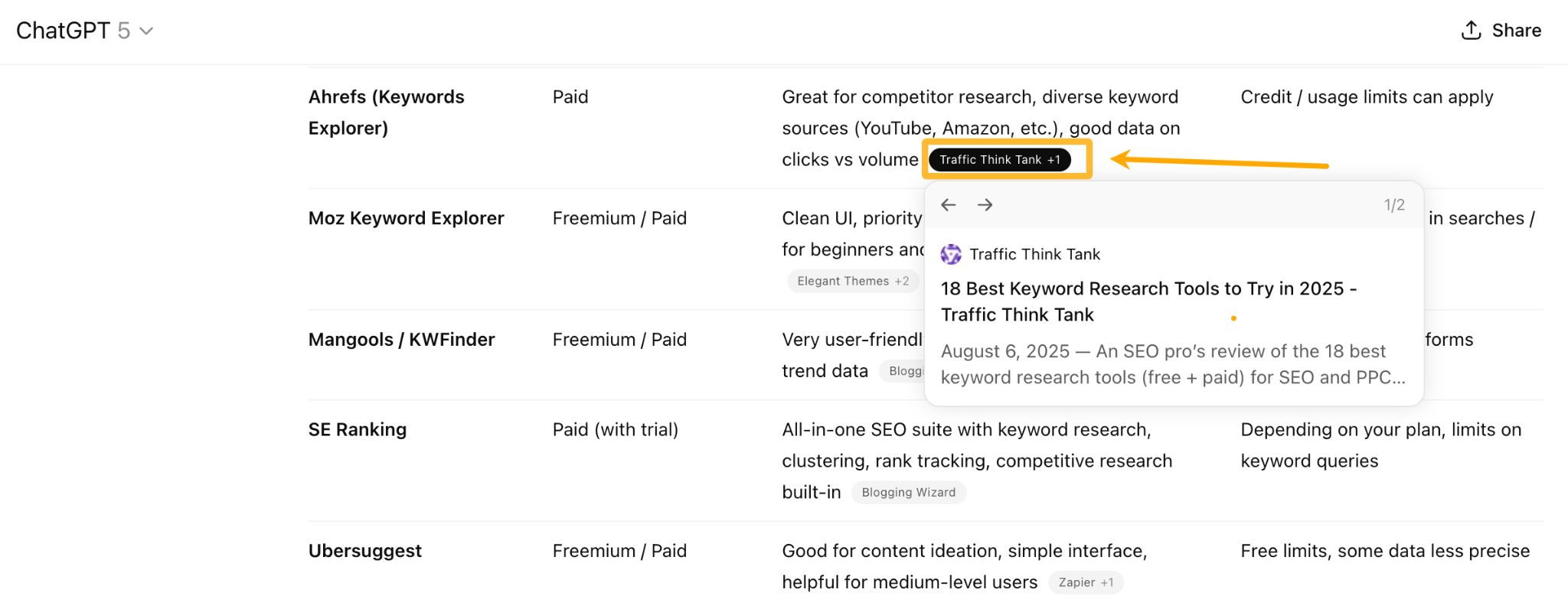
These usually appear when someone asks for data, statistics, how-to guides, or information about recent events. The AI pulls facts from your content and credits you as the source (not necessarily mentioning your brand in the main body of the answer).
In most AI interfaces, citations appear “in the background”; you’ll find them in a “sources” section, at the bottom of the response, or behind small numbered references you can click.
Mentions
A mention is when your brand or product name shows up in an AI-generated answer.
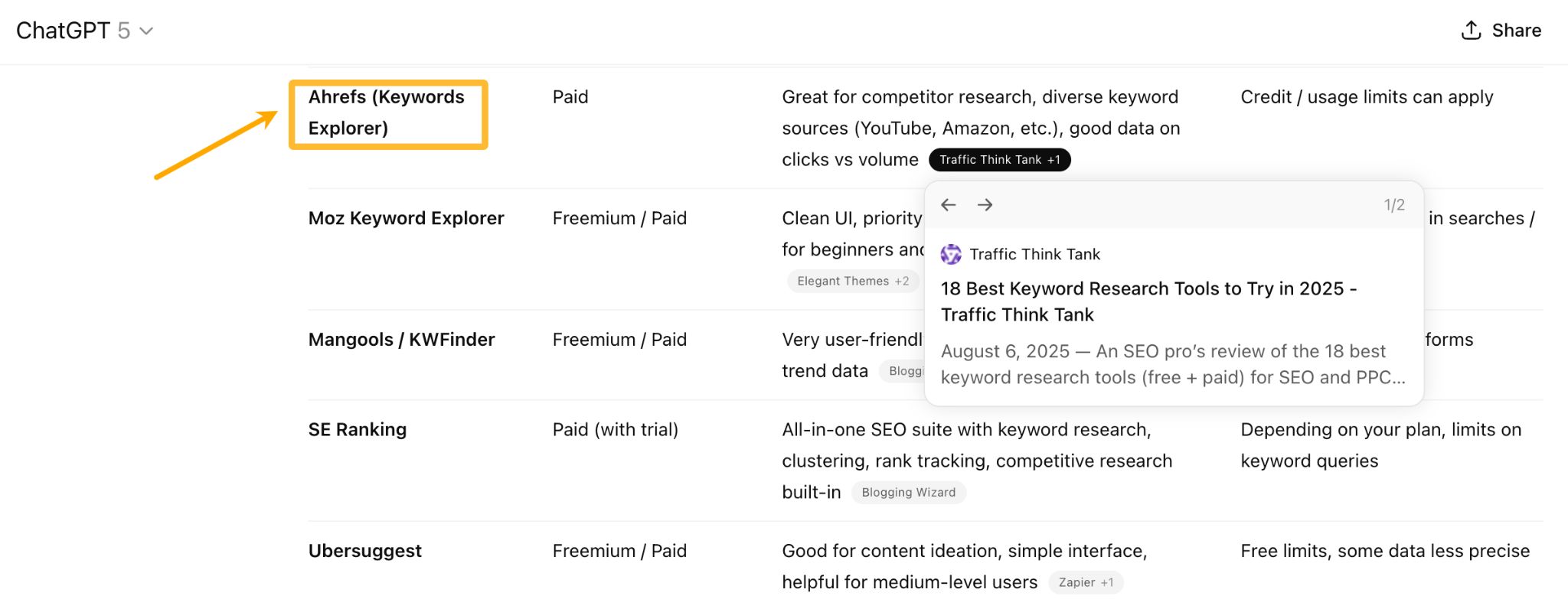
This typically happens when the user asks for product recommendations. For example, if someone asks “What’s the best project management software?”, the AI might list your product in its main response, but without linking to you.
Mentions are valuable because they build brand awareness. People see your name, remember it, and might search for you later.
The best of both worlds
Sometimes you get lucky and receive both: your brand is mentioned in the main text and linked in the citations list. These combined appearances are the most valuable because they give you visibility (the mention) plus authority and potential traffic (the citation).
While AI citations boost credibility and visibility, they work differently from traditional search. The real value is in immediate traffic and the long-term brand equity you’re building.
They provide measurable, attributable traffic
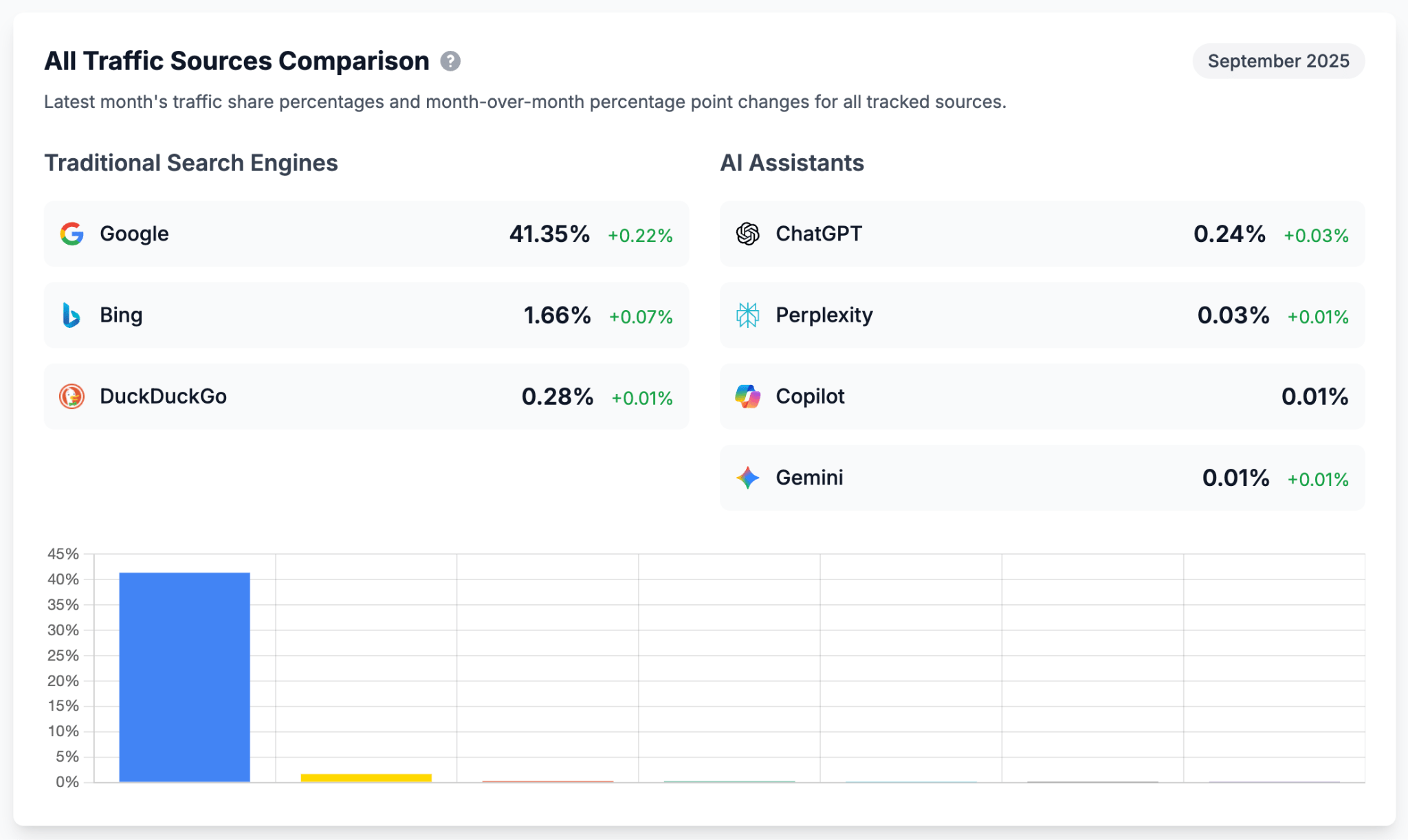
Let’s be clear: traffic from AI citations is modest. Our data from roughly 60,000 websites shows that all large language models combined account for less than 1% of total traffic, compared to Google Search’s 41.35%.
And there’s another wrinkle: citations don’t automatically equal clicks. I analyzed 1,000 of the most-cited pages from ahrefs.com, and only about 10% also ranked among the top pages getting traffic from ChatGPT. Most traffic went to practical resources—homepages, product pages, and free tools.
But here’s why this traffic still matters: quality over quantity. The visitors who do click through typically have strong intent. They’ve already seen a summary but want more depth, which suggests genuine interest in your content.
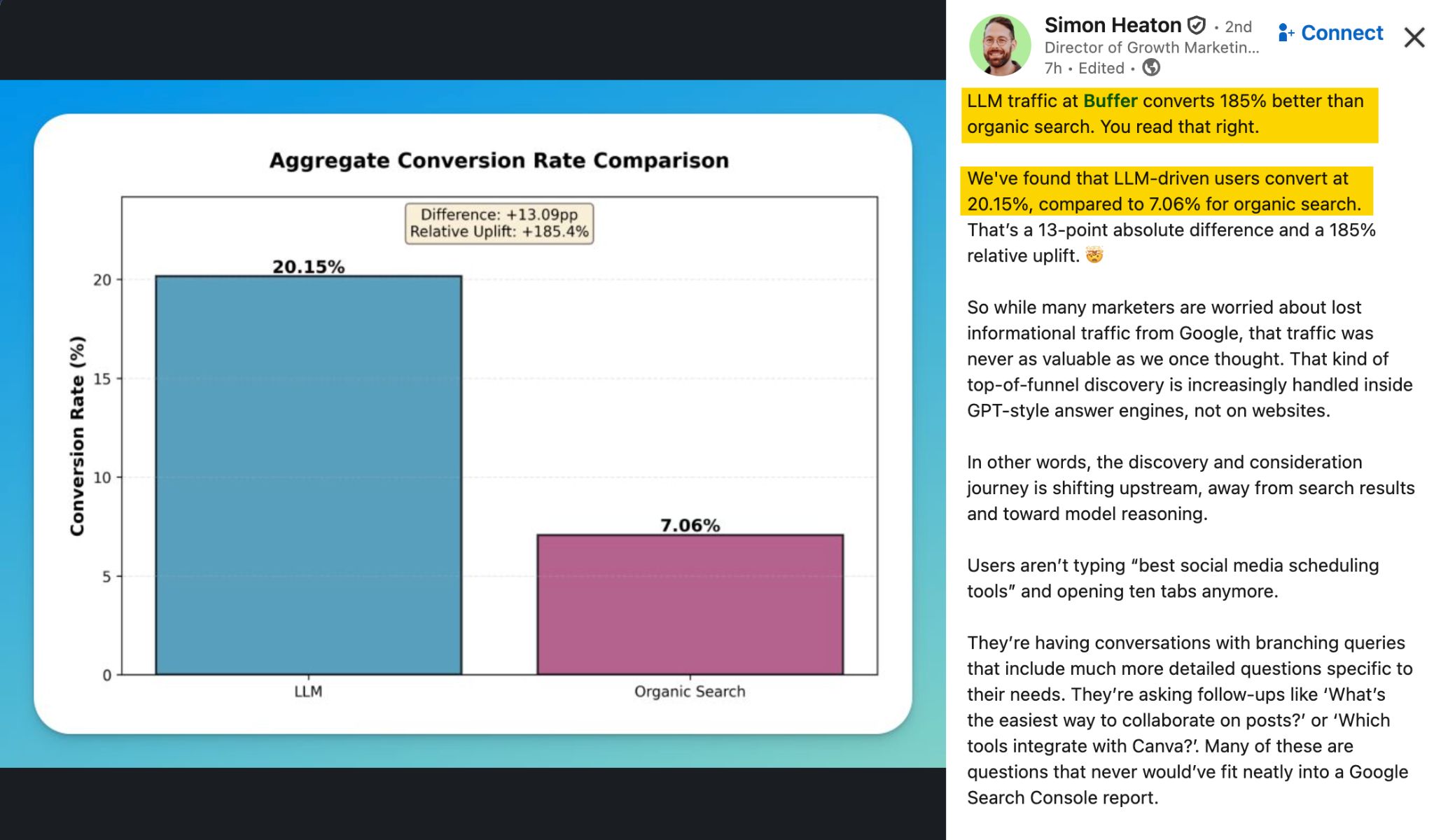
When those visitors convert, the results can be exceptional. Buffer reported conversion rates 185% higher than organic search, while we’ve seen rates up to 23 times higher.
Also, this traffic serves as a crucial benchmark. It allows you to:
- Confirm which AI platforms are actually citing your content.
- Gauge the relative importance of different AI assistants to your audience.
- Track progress over time as you optimize for AI citations.
- Understand which topics and content formats generate the most AI-driven engagement.
Citations don’t always equal traffic
When I looked at 1,000 of the most-cited pages from ahrefs.com, only about 10% also ranked among the top pages getting traffic from ChatGPT. Most of that traffic went to the homepage, product pages, and free tools.
In other words, being mentioned a lot doesn’t necessarily mean people will click through. And that’s fine. Citations help build authority and brand recognition, even if they don’t drive direct visits. Meanwhile, the pages that do attract the most traffic are usually practical tools or resources that meet users’ immediate needs.
They signal trust and authority
When an AI cites your content, it’s essentially telling users: “This source is reliable enough to stake my answer on.” That endorsement builds credibility, even if people never click through to your site.
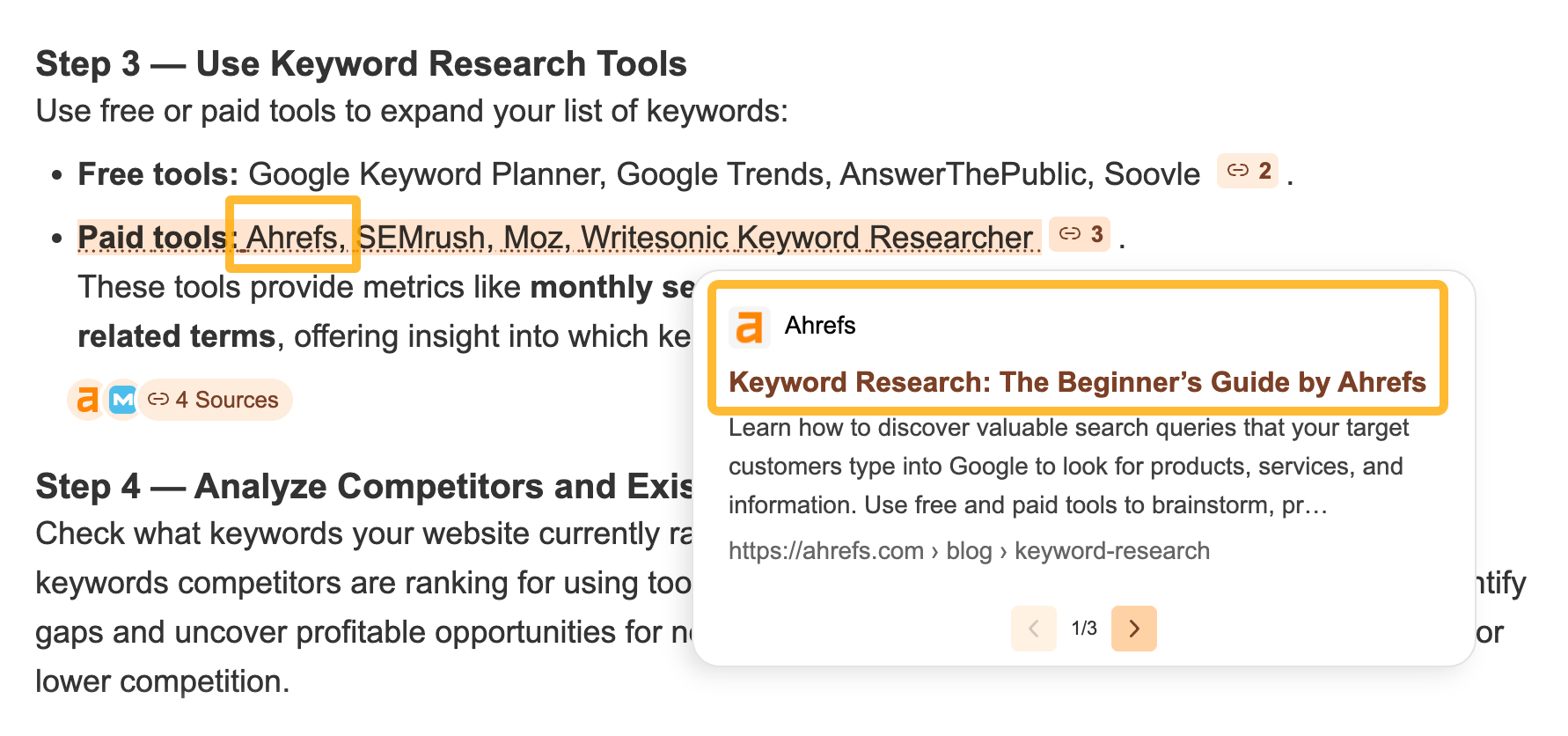
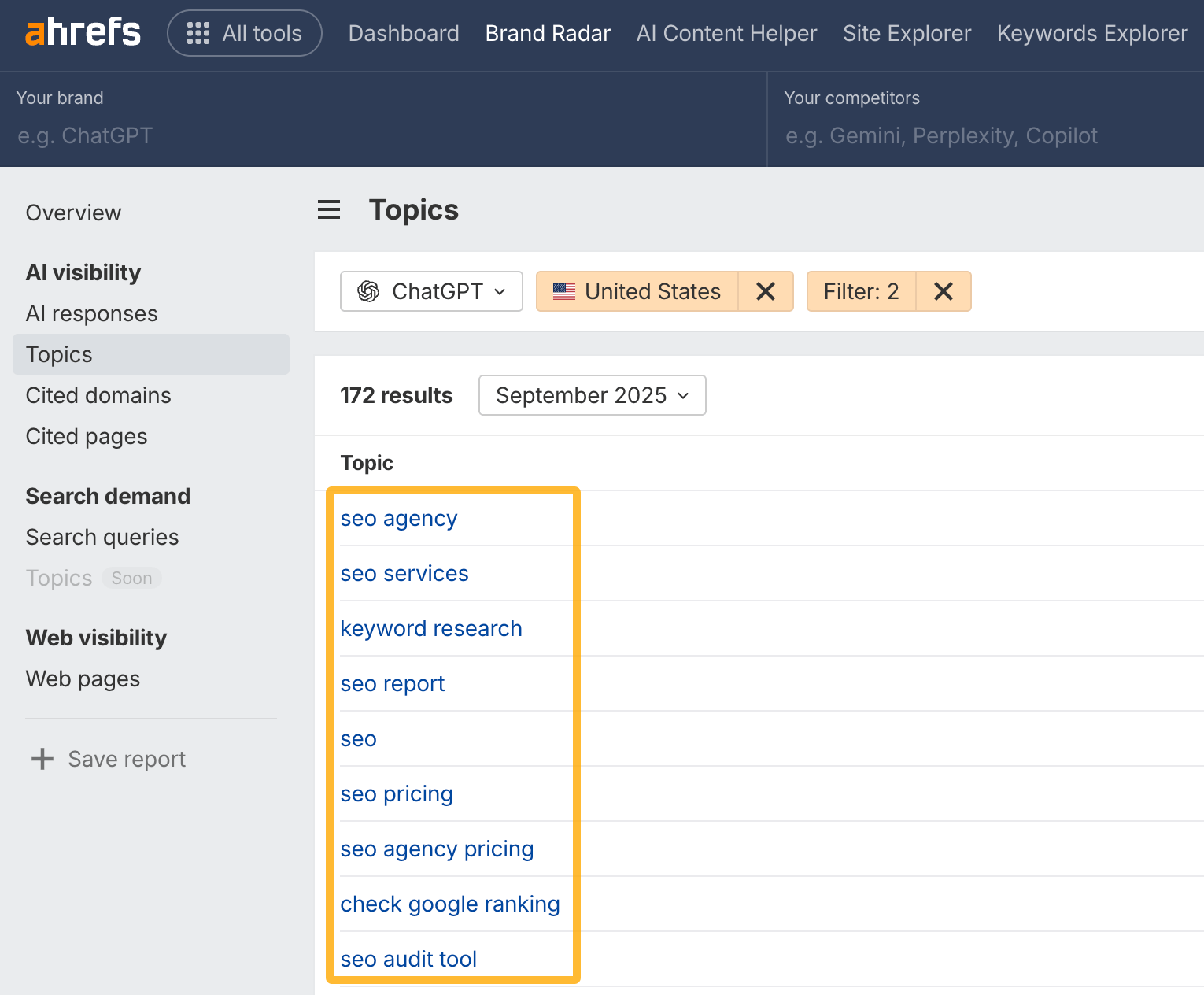
Think about it—if someone asks ChatGPT about SEO pricing and sees your brand cited, you’ve just been positioned as an expert in their mind. That perception matters.
For example, here are some of the topics where Ahrefs is cited. The pattern is quite clear—Ahrefs is an authority in SEO.
They build brand recognition in a new marketing channel
AI tools are expanding quickly. ChatGPT reached 100 million users faster than any other app ever, and now has around 800 million people using it every week. As search behavior shifts toward AI platforms, this is fundamentally about reputation building in a new channel.
The brands that appear consistently in AI citations will build the same type of authority that early SEO leaders established in traditional search—they become the trusted names audiences encounter repeatedly when seeking answers.
To understand how to get cited, you first need to understand how AI tools actually find and reference content.
Two sources of information
AI chatbots pull from two different knowledge bases:
- Training data. This is the information the AI learned during its initial training. Think of it as the AI’s “built-in knowledge.” It includes facts, concepts, and information that the AI “memorized” from millions of web pages, books, and documents before it was released.
- RAG (Retrieval-Augmented Generation). This is when the AI searches the web in real-time to find current information and improve the answer.
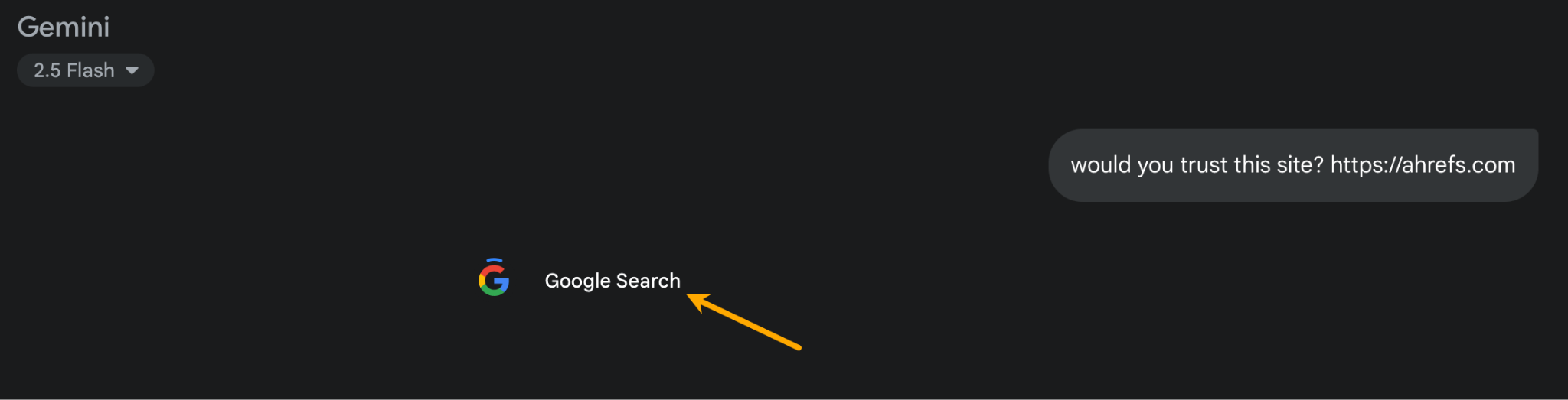
Here’s the key point: typically, it’s RAG that produces citations. When an AI uses its training data, it doesn’t link to sources right away. But when it searches the web through RAG, it cites the pages it found.
So, if you want citations, you need to optimize for AI platforms that actively search the web. Fortunately, most major LLMs now use RAG.
When LLMs search the web
AI chatbots typically trigger web searches when:
- The query needs fresh information. Recent events, current prices, latest news, or anything time-sensitive.
- The topic isn’t in their training data. Niche subjects, new products, or specialized industry information.
- Statistics or data are requested. Specific numbers, research findings, or survey results.
- It’s a YMYL topic. YMYL stands for “Your Money or Your Life”—topics like medical advice, financial guidance, or legal information where accuracy is critical. This is not something that is embedded in how LLMs work per se, but in practice, most of the time, LLMs will use a web search when you ask them about money, law, or health.
- The user explicitly asks. Phrases like “search the web” or “what’s the latest” trigger immediate searches.
So if your content addresses any of these trigger scenarios—timely information, specialized knowledge, data-backed insights, or authoritative guidance on important topics—you’re already creating the type of content AI tools are programmed to search for and cite.
Why you might get different citations for the same question
Ask the same question a few times, and you’ll often get slightly different answers with different sources.
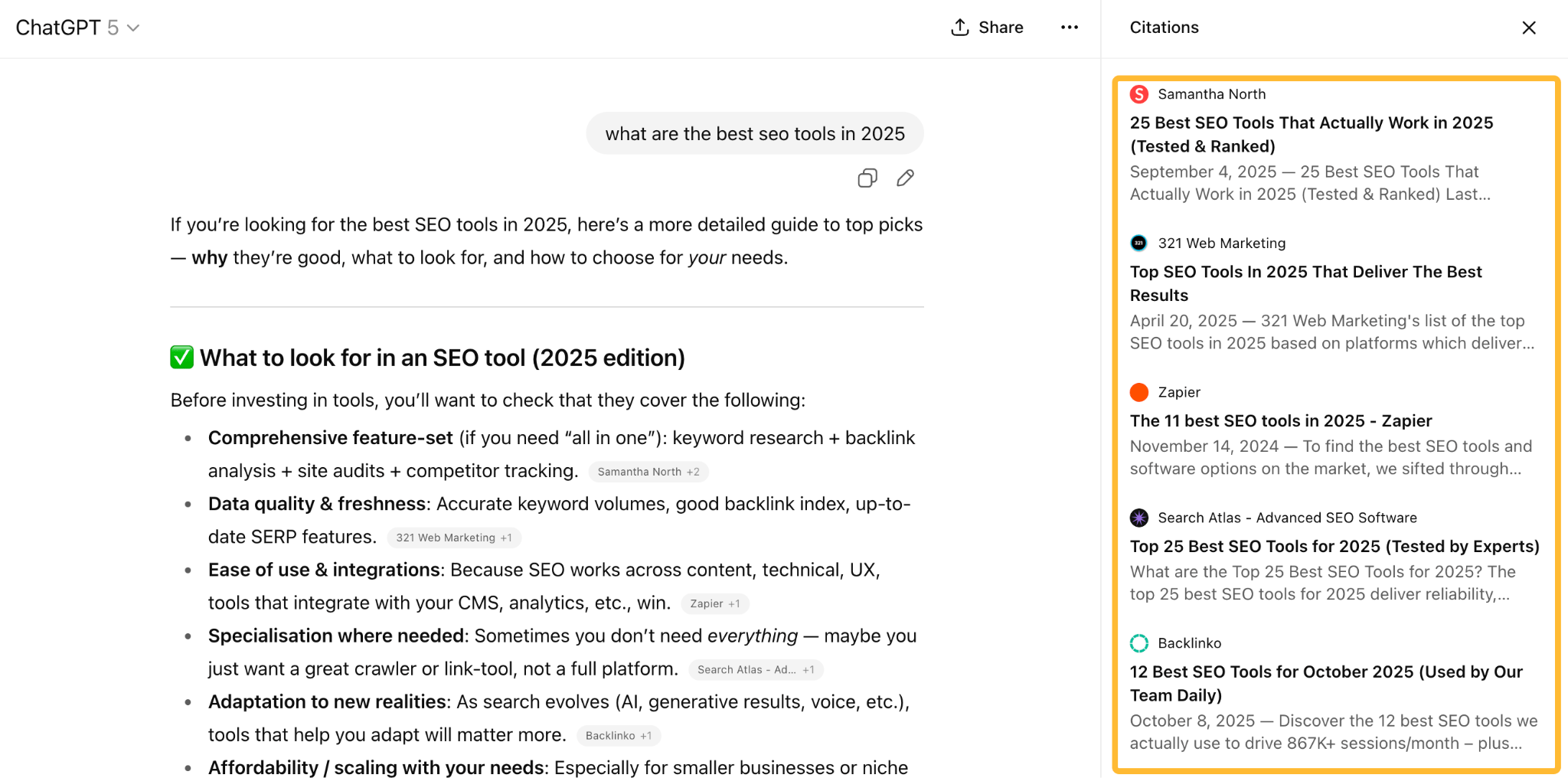
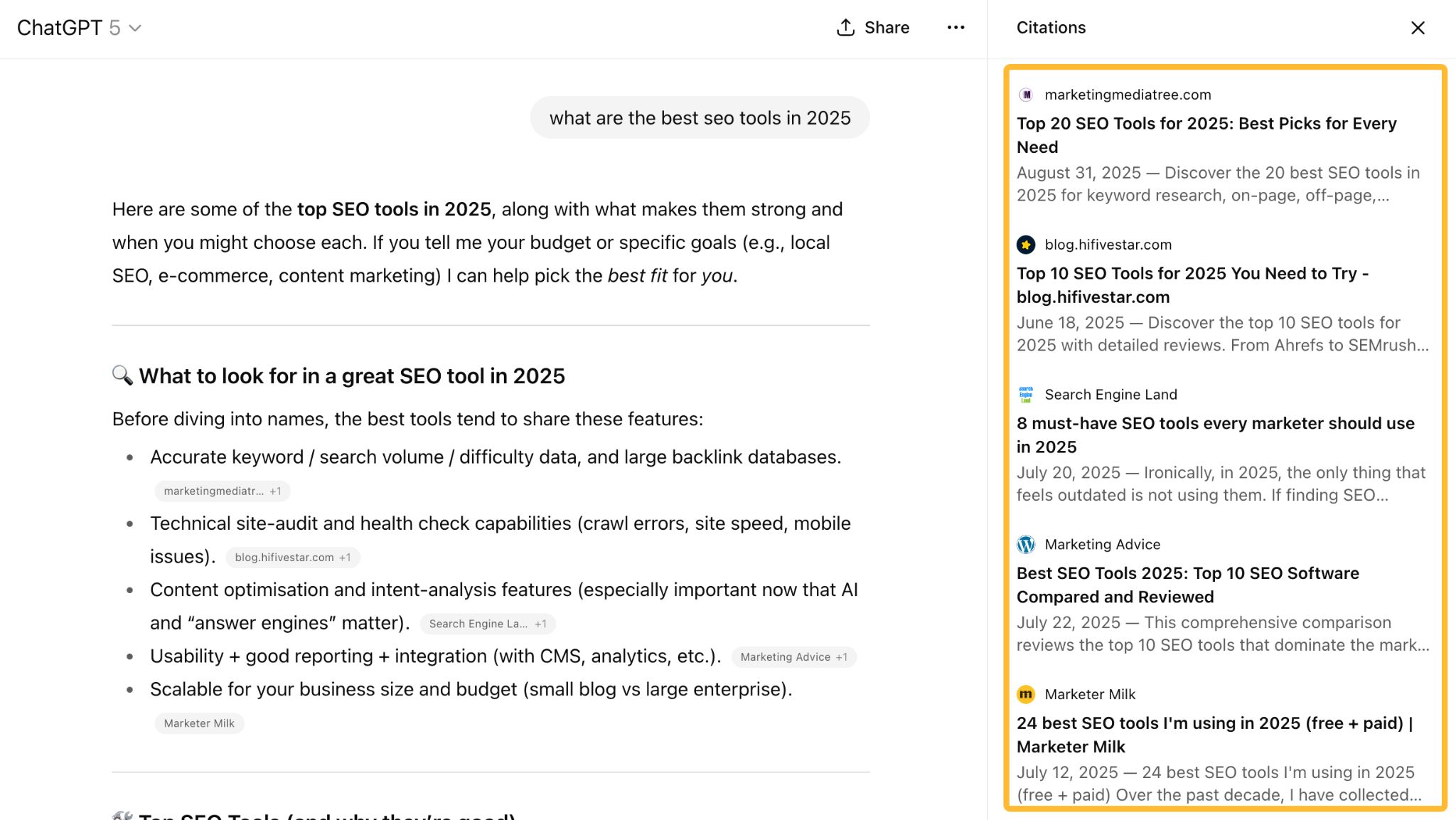
AI systems use probabilistic models, which means responses can vary even for identical questions. One reason is “temperature”—a parameter that controls how much randomness the model allows when choosing words. At higher temperatures, the AI explores more phrasing options, leading to different answers each time.
Other factors, like your location, the specific model version, and even the time of your query, can also affect which sources appear. Companies frequently update their models and retrieval systems, which can further influence citation patterns over time.
Additionally, the way you phrase your question matters. Slight variations in wording can lead the AI to prioritize different sources or interpretations, even when asking about the same topic.
My personal theory is that since LLMs are trained to satisfy the user’s intent, they sometimes end up “overoptimizing” or “overinterpreting” what’s being asked. When an AI notices that the same question is being asked again, it doesn’t just ignore it; it tries to make sense of why. It might assume the user wasn’t happy with the first answer and adjust its response, much like a human would in the same situation.
In general, when you ask an AI assistant a question, the system breaks your prompt into multiple search queries (a process called query fan-out), then uses retrieval-augmented generation (RAG) to fetch relevant content from the web or its index. The AI then synthesizes information from these retrieved results to construct its response.
This means citations are chosen because your content showed up in the retrieval process and met certain selection criteria.
Research, including our own, on AI Overviews, ChatGPT citations, and other AI assistants, reveals consistent patterns in what gets selected.
Freshness is heavily weighted
Our analysis revealed a strong bias toward recently published or frequently updated pages. LLMs appear to weigh freshness as a key factor when selecting sources, particularly for time-sensitive topics.
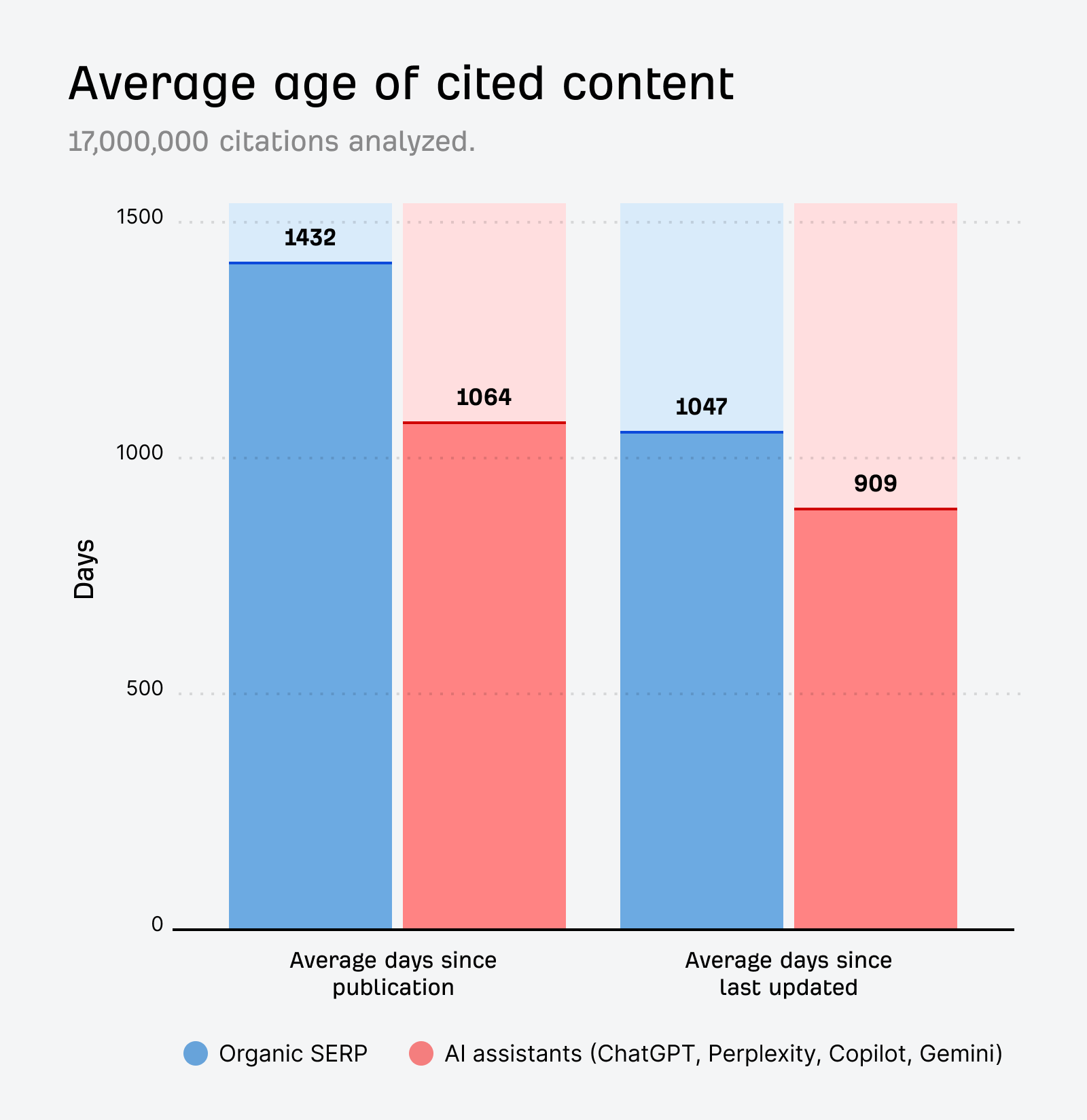
And we’re not the only ones who found this to be true. Another experiment referred to this behavior in LLMs as a “recency bias”. This likely stems from patterns in their training data, where fresh content is often associated with higher relevance and quality.
Across seven models, GPT-3.5-turbo, GPT-4o, GPT-4, LLaMA-3 8B/70B, and Qwen-2.5 7B/72B, “fresh” passages are consistently promoted, shifting the Top-10’s mean publication year forward by up to 4.78 years and moving individual items by as many as 95 ranks in our listwise reranking experiments. (…) We also observe that the preference of LLMs between two passages with an identical relevance level can be reversed by up to 25% on average after date injection in our pairwise preference experiments.
This likely stems from training data patterns where fresh content correlates with relevance and quality, particularly for time-sensitive topics.
Domain authority matters (because ranking matters)
From a traditional SEO point of view, websites that get cited by AI tend to have stronger link profiles.
When I analyzed the top 1,000 sites most frequently mentioned by ChatGPT, the data showed a clear pattern: AI favors websites with a Domain Rating (DR) above 60, and the majority of citations came from high-authority domains in the DR 80–100 range.
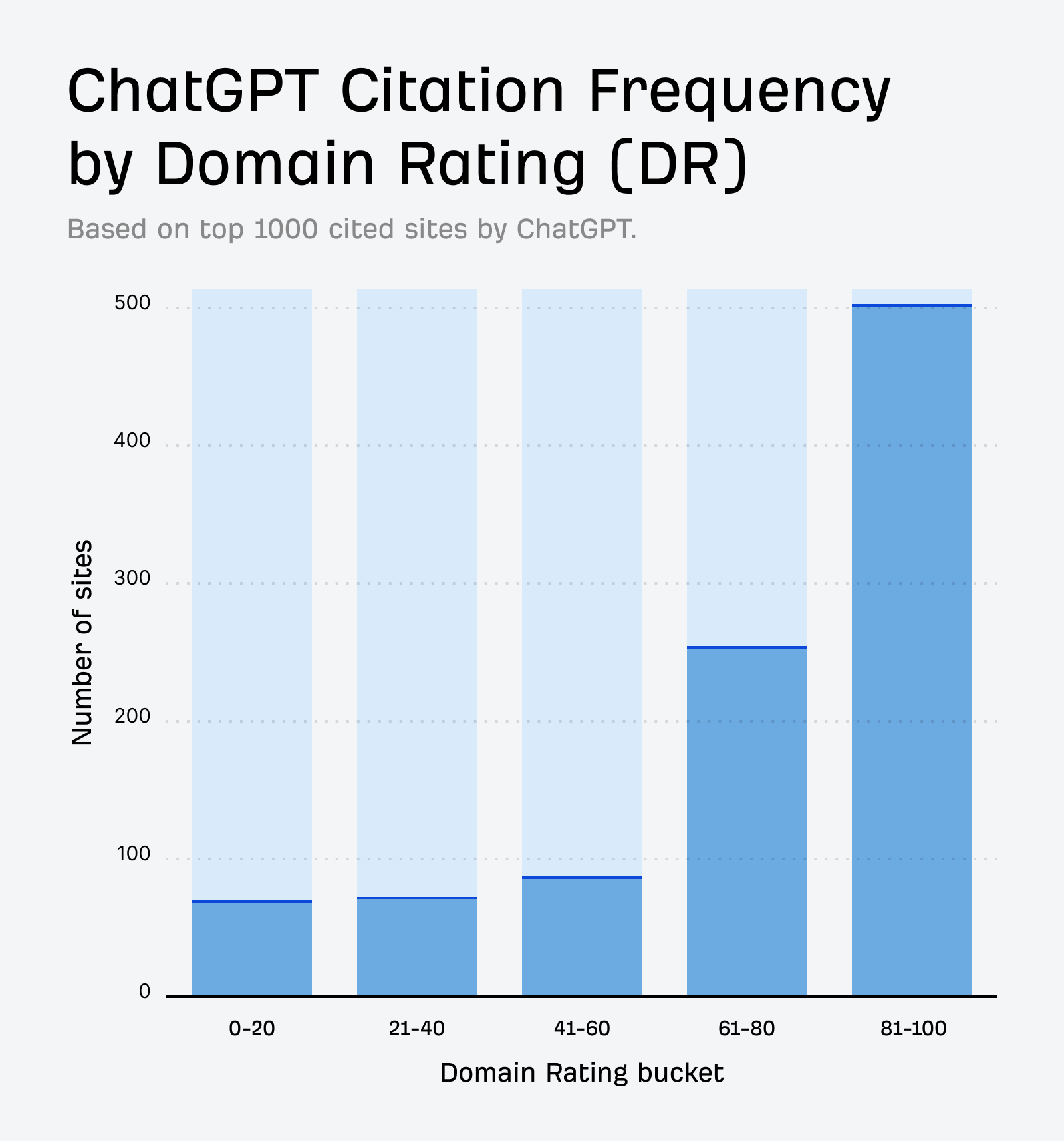
But this probably isn’t because LLMs directly evaluate domain authority. More likely, these systems retrieve content that ranks highly for their query fan-out terms, and high-DR sites naturally rank better in search results. The correlation with DR is indirect but strong.
Semantic relevance to the query
AI systems prioritize content that directly addresses the expanded queries generated from user prompts. You can see this with Google’s AI Overviews. When you search for something like “how to know when an avocado is ripe,” the cited sources typically contain exact sentences or paragraphs that answer that specific question.
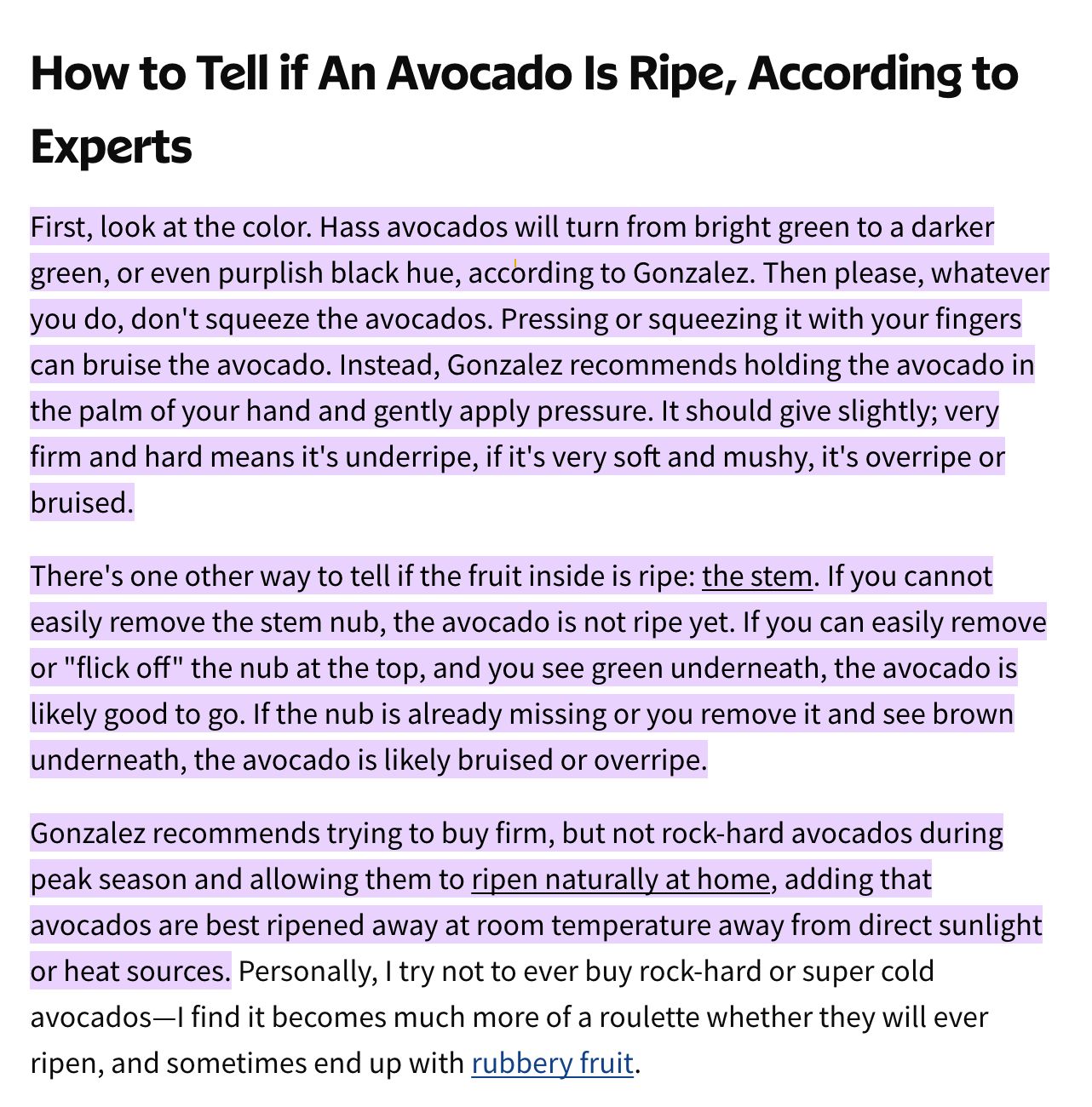
This isn’t about “clarity” in some general sense—it’s about having content that semantically matches what the AI is looking for when it fans out the user’s query into retrievable search terms.
Structured, extractable formatting
Microsoft’s guide on optimizing for AI search confirms what case studies have shown: AI systems favor content with clear meaning, consistent context, and clean formatting.
“Clarity is about more than just word choice, it’s how you phrase, format, and punctuate so AI systems can interpret your content with confidence. AI systems don’t just scan for keywords; they look for clear meaning, consistent context, and clean formatting. Precise, structured language makes it easier for AI to classify your content as relevant and lift it into answers.”
This makes sense from an LLM perspective—the easier it is to extract a relevant passage, the more likely that passage gets used.
Let’s look at a real example: Ahrefs’ “How Much Does SEO Cost?” page is one of our most frequently cited articles.
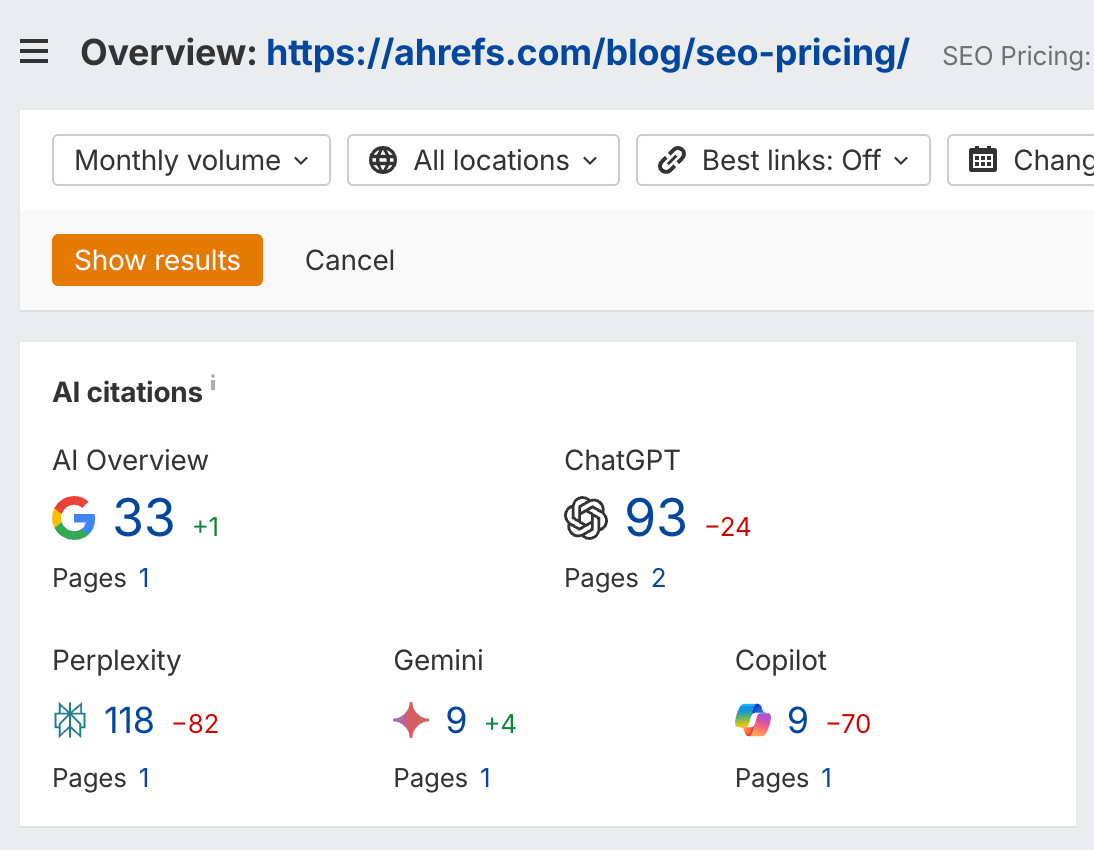
Here’s what, in my opinion, makes it work so well:
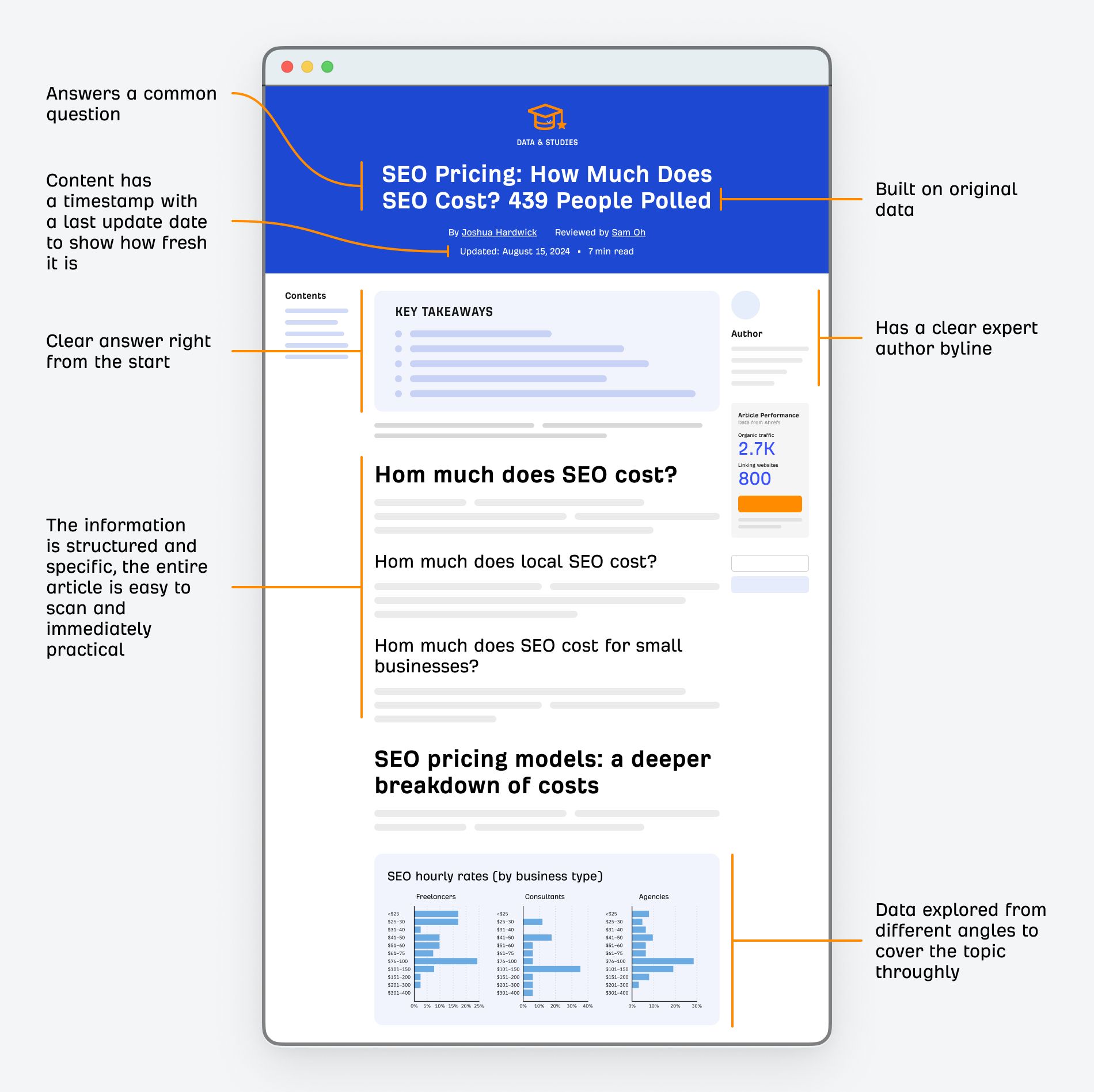
It answers a common question directly
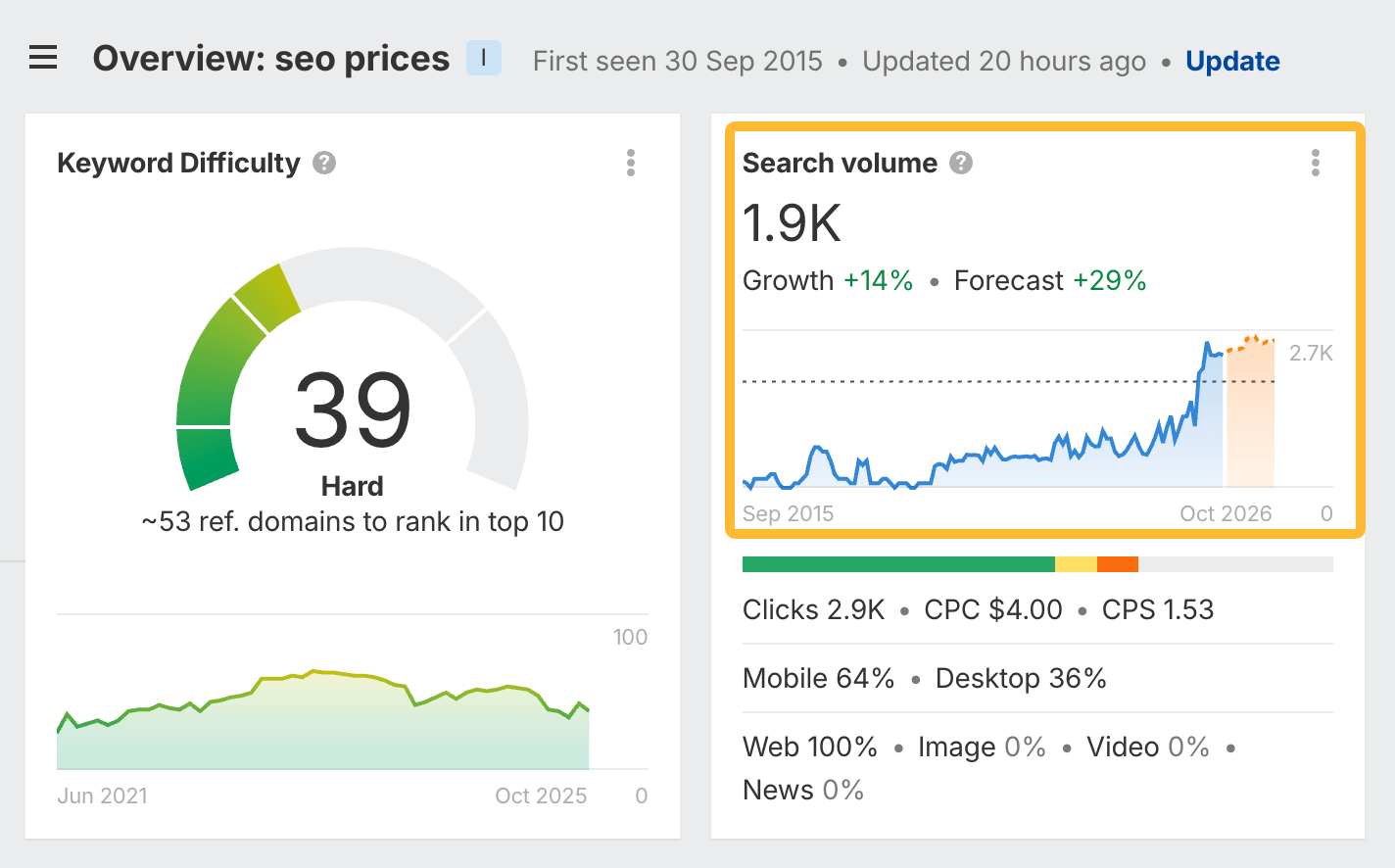
“How much does SEO cost?” is one of the most frequently asked questions in the industry, and that demand keeps growing. The more popular the question, the more opportunities there are to earn citations.
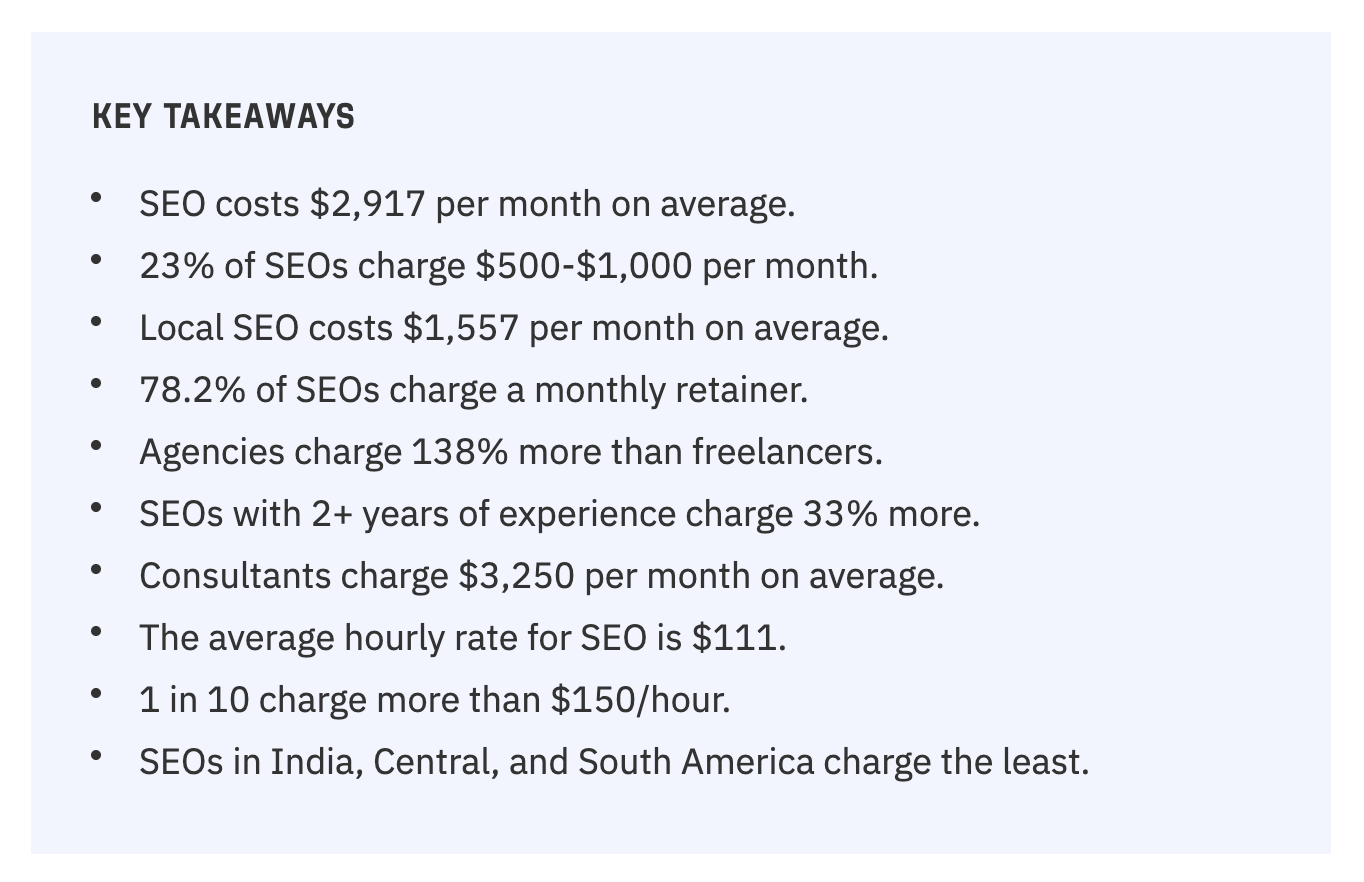
Our page tackles the query right away with a clear, straightforward answer at the top; no filler or long-winded introductions.
It’s built on original data (with a timestamp)
The title itself—“439 People Polled”—signals original research that can’t be found elsewhere. When AI tools generate answers about SEO pricing, they often cite Ahrefs because it’s the primary source.
Survey-based content with a clear sample size builds credibility. It’s not opinion; it’s hard to get data.
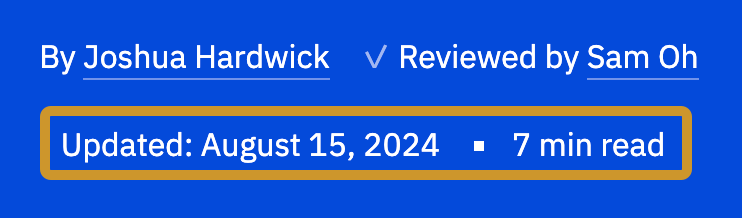
It’s also best practice to include a date for your data and keep it updated regularly, showing both freshness and reliability.
The information is accessible, structured, and practical
The page includes concrete numbers—percentages, price ranges, and averages—and breaks them down by factors like location or service type. This structured layout makes it easy for AI to extract exactly what it needs for different queries.
Importantly, key stats are written in plain text (not buried in images), which helps AI systems access and interpret them.
Unlike theoretica