
Brand mentions happen when people talk about your company online without necessarily linking to your website.
They’ve always happened on social media, forums, news sites, and blogs. But now they’re happening in AI responses—and these mentions influence how millions of people discover and perceive your brand.
Welcome to the new era of brand mention monitoring.
Right now, traffic from AI assistants makes up only a very small share of overall website visits—ChatGPT, the most popular one, accounts for just 0.21%. Still, there are at least three good reasons why this small number matters.
AI recommendations reach millions
People turn to AI to solve problems and to decide what to buy. If that AI recommends a competitor, you risk losing customers.
In July 2025, ChatGPT had more than 700 million weekly users around the world. If we focus just on users looking for how-to advice or products to buy, as stated by their usage report, that means brand recommendations could show up in conversations with at least 74.2 million people every week. 
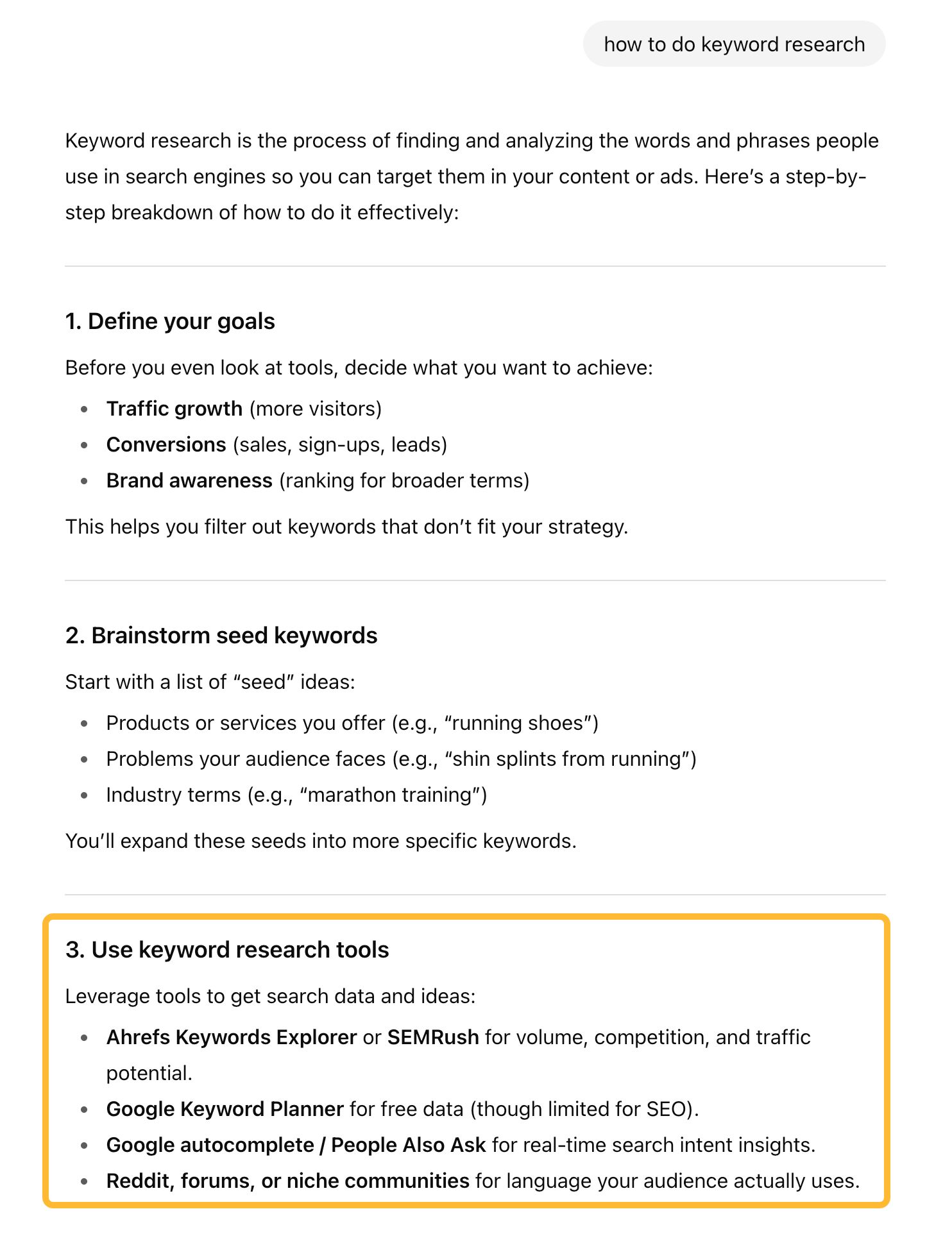
A brand mention doesn’t always mean someone asked directly for a specific brand or product recommendation. Brands can come up naturally, even when people are just asking for how-to advice.
Nearly half of people trust AI recommendations
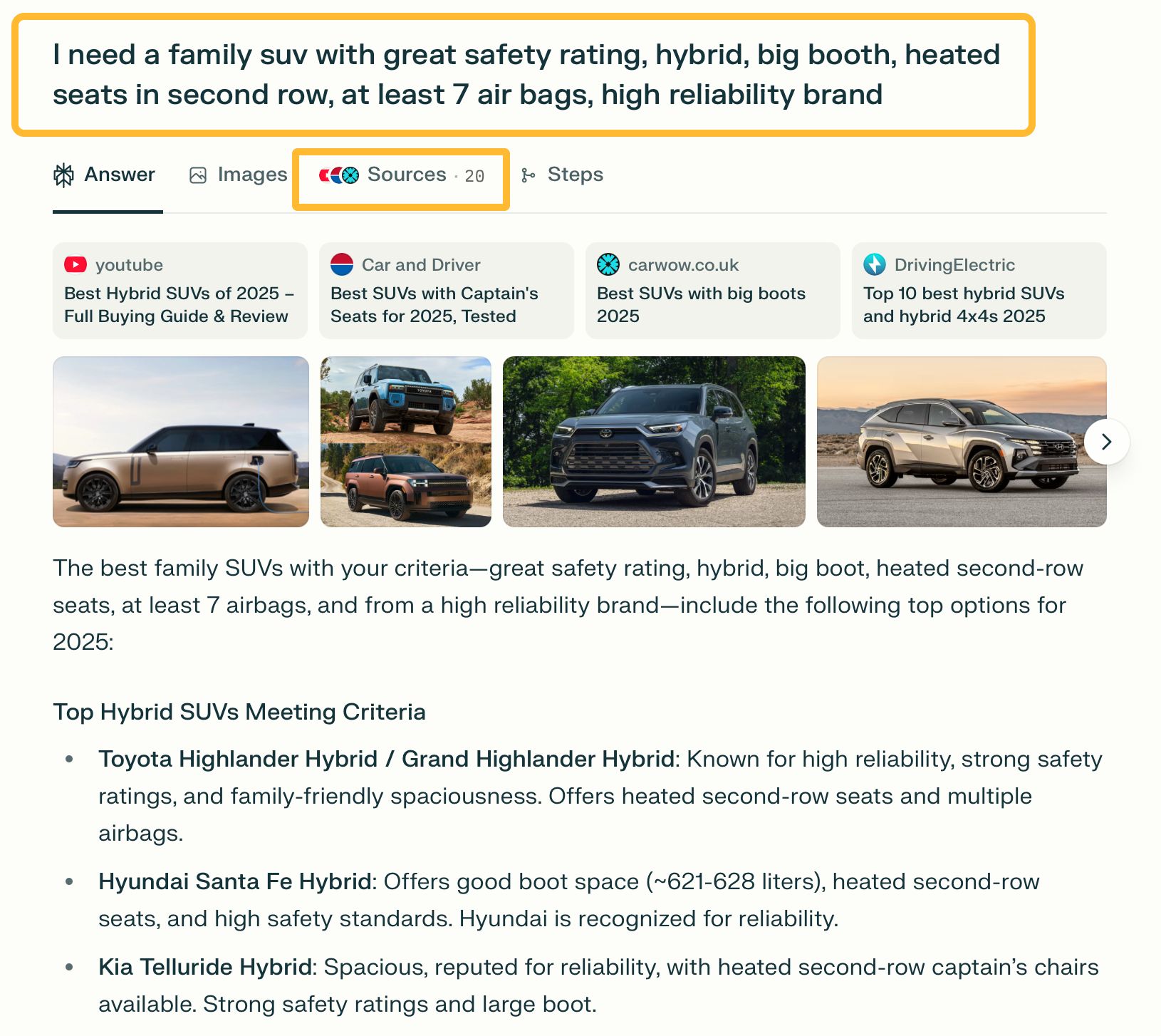
A study by the University of Melbourne has shown that nearly half of people trust AI. That half may be convinced by how the expert and tailored AI recommendations feel. Just share your requirements in a prompt, and the AI can scan dozens of sites to find the best option.
AI mentions stick around
Unlike social posts that fade quickly from feeds, brand mentions on the open web can have long-lasting effects. Your old content can stay indexed and searchable for years.
What’s different with AI is that these mentions don’t just live quietly online—they can shape how AI tools talk about your brand. That’s because models pull from both historical training data and fresh web searches. So a single mention today could keep resurfacing in answers months or even years from now.
For example, Perplexity has consistently highlighted Ahrefs as the top SEO software for more than two months straight, showing how repeated mentions can reinforce a brand’s position inside AI-generated responses.
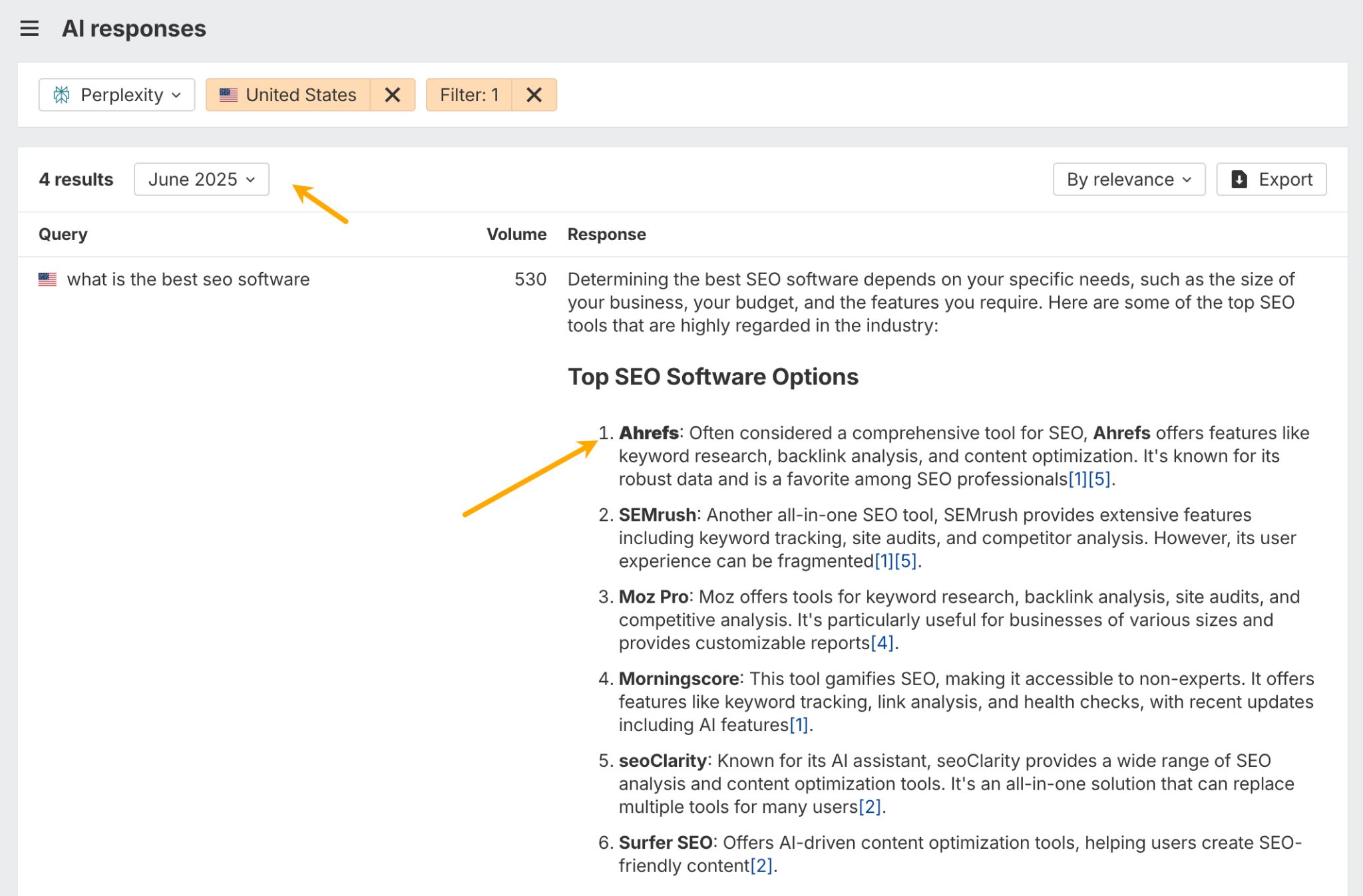
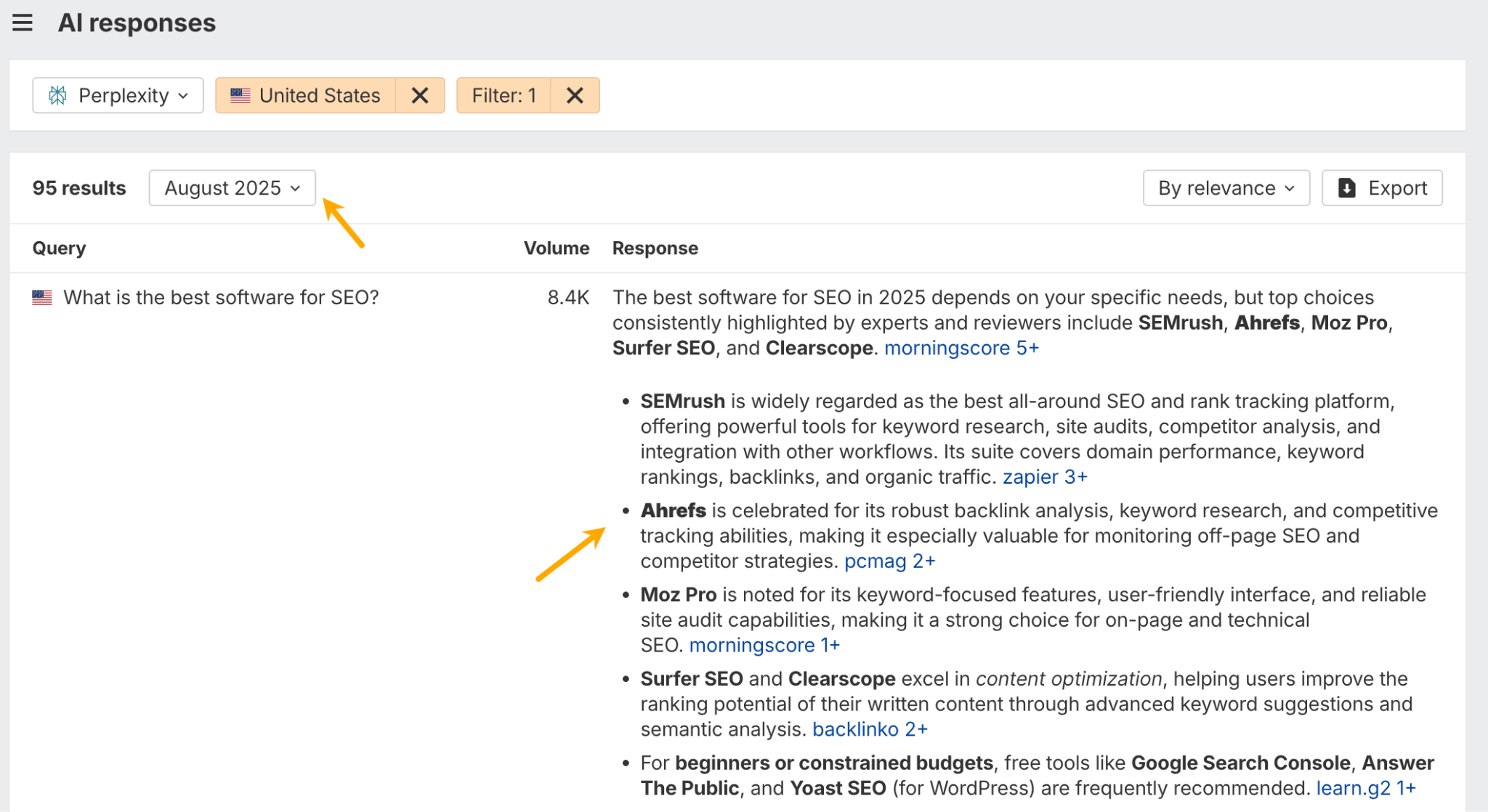
If you’re thinking, “great, another thing for our social media manager to track,” stop right there. AI brand mention monitoring is fundamentally different from the social media monitoring you already know, and it may even belong on someone else’s plate.
Social media mentions are fleeting and unpredictable—they can spike overnight and then fade just as quickly. By contrast, AI mentions are more stable. If ChatGPT highlights a competitor instead of you, it’s not about a passing trend; it reflects the deeper, long-term signals AI has learned from authoritative content over time.
And unlike social media, this is not something you can reply to directly.
That’s why monitoring AI is more about strategy than “firefighting”. You’re tracking visibility trends, spotting positioning gaps, and deciding what content to create next.
And since AI systems update on their own schedules—in case of AI assistants in Ahrefs’ Brand Radar, on a monthly basis—your monitoring should follow those cycles, making AI mention tracking more like competitive research than customer service.
To sum up:
| Aspect | Traditional brand monitoring (social media/forums) | AI brand mention monitoring |
|---|---|---|
| Owner | Social media managers, community managers | Content marketing, brand marketing, or SEO teams |
| Frequency | 24/7 monitoring with real-time alerts | Weekly visibility checks, monthly strategic reviews |
| Purpose | Crisis prevention, customer service, engagement | Market positioning, content strategy, competitive intelligence |
| Response | Direct replies, immediate damage control | Strategic content creation, PR, influencer marketing |
| Mindset | Reactive firefighting | Proactive market research |
Since AI mentions are invisible to most typical monitoring tools, you need specialized tracking. Look for tools like Ahrefs’ Brand Radar with a large index of prompts and answers from different AI indexes, giving you broad visibility into how AI assistants understand and discuss your brand.
In the case of Brand Radar, that’s over 150M prompts in six AI indexes: AI Overviews, AI mode, ChatGPT, Perplexity, Copilot, and Gemini. Here’s how you can navigate that data.
Track the growth of brand mentions
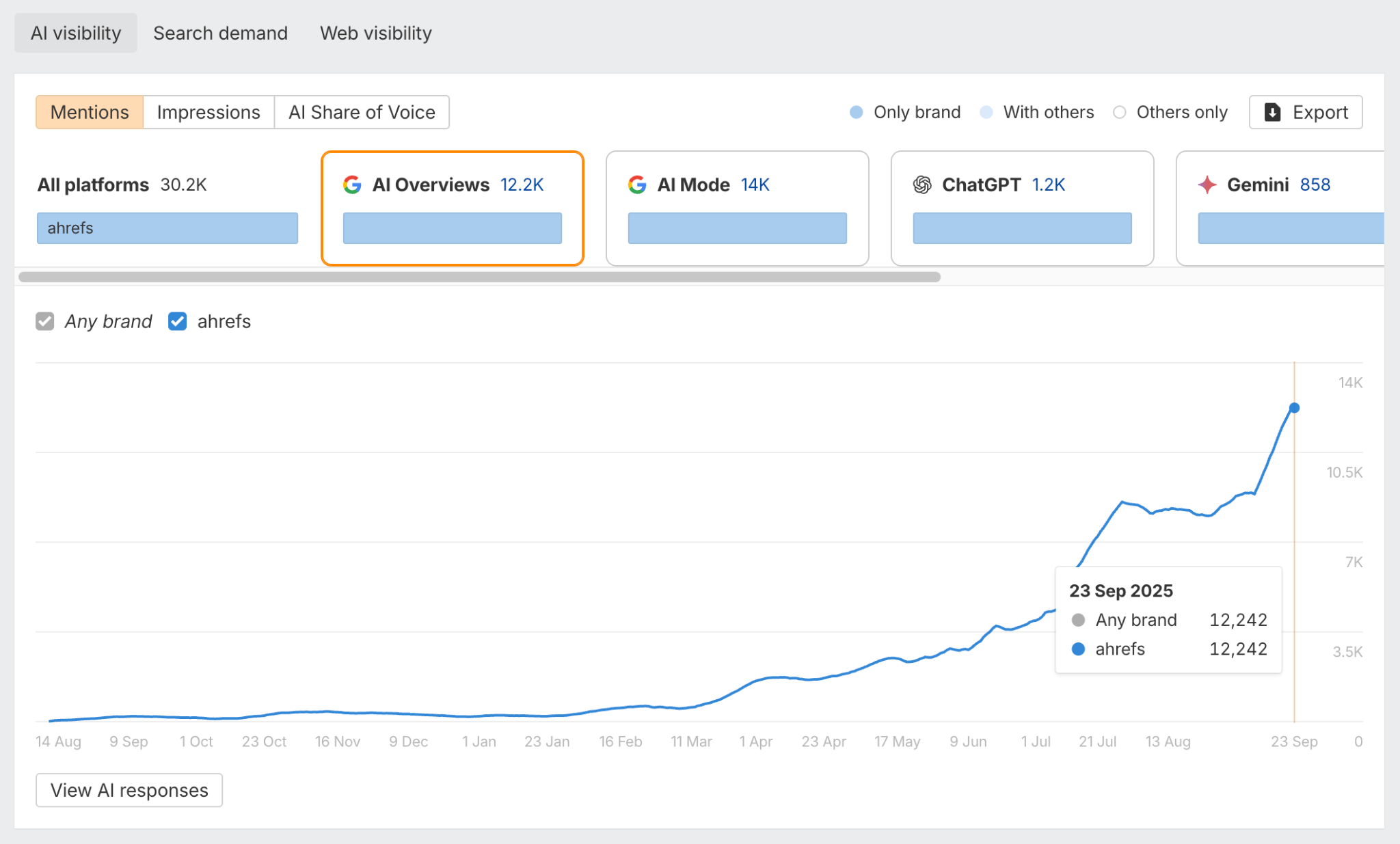
You can track how your brand’s presence in AI changes over time, which makes it easier to see whether your marketing efforts are paying off.
It’s like measuring brand awareness, but within the AI space. You’ll notice spikes after a big campaign or product launch, and you’ll also be able to catch sudden drops that could point to an issue that needs attention.
In Brand Radar, simply enter your brand name along with any common variations, and you’ll know the number of mentions and their change in time right away.
See what topics AI tools associate with your brand
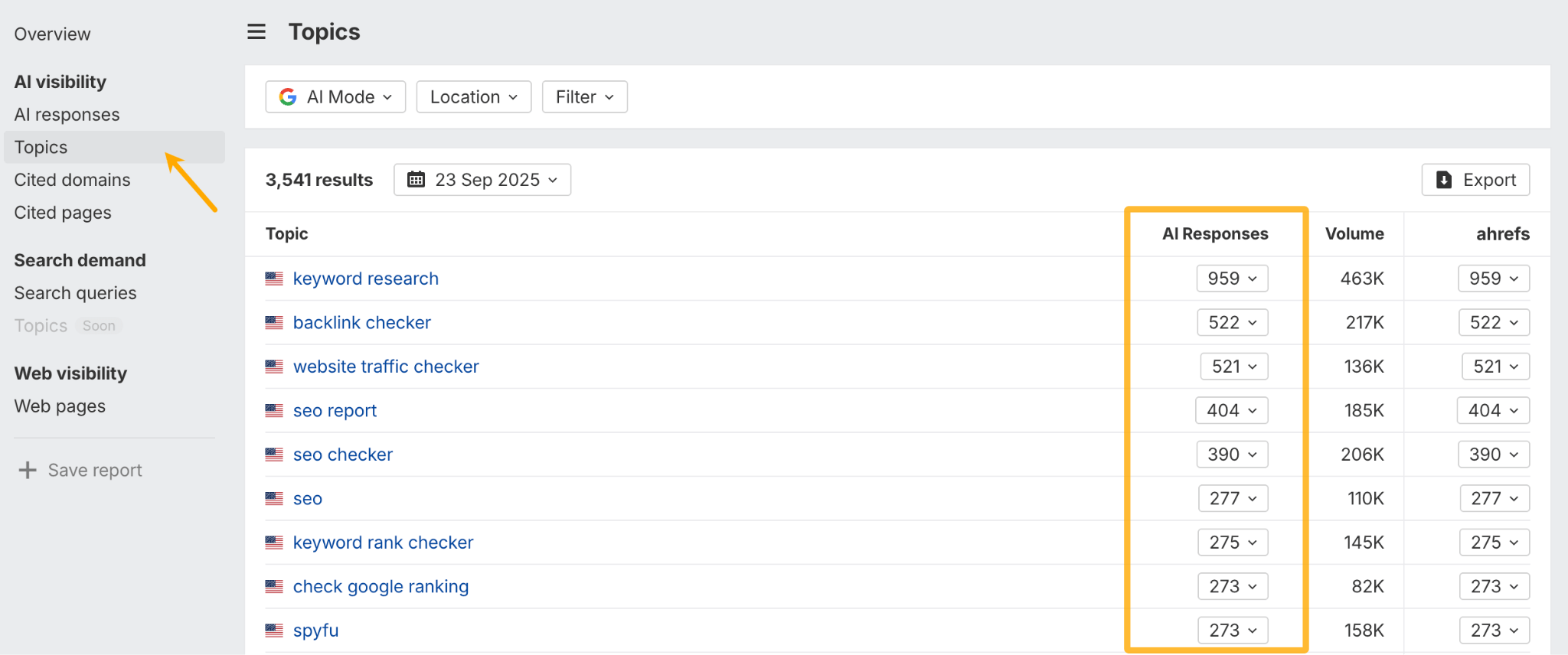
You can see which problems or topics naturally prompt AI systems to mention your brand. For example, your company might come up often in conversations about “sustainable packaging,” but be missing from discussions about “budget-friendly alternatives” where you’d want to appear. Insights like these show you where to focus your content strategy.
To get this data, open the Topics report on the right-hand side.
See how closely AI connects your brand to a topic or product category
If your brand spans multiple product categories, it’s important to track how often AI mentions you in each one.
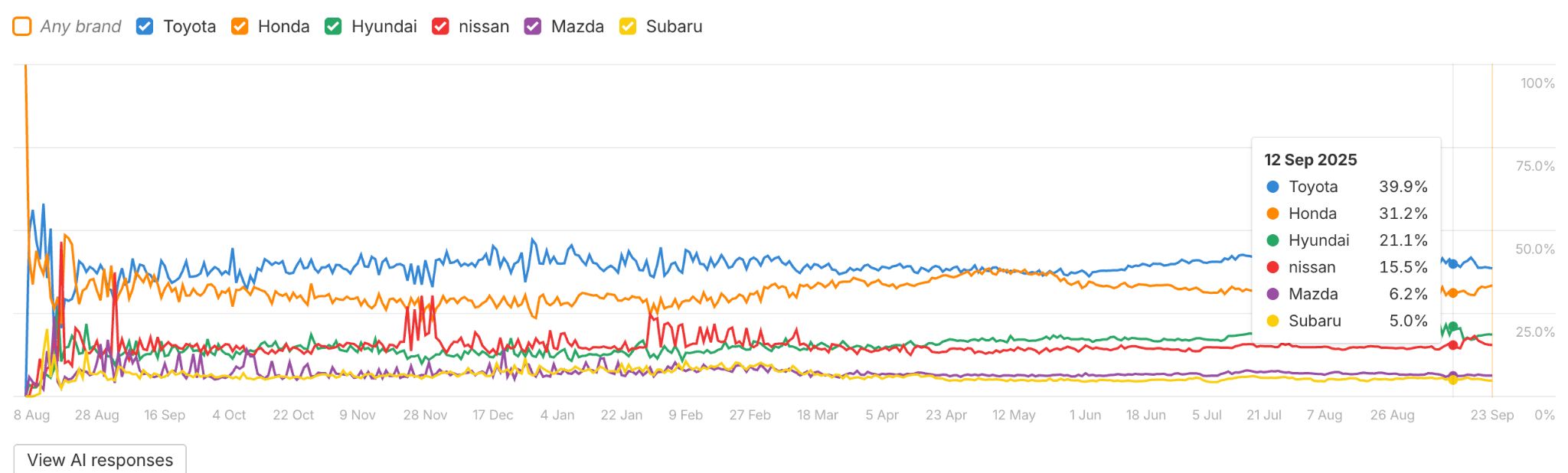
For example, the Subaru car brand wants to be top-of-mind when it comes to SUVs and crossovers. If we put these categories next to their brand name in Brand Radar and add some competitors, we’ll see that they are slightly more often mentioned as the crossover brand.
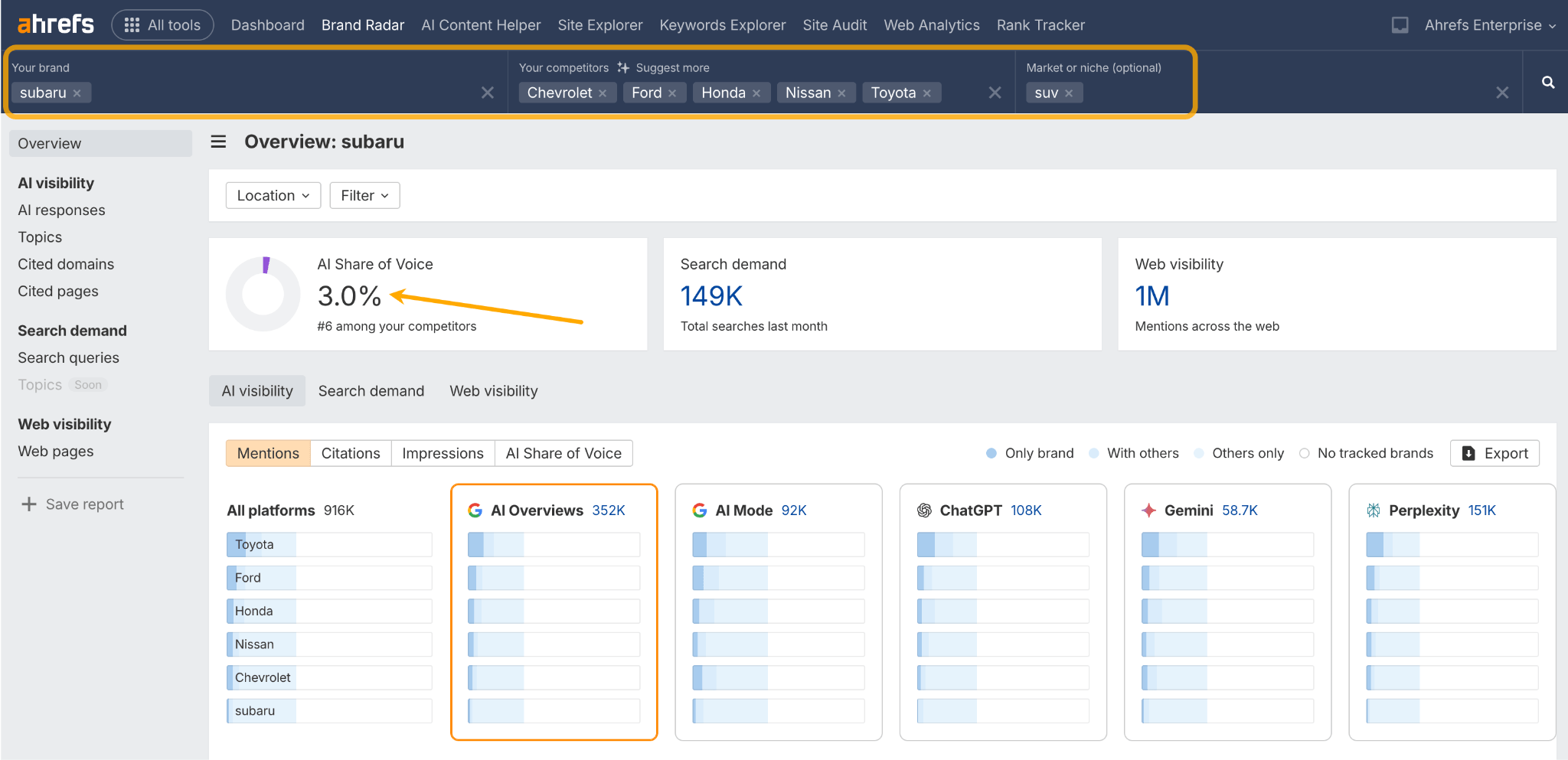
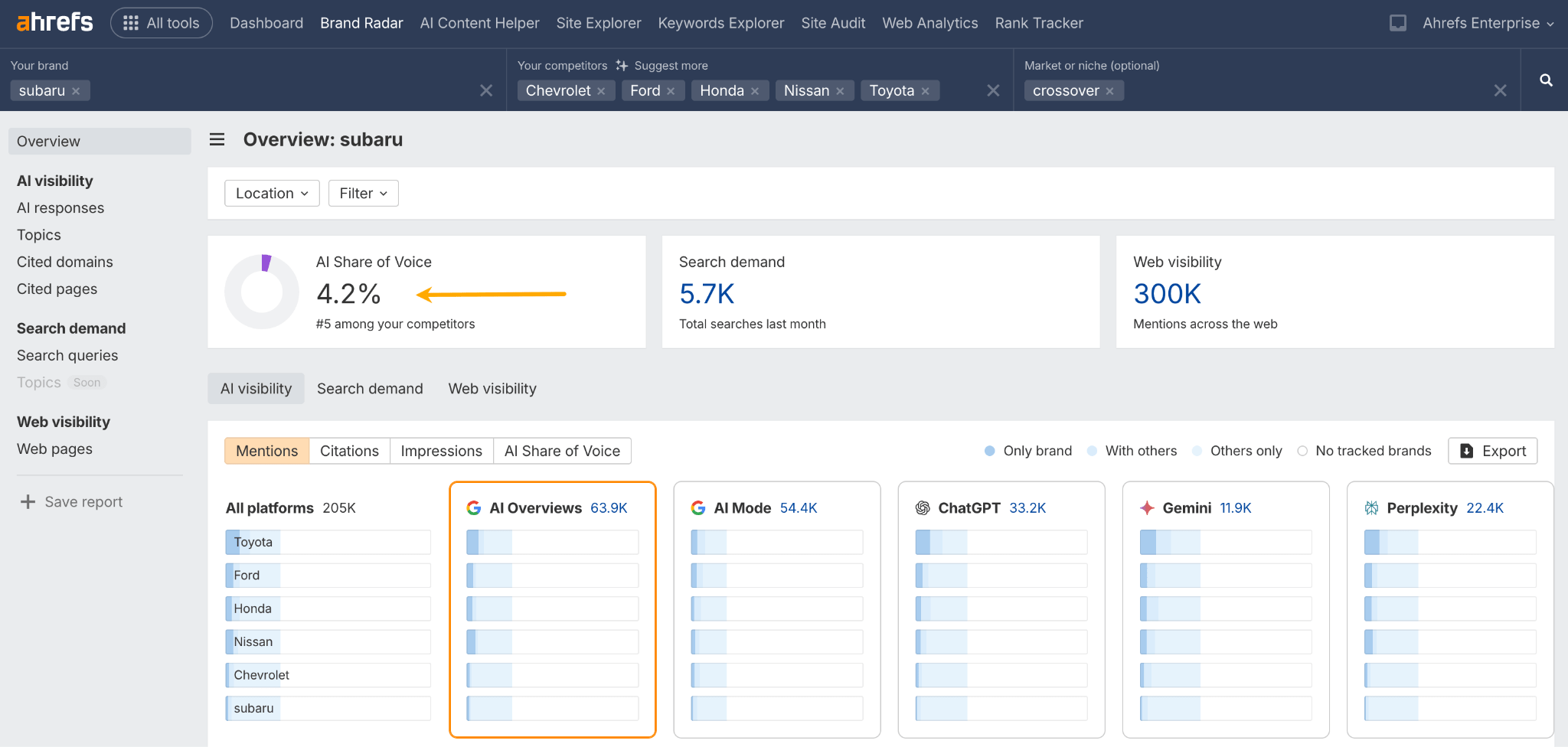
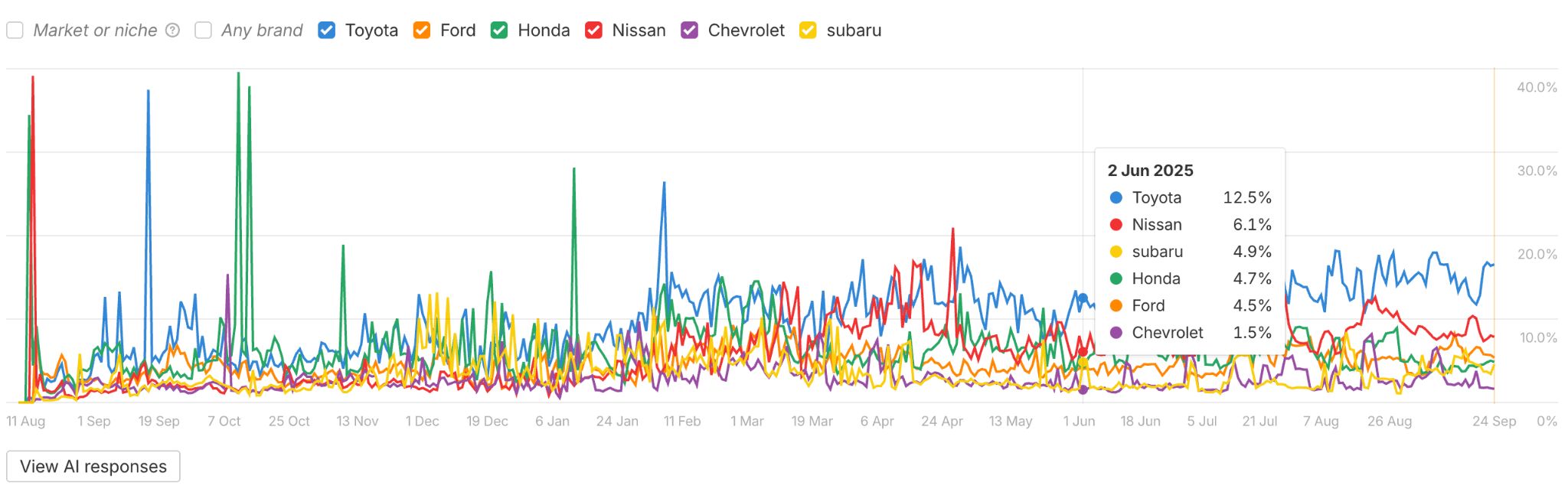
And right below the bar charts, we can see a graph showing how their AI visibility changed in time compared to competitors:
Find out what AI says about your brand (and step in when needed)
You can fact-check how AI describes your brand and catch mistakes before they spread.
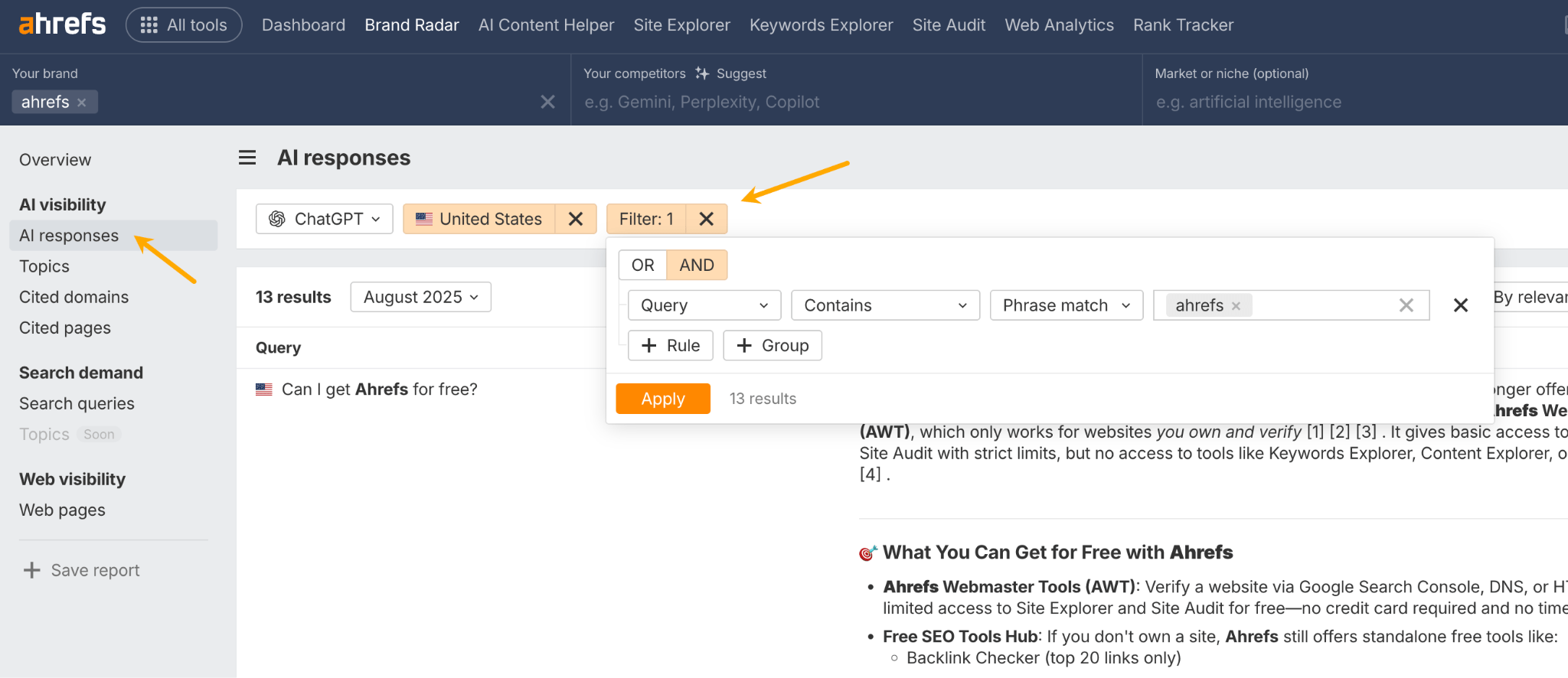
Sometimes AI gets simple details wrong, like your founding date, main products, or even your prices, while still citing your pricing page. Here’s a fresh example of AI citing the wrong prices.
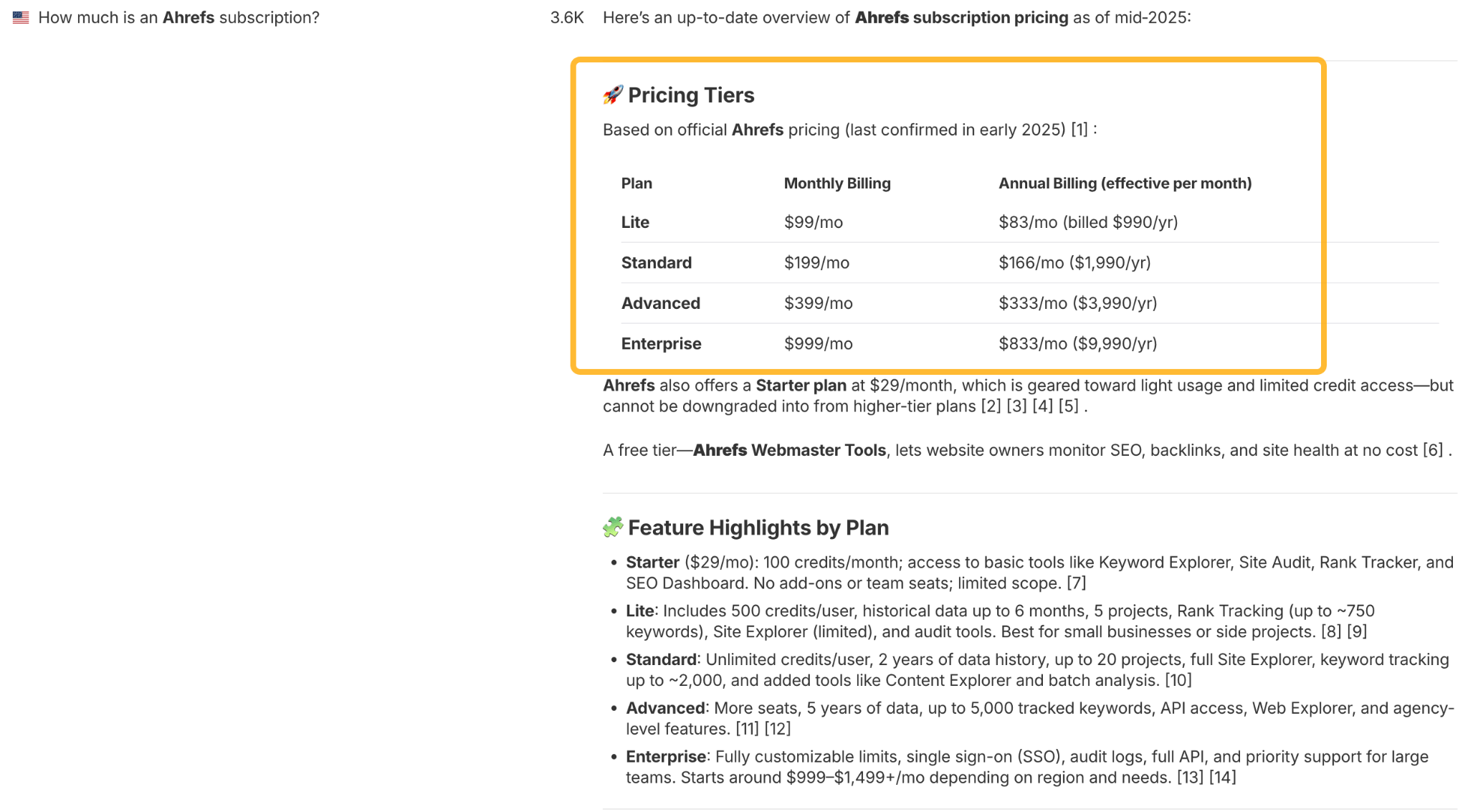
By spotting these errors, you get clear problems to work on, whether that means reaching out to the AI companies directly or creating content that sets the record straight.
In the AI responses report, enter your brand in the filters like so:
Measure and track your AI share of voice
Think of this as your slice of the AI conversation pie. You can see what percentage of AI mentions in your industry actually go to you versus your competitors. It’s especially useful for tracking progress over time—are you gaining ground or losing it?
Enter your brand and your competitors. Your overall AI share of voice is the number at the top.
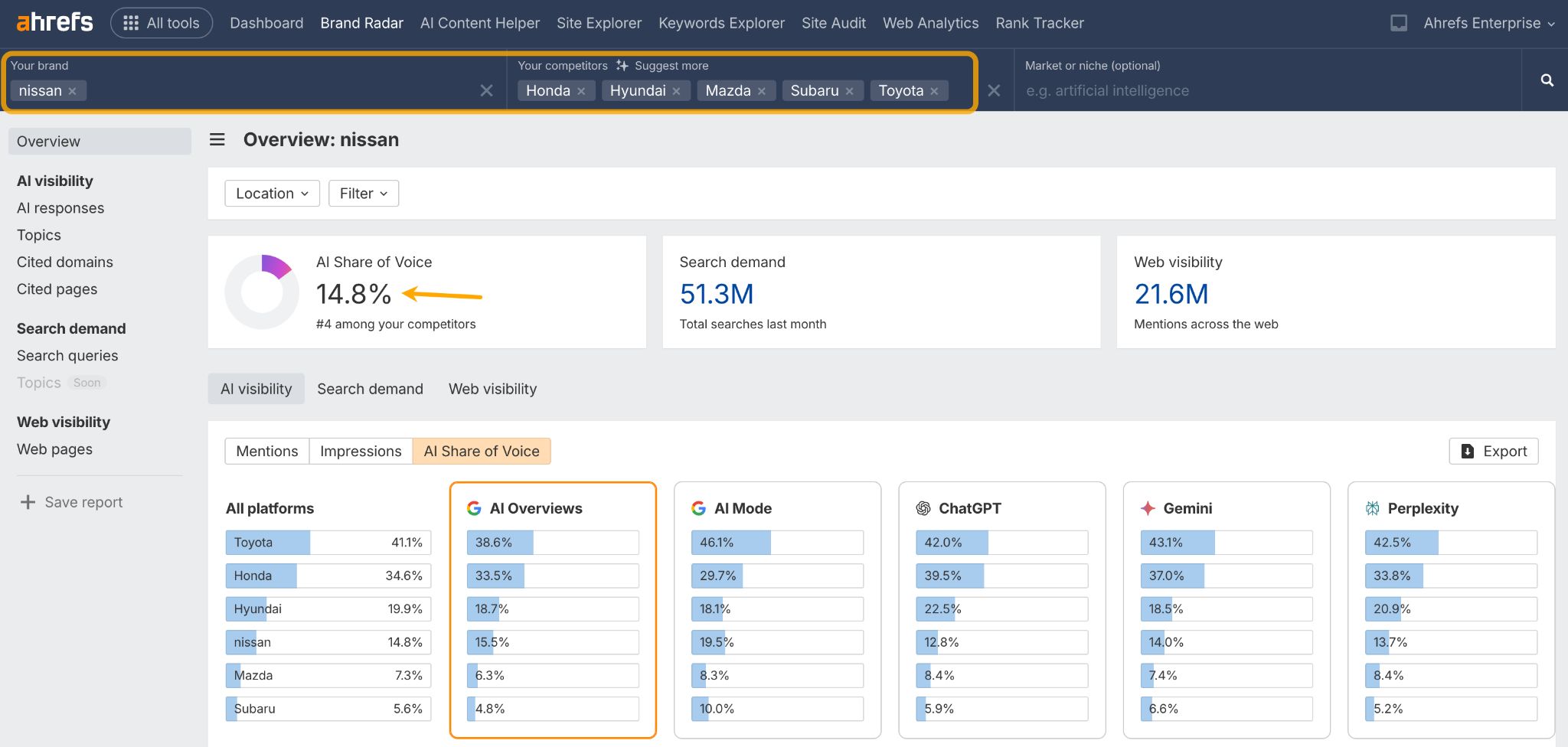
Below, you’ll get your share of voice in each of the six AI indexes.
Compare your AI visibility against competitors in specific topics
This goes deeper than the overall share of voice. You might find that your brand dominates AI mentions for “enterprise solutions” but barely shows up for “small business tools”, while a competitor has the opposite pattern.
Knowing your topic-specific strengths and gaps helps you refine your content strategy. For topics where you need to double down, you can secure more mentions on third-party sites (like product reviews) or create more of your own content (like how-to guides), or revise your own product marketing materials.
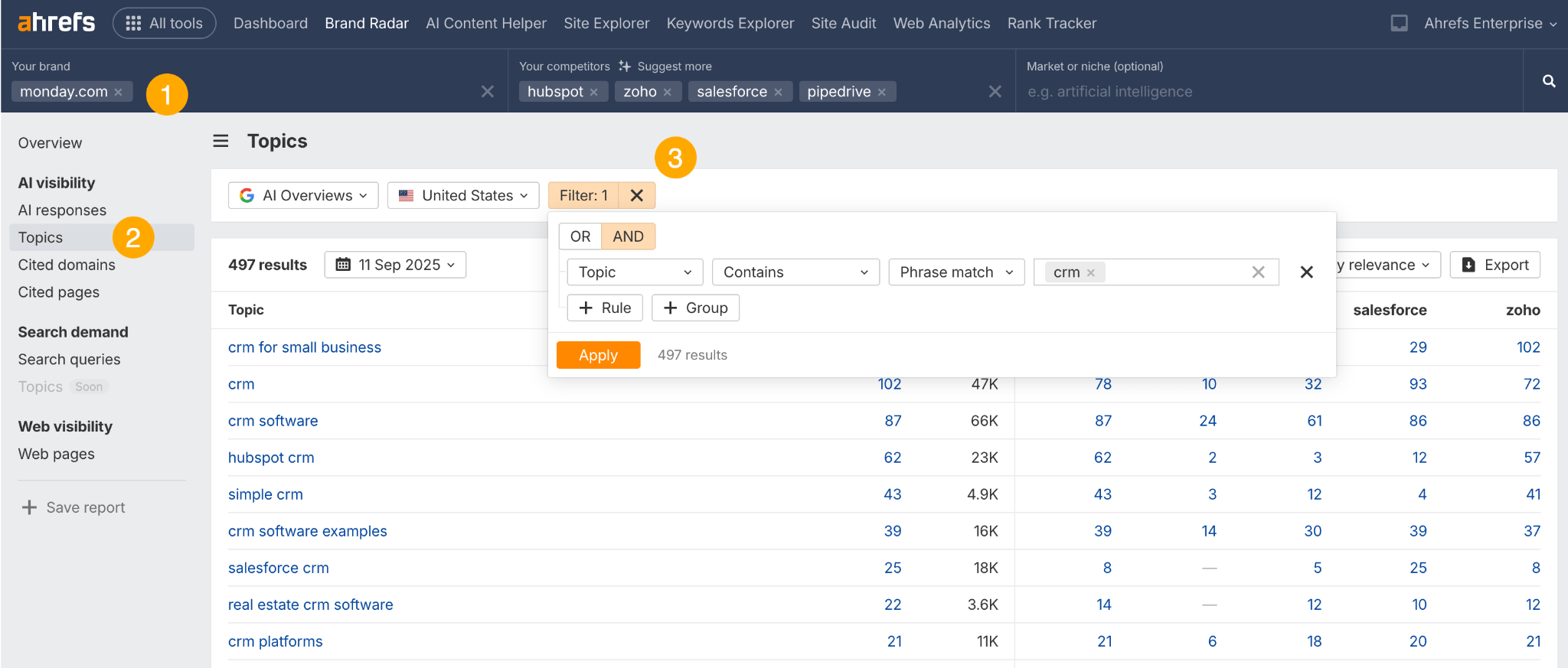
For example, when Monday.com launched its CRM feature, it was stepping into a bigger market with new competitors. Until then, the brand was mostly recognized for project management. Tracking their AI visibility showed how well they were breaking into this new space.
- Enter your brand and competitors.
- Go to the Topics report.
- Enter the topic in the Filter window.
Identify brand mention gaps where competitors get mentioned, but you don’t
For example, AI might regularly recommend your competitors for “integration with Slack” or “GDPR compliance,” while your brand never appears, even though you offer those features too. These gaps are immediate opportunities to create new content, optimize existing pages, or adjust your messaging so your brand gets included in those AI conversations.
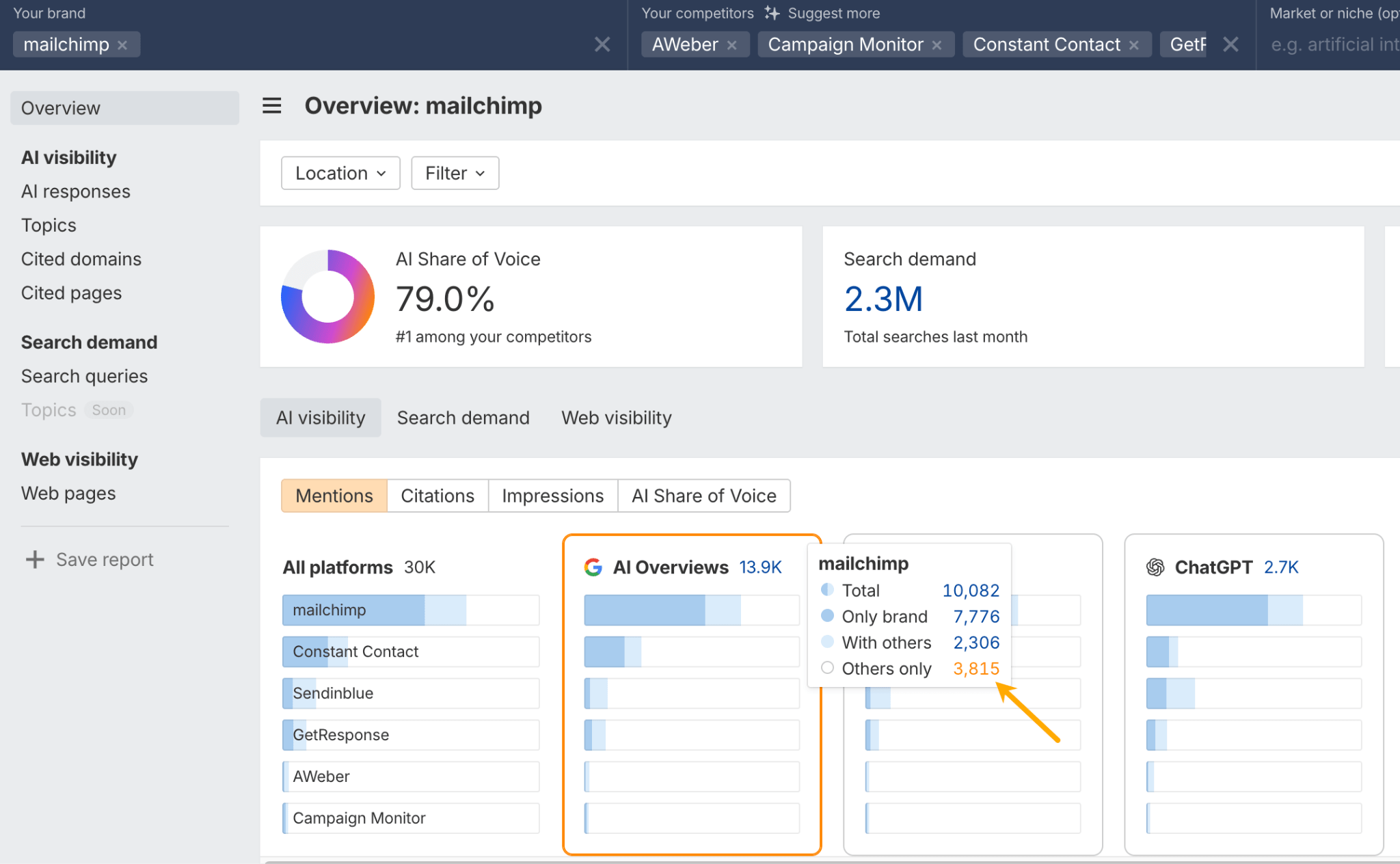
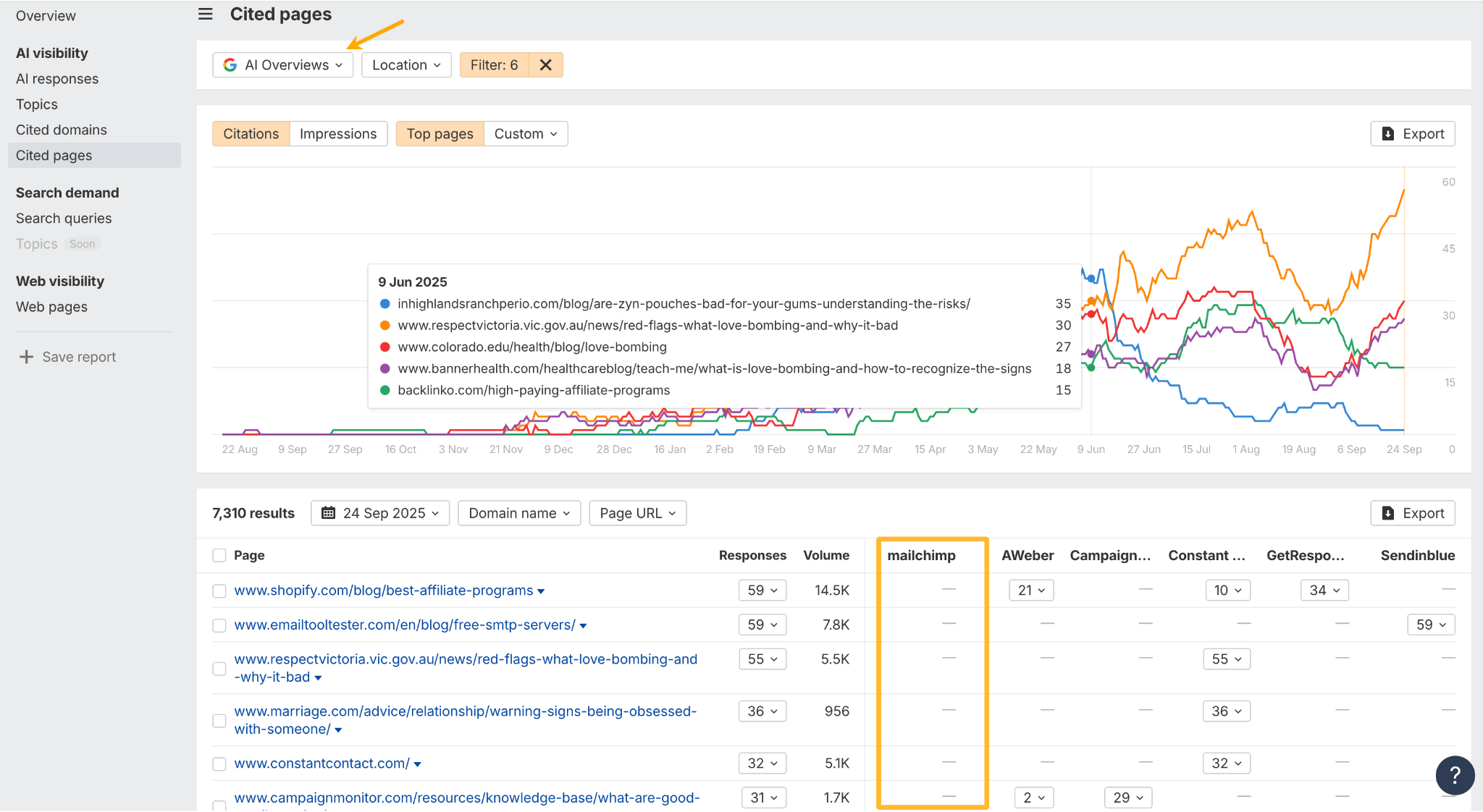
Here’s how to spot pages that talk about your competitors but don’t mention you—perfect opportunities to pitch your solution.
- Enter your brand and competitors.
- Hover on your brand in the mentions graph section and click on “Others only”.
- Go to the Cited pages report.
- Repeat for each AI index.
Tip
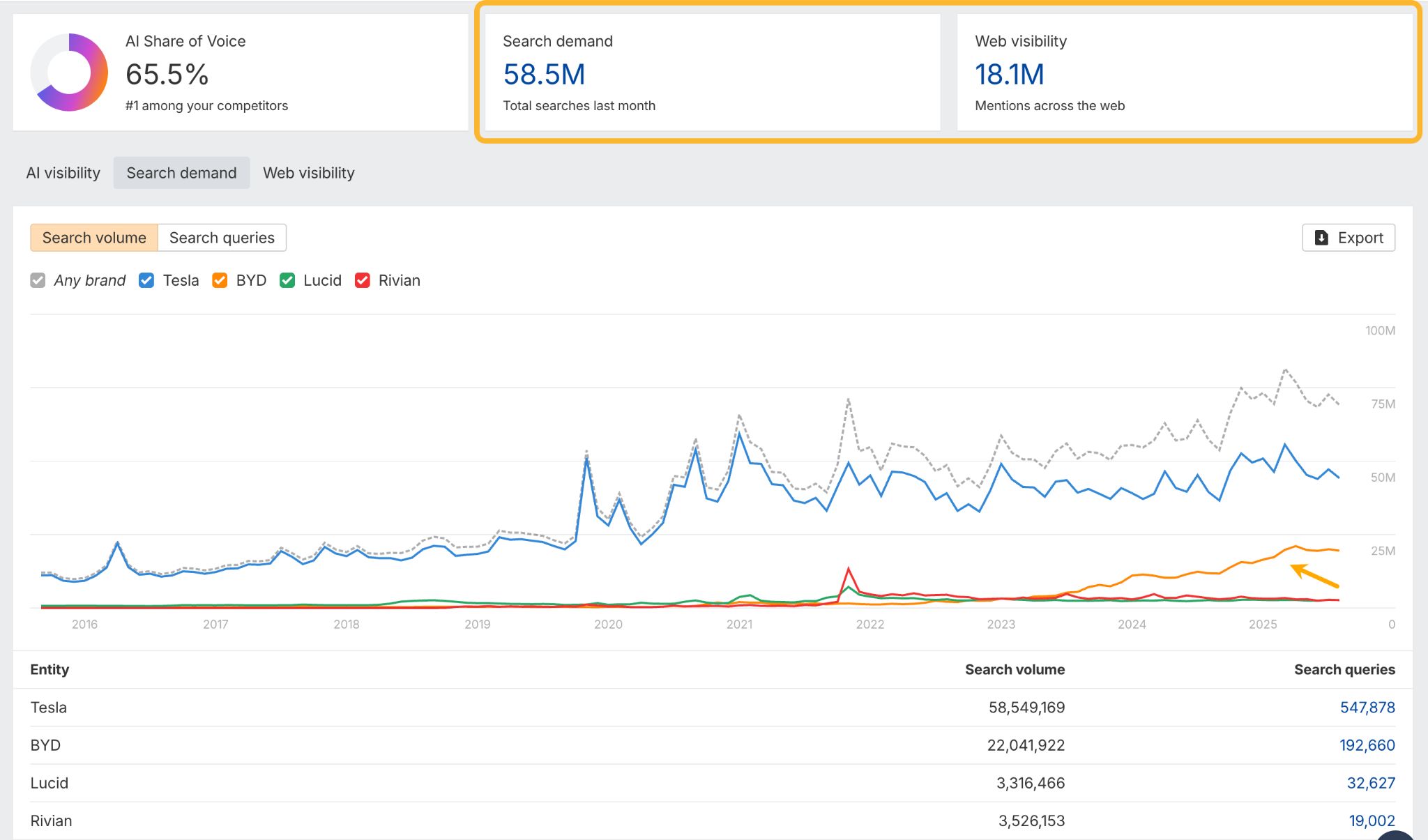
Brand Radar also tracks your search demand and web visibility.
It taps into one of the largest keyword databases in the industry (28.7B keywords) and uses a bot that crawls the web more frequently than any other marketing tool (learn more about Ahrefs’ data).