


Largest Contentful Paint (LCP) is the period of time it takes to load the one largest seen component within the viewport. It represents the web site being visually loaded and is likely one of the three Core Internet Vitals (CWV) metrics Google makes use of to measure web page expertise.
The primary impression customers have of your website is how briskly it seems to be loaded.
The most important component is normally going to be a featured picture or possibly the <h1> tag. But it surely may be any of these:
- <img> component
- <picture> component inside an <svg> component
- Picture inside a <video> component
- Background picture loaded with the url() perform
- Blocks of textual content
<svg> and <video> could also be added sooner or later.
Something exterior the viewport or any overflow shouldn’t be thought of when determining the dimensions. If a picture occupies the complete viewport, it’s not thought of for LCP.
Let’s take a look at how briskly your LCP needs to be and the way to enhance it.
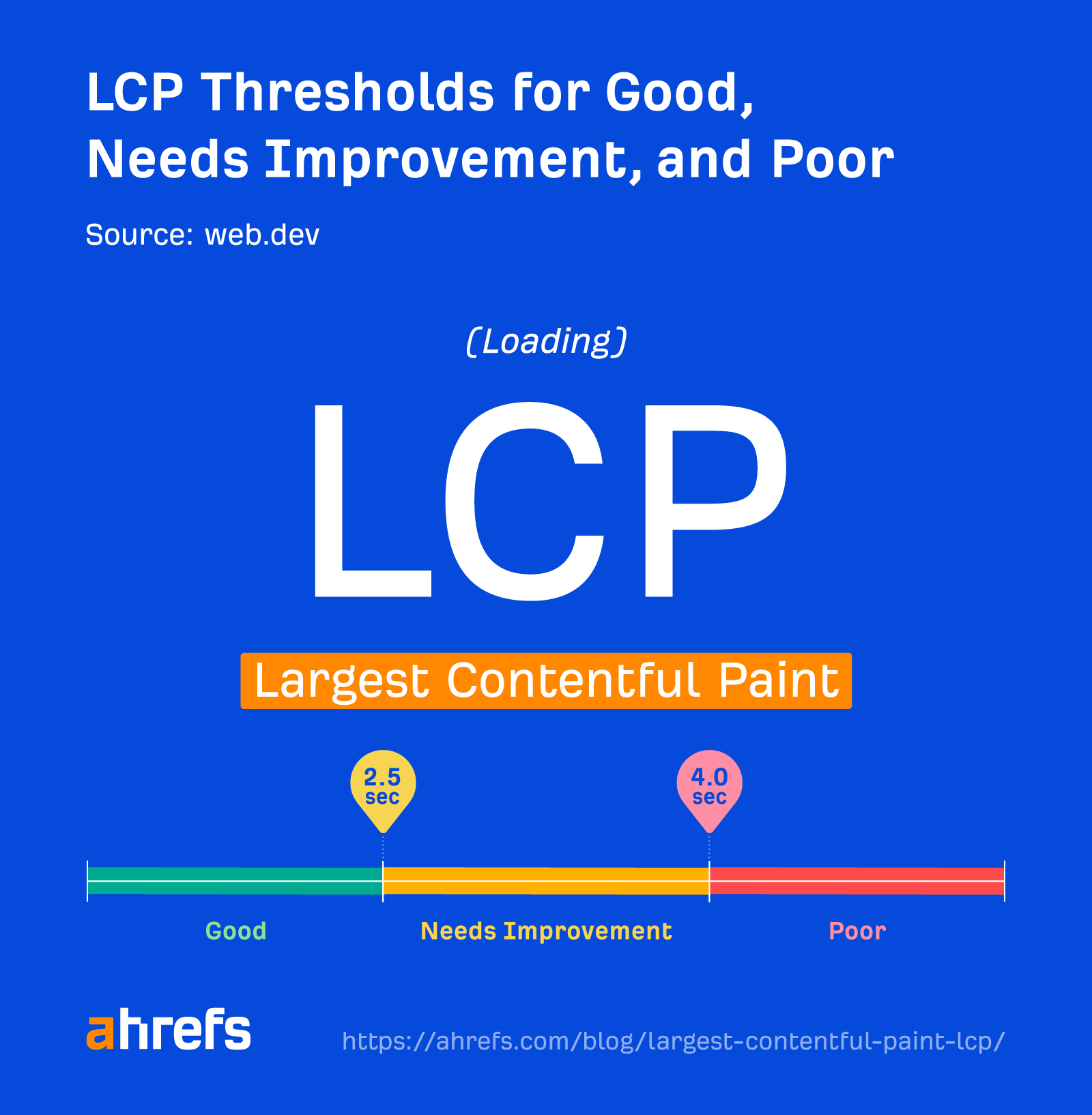
A superb LCP worth is lower than 2.5 seconds and needs to be based mostly on Chrome Person Expertise Report (CrUX) knowledge. That is knowledge from precise customers of Chrome who’re in your website and have opted in to sharing this info. You want 75% of web page visits to load in 2.5 seconds or much less.
Your web page could also be labeled into one of many following buckets:
- Good: <=2.5s
- Wants enchancment: >2.5s and <=4s
- Poor: >4s
LCP knowledge
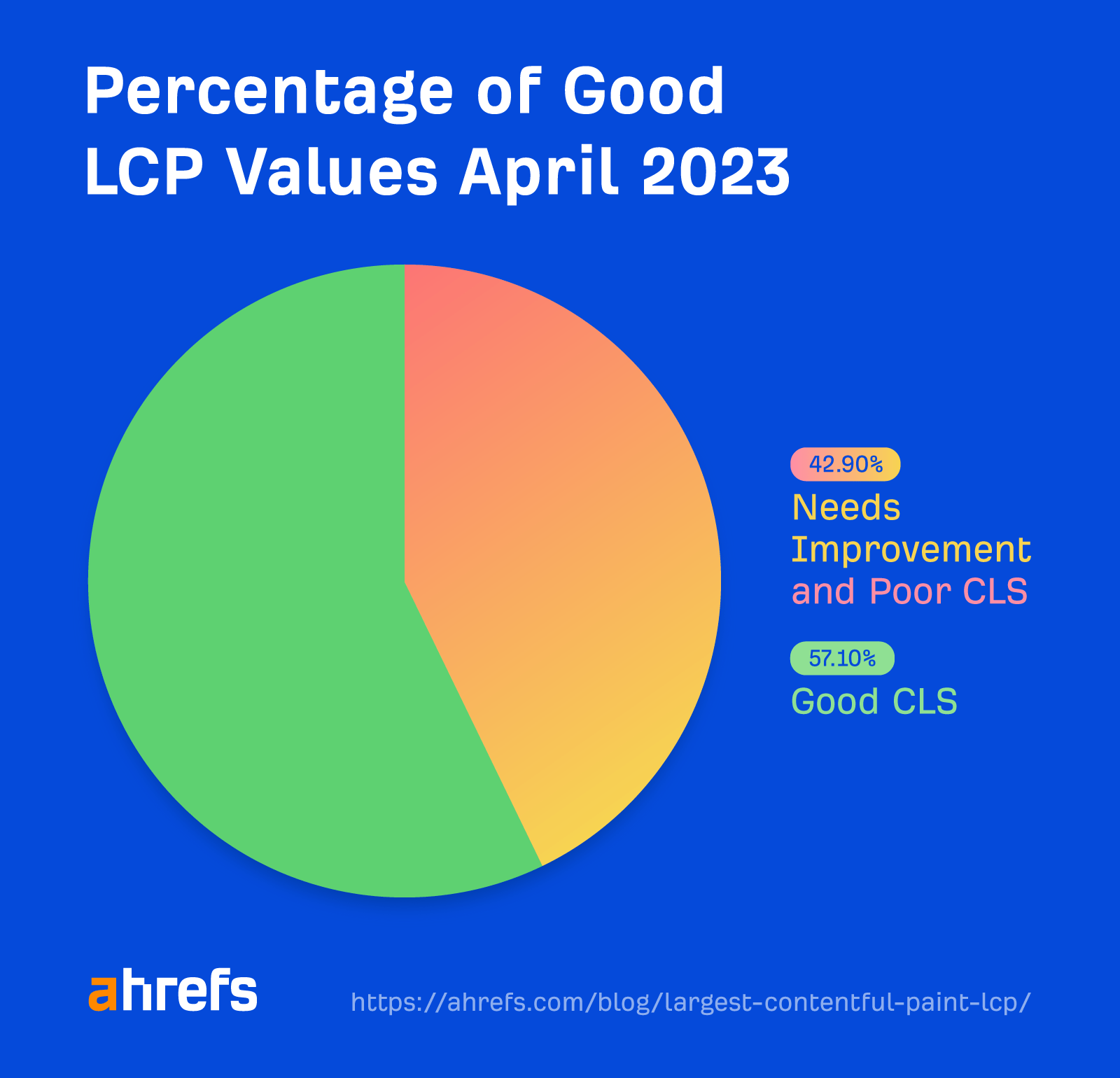
57.1% of websites are within the good LCP bucket as of April 2023. That is averaged throughout the location. As we talked about, you want 75% of web page visits to load in 2.5 seconds or much less to indicate as “good” right here.
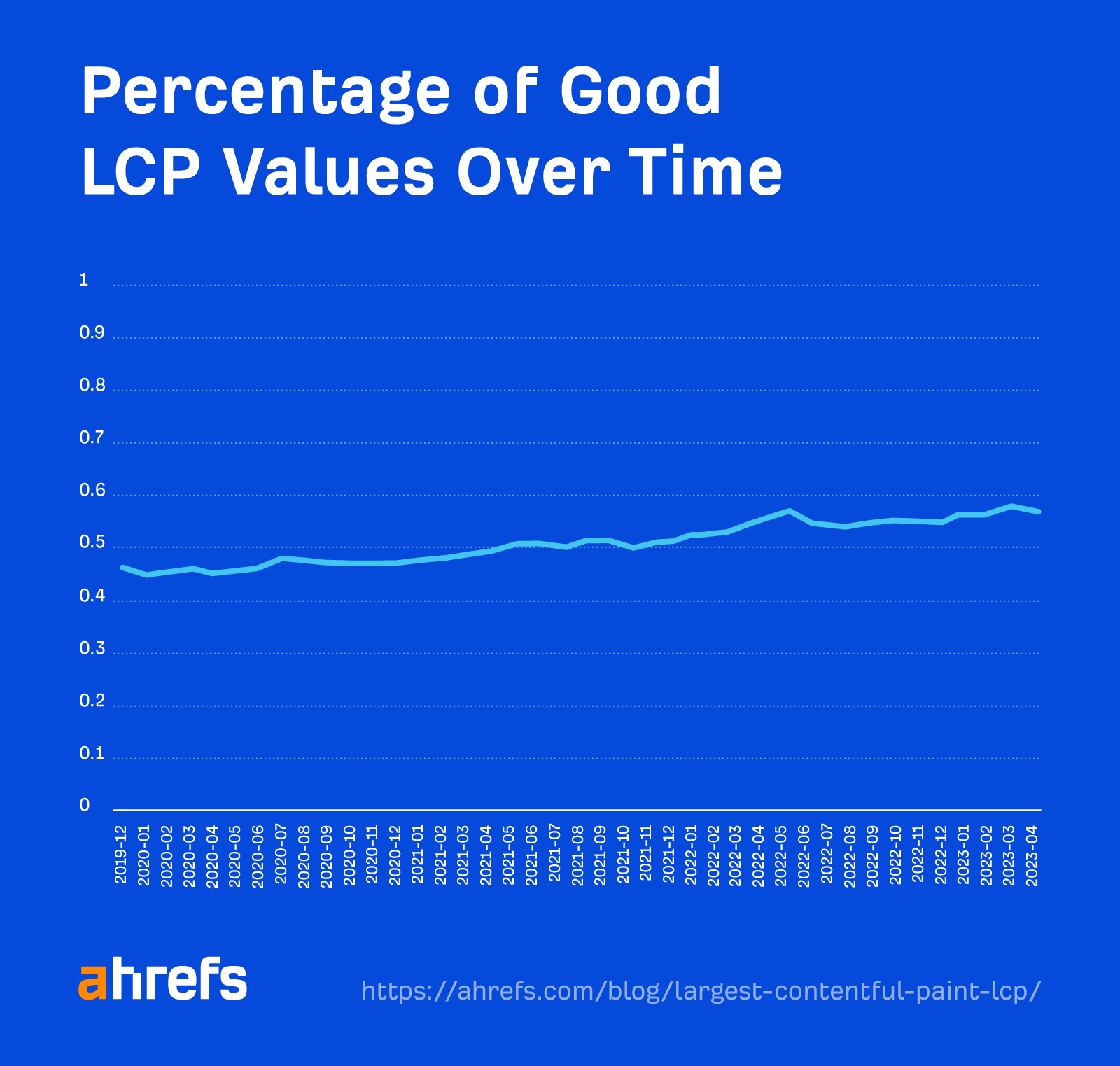
LCP is the Core Internet Very important that individuals are struggling essentially the most to enhance.
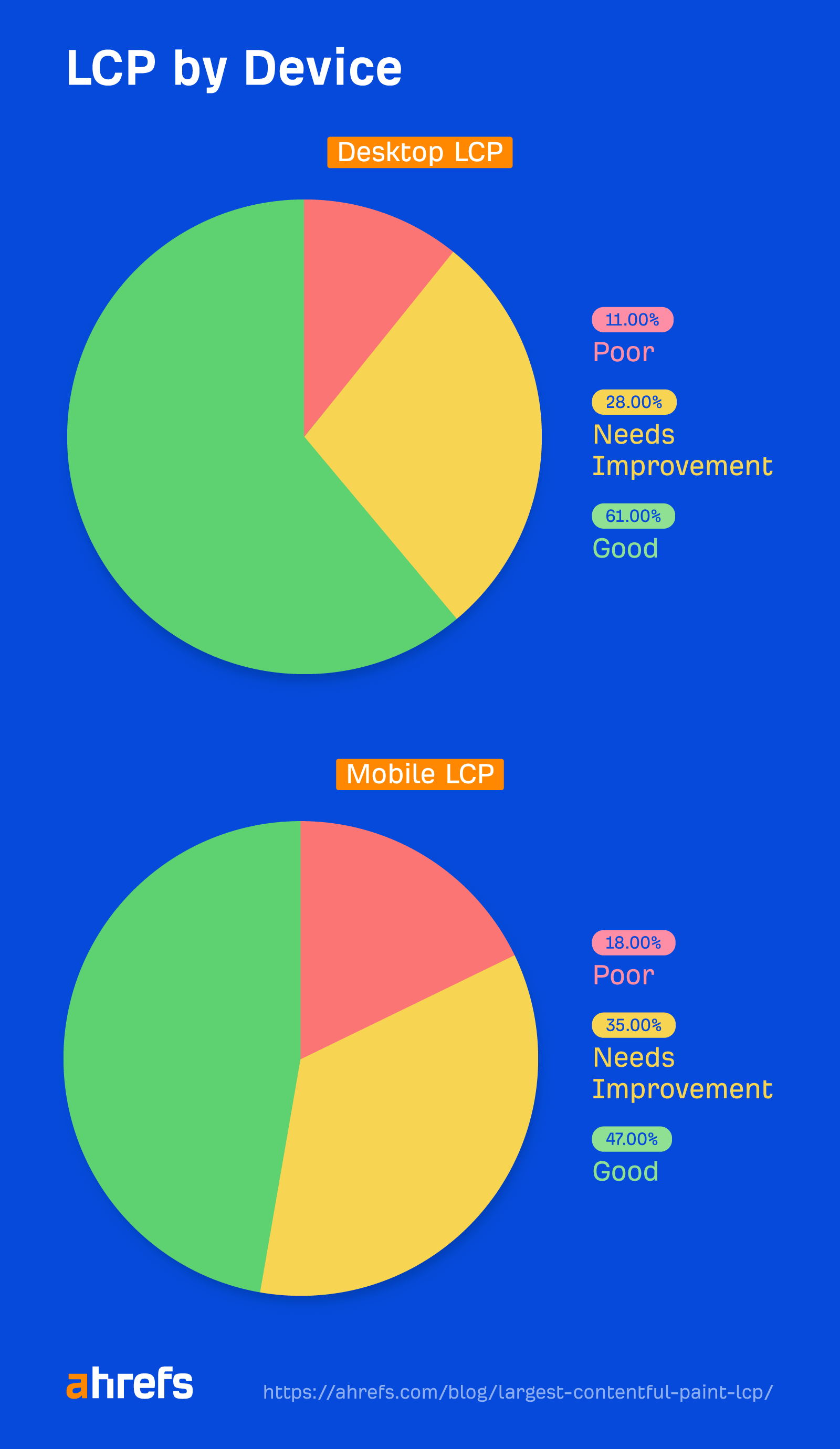
Once we ran a research on Core Internet Vitals, we noticed that pages are much less prone to have good LCP values on cell units in comparison with desktop.
The LCP threshold appears nearly inconceivable to go on slower connections.
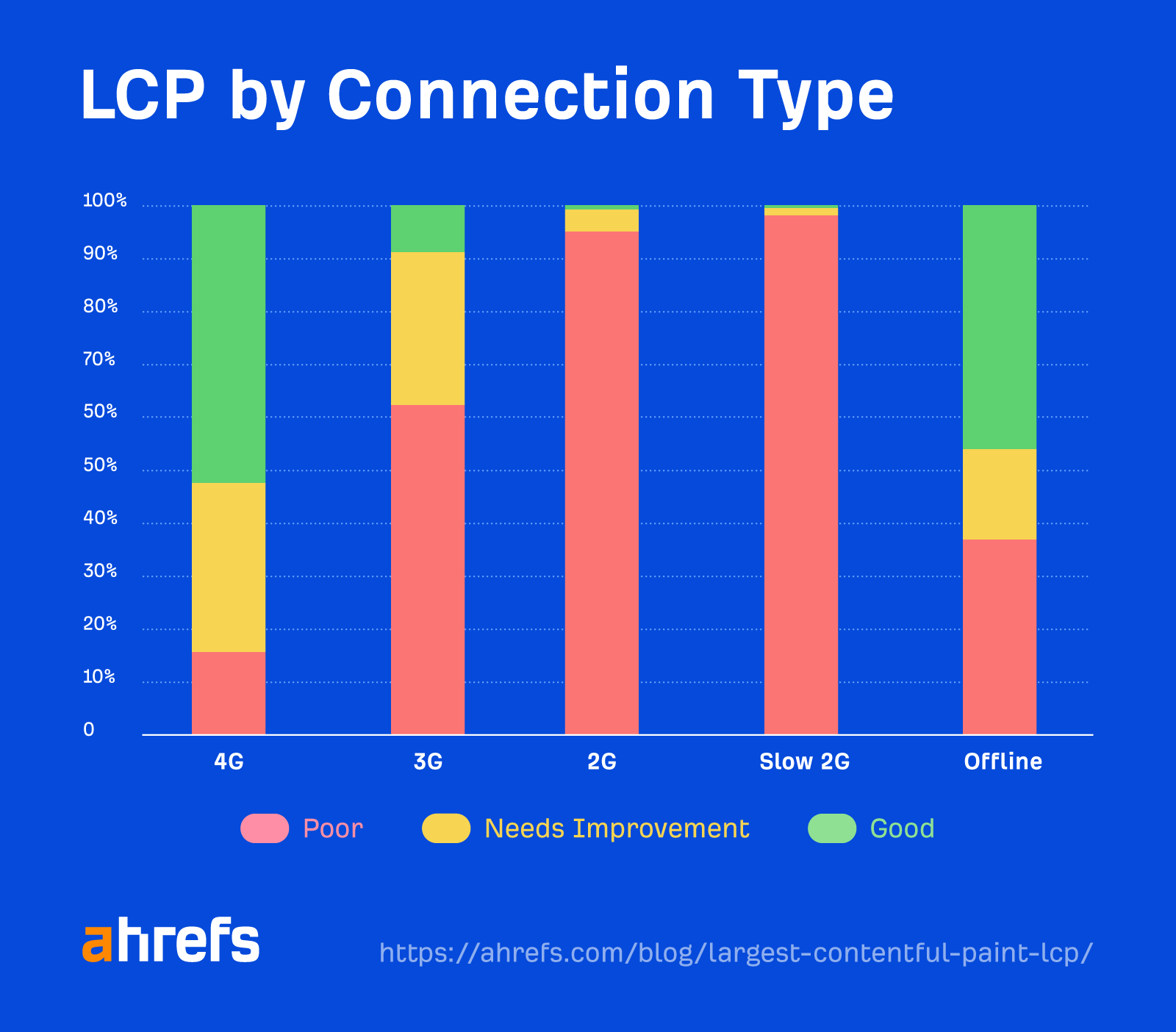
There are a few other ways of measuring LCP you’ll wish to take a look at: subject knowledge and lab knowledge.
Area knowledge comes from the Chrome Person Expertise Report (CrUX), which is knowledge from actual customers of Chrome who select to share their knowledge. This offers you one of the best thought of real-world LCP efficiency throughout completely different community circumstances, units, caching, and so forth. It’s additionally what you’ll really be measured on by Google for Core Internet Vitals.
Lab knowledge relies on exams with the identical circumstances to make exams repeatable. Google doesn’t use this for Core Internet Vitals, however it’s helpful for testing as a result of CrUX/subject knowledge is a 28-day rolling common, so it takes some time to see the impression of adjustments.
The most effective instrument to measure LCP will depend on the kind of knowledge you need (lab/subject) and whether or not you need it for one URL or many.
Measuring LCP for a single URL
Pagespeed Insights pulls page-level subject knowledge which you can’t in any other case question within the CrUX dataset. It additionally runs lab exams for you based mostly on Google Lighthouse and provides you origin knowledge so you possibly can evaluate web page efficiency to the complete website.
Measuring LCP for a lot of URLs or a complete website
You may get CrUX knowledge in Google Search Console that’s bucketed into the classes of fine, wants enchancment, and poor.
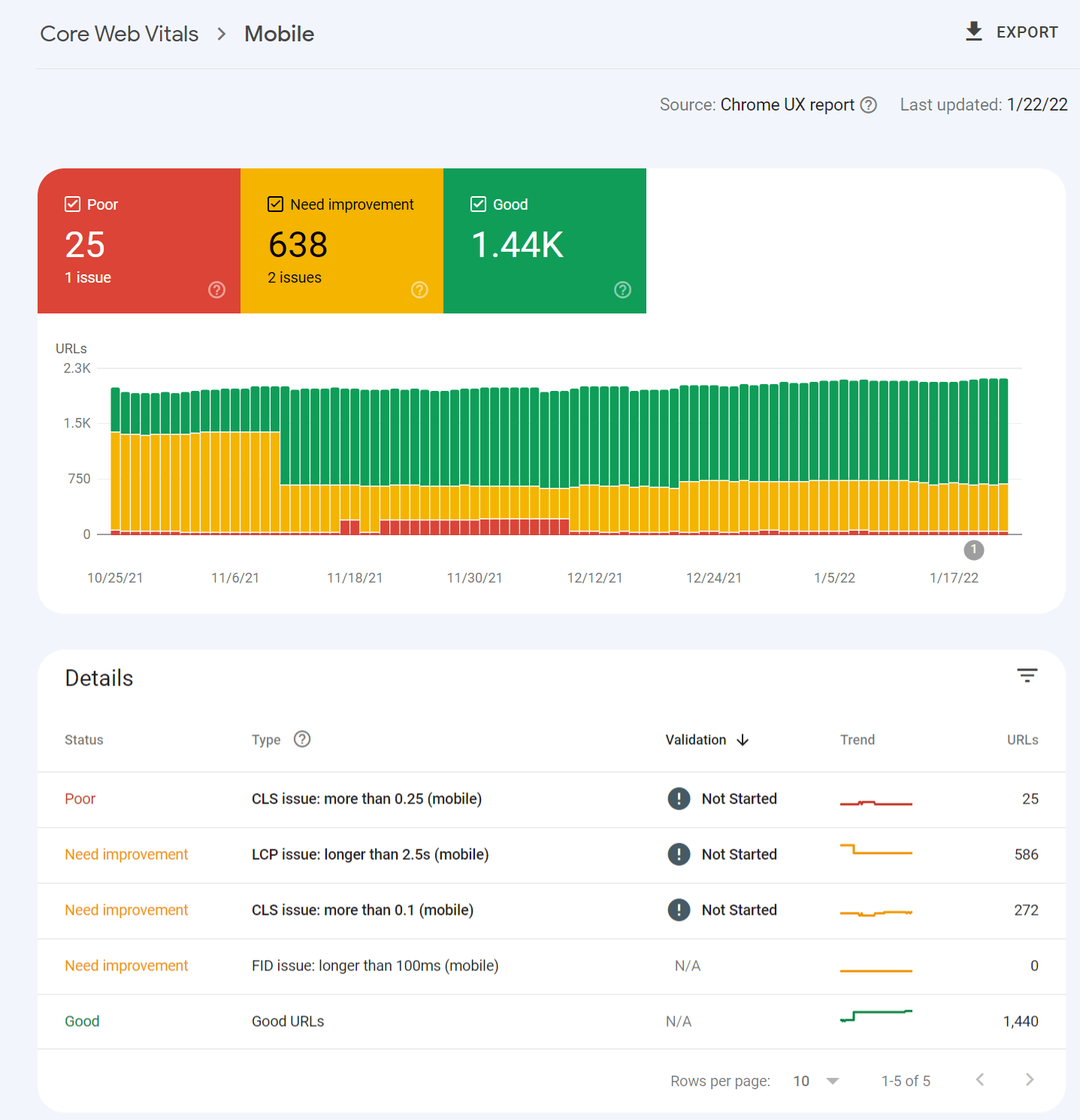
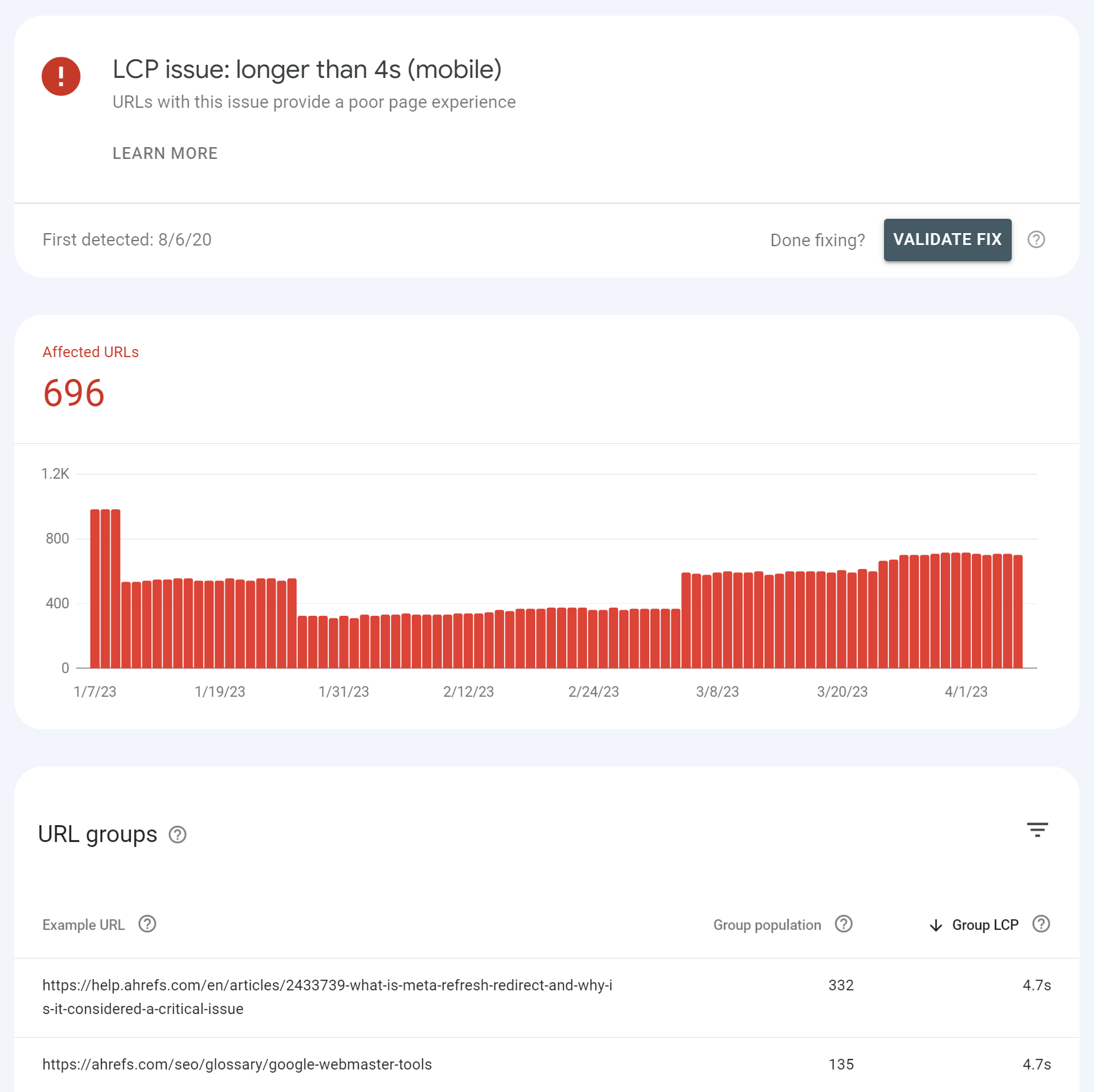
Clicking into one of many points provides you a breakdown of web page teams which can be impacted. The teams are pages with related values that seemingly use the identical template. You make the adjustments as soon as within the template, and that might be fastened throughout the pages within the group.
If you’d like each lab knowledge and subject knowledge at scale, the one solution to get that’s by way of the PageSpeed Insights API. You’ll be able to connect with it simply with Ahrefs’ Website Audit and get stories detailing your efficiency. That is free for verified websites with an Ahrefs Webmaster Instruments (AWT) account.
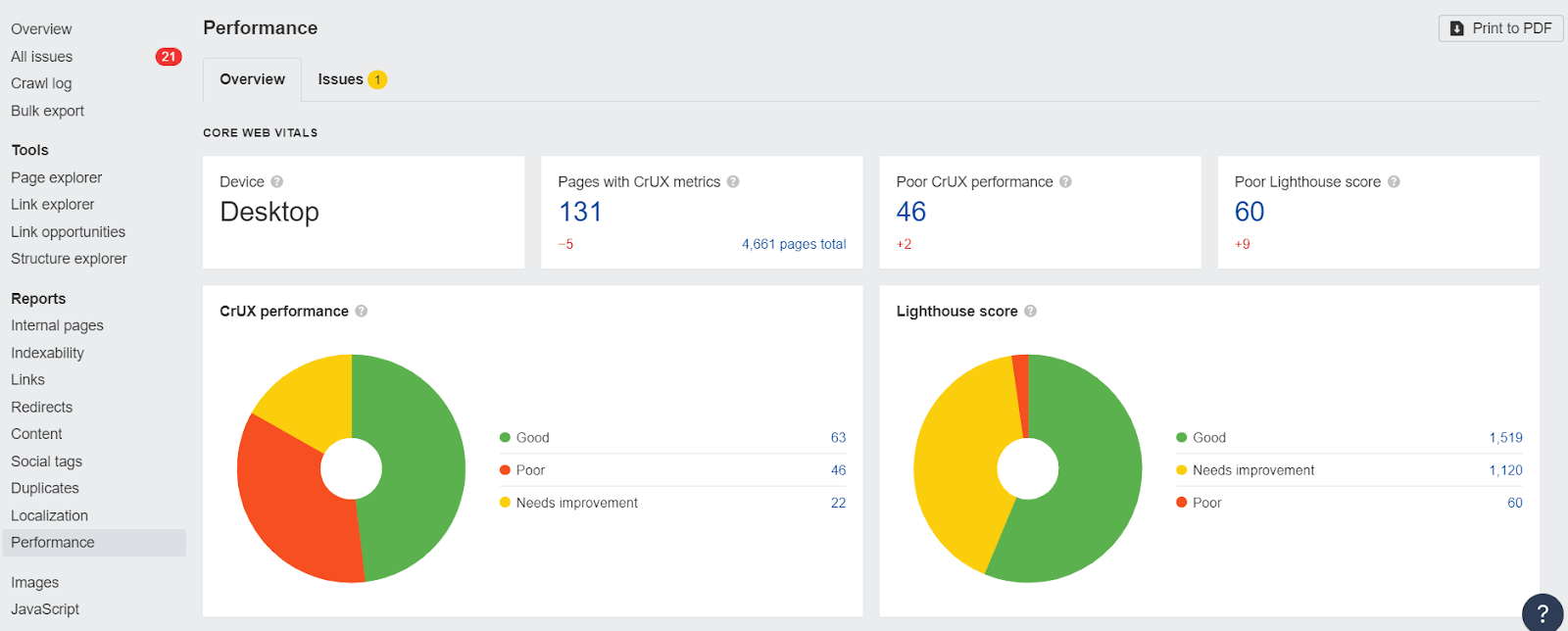
Be aware that the Core Internet Vitals knowledge proven might be decided by the user-agent you choose on your crawl in the course of the setup. In case you crawl from cell, you’ll get cell CWV values from the API.
In PageSpeed Insights, the LCP component might be specified within the “Diagnostics” part. Additionally, discover there’s a tab to pick LCP that can solely present points associated to LCP. These are the problems seen within the lab take a look at that you simply’ll wish to resolve.
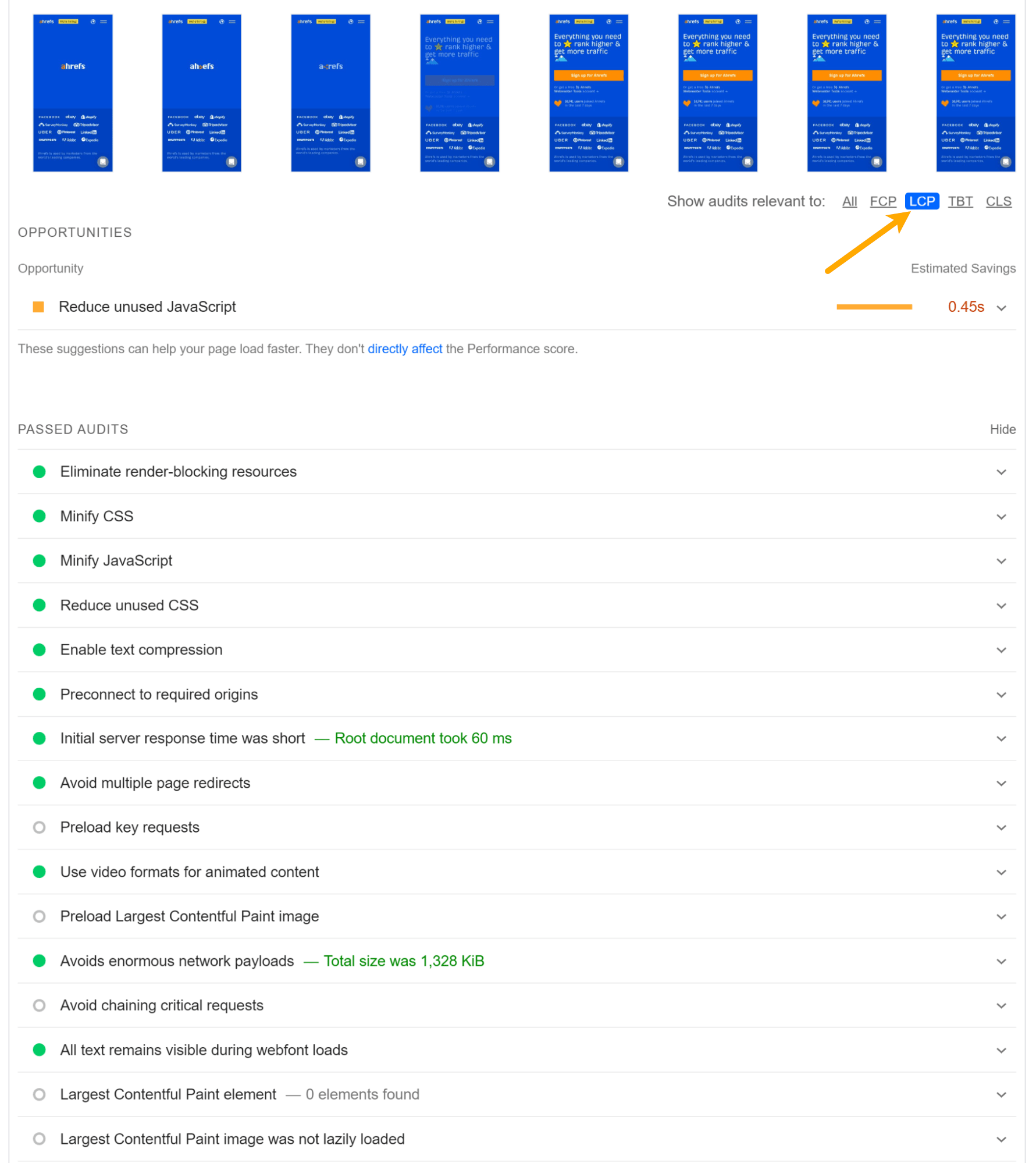
There are plenty of points that relate to LCP, making it the toughest metric to enhance.
The overall principle sounds straightforward sufficient. Give me the biggest component quicker. However in follow, this may get pretty complicated. Some information could require others to be loaded first, or there could also be conflicting priorities within the browser. You might repair a bunch of points with out really seeing an enchancment, which may be irritating.
In case you’re not very technical and don’t wish to rent somebody, search for efficiency or web page velocity optimization plugins, modules, or packages for no matter system you’re utilizing. You should use the under info as a information for what options you might want.
Listed below are just a few methods you possibly can enhance LCP:
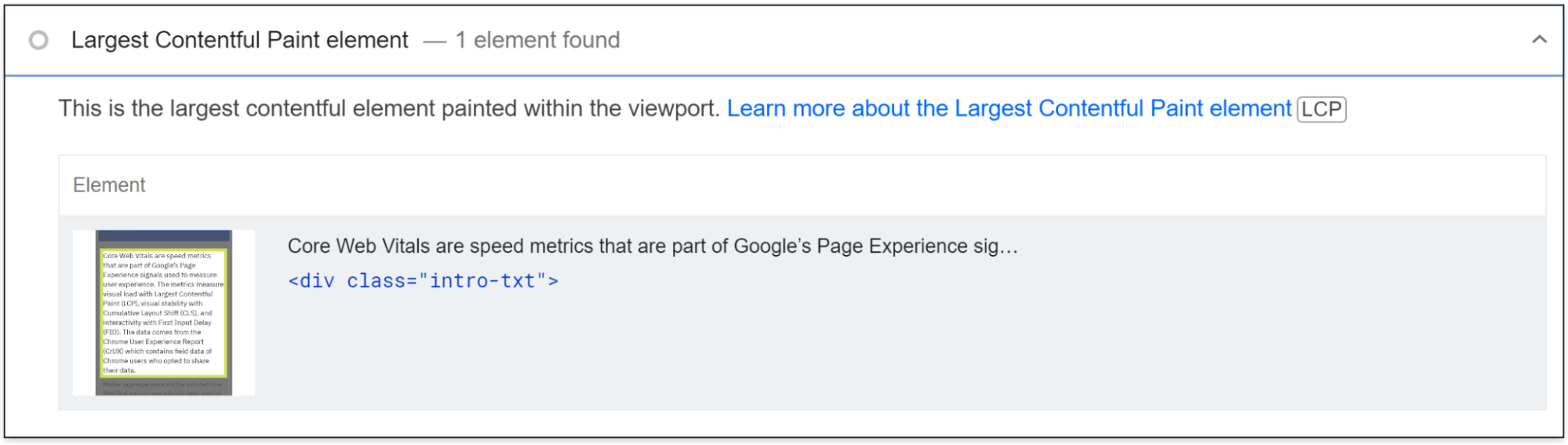
1. Discover your LCP component
In PageSpeed Insights, you possibly can click on “Largest Contentful Paint component” within the “Diagnostics” part, and it’ll determine your LCP component.
2. Prioritize loading of assets
To go the LCP examine, you need to prioritize how your assets are loaded within the important rendering path. What I imply by that’s you wish to rearrange the order during which the assets are downloaded and processed.
It is best to first load the assets wanted on your LCP component and another assets wanted for the content material above the fold. After the initially seen parts are loaded for customers, the remainder are then loaded.
Many websites can get to a passing time for LCP by simply including some early hints or preload statements for issues like the primary picture, in addition to crucial stylesheets and fonts. Let’s take a look at the way to optimize the varied useful resource sorts.
Photos early
In case you don’t want the picture, essentially the most impactful answer is to easily do away with it. In case you will need to have the picture, I recommend optimizing the dimensions and high quality to maintain it as small as doable.
You may as well use Early Hints. Fetchpriority=”excessive” can be utilized on <img> or <hyperlink> tags and tells browsers to get the picture early. This implies it’s going to show a little bit earlier.
Early Hints don’t work on all browsers, so you might also wish to preload the picture. That is going to start out the obtain of that picture a little bit earlier, however not fairly as early as fetchpriority=”excessive”.
A preload assertion for a responsive picture appears like this:
<hyperlink rel="preload" as="picture" href=“cat.jpg"
imagesrcset=“cat_400px.jpg 400w,
cat_800px.jpg 800w, cat_1600px.jpg 1600w"
imagesizes="50vw">
You’ll be able to even use fetchpriority=”excessive” and preload collectively!
Photos late
It is best to lazy load any photos that you simply don’t want instantly. This hundreds photos later within the course of or when a person is near seeing them. You should use loading=“lazy” like this:
<img src=“cat.jpg" alt=“cat" loading="lazy">
Don’t lazy load photos above the fold!
CSS early
It is best to minify any CSS you could have. If doable, take away any unused CSS as nicely.
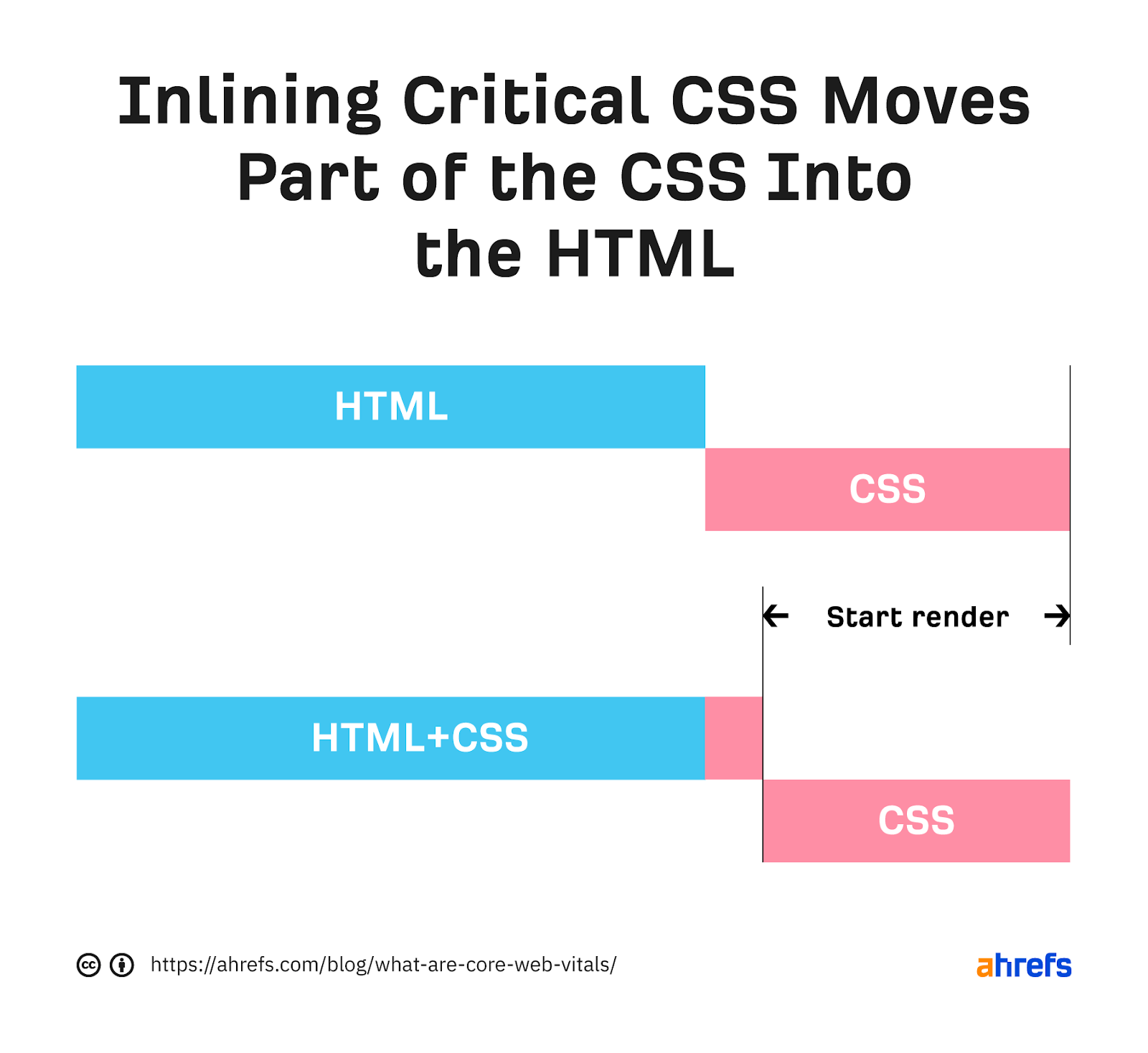
The opposite main factor you need to do is to inline important CSS. What this does is it takes the a part of the CSS wanted to load the content material customers see instantly after which applies it immediately into the HTML. When the HTML is downloaded, all of the CSS wanted to load what customers see is already accessible.
CSS late
With any further CSS that isn’t important, you’ll wish to apply it later within the course of. You’ll be able to go forward and begin downloading the CSS with a preload assertion however not apply the CSS till later with an onload occasion. This appears like:
<hyperlink rel="preload" href="https://ahrefs.com/weblog/largest-contentful-paint-lcp/stylesheet.css" as="model" onload="this.rel="stylesheet"">
Fonts
I’m going to present you just a few choices right here:
Good: Preload your fonts. Even higher if you happen to use the identical server to do away with the connection.
Higher: Font-display: elective. This may be paired with a preload assertion. That is going to present your font a small window of time to load. If the font doesn’t make it in time, the preliminary web page load will merely present a default font. Your customized font will then be cached and present up on subsequent web page hundreds.
Finest: Simply use a system font. There’s nothing to load—so no delays.
JavaScript early
We already talked about eradicating unused JavaScript and minifying what you could have. In case you’re utilizing a JavaScript framework, then you might wish to prerender or server-side render (SSR) the web page.
You may as well inline the JavaScript wanted early. This works the identical approach as was described within the CSS part, the place you progress parts out of your JavaScript information to as an alternative be loaded with the HTML.
Another choice is to preload the JavaScript information so that you simply get them earlier. This could solely be completed for belongings wanted to load the content material above the fold or if some performance will depend on this JavaScript.
JavaScript late
Any JavaScript you don’t want instantly needs to be loaded later. There are two foremost methods to do this—defer and async attributes. These attributes may be added to your script tags.
Normally, a script being downloaded blocks the parser whereas downloading and executing. Async will let the parsing and downloading happen on the identical time however nonetheless block parsing in the course of the script execution. Defer is not going to block parsing in the course of the obtain and solely execute after the HTML has completed parsing.
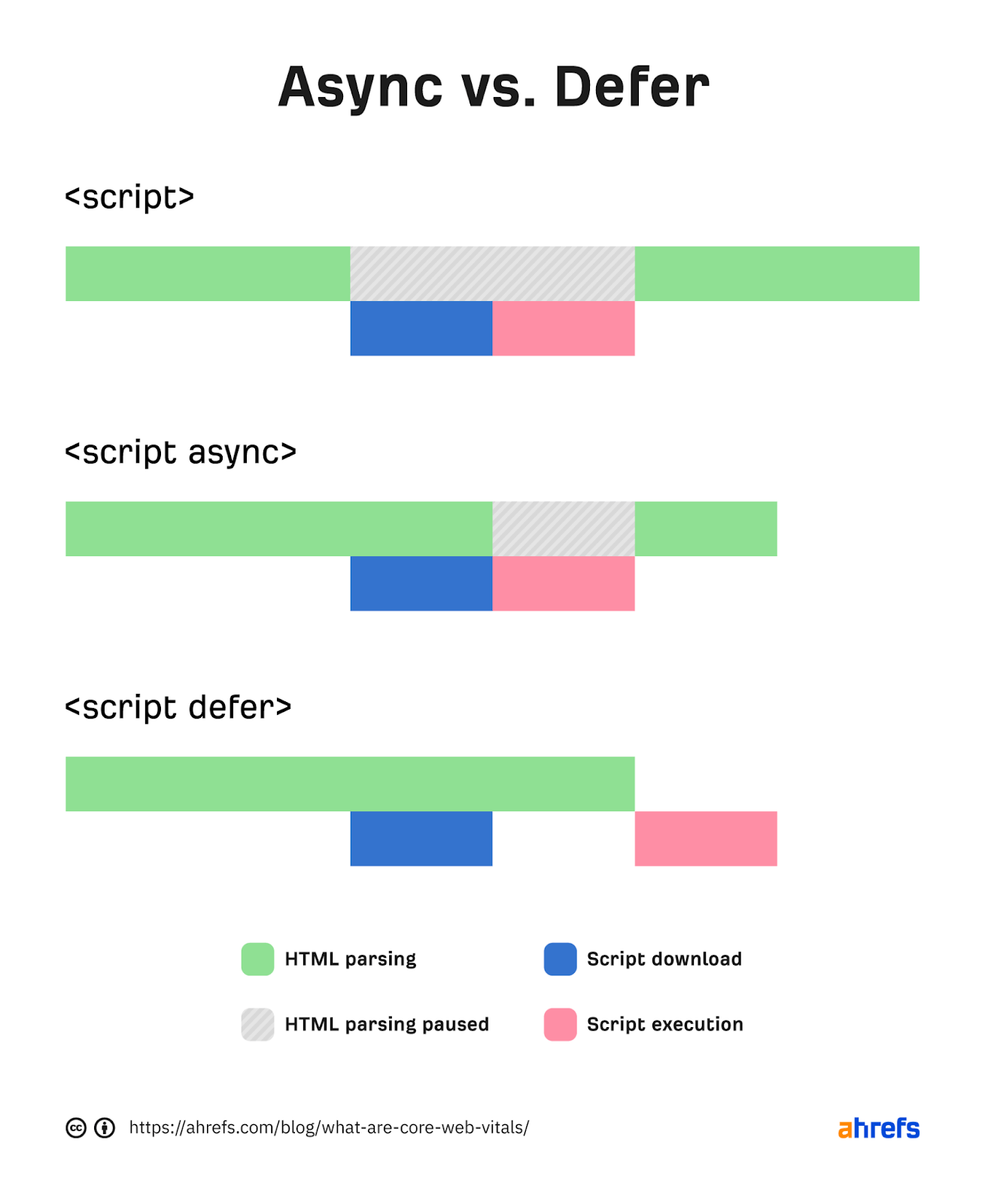
Which must you use? For something that you really want earlier or that has dependencies, I’d lean towards async.
As an illustration, I have a tendency to make use of async on analytics tags in order that extra customers are recorded. You’ll wish to defer something that’s not wanted till later or doesn’t have dependencies. The attributes are fairly straightforward to add.
Try these examples:
Regular:
<script src="https://www.area.com/file.js"></script>
Async:
<script src="https://www.area.com/file.js" async></script>
Defer:
<script src="https://www.area.com/file.js" defer></script>
3. Make information smaller
In case you can do away with any information or cut back their sizes, then your web page will load quicker. This implies you might wish to delete any information not getting used or components of the code that aren’t used.
The way you go about this can rely rather a lot in your setup, however the course of for eradicating unneeded components of information is normally known as tree shaking.
That is generally completed through an automatic course of with Webpack or Grunt with JavaScript frameworks or typically even programs like WordPress, however most typical CMS programs could not assist this.
You might wish to skip this or see if there are any plugins which have this feature on your system.
To make the information smaller, you sometimes wish to compress them.
Just about each file kind used to construct your web site may be compressed, together with CSS, JavaScript, Photos, and HTML. Additionally, almost each system and server assist compression.
It’s normally completed on the server or CDN stage, however some plugins assist this like WP Rocket for WordPress.
4. Serve information nearer to customers
Data takes time to journey. The additional you’re from a server, the longer it takes for the info to be transferred. Until you serve a small geographical space, having a Content material Supply Community (CDN) is an effective thought.
CDNs provide you with a solution to join and serve your website that’s nearer to customers. It’s like having copies of your server in numerous places across the world.
5. Host assets on the identical server
Once you first connect with a server, there’s a course of that navigates the net and establishes a safe connection between you and the server.
This takes a while, and every new connection it’s worthwhile to make provides further delay whereas it goes by way of the identical course of. In case you host your assets on the identical server, you possibly can eradicate these further delays.
In case you can’t use the identical server, you might wish to use preconnect or DNS-prefetch to start out connections earlier. A browser will sometimes await the HTML to complete downloading earlier than beginning a connection. However with preconnect or DNS-prefetch, it begins sooner than it usually would. Do be aware that DNS-prefetch has higher assist than preconnect.
For every useful resource you wish to get early, you add a brand new assertion like:
<hyperlink rel="preconnect" href="https://fonts.googleapis.com/">
<hyperlink rel="dns-prefetch" href="https://fonts.googleapis.com/" />
6. Use caching
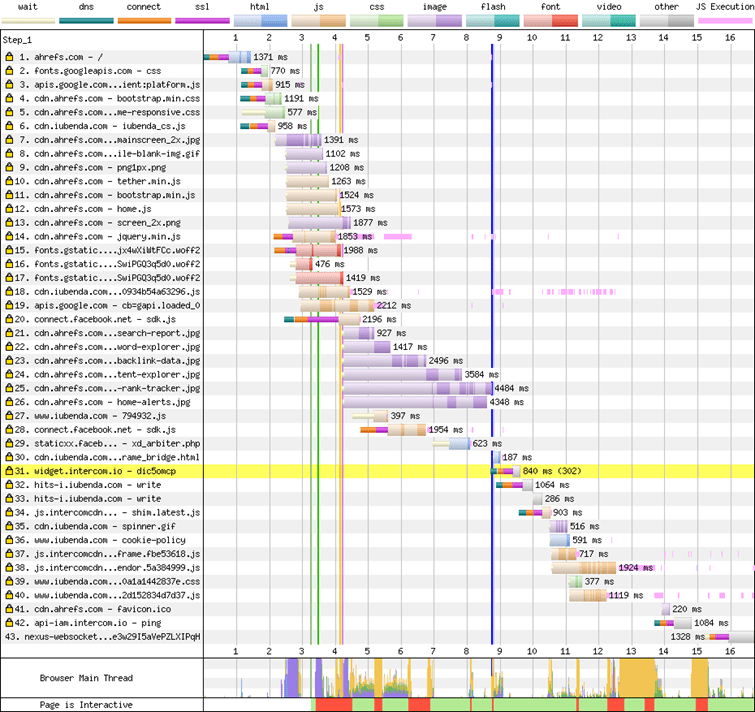
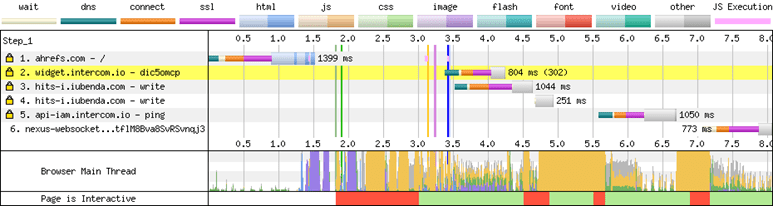
Once you cache assets, they’re downloaded for the primary web page view however don’t should be downloaded for subsequent web page views. With the assets already accessible, further web page hundreds might be a lot quicker.
Try how few information are downloaded within the second web page load within the waterfall charts under.
First load of the web page:
Second load of the web page:
In case you can, cache on a CDN as nicely. Your cache time needs to be so long as you’re comfy with.
An excellent setup is to cache for a very lengthy time frame however purge the cache while you make a change to a web page.
7. Misc
There are just a few different applied sciences that you could be wish to take a look at to assist with efficiency. These embody Speculative Prerendering, Signed Exchanges, and HTTP/3.
Ultimate ideas
Is there a greater metric to measure seen load? I don’t see something new on the horizon presently. We’ve already seen a number of evolutions attempting to measure the load.
Load and DOMContentLoaded don’t actually inform you what a person sees. First Contentful Paint (FCP) is the start of the loading expertise. First Which means Paint (FMP) and Velocity Index (SI) are complicated and don’t actually determine when the primary content material has been loaded.
In case you have any questions, message me on Twitter.

