



Many junior SEOs make the same mistake: they chase high search volume, assuming it means long-term opportunity. But search volume alone is completely misleading.
A keyword with 50,000 searches/month sounds like a goldmine, until you realize it’s already in decline. Investing in a fading trend is like buying MySpace stock today.
Every keyword follows a lifecycle moving through these distinct phases:
- Intro stage – Early interest, but not mainstream yet
- Surge & peak – Explosive growth and peak visibility
- Sustained growth – Long-term, steady momentum
- Plateau – Growth levels off, demand stabilizes
- Resurgence / seasonality – Demand spikes again, either cyclically or unexpectedly
- Decline – Gradual loss of interest over time
- Niche survival or extinction – Either a small, steady demand remains, or the keyword disappears entirely
If you don’t know where a keyword is in this cycle, you’re flying blind.
This post breaks down each phase, the patterns behind them, and how to spot emerging opportunities before your competitors do.
Let’s dig in.
Some keywords start with a bang, but most follow a slow build before they take off. The intro stage is when search demand is still low, but early adopters are starting to take interest.
At this stage, a topic’s future is uncertain.
It might gain traction and surge in popularity, or it might fizzle out before reaching mainstream awareness. The key is identifying which trends have real potential.
Here’s what to look out for:
Pre-peak growth – An exponential increase in search interest before reaching a tipping point.
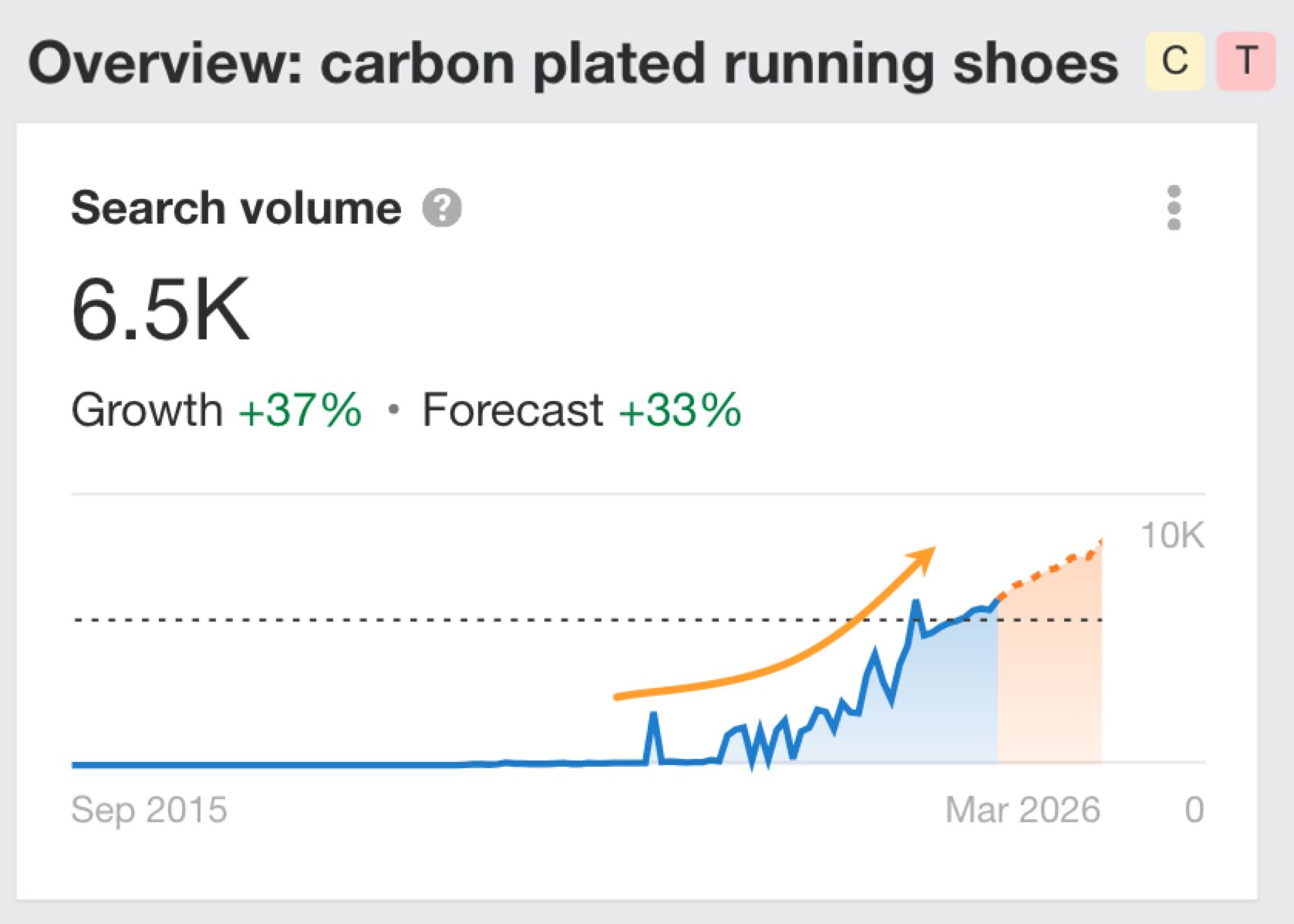
Steady growth – A slow but consistent upward trajectory.

Early virality / launch-related growth – A steep incline due to a product launch, social media trend, or PR push.
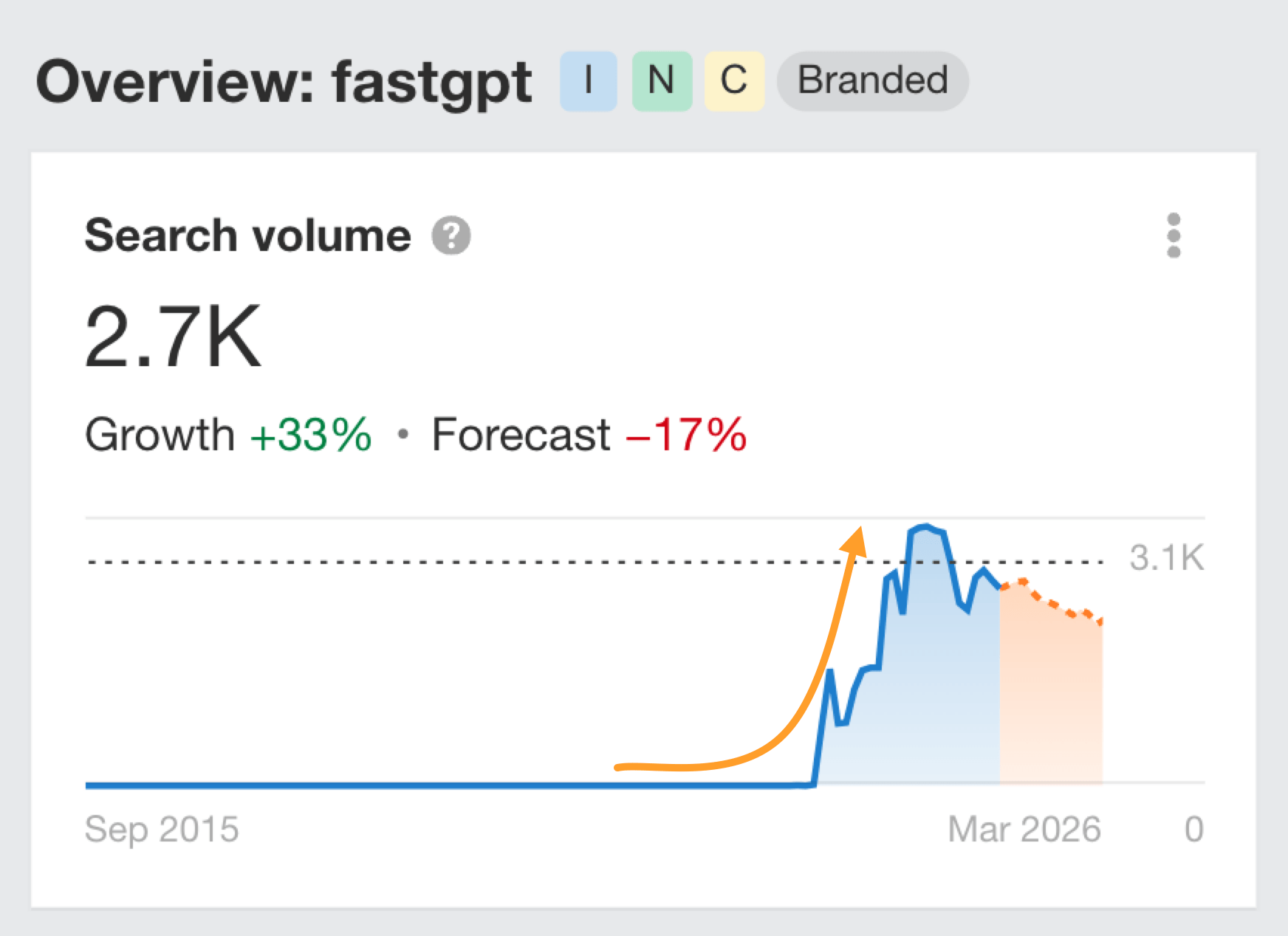
Keywords in this stage can stay under the radar for months or even years. Some take off quickly, while others require sustained marketing or a major industry shift to gain momentum.
SEO strategy for the intro stage
- Look beyond search volume – Topics in this stage have low search volume and require a leap of faith, trusting intuition, and real-world trends over keyword data, but their potential lies in early adoption.
- Monitor industry signals – Pay attention to product launches, investor funding, and expert discussions that hint at future demand.
- Create foundational content early – Publishing now can establish authority before competition floods in.
Many breakout trends start unnoticed. The best SEOs don’t wait until a keyword is trending, they invest before the surge begins.
Some topics experience rapid surges in demand, going from niche interest to mainstream adoption very quickly.
If it’s a PR or social-media fueled surge, searches can peak overnight. However, the most sustainable surges in search demand rise to a peak over the course of many months, even over a year, for some topics.
At this stage, a topic is at its highest search volume, but not all peaks are equal. Some trends sustain their growth, while others fade just as quickly as they appeared. Recognizing which keywords still have room to grow (and which are already oversaturated) is key to making the right SEO decisions.
Here’s what to look out for:
Peaking – A keyword has hit the top of a sharp rise and is either starting to slow, slightly decline, or plateau.

Actively surging – A keyword is still in the middle of a sharp upward spike, meaning demand is increasing rapidly.
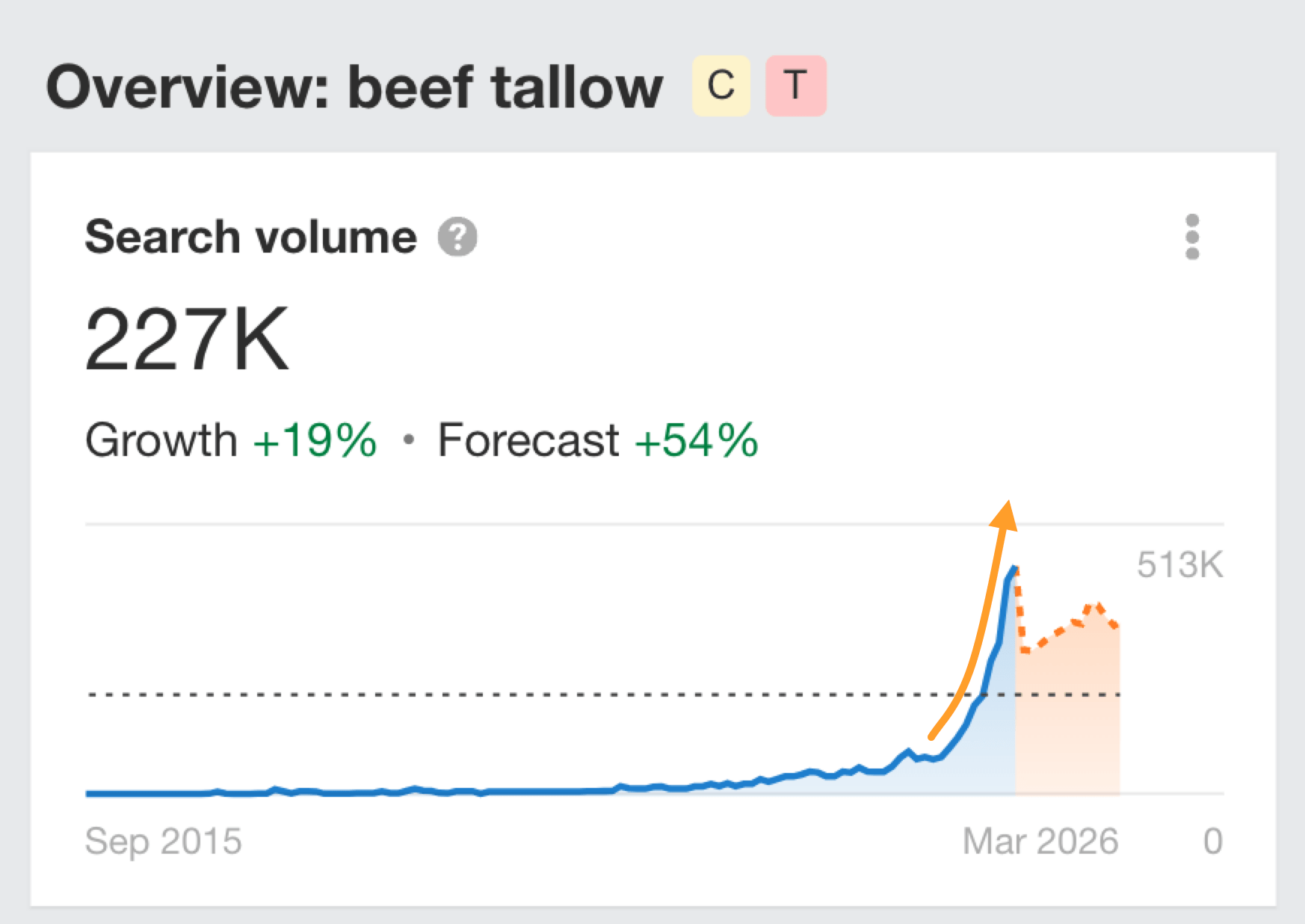
The longer a keyword stays in this phase, the better the chances that it will transition into sustained demand rather than decline.
SEO strategy for surge & peak demand
- Move fast – If a keyword is peaking, competition is likely rising. The best move is to optimize existing content that can likely rank quickly, allowing you to capture traffic while demand is high.
- Evaluate long-term potential – Not every spike is worth chasing. Hype-driven trends fade fast. A short-lived search trend may only spike for a handful of months, whereas a topic that grows over 12+ months has greater long-term longevity.
- Plan for post-peak shifts – Many keywords evolve after their peak. Look for ways to pivot content toward related evergreen topics to maintain relevance.
Riding a surge successfully requires speed and strategy. The best SEOs know when to capitalize on a trend and when to avoid short-lived fads that won’t hold long-term value.
Some topics surge and crash, but others experience steady, long-term growth that makes them high-value SEO investments.
The sustained growth phase is where a topic continues to gain traction over months or years.
Unlike volatile trends, topics in this phase offer long-term traffic potential. They may have already passed an initial peak, but their search demand remains stable or continues growing at a slower, predictable rate.
Identifying these topics early allows SEOs to build website authority and own the topic before competitors catch on.
Here’s what to look out for:
Peaking growth – A keyword has surged but is still increasing, though at a slower pace than before.

Gradual growth – A keyword experiences a steady upward trend with minor fluctuations.
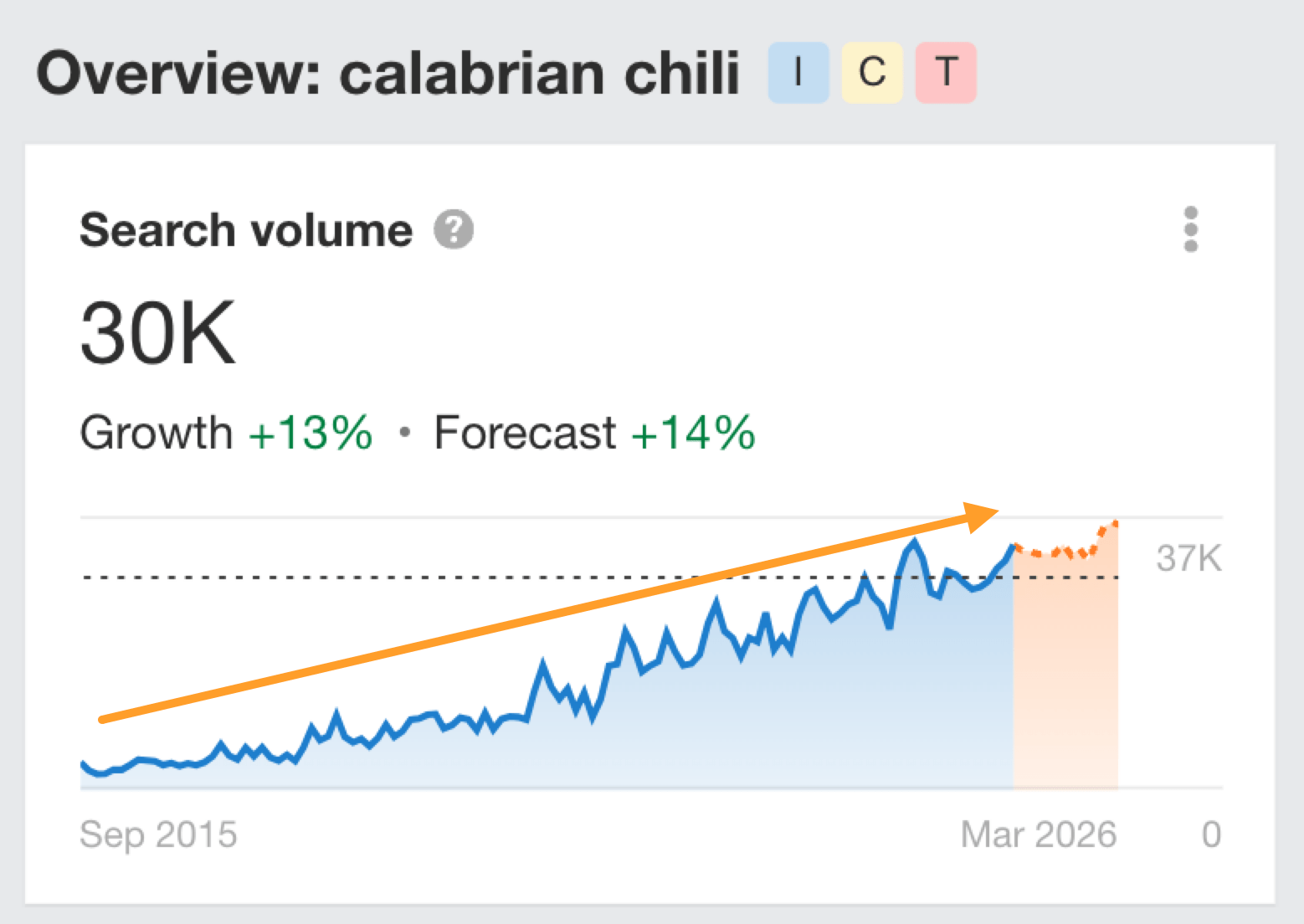
Post-peak growth – After an initial peak, the keyword starts stabilizing at a higher level than before the peak.
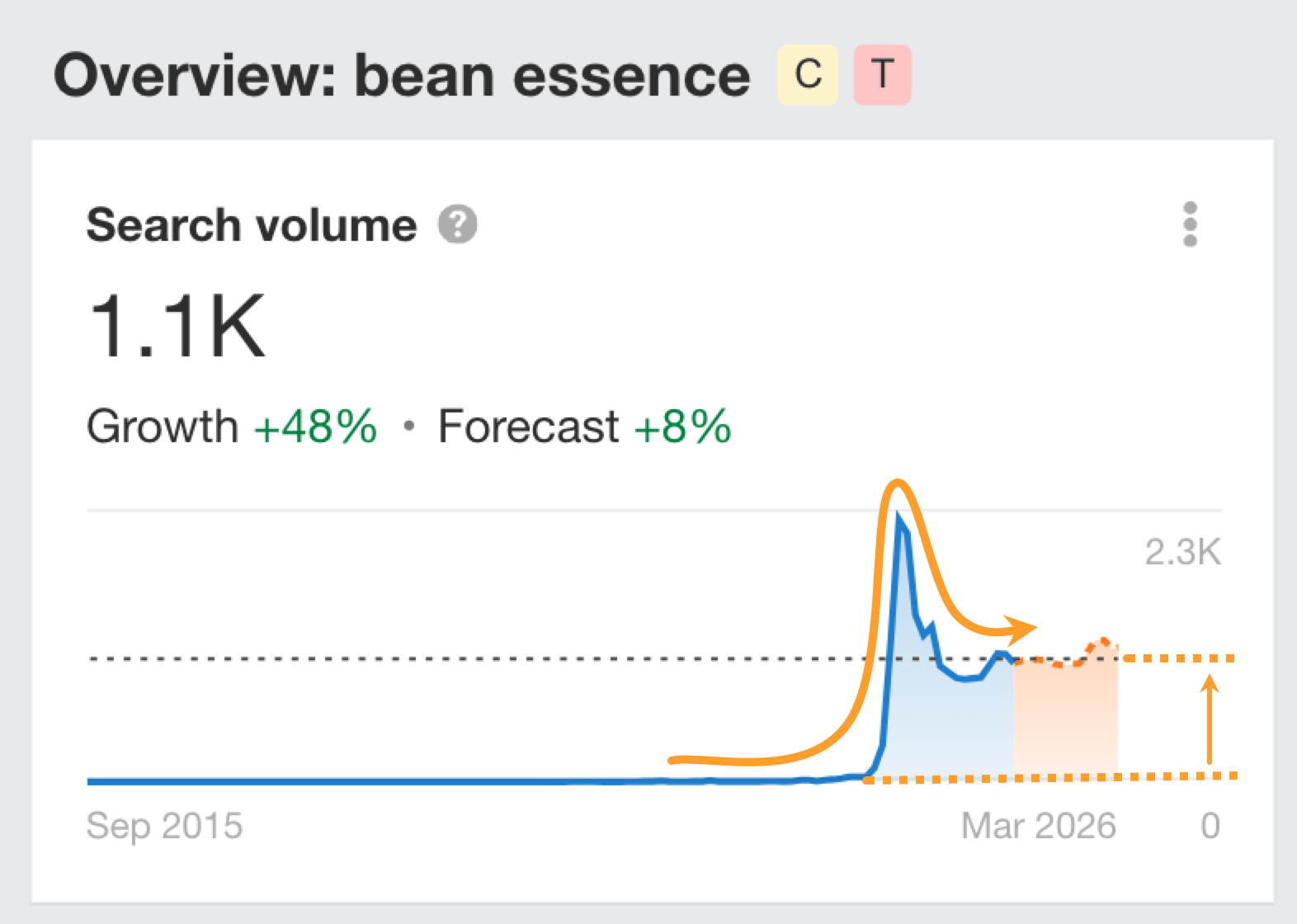
Topics in this phase have already proven their demand and are less likely to decline suddenly. The longer a keyword maintains steady growth, the more likely it is to become an evergreen topic.
However, not all topics with sustained growth remain strong forever. Understanding their trajectory is key to making the right content and optimization decisions.
SEO strategy for sustained growth
- Double down on authority – These keywords have long-lasting value. Invest in pillar content, supporting pages, and ongoing optimization to secure rankings.
- Monitor shifts in demand – Some keywords maintain slow growth indefinitely, while others may begin plateauing. Keep an eye on changes in search demand, intent, and competition.
- Consider content expansion – If a keyword has proven staying power, explore related subtopics to increase visibility and topic coverage.
Long-term growth topics compound in value over time. SEOs who invest in them early and consistently can build strong, defensible rankings that drive sustained traffic.
Not all topics keep growing. Some reach a point where demand stabilizes, neither increasing nor declining significantly.
This is the plateau phase, where search interest flattens out, signaling that a topic has reached its saturation point.
At this stage, a topic may still have a high search volume, but the rapid growth that once made it exciting has tapered off. Understanding whether a topic is truly evergreen or sitting at its peak before an eventual decline is critical for making the right SEO decisions.
Here’s what to look out for:
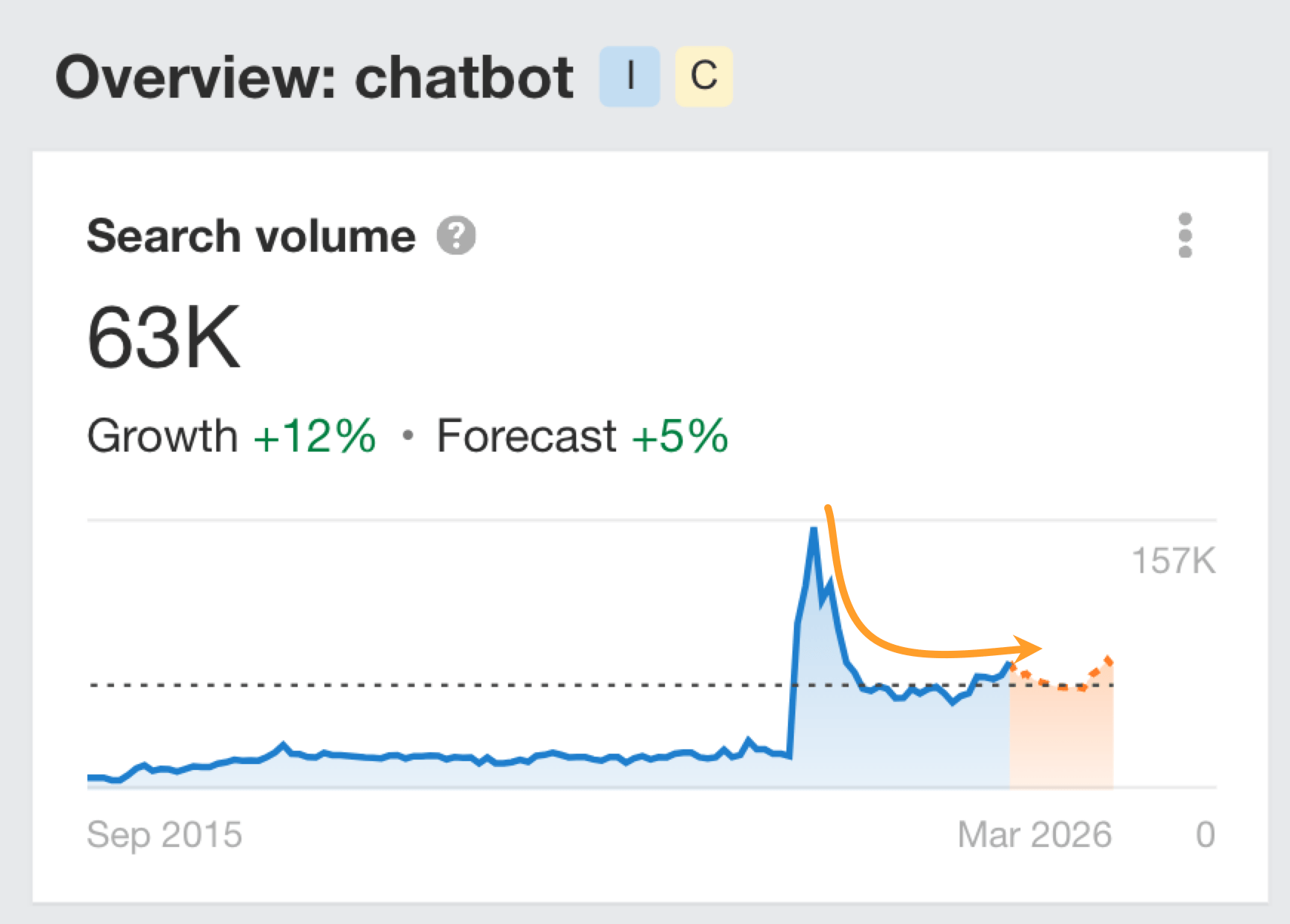
Post-peak plateau – A topic surged and then stabilized at a consistent level for a long period of time, ideally 6+ months.
Growth limit – A topic experienced steady growth but has now leveled off for a long time, signaling a possible demand ceiling.

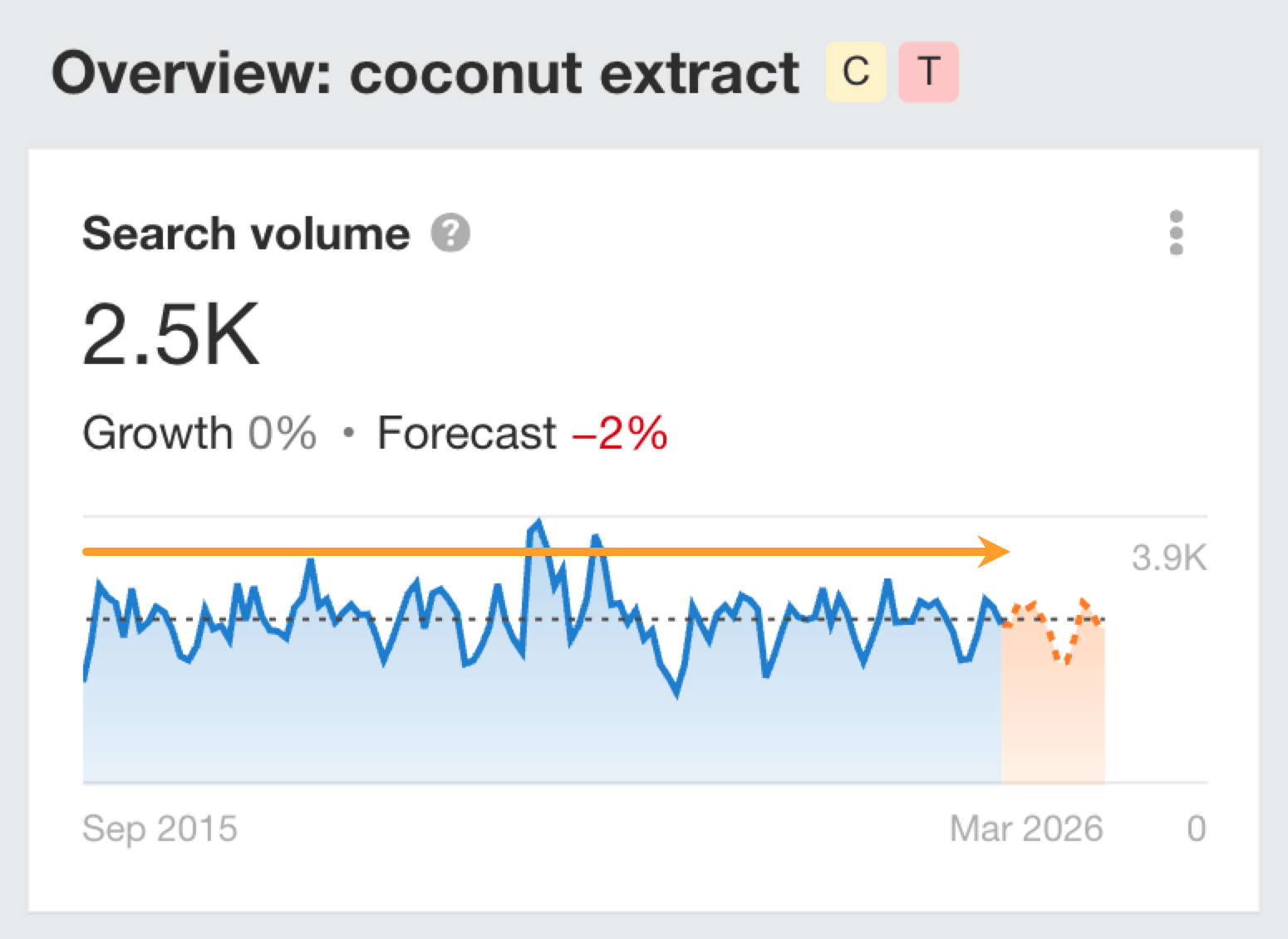
Evergreen plateau – A topic maintains steady search demand for years without a noticeable rise or fall in the long term. Short-term rises and dips can largely be ignored as they don’t influence the long-term demand trajectory.
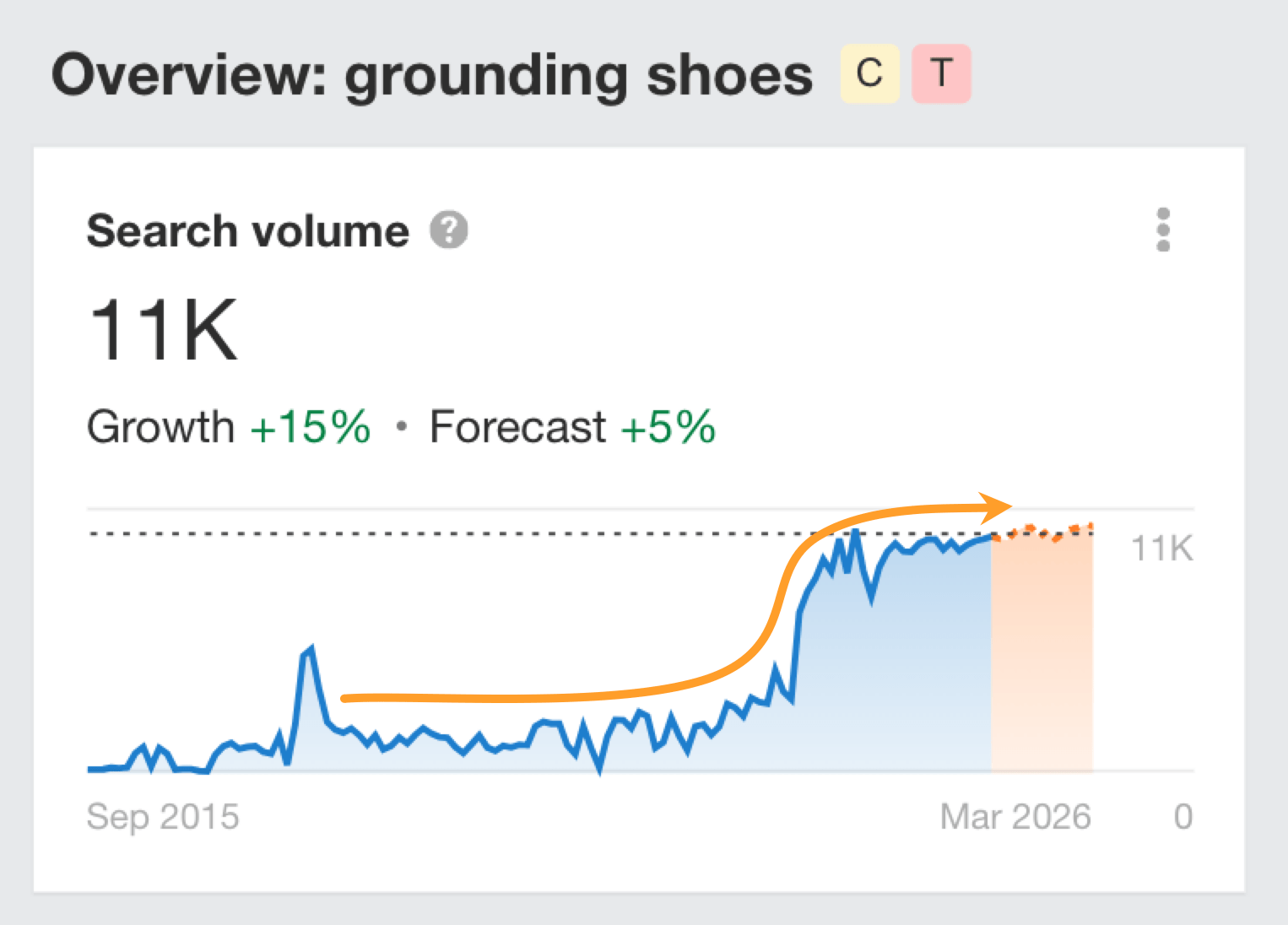
Stepped growth – The topic plateaus, then surges and plateaus again at a higher level, forming a series of upward steps over time.
Topics in this phase can remain valuable for years, but not all plateaus are equal. Some topics are evergreen staples, while others sit at an artificial peak driven by temporary factors.
The key is recognizing whether a plateau is stable and sustainable or the first sign of an impending decline.
SEO strategy for plateaued keywords
- Defend your rankings – If search volume remains steady, optimize and refresh existing content to maintain position.
- Look for related opportunities – Explore long-tail variations and adjacent topics to expand reach.
- Watch for signs of decline – Some plateaus hold, but others start dipping over time. Monitor YoY trends to avoid being caught off guard.
A plateau doesn’t mean a keyword is dead. It often signals stability and sustained traffic. The best SEOs know when to hold their ground and when to pivot before demand shifts.
Some topics don’t follow a single growth trajectory. Instead, they spike in demand repeatedly, either in predictable seasonal cycles or due to unexpected resurgences.
This phase is where demand fluctuates or resurges, but never fully disappears.
Understanding whether a topic follows a seasonal pattern or is experiencing random spikes due to external events helps SEOs decide whether to invest long-term or capitalize on short-term bursts of interest.
Here’s what to look out for:
Resurging / seasonal growth – The keyword sees repeated spikes, but the overall trend is upward.
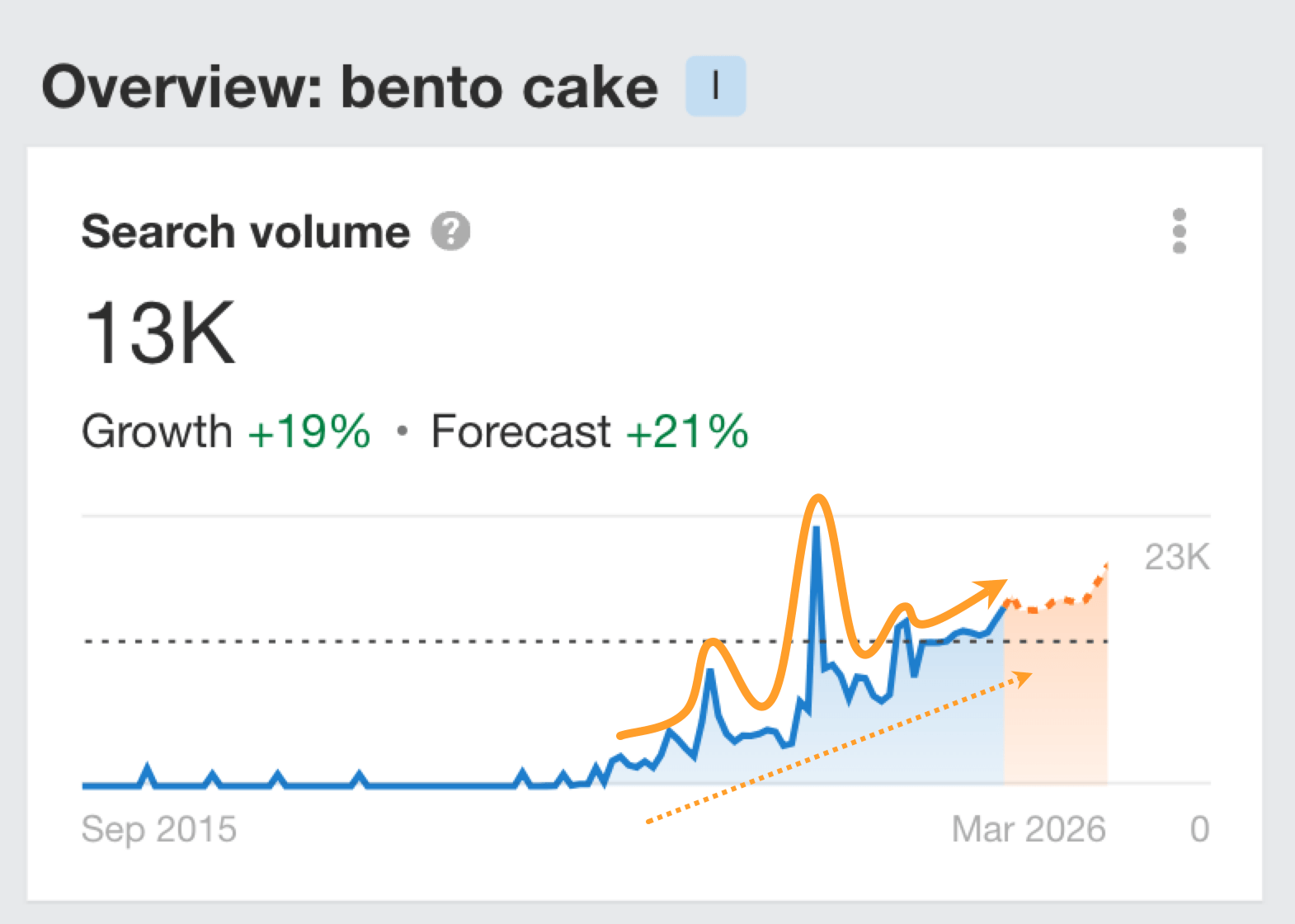
Resurging / seasonal plateau – Demand spikes at regular intervals but remains steady over time.
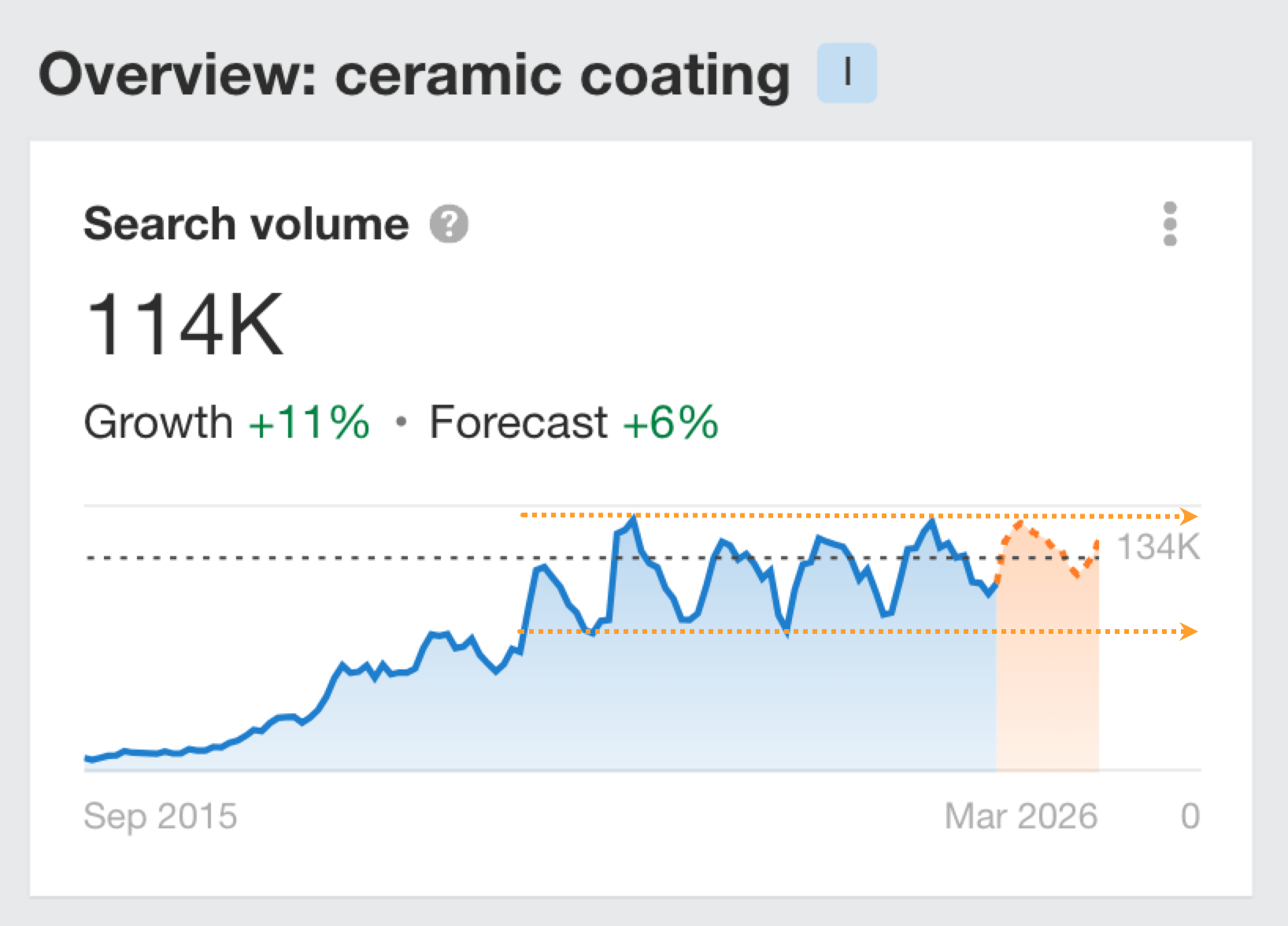
Resurging / seasonal decline – The keyword still has spikes, but its overall trajectory is downward.
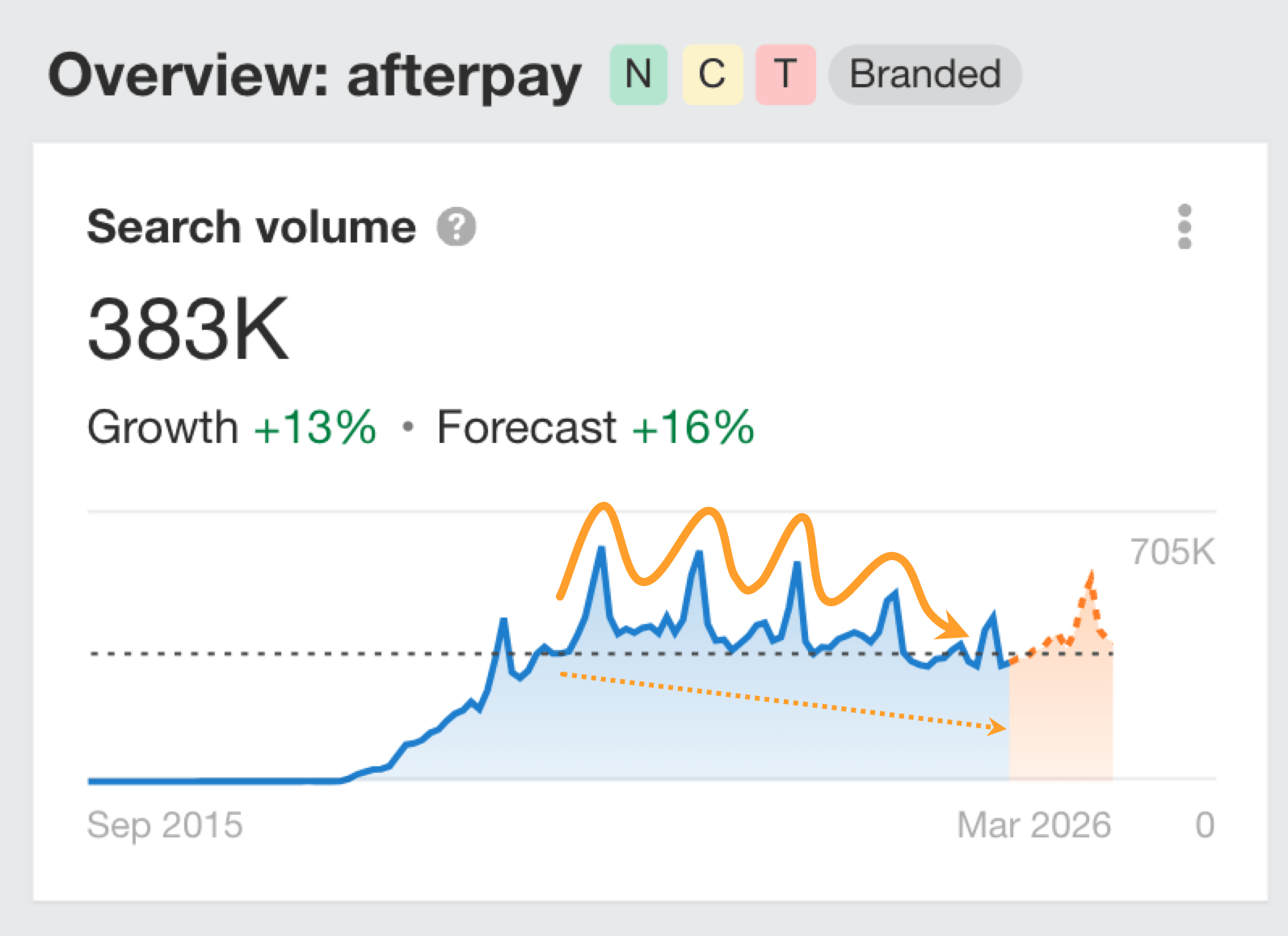
Ad hoc resurgence – A keyword surges unpredictably due to viral trends, news, or social media.
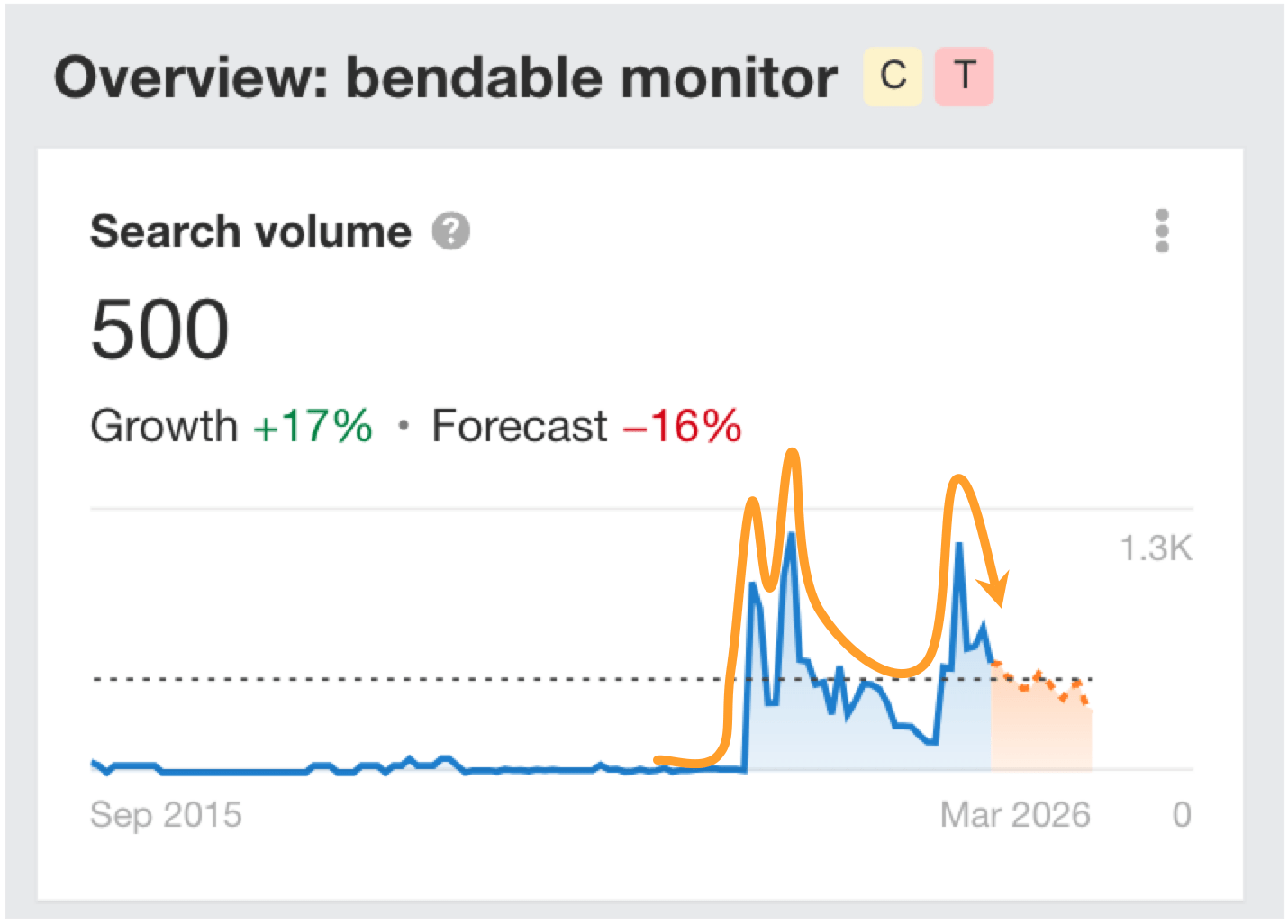
Early peak, late resurgence – A keyword had an initial massive spike, plateaued or declined, then saw a major resurgence later, often stabilizing at a higher level.

Some resurgences are highly predictable, like holiday-related searches that peak at the same time every year. Others are driven by unpredictable external events, making them harder to plan for but valuable when spotted early.
SEO strategy for resurgence & seasonality
- Use seasonal trends – If a topic surges predictably, create seasonal content refreshes and promotional campaigns ahead of time.
- Monitor news and social media – Unexpected resurgences are often driven by viral moments. Being first to react can capture huge search interest and visibility in Google News or Discover.
- Align link building with surges – If a topic has predictable peaks or is actively resurging, it’s a great time to build links and ride the topic’s popularity in the moment.
Resurgence and seasonality create huge opportunities for traffic if you know when to act. The best SEOs anticipate demand before it happens and position their content accordingly.
No topic stays relevant forever. Some experience a slow fade, while others drop sharply after a peak.
The decline phase is when search demand starts falling, often signaling that a topic is losing relevance, being replaced, or simply no longer needed.
It’s also worth noting that not all declines happen at the same rate. Some are gradual, while others are sudden and irreversible. For example, most branded keywords tend to have longer growth periods and shorter decline periods than non-branded keywords do.
Recognizing the early warning signs of decline allows SEOs to pivot their brand or content strategy before traffic dries up.
Here’s what to look out for:
Post-peak decline – A topic starts to dip immediately after reaching its peak.