

Semantic SEO sounds complicated, but it simply boils down to doing SEO without cutting corners.
If you do SEO properly, you’re automatically doing semantic SEO. It’s just that most people aren’t doing it properly…

It’s not a different type of SEO. You don’t need to do wildly different things. Rather, it’s a mental model that advances:
- The way you think about SEO strategy
- The SEO goals you aim for
- The processes you follow to achieve them
This is a no-hype, no-bs guide on how you can implement semantic SEO on your website.
We’ll cover what “semantic” means, how it applies to search engines and LLMs, and how I and the following experts actually do semantic SEO and get meaningful results for clients.
Let’s dig in.
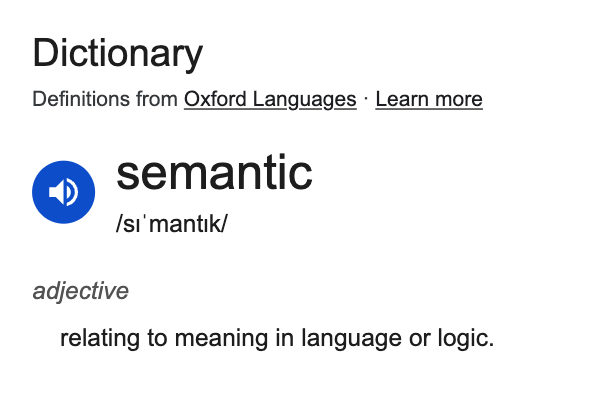
The word semantic means “of or relating to meaning”.
For example, the word “dog” has meaning to us, “asdf” does not, it’s just a random string of characters.
To machines, all words are random strings of characters. The field of semantics focuses on training them to interpret the meaning of words based on how we (humans) use them.
Search engines don’t speak English. They speak code. Semantic SEO is about translating your meaning into their language.

The more popular a particular sequence of characters is, the higher the chance it has meaning.
The more two separate strings are used together, the more likely they are related.
Notice the language I’m using — “more likely”, “higher the chance” — it’s all a matter of probabilities and calculations because machines cannot truly understand things the way we do.
Repetition and patterns in how humans use words are how they infer meaning.
That is the basis of semantic search.
Semantic SEO is about showing up in search engines and LLMs that surface content or create responses based on meaning rather than word strings.
They typically work by matching the topics in a user’s query with documents that cover that topic well.
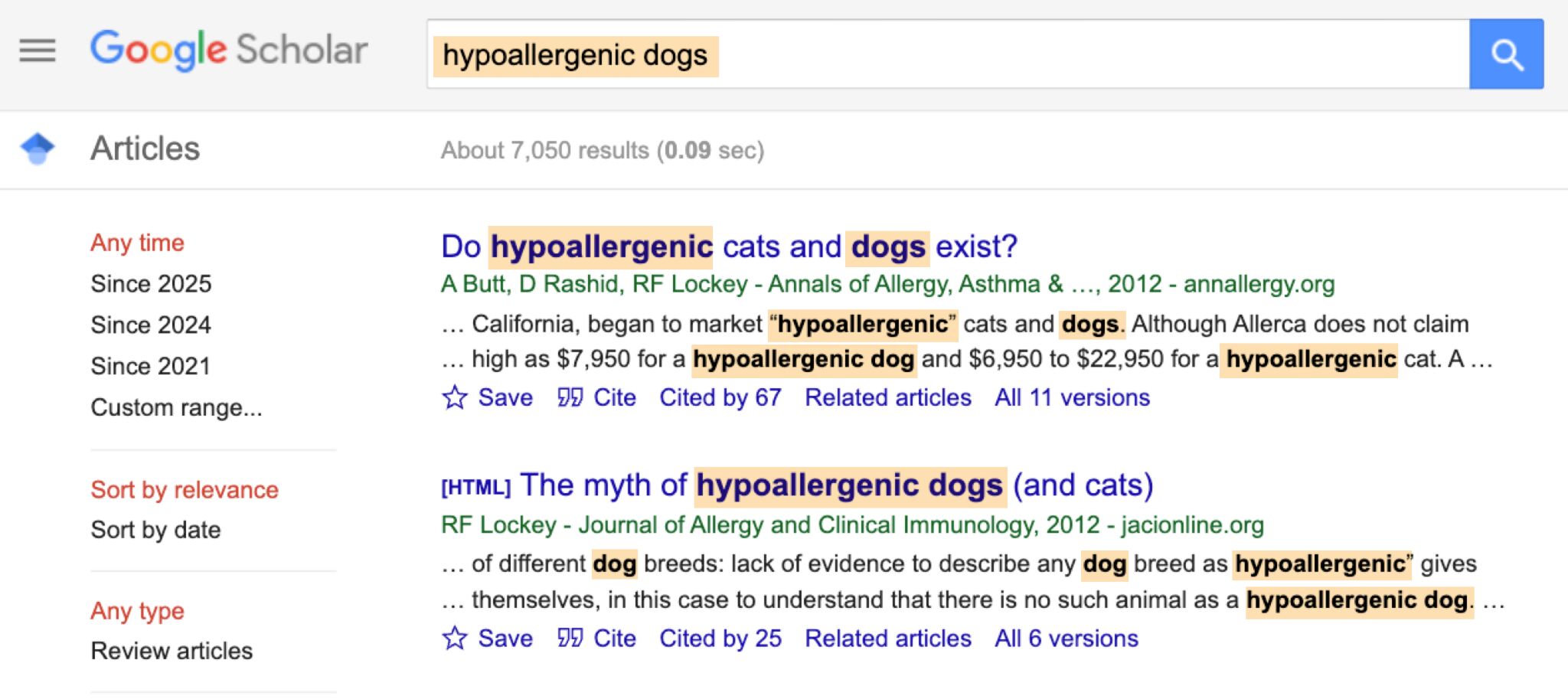
This is different from old-school search engines that match content based on the exact words used (a bit like how Google Scholar works today).
The way all senior SEOs I interviewed think about it is as an overlap between:
- Brand: To ensure machines understand and represent your brand accurately.
- Content: To connect your brand to core topics you want to be a trusted source for.
- Technical: To ensure your brand, content, and website are machine-friendly.
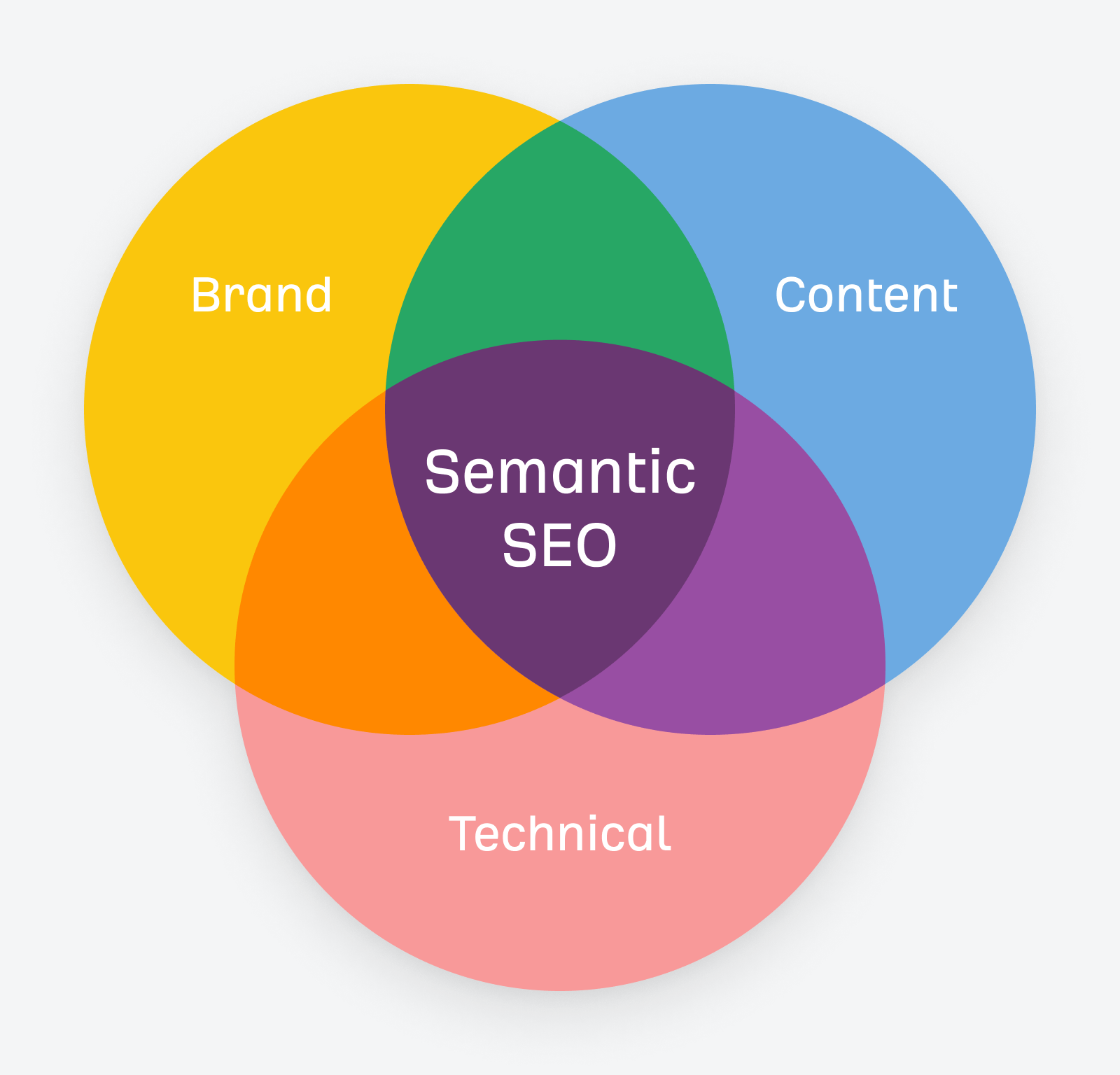
It’s where brand strategy overlaps with technical and on-page SEO — and that overlap is growing.
It’s all focused on how machines interpret your brand and content so they can mention you in more responses, accurately.
The goals of semantic SEO
Rankings and traffic have long been the staple goals of traditional SEO projects. However, they’re concerned with if a brand shows up in search results.
It doesn’t necessarily matter how because the expectation has been that content will be featured verbatim as it is on the brand’s website. Sure, Google uses different styling to emphasize relevant parts to searchers, but it doesn’t completely rewrite your content.
For instance, this search result displays the post’s first sentence word-for-word:
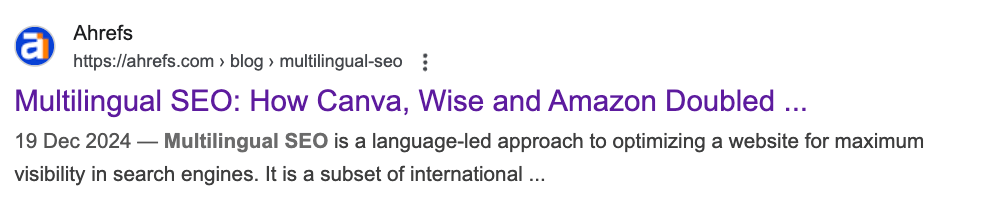
The goals of semantic SEO, however, are much more concerned with how a brand is featured.
- Is the brand accurately described and represented?
- Is it showing up as an authoritative, trusted source for the correct topics?
- Is the sentiment surrounding the brand mention positive?
- Is the brand’s thought leadership being recognized and cited?
These are the questions that now matter but traditionally were not a concern.
This is because of how modern search engines and LLMs present answers. Thanks to AI features, they can now rewrite a brand’s content in confident, authoritative-sounding prose. They can (and often are) confidently wrong in a way traditional search results could not be.
They also tend not to use your brand’s content verbatim.
Rather, they summarize your content based on their understanding and interpretation (a lot of which is formed from what other people say about your brand or topic).
So, to do SEO properly these days, you have to understand how search engines have adapted over the years and what factors now influence your brand’s visibility.
Search engines (and now LLMs) can retrieve information and present it to searchers in different ways.
- Lexical search is based on matching word strings, like when you search for an exact song lyric. It also treats words like “bat” and “bar” as similar because they start with the same sequence of characters.
- Semantic search is based on predicting patterns and inferring the meaning of words and their relationships. Most LLMs use this approach which is why they can better connect “hypoallergenic dogs” to “low shedding dogs” despite these terms not having much lexical similarity.
- Hybrid search blends the two together, which is what most search engines use today, including Google, Baidu, and others. It allows the best of both types of searches by running on a lexical base with some semantics overlaid on top.
Elie Berreby explains this very well:
Let’s imagine you are searching for beautiful new shoes 🙂
Lexical retrieval would be searching your favorite online store using a specific product code: “SHOE-1337-A”. It will find that exact product or nothing.
Lexical search could also mean searching “red leather shoes”, but it would only look for listings containing precisely those terms.
With semantic retrieval, imagine you search for “comfortable red shoes for dancing”.
The system would understand your purpose (to combine “comfort”, “elegance,” and “sport”) and use product descriptions, categories, colors, and possibly reviews to suggest suitable items… even if your exact words aren’t in the product title.
It retrieves based on your needs or on concepts evoked, not just on keywords.

The way in which semantic processes are used for information retrieval affects how your content and brand gets surfaced.
For example, Baidu has created both a lexical index and a semantic one, allowing it to index content in both ways. Google, has used vectorization for a long time and heavily relies on semantic processes during the reranking stage, right before choosing which results it thinks will be best for a searcher to see.
On the other hand, LLMs are almost completely semantic and rarely use lexical or hybrid methods.
Some AI models first do a quick yes/no check to see if they need extra info. Bigger, fancier ones can then grab outside data, run code, or use tools automatically to give you better answers.
They can retrieve from external data sources that are semantically embedded into a vector database ahead of time, usually custom content like PDFs, websites, or docs indexed by the dev team.
At query time, the input is embedded and compared to that database using semantic similarity, not search engine rankings or live knowledge graphs.
It’s all about what’s in the embedding store. Some setups do use search engines to fetch pages first, then embed them, but that’s not the default.
When it does occur, LLM retrieval is almost always semantic, not lexical, though some hybrid methods (e.g. BM25 + vectors) are also used.


In a nutshell, LLMs tend to be purely semantic, while modern search engines use a lexical base that’s semantically augmented in different ways.
Will search engines, like Google, become purely semantic?
According to Olaf Behrendt (Senior Data Scientist at Yep) and Brandon Li (Machine Learning Engineer at Ahrefs), it’s unlikely Google or other search engines will become fully semantic and completely replace lexical search for a few reasons:
- It’s cost and resource prohibitive.
- Exact match (lexical) search is still a dominant way people use Google.
- Fully semantic results are currently unreliable and untrustworthy.
Things may definitely change in the future, especially with new features like Google’s AI mode becoming more commonplace. However, until then, keyword-level optimization will remain an important baseline for showing up in traditional search results.
Entity SEO (and other semantic SEO processes) will need to enhance your baseline keyword strategy to increase visibility in LLMs or AI-driven areas of search results, such as AI Overviews.
So, all this theory is good to know, but you might be wondering what to do with it. Remember, doing semantic SEO doesn’t require anything different than regular SEO.
It’s just a more advanced way of thinking and focuses on optimizing for meaning. It’s about caring how your brand and content show up, not just if they do.
This is why semantic SEO was cited as one of the top advanced SEO skills in a recent poll among 100+ SEO experts. So, let’s look at how experts apply semantic thinking to common SEO processes.
1. Define your brand and build a universal brand guide
Creating a brand guide ensures your brand is consistent everywhere it’s featured. It also aligns everyone in your company to refer to it the same way in all communications.
Ensuring a brand is clearly defined and communicated is one of the biggest focus points of semantic SEO since machines cannot infer meaning from your brand name alone:
- Apple — could connect to the fruit
- Nike — could connect to the Greek goddess of victory
- Adidas — has no semantic meaning outside of its brand
Specifically, it’s all about the technical side of branding and codifying your brand guide so machines interpret who you are and what you’re about correctly.
Brand has to be a distributed source of effort because when you have thousands of employees, you can’t control every touchpoint. You need to codify it to keep it consistent.
Perhaps more importantly, codifying your brand allows you to also explain to others the correct way to refer to you. Think of media kits, public logo files, and correct and incorrect ways to shorten your brand name.
Sidenote.
Codifying in this context does not mean to turn your brand into code. Rather, it’s about creating a well thought out plan or system about how your brand should be represented and documenting it in clear brand guidelines for internal (company) and external (media) use.
For example, here’s Ahrefs’ media kit, where we make it easy for others to reference our brand the same way we do.
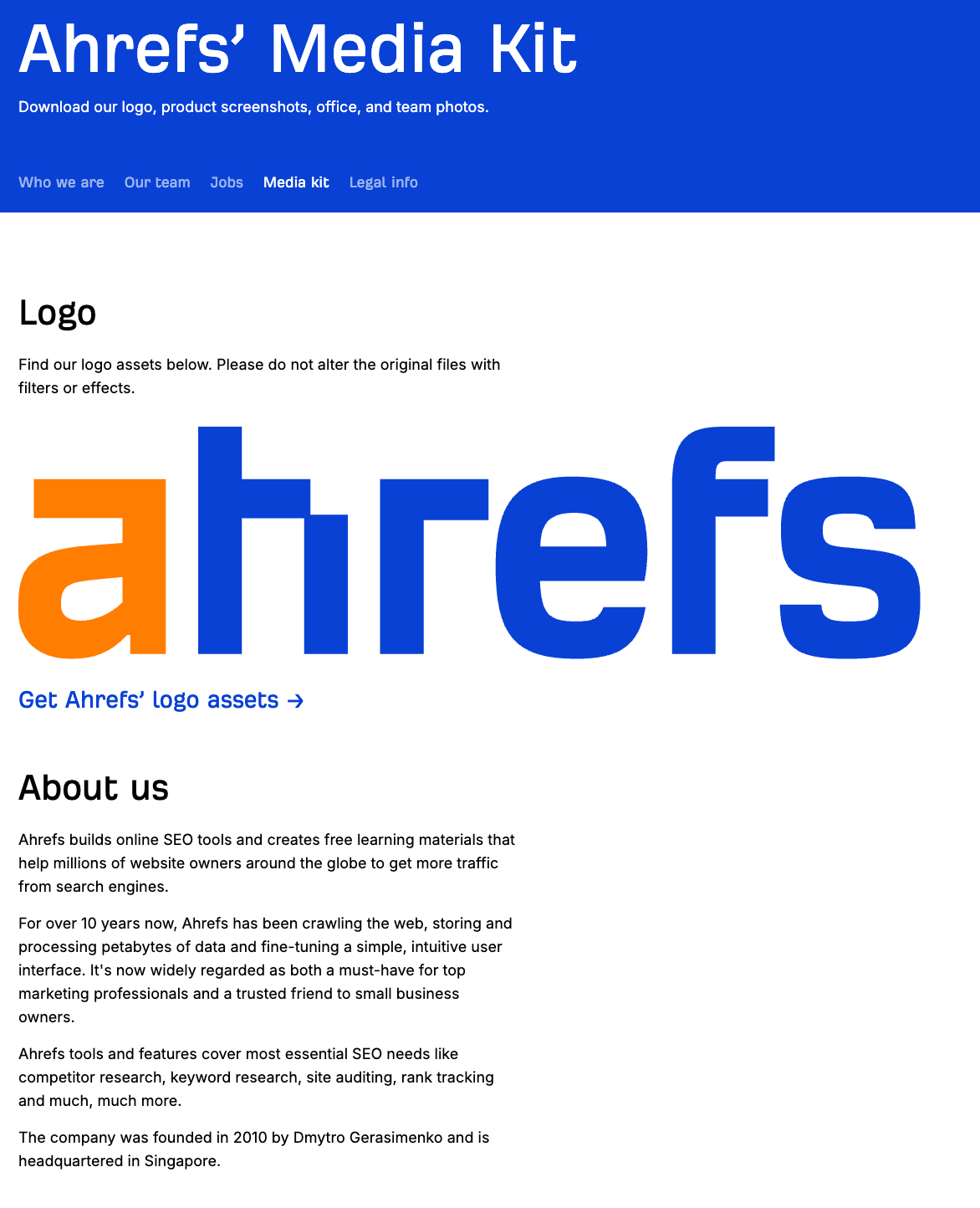
Since LLMs learn a lot about your brand from what others say, the more consistency there is between how you self-reference your brand and how others talk about you, the more likely LLMs will interpret and surface the correct information about you.
You need the internet to talk about you in a consistent way. That’s what gives your brand context beyond your own ecosystem.
Otherwise, LLMs may hallucinate responses based on misleading data or other people’s opinions.
2. Connect your brand to features and attributes people care about
Once you clarify who you are and what you do, you’ll need to connect your brand to things LLMs and semantic search engines can use to understand more about you.
Connecting your content to core entities and topics is already fairly standard practice.
However, advanced SEOs also connect the brand to features and attributes of these entities that matter most. Think of it like how:
- Apple connects to innovative technology
- Nike connects to performance footwear
- Hubspot connects to inbound marketing
Remember, when doing semantic SEO, we’re optimizing for meaning. Brand names on their own have no tangible meaning, so we need to create that meaning for semantic search engines to latch onto.
This is more than just adding specific words or entities in your content.
You can’t just say you’re the “best at X” or “the most Y.” It’s about other people saying this about you, too. This ultimately comes down to branding, something that traditional SEO has not concerned itself too much with.
You can get started with Ahrefs’ Brand Radar. Check out either your brand or competitors’ to spot what descriptive words, audience segments, or product categories get mentioned in AI Overviews:
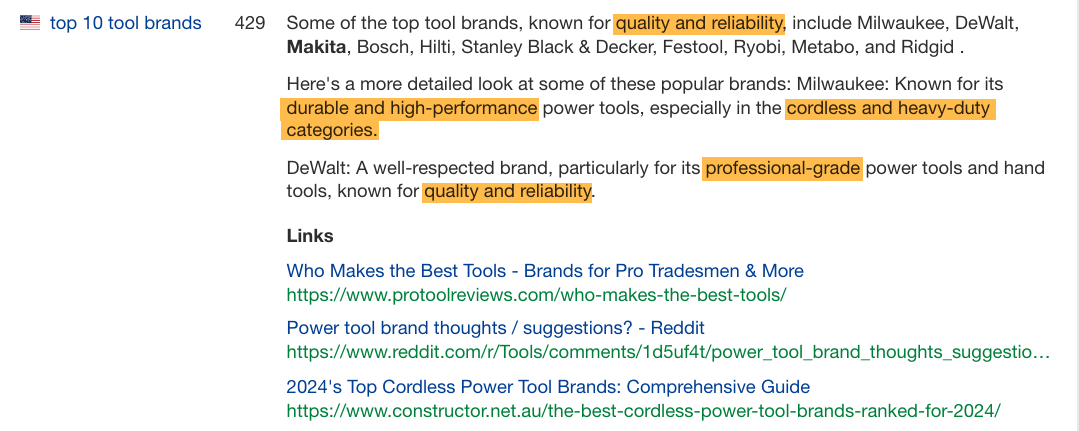
These are the features and attributes that LLMs connect to brands in your industry. Pick the one you care most about because this isn’t a matter of being known for everything. Instead, good branding comes down to being known for how well you do one thing.
For example, I successfully did this for a local aged care facility.
This was prior to AI Overviews being launched, so I used Google’s autosuggest at the time and noticed that attributes related to quality and price were commonly searched:
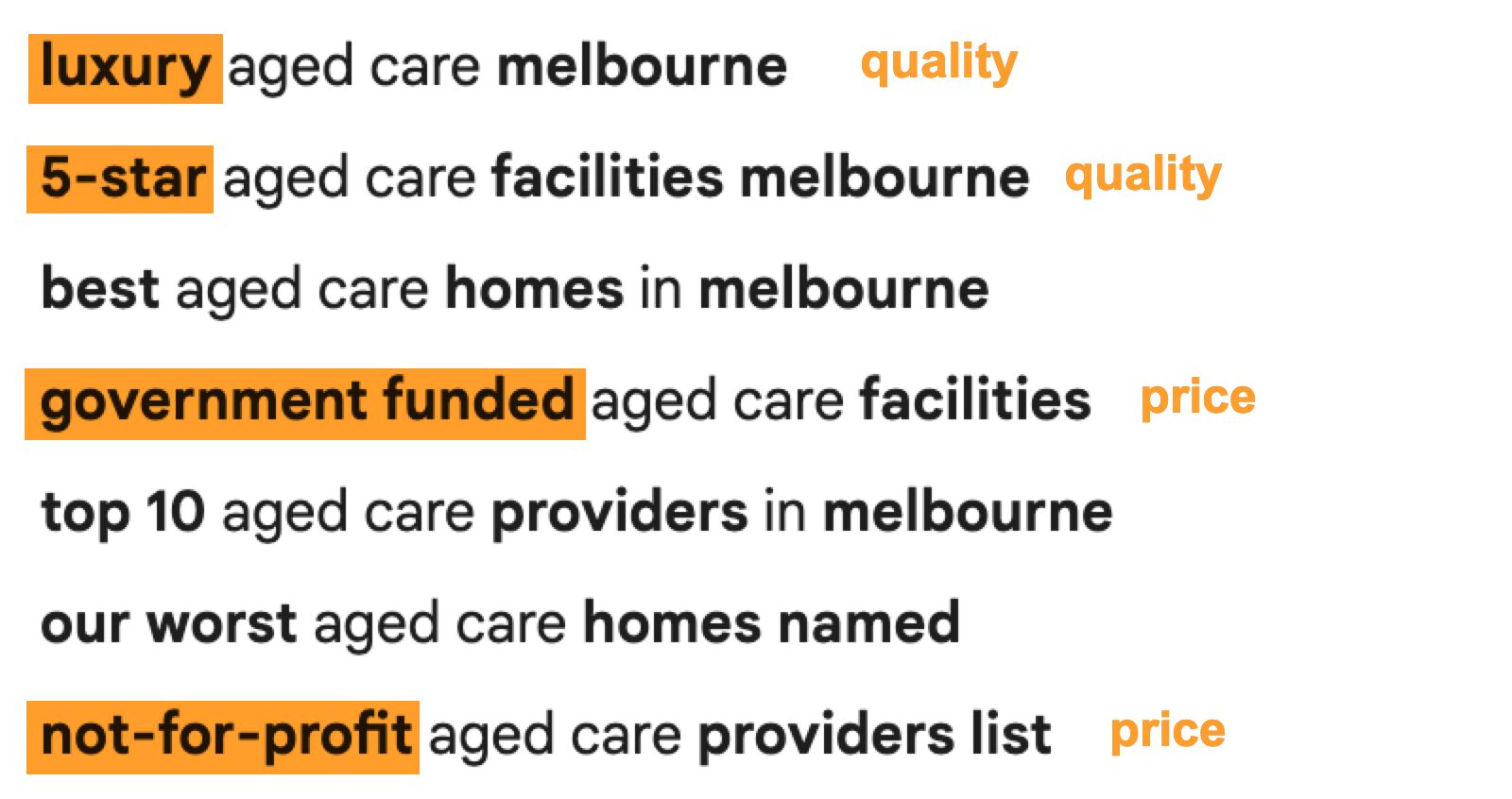
By connecting their new brand to these attributes, we could position them as the #1 choice for people who prioritize “value for money.”
It’s more than just saying your brand is #1.

You also have to prove it using authoritative, indisputable sources or some other mechanism that builds trust.
So, for this project, my team and I used government data that allowed us to show how this aged care facility:
- Was #1 in their local service area (compared to 238 other local facilities)
- Ranked in the top 1.26% of their entire city for “resident experience”
- Offered 50% more floor space (compared to 450 alternatives from competitors in their city)
- Was up to 33% cheaper on average (compared to 148 competitors)
We integrated this data either as micro-copy or entire sections everywhere it made sense to add it, like the:
- Home + about pages
- Accommodation pages
- Pricing documentation
- Citations + directory listings
- Ad titles and descriptions
- Page titles and descriptions
In my interview with her, Sally also endorsed this approach:
Don’t silo your identity to your About page. The homepage, service pages, even your footer — they all reinforce who you are to a machine.
Because we used data from an authoritative and immediately trustworthy source, we could be bold in our messaging and say things like:
We’re the #1 facility for resident experience in {city}.
Or…
Our rooms are twice as big and up to 33% cheaper compared to 450 alternatives in {city}.
Anyone else who spoke about the brand and saw the stats based on government data could then trust our data’s source and be more inclined to repeat this messaging.
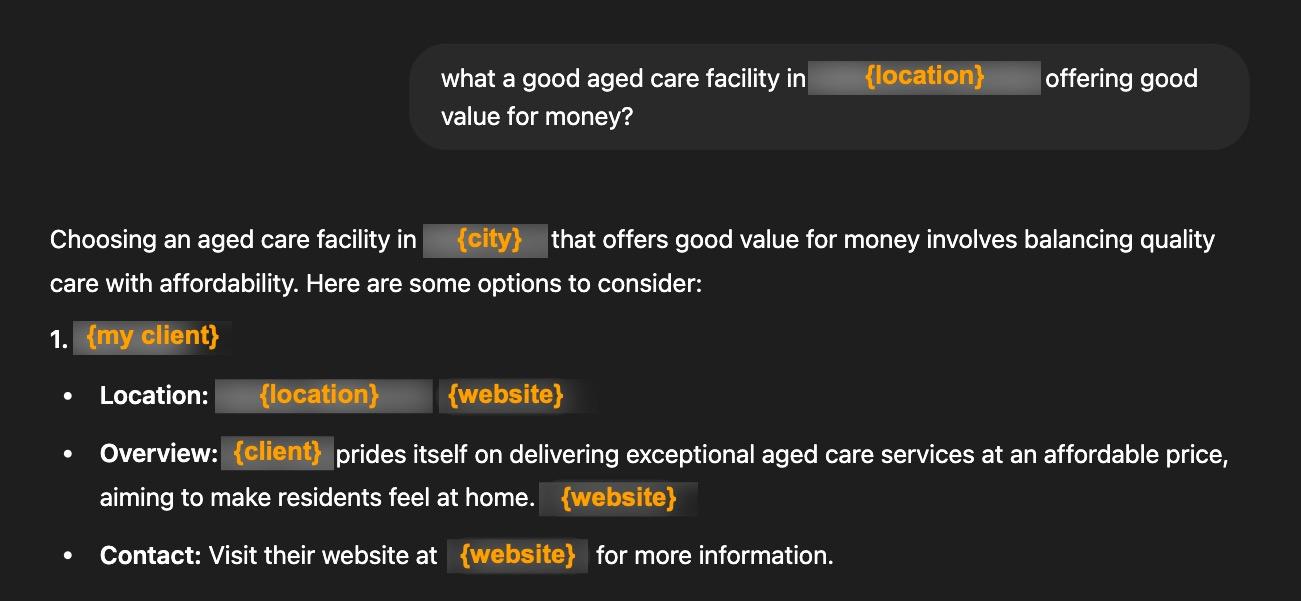
Thanks to this approach, some LLMs selected this aged care facility as the #1 choice when asked about “value for money”:
Perplexity also went a step further and created a comparison table:
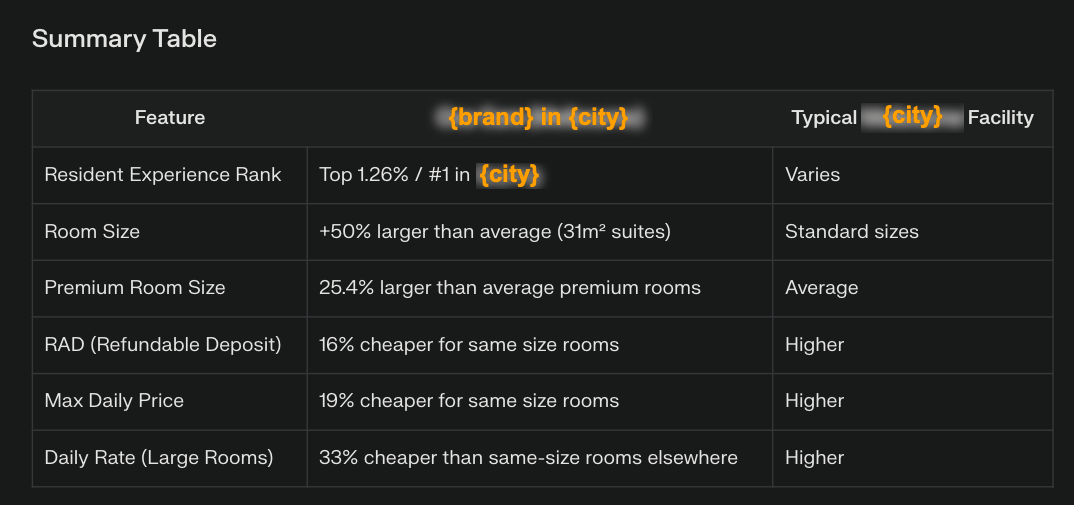
It hallucinated some points about typical facilities in the city… but it got all the remaining stats about this local business correct, most likely due to the consistency, clarity, and frequency with which we communicated them.
This result is a major early win, considering this aged care facility was still a new player in the market, didn’t yet rank organically for related keywords on search engines, and did not use the words “value for money” on their website.
That’s a semantic SEO win right there, something traditional keyword-based SEO would be unable to achieve.
3. Add keywords (and meaning) to “alphabet soup” URLs
Have you ever worked on a project where the URLs were automatically created by a CMS and looked like site.com/kj72376g8js?
That’s what I call “alphabet soup” URLs since they’re just a random string of characters that make no sense to machines or humans.
Converting these to user-friendly and search-engine-friendly URLs improves SEO, but it can certainly be a challenging process. Semantic SEO can help make the process easier, though!
For instance, you can use many tools that provide semantic information about each page on the site, like:
- Top ranking keywords
- Page titles and descriptions
- H1 headings
- Body content, and so on.
To keep things simple, I like to use Ahrefs’ Top Pages report if the site has been around for a while.
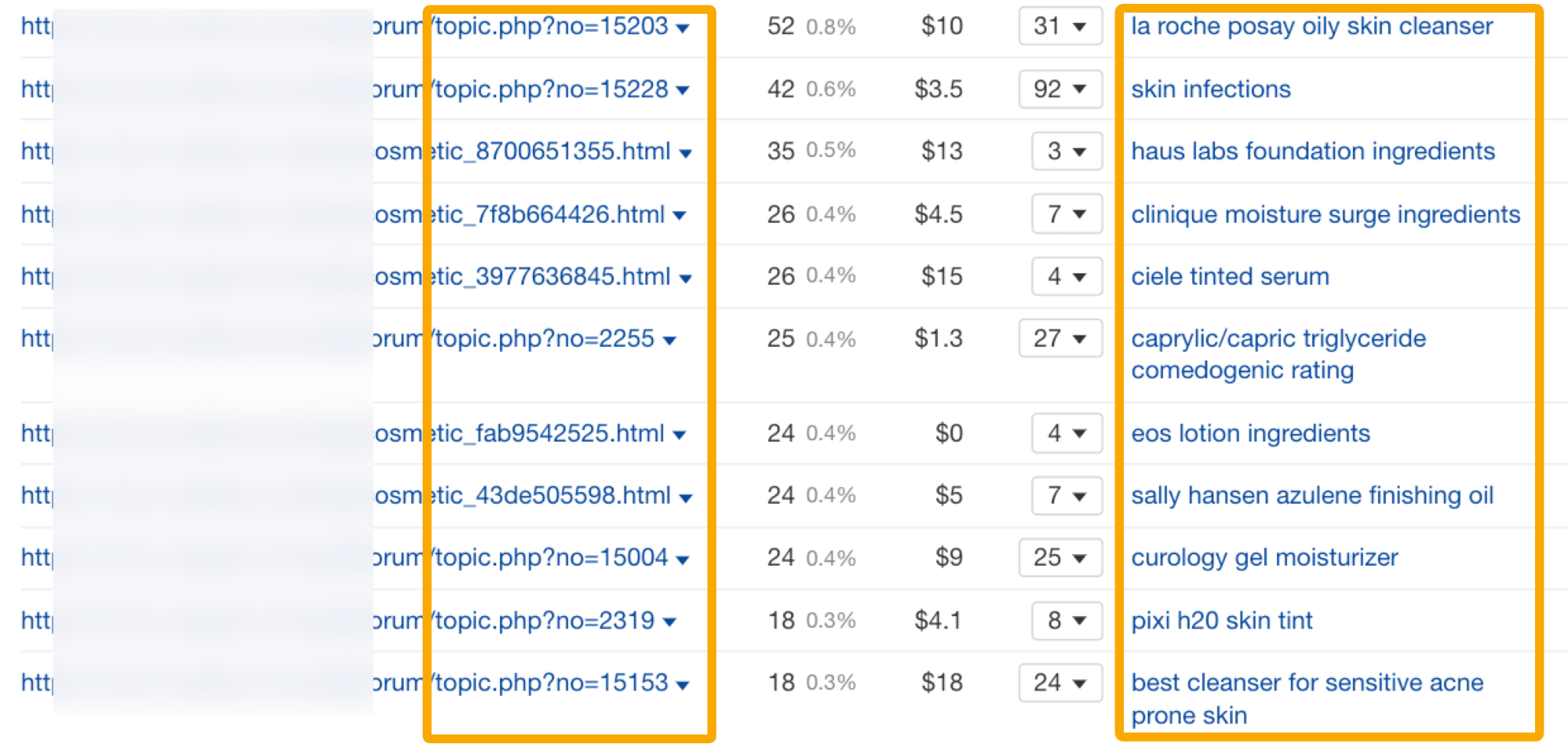
In one easy view, you can connect URLs to their best-performing keyword and streamline your approach to changing and redirecting URLs.
Not only that, but for large sites, you also get built-in prioritization since you can arrange the pages in the order of:
- The traffic they’re currently getting: so you can bump up the best-performing pages even more or identify the weakest pages that need some extra attention.
- The number of keywords they rank for: so you can improve on-page optimization of pages with the highest potential for a quick traffic boost.
- The volume of the top keyword: So you can evaluate missed potential due to poor optimization and prioritize pages with the most searches per month.
For newer sites with no performance yet, you can use Ahrefs’ Site Audit instead. Check out the Page Explorer report and customize the columns:
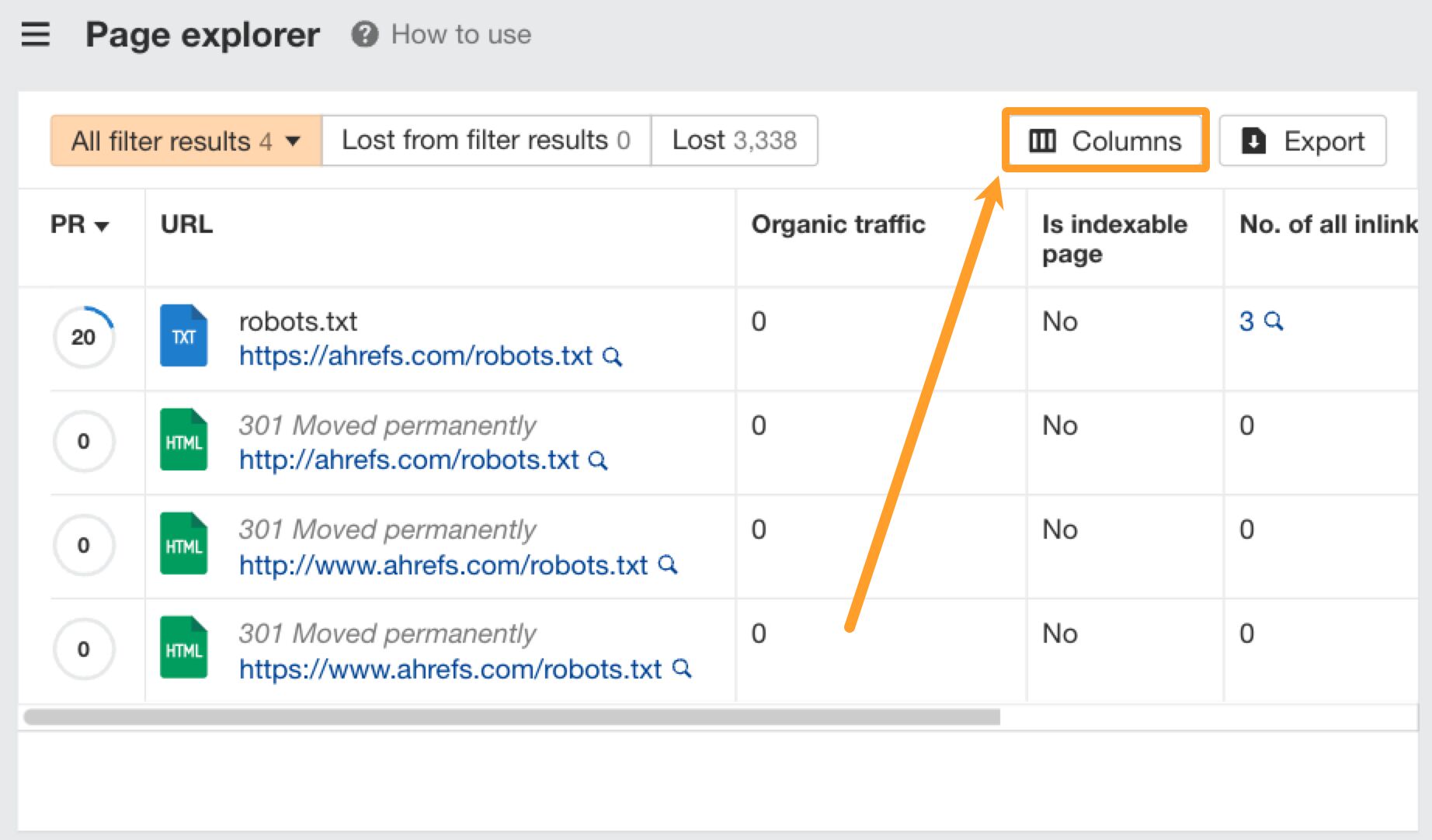
You can use the following highlighted fields in the “Content” section to extract keywords, entities, or other semantically meaningful content to use in your URLs:
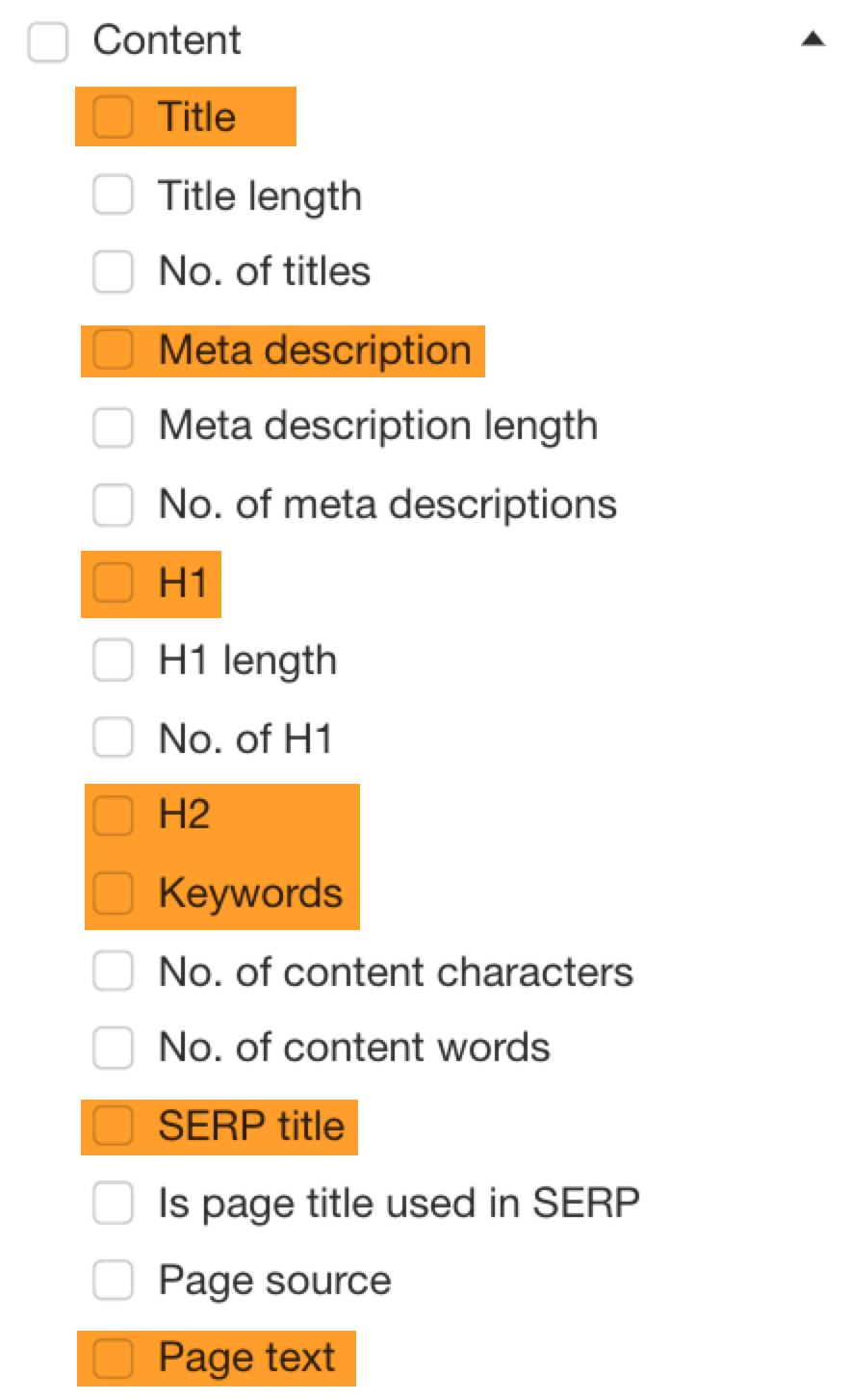
You can also take it up a notch and use semantic text analytics software to extract the most dominant topics and entities on each page. Some options worth trying (depending on your technical skill level) include Google’s Natural Language API and Text Razor.
What you’re looking for is a fast way to connect each page to a specific topic it talks about, then turn that topic into the slug to replace the alphabet soup (with 301 redirects, of course).
4. Map out a user and search-friendly information architecture
Most SEOs think of information architecture as “URL structure”, but it actually also involves:
- Navigation + menus
- Internal linking
- Taxonomies (like categories and tags)
- Labels you use for pages and categories
- Filters and faceted navigation systems
Traditionally, mapping out all these elements is part of the UX design process. Where most designers go wrong is that they don’t align these elements with keywords that people search for.
Advanced SEOs work alongside design teams to ensure these elements are all not only keyword optimized but also semantically optimized.
My approach here is to use the EAV model (entity-attribute-value):
| What is it | Example in action | |
|---|---|---|
| Entity | Represents the object or item you’re optimizing. | Products, categories, users |
| Attribute | This is a characteristic or feature of the entity | Colors, sizes, materials |
| Value | This is the specific information tied to the attribute | Red, medium, cotton |
This is especially helpful for sites that need to organize collections of listings like:
- E-commerce stores (organizing product listings)
- Marketplaces (organizing marketplace items)
- Real estate (organizing property listings)
- Job boards (organizing job listings)
- Directories (organizing business listings)
The listings are the entities you’re optimizing for.
The collections of listings are generally where you’ll need to consider the features and attributes t