

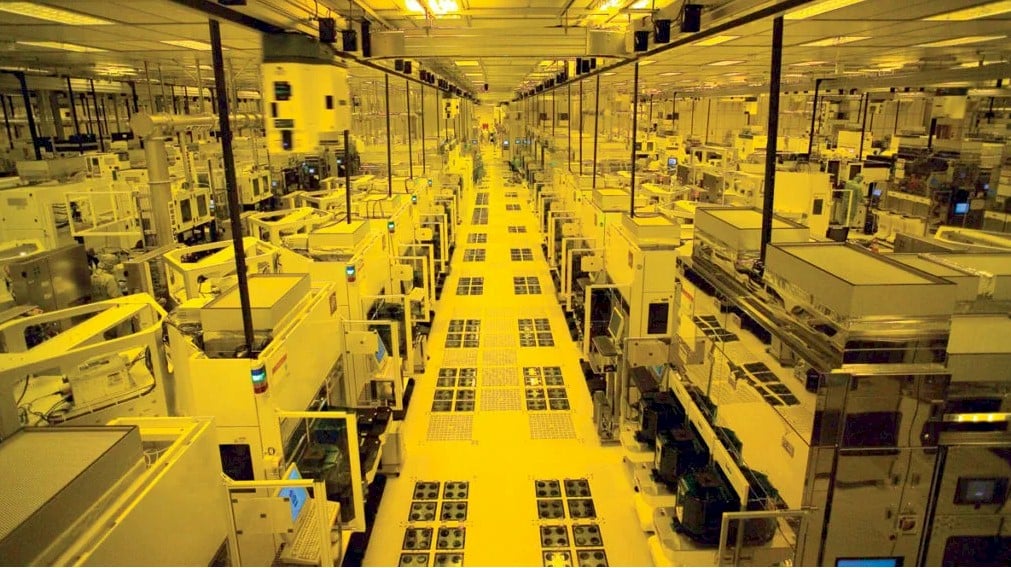
TSMC says it will ramp up production at its second fab site in Arizona earlier than initially expected as it looks to shift nearly a third of its leading-edge wafer output stateside.
The Taiwanese foundry giant began volume production at its first fab in Arizona at the end of 2024, serving major US chip designers including Nvidia, Apple, and AMD.
Construction of TSMC’s second US fab, which is set to produce parts on its 3nm process node, has now been completed, CEO CC Wei said during the company’s Q2 earnings call Thursday, according to a transcript.
“We’re seeing strong interest from our leading US customers and are working on speeding up the volume production schedule by several quarters to support their need,” he told analysts on the call.
Efforts to accelerate TSMC’s US build out are set against a backdrop of uncertainty caused by the Trump administration’s often erratic and inconsistent trade policies. The US president has placed a 10 percent tariff on all imports to the US, briefly imposed a 32 percent tariff on Taiwanese goods before delaying the measure, and has repeatedly teased the possibility of a 100 percent import tax on foreign made semiconductors.
Faced with this specter, TSMC doubled down on its US investments in March announcing a $100 billion foundry expansion that would see the construction of three additional fabs alongside previously announced advanced packaging and R&D facilities in the region.
When complete, Wei anticipates that US production will account for roughly 30 percent of the company’s 2nm and smaller process tech will be located in Arizona. The timeline for when these facilities will begin operation remains vague with Wei noting that “the construction and ramp for those fabs will be based on our customers’ needs.”
With that said, work on the company’s third Arizona fab site, which will eventually produce wafers based on its 2nm and A16 process nodes, has already begun. “We will look into speeding up the production schedule as well based on the strong AI related demand from our customers,” he added.
Wei said its fourth fab will also produce wafers on these same nodes while the fifth and sixth will use more advanced technologies. However, by the time the third and fourth fabs are actually completed, we wouldn’t be surprised if they are reconfigured to produce more advanced chips, similar to what we saw with its first fab which originally targeted its N5 node before getting upgraded to N4.
Despite the persistent threat of tariffs from the Trump administration, TSMC fared well during the second quarter. The company reported Q2 revenues which grew 38.6 percent year-over-year to $31.7 billion USD (933.8 billion TWD).
Net income for the quarter topped $13.5 billion (397.5 billion TWD), driven in large part by strong demand for the foundry operator’s leading edge nodes which CFO Jen-Chau Huang said now made up about 74 percent of wafer revenue.
Demand for chips used in AI accelerators also grew during the quarter with Huang reporting its high-performance computing segment was up 14 percent from last quarter and accounted for 60 percent of revenues for the quarter followed by smartphones at 27 percent, and IoT and automotive both at 5 percent.
Looking ahead to the third quarter, Wei remains cautiously optimistic. “Looking into the second half of 2025, we have not seen any change in our customers’ behavior so far. However, we understand there are uncertainties and risks from the potential impact of tariff policies, especially on consumer-related and price-sensitive end market segments.” ®

