

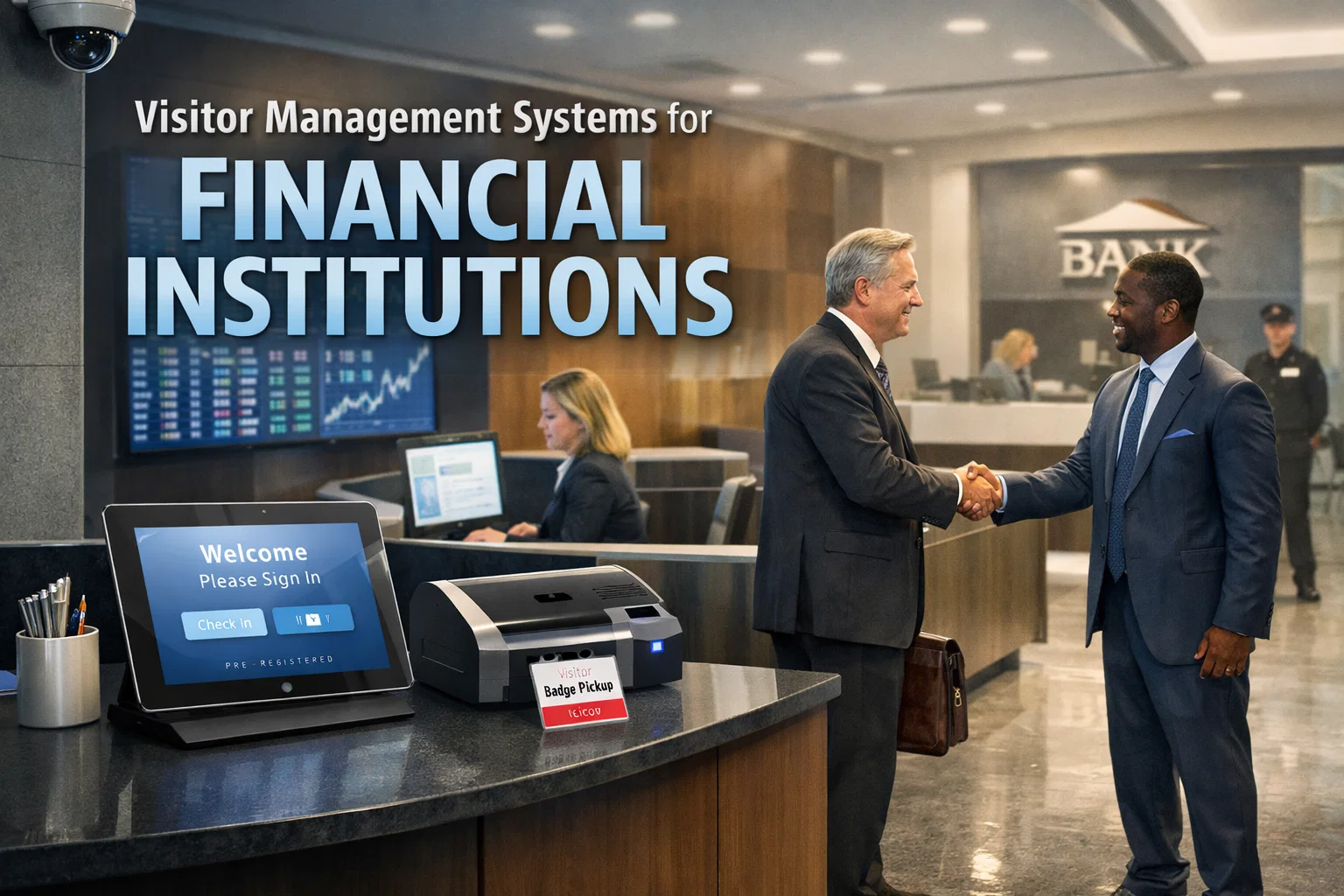
Financial institutions require more than basic visitor check in tools. They need advanced security features that protect sensitive data, support compliance, and maintain full visibility of visitor activity. A modern visitor management system combines multiple security layers to help financial organizations control access while maintaining a smooth visitor experience.
Below are the most important features financial institutions should look for in a visitor management system.
Visitor Pre Registration and Approval Workflows
Pre registration allows financial organizations to know who is visiting before they arrive at the office. Visitors can submit their details in advance, and hosts or security teams can review and approve access before the visit.
This reduces the risk of unexpected walk ins and improves front desk efficiency. It also allows security teams to prepare for high priority visitors such as auditors, regulators, or high value clients.
ID Verification and Secure Badge Printing
Digital ID verification helps ensure that every visitor is verified using a consistent process. This removes the risk of manual checks being skipped or done incorrectly.
Secure badge printing provides visitors with clear identification. Badges typically display visitor name, host information, visit purpose, and access permissions. This helps employees easily recognize authorized visitors and improves workplace security.
Real Time Visitor Tracking and Monitoring
Real time visitor tracking allows security teams to see who is inside the building at any moment. This improves day to day security monitoring and helps during emergency situations.
Security teams can quickly identify visitors who have not checked out or who may be in restricted areas. This level of visibility is especially important in large financial offices or multi floor buildings.
Watchlist and Blocklist Screening
Watchlist and blocklist features help prevent restricted individuals from entering the facility. The system can automatically check visitor information against internal security lists during check in.
This reduces human error and helps security teams enforce access rules more consistently. It also provides an additional layer of protection for high security environments.
Access Control System Integration
Modern visitor management systems can connect with building access control systems. This allows visitor access permissions to be automatically assigned based on visit approval.
Access can be limited to specific doors, floors, or areas and automatically removed after the visit ends. This helps prevent visitors from accessing unauthorized areas.
Audit Logs and Compliance Reporting
Visitor management systems automatically record visit details including check in time, check out time, host details, and access history.
These digital audit logs help financial institutions maintain compliance with regulatory requirements. They also make it easier to provide accurate records during audits or security investigations.
Data Encryption and Privacy Protection
Financial institutions handle sensitive personal and financial data. Modern visitor systems protect visitor information using encryption, secure cloud storage, and role based access controls.
This ensures that only authorized staff can access visitor data. It also helps organizations meet data privacy and security regulations.

