

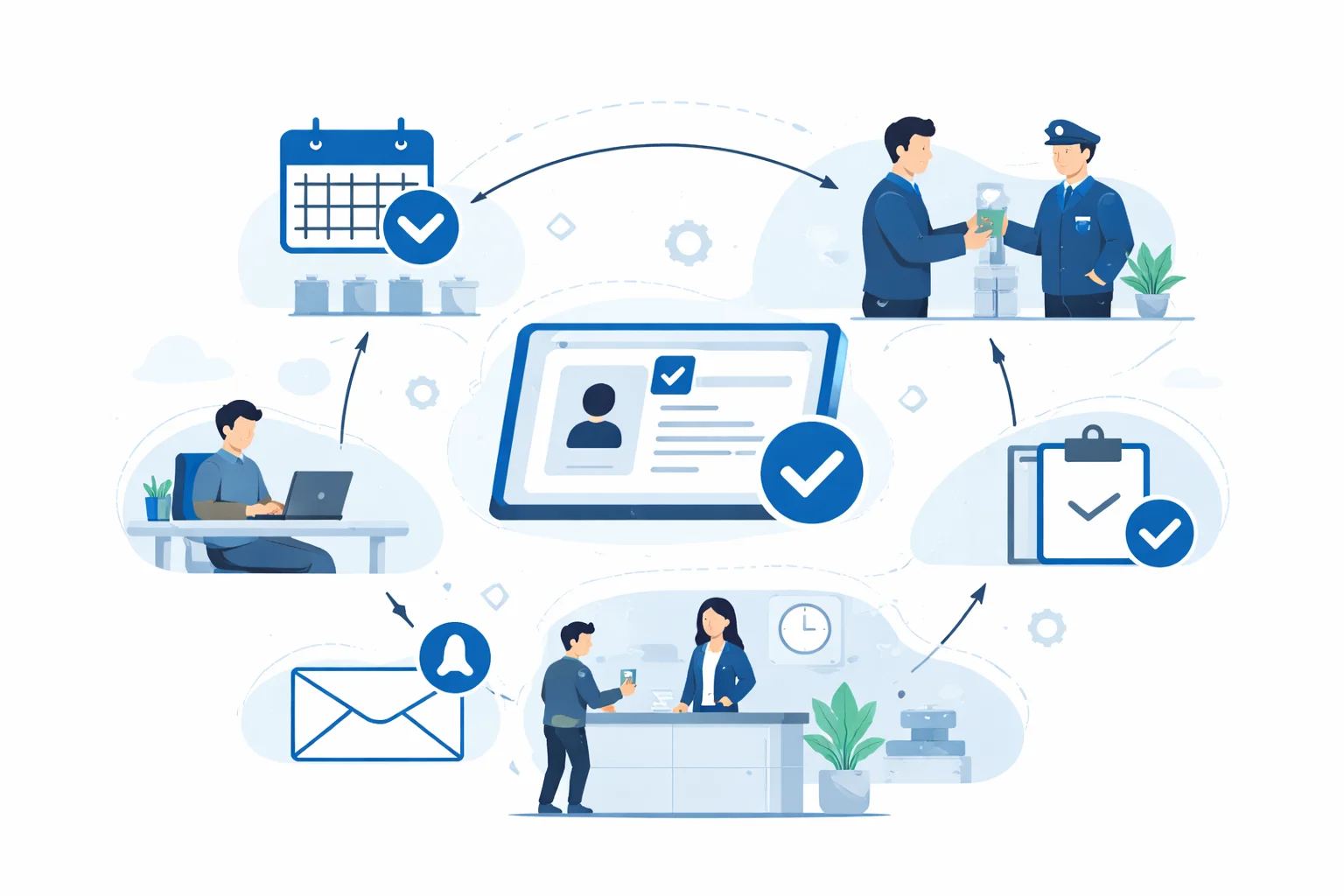
The way visitor management shows up in daily operations depends heavily on the environment. A hospital does not experience visitor flow the same way a factory or a restaurant does, even if the underlying principles remain the same.
What changes is the pressure point. In some places, it is safety; in others, efficiency, compliance, or simply keeping the day from becoming chaotic. What follows is how those differences tend to play out across industries.
Healthcare and Patient Care Services
In healthcare settings, visitor management is closely linked to patient safety and privacy. Controlled access helps protect sensitive areas without turning hospitals into closed spaces. Digital visit records support compliance requirements, while health declarations and tracking help with infection control.
Hospitals deal with constant movement. Patients, families, clinicians, and vendors all pass through the same doors. A structured visitor process brings order to that flow without adding work for clinical teams who already have enough to manage.
Offices and Organizations
In office environments, the impact is quieter but noticeable. Guests move through the reception without delay, and hosts are notified without having to chase updates. Employees stay focused instead of stepping away to coordinate arrivals.
Restaurants and Hospitality Operations
Restaurants rarely think of visitors in the traditional sense, yet access still matters. Vendors arrive during busy hours. Maintenance teams come and go. Deliveries overlap with service. Front desk Visitor tracking system helps keep those movements organized, especially when timing and compliance matter.
Manufacturing Facilities
Manufacturing floors operate on clear boundaries. Contractors, inspectors, and vendors cannot move freely, and safety accountability is not optional. Visitor management systems make those limits practical without slowing production. The structure supports safety without interrupting the work itself.
Travel Agencies and Service Businesses
For service-based businesses, the front desk sets the tone. Appointments, documents, and client conversations often occur simultaneously. Digital visitor processes help keep information secure while maintaining a steady flow. The result is less friction and fewer interruptions throughout the day.
Small Businesses
Smaller organizations often feel the benefit quickly. Replacing manual logs reduces administrative effort and removes small but persistent errors. Digital check-in also signals professionalism without requiring significant investments. It is a modest change that carries weight.
Large-Scale Enterprises
At scale, visibility becomes the real advantage. Multi-location tracking and consistent access rules allow enterprises to maintain control across sites. Centralized reporting supports both security teams and leadership decisions.

